

The US Department of Justice (DOJ) is intensifying its efforts against hackers and exploiters in the Decentralized Finance (DeFi) sector, following a significant increase in illicit cryptocurrency activities over the past four years.
Eun Young Choi, the head of the DOJ’s National Cryptocurrency Enforcement Team (NCET), shared in a Financial Times report on May 15 that the DOJ is zeroing in on thefts and cyber-attacks related to DeFi, with a special focus on “chain bridges.”
Choi highlighted that this is a considerable concern for the DOJ, especially since North Korean state-sponsored hackers have been identified as major players in this area.
Cointelegraph reported in February that North Korean hackers had pilfered an estimated $630 million to $1 billion in cryptocurrency assets in 2022 alone.
Choi, who has nearly ten years of prosecutorial experience with the DOJ, was named the inaugural director of the NCET in February 2022. The DOJ stated at that time that the NCET would act as the primary hub for the department in dealing with matters related to cryptocurrency, cybercrime, money laundering, and asset forfeiture.
The DOJ underscored that they would specifically target “mixing and tumbling services,” but there was no mention of DeFi platforms in their initial announcement.
Speaking at the recent Financial Times Crypto and Digital Assets Summit, Choi reaffirmed that the DOJ is targeting cryptocurrency companies that either commit crimes or knowingly permit such activities to occur, thereby facilitating money laundering.
Choi underlined that focusing on the platforms where these activities originate could have a multiplying effect by making it harder for criminals to reap the benefits of their illicit activities.
She also noted that the extent and variety of illicit uses of digital assets have significantly increased in the past four years.
Jump Trading, a firm associated with Terraform Labs, has been accused in an Illinois district court lawsuit of manipulating the price of the collapsed algorithmic stablecoin, TerraUSD (UST). Court documents from May 9 suggest that Jump Trading bought millions of UST tokens in 2021 with an intent to artificially inflate its price to $1.
The plaintiff, Taewoo Kim, alleges that Jump Trading and its CEO, Kanav Kariya, breached the Commodity Exchange Act, Commodity Futures Trading Commission (CFTC) regulations, and engaged in common law unjust enrichment.
The lawsuit claims that Jump Trading was an early supporter and the primary financial contributor to Terraform Labs. From November 2019 to September 2020, Jump Trading allegedly made several agreements with Terraform and its affiliates. The agreements allowed Jump to borrow tens of millions of Terra LUNA tokens from Terra and to offer market-making services for LUNA, UST, and aUST transactions.
In return, Jump Trading had the opportunity to buy LUNA tokens at a significant discount, which could then be sold on the market for profit.
The legal filing states that in May 2021 — a year before Terra’s ecosystem collapsed — the UST stablecoin algorithm failed to maintain its $1 peg. This led Terraform and its CEO, Do Kwon, to orchestrate trades to support the token’s price:
“Rather than publicly admitting TFL’s algorithm’s failure to maintain UST’s advertised peg price (which was fundamental to the perceived market value of UST and aUST), TFL and Kwon secretly conspired with Defendant Jump to manipulate the market prices for UST and aUST by making secret, coordinated trades to maintain UST’s $1 peg.“
The alleged scheme involved Jump Trading buying over 62 million UST tokens between May 23 and May 27, 2021. This action reportedly artificially increased UST’s price to $1 and also inflated aUST’s price.
The court filing alleges that Terra and Kwon altered their initial agreements to reward Jump for its purported market manipulation. They reportedly gave Jump more than 61.4 million LUNA tokens at a discount of over 99% from their market price at the time. Jump allegedly later sold these LUNA tokens in the market for a profit exceeding $1.28 billion.
Cointelegraph tried to reach out to Jump Trading regarding the lawsuit but received no immediate response.
On March 13, Bloomberg reported that U.S. prosecutors are scrutinizing a Telegram chat group discussion involving Jump Trading, Alameda Research, and Jane Street Group about a potential TerraUSD stablecoin bailout.
The U.S. Justice Department is also investigating the stablecoin’s collapse, which led to a $40 billion loss in the Terra ecosystem in May 2022. The Federal Bureau of Investigation and the U.S. Attorney’s Office for the Southern District of New York have questioned former Terraform Labs staff recently.
Kwon was arrested in Montenegro in March for allegedly using fake documents. South Korean and U.S. authorities are seeking his extradition. He was released on bail for 400,000 euros on May 12 and is currently under house arrest.

Riot Platforms, previously known as Riot Blockchain, a crypto mining company, has initiated legal proceedings against Rhodium Enterprises, a Bitcoin miner based in Texas. The dispute involves recovering an alleged unpaid sum exceeding $26 million in mining facility fees.
Riot Platforms, in its Q1 2023 financial statement released on May 10, claimed that Rhodium violated their contract by not meeting the payment obligations for hosting and service fees. These fees were related to the use of Whinstone’s Bitcoin mining facilities, which Riot Platforms fully owns.
On May 2, a legal petition was lodged against Rhodium Enterprises in the Milam County Court in Texas. The petition seeks to recoup “over $26 million” and requests reimbursement for any legal expenses incurred.
In addition, Riot has asked for authorization to end “certain hosting agreements” with Rhodium. They also proposed that they should not be obligated to pay back any remaining power credits after stopping these services.
Riot Platforms acknowledged the uncertainty surrounding the possible recovery of these unpaid fees at this stage of the litigation. They stated:
“At this early stage of the litigation, it’s not possible to reasonably predict the probability of a negative outcome or the extent of such an outcome, if it happens.”
According to the report, Rhodium was served on May 8 and given until May 30 to respond.
The report also disclosed that Riot Platforms had successfully mined “2,115 Bitcoins” in the first quarter of 2023, marking a 50.5% rise from Q1 2022.
The report clarified that Riot Platforms had no involvement with recent bank failures, stating:
“We have no banking relationships with Silicon Valley Bank, Silvergate Bank, or First Republic Bank, and currently we keep our cash and cash equivalents in several banking institutions.”
Riot Platforms anticipates ongoing challenges for crypto mining businesses in 2023. This is due to the “significant drop in Bitcoin’s value” and “other national and global macroeconomic factors.”
However, Riot believes its “relative position” in the industry, coupled with its “liquidity and lack of long-term debt,” places it in a strong position to “benefit from such consolidation.”
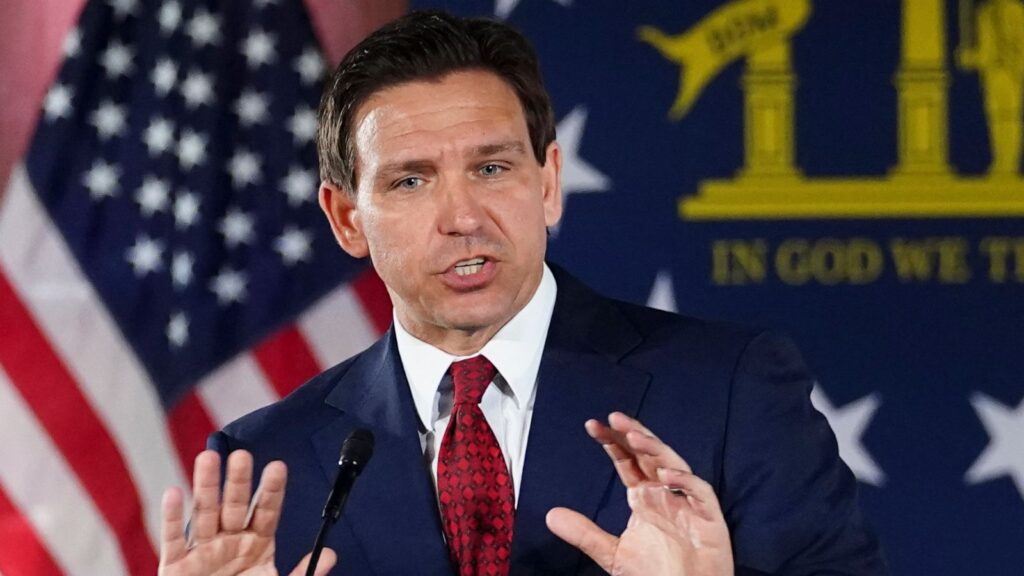
Florida’s Governor Ron DeSantis has endorsed a bill that limits the application of central bank digital currencies (CBDCs) within the state, as reported by local media. DeSantis had earlier in March urged the state legislators to craft this bill.
The newly ratified law disallows the use of a CBDC of the United States as legal tender under Florida’s Uniform Commercial Code (UCC). It further proscribes the use of CBDCs issued by foreign governments and encourages other states to enact similar restrictions in their respective commercial codes.
At the bill’s signing event, DeSantis expressed that his decision was influenced by the current U.S. administration, led by President Joe Biden, and its exploration of this nascent financial technology. He noted that despite the U.S. not having a CBDC or any immediate plans to roll one out, he believes the exploration implies an intent to do so.
“If they didn’t have plans to implement this, they wouldn’t have studied it,” he remarked. DeSantis further opined that the issuance of a U.S. CBDC would signify a significant power shift from consumers to a centralized authority.
He also perceived the possible launch of a CBDC as a threat to existing cryptocurrencies, stating, “I believe they aim to marginalize and abolish other forms of digital assets like cryptocurrencies because they lack control over them, which they detest.”
The enacted bill introduces modifications to Florida’s prevailing commercial code. DeSantis cited a growing trend among states to incorporate CBDCs into their Uniform Commercial Codes, which he believes is influenced by powerful entities. He said:
“We examined this and concluded, ‘… We are not going to include central bank digital currency in our commercial code,’ but we also decided, ‘… We need to implement safeguards for Floridians against this,’ and so we will specify in the Uniform Commercial Code that we do not recognize CBDC.”
Despite the allegations, the Uniform Law Commission has made efforts to quash any insinuations that it endorses the adoption of CBDC, even releasing a recent statement to clarify its stance.
John Montague, a legal expert from Florida-based Montague Law, informed Cointelegraph: “This bill implies that transactions involving CBDCs won’t enjoy the typical UCC protections, which might discourage entities or individuals from conducting such transactions using CBDCs.” He continued, “The UCC can impose obligations and modify rights of third parties, even without their explicit contractual agreement. Florida possesses the power to amend this definition.”
The law will be operational from July 1.
Cryptocurrency exchange Binance announced via Twitter on May 12 that it is ceasing operations in Canada. The decision is a “proactive” response to the new regulatory guidelines enforced by Canadian authorities, which are significantly impacting the nation’s cryptocurrency sector.
This move makes Binance the latest among several other cryptocurrency entities to exit Canada, following the implementation of new rules by the Canadian Securities Administrators (CSA) on February 22. These rules mandate that all crypto firms must submit new preregistration undertakings and comply with additional restrictions.
Despite having reportedly submitted a new preregistration undertaking, Binance clarified in a tweet: “Regrettably, new guidelines related to stablecoins and investor limits on crypto exchanges make it untenable for Binance to continue operations in the Canadian market at this time.”
The newly introduced CSA rules forbid companies from allowing Canadian clients to enter into contracts to purchase and sell any crypto asset classified as a security and/or a derivative, and they categorize stablecoins as securities.
Previous to Binance’s announcement, OKX exited the Canadian market in March, followed by decentralized exchange dYdX in April and blockchain fintech Paxos afterward.
An email from Binance to its Canadian users, as seen by Cointelegraph, asked them to settle their open positions by September 30, 2023. It cautioned that, “Starting October 1, 2023, Canadian customers will be transitioned to liquidation only mode.”
Binance further stated: “Although we disagree with the new guidelines, we intend to remain in dialogue with Canadian regulators in the hope of establishing a comprehensive, thoughtful regulatory framework.”
Binance had previously been operating in all Canadian provinces and territories, except Ontario. It had withdrawn from this province in March 2022, following an extended dispute with its regulatory authorities.
However, not all is doom and gloom for Canadian crypto enthusiasts. Kraken, another major player in the space, submitted a new preregistration undertaking in March and has pledged to maintain its operations in Canada. According to the CSA, there are 11 platforms “Authorized to Do Business with Canadians.”
JPMorgan Chase CEO, Jamie Dimon, has expressed concern about the potential repercussions for US banks should the Federal Reserve resort to an overregulatory approach in response to crisis. This comes in the wake of JPMorgan’s recent acquisition of the beleaguered First Republic Bank.
In an interview with Bloomberg TV on May 11, Dimon warned that the banking sector could face further difficulties unless the Federal Reserve adopts more proactive strategies, as opposed to merely increasing regulations.
The initial months of the year have already seen the collapse of three major US banks: Signature Bank, Silicon Valley Bank, and First Republic Bank.
Dimon attributed these failures to a problem with supervision, arguing that the onus should be on the bank CEOs and board members, who are usually the focus of compliance with regulations.
He voiced skepticism about the efficacy of adding more regulations to the Federal Reserve’s already voluminous 200,000-page stress test, arguing that this is not the remedy for the ongoing banking crisis.
According to Dimon, increasing regulations impedes banks’ business operations, pointing out that several community banks now employ more compliance personnel than loan officers.
He advocated for a comprehensive approach to regulatory reform, observing that existing rules already number in the hundreds and may hinder banks’ operations.
Dimon also questioned the reliability of stress tests, suggesting that companies that concentrate solely on passing these tests may neglect other issues, including recurring historical events. He warned that overreliance on a single stress test can instill a deceptive sense of security.
Dimon criticized the Federal Reserve for its apparent lack of foresight, stating that none of the Fed governors had predicted the banking crisis.
This isn’t the first time a JPMorgan executive has aired grievances about banking regulations. On April 27, Bob Michele, the chief investment officer of J.P. Morgan Asset Management, commented in a Bloomberg TV interview that the liquidity issues of First Republic Bank should not have occurred given the stringent regulatory environment in the banking industry.
More recently, on May 1, it was announced that JPMorgan would be acquiring the assets of First Republic Bank (FRB) after unsuccessful attempts to rescue it.
Silvergate Capital, the parent company of the now-defunct Silvergate Bank, has announced its impending removal from the New York Stock Exchange (NYSE) and the termination of 230 employees.
The company revealed in a May 11 statement to the U.S. Securities and Exchange Commission (SEC) that the layoffs would begin on May 12. The NYSE has already halted trading of its stock, with a formal delisting anticipated to follow soon.
Following these layoffs, approximately 80 personnel, including officers and employees, will remain to manage the bank’s liquidation process.
Additional layoffs are anticipated, with three more rounds of workforce reduction scheduled for June 30, August 30, and November 30, or potentially later, according to the filing.
The company anticipates that the cost of reducing its workforce will be around $13.6 million, including expenses related to severance packages, retention and bonus payments, and employment placement programs.
In another SEC filing on May 11, Silvergate disclosed that it is unable to submit the legally required financial reports for the 2022 fiscal year and the first quarter of 2023. It also stated that it does not foresee being capable of submitting similar reports in the future.
The company attributed this inability to ongoing regulatory inquiries, investigations, and liabilities arising from legal action and the bank’s liquidation process.
Silvergate affirmed that it is in the stakeholders’ best interests to cut costs and expenses, including the termination of employees critical to preparing these reports, to maintain value.
Silvergate Capital had previously declared on March 8 that it would voluntarily liquidate Silvergate Bank. A few days prior, several cryptocurrency firms, such as Gemini, Coinbase, Galaxy Digital, and BitStamp, had severed their relationships with the bank due to a Justice Department investigation into alleged connections with the downfall of FTX.

Seattle, USA, May 11th, 2023, Chainwire
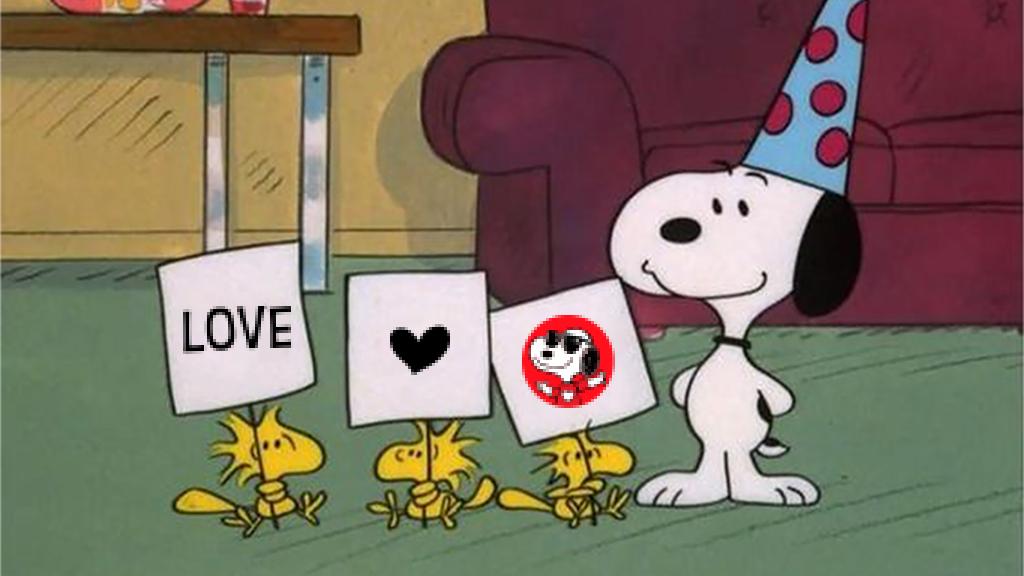
A new memecoin has emerged with more than 70 years of history behind it and the goal of unseating current meme king PEPE. $LOVESNOOPY is a meme token with a Snoopy theme backed by the love of fans and armed with formidable meme power. With a fandom that has grown over generations, the anticipated impact of $LOVESNOOPY is high.
$LOVESNOOPY is the latest in a long line of dogcoins including Dogecoin (DOGE), Shiba Inu (SHIB), FLOKI (FLOKI), and Baby Doge Coin (BabyDoge). The Snoopy-themed token arrives on the market at a time when interest in memecoins is at a two-year high. The trading volume of meme coins reached $2.3 billion last week, the highest since May 2021
The official website of $LOVESNOOPY supports all languages in the world including English, Arabic, Chinese, Japanese, French, German, and Vietnamese, showcasing its global ambitions. $LOVESNOOPY has made a powerful entrance onto the scene by trading on Uniswap and announcing listings on five centralized exchanges (CEXs). Its rapid rise has prompted speculation that it could quickly ascend to become a blue-chip player in the world of memecoins.
Since its debut, $LOVESNOOPY has captured the attention of cryptocurrency investors, rapidly gaining a foothold in the market. Observers will be watching closely to see whether it can surpass Pepe token and Dogecoin and claim its position as the ‘Meme King’ amidst the flood of contenders.
About $LOVESNOOPY
The main utility of $LOVESNOOPY is to establish a vibrant and impassioned meme community that we can embrace with all our hearts. LOVESNOOPY’s path to global domination is simple! Just enjoy and ‘LOVE SNOOPY’! The more people enjoy and LOVE SNOOPY, the more indelible his legacy as a beloved meme will become.
Contact
I LOVE SNOOPY team
[email protected]

Cryptocurrency exchange OKX has launched an audacious new marketing campaign, encouraging a comprehensive overhaul of existing financial and digital systems. The campaign subtly takes aim at the American exchange Coinbase and the wider conventional finance sector.
OKX unveiled its latest high-quality commercial, with its CMO, Haider Rafique, explaining the firm’s conviction in a Cointelegraph interview that blockchain technology is crucial for revamping financial infrastructure and promoting digital ownership.
During Rafique’s tenure, OKX has engaged in significant partnerships and daring ad campaigns with entities such as Manchester City and the McLaren Formula1 team, thereby bringing cryptocurrencies and Web3 offerings to broad global audiences.
The “Rewrite the System” initiative uses potent imagery to underscore issues like inflation, data breaches, and censorship as evidence of a flawed system. Rafique stressed that discussions about updating existing financial and digital structures do not address the deep-seated problems that inspired the campaign:
“The current system is not really designed to be updated and then updated into a system that can really solve some of the problems that the entire system has created.”
Several events over the past year have revealed the deficiencies of current financial systems, as well as the lapses of conventional finance and decentralized finance (DeFi) entities.
The notorious fall of FTX and the subsequent arrest of its former CEO, Sam Bankman-Fried, tarnished the cryptocurrency sector’s reputation. Traditional finance institutions, meanwhile, grappled with their own crises in a high-inflation economy, leading to the folding of Silicon Valley Bank, Silvergate Bank, and Signature Bank.
Rafique is of the opinion that these ongoing system failures highlight the stress on the financial ecosystem. He believes that these events will demonstrate how blockchain-based software offers individuals more control over their financial and digital independence:
“Our hope is that we can give the tooling to people that Web3 starts with, ultimately downloading software on your machine or your phone that enables you to be your own bank.”
The campaign also emphasizes interoperability as a key element in the case for blockchain-based, Web3 tools to revolutionize financial systems and platforms. Rafique cites the isolated nature and incompatibility of Google’s Play Store and Apple’s App Store as an example where blockchain-based applications could offer superior interoperability:
“Crypto and blockchain-based apps are actually designed to connect with each other and drive their interoperability.”
OKX aims to offer a wallet service that connects public chains, simplifying the management of digital assets, and exemplifying the interoperability inherent in blockchain technology:
“We want to connect all crypto ecosystems together so you can hop from one place to another place or another place very easily, but also at very low transaction costs.”
Rafique is firm in his belief that OKX’s advertising efforts, which include engaging audiences through partnerships in diverse markets, have shaped the exchange’s image.
The crypto community associated with the PEPE memecoin has expressed significant displeasure following an email from Coinbase labeling the Pepe meme as a “hate symbol” exploited by alt-right groups.
Borovik.eth, a notable cryptocurrency influencer, shared a screenshot of Coinbase’s email newsletter dated May 10 with his 96,000 followers. The email referenced a 2016 decision by the Anti-Defamation League to categorize the frog-themed character as an online hate symbol.
The characterization of the token incensed the memecoin’s followers and holders, leading to demands for Coinbase to apologize. In response, some users have begun closing their Coinbase accounts.
A Twitter user and solidity developer, Kenobi, argued that Pepe is not a hate symbol and announced his intention to shift his funds to the US-based crypto exchange, Gemini. He ended his tweet with the hashtag “#deletecoinbase”.
The hashtag “#deletecoinbase” has since become a trending topic on Twitter, amassing more than 14,000 tweets in the last two hours, according to Tweetbinder data.
After Binance added the token for trading on May 5, other members of the Crypto Twitter community who hold Pepe have been urging various cryptocurrency exchanges to also list the token. Coinbase, however, has given no hint as to whether it plans to add the Pepe token to its platform.
When approached for comment, a Coinbase representative stated that the exchange had “nothing further to add” in an email to Cointelegraph.
Interestingly, Cameron Winkelvoss, CEO of Gemini, seems to have paid attention to the community’s request. On May 9, the Winklevoss-owned crypto exchange added the memecoin for trading, providing a more neutral description of the new token.
Following the news about Coinbase’s email, the price of Pepe dropped 2.6%. At the time of writing, Pepe was trading at $0.00000184, marking a decrease of 10.4% over the past 24 hours, as per data from CoinGecko.