

Cryptocurrency giant Binance has faced massive headwinds on Monday after reports found net outflows of $831 million in a 24-hour period.
Blockchain research firm Nansen revealed the data, which follows a major regulatory crackdown on Binance USD (BUSD) issued by crypto trading platform Paxos.
Nansen blockchain data showed that users withdrew roughly $2.8 billion of their digital assets, surpassing $2 billion in deposits over the same period.
The withdrawals hit Binance after the New York Department of Financial Services slapped Paxos with an order to stop issuing the stablecoin. The third-largest in the world, BUSD accounts for 35 percent of Binance’s total trading volumes.
Binance CEO Comments on SEC-Paxos Lawsuit
In a series of tweets, Binance chief executive Changpeng Zhao (CZ) commented on the ongoing developments to his followers that “all funds are #SAFU.”
CZ stated that due to the regulatory crackdown, BUSD’s market capitalisation would decrease over time, adding Paxos would “continue to service the product, and manage redemptions.”
He added that he did not have any information on the SEC lawsuit against Paxos and that the latter had “assured us the funds are #SAFU, and fully covered by reserves in their banks.”
Zhao said: “I am not an expert on US laws. But personally […] ‘IF’ BUSD is ruled as a security by the courts, it will have profound impacts on how the crypto industry will develop [in] the jurisdictions where it is ruled as such. Binance will continue to support BUSD for the foreseeable future.
He stated that Binance did not “foresee users migrating to other stablecoins over time,” adding it would make product adjustments “accordingly.”
CZ concluded: “Given the ongoing regulatory uncertainty in certain markets, we will be reviewing other projects in those jurisdictions to ensure our users are insulated from any undue harm.”
Irvine, California, United States, 16th February, 2023, Chainwire
The PlayDapp team announced the acquisition of ProudNet, the renowned peer-to-peer server network provider. This move is seen as an aggressive step towards entering the US gaming market and is set to provide game developers with the best possible technology in terms of stability and reliability for online multiplayer gameplay.
ProudNet, formerly a subsidiary of Pearl Abyss best known for cross-platform MMORPG Black Desert, is used by over 200 games globally. The company’s expansive portfolio is comprised of globally renowned titles, including Nexon’s “Vindictus”, Netmarble’s “Monster Taming”, “Seven Knights”, and “Marvel Future Fight” and Capcom’s “Street Fighter 5”.
Moreover, Proudnet is preferred by server developers for its patented technologies like System And Method For Changing Channels For Guaranteed Reliability Communications (Patent Issued 2016.5.31) and User Datagram Protocol Networking Method For Stability Improvement (Patent Issued 2019.6.11). It is this technology that enables the company to achieve world-class performance in online gameplay.
FPS, MRPG, MMORPG and other online, mobile, and social game-developing companies use Proudnet to make online gameplay more stable and reliable, which is notoriously hard to achieve. The company’s main client base consists of Asian game developers, however, with this acquisition, PlayDapp is looking to bring this game-changing technology to the US market.
An Acquisition to Transform the Gaming Industry
PlayDapp’s acquisition enables game developers to tap into the power of ProudNet’s P2P technology stack, by outsourcing most of the server development work and therefore significantly cutting costs. This means that developers can now deploy reliable, secure, lightning-fast peer-to-peer networks for their games with minimal effort and time.
Not only does this speed up development cycles and massively reduce costs but it also brings several other benefits that aim to increase the effectiveness of the game development industry. With ProudNet, PlayDapp will allow game developers to:
• Decrease the number of in-game drop-offs
• Reduce the cost of hosting by allowing games to be hosted on multiple servers instead of just one
• Significantly reduce latency and lag in online multiplayer games
• Process over 13,000 simultaneously connected players
• Employ multi-threading in server-to-server communication
• Achieve over 56% mobile hole-punching success rate
• Maintain gameplay stability at 98% or more.
When combined with the effective suite of PlayDapp’s blockchain products, the acquisition of ProudNet brings an all-in-one solution to developers.
PlayDapp’s Continued Market Growth
PlayDapp is a global blockchain middleware provider. It enables companies across many different industries to integrate blockchain technology into their business models and easily turn their assets into Non-Fungible Tokens (NFTs).
Notable partnerships include creating the Metaverse version of Samsung’s Everland, KB Bank (Korea’s Largest Bank) and PlayDapp’s blockchain-based C2C NFT Marketplace (formally Polygon’s Number one marketplace) allows gamers and users to freely buy, sell and trade their digital assets with each other. PlayDapp has seen tremendous success in terms of its market cap with a total of $133,240,187 at the time of writing (2/16/2023).
CryptoDozer, DozerBird, and Along with the Gods are just some of the company’s popular games. Players can expect even more games to come out of the press as the acquisition of ProudNet makes game development much more accessible.
PlayDapp is proud to announce the launch of its new office in Irvine, California, and will be utilizing ProudNet Technology for US game developers. With the newly added tech stack, PlayDapp aims to substantially improve the ecosystem of how games are created and experienced by users all across America.
About ProudNet
As the infrastructure to numerous game features, ProudNet enables advanced functionality such as real-time interactions across different devices, secure data transmission, and reliable latency. Game developers who are interested in learning more about ProudNet and its benefits should visit PlayDapp’s booth at the Game Developers Conference on March 20-25th, Booth S355.
ProudNet English Intro Video: https://youtu.be/4Yk2D7befpI
Website: https://proudnet.com/en/
Contact
Head of Global Marketing
Peter Song
PlayDapp
[email protected]

A key exec from the US Federal Reserve warned investors this week that cryptocurrency prices could plummet to zero in the future.
Fed governor Christopher J Waller said in a recent speech at the Global Interdependence Center:
“To me, a crypto asset is nothing more than a speculative asset, like a baseball card. If people believe others will buy it from them in the future at a positive price, then it will trade at a positive price today. If not, its price will go to zero.”
He continued: “If people want to hold such an asset, then go for it. I wouldn’t do it, but I don’t collect baseball cards, either […] If you buy crypto assets and the price goes to zero at some point, please don’t be surprised and don’t expect taxpayers to socialize your losses.”
Waller continued, explaining that several major “crypto-related firms,” which included “payment platforms, exchanges, crypto lenders, and hedge funds” had filed for bankruptcy. He added that retail and institutional investors faced difficulties due to the ongoing crypto winter.
He also criticised banks and other financial institutions facilitating cryptocurrency trading. He stated such organisations backing crypto transactions presented “a heightened risk of fraud and scams, legal uncertainties, and the prevalence of inaccurate and misleading financial disclosures.”
Waller later urged that banks joining cryptocurrency trading programmes should meet Know Your Customer (KYC) and anti-money laundering obligations.
He concluded that “spillovers” across the financial system had been “minimal.”
Fed Comments on Bank-Crypto Collaborations
The news comes after Michael Barr, Federal Reserve vice chairman of supervision, warned banks accepting cryptocurrency deposits should remain aware of increased liquidity risks.
In a speech in October, he said the Fed was working with regulatory groups to note risks to crypto-backing banks across the financial industry.
Barr stated at the time: “The recent volatility in crypto markets has demonstrated the extent of centralization and interconnectedness among crypto-asset companies, which contributes to amplified stress. While banks were not directly exposed to losses from these events, these episodes have highlighted potential risks for banking organizations.”
Circle, a rival stablecoin issuer of Paxos, blew the whistle on the latter’s cryptocurrency offering to New York regulators, fresh reports have revealed.
According to a Bloomberg report on Monday, Circle tipped off the New York Department of Financial Services (NYDFS) in the autumn of last year. Citing people familiar with the matter, it alleged to regulators that Binance failed to show sufficient reserves to support Binance USD (BUSD) tokens issued from the competitor platform.
The news comes after Reuters received comment from an NYDFS spokesperson revealing Paxos did not issue BUSD in a “safe and sound” manner.
This allegedly violated obligations to conduct “tailored, period risk assessments” and due diligence on Binance and Paxos-issued BUSD customers to prevent “bad actors from using the platform,” the report read. The NYDFS later ordered Paxos to halt minting BUSD due, citing its ties to Binance.
Paxos later issued a statement that it had stopped minting BUSD tokens, adding that US dollar-denominated reserves backed all current BUSD tokens.
The company added: “BUSD will remain fully supported by Paxos and redeemable to onboarded customers through at least February 2024. New and existing Paxos customers will be able to redeem their funds in US dollars or convert their BUSD tokens to Pax Dollar (USDP), a regulated US dollar-backed stablecoin also issued by Paxos Trust.”
The news comes after the US Securities and Exchange Commission (SEC) launched a lawsuit against Paxos, accusing the latter of issuing BUSD as an unregistered security.
Cryptocurrency exchange Kraken and Ripple Labs, the firm behind the Ripple (XRP) token, were also slapped with unregulated securities accusations over the last few months.
News of the lawsuits has triggered backlash from the crypto community and prompted Kraken to remove its $30 million USD staking platform for cryptocurrencies.

Cybercriminals using the Wormhole Network exploiter have moved additional funds around their networks, PeckShield reported.
The hackers stole roughly $325 million in 2022 and moved roughly $150 million in stolen digital assets in January. According to PeckShield, the group shuffled more of the funding on Sunday.
The report outlined the funds as they moved across channels. The suspect converted $46 million in assets to 16.6 million MakerDAO’s DAI native tokens. Converted assets included 24,400 Lido-wrapped staked Ether (wstETH) valued at $41.4 million, and a further 3,000 Rocket Pool ETH totalling $5 million.
The Wormhole hacker later bought 9,752.24 ETH for $1,537 each, totalling $14.9 million.
It also bought 1,036 staked ETH (stETH) valued at $1.5 million, wrapping the purchase for 9,700 wstETH, the report concluded.
PeckShield, a suspicious accounts watchdog, issued further reports on similar activities. In December last year, unknown users reactivated an inactive crypto wallet after four years to transfer a huge 22,982 ETH sum to a new address.
It found transfers from Poloniex and Genesis valued at 9,878 ETH and 13,103 ETH, respectively. Transactions took place after Ethereum peaked at $1,200 per coin last year.
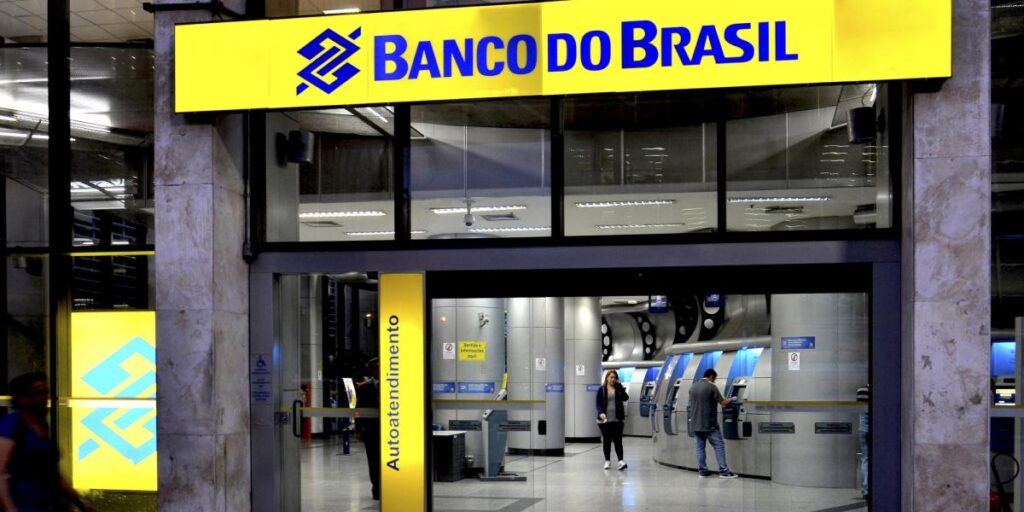
Brazil’s oldest bank has launched payment systems for taxpayers to use cryptocurrency for annual filings, reports found this week.
The Banco do Brasil said in an 11 February statement that it was “possible” for taxpayers to pay their bills with cryptocurrencies. Bitfy, a Brazilian crypto platform, has worked jointly with the bank to facilitate the programme as its collection partner.
The bank added that using cryptocurrencies could provide customers convenience and “expand” digital asset ecosystems nationally. It could also offer the stability of Banco do Brasil’s strong reputation and consumer protections.
Bitfy founder and chief executive Lucas Schoch said in a statement: “Now that we have sealed this strategic partnership, Bitfy and Banco do Brasil, we will drive the adoption of the new DeFi economy, developing the necessary infrastructure to increase autonomy and democratize the use and access to the digital asset ecosystem throughout Brazil.”
He added that the “new digital economy is a catalyst for a future full of advantages.”
How Does it Work?
Bitfy’s statement continued that people using cryptocurrencies to pay taxes could use the streamlined process complete with tax data and amount of reals, the nation’s fiat currency. The new platform would convert the amount owed to cryptocurrency to pay the fee.
Users can scan barcodes to pay the tax bill, similar to a “boleto,” or ticket payment. Brazilian municipalities such as Rio de Janeiro have already rolled out similar programmes in October last year.
Former president Jair Bolsonaro passed regulatory frameworks to legalise cryptocurrencies as national payment, with the law set to pass later in June.
Additional companies have begun exploring cryptocurrency integrations across their respective economies. Nations and blocs such as El Salvador, China, Fiji, Tonga, and others have begun trialling cryptocurrencies as accepted forms of payment.
The European Union, the United Kingdom, the United States, Montenegro, Japan, and many nations have begun outlining plans to unveil central bank digital currencies.
Toronto, Canada, 15th February, 2023, Chainwire
Today China Telecom and Conflux Network announce a partnership to bring Blockchain SIM cards (BSIM) to market. The entry-level Web3 product will be the largest blockchain hardware product ever seen globally, involving the most users and applications. China Telecom will launch the first BSIM pilot program in Hong Kong later this year.
This will likely be followed by pilots in key mainland China locations such as Shanghai.
BSIM will dramatically lower the barrier to entry to Web3 for China Telecom’s 390+ million mobile phone subscribers, while making transactions faster and more secure. By making telecom users’ personal digital assets more secure, the goal is to make mobile phones more secure.
The BSIM card integrates Conflux’s Tree-graph, dual proof of stake and proof of work technology, enabling the highest system performance for any blockchain in the world. It uses the hardware security advantages of SIM cards to protect users’ private keys, which is a secure and convenient Web3 entry solution.
The BSIM Card is indistinguishable from a traditional SIM in appearance but the storage space is 10-20 times larger than the traditional SIM card, and the computing power is increased by tens of times. Users who switch to a BSIM card will be able to store digital assets safely, transfer their digital assets conveniently, and display their assets in a variety of applications.
The BSIM card will manage and store the user’s public and private keys in the card, and carry out digital signatures in a way that the private key does not exit the card. The BSIM card can also allow encrypted storage, key retrieval and other operations. The built-in Bluetooth module will be responsible for the signature and transfer of assets, to ensure the security of personal digital assets. This reduces the risk of the user being attacked by viruses and other malicious software on the mobile phone.
Users’ identifiers in the traditional world, such as mobile phone numbers, can be tied to their Decentralized Identifiers (DID). This will allow for better integration and interaction between virtual and real-world information. BSIM cards can also be combined with abstract accounts based on smart contracts, enabling blockchain applications to safely and efficiently use users’ crypto and traditional world information. Connecting DID with cell phone numbers may also alleviate some of the regulatory concerns stemming from the anonymity of the blockchain technology.
The initial agreement was signed in 2022 between Conflux Network and China Telecom and this prototype is the culmination of a strategic year-long engagement with the goal to build hardware products at the entrance to the world’s metaverse.
The research and development phase of BSIM card is now complete, and it has successfully connected with Conflux’s main network in the test environment. This prototype has the storage and sending functions of digital assets. Conflux and China Telecom will now focus on enriching the BSIM card’s ecological applications, with emphasis on games, payments and other fields.
Dr. Ming Wu, CTO of Conflux Network said “The BSIM card significantly improves the user experience and lowers the barriers to entry for Web3 and the Metaverse world for users. It is key to allowing Conflux to take its ecosystem to the next level. Collaborating with such a strong partner like China Telecom and initiating it from Hong Kong will allow us to enter the market in the near future, both in China and globally.”
Dr. Liang Wei, Deputy Director of Big Data and Artificial Intelligence Research Institute, China Academy of Telecommunication Research said “Blockchain-based digital identity lies in the core of future Web3.0, while blockchain-based digital assets are an important catalyst for the Metaverse. The BSIM card is positioned as the entrance infrastructure of the Metaverse, which provides differentiated functions such as telecom hardware security, intelligent digital wallet, as well as DID value-added services. Partnership with Conflux will accelerate the process of connecting Web2.0 and Web3.0 users in this most imaginative space.”
About Conflux Network
Conflux is a permissionless Layer 1 blockchain connecting decentralized economies across borders and protocols. Recently migrated to hybrid PoW/PoS consensus, Conflux provides a fast, secure, and scalable blockchain environment with zero congestion, low fees, and improved network security.
As the only regulatory-compliant public blockchain in China, Conflux provides a unique advantage for projects building and expanding into Asia. In the region, Conflux has collaborated with global brands and government entities on blockchain and metaverse initiatives, including the city of Shanghai, McDonald’s China, and Oreo.
To learn more about Conflux, visit confluxnetwork.org or China Telecom visit http://www.chinatelecom.com.cn/
Dr. Ming Wu, CTO of Conflux Network and Dr. Liang Wei, Deputy Director of Big Data and Artificial Intelligence Research Institute, China Academy of Telecommunication Research are available for interview.
Contact
Melissa
[email protected]
Swanage, United Kingdom, 14th February, 2023, Chainwire
UK-based PEGA Pool announces the official launch of its eco-friendly Bitcoin mining pool that enables clients to offset their carbon footprint and incentivizes them to use renewable energy. By allowing clients to connect their ASIC miners to its platform and mine together, it provides them with a more consistent and attractive income than mining alone.
PEGA Pool is one of the world’s top 10 largest Bitcoin mining pools, according to BTC.com. With the growing adoption of Bitcoin, the Proof-of-Work mining operations have received a lot of criticism from individuals, corporations, and governments over the industry’s fossil fuel consumption. Countries such as China have banned crypto mining due to its negative environmental impacts. As a result, the industry is witnessing a spike in demand for sustainable mining options.
PEGA Pool’s mission to create a more sustainable industry began with its parent company PEGA Mining Ltd, which uses only renewable energy for its mining operations, demonstrating that large-scale Bitcoin mining with green energy alone is absolutely possible.
David Bungay, CEO of PEGA Pool, said, “I am very excited to announce the official launch of PEGA Pool, our British Eco-Friendly Bitcoin Mining Pool. Our journey began with PEGA Mining which gave us the desire to build PEGA Pool and provide the world with what was missing in our industry. We built PEGA Pool so that we could not only offer our clients a top-performing trustworthy mining pool but also provide them with an incentive to change the industry for the better and follow in our green footsteps.”
PEGA Pool offers an aggressive payout structure with a competitive Full-Pay-Per-Share (FPPS) model that incentivizes miners to switch to renewable energy sources. It is one of the highest paying Bitcoin mining pools for revenue per TH (Terahash). The platform is open to all Bitcoin mining clients, irrespective of what energy source they use.
Clients mining with renewable energy pay 50% lower pool fees. It not only rewards miners making a positive impact on the environment, but also encourages others to use renewable energy.
For those mining with fossil fuel sources, PEGA Pool uses a portion of their pool fees to plant trees in order to partially offset their carbon footprint. It has already planted over 148,000 trees, resulting in a yearly offset of 3,967 tons of CO2. This initiative gives miners the peace of mind that PEGA Pool is planting trees on their behalf to help offset their carbon emissions.
Currently, with the Bitcoin price low and mining difficulty rising, miners are finding it difficult to generate profits. With PEGA Pool, they benefit from the reduced pool fees, which can make a noticeable difference in their profitability. It ensures that miners can stay afloat even during the bear market.
PEGA Pool’s unique Global Pool Infrastructure ensures that it is resilient to outages and equipment issues, including those caused by natural disasters. Established and operating in the UK, the platform offers the world a trustworthy and reliable mining pool that was built by miners themselves.
About PEGA Pool
PEGA Pool is a UK-based, eco-friendly Bitcoin mining pool which enables clients to obtain a more consistent, stable income than they would mining alone whilst offsetting their carbon emissions. The platform is open to all Bitcoin miners, regardless of whether they use renewable or non-renewable energy.
For more information, visit: Website | Twitter | LinkedIn
Contact
Magda Lesniowska
[email protected]
Paxos Trust Co, a stablecoin issuer and producer, faces a major lawsuit over alleged violations of laws to protect investors.
The Wall Street Journal (WSJ) reported the United States Securities and Exchange Commission (SEC) had launched the suit due to Binance USD (BUSD). Paxos backed the stablecoin with USD after inking a deal with the world’s largest exchange by volume in September 2019.
BUSD is the third largest stablecoin by market capitalisation at $16 billion USD.
The SEC slapped Paxos with a Wells notice signalling imminent enforcement action, the WSJ reported, citing people familiar with the matter.
The sources added the notice accuses BUSD of functioning as an unregistered security. The news comes after the New York Department of Financial Services (NYDFS) launched investigations on Paxos. Reports have not provided clarity on the investigations.
The news comes after the SEC hit cryptocurrency exchange giant Kraken with a similar investigation, citing alleged unregistered securities sales.
SEC chairman Gary Gensler ordered the platform to register with it as it conducted crypto transactions.
Kraken chief executive Dave Ripley told Reuters that Kraken had no plans to register with the SEC or delist any crypto offerings targeted by the SEC as securities.
Despite this, Kraken agreed to stop its crypto-staking programme in its $30 million USD settlement with the regulator, sources familiar with the industry told reporters.
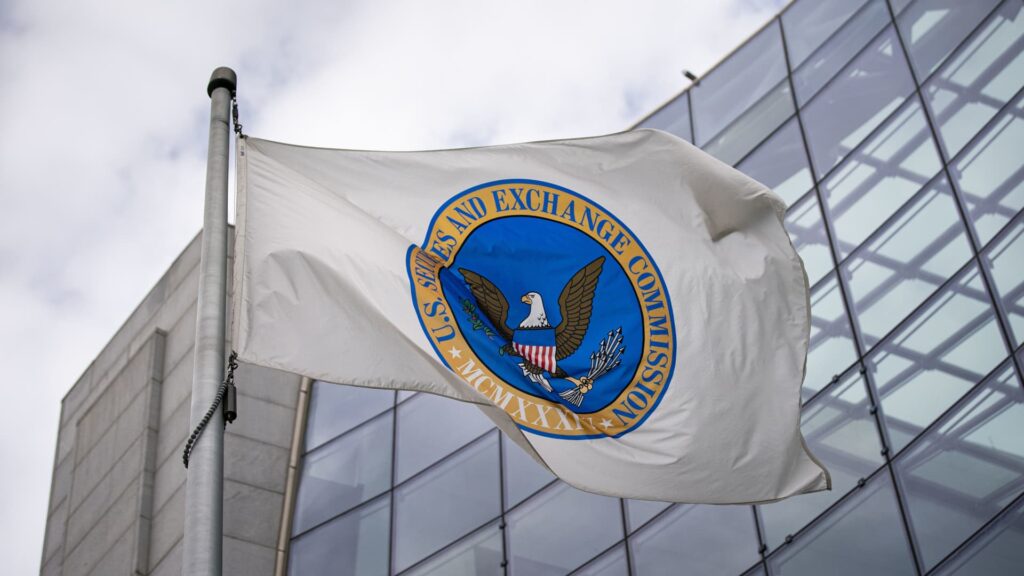
Cryptocurrency trading platform Kraken has been ordered to halt its crypto staking-as-a-service platform “immediately” for US users, the United States Securities and Exchange Commission (SEC) has revealed.
The move comes after the platform paid $30 million to the SEC after the latter charged Kraken with providing unregistered securities.
Both of Kraken’s registered companies, Payward Ventures Inc and Payward Trading Ltd, would halt the programmes offered to public users since 2019, according to the SEC in a statement.
The regulator continued: “The complaint alleges that Kraken touts that its staking investment program offers an easy-to-use platform and benefits that derive from Kraken’s efforts on behalf of investors, including Kraken’s strategies to obtain regular investment returns and payouts.”
Kraken Response
The cryptocurrency platform responded in a blog post it would unstake assets staked by US customers save for those conducted in Ether. The company will not take measures on Ethereum-based stakes until after the network conducts its Shanghai upgrade.
It explained that staking services for non-US clients would “continue uninterrupted.”
The SEC added that Kraken’s staking mechanism revealed “risks” for investors using the tool, offering them “very little protection.”
Staking involves proof-of-stake blockchain networks that use decentralised validators. These provide cryptocurrencies as collateral as proof it will use the networks honestly, in return for token rewards.
SEC chair Gary Gensler explained: “Whether it’s through staking-as-a-service, lending, or other means, crypto intermediaries, when offering investment contracts in exchange for investors’ tokens, need to provide the proper disclosures and safeguards required by our securities laws.”
He concluded that the organisation’s actions would “make clear” to cryptocurrency markets that staking-as-a-service providers will “register and provide full, fair and truthful disclosure and investor protection.”