

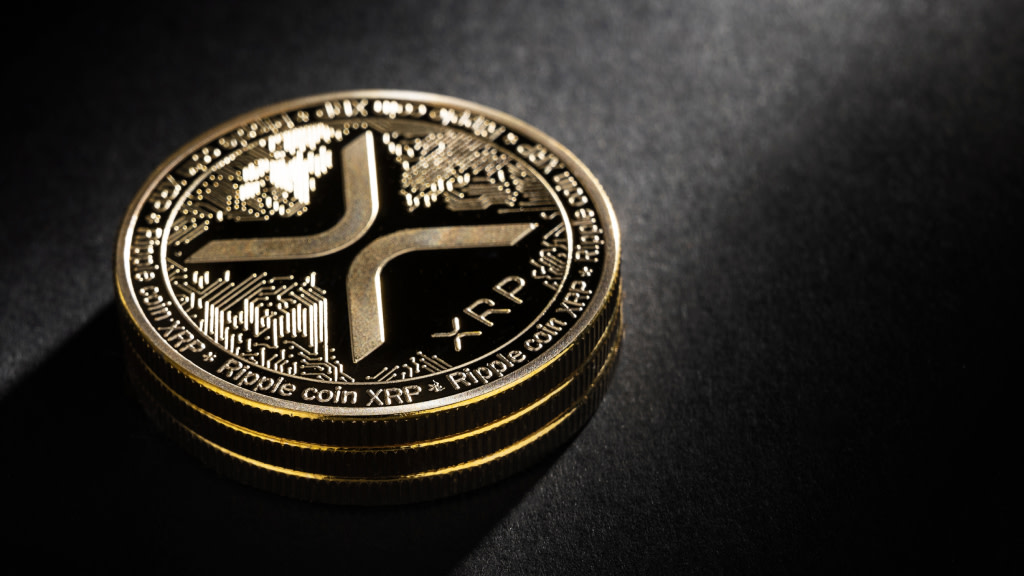
The U.S. Securities and Exchange Commission (SEC) has extended its review timeline for Franklin Templeton’s spot XRP exchange-traded fund (ETF), now setting a decision deadline of June 17, 2025. The regulator announced the delay in a notice issued earlier this week, stating it needed more time to consider the proposed rule change filed by the Cboe BZX Exchange.
More Time Needed for Evaluation
Originally submitted on March 13 and published in the Federal Register on March 19, the application was initially under a 45-day review period set to expire on May 3. The SEC explained its rationale for the delay, saying, “The Commission finds it appropriate to designate a longer period… so that it has sufficient time to consider the proposed rule change and the issues raised therein.”
Franklin Templeton is aiming to launch the Franklin XRP Fund, joining a growing list of asset managers—including Grayscale, Bitwise, 21Shares, and WisdomTree—seeking approval for crypto-backed investment products.
XRP Price and Market Position
XRP, which ranks as the fourth-largest cryptocurrency by market capitalization, was trading at around $2.30 at the time of the notice. The token saw a 7% increase over the past week, according to CoinGecko.
The ETF would allow traditional investors to gain exposure to XRP through a regulated investment vehicle, without the need to hold the crypto asset directly.
Other Delays in Crypto ETF Decisions
The SEC didn’t stop with the XRP fund. It also postponed decisions on other crypto-related ETFs, including Fidelity’s spot Ethereum ETF with staking capabilities, Bitwise’s Dogecoin ETF, and Franklin Templeton’s proposed Solana ETF.
These delays, while frustrating to some market participants, are not unexpected. The SEC often extends review periods to collect more information, open comment windows, and evaluate broader regulatory implications.
Analysts: Delay Is “Standard Procedure”
Industry experts were quick to interpret the delays as routine rather than signs of rejection. Bloomberg Intelligence analyst James Seyffart emphasized that the pause was “standard procedure” and wouldn’t necessarily hurt the ETF’s approval odds.
“This doesn’t change our (relatively high) odds of approval,” Seyffart said. He also noted that the final deadlines for these ETF decisions aren’t until October.
Echoing this view, Bloomberg’s Eric Balchunas referenced prior delays for Bitcoin and Ethereum ETFs that ultimately received regulatory approval. According to Balchunas, the current setbacks fit the established pattern used in past crypto fund evaluations.
Patience Required as Crypto ETF Landscape Evolves
For now, investors will have to wait a little longer to see if XRP will be available as a spot ETF on major exchanges. The SEC’s extended timeline may be part of a broader strategy to approach crypto-based financial products cautiously while balancing innovation with consumer protection.
While these procedural pauses are unlikely to derail the applications entirely, they highlight the SEC’s careful approach to regulating the fast-evolving digital asset market.
Neo X is teaming up with the Foundation for Interwallet Operability (FIO) to make blockchain technology more accessible and user-friendly. This collaboration will integrate the FIO Protocol into the Neo X ecosystem, aiming to lower the barriers between Web2 and Web3.
The FIO Protocol serves as a decentralized, open-source usability layer that works across all blockchains, tokens, and crypto applications. Central to the protocol is the FIO Handle — a human-readable name (such as yourname@neo) that links all public wallet addresses to one simple identifier. By replacing long, complicated wallet addresses with familiar usernames, the FIO Protocol makes blockchain transactions easier and more trustworthy for everyday users.
Soon, Neo X users will have the ability to register and manage their own FIO Handles. This will streamline sending, receiving, requesting, and signing blockchain transactions, creating a much smoother experience within the Neo X platform.
“Neo has always believed that for Web3 to truly take off, it must feel as intuitive and seamless as Web2 — without sacrificing decentralization. By integrating FIO Protocol into Neo X, we’re taking another step toward that goal, making blockchain more approachable for everyone, regardless of technical experience,” said John Wang, Head of EcoGrowth at Neo.
This partnership underscores both organizations’ commitment to user empowerment, aiming to make Web3 navigation straightforward for both seasoned users and newcomers.
“Previous technology adoption cycles have shown that usability is key to ensuring mass adoption and provides the guiding star for our team at FIO as we work to remove complexities in crypto and Web3. We are excited to be collaborating with Neo, as we work together to make digital assets accessible and easy to use for everyone,” added Wayne Marcel, Head of Growth at FIO.

Layer-1 blockchain Supra has announced the public testnet debut of two key innovations it believes are critical to fulfill its ambitions of becoming the leading execution hub for cross-chain decentralized finance.
They include AutoFi, a system-level automation engine that’s designed to execute DeFi transactions instantly, without delays, and SupraNova, an interoperability protocol that facilitates trustless communication between L1 networks without relying on risky blockchain bridges.
First announced last month, AutoFi is a novel solution that aims to address some of the biggest challenges in DeFi, such as transaction slippage, front-running attacks by validators and execution delays. The big innovation here is its system-level automation, which makes it possible for smart contracts to execute with zero-block delays. In other words, transactions can be completed instantly, within the same block, the moment the contract’s conditions have been met.
Built natively into the Supra stack, AutoFi represents a significant advance for DeFi. It will allow users to execute sophisticated trading strategies with laser-like precision, ensuring they can capitalize on market opportunities with unprecedented accuracy.
It’s the latest in a string of exciting innovations that set Supra apart from other blockchains. Supra is also the first L1 to feature integrated oracle price feeds and verifiable on-chain randomness, while it’s powered by a Moonshot consensus mechanism that supports up to 500,000 transactions per second with sub-second latency, making it one of the fastest networks in the business.
Streamlined transactions and sustainable economics
Supra believes AutoFi is a game-changer for three reasons. The obvious benefit is increased fairness, as AutoFi eliminates the opportunity for others to manipulate transactions. More broadly speaking, it will also help to enable a new era of artificial intelligence-powered agents that can execute advanced DeFi strategies on behalf of users.
The third major benefit is how AutoFi will help to boost Supra’s blockchain economics, redistributing revenue it generates across its ecosystem in a way that incentivizes growth. Supra’s team explained that 25% of transaction fees will go to the DeFi dApps they originate from, while another 25% is allocated to the node operators for maintaining the network. The other 50% will be redirected to Supra’s treasury, ensuring it will always have funds available to provide liquidity to the ecosystem and support other protocols building on its network.
AutoFi derives its revenue from automation task fees, which are recurring fees charged to users who register automated DeFi actions. In addition, the system features a competitive bidding mechanism, where users can bid for the rights to execute high-value actions such as liquidations.
Supra co-founder and Chief Business Officer Jon Jones likens the system to Google AdSense.
“Instead of just charging for blockspace, we’re monetizing execution priority in real time, opening up entirely new, sustainable revenue models,” he pointed out.
The result will be a self-sustaining and anti-inflationary economic loop, and Supra is so confident in the model that it believes it will be able to wean itself off block rewards within just two years.
Trustless L1-to-L1 Communications
With these capabilities in place, Supra is now turning its attention to cross-chain interoperability. SupraNova will launch its testnet on April 29, and is said to be the first truly bridgeless protocol for cross-chain communications, It eliminates the bridge by recomputing external chains’ consensus mechanisms natively and directly on its L1 network.
When a user attempts a cross-chain transaction on a supported chain, it generates a cryptographic proof of that event and submits it to Supra. SupraNova will then verify this transaction by recomputing the source blockchain’s consensus to ensure its validity, without any need for external validators, relays or multi-sigs. In this way, it ensures full preservation of the source chain’s consensus and the security guarantees it provides.
Surpa Chief Executive Joshua Tobkin said SupraNova allows blockchains to communicate with one another without any of the risks posed by bridges, which have lost billions of dollars over the years due to exploits. “It doesn’t rely on external multi-sigs or wrappers, removing the biggest vulnerabilities in interoperability,” he said.
For now, the public testnet of SurpaNova only supports Ethereum transactions, but will soon expand to include EVM-compatible proof-of-stake networks. It will then move to embrace MoveVM-based networks and ultimately, numerous other L1s and L2s.

Strategy, the largest corporate holder of Bitcoin, has expanded its cryptocurrency portfolio once again. On Monday, the company revealed it had acquired an additional 15,355 Bitcoin between April 21 and April 27, investing approximately $1.4 billion. The average purchase price was $92,737 per Bitcoin.
The move was made possible through proceeds raised from stock sales. According to a new SEC filing, Strategy sold 4.02 million shares of its Class A common stock (MSTR) and 435,069 shares of its 8.00% Series A preferred stock (STRK), generating the necessary funds.
Growing Holdings and Soaring Value
This latest acquisition brings Strategy’s total Bitcoin holdings to a staggering 553,555 BTC, currently valued around $52.7 billion. Bitcoin’s price surge to roughly $95,300 has significantly boosted the company’s portfolio value, turning a $37.9 billion investment — purchased at an average of $68,459 per Bitcoin — into nearly $15 billion in unrealized gains.
Strategy’s aggressive buying spree shows no signs of slowing. The recent purchase follows a similar move last week when the company announced the acquisition of 6,556 Bitcoin.
Market Response and Future Outlook
Market watchers anticipated this move following a post by Michael Saylor on Sunday, in which he highlighted Strategy’s Bitcoin portfolio tracker — often a precursor to major announcements.
Following the news, Strategy’s stock (MSTR) rose 1.6% in pre-market trading on Monday, building on a 5% gain from the previous Friday. With Bitcoin prices maintaining strength, Strategy’s bold bet on the cryptocurrency appears to be paying off handsomely.

Bitcoin is currently trading well below its intrinsic value, according to Charles Edwards, founder of Capriole Investments. Edwards claims that Bitcoin’s energy value, calculated based on mining costs and energy consumption, is approximately $130,000. This indicates that despite its current market price, Bitcoin is undervalued relative to its underlying energy consumption.
Institutional Buying and Exchange Outflows
On April 24, more than 8,756 BTC (around $830 million) were withdrawn from Coinbase, which could indicate institutional buying or ETF-related purchases. This aligns with recent Bitcoin ETF inflows, with Bloomberg’s ETF analyst Eric Balchunas noting that institutions have engaged in a $3 billion Bitcoin buying spree in recent days.
Binance also saw a significant outflow of 27,750 BTC on April 25, marking the third-largest outflow in the exchange’s history. While such outflows often indicate bullish sentiment, analyst Joao Wedson cautioned that these large withdrawals do not automatically guarantee a continued rally. He pointed out that in 2021, massive outflows did not prevent a market downturn following China’s crypto ban. However, continuous outflows, like during the FTX collapse, often signal a market bottom and potential recovery.
Bitcoin’s Fractal Patterns and the $100,000 Target
Bitcoin’s performance over the past week mirrors similar patterns from Q4 2024, when the cryptocurrency saw a series of significant price increases. As seen in the 1-day chart, Bitcoin has risen by 11% between April 21-25, and analysts suggest that a further 7-10% increase could push Bitcoin above the $100,000 mark in the near future.
While fractal patterns can offer insight into potential price movements, they are not always reliable. Unlike Q4 2024, when Bitcoin rallied without major resistance, the current overhead resistance level at $96,100 could prevent a breakout. However, if Bitcoin can break through this level, a surge above $100,000 could be within reach.
Conclusion
Bitcoin’s recent performance and bullish forecasts suggest it may continue to rise, with potential price targets ranging from $130,000 to $200,000 by the end of 2025. Factors like Bitcoin’s energy value, institutional buying, and the relationship between Bitcoin and gold all play a role in shaping its market dynamics. With strong outflows from exchanges and a weakening US Dollar, Bitcoin appears to be in a favorable position for further growth. However, key resistance levels and market conditions will determine how quickly it can reach new highs.
Bitcoin’s Intrinsic Value and Market Movements in Focus
Bitcoin (BTC) has been trading at a notable 40% discount to its intrinsic value, according to Charles Edwards, the founder of Capriole Investments. Edwards argues that Bitcoin’s true value, based on energy consumption and mining costs, stands at $130,000, significantly higher than its current market price.
Bitcoin’s Energy Value and Discounted Price
Edwards recently shared insights on X, explaining that since Bitcoin’s April 2024 halving event, which reduced block rewards to 3.125 BTC, the cryptocurrency’s energy value has remained significantly above its market price. This suggests that Bitcoin is undervalued, offering potential for substantial price appreciation in the future.
Coinbase, one of the largest cryptocurrency exchanges, experienced a substantial outflow of Bitcoin on April 24, with more than 8,756 BTC (around $830 million) being withdrawn. This negative netflow may signal growing institutional interest or the purchase of Bitcoin via exchange-traded funds (ETFs), which reflect a strong underlying demand for the asset.
Institutional Interest and ETF Activity
The outflows from Coinbase align with recent spot Bitcoin ETF inflows, which have garnered attention from institutional investors. Bloomberg’s ETF analyst Eric Balchunas noted that institutions have been on a $3 billion Bitcoin buying spree, suggesting that large investors are increasingly confident in Bitcoin’s future prospects.
Binance also saw significant Bitcoin outflows on April 25, with 27,750 BTC withdrawn. This marks the third-largest outflow in Binance’s history. While such withdrawals often indicate bullish sentiment, analyst Joao Wedson warned that large outflows do not always lead to sustained price increases. He pointed out that in 2021, significant outflows did not prevent a market decline triggered by China’s crypto ban. However, he also noted that continued outflows over several days, similar to the FTX collapse, could indicate a market bottom and a potential recovery.
Bitcoin’s Fractal Patterns and Price Predictions
Bitcoin’s recent performance mirrors the behavior seen in late 2024, particularly in November, when the cryptocurrency posted significant gains. Bitcoin’s price increased by 11% from April 21 to 25, showing similar buying pressure to previous rallies. If the price maintains this momentum, Bitcoin could see a 7-10% rise over the coming days, potentially pushing the cryptocurrency above the $100,000 mark.
However, analysts caution that fractal patterns, while insightful, are not always reliable. Unlike Q4 2024, when Bitcoin rallied without resistance, Bitcoin currently faces overhead resistance at $96,100. If Bitcoin can overcome this resistance level, a breakout above $100,000 could follow.
The Role of the US Dollar in Bitcoin’s Rally
Bitcoin’s rally is also being influenced by the weakening US Dollar. On April 21, the DXY (US Dollar Index) dropped to a three-year low, which has historically been a bullish indicator for Bitcoin. The DXY’s decline could signal a shift in market conditions that benefits risk assets like Bitcoin. As crypto analyst ‘Venture Founder’ explained:
“Traditionally, DXY going down is very bullish for $BTC, we now have a massive bearish divergence for DXY, which may suggest it goes to 90. The last 2 times this happened triggered a Bitcoin parabolic bull run in the final phase of the bull market (lasting 12 months).”
Conclusion: Bitcoin’s Bullish Prospects
Bitcoin’s recent price activity, its intrinsic value based on energy consumption, and institutional interest through ETF inflows all suggest a bullish outlook for the cryptocurrency. While significant outflows from exchanges like Coinbase and Binance are encouraging, the market faces key resistance levels that could impact Bitcoin’s near-term performance. However, the broader market dynamics, including the weakening US Dollar, indicate that Bitcoin is well-positioned for continued growth. With the potential for Bitcoin to reach $100,000 or beyond, the outlook for 2025 remains optimistic.

Healthcare technology firm Semler Scientific has further deepened its Bitcoin investment, acquiring approximately $10 million worth of the digital asset since February 14, according to a statement released on April 25.
The company confirmed the purchase of 111 Bitcoin at an average price of around $90,000 per coin. Overall, Semler now holds more than 3,300 Bitcoin, valuing its total crypto treasury at about $300 million.
Measuring Bitcoin Yield Performance
Semler highlighted that its Bitcoin acquisitions have contributed to a Bitcoin yield of 23.5% for shareholders so far this year. The Bitcoin yield metric compares the company’s Bitcoin holdings to its number of outstanding shares, helping to demonstrate how Bitcoin exposure per share has grown.
“Semler Scientific uses BTC Yield as a [key performance indicator] to help assess the performance of its strategy of acquiring bitcoin in a manner Semler Scientific believes is accretive to stockholders,” the company explained.
Since initiating this strategy in February, Semler has been aggressively building its Bitcoin position.
Financing the Bitcoin Strategy
The company stated it purchased its Bitcoin treasury for an average price close to $89,000 per coin. With Bitcoin currently trading at around $95,000, Semler’s investment has seen early gains.
To support its Bitcoin acquisitions, Semler has financed the purchases by issuing roughly $125 million in new stock. Additionally, in January, the firm announced plans to raise another $75 million through a private offering of convertible senior notes.
Semler Scientific primarily operates in the healthcare sector, developing diagnostic products that help detect chronic diseases.
Corporate Bitcoin Holdings on the Rise
Semler’s move follows a broader trend among corporations accumulating Bitcoin for their treasuries. Data shows public companies collectively hold approximately $71 billion worth of Bitcoin as of April 25.
Leading the pack is Michael Saylor’s Strategy (formerly MicroStrategy), which boasts a treasury valued at over $50 billion. During the week of April 14 alone, Strategy acquired an additional 6,556 Bitcoin at an average price of $84,785 per coin.
Despite corporations building significant Bitcoin reserves, they still trail behind Bitcoin holdings managed by exchange-traded funds (ETFs), which control about $110 billion in Bitcoin.
Semler’s aggressive Bitcoin strategy mirrors the growing institutional appetite for digital assets, signaling a continuing shift in corporate finance strategies.

Bitwise Asset Management is making waves in the crypto investment space once again with its registration of the Bitwise NEAR ETF in Delaware. This move could pave the way for the first U.S.-listed exchange-traded fund (ETF) tied to NEAR, the native token of the NEAR Protocol.
A Strategic Expansion into Altcoins
The newly registered trust marks Bitwise’s ongoing effort to diversify beyond Bitcoin and Ethereum. If approved, this ETF would grant institutional investors streamlined access to NEAR through a regulated product. This eliminates the hassle of managing private keys, wallets, and complex custody arrangements.
Unlike private placement vehicles, ETFs provide real-time price transparency and are easily accessible via public exchanges. The fund would track NEAR’s spot price and disclose its holdings daily, helping investors better manage risk and portfolio exposure.
Previous NEAR Investment Products
Bitwise’s push comes amid rising interest in altcoin ETFs. Competitors such as 21Shares and Grayscale have already launched NEAR-related products, though not in the ETF format. 21Shares offers a staking ETP, while Grayscale’s NEAR Trust targets accredited investors via private placement.
Bitwise’s offering, however, would be the first of its kind on a U.S. exchange, opening the door for broader institutional engagement with NEAR.
Growing Crypto Product Portfolio
Bitwise has become a heavyweight in the digital asset investment landscape. As of October 2024, the firm managed over $5 billion in assets, a fourfold increase within the year. Its product suite spans crypto index funds, spot ETPs, separately managed accounts, and more.
One of its most successful launches, the spot Bitcoin ETF (BITB), debuted in January 2024 and has already amassed $3.6 billion in assets. This fund is now considered one of the top-performing Bitcoin ETFs in the market.
Looking ahead, Bitwise plans to expand its ETF offerings to include other high-profile crypto assets like XRP, Dogecoin, and Solana.
Regulatory Momentum Under Trump-Era Policies
Bitwise’s latest move is also seen as part of a larger trend driven by a more crypto-friendly political climate. The Trump administration’s return to power has fostered optimism in the industry, with many anticipating quicker approvals for innovative financial products.
Earlier this week, Trump Media and Crypto.com announced plans to launch “America-first ETFs,” including funds tied to Cronos. These announcements reflect growing confidence that the new SEC leadership will take a more favorable stance on digital assets.
All Eyes on the SEC
Ultimately, the fate of the Bitwise NEAR ETF rests with the U.S. Securities and Exchange Commission. Newly appointed SEC Chairman Paul Atkins is expected to oversee the review of numerous pending crypto fund applications in the coming months.
If approved, Bitwise’s NEAR ETF could open a new chapter in institutional crypto investing—signaling that the altcoin era is gaining mainstream financial traction.
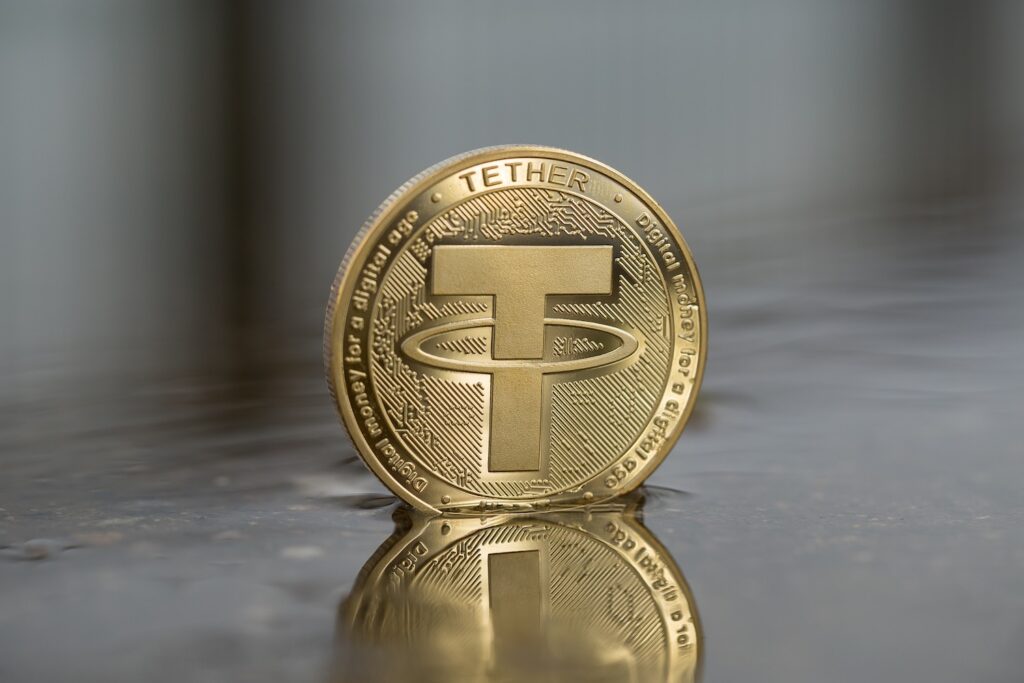
Tether has increased its ownership stake in Juventus Football Club, solidifying its position as a major shareholder. The crypto company now holds 10.12% of the club’s issued share capital and 6.18% of voting rights, following its latest share acquisition. This move marks a continued effort by Tether to diversify its portfolio and establish a presence in the world of professional sports.
Building on an Earlier Stake
This latest development expands on Tether’s earlier purchase, which gave the company an 8.2% stake in the Turin-based football powerhouse. The additional shares enhance Tether’s influence within one of Italy’s most prestigious football clubs.
Tether’s involvement is not merely financial. “We are proud to become a significant shareholder of Juventus, a club with a history, brand, and fanbase that is second to none,” said Tether CEO Paolo Ardoino. “This investment is not just financial—it’s a commitment to innovation and long-term collaboration. We believe Juventus is uniquely positioned to lead both on the field and in embracing technology that can elevate fan engagement, digital experiences, and financial resilience.”
A Vision Beyond Investment
The company’s global reach through its USD₮ stablecoin, which serves more than 400 million users, adds weight to its ambitions in the football sector. Tether has expressed an openness to participating in future equity injections, signaling a readiness to further support Juventus’ financial stability and growth.
Collaboration with club leadership is a key part of Tether’s strategy. The firm is exploring the potential for creating an integrated board of directors that would allow for more strategic alignment between the two organizations.
Expanding Its Sports Investment Portfolio
Earlier in the year, Tether began its foray into professional sports by acquiring a minority stake in Juventus. The move was part of a broader strategy to diversify its holdings by aligning with globally recognized brands that also prioritize innovation. Tether appears to see football—particularly a club of Juventus’ caliber—as a platform for both brand exposure and technology integration.
The company’s broader interest in technology-enhanced experiences hints at potential innovations in fan engagement, including blockchain-driven initiatives that may emerge in future collaborations.
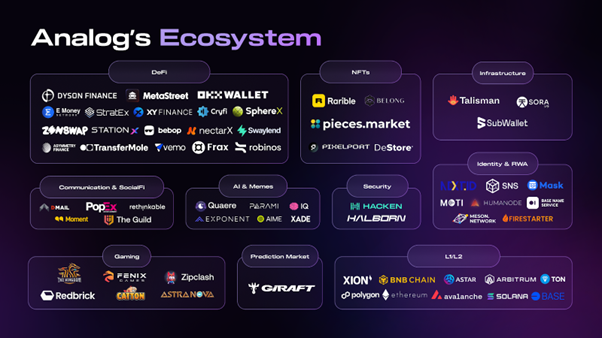
Analog, a leader in blockchain interoperability, has secured a $15 million strategic funding commitment from Bolts Capital, further boosting its capital raise to a total of $36 million. This new commitment comes in the form of a significant token purchase, deepening Bolts Capital’s role in Analog’s mission to unify liquidity across the decentralized Web3 landscape.
Fueling Infrastructure for Unified Liquidity
“This $15 million in a strategic funding commitment from Bolts Capital is a major step forward for Analog as we continue building the infrastructure layer for unified liquidity in Web3,” said Victor Young, Founder of Analog.
Analog aims to become the ultimate liquidity hub by enabling frictionless asset movement across chains. The newly secured capital will support the development of innovative tools like the Omnichain Analog Token Standard (OATS), Firestarter, and Zenswap. “With this capital, we’re accelerating the development of groundbreaking solutions like OATS, Firestarter, and Zenswap, which will drive scalable RWA adoption, optimize liquidity, and unlock deeper markets for DeFi applications,” Young added.
A Track Record of Momentum
Before this latest funding, Analog had already raised $21 million from leading investors such as Tribe Capital, Wintermute, NGC Ventures, and the NEAR Foundation. The February 2025 launch of its mainnet and $ANLOG token marked major milestones, with listings now live on platforms including Bitget, Gate.io, KuCoin, MEXC, and Kraken. Stakers are currently enjoying an APY of 82.7%, showcasing high yield opportunities within the ecosystem.
Ecosystem Growth and Cross-Chain Adoption
Analog’s ecosystem now features over 60 partners across DeFi, RWA, gaming, and AI. Key collaborators include OKX Wallet, Frax, MetaStreet, and Rarible. On the testnet side, more than 384,000 users have participated, and over 121,000 have already claimed airdrop rewards.
The platform’s expansion is also reflected in community apps like Pixelport, which has brought in nearly 58,000 users. To date, 14,980 NFTs have been bridged across different blockchains, highlighting early interest in omnichain asset utility.
What’s Next
Analog’s product roadmap features several new launches, led by OATS for seamless cross-chain asset transfers. Firestarter, backed by Black Label Ventures, will introduce real-world asset tokenization, while Zenswap—developed with Soramitsu—will enable cross-chain swaps via a single transaction.
“We see Analog as one of the few teams truly solving for interoperability at scale. As more use cases emerge across chains, especially in RWAs, there’s a real need for foundational infrastructure like what Analog is building,” said Managing Director of Bolts Capital. “And we’re excited to support their vision and growth with this $15 million strategic commitment.”

Bitcoin has once again cemented its place in the global financial hierarchy, reaching a market capitalization exceeding $1.8 trillion. This surge propels it ahead of some of the world’s most recognized corporations and commodities, placing it as the fifth largest asset by value.
Outpacing Corporate and Commodity Giants
Recent data from CompaniesMarketCap reveals that Bitcoin’s current market cap puts it just above Alphabet, Google’s parent company, by around $12 billion. The cryptocurrency also now surpasses Amazon, which holds a market valuation of $1.837 trillion, and has edged out silver, a historically significant precious metal, valued at $1.856 trillion.
Now, the next target for Bitcoin is Nvidia, which currently sits in fourth place with a market cap of approximately $2.4 trillion. However, to dethrone gold—the world’s top asset—Bitcoin would need an astronomical rally of over 1,000%.
Price Momentum Builds Amid Economic Shifts
The digital currency has witnessed an impressive 12% jump in value this week alone, now trading above the $93,500 mark. During the Asian trading session on Wednesday, Bitcoin even briefly pushed past $94,000. This rise follows easing global tensions and supportive remarks from President Trump, which calmed market nerves and encouraged investor optimism.
“Digital Gold” Narrative Strengthens
Bitcoin’s trajectory appears to be diverging further from traditional equity markets, enhancing its reputation as a hedge against macroeconomic uncertainty. This trend has been a key factor in reinforcing the asset’s “digital gold” status, especially as investors seek alternatives amid global instability.
Institutional Interest Fuels Momentum
There’s also been a significant uptick in institutional interest. On Tuesday, U.S.-listed spot Bitcoin ETFs recorded their largest single-day net inflow since mid-January, with nearly $913 million pouring in. These funds have now enjoyed three straight days of net inflows, signaling strong investor confidence.
Bitwise CIO Matt Hougan underscored this sentiment, stating, “Bitcoin is rallying because they broke the economy. And the way they’ll ‘fix’ the economy will make Bitcoin rally harder.”
Long-Term Optimism Remains High
Bitcoin developer Adam Back expressed a bullish long-term view, declaring that Bitcoin prices under $100,000 are still “cheap.” This kind of commentary highlights the enduring confidence among industry veterans in Bitcoin’s continued rise.