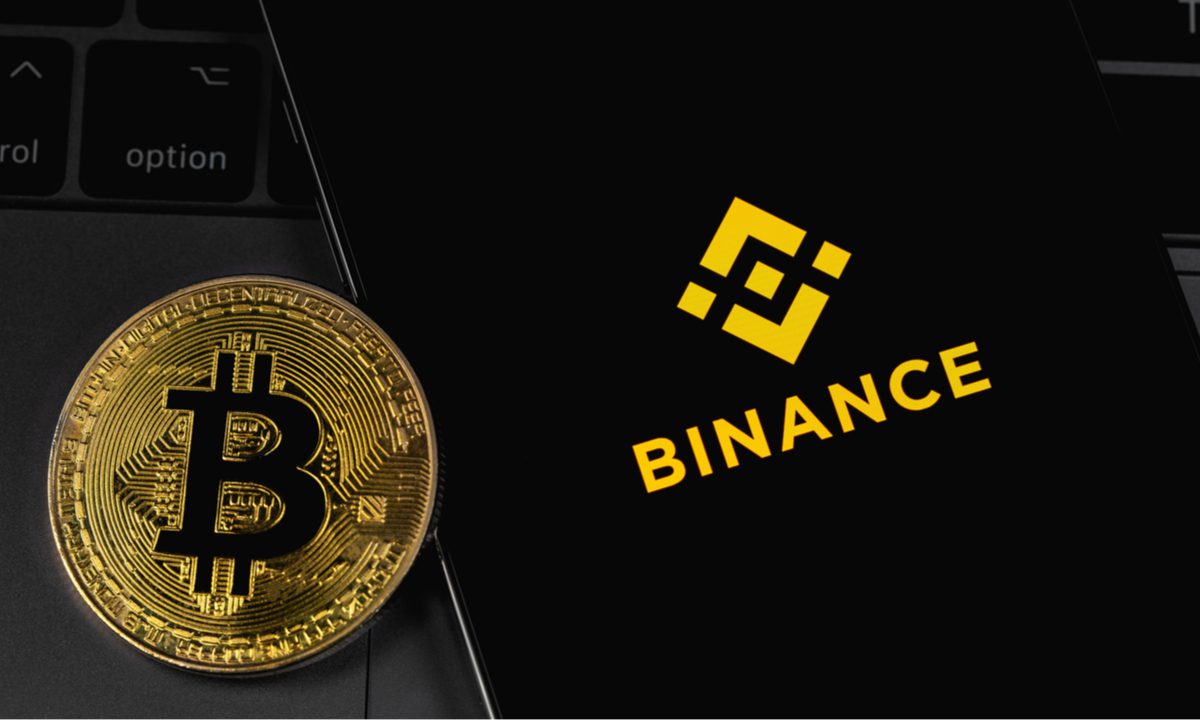
Binance has expanded its support for World Liberty Financial’s USD1 stablecoin, introducing new fee-free trading pairs and preparing for a major shift in the composition of its collateral reserves.
The exchange announced that USD1 trading pairs will now be available for Ether, Solana, and BNB, in addition to the Bitcoin pair already offered.
The move significantly widens the stablecoin’s presence on the platform and presents it as a more central asset within Binance’s ecosystem.
In tandem with the new listings, Binance said it will convert all collateral assets backing its previous stablecoin, BUSD, into USD1 on a one-to-one basis within a week.
The exchange described the transition as a critical milestone, stating that “USD1 will become an integral part of Binance’s updated collateral structure, further embedding the stablecoin within the exchange’s ecosystem.”
Growing Utility for USD1
Zach Witkoff, co-founder and CEO of World Liberty Financial, welcomed Binance’s decision, describing it as a major step in expanding global access to the asset.
He said, “Binance’s expansion of USD1 marks an important moment in WLFI’s effort to make digital US dollar stablecoins available to people everywhere.”
USD1 launched earlier this year on Ethereum and BNB Chain, backed by U.S. Treasury bills and designed to serve as a fully collateralized onchain dollar.
Its market capitalization has grown to $2.7 billion, placing it among the top stablecoins globally.
Demand was boosted significantly in May after Abu Dhabi investment firm MGX used USD1 for a $2 billion investment into Binance.
Despite the recent momentum, USD1’s circulating supply has declined slightly from its October peak of $3 billion.
The reduction stems from a lack of new issuance in recent months, according to market data.
Political and Corporate Ties Shape USD1’s Public Profile
USD1 has attracted attention far beyond the crypto industry because of its political connections.
President Donald Trump, alongside his sons, is a co-founder of World Liberty Financial.
That association drew renewed scrutiny after Trump issued a presidential pardon for Binance founder Changpeng Zhao seven weeks ago.
Zhao had been sentenced to four months in prison in April 2024 after pleading guilty to failing to implement an adequate anti-money-laundering program at Binance.
Trump commented that he granted the pardon following widespread appeals, stating that “a lot of people” urged him to reconsider Zhao’s conviction and insisted that “what he did is not even a crime.”
A Stablecoin Positioned for Larger Influence
As Binance integrates USD1 more deeply into its trading ecosystem, the stablecoin is poised to play a larger role in the platform’s liquidity and collateral systems.
The decision to replace BUSD’s collateral with USD1 underscores Binance’s broader shift away from internally issued stablecoins toward assets backed by external entities.
For World Liberty Financial, the exchange’s support accelerates its ambition to establish USD1 as a dominant global stablecoin, particularly in regions with growing demand for blockchain-based dollar instruments.
With political involvement, institutional backing, and expanding exchange support, USD1 now sits at the intersection of finance, crypto, and public policy.
As Binance and World Liberty Financial continue pushing forward, the stablecoin’s evolution is likely to remain one of the sector’s most closely watched developments.