
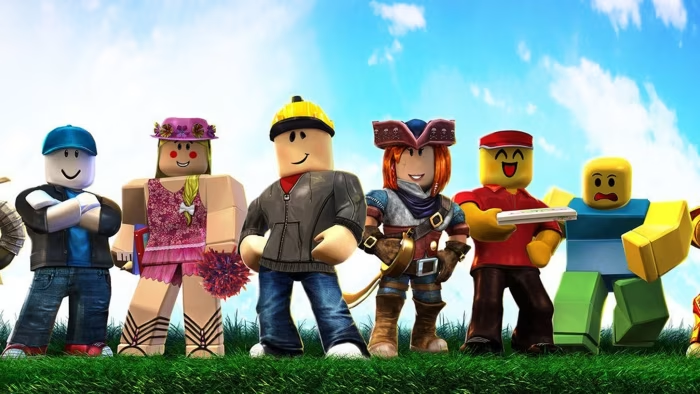
Roblox has built a global platform with massive engagement and real payouts for creators, but scale alone doesn’t equal staying power. Unlike Pixar, which crafts lasting franchises with predictable value, Roblox hasn’t yet proven it can turn user-generated hits into durable IP. The real question is whether it’s heading toward long-term cultural relevance or following Zynga’s boom-and-bust path.
Roblox Isn’t Just a Game, It’s a Platform with Market Ambitions
Roblox isn’t building stories, it’s building infrastructure. The company sees itself more like Unity or YouTube, a platform where others create and monetize content at scale. It offers tools, systems, and revenue models for independent developers, but unlike Pixar or Nintendo, it doesn’t own the IP that drives its success.
That matters because long-term value in entertainment usually comes from owning and controlling franchises. Pixar crafts every frame, character, and narrative beat. Nintendo doesn’t just host Zelda or Mario, it licenses them across film, toys, and theme parks.
Even Epic Games, which owns Fortnite, has built recurring IP through controlled content and branded crossover events. That’s a critical difference from companies that build and license content end to end, like Pixar or Epic Games with Fortnite, and even gambling platforms.
Leading casino sites work with providers like Elk Studios, Play’n GO, and Nolimit City to offer exclusive, verified software with consistent gameplay standards. They own or license branded slots, enforce quality, and back it all with features like instant deposits and trusted payment rails. Roblox, by contrast, relies on a user-generated scale without central control.
Roblox’s Current Financial Reality
Roblox’s growth numbers are real. In early 2025, the company reported revenue of over $1 billion and bookings, essentially future sales, climbed even higher. Later reports showed daily active users rising above 110 million, up strongly year over year, and bookings up more than 50%.
But growth doesn’t equal profitability. Roblox has continued to report net losses, even as revenue rises. That means money is being plowed back into operations, scaling, and new initiatives rather than stacking up as profit.
This kind of pattern is common in tech stocks and platforms. However, it also means the company still has to prove it can convert massive usage into consistent returns for shareholders.
Creator Economy, A Strength and a Weakness
Here’s where Roblox’s model shines and strains at the same time. With millions of creators making experiences, the platform has huge variety and endless novelty. Successful creator titles can attract tens of millions of visits. It’s an ecosystem that rewards innovation and viral hits.
But there’s a flip side, no central quality control or long-term narrative investment. Pixar films stay relevant for years because they are crafted with intention, with tight creative oversight and a distribution strategy that spans the globe. Roblox’s content pipeline is hugely varied, but it lacks a consistent pipeline of owned stories, characters, and franchises.
Efforts to Bridge the Gap to Real IP Value
Roblox isn’t oblivious to this limitation. In 2025 it launched a licensing platform that makes it easier for media companies like Netflix and Lionsgate to put their characters and worlds on Roblox games.
That’s significant. Instead of purely user-driven experiences, Roblox is now building pathways for recognized IP to exist inside its ecosystem, giving creators legit branded “worlds” to work with. This could help the platform host true franchise value, even if it doesn’t originate it.
That’s a step closer to Pixar-style cultural relevance, but it’s still dependent on external franchises, not Roblox owning their own universe of stories.
So Is It More Zynga, Or More Pixar?
Let’s briefly recall why Zynga struggled. During the Facebook gaming era, Zynga dominated with smash hits like FarmVille, but it struggled to adapt when platforms shifted to mobile. Its user engagement dropped, and its games lacked deep, durable hooks that kept players coming back over the long term. As a result, revenue and stock value suffered.
Roblox doesn’t suffer from the same problem, at least not yet. Its engagement numbers have actually expanded, and the company raised its annual bookings forecast multiple times in 2025, driven by strong spending and viral games.
So Roblox isn’t on a Zynga-like decline. However, the type of value created is still very different from Pixar.
Pixar generates stories that become cultural touchstones, products that have licensing life across toys, apparel, spin-offs, and even theme parks. Roblox’s strength, a distributed creator economy, hasn’t yet proven it can produce that kind of long-tail, cross-medium revenue.
