




The ongoing saga of an investor exodus from Grayscale’s Bitcoin Trust (GBTC) has sent shockwaves through the cryptocurrency market, dragging Bitcoin’s price down to below $39,000 for the first time in nearly two months.
Since its transformation into a spot Bitcoin exchange-traded fund (ETF) on January 11, GBTC has experienced massive outflows, totaling more than $3.4 billion.
In response to this, Grayscale has been depositing vast amounts of Bitcoin onto the crypto exchange Coinbase Prime, presumably for sale.
The situation has raised concerns about the extent of the GBTC exodus and its potential consequences.
According to Eric Balchunas, an ETF analyst at Bloomberg, GBTC saw outflows of $515 million on January 23, resulting in a loss of 13% of its outstanding shares.
However, there are indications that the pace of outflows may be slowing down.
In an informal poll conducted on social media platform X (formerly Twitter), Balchunas sought the opinion of the community on when the “mass exodus” from GBTC might end.
Nearly half of the respondents believed it could continue until shares outstanding had diminished by 35–50%, while Balchunas and fellow Bloomberg analyst James Seyffart estimated this might occur at around 25% of outstanding shares.
Currently, Grayscale’s website shows 600.5 million shares outstanding, holding a total of 536,694.9 Bitcoins in trust.
READ MORE: US House Committee Pressures Meta for Transparency on Crypto and Blockchain Plans
In contrast, data from CC15Capital indicates that 82,525 Bitcoins have departed from GBTC since January 10.
The recent wave of outflows is primarily attributed to the defunct cryptocurrency exchange FTX, which reportedly sold two-thirds of its 22.3 million GBTC shares in just three days of trading.
FTX still holds approximately eight million shares, valued at around $281 million, awaiting sale.
Additionally, there is growing concern that Bitcoin from Mt. Gox may soon enter the market.
The Mt. Gox trustee has reportedly contacted creditors to complete identity verification for crypto exchange accounts, which are intended to be used for repaying Bitcoin and Bitcoin Cash. This potential influx of assets could add further downward pressure to Bitcoin’s price.
As of now, Bitcoin is trading at $39,949, showing a slight increase of 0.60% for the day, according to data from CoinMarketCap.
The Crypto Fear & Greed Index hit a 100-day low of 48 on January 24, reflecting the uncertainty and apprehension surrounding the cryptocurrency market.
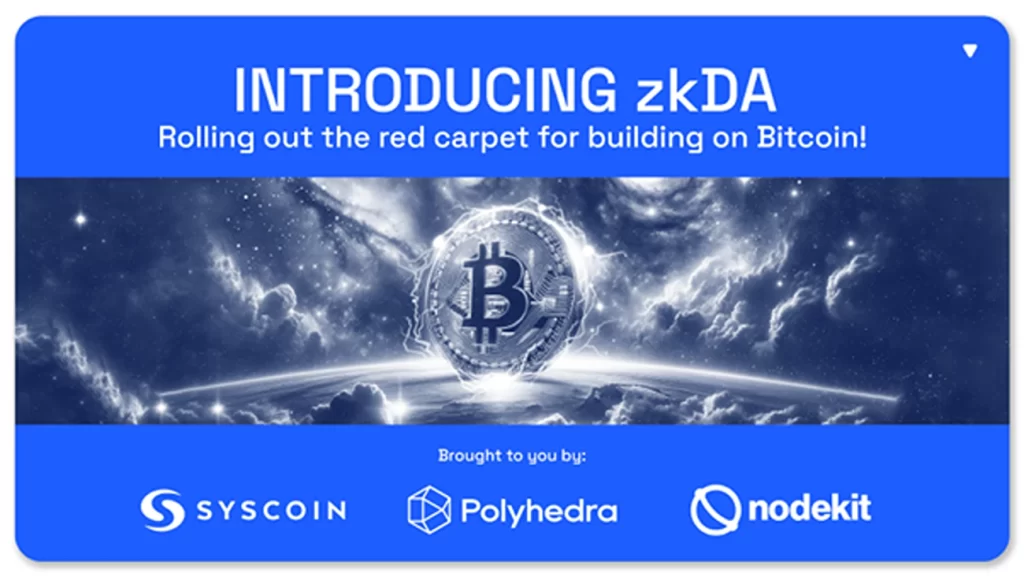
Syscoin, a longstanding advocate for harnessing Bitcoin’s infrastructure to drive blockchain innovation, has joined forces with Polyhedra Network and NodeKit to announce a groundbreaking initiative. This strategic partnership is set to introduce Zero-Knowledge Proof-of-Data Availability (zkDA) into Syscoin’s ecosystem, marking a significant advancement in Bitcoin’s merged mining mechanism and decentralized finance (DeFi) capabilities.
Key highlights of this new partnership include:
- Bitcoin Integration via zkBridge: This enables seamless two-way transactions between Bitcoin and Rollux, Syscoin’s EVM Layer 2, establishing a robust Bitcoin Layer 3.
- Client-Side Receiver Chain on Rollux: This enhancement boosts DeFi capabilities and interoperability, utilizing Syscoin’s Proof-of-Data Availability (PoDA).
- Integration of zkDA in Syscoin: zkDA is deployed across multiple blockchains, adding modularity and enhancing security.
- Sender Chain for Syscoin Assets: This trustless transfer mechanism facilitates the movement of Syscoin assets to other chains.
- Integration with NodeKit: The collaboration incorporates Rollux and zkDA to leverage Bitcoin’s security for other rollups.
Syscoin’s zkDA combines Bitcoin’s security with Syscoin’s PoDA, offering robust security and efficient data processing. This integration represents a significant step towards improved blockchain interoperability and efficiency.
Jagdeep Sidhu, Core developer of Syscoin, highlighted the partnership’s importance, stating, “This collaboration brings scalable solutions without compromising security and decentralization, fundamental to blockchain development.”
Abner Jia, CEO of Polyhedra, emphasized the benefits, stating, “Our partnership leverages Bitcoin’s security with Syscoin’s zkDA, providing a path for Bitcoin to compete with other major smart contract platforms.”
Meanwhile, Noah Pravecek, Founder of NodeKit, added, “Our collaboration with Syscoin enhances our sequencing solutions, addressing decentralized and cross-chain rollup complexities.”
Real-world case studies showcase the impact of this partnership:
- Cartesi utilizes Syscoin’s Layer 3 capabilities with PoDA, extending rollup functionalities across chains using zkDA.
- NodeKit integrates Syscoin’s zkDA to bolster its sequencing network.
- Polyhedra completes zkBridge of BTC to Rollux, enhancing multi-chain friendly secure DA solutions.
This partnership, coupled with the introduction of zkDA, represents a transformative leap in blockchain technology. It underscores Syscoin’s role as a pioneer in leveraging Bitcoin’s infrastructure, paving the way for a new era of modularity, where multiple chains can harness Bitcoin’s robust framework for scalable and innovative blockchain solutions.
Syscoin, with a decade of experience in blockchain innovation, has been at the forefront of harnessing Bitcoin’s security for scalable blockchain solutions. The integration of zkDA is a testament to Syscoin’s modular blockchain design approach, emphasizing performance and cost-efficiency.
Bitcoin faced significant pressure as it struggled to hold the $40,000 mark on January 22, coinciding with the Wall Street opening bell.
This downward trend was exacerbated by ongoing BTC sales from Grayscale, a prominent asset manager.
Data from Cointelegraph Markets Pro and TradingView confirmed that Bitstamp witnessed Bitcoin hitting new six-week lows at $40,324.
While BTC’s price had shown relative stability over the weekend, the new week brought continued selling pressure due to the Grayscale Bitcoin Trust (GBTC) reducing its assets under management.
In response to the recent approval of its transition to a spot Bitcoin exchange-traded fund (ETF), GBTC experienced outflows totaling 19,250 BTC, equivalent to $785 million, on January 22, according to live data from Arkham, a crypto intelligence firm.
Some sources even estimated the outflows to be as high as $700 million, as noted by Alex Thorn, head of research at Galaxy, a crypto reconnaissance firm.
Eric Balchunas, an ETF analyst at Bloomberg Intelligence, expressed concerns that these massive sales, conducted as transactions with Coinbase, might be too substantial for other ETF players to absorb.
Despite these challenges, the new spot ETF cohort continued to receive net positive inflows.
GBTC still held over $20 billion in assets, with its share price trading at just a 0.27% discount relative to BTC spot prices as of January 19, according to data from Bitcoin Treasuries.
Bitcoin’s price remained resilient, maintaining support at the $40,000 level despite increasing speculation of further declines.
Many traders started eyeing the mid-$30,000 range as a potential entry point for long positions.
READ MORE: Terraform Labs, Behind Defunct TerraUSD, Files for Bankruptcy Amid Ongoing Legal Battle
The BTC/USDT order book on Binance, a major global exchange, showed growing interest from buyers at $38,500.
Material Indicators, a trading resource, observed that Bitcoin often experienced significant price fluctuations within the first few hours after the US market opened, often linked to ETF flows occurring at the start and end of trading days.
Arthur Hayes, former CEO of BitMEX, shared the sentiment, describing the BTC/USD market as “heavy” and joined others in predicting further price declines.
Despite these challenges, the cryptocurrency market continued to draw attention and interest from investors, with its future trajectory remaining uncertain.
Bitcoin traders are facing a challenging time as the recent sell-off in the market has left them disappointed, with newly launched spot Bitcoin exchange-traded funds (ETFs) failing to deliver the anticipated price surge.
Adding to their concerns, the steady outflows from the Grayscale Bitcoin Trust (GBTC) have been putting downward pressure on the Bitcoin price.
To make matters more complex, there is a strong resurgence of the U.S. dollar, compounding the challenges for market participants.
The U.S. Dollar Index (DXY), a gauge of the dollar’s performance against major foreign currencies, has shown a remarkable recovery, surging by 2.71% from its low of 100.617 on December 27th.
This resurgence has been fueled by positive economic data from the United States, including robust retail sales, an upbeat Philly Fed Manufacturing Index, and a decline in weekly initial jobless claims.
Consequently, the DXY has reached new highs in the range of 103.65 to 103.70 in 2024.
December 2023 retail sales, as reported by the U.S. Census Bureau, exceeded expectations with a growth rate of 0.6%, surpassing the anticipated 0.4% and the previous period’s 0.3%.
Moreover, the dollar’s recovery can be attributed to an increase in U.S. yields, driven by diminishing expectations of an imminent interest rate cut by the Federal Reserve.
From a technical perspective, the U.S. Dollar Index appears poised for a further ascent, potentially exceeding 1.12% due to the formation of a V-shaped recovery pattern.
If the DXY manages to breach its neckline at 104.56, the likelihood of an extended recovery towards 107 in the coming months is on the horizon.
Meanwhile, the massive outflows from GBTC have significantly impacted the Bitcoin price since the launch of spot Bitcoin ETFs on January 11th.
Grayscale has liquidated a substantial portion of its Bitcoin holdings within GBTC, with nearly 38,000 BTC leaving since the conversion to a spot ETF on that date.
On January 12th alone, there were outflows totaling $484 million from Grayscale, as GBTC holders exercised open redemption options.
Notably, despite the approval of spot Bitcoin ETFs, economist Peter Schiff believes that the Bitcoin price has not surged due to the outflows from Grayscale’s GBTC product.
He argues that while total inflows were substantial, their impact on the overall BTC market has been limited.
In terms of price analysis, independent market analyst Ali suggests that Bitcoin has been moving within an ascending parallel channel since late 2022.
He attributes the current correction to a rejection from the upper boundary of the channel at $48,000 and predicts a retracement to the lower boundary at $34,000.
Nevertheless, market intelligence firm Santimet remains optimistic about the long-term impact of spot Bitcoin ETFs.
READ MORE: Netherlands Allocates €204.5 Million to Boost AI Investment and Competitiveness
They acknowledge that the approval news may have contributed to a localized crypto market peak, as many experts believed that the approvals were already factored into market prices at the time of the announcements.
Egger Mielberg is a mathematician, bioengineer, software developer, and the CEO & Founder of Arllecta. We sat down with him for an interview about his crypto project, his experience and background, and much more.
- What does your company Arllecta do?
Our company began its activities with the advent of a new mathematical theory for artificial intelligence that we created. We named it Sense Theory.
Several years of our research in search of solutions to such key problems in the field of creating real AI as identifying basic knowledge and forming new knowledge, led us to the conclusion that current traditional mathematics does not have the appropriate logical tools that could work with such important concepts for AI as meaning and self-awareness. This is how such important concepts in our new theory as semantic or sense function, semantic or sense derivative and other semantic concepts and definitions were born.
After several months of testing in terms of the search algorithm we created by meaning, we received a very high-quality search result that bypassed the existing search solutions of large IT giants by an order of magnitude. After this, we decided to launch several products in the field of AI using exclusively our own algorithms as the base ones in our products.
This is how products such as speechllect – speech recognition and synthesis, medzard – diagnostic system, senseprofile – speech analytics of meetings and others appeared.
- What is your background? What is your specialization?
Already at the age of 16, I was interested in problems that could not be solved by the greatest minds of mankind. At the age of 17, I actively began to study mathematical analysis and methods for solving incorrectly formulated mathematical problems. Then I realized that in mathematics there are many problems that have not had their solution for hundreds of years. This encouraged me to enter the Faculty of Mechanics and Mathematics at the European State University. That’s how I became a mathematician.
After graduating from university, I was invited to posgraduate school at the department of applied mathematics without exams. Additionally, I was invited to the Department of Information Technology as a senior lecturer. After a year of teaching, I created two fully innovative courses for university students in Calculus and the C++ programming language.

In 2010, while working in one of the American companies developing complex analytical diagnostic software products for medicine, I decided to write the core of a search system that would bypass the Google project in terms of the quality of searching for relevant information. After a year and a half of work, part of the search algorithms was sold to a European search project.
Working as one of our scientists in the field of medicine, I found the implementation of my mathematical algorithms in the direction of early diagnosis of diseases and methods for quickly searching for energy profiles of chemical compounds for the synthesis of new drugs. After this, we began research in the field of longevity since the problems in this area are perhaps the most incredibly complex and require great talent to solve.
- Why did you decide to create the SenseChain project and what is it about?
The main reason that made me come up with the SenseChain project is the basic principles of operation of the current global financial system, or rather the consequences to which this system leads, or rather the economic consequences that have already been described many times and have a cyclical nature of repetition.
The facts have become obvious that a person, as a biological species capable of self-education, should not spend the overwhelming time of his entire life earning monetary assets for existence on this planet. The key here is “capable of self-education.” In our opinion, it is precisely the artificially created barriers of the current financial system that do not allow a person who wants to improve their knowledge in the development of technologies in various fields of science and business.
At the current time, to eliminate these barriers, we see the creation of a global unified decentralized network in terms of eliminating the influence of its individual participants on its performance. However, simply creating a decentralized network will not eliminate these barriers and a strong economic model is needed here, as for a full-fledged large state.
This is how SenseChain technology was born.
The SenseChain in our context is a sense-to-sense algorithm based technology.
The four main characteristics of the SenseChain project are:
- A new digital economic model implemented on the basis of sense business contracts.
- A Sense-To-Sense algorithm realized. It is an revolutionary sense-focused method of searching a meaning point between a millions of objects of any kind and type.
- A new financial digital model based on a digital coin secured by the time spent by network participants.
- Native coin (SC) – equivalent to job hours (JH);
Stability of the native coin rate (minimum job rate): 1SC = 1JH = $10
One of the main goals of the SenseChain is to unite the people of our planet into one big digital family, giving people the opportunity to earn money and exchange experiences from different countries and to speed up technological progress as much as possible for the benefit of a comfortable and safe life for each of its members.
The main and fundamental difference between SenseChain and any other crypto projects is the implementation of its own paradigm of the main asset in the form of user hours spent and the realized economy. Also, it should be especially noted that SenseChain is not a pure crypto project, it is primarily an IT project with partial implementation of crypto characteristic of the crypto industry. Finally, SenseChain uses its own main network with own native digital currency (coin) – SenseCoin (SC).
- What is sense coin and how is it different from bitcoin?
In simple words, Sense Coins are the hours spent by a network participant to fulfill a certain sense contract. That is, every Sense Coin
economically secured by the actual spent lifetime of a real person.
In other words, behind each Sense Coin there is work performed under a sense contract for a certain lived time.
In comparison with Bitcoin, the author of which defines it as a chain of digital signatures and the emission of which is associated with the iterative search for a certain hash value, Sense Coin is not such a digital surrogate that cannot, by its nature, form the economic value of the object or subject being used.
Sense Coin is a full-fledged digital currency with its established nominal value, which is economically justified by a specific executed sense contract.
- Do you believe in the further development of any current project or several projects in the crypto industry?
At the current time in the crypto industry, almost all projects without exception have as their main goal to collect the maximum possible amount of money from users without giving the most important thing, in my opinion, long-term stability in earnings.
And this is not a problem of the creators of such projects, this is a derivative, again I want to repeat, of a weak and not far-sighted global financial system. Current technologies would not exist without the hard work of the best minds in our world. But to move forward in creating technologies that are unique and extremely necessary for humanity, it is necessary to create conditions for creation. These conditions are to provide comfortable conditions for everyone who has the desire to try to explore and create something that is very useful and necessary for all people. And monetary compensation as such should be paid for such work without any technology-incompetent supervisory authorities.
The incentive medium, fiat money, crypto currency, product tokens and other digital derivatives should play a secondary role in any work or scientific research.
And if you look at the top five liquidity projects in the crypto industry, it becomes obvious that all these projects, without exception, introduce more and more new programs or subprojects for users with only one goal – to show the bull rise of their coin or token to the skies. In other words, the creators of the projects offer nothing more than speculation.
I see the future of the crypto industry, at the current time, only if real decentralized economic and financial instruments are implemented, which will provide economic liquidity through real business contracts. I am for a decentralized economy!
- How do you combine your work on the medical project, Longevity Research, with your other AI projects?
Research in the field of longevity did not arise out of nowhere and is a logical continuation of the implementation of the algorithms of our theory Sense Theory in various fields. Thus, based on the algorithms of the Sense Theory, a hematological preventive method for early diagnosis of diseases was formulated and described in two technological articles. After analytical studies of the practical application of theory algorithms on anonymized data of patients diagnosed with myocardial infarction, we concluded that these algorithms have great potential in any of the most complex areas of early diagnosis. First, of course, we focused on especially dangerous diseases that in most cases lead to death.
In 2024, I will complete my master’s degree at the Department of Biotechnology of the European National Research Medical University. I deliberately entered this university for the practical implementation of my methods both in the field of oncology and in the field of longevity.
So, after an additional year of painstaking analysis, we concluded that without finding the true causes of cancer cells, we will not be able to create an elixir of youth, since the biochemical processes taking place inside a single human organ, or rather, inside individual cells, have their own specifics.
It became obvious to us that by creating the elixir of youth and not creating a cure for eliminating the causes leading to the appearance of cancer cells, we may find ourselves in a situation where, for example, an engineer who created a high-speed car forgot to create a braking system.
- Do you really believe that among humanity there can be people extremely smart enough to create a real elixir of youth?
We believe, no, we are even 100% convinced that all restrictions without exception are born in our heads. The reasons for this are different. The main reason is the lack of knowledge and the ability to look at a task or problem from different angles using the knowledge of different sciences.
In the current world of digital technology, the main obstacle to creating something new and innovative is the lack of information hygiene. The overwhelming number of people on our planet simply do not know how to conduct a qualitative analysis of the data they receive on the Internet. Our slogan is “Analyze more, ask less.”

The European Union has taken a significant step in its ongoing battle against financial crime by extending its Anti-Money Laundering and Counter-Terrorist Financing guidelines to encompass European crypto companies.
This decision, made by the European Banking Authority (EBA) on January 16, 2024, is aimed at enhancing the ability of crypto asset service providers (CASPs) to identify and address their exposure to financial crimes arising from various factors such as customers, products, delivery channels, and geographical locations.
The amended guidelines also offer specific recommendations on how crypto firms should adapt their anti-money laundering and counter-terrorist financing measures.
One notable suggestion is the incorporation of blockchain analytics tools into their compliance efforts. These new guidelines officially came into effect on December 30, 2023.
The EBA emphasized that these amendments represent a crucial advancement in the European Union’s fight against financial crime.
They also seek to create a harmonized approach for crypto firms across the union, facilitating the mitigation of money laundering and terror financing risks.
One significant aspect of the updated guidelines is the inclusion of cryptocurrency and crypto company-specific risks and guidance for financial institutions that either hold or serve crypto firms.
READ MORE: How Playable Ads Are Set to Reinvigorate the Streaming and Digital Content Industry
This addition recognizes the unique challenges and risks associated with the crypto industry and aims to provide clear guidance to traditional financial institutions operating in this space.
Furthermore, the guidelines provide detailed instructions for crypto firms regarding the assessment of financial crime risks.
These firms are directed to evaluate the potential risks associated with features that enhance anonymity, self-hosted wallets, decentralized platforms, and products facilitating transfers between the company and such services.
In 2023, the European Union finalized two critical pieces of regulation in the crypto space: the Transfer of Funds Regulation (ToFR) governing crypto transfers and the comprehensive Markets in Crypto-Assets (MiCA) regulations.
MiCA, which includes provisions for protecting crypto investors, is scheduled to take effect in December.
However, EU member states have the option to implement an 18-month transitional period for CASPs, allowing them to continue operating without a license during this time.
In conclusion, the extension of the Anti-Money Laundering and Counter-Terrorist Financing guidelines to European crypto companies represents a significant development in the regulatory landscape, aiming to create a safer and more compliant environment for crypto businesses while addressing the evolving challenges posed by financial crime.
The spirit of Web3 is all about building deep connections between the users and the product, enabling new and exciting reward and participation systems, as many brands look into Web3 to reach the next level of fan and customer loyalty. Azarus is the leading proponent of this approach in streaming, creating a whole new experience for streamers and their viewers thanks to gamified ads.
Ads are the lifeblood of the entertainment industry. As much as we might dislike most of them, without ads we also wouldn’t have any of our favorite YouTubers, Twitch streamers, sports channels and much more. But with Azarus, ads become exciting games that you play to compete for unique prizes from brands that you enjoy.
Azarus integrates with all the most used streaming platforms, including YouTube, Twitch or even TV streaming services. Only here, instead of boring insurance and sleeping pill ads, you see a cool trivia game sponsored by Nike (or whatever fits your bill — imagine you’re a sneakerhead in this scenario).
Not only do you get to show off your knowledge with all the other stream viewers, but you might also get a limited-edition prize from Nike as a physical reward. Or you may receive AZA tokens, which can be exchanged in a rewards store for over 35,000 digital items (mostly, games and game keys for both new and older titles), or even cold hard cash.
The games are fast-paced, lasting only a few seconds, and make you feel connected through a massively multiplayer and interactive experience. It’s like a digital stadium in your living room — a sneak peek into a world of mass VR integration.
Active Participation vs. Passive Viewership
The platform sees itself as modernizing entertainment to the modern age, specifically by using the fact that streams offer way more opportunities for engagement than TV. Interacting with a TV show back in the day required picking up a phone, which might have meant going to a different room. Though this was modernized with the advent of smartphones, streams are already streamlined, as they bring a combined viewership and engagement platform all in one.
Only the most active users will actively join Twitch chats, and for really large general-purpose streams it all becomes noisy. What Azarus is trying to do is to bring order to the chaos, and engage more people who otherwise couldn’t care less about chatting with others. The viewership experience becomes more bi-directional, and all without catering to very specific social urges.
The platform of course shares part of its proceeds with the streamers who integrate it in their channels, which benefits them both monetarily and from a user engagement standpoint.
The platform distributed over $2M in rewards last year, with over 6 million unique players, so the phenomenon seems to be catching on.
Not Just an Average Crypto Platform
Now, while Azarus is a crypto project with its own tokens, this is only a means to an end here, which is different from many other startups that tried to merge blockchain with the “real world” or the wider digital realms.
Blockchain is used for its infrastructure, hosting the AZA tokens which are used for rewards. This gives a global nature to the platform right from the start, allowing anyone in the world to earn from Azarus, even if they live in a country with extremely poor financial infrastructure.
While the tokens are mostly meant to be used for rewards in the Azarus store, they do have a monetary value as well, which is an interesting fringe benefit of tokenizing reward points.
The users don’t need to know anything about blockchain, as it’s all managed directly from the Azarus app and extension. Thus, it offers a neat way for people to gradually ease into the concept, but only if they want to.
Azarus was recently acquired by Animoca Brands, a giant in the Web3 industry, which should give the platform all the resources it needs to scale even further. Already it’s been actively working with brands like Ubisoft and Logitech, which only goes to show even further that publishers and gaming industry brands are looking to reinvigorate their marketing.
Ultimately, Azarus is about creating a useful product for people so that we can improve the experience of watching and interacting with content. The fact that it’s a Web3 project is secondary to this fact.

Vanguard’s recent decision to exclude spot Bitcoin exchange-traded funds (ETFs) from its platform has raised concerns among some of its customers, leading them to consider alternative investment avenues.
The move comes as Vanguard emphasizes its commitment to traditional asset classes like equities, bonds, and cash, according to Investing Insider.
Vanguard officially stated that they will not offer spot Bitcoin ETFs for purchase on their platform and have no plans to introduce any Bitcoin or crypto-related products.
This decision is in line with their focus on conventional investment offerings, as they believe these assets are the foundation of a well-balanced, long-term investment portfolio.
Vanguard did not participate in the applications for spot Bitcoin ETFs in 2023, which has prompted investors to explore other platforms.
Tony Spencer, a Vanguard customer, claimed that the company informed him that they are not permitting the purchase of spot Bitcoin ETFs because it contradicts Vanguard’s investment philosophy.
Currently, Vanguard only allows investors to sell Grayscale’s flagship Bitcoin product, which was recently transformed into a spot ETF.
In response to Vanguard’s stance, some customers, including Coinbase’s senior engineering manager Yuga Cohler, are moving their funds to other platforms like Fidelity, which launched one of the ten spot Bitcoin ETFs on January 11.
Cohler expressed dissatisfaction with Vanguard’s decision, stating that it doesn’t align with his investment philosophy.
Neil Jacobs, a Bitcoin commentator, also voiced his disapproval and is in the process of transferring his funds out of Vanguard, describing the decision as a “terrible business decision.”
READ MORE: Congress Calls for Investigation into SEC Following Twitter Account Compromise
The Wall Street Journal reported that customers of investment firms such as Citi, Merrill Lynch, Edward Jones, and UBS faced similar restrictions on purchasing spot Bitcoin ETFs on their respective platforms.
Some of these firms are still evaluating their approach to these products.
UBS is reviewing unsolicited offers from prospective spot Bitcoin ETF investors on a case-by-case basis and is currently making the ETF available only for “aggressive investors.”
Not all approved spot Bitcoin ETFs are available on their platform.
Citi has made a spot Bitcoin ETF available for institutional clients and is considering its adoption for individual wealth clients.
Merrill Lynch is monitoring the efficiency of spot Bitcoin ETF trading before deciding to offer these products to their customers.
In contrast, JPMorgan’s brokerage platform allowed spot Bitcoin ETF trading, with JPMorgan being an authorized participant of BlackRock’s iShares Bitcoin Trust ETF. However, JPMorgan disclosed potential risks to prospective investors considering these trades.
The first day of trading for spot Bitcoin ETFs, following regulatory approval, saw trading volumes exceeding 4.5 billion dollars, primarily driven by BlackRock, Grayscale, and Fidelity’s Bitcoin ETFs.
Additionally, the United States Securities and Exchange Commission approved applications from various ETF issuers, including ARK 21Shares, Invesco Galaxy, VanEck, WisdomTree, Valkyrie, Bitwise, and Franklin Templeton, with Hashdex awaiting S-1 approval.

Several FTX clients have urged a U.S. bankruptcy judge to reconsider the defunct crypto exchange’s valuation of their cryptocurrency deposits, which is based on 2022 prices.
They argue that FTX’s approach is preventing them from benefiting from the recent surge in crypto prices.
The Official Committee of Unsecured Creditors, in support of the debtor’s motion to estimate claims based on digital assets, believes that collectively estimating claim values, as proposed in the motion, is the most efficient way to simplify the claim reconciliation process and expedite Chapter 11 confirmation.
The Debtors’ motion states that if the court determines that cryptocurrency deposits are not part of the estate, the appreciated cryptocurrency, which has grown by more than $5 billion since the petition date, must be returned to customers in kind and not used to pay administrative claims, among other things.
FTX’s bankruptcy plan outlines a reimbursement in U.S. dollars based on cryptocurrency prices at the time of the November 2022 bankruptcy filing.
FTX argues that U.S. bankruptcy law mandates valuing claims using that date, while customers contend that this method undervalues cryptocurrencies that have surged since the 2022 market low.
Sunil Kavuri, an FTX creditor activist, raised objections to the debtor’s motion to estimate claims.
When contacted by Cointelegraph, Kavuri clarified that his lawyers,
READ MORE: CFTC Issues Recommendations to Mitigate DeFi Risks in U.S. Financial Markets
Moskowitz and Boies, advocate for customers to receive “at least the value of crypto back” since property rights remain unresolved.
In addition to the Official Committee of Unsecured Creditors, FTX customers worldwide submitted letters to the U.S. bankruptcy court challenging FTX’s valuation approach before the Thursday deadline. FTX intends to have its list of cryptocurrency prices approved at a court hearing scheduled for January 25 in Wilmington, Delaware.
Some customers argue that the proposal unfairly favors stablecoin holders and external investors who acquired FTX bankruptcy claims at a lower cost, while holders of Bitcoin (BTC) and other volatile assets are left at a disadvantage.
The values of three major cryptocurrencies held by FTX customers—Bitcoin, Ether (ETH), and Solana (SOL)—have substantially increased since FTX declared bankruptcy.
Additionally, customers oppose the company’s decision to value its equity shares and token, FTT, at $0, which would erase over $700 million in FTT and FTX equity held by customers under the bankruptcy plan.
In a court filing on December 27, 2023, FTX argued that determining crypto prices based on the bankruptcy petition date is the only practical approach for initiating customer repayments.
FTX also pointed out that other bankrupt crypto firms like Celsius Network, BlockFi, and Voyager Digital had been permitted by courts to use petition-date prices to assess their customer claims.
The United States Commodity Futures Trading Commission (CFTC), responsible for overseeing U.S. derivatives markets, has released a comprehensive report aimed at addressing the risks associated with decentralized finance (DeFi).
In the report, the CFTC’s Digital Assets and Blockchain Technology Subcommittee acknowledges that DeFi offers promising opportunities, but also highlights the complexity and substantial risks it poses to the U.S. financial system, consumers, and national security.
To tackle these risks, the CFTC outlines a series of recommendations for policymakers and industry stakeholders.
One crucial aspect is the enhancement of technical capabilities and understanding of DeFi.
Additionally, the report suggests a thorough assessment of the existing regulatory boundaries, identification of potential risks and vulnerabilities, and the evaluation of policy responses to mitigate these risks.
Furthermore, the report emphasizes the importance of determining the most suitable targets and forms of regulatory intervention.
Policymakers are advised to carefully consider where intervention is likely to incur the lowest costs and result in the fewest unintended consequences, effectively balancing the costs and benefits of regulatory measures.
READ MORE: Bitcoin ETF Race Heats Up as Leading Players File Final Amendments with SEC
The CFTC also underscores the need for increased engagement and collaboration between regulatory bodies, DeFi developers, and international standard-setting organizations to create a more effective regulatory framework.
In a public statement on January 8th, CFTC Commissioner Christy Goldsmith Romero emphasized the urgency of studying digital asset-related issues to prevent unforeseen negative consequences.
She stated, “From the time that I arrived at the CFTC, I have played a steady drumbeat that we need to study emerging issues related to digital assets or we could risk harmful unintended consequences.”
Romero hopes that the report can serve as an initial step in initiating a dialogue between policymakers and industry participants, given that DeFi remains at the forefront of concerns related to illicit financial activities, cyberattacks, and theft.
In conclusion, the CFTC’s report underscores the potential benefits and significant risks associated with DeFi in the U.S. financial system.
It provides a roadmap for addressing these challenges, emphasizing the importance of collaboration, understanding, and careful regulatory intervention to strike a balance between safeguarding the system and fostering innovation in the rapidly evolving world of DeFi.