
As a medium, video games have long stopped being just mere entertainment and pastime. As a legitimate hobby that can be educational, stimulating, and engaging, modern titles serve multiple purposes. While having fun and unwinding after a tough day at work or school will always be their primary function, games have become increasingly more intriguing, advanced, and peculiar in how they utilize both graphics and gameplay elements.
Nowadays, you can play just about anything, especially when they are genre bending and unique in the way they approach the user and what they offer. From history and geography to politics, science, and art, there is nothing that a modern game cannot teach you. And even if it does not focus on a particular skill or area applicable in the real world, problem solving, logical thinking, and attention to detail always benefit from them.
In the vast industry that is gaming, oftentimes it is the indie (independent) games by smaller studios that cause the most talk when innovation and breakthroughs are considered. While the AAA studios and industry leaders try to stick to what works to appeal to the shareholders and not stain their reputation with something new and different, indie games are not afraid of experimentation and novel ideas. The prime example of this is the popular game called Turmoil, a title all about the 19th century oil rush in the United States. If you think something like this cannot be a fun game that glues you to the screen and offers countless hours of fun, think again. Read on to learn why the game is so addictive and why this era of history is so popular these days.
What is the Turmoil Game?
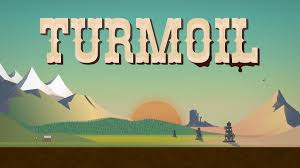
Turmoil is an indie simulation and management game developed and published by Gamious that puts you in the shoes of an aspiring oil entrepreneur during a stylized version of the 19th century North American oil rush. It started life in Steam Early Access in 2015 and was fully released on June 2, 2016, for Windows, macOS, and Linux.
Later, it expanded to platforms like Nintendo Switch, PlayStation 4, Xbox One, Xbox Series X/S, as well as mobile versions for both iOS and Android. The setting is playful rather than serious, as you lease land at auctions, dig for oil with various tools like dowsers and scanners, build rigs and pipe networks, store your crude oil in silos, and sell it at opportune moments to outcompete rival tycoons and grow your town. There is a campaign mode with AI competitors, a procedural single game mode with millions of level variations, and even local and online multiplayer options on some versions. The latter is the most popular if you enjoy competition and want to prove your skills among the best Turmoil players out there.
The core gameplay in Turmoil is deliberately simple but very diverse and strategic. Each round typically lasts about one in game year, during which you must manage drilling operations, transport logistics, and fluctuating oil prices. Every aspect of the endeavor is yours to control, and how well you perform impacts everything. You dig vertically and then horizontally to find rich oil pockets, decide how many wagons and storage silos to invest in, and choose when to sell. Just like in the real world, waiting for high prices can pay off, but holding too long can backfire and cause you to lose considerable leverage. Upgrades are crucial for progress and include things like better tools and wider pipes. Gas utilization helps optimize production, and the rival tycoons add a light competitive pressure. The art style is charming with a lighthearted tone, akin to most indie titles, and the interface is approachable, which makes it easy for newcomers to pick up while still offering some satisfying decision making for experience tycoon genre fans.
In terms of popularity and reception, Turmoil has been a modest success in the indie scene. On Steam, it enjoys a “Very Positive” user rating, with over 5,000 positive reviews and around 92% favorable feedback in recent reviews. This is a good result as it indicates a strong community appreciation for its quirky, addictive gameplay loop. Critics, as aggregated on Metacritic, gave it a Mixed or Average score of around 73/100, praising its accessibility and strategic elements but noting that the simplicity can become repetitive over time. Users agree with this sentiment, with many enjoying the relaxing, “just one more run” feel, while others find the core loop too limited for long term play. But alas, that is usually the case with independent, “smaller” games like this one. Some console storefronts report high average user star ratings as well (~4.38/5 on PlayStation platforms). Overall, Turmoil is seen as a fun, casual business simulator that is easy to get into and perfect for short sessions, though perhaps light on depth for those seeking a deeper tycoon experience. It has also served as inspiration for other titles across genres and industries, for example…
Drill Casino Game by Stake
Stake Original’s Drill is a fast paced, burst style casino game built around simplicity and big win potential that keeps fans coming back for more. So what is it about, and how to play the Drill game? At its core, allows the players to set a wager, choose a target multiplier, and then pick one of three drills before each round begins. Once the round starts, all three drills begin “digging” downward, revealing increasing multipliers as they go. If the drill you backed reaches or exceeds your chosen multiplier, you win that round and collect your payout. If it stops short, you lose your bet. This clear and direct risk reward mechanic makes the game easy to learn and quick to play, even for newcomers. Similar to the rest of the Stake Originals library of games that keeps growing, it is a straightforward, simple, yet very engaging and fun time.
What sets Drill apart from many casino titles is its simple yet strategic choice of drill and target. Although only your selected drill matters for your bet outcome, watching the other two drills progress adds a psychological thrill and decision making layer: do you trust your pick and keep at it, or switch for the next round? With a provably fair random number generator and transparency tools, every round’s outcome can be independently verified for fairness, which adds trust and confidence for players who enjoy that level of transparency. The game also boasts a high return to player (RTP) percentage of about 98% and a low house edge, making it appealing for those chasing value while still enjoying the risk inherent in gambling. Perhaps the biggest source of excitement is the massive maximum payout of up to 2,000,000× your bet.
The Obsession and Fascination With the Oil Rush
Whether it is Turmoil, playing Drill online, watching a popular show about this setting like Blood & Oil or Landman, or a big Hollywood blockbustersuch as There Will be Blood or Killers of the Flower Moon, the popularity of and fascination with this period in history cannot be overstated. Both the creatives behind these projects and the fans that consume them are equally obsessed with it and keep being inspired to learn more through various depictions. A simple question arises: why? Why is this period so relevant and prevalent, and enjoys so much attention from the modern man?
The oil rush has remained a compelling subject in movies, television series, video games, and documentaries because it represents a volatile combination of ambition, wealth, technology, and human cost. Like the gold rush that came before it, these oil boom stories are built around transformation. The barren land becomes suddenly valuable, ordinary people turn into tycoons or casualties, and societies are reshaped almost overnight. Visual media thrives on these extremes. Films and shows often depict oil fields as modern frontiers, places where law, morality, and identity are tested under immense pressure.
The iconic imagery of towering derricks, roaring flames, and desolate landscapes is more than enough to showcase powerful symbolism for the onset of progress and destruction alike. Games and documentaries further extend this fascination by allowing audiences to participate in or closely observe the systems behind extraction, speculation, and power, as well as shady background deals that the common folk are never privy to. These portrayals tap into universal themes of risk and reward, greed and ingenuity, making the oil rush feel both historically specific and timeless in its emotional stakes.
Simply put, people remain drawn to the oil rush because its consequences are still unfolding in the present day. Oil wealth shaped modern geopolitics, corporate power, environmental debates, and patterns of inequality that continue to define global society. Revisiting this era allows storytellers to explore the origins of today’s energy dependence and the myths that grew around industrial success. The oil rush is often framed as a cautionary tale as much as a celebration, since it portrays how unchecked ambition can create fortunes while eroding entire communities and ecosystems.
At the same time, it appeals to a deep cultural fascination with self made power, where individuals challenge nature itself in pursuit of dominance and legacy. The persistence of oil rush narratives in popular media reflects a collective attempt to understand how progress is achieved and at what cost. As long as oil remains central to economies and environmental conflict, the stories of its discovery and exploitation will continue to resonate. As they did before, these accounts will serve as mirrors through which audiences examine both past dreams and present anxieties.
FAQs About the Oil Rush
Why is 1859 called the beginning of the modern oil industry?
In 1859, Edwin L. Drake successfully drilled the first commercial oil well in Titusville, Pennsylvania. Unlike earlier oil collection methods that skimmed surface seepage only, drilling made large scale extraction possible and transformed oil into a major industrial commodity.
What did people use oil for before gasoline cars existed?
The primary product was kerosene, used for lighting homes and streets. Oil also replaced whale oil, helping to reduce pressure on declining whale populations and reshaping global energy consumption decades before automobiles.
Why did Pennsylvania become the center of the early oil rush instead of the West?
Oil naturally seeped to the surface in western Pennsylvania, making its presence obvious. The region also had navigable and familiar rivers, railroads, and nearby refineries. All of this allowed oil to be transported and processed efficiently compared to more remote western territories.
How chaotic were early oil boomtowns?
Extremely chaotic. Towns like Pithole, Pennsylvania, sprang up almost overnight with thousands of residents, saloons, hotels, and speculators, but often collapsed just as quickly once nearby wells dried up. This earned them the nickname “instant cities.”
What dangerous working conditions did oil drillers face?
Workers dealt with frequent explosions, toxic gases, collapsing derricks, and fires caused by highly flammable crude oil. There were few safety regulations, and accidents were common and often deadly.
How did the oil rush change transportation and infrastructure?
The need to move oil led to innovations such as pipelines, tank cars, and specialized refineries. These developments laid the groundwork for modern energy infrastructure and helped standardize industrial transportation systems.
What role did speculation play in the oil boom?
Speculation fueled rapid investment and equally rapid financial ruin. Many people bought land leases or shares in oil companies hoping to strike it rich, but price volatility and overproduction caused frequent market crashes.
How did John D. Rockefeller reshape the oil industry?
Rockefeller used vertical integration and aggressive business tactics to consolidate refining, transportation, and sales under Standard Oil. By the 1880s, his company controlled most U.S. oil refining, setting precedents for both corporate power and antitrust laws.
Did Indigenous peoples interact with oil before the 19th century rush?
Yes. Indigenous communities had long used surface oil for medicine, waterproofing, and ceremonial purposes. Early settlers learned about oil’s usefulness from Indigenous knowledge but rarely credited or compensated those communities.
Why is the 19th century oil rush still relevant today?
It established the foundations of the global petroleum economy, influenced modern corporate practices, and set patterns of boom and bust resource extraction that continue to affect energy policy and economies worldwide. Geopolitics is shaped by it with disputes, sanctions, trade wars, and real wars all over oil.
