



After a devastating exploit on November 22nd, crypto investors have been rapidly withdrawing their assets from the cryptocurrency exchange formerly known as Huobi, now rebranded as HTX.
This breach resulted in the exchange suspending its services and incurring losses amounting to $30 million.

In the aftermath, between November 25th, when HTX resumed its services, and December 10th, a staggering $258 million in net outflows were recorded, as per data sourced from DefiLlama.
DefiLlama’s data further reveals that HTX’s reserves are comprised of 32.3% Bitcoin and 31.8% Tron (TRX), which is the native currency of the Tron network, established by Justin Sun in 2017.
Despite the turmoil, HTX, as of the time of this report, remains the 16th largest cryptocurrency exchange in terms of daily trading volume, boasting a total trading volume of $1.6 billion over the last 24 hours, according to CoinMarketCap.
In a bid to reassure affected HTX users, Sun, the founder of Tron, pledged full compensation for losses incurred from the hot wallet breach and assured the public that an investigation was already in progress.
READ MORE: Taiwan’s Central Bank Explores Wholesale CBDC as Part of ‘Banking 4.0’ Vision
Sadly, this incident was not an isolated event for HTX and related entities under the Sun umbrella. Over the past two months, they have been plagued by a total of four hacks.
The initial breach occurred shortly after the exchange’s rebranding to HTX on September 24, 2023, with an unknown assailant making off with nearly $8 million in cryptocurrency.
The most significant of these breaches was the $100 million exploit that targeted the Poloniex exchange on November 10th, attributed to a compromise of private keys.
Another substantial breach hit HTX’s HECO Chain bridge on November 22nd, where hackers compromised the bridge and funneled at least $86.6 million to suspicious addresses.
November 2023 was a bleak month for the cryptocurrency world, witnessing a surge in theft as malicious actors pilfered a total of $363 million in ill-gotten digital assets.
Cointelegraph reached out to HTX for a statement, but at the time of reporting, no response had been received.
These ongoing security breaches have cast a shadow of doubt over the safety and trustworthiness of the HTX exchange and related platforms, prompting investors to move their assets elsewhere.

Cyvers, a prominent blockchain security firm, recently uncovered a suspicious movement of $50 million in HAXcoin (HXA), the native utility token of the Herencia Artifex nonfungible token (NFT) project.
This significant transfer of funds was linked to an entity known as the KyberSwap exploiter, raising concerns in the cryptocurrency community.
The KyberSwap exploiter obtained these tokens by exploiting the “transfer from function” within the Ethereum network.
The “transfer from” function is commonly utilized by decentralized application users, allowing one party to transfer tokens from the balance of another party to a third-party address.
However, misuse or vulnerabilities in the implementation of such functions can lead to security vulnerabilities.
Cyvers, in its report, suggests that the security breach may be associated with a potential flaw in the Multicall function, a component of the thirdweb libraries integrated into the HXA token’s smart contract.
Cyvers encourages interested parties to actively participate in the investigation to comprehensively understand the extent and repercussions of this exploit.
READ MORE: Krist Novoselic Urges Microsoft to Reevaluate Generative AI Approach in Shareholder Proposal
The Cyvers team has also revealed that the funds acquired by the KyberSwap exploiter have been dispersed among various externally owned accounts, which are now recognized as the top HXA tokenholders. This distribution adds complexity to tracking and recovering the stolen assets.
Meanwhile, cryptocurrency exchange MEXC has taken a precautionary measure by temporarily suspending HXA token withdrawals and deposits.
However, this halt is not directly linked to security concerns arising from the hack but rather stems from unusual on-chain activities related to HXA, as reported by the exchange.
In an unexpected development, the official website of HAXcoin, hxacoin.io, is currently inaccessible, leaving investors and stakeholders without access to official information and updates.
This further complicates the situation and raises suspicions regarding the project’s integrity and transparency.
This incident follows a recent hack that saw hackers siphon off approximately $46 million in cryptocurrency assets from the decentralized KyberSwap exchange.
The cumulative impact of such security breaches highlights the need for enhanced security measures within the cryptocurrency ecosystem, urging industry participants to remain vigilant and proactive in safeguarding digital assets and user interests.

On December 11, 2:15 am UTC, the price of Bitcoin briefly dipped below the $41,000 mark, experiencing a sudden 6.5% drop from $43,357 to as low as $40,659 within a mere 20 minutes.
However, as of the latest TradingView data, Bitcoin has made a slight recovery, trading at around $41,960 after hitting the local low.
Ether, the second-largest cryptocurrency by market capitalization, also faced a sharp decline during the same timeframe, plummeting by more than 8.9%.
Presently, the price of ETH has stabilized at $2,233, reflecting a 5.3% decrease on the day. Other prominent cryptocurrencies like BNB, XRP, and Solana have also witnessed losses in value.
According to data sourced from CoinGlass, this abrupt drop led to the liquidation of long positions worth more than $270 million.
Additionally, it wiped out approximately $1.2 billion in open interest related to BTC, which currently stands at about $17.9 billion.
READ MORE: EU Reaches Landmark Agreement on Comprehensive AI Regulation
Interestingly, this price decline occurred just moments after Scott Melker of Wolf of All Street had remarked on Bitcoin closing its eighth consecutive green weekly candle, playfully asking, “When correction, sir?”
This recent drawdown constitutes the most significant single-day decline for Bitcoin in over a month, despite the asset’s impressive growth of more than 12% over the past 30 days.
Notably, Bitcoin has seen a remarkable rally of over 150% since the beginning of the year.
This uptrend has been primarily fueled by the anticipation that the United States Securities and Exchange Commission (SEC) will greenlight several spot Bitcoin exchange-traded funds (ETFs).
This approval would provide large institutions with a substantial avenue for exposure to the cryptocurrency for the first time.
Another contributing factor to Bitcoin’s rally is the prevailing market expectation that the U.S. Federal Reserve will commence interest rate cuts around the middle of 2024.
Investors are also gearing up for the release of the next round of inflation data and the final Federal Open Market Committee (FOMC) meeting of 2023.
Analysts largely anticipate improvements in core inflation and are betting on the Fed maintaining the current interest rate levels.

On December 8th, asset management firm VanEck made headlines by filing its fifth amended application for a spot Bitcoin exchange-traded fund (ETF).
This move was submitted to the United States Securities and Exchange Commission (SEC) as an update to the VanEck Bitcoin Trust, signaling the company’s continued pursuit of launching a Bitcoin ETF.
A spot Bitcoin ETF is a financial product that enables investors to acquire shares in a fund directly tied to the price of Bitcoin.
One intriguing aspect of VanEck’s application is its choice of ticker symbol for the ETF: “HODL.” This term, derived from a misspelling of “hold” or an acronym for “hold on for dear life,” is widely recognized among cryptocurrency enthusiasts.
It represents a strategy of holding onto Bitcoin without selling, regardless of market fluctuations.
While this ticker symbol may resonate with crypto-savvy individuals, some have suggested that it might be less familiar or clear to older generations, often humorously referred to as “boomers.”
Nate Geraci, the president of advisory firm The ETF Store, opined that those well-versed in the crypto space would appreciate the ticker symbol.
However, he humorously noted that it might leave “boomers” scratching their heads.
Submit a Press Release to Cointelegraph
Despite this potential generation gap, the choice of “HODL” could serve to emphasize the long-term holding strategy often associated with Bitcoin.
Eric Balchunas, a senior ETF analyst at Bloomberg Intelligence, highlighted that VanEck’s unconventional ticker symbol stands out in contrast to the more traditional choices made by companies like BlackRock and Fidelity when naming their financial products.
He characterized VanEck’s choice as a unique and creative approach.
VanEck even joined the playful banter, posting a comment on December 8th that humorously stated, “My #Bitcoin ETF will bring all the baby boomers to the yard, *if approved.”
VanEck is not alone in its pursuit of a spot Bitcoin ETF. Several other companies, including BlackRock, Fidelity, Valkyrie, and Franklin Templeton, are also vying for approval from the SEC to launch their own Bitcoin ETFs.
While the SEC has not yet expressed its support for these filings, it has engaged in discussions with the applicant firms to address technical aspects of their fund proposals.
VanEck remains optimistic about the prospect of SEC approval for its Bitcoin ETF, with expectations set for January.
If approved, the company estimates substantial inflows of approximately $2.4 billion in the first quarter of implementation.

Over the course of four days, wallets connected to the now-defunct crypto trading firms, FTX and Alameda Research, orchestrated the movement of a staggering $23.59 million worth of digital assets onto some of the most prominent cryptocurrency exchanges.
This revelation came to light thanks to the diligent work of blockchain analytics firm Spot On Chain, which uncovered that these defunct entities had been orchestrating a series of transfers amounting to a whopping $591 million since October 24th.
Remarkably, these transfers involved a total of 59 different cryptocurrency tokens.
In the latest wave of transfers linked to FTX wallets, the sum of $23.59 million was distributed across 19 tokens.
Among these tokens, 3,150 Ether valued at $6.8 million, 59.6 million Aleph.im (ALEPH) worth $6.41 million, $2.48 million in Curve DAO (CRV) tokens, $990,000 in Avalanche, and $848,000 in Chainlink’s LINK were prominently featured.
Intriguingly, this movement also encompassed $6.07 million in a diverse range of assets, including Pundi X (PUNDIX), Reserve Rights (RSR), Dogecoin, Bitcoin Cash, Chromia (CHR), Axie Infinity, Polygon’s MATIC, Uniswap, Orbs (ORBS), Frax Share (FXS), Polkadot, STEPN, 1inch (1INCH), and Solana.
READ MORE: Bitcoin Rally Continues But Concerns About Pullback Loom
These assets were subsequently funneled into major exchanges like Binance, Coinbase, OKX, and Galaxy Digital OTC.
The financial maneuverings began on October 24th when both FTX and Alameda wallets initiated a $10 million transfer to a single wallet address, which was subsequently distributed to Binance and Coinbase accounts.
A similar transaction took place on November 1st, involving $13.1 million being channeled into Binance and Coinbase accounts.
This movement of funds has its origins in March when FTX and Alameda embarked on the journey to recover assets for their investors.
During that period, three wallets associated with FTX and Alameda Research shifted $145 million worth of stablecoins onto various platforms, including Coinbase, Binance, and Kraken.
While these revelations demonstrate a significant recovery of over $5 billion in cash and liquid cryptocurrencies by the troubled cryptocurrency exchange, FTX, there is still a substantial outstanding liability of $3.8 billion that remains unresolved.
The crypto world continues to watch closely as the intricate web of financial transactions unfolds.

On December 8, Lifinity, a decentralized exchange (DEX), experienced a significant setback when an arbitrage bot drained its LFNTY-USDC liquidity pool, resulting in a loss of $699,090.
The incident was attributed to an unexpected response from a failed trade, as reported in Lifinity’s Discord channel.
The ordeal unfolded when an arbitrage bot embarked on a complex trading route, involving USDC, xLFNTY, LFNTY, and USDC, aiming to exploit price disparities between various trading pairs.
The bot executed an Immediate-or-Cancel (IOC) market order on Serum v3, a type of order that requires immediate execution at the prevailing market price upon being filled. Orders unable to be executed immediately are typically canceled.
However, instead of returning an error as expected, the bot’s request yielded a 0 amount output.
This unforeseen outcome caused the liquidity pool to process the 0 amount, subsequently updating the last transaction price to 0 and setting the next starting price to the same value.
While the actual price on the constant product curve (CP curve) wasn’t zero, the pool offered an exceptionally low price, making it vulnerable to a drain.
READ MORE: Binance Abu Dhabi Withdraws Application with Regulator Amidst Expansion Plans
Lifinity v1 functions as an automated market maker (AMM), employing algorithms to create liquidity in trading pairs. It relies on the constant product market maker (CPMM) model to maintain balance between two token quantities within a liquidity pool.
This approach is also used by other DEXs like Uniswap and Bancor.
While Lifinity v1 does not directly employ the standard constant product (CP) curve found in traditional CPMMs, it replicates its functionality.
The bug in this case allowed the arbitrage bot to exploit the discrepancy and deplete the funds.
Efforts are now underway to address the situation, with Lifinity’s team working on restoring liquidity to the affected pool.
Additionally, they are reviewing the protocol code and exploring options for fund recovery.
To prevent future incidents, the DEX has implemented a new measure: trades resulting in 0 amounts are no longer accepted.
Contrary to initial concerns, the incident does not appear to be the result of an external attack, as clarified by a community member on social media.
While Cointelegraph reached out to Lifinity’s team for comment, an immediate response was not received, leaving the community awaiting further updates on the situation.

The United States government recently made significant changes to the National Defense Authorization Act (NDAA) by eliminating two provisions intended to tackle anti-money laundering (AML) concerns within the cryptocurrency space.
The NDAA is a crucial piece of legislation that dictates how the country’s defense department can allocate federal funding.
Among the numerous provisions removed from the NDAA, two specifically addressed the need for a comprehensive review system and reporting mechanisms to combat illicit activities related to cryptocurrencies.
The first provision required the US Secretary of the Treasury to collaborate with banking and government regulators to establish a risk-focused examination and review system for cryptocurrencies within financial institutions.
This system aimed to enhance oversight and ensure compliance with AML regulations.
The second provision focused on addressing anonymous cryptocurrency transactions, particularly those involving crypto mixers and tumblers.
It mandated the creation of a report detailing the extent of crypto asset transactions associated with sanctioned entities, along with an analysis of regulatory approaches adopted by other jurisdictions.
This report was intended to guide the development of cryptocurrency regulations in the United States.
Back in July, the United States Senate approved the NDAA, allocating $886 billion for defense purposes.
READ MORE: Meanwhile Group Launches Innovative Bitcoin Private Credit Fund for Institutional Investors
Notably, the NDAA included amendments inspired by the Digital Asset Anti-Money Laundering Act, introduced in 2022, and the Responsible Financial Innovation Act.
These amendments sought to establish precautionary measures to prevent incidents similar to the FTX debacle in the cryptocurrency industry.
The proposal for these amendments was put forward by a group of senators, including Cynthia Lummis, Elizabeth Warren, Kirsten Gillibrand, and Roger Marshall.
In recent times, the US government has been actively addressing concerns related to money laundering and terrorist funding facilitated through cryptocurrencies.
The Financial Services Committee of the US House of Representatives convened on November 15 to discuss illegal activities within the crypto ecosystem.
During this meeting, a thorough review was conducted to assess the proactive measures taken by cryptocurrency exchanges and decentralized finance providers to prevent money laundering and terrorist financing.
In summary, the United States government’s decision to eliminate two key provisions from the NDAA indicates a shift in its approach to cryptocurrency regulation.
While these provisions aimed to enhance oversight and combat illicit activities, their removal reflects ongoing debates and discussions within the government regarding the appropriate regulatory framework for the cryptocurrency industry.

The United Kingdom’s National Audit Office (NAO) has raised concerns regarding the effectiveness of the Financial Conduct Authority (FCA) in regulating the cryptocurrency industry, as detailed in their latest report titled ‘Financial services regulation: adapting to change.’
The NAO’s report highlights the FCA’s slow response to illicit activities within the crypto sector, sparking concerns in the financial landscape.
One notable issue pointed out by the NAO is the extended timeframe it took the FCA to take action against unlawful operators of cryptocurrency ATMs.
The NAO reported that it took nearly three years for the FCA to initiate significant enforcement measures, which culminated in the shutdown of 26 crypto ATMs on July 11, as reported by Cointelegraph.
The NAO’s report underscores this delay, underscoring that, “While the FCA has mandated crypto-asset firms to comply with anti-money laundering regulations since January 2020 and initiated supervision efforts involving unregistered firms, it did not commence enforcement measures against illicit crypto ATM operators until February 2023.”
The NAO attributes the delay in registering crypto firms seeking FCA approval to a shortage of specialized cryptocurrency expertise within the authority.
Their report highlights this concern, stating, “A lack of crypto skills within the FCA led to prolonged registration of crypto-asset firms under money laundering regulations.”
READ MORE: Babylon Chain Secures $18 Million Series A Funding to Revolutionize Bitcoin Staking
This issue becomes even more pressing when considering that, as of January 27, the FCA had approved only 41 out of 300 crypto firm applications seeking regulatory clearance since the rules were implemented in January 2020.
Furthermore, the FCA has recently issued guidance materials to assist cryptocurrency firms in understanding the new regulations related to the promotion of crypto services.
On November 2, Cointelegraph reported the introduction of “finalized non-handbook guidance” by the FCA to ensure compliance with these new rules, which specifically govern how crypto companies can market their services to customers.
Among the key aspects addressed in the FCA’s guidance are concerns regarding crypto firms making claims about the ease of using cryptocurrencies without adequately highlighting associated risks.
Additionally, the guidance emphasizes the importance of making risk warnings highly visible, as some firms have previously used small fonts that can easily be overlooked.
In conclusion, the NAO has expressed reservations about the FCA’s ability to effectively oversee the cryptocurrency industry, citing delays in enforcement actions and a shortage of cryptocurrency expertise within the organization.
These concerns arise at a time when the FCA is introducing new rules and guidance aimed at improving transparency and consumer protection within the crypto space.
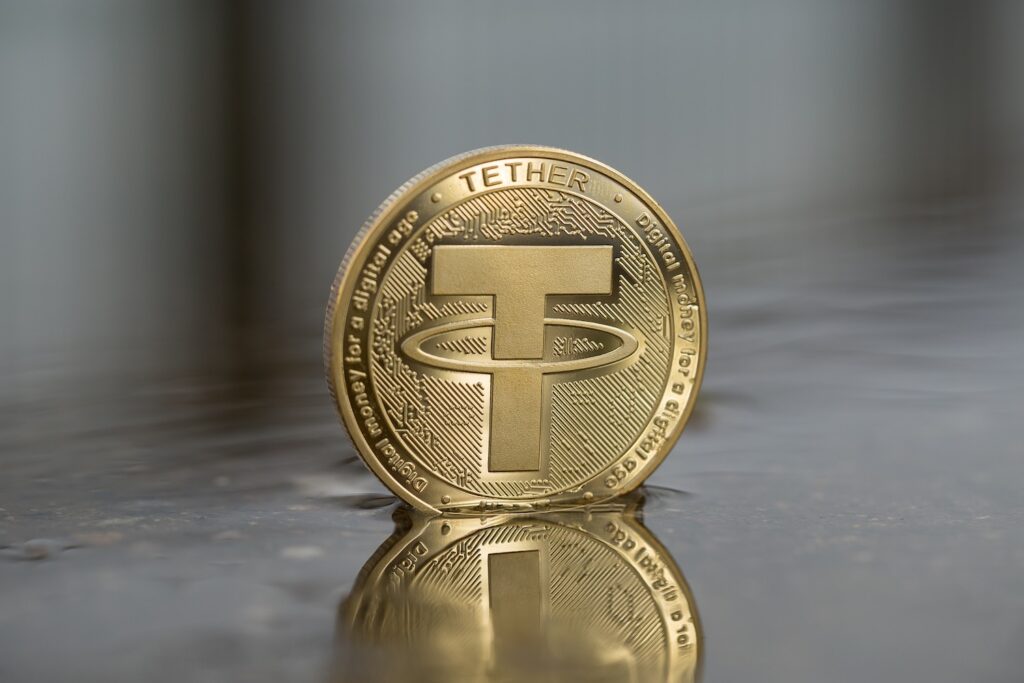
Tether, the issuer of the popular stablecoin, has recently taken a significant step toward enhancing its cooperation with law enforcement and regulatory agencies.
In a blog post dated December 9th, the company announced the implementation of a voluntary wallet-freezing policy, aimed at bolstering its efforts to comply with global regulations and law enforcement requests.
Since December 1st, Tether has been providing controls on the secondary market to freeze any activity associated with individuals or entities listed on the United States Office of Foreign Assets Control (OFAC) Specially Designated Nationals (SDN) List.
This list comprises companies and individuals connected to sanctioned countries. Tether’s move is part of a broader proactive approach to align itself more closely with regulatory bodies worldwide.
The U.S. Department of the Treasury utilizes the SDN List to monitor and prevent cryptocurrency transactions that may be linked to illicit activities, such as terrorism financing and the unauthorized distribution of fentanyl.
Notably, Tether has already frozen wallets that were previously added to the SDN List, marking a departure from its earlier stance on this matter.
READ MORE: Meanwhile Group Launches Innovative Bitcoin Private Credit Fund for Institutional Investors
In August 2022, the company had stated that it would not proactively freeze addresses associated with sanctioned Tornado Cash transactions unless explicitly instructed to do so by law enforcement agencies.
Tornado Cash had come under scrutiny for allegedly facilitating over $7 billion in cryptocurrency money laundering since 2019, as per the OFAC.
Paolo Ardoino, CEO of Tether, emphasized the importance of these measures, saying, “By executing voluntary wallet address freezing of new additions to the SDN List and freezing previously added addresses, we will be able to further strengthen the positive usage of stablecoin technology and promote a safer stablecoin ecosystem for all users.”
Tether, headquartered in Hong Kong, is responsible for the stablecoin of the same name.
The stablecoin has gained immense popularity, with its market capitalization recently reaching $90 billion, even amidst increased regulatory scrutiny of cryptocurrency firms in the United States.
Tether’s stablecoin continues to dominate the market, holding nearly 70% of the stablecoin market share.
In summary, Tether’s decision to proactively freeze wallet addresses associated with sanctioned individuals and entities reflects its commitment to compliance and cooperation with regulatory authorities, further solidifying its position in the stablecoin market.

On December 8, the United States Department of Justice (DOJ) unsealed Binance’s compliance commitments, shedding light on a significant level of government oversight of the cryptocurrency exchange’s operations and business dealings.
In a recent analysis posted on X (formerly Twitter), John Reed Stark, a former Securities and Exchange Commission (SEC) official, described Binance’s new compliance commitments as an “exhaustive list” that resembles a “consulting firm’s wish list,” and he suggested that these commitments could potentially lead to the platform’s shutdown.
These obligations are outlined in an 11-page document and entail full cooperation with authorities, granting them access to documents, records, and resources upon request.
This access extends to information related to Binance’s past employees, agents, intermediaries, consultants, representatives, distributors, licenses, contractors, suppliers, and joint venture partners, as noted by Stark.
Various sections of the DOJ’s criminal division will closely monitor Binance’s activities, including those related to money laundering and asset recovery, national security, counterintelligence and export control, as well as the office of the United States Attorney for the Western District of Washington.
As previously disclosed, Binance’s plea deal with the U.S. government includes a five-year oversight period by the Financial Crimes Enforcement Network (FinCEN).
This unprecedented level of oversight is expected to come with a substantial financial cost for the exchange.
READ MORE: Babylon Chain Secures $18 Million Series A Funding to Revolutionize Bitcoin Staking
Stark commented, “Binance’s settlement requires it to offer years of instantaneous access, audit, examination, and inspection to DOJ, FinCEN, and all types of financial regulators and law enforcement, exposing the company — and its customers — to a 24/7, 365-days-a-year financial colonoscopy.”
Binance and its former CEO, Changpeng “CZ” Zhao, have already admitted to violating U.S. laws related to money laundering and terror financing, agreeing to pay $4.3 billion in fines on November 21.
These newly unsealed court records are part of a recent filing by the U.S. SEC, which incorporates the DOJ’s enforcement actions and settlements to strengthen its case against Binance and Zhao.
The SEC had initially filed 13 charges against Binance on June 5, accusing the exchange of unregistered offers and sales of various tokens and products.
The SEC also alleges that Binance failed to register its Binance.com platform as an exchange or broker-dealer clearing agency.
With this latest filing, the regulator is seeking judicial notice of the facts presented in Binance’s settlement, essentially asking the court to acknowledge these facts as true without formal evidence presentation.
The SEC is leveraging the settlement to challenge Binance’s motion to dismiss the case, thereby undermining the exchange’s arguments regarding its presence and operations in the U.S. over the past years.
According to Binance’s settlement with the DOJ, the exchange had over three million U.S. customers by March 2018, with approximately 30% of its web traffic originating from the United States as of June 2019.