



An escalating trend is taking root among investment firms across the United States, the United Kingdom, and Europe, as market intelligence reveals a surge in the appointment of senior executives to spearhead digital asset investment strategies.
The latest insights from a report by Amberdata, titled “Digital Assets: Managers’ Data Infrastructure Fuel,” disclose that a noteworthy 24% of asset management firms have already embraced digital asset strategies, with an additional 13% actively planning to follow suit within the next two years.
The data paints a picture of increasing commitment, with nearly a quarter of these organizations now boasting senior positions wholly dedicated to digital asset implementation, signaling both a seriousness of intent and a resounding endorsement from top management.
The report derived its findings from a comprehensive survey encompassing 60 investment professionals hailing from the U.S., U.K., and Europe.
This diverse group included asset managers, hedge funds, and various investors.
Encouragingly, almost half (48%) of the study participants have already integrated digital assets into their firm’s portfolios. Amberdata’s prognosis for the near future predicts a continued emphasis on digital asset trading and investment strategies among asset managers.
Remarkably, this trend persists despite the prevailing regulatory scrutiny faced by the U.S. crypto industry, chiefly from the Securities and Exchange Commission (SEC) and the Commodities Futures Trading Commission (CFTC).
READ MORE: Congressman Takes Aim at SEC’s Digital Asset Enforcement Spending
Despite the regulatory challenges, Amberdata remains optimistic, forecasting a potential positive shift in the next few years.
Their report states, “The good news is that the tide may be turning. In the next five years, the SEC and the CFTC are expected to be providing the most positive opportunities for investors in our study.”
Moreover, the report highlights Ripple’s recent partial legal victory against the SEC as a potential catalyst, which could draw more asset management firms into the fold of digital asset strategy adoption.
In a related development, European digital asset manager CoinShares has reported substantial growth, with a total revenue of 20.3 million pounds ($25.9 million) in the second quarter of 2023.
This marks a significant 33% increase compared to the corresponding quarter in the previous year.
This achievement underscores the burgeoning potential and allure of the digital asset landscape for investment firms seeking to diversify their portfolios and tap into the evolving financial landscape.
Other Stories:
Ant Group Unveils ZAN Sub-Brand for Web3 Blockchain Development Services
Ripple Bolsters U.S. Regulatory Presence with Fortress Trust Acquisition
Ripple’s Chief Legal Officer Lambasts SEC’s ‘Contradictory Shift’ in Latest Submission

Vitalik Buterin’s X (previously Twitter) account was reportedly hacked.
Blockchain expert ZachXBT revealed that the hack resulted in losses exceeding $691,000 from users who clicked on a malicious link.
On September 9, Dmitry Buterin, Vitalik’s father, warned on X that his son’s account had been breached.
He urged followers to disregard a particular post, which has since been deleted.
This misleading post celebrated “Proto-Danksharding’s” introduction to Ethereum.
The hacker baited users with a link for a free commemorative NFT, tricking them into connecting their wallets, and then stole their assets.
Ethereum developer Bok Khoo, aka Bokky Poobah on X, has stated that his CryptoPunk NFTs were among the assets lost.
At present, a CryptoPunk NFT’s floor price is 46.99 Ether, translating to roughly $76,837.
ZachXBT has kept his 438,200 followers updated on the hacker’s moves.
He disclosed that the most valuable stolen NFT is CryptoPunk #3983, valued at 153.62 ETH or about $250,543.
READ MORE: Ripple’s Chief Legal Officer Lambasts SEC’s ‘Contradictory Shift’ in Latest Submission
An X user, Satoshi 767, speculated that Buterin might have skimped on security measures for his X account.
This user suggested that Buterin should admit to his operational security lapses and reimburse the affected individuals.
He theorized that the breach could either be an internal job at X, a direct physical threat to Buterin, or, most probably, a SIM swap.
Yet, ZachXBT countered this by highlighting Buterin’s prominence, suggesting he’s an attractive target for various hacking methods.
He emphasized the uncertainty around the breach being a SIM swap and proposed that an insider might have been bribed or used a panel.
Other Stories:
Ripple Bolsters U.S. Regulatory Presence with Fortress Trust Acquisition
Ant Group Unveils ZAN Sub-Brand for Web3 Blockchain Development Services
Crypto Exchange CEO and Siblings Sentenced to Over 11,000 Years in Prison
This year has seen a series of shifts in the global macroeconomic landscape coupled with evolving regulatory frameworks for virtual assets. Amidst this backdrop, the crypto world continues to evolve by offering new products that cater to the needs of users and the community. That’s where Real World Asset (RWA) tokenization came in as a new frontier and value capture channel within the crypto market.
As this wave gains momentum, native crypto DeFi protocols like MakerDAO and Aave are actively making moves to embrace RWA. The BNB.WIN ecosystem has recently introduced its first RWA product BNB.WIN.
After observing their performance over the past few weeks, the question on everyone’s mind is whether BNB.WIN and similar products are truly worthwhile?
Is BNB.WIN a safer choice?
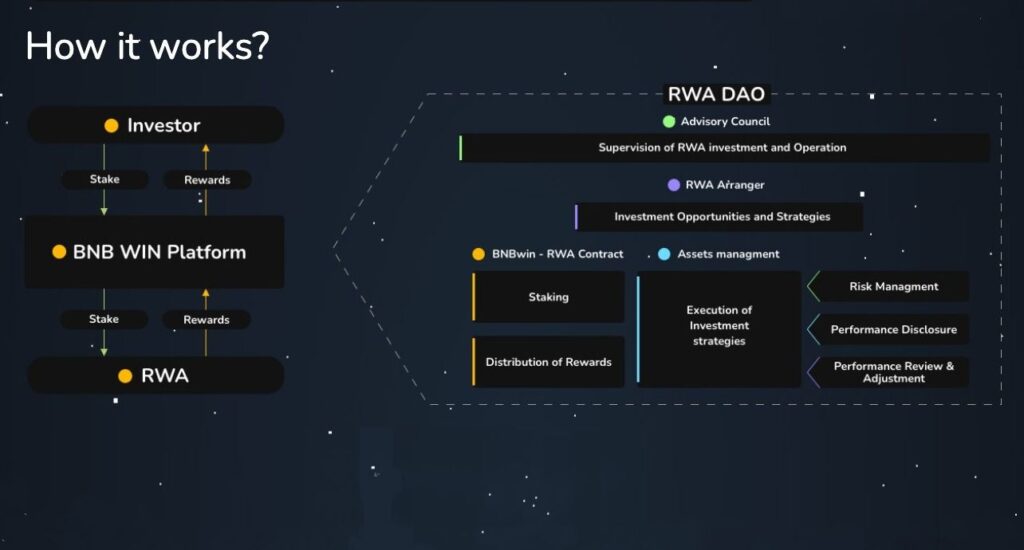
According to bnb.win, BNB.WIN is the first rebasing RWA protocol on the BSC network. Users receive BNB as a receipt token upon staking BNB on the platform. It runs on the decentralized platform.
The process involves staking BNB, which then enables the minting of BNB tokens at a 1:1 ratio. Notably, these BNB tokens are pegged to real-world assets. Their associated smart contracts, known as BNB.WIN-RWA, distribute rewards to token holders via a rebase mechanism.
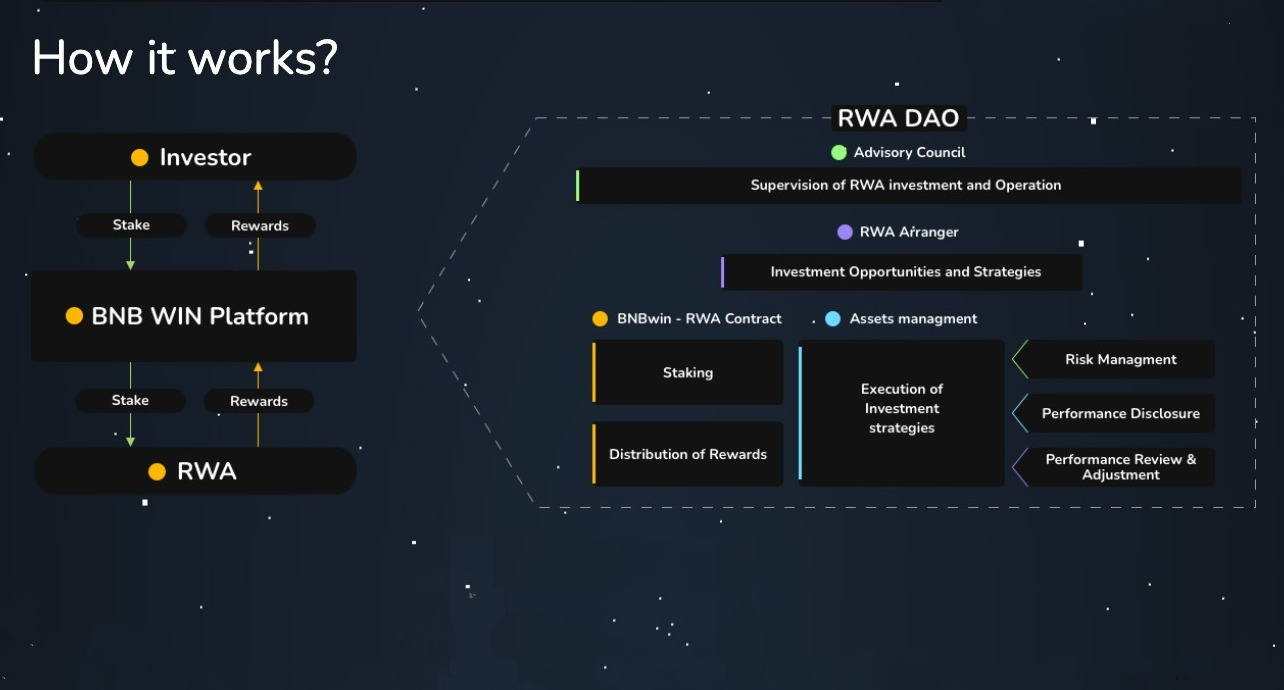
BNB.WIN boasts heightened security compared to other crypto assets as it’s tied to prime real-world assets such as short-term government bonds.
BNB backing is based on a reserve of real-world assets while BNB.WIN is tied directly to short-term government bond investments. If anything, BNB.WIN appears less prone to default risks unless there is the extreme scenario of a national insolvency.
What about the returns for BNB.WIN?
333% per year for BNB is the best rate for the entire crypto industry.
In terms of returns for BNB.WIN, BNB.WIN Founder Satoshi Aoki shared in a recent interview that BNB.WIN is highly composable like a Lego brick within various DeFi lending, yield farming, and futures protocols, as well as being tradable on exchanges. BNB.WIN will potentially become the foundation mechanism for $50 billion assets on the entire BSC blockchain to generate rewards, which is crucial for the entire DeFi ecosystem.
The yields users earn on subscribing to BNB.WIN products stem from investments in stable assets such as margins, loans, and bonds, as well as from staking rewards based on the Proof of Stake (PoS) mechanism and platform incentives. Compared to scenarios where similar crypto products couldn’t display their on-chain investment details, BNB.WIN significantly enhances fund transparency.
On August 28, 2023, BNB.WIN announced the latest Merkle tree asset proof data. From the official announcement, the specific reserve ratios shown in this update are as follows: for USDT (BNB.WIN wallet balance: 122,404,586 USDT), for BNB (BNB.WIN wallet balance: 84,410 BNB).
BNB.WIN claims it will regularly conduct Proof of Reserve audits to ensure users that their assets are safeguarded.
In conclusion, RWA assets exemplified by BNB.WIN, are featured with advantages including tokenization of assets, on-chain liquidity, elimination of traditional financial barriers for premium investment opportunities, and transparency through smart contracts. In the future, they will become an integral part of the stablecoin asset-liability structure.
BNB.WIN – https://bnb.win

Bitcoin is in the midst of a recovery journey after enduring a “black swan” event reminiscent of the turbulent days of the March 2020 COVID-19 crash, according to recent data.
On September 7, CryptoQuant, an on-chain analytics platform, brought attention to a significant surge in loss-making unspent transaction outputs (UTXOs), revealing a curious tale of Bitcoin activity “under the hood.”
UTXOs signify the remaining BTC following an on-chain transaction, and CryptoQuant’s “UTXOs in Loss” metric tracks instances where these UTXOs are currently worth less than their original acquisition price.
The data shows that more UTXOs are currently in a loss position compared to their initial purchase price than at any point since March 2020.
Back then, the BTC/USD price plummeted by a staggering 60%, reaching its lowest levels since March 2019, which it never revisited.
Drawing parallels with March 2020, CryptoQuant contributor Woominkyu suggested that Bitcoin may be experiencing, or even recovering from, a surprise selling event, akin to a “black swan.”
He stated that those anticipating another “black swan” event should contemplate whether it is already unfolding.
In terms of percentages, 38% of UTXOs were in a loss position at the close of August, a level not witnessed since April 2020.
READ MORE: Ripple Bolsters U.S. Regulatory Presence with Fortress Trust Acquisition
Woominkyu explained that when numerous UTXOs are in a loss position, it can indicate heightened market anxiety, potentially prompting more investors to sell.
Conversely, when most UTXOs are profitable, it suggests optimism and stronger investor sentiment.
Bitcoin, however, remains ensnared in a narrow trading range, with no clear trend emerging in its price.
The cost basis data reveals that the current spot price is hovering between the acquisition prices of different investor cohorts.
The “Realized Price,” which is calculated as the price at which the supply was last moved divided by age group, shows that short-term holders face losses when BTC/USD dips below approximately $27,000.
Nevertheless, a complete capitulation event has yet to manifest on-chain.
In conclusion, despite the recent turbulence in Bitcoin’s UTXOs and price activity, the crypto market is witnessing intriguing dynamics reminiscent of the “black swan” event of March 2020, leaving market participants pondering the future trajectory of the leading cryptocurrency.
Other Stories:
Congressman Takes Aim at SEC’s Digital Asset Enforcement Spending
Ripple’s Chief Legal Officer Lambasts SEC’s ‘Contradictory Shift’ in Latest Submission
Ant Group Unveils ZAN Sub-Brand for Web3 Blockchain Development Services
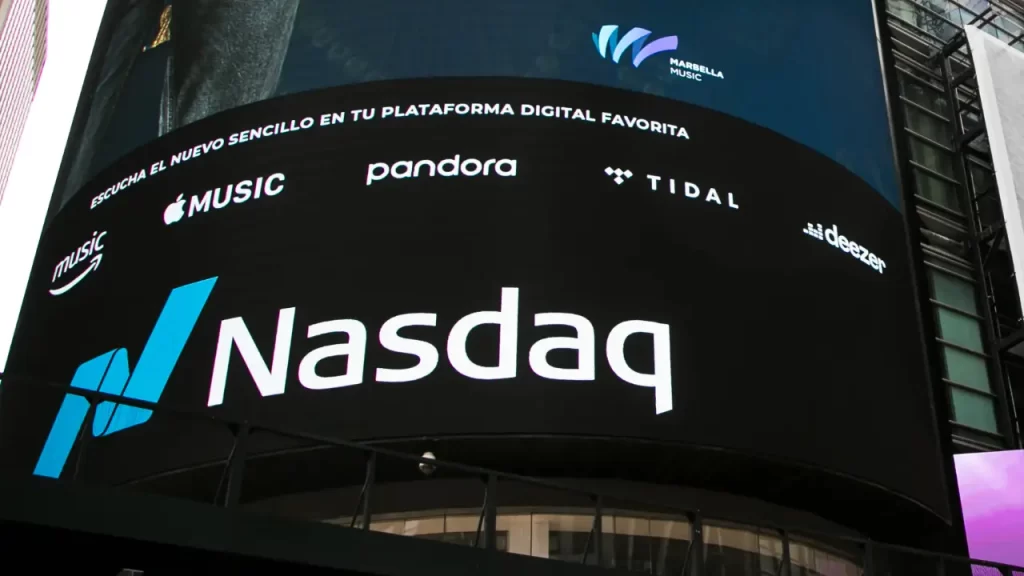
Nasdaq received approval from the United States Securities and Exchange Commission on September 8 to launch the first AI-driven exchange order type.
This innovative system, known as the dynamic midpoint extended life order (M-ELO), builds upon the existing M-ELO automated order type by incorporating real-time artificial intelligence (AI) capabilities, allowing it to continuously adjust and recalibrate itself.
Order types involve sets of software instructions that execute specific trade pairs at precise market pricing thresholds.
While automation of this kind has been in use for some time, the introduction of AI-driven order types marks a groundbreaking development, employing real-time reinforcement learning AI for order execution.
This advancement is expected to significantly accelerate order processing within the system.
Nasdaq revealed in a blog post that during research and testing, dynamic M-ELO achieved a remarkable “20.3% increase in fill rates and an 11.4% reduction in mark-outs.”
READ MORE: Block Earner Forges Ahead with Crypto-Backed Loans Despite Legal Battle with Regulator
Operating on a symbol-by-symbol basis, this new functionality continuously analyzes over 140 data points every 30 seconds to detect market conditions and optimize the holding period for trade execution eligibility.
This dynamic approach, in contrast to the traditional system’s static timeouts, should enhance fill rates without causing notable market impact.
The integration of artificial intelligence technologies in the fintech sector has had a profound impact on the entire financial industry.
Large language models like ChatGPT have found applications as educational tools for both traditional stock and cryptocurrency traders.
Nasdaq’s prior ventures into combining AI with finance included incorporating predictive AI models to assist in processing the vast array of over 1.5 million options listings in the U.S. market.
Other Stories:
Ant Group Unveils ZAN Sub-Brand for Web3 Blockchain Development Services
Crypto Exchange CEO and Siblings Sentenced to Over 11,000 Years in Prison
Singapore’s MAS Maintains Strict Stance on Crypto Participation in Regulatory Sandbox

Two United States senators, Richard Blumenthal and Josh Hawley, introduced bipartisan AI legislation on September 8, amidst growing congressional efforts to regulate this emerging technology.
Their proposed framework advocates for mandatory licensing for AI companies and explicitly states that technology liability protections won’t shield these firms from legal actions.
Senator Blumenthal, in a statement on X (formerly Twitter), hailed this bipartisan framework as a significant leap forward—a robust and comprehensive legislative plan to establish concrete and enforceable AI safeguards, aiming to guide the management of AI’s potential benefits and risks.
Senator Hawley stressed that these principles should serve as the foundational basis for Congress to take action on AI regulation, indicating a commitment to further hearings with industry leaders and experts to build support for legislation.
The framework’s core proposition involves the establishment of a licensing system overseen by an independent regulatory body, requiring AI model developers to register with this authority, which can conduct audits of licensing applicants.
READ MORE:Ant Group Unveils ZAN Sub-Brand for Web3 Blockchain Development Services
Furthermore, the framework suggests clarifying that Section 230 of the Communications Decency Act, providing legal protections to tech firms for third-party content, does not extend to AI applications.
It also advocates for corporate transparency, consumer and child protection, and national security safeguards.
Blumenthal and Hawley, who lead the Senate Judiciary Subcommittee on Privacy, Technology, and Law, disclosed plans for an upcoming hearing featuring prominent figures like Brad Smith, Microsoft’s vice chairman and president, William Dally, NVIDIA’s chief scientist and senior vice president of research, and Woodrow Hartzog, a professor at Boston University School of Law.
This framework’s unveiling and the announcement of the accompanying hearing precede Senate Majority Leader Chuck Schumer’s AI forum, which will include leaders from major AI companies sharing insights into the technology’s potential advantages and risks.
Notably, Schumer had introduced his own AI framework in June, which outlined fundamental principles but lacked the detailed measures proposed by Senators Hawley and Blumenthal.
Other Stories:
Crypto Exchange CEO and Siblings Sentenced to Over 11,000 Years in Prison
Singapore’s MAS Maintains Strict Stance on Crypto Participation in Regulatory Sandbox
Block Earner Forges Ahead with Crypto-Backed Loans Despite Legal Battle with Regulator

On September 8, United States Representative Tom Emmer, the Majority Whip of the U.S. House of Representatives, sponsored an appropriations amendment aimed at restricting the U.S. Securities Exchange Commission’s (SEC) use of funds for digital asset enforcement.
Emmer, a vocal critic of the SEC’s actions in the cryptocurrency industry, particularly the leadership of SEC Chair Gary Gensler, alleged that Gensler had exceeded his authority, resulting in adverse consequences for the American people.
Emmer urged Congress to employ available methods and proper procedures to prevent potential misuse of taxpayer funds by Gensler and the SEC.
Emmer’s history includes co-sponsoring several bills designed to improve regulatory transparency within the United States.
He asserted that Gary Gensler had abused his authority to expand the Administrative State, to the detriment of the American people, emphasizing the necessity for Congress to employ all available tools, including the appropriations process, to restrain Gensler from further leveraging taxpayer dollars.
READ MORE: Ant Group Unveils ZAN Sub-Brand for Web3 Blockchain Development Services
The appropriations amendment Emmer introduced will limit the SEC’s use of funds for digital asset enforcement until comprehensive rules and regulations are established.
Concerns have arisen due to the absence of cryptocurrency regulations, with Emmer suggesting that the SEC’s substantial expenditures on legal disputes with numerous crypto entities might constitute a “weaponization” of taxpayer funds.
In a separate legislative move, Emmer introduced the Blockchain Regulatory Certainty Act, which clarifies that blockchain developers and service providers should not be classified as money transmitters, as they do not hold consumer funds in custody.
This distinction is intended to relieve non-custody providers from unnecessary compliance burdens that could hinder innovation in the United States, ensuring that validators, miners, and other noncustodial service providers are not grouped together with custody providers.
Prominent figures in the blockchain sector, including Blockchain Association CEO Kristin Smith and Crypto Council CEO Sheila Warren, voiced their support for Emmer’s proposed legislation.
Additionally, Emmer threw his support behind Representative Warren Davidson’s SEC Stabilization Act, which aims to remove Gary Gensler from his position as SEC chair.
Other Stories:
Block Earner Forges Ahead with Crypto-Backed Loans Despite Legal Battle with Regulator
Singapore’s MAS Maintains Strict Stance on Crypto Participation in Regulatory Sandbox
Crypto Exchange CEO and Siblings Sentenced to Over 11,000 Years in Prison
Stuart Alderoty, Ripple’s chief legal officer and general counsel involved in the SEC vs. Ripple Labs case, has labeled the SEC’s most recent submission as a “contradictory shift,” asserting that it carries little weight.
In response to the SEC’s recent filing to bolster its interlocutory appeal, Alderoty took to X (formerly Twitter) to characterize the submission as yet another instance of a “hypocritical pivot.”
Within his statement, Alderoty pointed out what he perceives as inconsistencies in SEC Chair Gary Gensler’s stance, citing manipulative actions and a desire for increased regulation.
Alderoty emphasized that despite Gensler’s prior assertion that cryptocurrency regulations were clear and non-negotiable for the industry, the SEC now urgently seeks an appeal to address complex legal issues.
READ MORE: Crypto Exchange CEO and Siblings Sentenced to Over 11,000 Years in Prison
Another attorney, James Filan, took a swipe at the SEC, mocking its newfound concern for conserving judicial resources and highlighting the SEC’s previous attempt to halt proceedings in the case.
Pro-XRP lawyer John Deaton noted that, to those unfamiliar with the case, Alderoty’s response might seem harsh; however, among those well-versed in the matter, it merely reflects the sentiments of the federal judge overseeing the proceedings.
In the Grayscale lawsuit, federal judges have criticized the SEC’s claims as “arbitrary and capricious.”
Furthermore, Ripple’s executive chairman, Chris Larsen, anticipates that the SEC’s strategy of enforcing regulations through legal actions may soon reach a conclusion in the near future.
Other Stories:
Block Earner Forges Ahead with Crypto-Backed Loans Despite Legal Battle with Regulator
Singapore’s MAS Maintains Strict Stance on Crypto Participation in Regulatory Sandbox
Ant Group Unveils ZAN Sub-Brand for Web3 Blockchain Development Services
Ripple, the financial technology firm, is expanding its regulatory licenses in the United States by acquiring Fortress Trust, as per the announcement on September 8th.
Fortress Trust specializes in providing regulatory and technology infrastructure for blockchain organizations and possesses a Nevada Trust license for asset custody, supplementing Ripple’s existing portfolio of more than 30 licenses nationwide as a money transmitter, including the requisite BitLicense for New York operations.
Monica Long, Ripple’s President, emphasized the significance of licenses as a means to enhance customer experiences for enterprises and stated that the technology and licensing acquired from Fortress Trust aligns with Ripple’s business and product roadmap.
Ripple initially invested in Fortress Trust in 2022 through a seed round, though specific financial details of the recent transaction remain undisclosed.
READ MORE:Block Earner Forges Ahead with Crypto-Backed Loans Despite Legal Battle with Regulator
Brad Garlinghouse, Ripple’s CEO, expressed confidence in Fortress Trust’s vision and technology, noting their impressive growth since their 2021 launch and their diverse customer base, encompassing both crypto-native and newcomers to the crypto industry.
Amidst the crypto market’s bearish conditions, Ripple has been actively pursuing strategic deals.
In May, they announced the $250 million acquisition of Metaco, a Swiss digital asset custodian and tokenization provider.
Earlier in the year, a Ripple executive had forecasted a surge in crypto-related acquisitions in 2023, aimed at filling capability gaps in the industry.
Ripple’s plans extend beyond just acquiring Fortress Trust; they intend to invest in Fortress Trust’s parent company, Fortress Blockchain Technologies, and its affiliated entity, FortressPay services.
Ripple’s global presence spans more than 55 countries, offering blockchain-based payout services, showcasing their commitment to expanding their footprint in the blockchain and fintech space.
Other Stories:
Ant Group Unveils ZAN Sub-Brand for Web3 Blockchain Development Services
Crypto Exchange CEO and Siblings Sentenced to Over 11,000 Years in Prison
Singapore’s MAS Maintains Strict Stance on Crypto Participation in Regulatory Sandbox
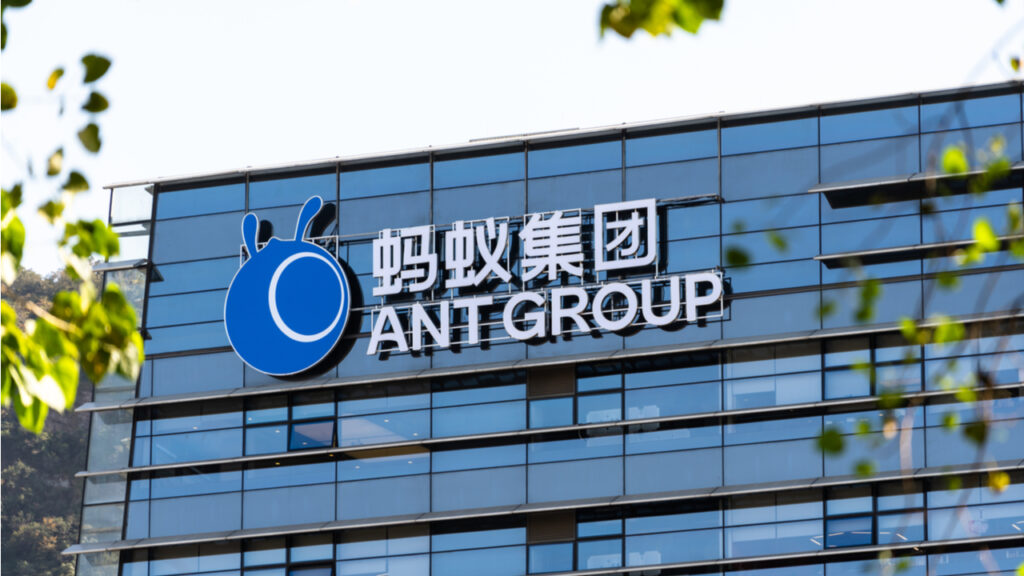
Ant Group, the owner of the world’s largest mobile payment platform, Alipay, has unveiled its new sub-brand called ZAN, focusing on blockchain development and services tailored for both institutional and individual Web3 developers.
The official press release, issued on Sept. 8, outlines ZAN’s extensive range of technical offerings for its clientele. ZAN’s offerings commence with a solution designed to assist Web3 companies in issuing and managing real-world assets (RWAs) in strict adherence to local regulatory requirements.
The portfolio also encompasses a suite of technical products, encompassing electronic Know Your Customer (KYC) procedures, Anti-Money Laundering protocols, and Know Your Transaction checks specifically tailored for the Web3 ecosystem.
ZAN is further committed to delivering services such as smart contract audits and node services, including remote procedure calls, essential for constructing decentralized applications (DApps).
During the Hong Kong Web3 Festival held in April, HashKey DID, a Web3 decentralized identity data aggregator, made a significant announcement, indicating its adoption of ZAN’s electronic KYC solution.
READ MORE: Self-Custody Platform Enhances User Privacy with New ETH Pay Wallet Relay Feature
HashKey Group actively participated in ZAN’s brand launch ceremony, establishing itself as one of the inaugural partners in this innovative venture.
In a development reported by Bloomberg in July, Ant Group is actively exploring the possibility of separating its blockchain division from its core entity, a move necessitated by the pursuit of a financial holding license in China.
Reflecting on events from 2020, Ant Group had set ambitious objectives, targeting a valuation of $226 billion alongside a monumental $30 billion initial public offering (IPO) on both the Hong Kong and Shanghai stock exchanges.
Had this venture succeeded, it would have marked the largest IPO in history, surpassing records like the $29.4 billion raised during the Saudi Aramco IPO.
However, this ambitious IPO was ultimately thwarted by regulatory actions taken by the Chinese government.
Other Stories:
Race for First U.S. Ethereum ETF Heats Up as CBOE Files 19b-4 Applications
Sam Bankman-Fried’s Bail Revocation Upheld Amid Witness Tampering Concerns
Former OpenSea Manager Chooses Prison as Insider Trading Appeal Looms