



Catapult Trade has secured an investment from KuCoin Ventures, the company said. The size of the position was not disclosed and the funding round remains open, with proceeds earmarked in part for regional expansion into markets where conventional financial infrastructure is limited.
The platform, which went into full operation in December 2025 after an incentives-led pre-launch campaign, runs a synthetic trading model built around algorithmically generated price charts. Each chart’s complete price path is committed to via cryptographic hash before trading begins and revealed at settlement, enabling independent verification that no party altered the trajectory mid-session. The company has framed the design as a structural correction to memecoin launchpads, where information asymmetry has consistently produced adverse outcomes for retail traders. Cumulative volume on the platform has crossed $1.5 billion alongside an active user base of over 80,000, with no paid acquisition spend behind the growth.
Operational build-out has accelerated in the months since the KuCoin Ventures investment. Claire “Cookie” Dang joined as VP of Growth and Co-Founder, bringing experience from senior roles at Binance, KuCoin and Crypto.com, and taking responsibility for community growth and international expansion. Her arrival has been accompanied by a broader expansion of the company’s external presence, including the launch of the Catapult-sponsored Terminally Online podcast and the assembly of a media network of acquired social properties with combined reach above 20 million followers. Catapult Trade has also run trading-activity collaborations with the exchange Gate during the period. Separately, the platform’s chart-generation engine has cleared a second independent security audit by Halborn, following an earlier review by Hashlock, with the company committing to an annual audit cadence going forward.
Speculation about a forthcoming token distribution has continued, fueled by a points system the platform has operated since launch. The company has acknowledged a token is planned in community sessions but has yet to publish an allocation schedule or vesting framework. A second product, Catapult Hyper, is under development and would extend the platform’s surface area from synthetic trading into multichain on-chain launches. Built on LayerZero’s omnichain fungible token standard, Hyper is intended as a complement to the existing product rather than a replacement.
The investment arrives during a phase of consolidation in consumer-facing crypto. Hyperliquid has become the reference point for on-chain perpetuals, Polymarket for prediction markets, and stablecoin-yield products for retail-accessible DeFi. What these share is that demand for the product is independent of speculation about token value, with each capturing organic retail interest in the underlying activity. Catapult Trade occupies a fourth such category, gamified short-session trading on verifiable synthetic charts, and is currently the only operator running at meaningful volume in it.
Crypto’s consumer turn has been the through-line connecting these products. Where the last cycle’s dominant names rested on speculation about token economics, the current cohort is being assessed on the same criteria as any consumer software business, with active-user retention and fee revenue as the dominant signals. The cumulative effect is a market in which crypto’s consumer products are themselves the leading edge of the format, with the underlying financial infrastructure already built out across previous cycles.

Harvard Management Company has fully exited its position in BlackRock’s iShares Ethereum Trust ETF, selling the entire $86.8 million stake it had acquired only one quarter earlier, according to the university’s Q1 2026 13F filing with the Securities and Exchange Commission.
The exit was complete as of March 31, 2026, with the filing showing zero holdings in the Ethereum ETF after the position had been listed in Q4 2025 disclosures as one of the endowment’s emerging digital asset allocations.
Simultaneously, Harvard cut its iShares Bitcoin Trust holdings by approximately 2.3 million shares, a reduction of roughly 43 percent from the prior quarter, leaving it with 3,044,612 IBIT shares worth about $117 million.
The contrast between the full Ethereum exit and the partial Bitcoin reduction tells a story the filing itself does not explain, suggesting a deliberate tilt toward Bitcoin as the preferred crypto allocation rather than a wholesale exit from digital assets.
Ethereum’s price decline is the obvious contextual backdrop. The token has fallen more than 50 percent from its all-time high of approximately $4,953 reached in August 2025, trading around $2,100 to $2,120 in the days surrounding the filing’s release.
A 13F filing records only quarter-end positions and does not disclose trade timing, rationale, or whether the sale was executed in a single transaction or spread across the quarter, meaning the precise circumstances of Harvard’s exit remain opaque.
What makes the exit particularly significant is the timing relative to the Ethereum Foundation’s widely covered leadership instability. Eight Foundation team members departed in 2026 including researchers Julian Ma, Carl Beek, Tim Beiko, Barnabe Monnot, Trent Van Epps, and Alex Stokes, alongside former co-executive director Tomasz Stanczak.
Community member Banteg posted on X: “Situation: all three EF protocol leads have left,” alongside a marked-up version of the Foundation’s organisational chart, a post that circulated widely and crystallised the breadth of the departures in a way that formal announcements had not.
Journalist Laura Shin characterised the internal debate by writing that the Foundation’s March mandate outlining priorities around decentralisation, privacy, and censorship resistance contained “great” principles that were “worth fighting for” but argued the organisation needed to place greater emphasis on tokenomics and Ether’s market value.
Abu Dhabi’s Mubadala moved in the opposite direction to Harvard, increasing its iShares Bitcoin Trust stake by 16 percent to 14,721,917 shares worth approximately $566 million, illustrating how differently institutional investors are currently reading the risk-reward profile of crypto ETF exposure.
Harvard’s prior quarter decision to add the Ethereum position and then exit it entirely within three months sits alongside Dartmouth’s reported expansion into Solana ETFs, suggesting that institutional crypto allocation is still in a genuinely exploratory phase rather than reflecting settled long-term conviction.
The next quarterly filing for Q2 2026 is due in August, which will show whether Harvard continues to reduce exposure, stabilises at the current Bitcoin-only position, or rebuilds the Ethereum allocation if price conditions improve.
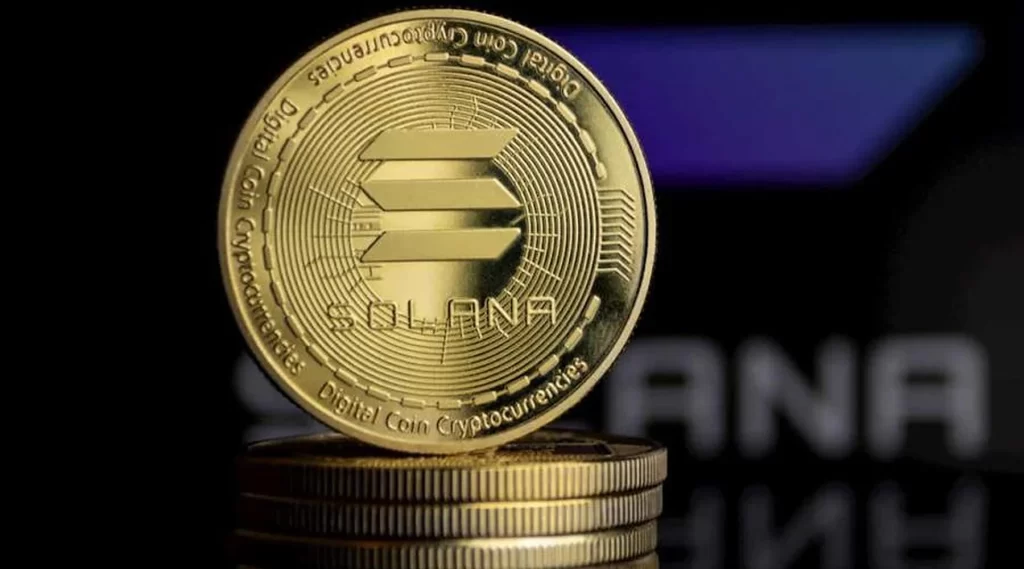
Solana (SOL) has reclaimed momentum in the institutional capital allocation landscape, with ETF inflows during May 2026 rebounding decisively after a six-month declining trend that had compressed monthly inflows from a high of $419 million in November 2025 to just $39.93 million in April. As of May 19, Solana spot ETF products have accumulated more than $103 million in monthly inflows, outpacing XRP’s $97 million for the same period and signalling a genuine rotation into altcoin-focused products from investors pulling back on Bitcoin exposure.
The broader crypto market context matters here. CoinShares data published on May 19 confirmed that digital asset investment products recorded $1.07 billion in outflows last week overall, with Bitcoin products absorbing $982 million of that figure. Ethereum saw $249 million leave its investment products, its largest weekly outflow since late January. Against that backdrop, Solana’s $55.1 million and XRP’s $67.6 million in weekly inflows were striking in their divergence from the broader market direction.
The interpretation of these flows requires some care. Analysts have described the movement not as investors exiting crypto but as a more sophisticated rotation toward assets with distinct narratives and yield characteristics. Solana’s staking infrastructure, network speed, and growing institutional validation through spot ETF products launched in October 2025 give it a story that is meaningfully different from Bitcoin’s store-of-value proposition. Investors increasingly appear to want targeted exposure rather than broad sector risk.
SOL was trading at approximately $86 on May 21 according to live price data, up around 2.15% over the previous 24 hours. That places the token at the lower end of the forecast range some analysts had pencilled in for this month, with prediction models from CryptoChangelly and InvestingHaven both pointing to a potential path toward $97 to $100 before the end of May if the current momentum sustains.
The concentration risk within Solana’s ETF product suite is worth monitoring. In its strongest recent week, Bitwise’s BSOL accounted for approximately 92% of the category’s total inflows, a concentration that leaves the overall Solana ETF market more vulnerable to product-specific disruptions than a more diversified XRP ETF ecosystem where inflows are spread across five separate products.
Solana’s April on-chain data presented a somewhat contradictory picture that informed the current setup. Exchange net position flows were positive every single day during April, meaning more SOL moved onto exchanges than off them throughout the month. In theory, that distribution pressure should have weighed heavily on prices, yet SOL closed April up 1.18%, its first positive month since October 2025. The explanation appears to lie in ETF buying absorbing the exchange selling.
Broader geopolitical risk remains a headwind for the entire crypto complex. Bitcoin dipped to around $77,200 mid-week before recovering slightly as Senate moves to curb Trump’s Iran war powers provided some risk-on relief. Altcoins including Solana followed the bounce, but the connection between macro risk sentiment and crypto pricing remains tight enough that any renewed escalation would likely pull the sector lower regardless of Solana-specific positives.
The medium-term picture for SOL will depend on whether institutional appetite continues to recover from the April lows and whether the Solana ecosystem can demonstrate the kind of developer and usage growth that justifies the premium its network commands relative to competitors in the smart contract space.

Bitcoin is trading at approximately $78,180 as of Sunday, down around 1.1% in the past 24 hours and continuing to give back gains that had briefly pushed the asset above $82,000 following the US Senate Banking Committee’s passage of the Digital Asset Market CLARITY Act in a 15-9 bipartisan vote on May 14.
The retreat from those levels is being driven by a combination of profit-taking from institutional ETF holders, hotter-than-expected Producer Price Index data showing US inflation rising 1.4% in April, and a wave of Bitcoin long liquidations that wiped approximately $77.95 million in leveraged positions over a 24-hour period as the asset rejected resistance near the 200-day simple moving average at $82,270.
The CLARITY Act committee passage was broadly celebrated across crypto markets, with XRP and Dogecoin each rising around 5% in the immediate aftermath while Bitcoin climbed above $81,000 before the subsequent pullback. The bill, which aims to clarify regulatory jurisdiction between the SEC and CFTC, classify most digital assets as commodities, and establish a framework for stablecoin regulation, now advances to the full Senate with a floor vote targeted for summer. Citi analysts have tied a $143,000 Bitcoin price target directly to full Congressional passage of the act, projecting an additional $15 billion in net ETF inflows once the bill clears both chambers. That target sits dramatically above current prices, and the market’s muted follow-through on the committee win reflects awareness that the full Senate path remains uncertain.
Spot Bitcoin ETFs recorded $635 million in net outflows on May 13, the largest single-day withdrawal since late January, led by Fidelity’s FBTC which alone accounted for over $86 million in outflows. The reversal followed a period of strong inflows that had totalled approximately $2.7 billion through nine consecutive days of net additions in early May. BlackRock’s IBIT absorbed $1.7 billion in inflows during April alone, representing roughly 70% of total US spot Bitcoin ETF flows for the month and cementing its role as the primary vehicle for institutional Bitcoin allocation. The oscillation between heavy inflows and sharp outflow days reflects the behaviour of institutions treating Bitcoin ETFs as a tactical risk allocation rather than a permanent strategic position, meaning flows can reverse quickly when macro data turns against risk assets.
The technical picture remains mixed. Bitcoin is trading below its 50-day simple moving average, a shorter-term bearish signal, but above the 200-day moving average, which has been rising since mid-May and provides longer-term structural support. The 14-day RSI of around 52 places the asset in neutral territory rather than the deeply oversold conditions that have historically preceded sharp recoveries. Exchange reserves continue to decline, sitting near multi-year lows, which reduces the available supply that sellers can quickly bring to market and theoretically provides a floor under any prolonged decline. The Coinbase Premium, which measures institutional US demand by tracking the price difference between Coinbase and Binance, flipped negative in the days before the outflow spike, providing an early signal that institutional sentiment was shifting before the data confirmed it.
On-chain data from CoinShares shows that Bitcoin’s total ETF net asset value stands at approximately $107.31 billion, with cumulative historical inflows reaching $59.13 billion. That figure compares to the $61.19 billion peak recorded in October 2025, when Bitcoin itself was trading above $126,000. The proximity to prior flow highs at prices more than 35% below those levels suggests institutional positioning is actually quite concentrated relative to price, which cuts both ways: it provides support through existing long exposure but also creates meaningful overhang if confidence weakens.
Bitcoin hit an all-time high of $126,000 in October 2025 before a sustained sell-off through the winter months, with five consecutive red months from October through February taking the price from that peak to a low near $60,000. The recovery to the current $78,000 to $82,000 range has been driven by the combination of ETF inflow momentum and the CLARITY Act legislative progress rather than by broad retail participation, which the Fear and Greed Index reading of 31 confirms remains in “Fear” territory. Benjamin Cowen, CEO of Into The Cryptoverse, noted the possibility of an earlier-than-expected cycle bottom: “Bitcoin could bottom sooner, as early as May. But in order for that to happen, there would have to be some type of massive capitulation well below what we historically expect.” That scenario has not yet materialised, leaving the market in a state of range-bound uncertainty as the CLARITY Act heads toward its next legislative hurdle.

The legal cannabis industry operates under a peculiar financial handicap. Despite generating billions in legitimate taxable revenue across multiple US states and a growing number of international jurisdictions, many dispensaries and cannabis businesses remain shut out of conventional banking.
Federal prohibition in the United States means most major banks refuse to offer merchant accounts, business loans, or standard payment processing to cannabis operators, forcing much of the industry to function as a cash-only business. That cash dependency creates security risks, operational inefficiencies, and compliance headaches that cost merchants an estimated 10 to 15 percent of total sales in handling costs alone.
It is against this backdrop that Dash has positioned itself as a serious candidate to become the marijuana industry coin of choice. Dash, originally launched in 2014 as a fork of Litecoin, has distinguished itself from the cryptocurrency crowd through a focus on practical payments utility rather than speculative investment narratives. Its InstantSend mechanism enables transaction confirmation in under a second, giving it a functional edge over Bitcoin and many other cryptocurrencies that require waiting periods incompatible with retail point-of-sale environments.
The most significant early proof of the concept came through a partnership with Alt Thirty Six, a Phoenix-based digital payments platform that integrated Dash as its preferred payment method for cannabis dispensaries, vendors, and customers across the United States. The collaboration was designed to address the cash problem head-on, enabling merchants to receive and settle payments digitally using Dash rather than handling large volumes of physical currency. Alt Thirty Six subsequently secured $10 million in Series A investment to scale the platform, a sign that institutional money saw merit in the cannabis-crypto payments thesis. Dash also partnered with VegaWallet, another fintech startup targeting the underbanked cannabis sector, deepening its presence in the vertical.
The practical benefits for cannabis merchants are tangible. Digital payments via Dash eliminate the cost and security risk of transporting and storing cash, remove card processing fees charged by traditional networks, and provide instant settlement without the delays associated with bank transfers. For customers, the experience is similar to a contactless card payment at existing point-of-sale terminals, which removes a meaningful adoption barrier.
The argument for Dash as the marijuana industry coin also draws on its governance model. Ten percent of all Dash mining income is allocated to a decentralised treasury controlled by masternode holders, creating a self-funding system for community-approved projects and partnerships. That structure has enabled the Dash community to fund cannabis-specific integrations and industry event participation in ways that less organised cryptocurrency projects cannot replicate.
Critics of the thesis point to several genuine obstacles. As traditional banks and credit unions have gradually begun serving cannabis businesses in some states, the original urgency that made Dash’s pitch compelling has partially diminished. Cryptocurrency volatility remains a concern for merchants who price their products in dollars and cannot afford to absorb significant exchange rate swings between the moment of sale and conversion. Widespread merchant adoption is still limited relative to the scale of the industry, and competing payment solutions from stablecoins and fintech operators are competing for the same market.
One assessment of the current situation concludes that while the original cannabis thesis has not fully materialised on the scale early advocates projected, Dash’s broader payments infrastructure remains functional and relevant. The coin’s real opportunity may lie less in any single industry vertical and more in its demonstrated ability to process fast, low-cost transactions wherever traditional finance is slow to arrive.
Whether Dash ultimately becomes the definitive marijuana industry coin or a more general-purpose payments layer across underbanked sectors, the argument it presents is rooted in a genuine problem that has not been fully solved. As cannabis legalisation continues to expand and banking access remains inconsistent, the space for a proven crypto payments solution remains open.

Few names in the digital art world carry as much weight as Beeple. When Mike Winkelmann — better known by his moniker — sold a JPEG called “Everydays: The First 5000 Days” at Christie’s auction house in March 2021, the $69.3 million sale price rewrote the record books and forced the mainstream to take NFTs seriously. That moment placed Beeple among the most valuable living artists in history and marked the first time a major auction house had sold a purely digital artwork. For many observers, it was the cultural turning point that legitimised the entire NFT asset class.
So how much is a Beeple NFT worth now, more than five years on? The short answer is that it depends entirely on which piece you are looking at, and the gap between the headline number and current market reality is dramatic. The $69.3 million “Everydays” sale remains a historic landmark, but the broader Beeple market has cooled considerably in line with the overall NFT correction that followed the 2021 peak.
For collectors tracking the floor price of his ongoing collections, the picture is more nuanced. The BEEPLE: The 5000 Days Collection, a commemorative drop linked to the original “Everydays” project, currently shows a floor price of around $53,000 across 119 minted NFTs held by 99 unique owners, with a total collection market cap of approximately $6.3 million. Entry-level pieces in that specific drop have been available for as little as $34,000, a figure that reflects both the liquidity constraints of the NFT market and the steep fall from the speculative highs of early 2021.
The crash in NFT trading volumes tells much of the story. Between January and September 2022, monthly trading volumes across the sector dropped by roughly 97%, wiping out billions in paper wealth and deflating the valuations of even blue-chip artists like Beeple. Winkelmann himself acknowledged at the time that the market was experiencing bubble dynamics, a candid admission that did nothing to stop the frenzy while it lasted.
Several factors explain the divergence between that historic $69.3 million sale and where Beeple NFT prices sit today. First, the original “Everydays” was a genuinely one-of-a-kind cultural artefact representing over 13 years of daily digital work, compressed into a single collage. Nothing else in the Beeple catalogue carries that same narrative weight or scarcity. Second, the 2021 auction attracted just two serious bidders, which critics now point to as a structural weakness. Deep, durable market value typically requires many competing buyers, not a contest between two collectors with deep pockets. Third, as traditional banks and fintech providers have incrementally opened up to digital assets, some of the novelty premium attached to early NFT commerce has eroded.
That said, Beeple retains genuine standing in the NFT art world. In 2026, the market increasingly rewards cultural provenance and artistic credibility over hype, and Winkelmann has both. Historical data confirms that early Beeple works continue to command serious monetary value, with collectors still paying five-figure sums at floor level and far more for notable individual pieces. Aggregate market cap estimates across his various collections place total Beeple NFT value somewhere between $63 million and $66 million, which suggests the asset class as a whole has retained more value than critics expected given the scale of the broader market downturn.
Beeple’s estimated personal net worth currently sits at around $50 million, a figure shaped heavily by the original Christie’s windfall and ongoing secondary market activity across his catalogue. His work continues to be cited as a reference point in debates about the long-term viability of digital art ownership and what NFTs can achieve when paired with genuine creative credibility.
The broader NFT landscape in 2026 is markedly different from its 2021 incarnation. Speculative volume has collapsed, the cartoon ape era feels distant, and the market now rewards selectivity and substance over momentum trading. Beeple sits comfortably in the upper tier of that recalibrated hierarchy, alongside the likes of CryptoPunks and Art Blocks. His most historically significant work may never again command $69 million, but the Beeple NFT ecosystem continues to attract serious collectors who believe digital art provenance is a real and lasting source of value.
For anyone researching how much a Beeple NFT is worth now, the answer is: considerably less than the headline, but considerably more than zero, and still more than most NFT artists can claim.
Ethereum is working through a serious structural debate about its staking reward model, with asset manager Grayscale publishing research that explicitly backs proposals to cap how much validators can earn above certain staking thresholds, arguing the change would be “positive for the price of ETH” over time.
The report, authored by Grayscale’s Head of Research Zach Pandl, identifies two compounding problems that have quietly shifted Ethereum from a deflationary to an inflationary token since its peak burning period.
The first issue is the collapse in Layer 1 transaction fee revenues. As more activity has migrated to cheaper Layer 2 networks, the base fee burned on every Ethereum transaction has declined substantially. Annual gross inflation now sits at approximately 1 million ETH, with the token burn rate failing to keep pace. The second structural problem is that the marginal cost of staking ETH has fallen to near zero. When Ethereum first introduced proof-of-stake, staked assets were locked with no withdrawal option, imposing a genuine liquidity premium on validators. With withdrawals now enabled and liquid staking tokens, ETFs, and corporate treasury vehicles all competing to stake at minimal cost, that risk premium has essentially disappeared. The consequence, Pandl warns, is that if current incentives persist, virtually all ETH could eventually end up staked, creating unnecessary dilution and dangerous centralisation risk if a handful of large validators control the majority of staked supply.
The Ethereum community is currently discussing proposals including EIP-7917, which would introduce tiered or capped reward curves. Under these models, validators staking beyond a defined threshold would receive diminishing or zero additional rewards, structurally reducing the incentive to over-stake. Grayscale’s research points out that capping issuance above certain staking ratios would slow supply growth and enhance ETH’s scarcity characteristics. The firm draws an analogy to commodity markets, where constrained production typically supports long-term prices. A record 32% of all ETH is currently staked, with the base staking yield sitting at approximately 3.0-3.2%, down roughly 40% from levels above 5% in late 2022.
As of Friday morning, ETH is trading at approximately $2,255, up around 1.4% over the past 24 hours and maintaining a market capitalisation of roughly $272 billion. Whale wallets have been accumulating heavily in recent sessions, with on-chain data indicating purchases of over 140,000 ETH in a 96-hour window earlier this month. The upcoming Glamsterdam upgrade, targeting June 2026, is expected to significantly increase Layer 1 throughput and is viewed by some analysts as a catalyst that has not yet been fully priced into the market. Whether the staking reward debate ultimately results in a protocol change will depend on community consensus, a process that on Ethereum tends to move slowly, though Grayscale’s public backing adds weight to the reformist camp.

Bitcoin closed the week at approximately $80,960, down 0.76% across seven days of trading that saw the price touch $82,000 twice before being rejected at that level on both occasions. The pattern has now repeated four times in the current cycle, establishing $82,000 as a technical and macro resistance level that has hardened with each failed breakout attempt.
The final catalyst of the week was Tuesday’s April CPI report showing annual headline inflation at 3.8%, the highest reading since 2023 and above the 3.7% consensus forecast. That single data point pushed rate cut expectations from 2026 entirely into 2027, lifted bond yields, and removed the easy-money macro tailwind that had quietly supported Bitcoin’s recovery from the roughly $63,000 level traded in early February.
The relationship between Bitcoin and Federal Reserve policy expectations has become increasingly mechanical in the post-ETF era, as institutional capital now dominates flows in and out of the asset in ways that retail sentiment alone never could. When the CPI landed, yields moved immediately, the dollar strengthened, and risk assets including Bitcoin surrendered gains that had built over several weeks of improving sentiment. Ethereum was hit harder, falling 3% on the day to approximately $2,259, underperforming Bitcoin and reflecting the higher beta typically associated with second-tier crypto assets when macro conditions tighten.
BlackRock’s iShares Bitcoin ETF, IBIT, recorded $269 million in net inflows in a single session last week, the highest single-day figure in five weeks, and total weekly ETF inflows across all Bitcoin products reached $858 million. That institutional demand has been the structural support beneath the market during a period when price action has been uninspiring. Strategy, formerly MicroStrategy, continued its weekly Bitcoin accumulation, purchasing another 535 BTC despite the price stagnation, the smallest weekly addition of 2026 but a signal that the company’s long-term thesis remains unchanged.
Exchange reserves near seven-year lows and sustained buying by wallets holding more than 1,000 BTC provide the on-chain underpinning that analysts point to when arguing the current consolidation is accumulation rather than distribution. Funding rates in perpetual futures markets remain neutral, having shifted away from the negative readings that indicated heavy short positioning earlier in the year. The shift away from short pressure suggests the short squeeze dynamic that carried Bitcoin from $66,000 to $82,000 has largely played out, and the next directional move will be determined by macro triggers rather than technical positioning.
The Digital Asset Market Clarity Act Senate Banking Committee markup, scheduled for Thursday, May 14, represents the most significant near-term fundamental catalyst for the market. A credible advance of the bill would provide regulatory clarity on digital asset classifications, custody, and jurisdictional boundaries between the SEC and CFTC, exactly the kind of structural certainty that institutional capital has been waiting for before deploying at scale. Polymarket currently prices a 75% probability of the CLARITY Act becoming law in 2026. If the markup produces a clean result and the bill advances toward a full Senate vote, Bitcoin has a clear path toward the $85,000 level that both on-chain analysts and options positioning have flagged as the next structural threshold.

Bitcoin (BTC) is trading in the $78,000 range heading into May 2026, sitting in a range it has occupied since mid-April after bouncing off support at $75,000 earlier in the week. The price action has been relatively contained, with BTC stuck between $75,000 and $80,000 for approximately two weeks, but there is a convergence of factors in May that analysts believe could break this range decisively in either direction. The Fear and Greed Index sits at neutral, reflecting the uncertain sentiment that has characterised recent trading.
April was actually one of the strongest months for Bitcoin ETF inflows this year, with approximately $2.44 billion flowing into spot ETF products during the first three weeks of the month. BlackRock’s IBIT captured roughly 70 percent of those flows, reinforcing its dominant position in the institutional Bitcoin market. The inflows then reversed slightly in the final days of April, with $491 million leaving across three consecutive sessions, which contributed to the current price consolidation. Whether May’s inflows resume is seen as a key price indicator.
Ark Invest published analysis this week projecting that Bitcoin’s market capitalisation could reach $16 trillion by 2030, implying a price roughly ten times current levels. Cathie Wood’s firm cited accelerating institutional adoption through ETFs and corporate treasuries, combined with Bitcoin’s growing credibility as a macro hedge and “digital gold.” The firm also forecast the broader crypto market cap reaching $28 trillion by the end of the decade. The research is optimistic by design, but it captures a genuine shift in how institutional investors discuss Bitcoin as an asset class.
Several macro catalysts will influence Bitcoin’s trajectory during May. The Iran war has been a persistent source of financial market anxiety, with oil prices elevated and inflation running above expectations in the US. A ceasefire or resolution would likely be bullish for Bitcoin alongside broader risk assets, while further escalation risks another correlation sell-off. Strategy’s Q1 earnings report on May 5 will also be closely watched, as it will reveal the scale of unrealised losses on their 818,334 BTC position during what was a difficult first quarter for price.
Technically, analysts note that Bitcoin needs to close above the 200-day EMA at $82,228 on a weekly basis to confirm a broader trend reversal. The current range represents a decision point, and the Senate’s recent progress on stablecoin legislation has been cited as a positive regulatory signal for the overall crypto market structure. For now, Bitcoin remains one of the most watched assets globally, with prediction market participants placing the highest volume of bets on a price between $80,000 and $90,000 as the likely May range.

Bitcoin (BTC) is entering May 2026 having delivered one of its strongest monthly performances of the current cycle, gaining approximately 13 percent across April from lows near $68,000 in early February to the current trading range of $76,000 to $77,500, while simultaneously struggling to break above the $80,000 resistance level that has now rejected the cryptocurrency on multiple attempts and become the most watched technical threshold in the digital asset market.
The Federal Reserve’s decision to hold interest rates steady at the April 29 meeting while signalling a “higher-for-longer” trajectory was the most significant domestic macro event of the week for Bitcoin, removing what would have been a near-term positive catalyst in a rate cut while also limiting the downside risk of a hawkish surprise, leaving the cryptocurrency in the same range-trading environment that has characterised the past two weeks.
Prediction markets on Kalshi are pricing a 64 percent probability that Bitcoin will hold above $76,000 entering May 1, with contracts tied to a recovery above $77,000 showing only a 37 percent implied probability, suggesting the market-implied view among active traders is one of stable consolidation at current levels rather than either a decisive break higher or a meaningful pullback in the immediate term.
The liquidation data adds texture to that cautious consensus, with more than $110 million in Bitcoin leveraged positions being wiped out across the most recent reporting period as the market cleared out the most aggressive bullish positioning that had built up during April’s recovery, a deleveraging episode that has historically served to create a cleaner base from which more sustainable upside moves develop once the overleveraged speculative positions are removed.
The $76,200 level, aligned with the 23.6 percent Fibonacci retracement of the move from the February lows to the April high of approximately $79,500, has emerged as the key near-term support that technical analysts are watching, with a sustained hold above that level expected to produce continued consolidation in the $76,200 to $79,000 range while a break below it risks a sharper move toward $73,500 if elevated oil prices from the Iran conflict continue to weigh on risk appetite broadly.
The Iran conflict remains the most persistent macro headwind for Bitcoin’s recovery, with oil prices holding above $100 per barrel following Trump’s rejection of Iran’s offer to end the US naval blockade and reopen the Strait of Hormuz, and the associated risk aversion flowing into crypto markets through the modest 18 percent correlation with the S&P 500 that characterises Bitcoin’s current positioning.
Strategy’s 815,061 BTC holding, accumulated at an average cost of $75,528 per coin, sits in positive territory at current prices and represents a commercial vindication for Michael Saylor’s accumulation model that is not lost on the institutional community watching how the world’s largest corporate Bitcoin holder has navigated one of the more volatile quarters in recent digital asset market history.
Bitcoin ETF inflows have remained constructive through the consolidation period, with US spot Bitcoin ETFs extending their pattern of sustained net positive flows that has been one of the defining structural features of the 2025 to 2026 market cycle and that provides a more reliable floor beneath prices than the purely speculative capital that drove previous cycle highs.
The broader crypto market is showing the classic consolidation pattern that follows a significant recovery rally, with the CoinMarketCap altcoin season indicator sitting in neutral territory and capital concentration in Bitcoin and Ethereum rather than the broader altcoin space suggesting that the most sophisticated money is not yet confident enough in the macro environment to extend into higher-beta positions.
Looking forward into May, the catalysts that could break the current range in either direction include any meaningful development in the Iran ceasefire negotiations, any shift in the Federal Reserve’s communication about the rate path, further Strategy Bitcoin purchases that Saylor has pre-announced through his characteristic social media tracker posts, and the continued conversion of the White House’s Strategic Bitcoin Reserve framework from conceptual to operational.