



South Korean authorities have indicted Do Kwon, the co-founder of Terraform Labs, along with nine other individuals, in connection with a high-profile cryptocurrency investigation. The individuals are facing charges of violating the Act on the Reporting and Use of Specific Financial Transaction Information.
The indictment comes as a result of a joint investigation by the South Korean police, the Financial Services Commission (FSC), and the Financial Intelligence Unit (FIU). The authorities have scrutinized the actions of Terraform Labs, the company behind the Terra blockchain, as well as the other individuals involved.
The investigation focused on allegations of failing to comply with South Korea’s stringent anti-money laundering (AML) regulations. Specifically, the charges involve the accused individuals neglecting to report transactions exceeding 10 million Korean won (approximately $8,400) and not implementing a proper AML system.
The indictment of Do Kwon and the other individuals comes amid growing concerns surrounding the use of cryptocurrencies for illicit activities. South Korean authorities have been cracking down on cryptocurrency exchanges and other businesses involved in the space to ensure compliance with financial regulations and to protect consumers.
Terraform Labs has been a prominent player in the cryptocurrency ecosystem, with its native cryptocurrency, LUNA, achieving a significant market capitalization. The indictment of its co-founder and other individuals may have implications for the company and its reputation within the industry.
As South Korea continues to take a hard stance on cryptocurrency-related businesses, it remains to be seen how this case will unfold and what impact it will have on the nation’s crypto landscape.

Cryptocurrency exchange Gemini, founded by the Winklevoss twins, is reportedly gearing up to launch a derivatives platform outside of the United States. According to a CoinTelegraph article, this move aims to expand the company’s product offerings and reach a broader global audience.
Gemini’s derivatives platform will offer a range of financial products, including futures and options, which allow traders to speculate on the future prices of cryptocurrencies. These products have gained increasing popularity among both retail and institutional investors, providing an opportunity for Gemini to tap into this growing market.
The decision to launch the platform outside of the United States is likely due to the country’s stringent regulatory environment surrounding cryptocurrency derivatives. By operating in a different jurisdiction, Gemini can offer these products without encountering the same regulatory hurdles faced by competitors in the US market.
Although the specific location for the derivatives platform has not been disclosed, Gemini has been expanding its international presence in recent years. The company has already established operations in regions such as Europe, Asia, and South America, providing a foundation for further global expansion.
The introduction of a derivatives platform is in line with Gemini’s broader strategy of diversifying its product offerings and becoming a comprehensive cryptocurrency services provider. In addition to its core exchange services, the company has also launched a custody service, a stablecoin, and a credit card that offers rewards in cryptocurrency.
As the global interest in cryptocurrency derivatives continues to grow, Gemini’s decision to launch a platform outside of the United States demonstrates the company’s ambition to remain at the forefront of the rapidly evolving digital asset space.
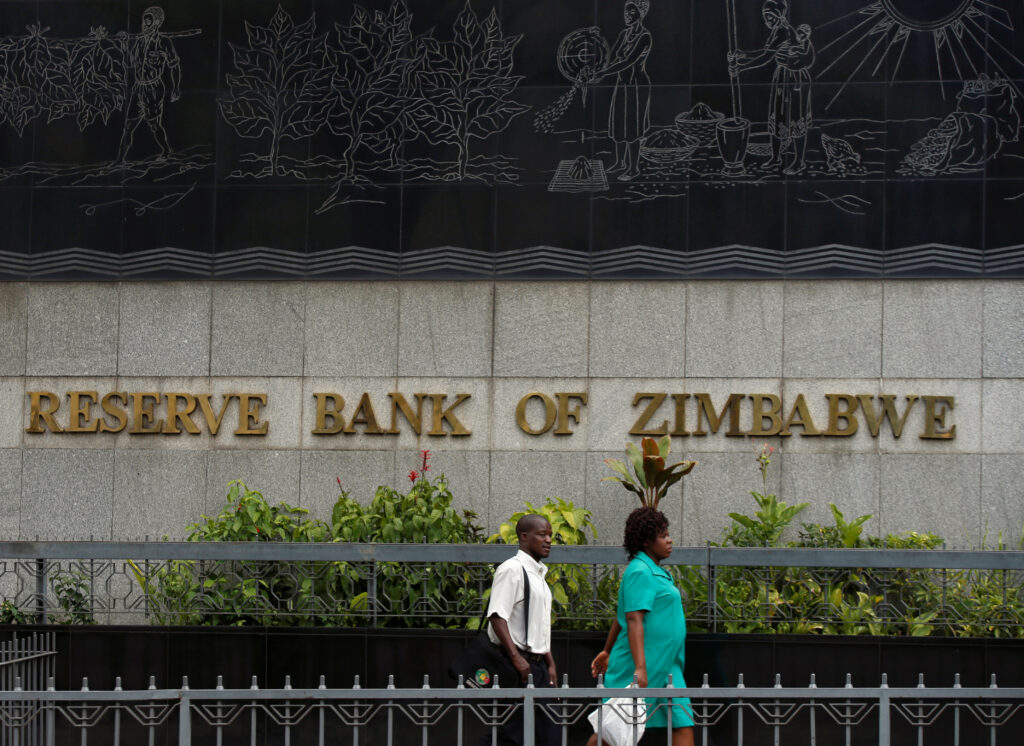
Zimbabwe’s central bank, the Reserve Bank of Zimbabwe (RBZ), is reportedly preparing to introduce a gold-backed digital currency. A report from CoinTelegraph reveals that the move is an effort to address the country’s ongoing economic challenges, including hyperinflation and currency instability.
This gold-backed digital currency is designed to offer Zimbabweans a more stable and reliable means of transacting, with the goal of fostering economic growth and stability. The digital currency will be backed by physical gold reserves, which are expected to help maintain the currency’s value and protect it from rapid fluctuations.
John Mangudya, the Governor of the Reserve Bank of Zimbabwe, announced the central bank’s plans during a recent press conference. He explained that the introduction of this digital currency aligns with global trends towards digitalization, and that the gold-backed nature of the currency would help to instill confidence in its stability.
In recent years, Zimbabwe has grappled with a range of economic challenges. The collapse of the Zimbabwean dollar in 2009 led to the adoption of multiple foreign currencies as legal tender. However, the nation has struggled with currency shortages and a growing demand for cash, resulting in the introduction of the bond note in 2016.
Despite these efforts, Zimbabwe continues to face economic difficulties, with many citizens resorting to cryptocurrencies such as Bitcoin as a more reliable store of value. The launch of a gold-backed digital currency could provide a viable alternative, offering citizens a stable, government-backed option for transactions and savings.
It remains to be seen how the gold-backed digital currency will impact Zimbabwe’s economy, but the central bank’s move reflects an increasing global interest in digital currencies and their potential to address economic challenges.

Trust Wallet, a popular cryptocurrency wallet, has announced plans to reimburse users who were affected by a recent security breach that resulted in a loss of approximately $170,000. The company’s swift response demonstrates its commitment to addressing security concerns and protecting the interests of its users.
The incident, which occurred earlier this week, involved unauthorized access to users’ funds due to a vulnerability in the Trust Wallet system. The breach affected an estimated 21 wallets, leading to the loss of various cryptocurrencies, including Ethereum and Binance Smart Chain tokens.
In a statement addressing the breach, Trust Wallet acknowledged the security incident and assured users that the company is taking necessary measures to rectify the situation. As part of their response, Trust Wallet is set to reimburse all affected users for their losses. The company is currently working on identifying the root cause of the vulnerability and implementing security upgrades to prevent similar incidents in the future.
Trust Wallet’s decision to compensate users for their losses has been well received by the cryptocurrency community, demonstrating the company’s dedication to maintaining a secure and transparent platform. The move also serves as a reminder to the broader industry of the importance of prioritizing security measures to protect users’ funds and maintain trust in the rapidly evolving world of digital assets.
As the cryptocurrency space continues to grow, it is essential for wallet providers and exchanges to continually invest in security infrastructure and adopt best practices to safeguard user assets. Trust Wallet’s response to the breach offers a model for how companies can take decisive action to address security concerns and maintain customer trust in the face of potential threats.

As Bitcoin’s price begins to inch away from recent lows, the market remains cautious, with the cryptocurrency’s weekly chart indicating a potential bearish engulfing. On Monday, Bitcoin rose 2.5% off its lows, hitting the $43,500 mark. While this upward movement has been noted by the market, experts continue to keep a watchful eye on the trend for further signs of recovery or another dip.
The recent decline in Bitcoin’s price was initially prompted by comments from the Federal Reserve’s Jerome Powell, who suggested the possibility of a digital dollar in the future. These remarks led to market uncertainty, as investors grappled with the potential implications for the cryptocurrency market.
As the market continues to navigate this uncertainty, analysts emphasize the importance of monitoring Bitcoin’s price movements. The weekly chart, in particular, is being watched closely for signs of a bearish engulfing, which could indicate a further downward trend. A bearish engulfing is a pattern that occurs when a smaller green candle is followed by a larger red candle, which “engulfs” the entire body of the previous candle. This can often signal a trend reversal, suggesting that a bearish trend is about to begin.
Despite the looming threat of a bearish engulfing pattern, some traders maintain an optimistic outlook on the cryptocurrency’s prospects. Key support levels for Bitcoin are currently hovering around the $42,000 mark, with resistance levels at $45,000. If the cryptocurrency manages to break past the resistance level, the market could potentially regain momentum and begin moving upward once more.
As Bitcoin struggles to recover from its recent downturn, investors are reminded to exercise caution and maintain a well-diversified portfolio in order to mitigate potential risks. Monitoring the market’s reaction to global economic developments, regulatory changes, and technological advancements will be critical in navigating the uncertain landscape of cryptocurrency investments.

Do Kwon, co-founder of Terraform Labs, has reportedly received support from his legal team in response to allegations of securities fraud levied by the U.S. Securities and Exchange Commission (SEC). Kwon’s attorneys have dismissed the claims, as the SEC increases scrutiny on the cryptocurrency industry.
Terraform Labs, the company behind the Terra blockchain and its native stablecoin TerraUSD (UST), has been the subject of an ongoing investigation by the SEC. The regulatory body alleges that the company and its co-founder, Do Kwon, engaged in fraudulent activities related to the sales of unregistered securities, thereby violating the U.S. securities laws.
In a recent development, Kwon’s legal team has reportedly refuted the SEC’s allegations, arguing that the regulatory body’s claims are unfounded. The attorneys emphasized that the tokens in question do not meet the criteria of securities under U.S. federal law, and as such, the SEC’s accusations hold no merit.
The SEC’s heightened attention towards the cryptocurrency sector has been a source of concern for many industry participants, who worry about the potential impact on innovation and growth. This increased scrutiny has, in some instances, led to legal battles between regulators and prominent figures within the crypto ecosystem.
Despite the ongoing regulatory challenges, Terraform Labs and Do Kwon remain committed to the development of the Terra blockchain and its ecosystem. The company has experienced significant growth, with TerraUSD (UST) emerging as one of the most widely-used stablecoins in the DeFi space. Terra has also gained recognition for its innovative use of algorithmic monetary policy and its potential to revolutionize the world of digital finance.
In summary, as the SEC continues to scrutinize the cryptocurrency sector, Do Kwon’s legal team is steadfastly dismissing allegations of securities fraud. With the backing of his attorneys, Kwon remains focused on the ongoing growth and development of the Terra blockchain and its native stablecoin, TerraUSD (UST).

As the price of Bitcoin (BTC) experienced a 10% drop within a week, traders and analysts within the cryptocurrency community are advising patience and calm, while emphasizing the need for a more comprehensive perspective on the market.
The leading cryptocurrency had been enjoying a relatively stable period before the sudden downturn, which took many by surprise. At the time of writing, Bitcoin’s price hovers around $52,000, a significant decline from the previous week’s high of $58,000.
Several factors have been cited as potential contributors to the drop, including increased regulatory scrutiny and the growing influence of institutional investors. However, it is important to consider the historical context of similar price fluctuations in the past. As many seasoned Bitcoin traders will recall, the market has weathered similar, if not more severe, dips before.
Veteran traders are urging the community to keep their cool and not to panic in the face of this recent downturn. They stress the importance of assessing the market from a long-term perspective, rather than focusing solely on short-term volatility.
One prominent Bitcoin trader, known as ‘CryptoCobain’ on Twitter, reminded followers that the cryptocurrency has a history of bouncing back from significant declines, stating that “Bitcoin has seen many 10-20% corrections during its last bull run, and it always recovered.” He further advised not to “make emotional decisions based on short-term price action.”
Some analysts also note that the current price decline may be a healthy correction, allowing the market to consolidate before potentially continuing its upward trajectory. They argue that such a correction can create a solid foundation for the next leg of the bull run, as it washes out weaker hands and attracts new investors looking for more attractive entry points.
Despite the recent dip, many in the cryptocurrency community remain optimistic about Bitcoin’s long-term potential. They continue to emphasize the importance of the digital asset as a store of value and hedge against inflation, especially in the current global economic climate.
In conclusion, while the recent 10% decline in Bitcoin’s price has undoubtedly shaken some investors, seasoned traders and analysts advise the community to maintain perspective and not to panic. By considering the long-term potential of Bitcoin and the historical context of similar price fluctuations, a more rational assessment of the market can be made.

The current state of the blockchain industry is marked by its rapid development and expansion. Over the past few years, blockchain technology has garnered significant interest and uptake, with many enterprises from diverse sectors adopting it to enhance their operational efficiency.
Enterprises from various industries are adopting blockchain technology to streamline their business operations. Blockchain offers a decentralized and secure platform for storing, managing, and sharing data, making it ideal for improving efficiency and security.
Supply chain management and financial industry payments are the common use cases for blockchain in the enterprise space. In contrast, identity management can help prevent identity theft and fraud, improving overall security.
Enterprise blockchain limitations
The one-size-fits-all approach of most enterprise blockchain solutions is a major limitation for businesses looking to leverage the technology. Customization options are often limited, preventing companies from tailoring operations to their unique needs and requirements. This lack of flexibility can cause frustration and inefficiencies limiting mainstream technology adoption.
Additionally, interoperability is a significant issue, as many blockchain platforms are siloed and unable to communicate. This can be a considerable challenge for companies that operate in complex ecosystems and require seamless data sharing. The lack of seamless integration also serves as a hurdle for enterprises to deploy on blockchains quickly.
Leading players, including Aurora Cloud, are driving innovation by addressing these issues empowering enterprises to leverage blockchain to the best potential and drive new revenue streams for their businesses.
How Does Aurora Cloud Fit in the Puzzle?
Aurora Cloud is an enterprise blockchain solution that provides a customizable kit enabling web2 enterprises to create their blockchain akin to Aurora. The blockchain’s transaction throughput is above $10 million per day. Aurora Cloud is distinguished from other enterprise blockchain solutions by its Aurora Borealis infrastructure, which enables customizing operations, and its ability to integrate with Aurora Silos, Near, and Ethereum, promoting interoperability.
Blockchain newcomers may find it hard to grasp the concept of transaction fees and network-specific tokens, hindering businesses from adopting blockchain technology. However, Aurora Cloud’s Borealis Business is a revolutionary solution that simplifies the user experience and allows for flexible economic models. This transaction processing and accounting engine hides transaction fee complexities, enabling businesses to integrate blockchain technology into their operations smoothly. Moreover, enterprises can permission native blockchains in a way wherein they can control who interacts with the blockchain as well as add sophisticated whitelisting features.
The ecosystem provides specialized blockchains explicitly designed for Aurora clients and offers more than just compatibility with Ethereum. These blockchains boast an array of cutting-edge innovations, including unique token and fee mechanisms, strict access controls, exceptional transaction throughput, and various other features. The deployment of Aurora Cloud on the Near Blockchain also provides enhanced security through replica smart contracts that inherit the security model of Near, ensuring that the blockchain is secure and reliable. Moreover, the cross-chain communication between independent Aurora Silos with Near and Ethereum redefines enterprise blockchain’s interoperability.
Conclusion
The future of the enterprise blockchain market looks promising and has the power to transform global markets and industries. However, innovation remains at the forefront with newer technologies, including Zk proofs driving momentum in the space. The current rate of blockchain adoption by enterprises is slow; however, we will witness a major uptick when sophisticated features strike in, allowing enterprises to plug in blockchain systems seamlessly.
The adoption of enterprise blockchain solutions is paramount, knowing that it can serve as a bridge to onboard mass users in web3.

San Francisco, United States, April 21st, 2023, Chainwire
Introducing Flow: The Game-Changing NFT Ecosystem Set to Revolutionize the NFT Market. Aggregator Beta Launches on Ethereum Mainnet. Groundbreaking AI and Rollup-Centric Roadmap Unveiled; Anticipated Token Launch on April 30.
Flow’s aggregator makes NFT bidding a breeze with their groundbreaking “place bid once, buy from everywhere” technology. Flow’s powerful order matching and execution engines provide users a great UX while protecting them from frontrunners and unnecessary gas fees by routing transactions via Flashbots. With a $3M seed funding round led by Nima Capital and participation from Shima Capital and other industry heavyweights, Flow is poised to take the NFT world by storm.
“Flow is a great example of what people can build on top of Reservoir which aggregates liquidity from all marketplaces” said Peter Watts, founder of Reservoir.
Developed by a team led by an ex-Googler and ex-Binance Labs incubee, Flow will soon integrate AI into its platform such as LLM-based NFT analytics solutions, cutting-edge agents to automate trading and tools for the community to create and deploy NFTs. The developers’ smart contracts already support the seamless automation of NFT trading actions.
As the blockchain world moves towards a modular, plug-and-play approach, Flow is perfectly positioned to create a modular NFT ecosystem.
“We are entering a modular world where execution environments, data availability, consensus and transaction sequencing are moving towards a plug-and-play model. NFT platforms built on this modular stack can leverage shared security from an underlying L1 while building fast, low cost NFT trading infrastructure and creator tooling. Flow’s matching and execution engines are well positioned for this future” said nneverlander, the project’s founder.
Flow is currently available on the Goerli testnet and in beta on the Ethereum mainnet. Those interested in contributing to the success of Flow can consider joining the ambassador program, which provides rewards for participation. This could be an opportunity to be a part of the future.
Users can stay updated on the much-anticipated token launch of Flow by following Flow’s journey on Twitter and joining the conversation on Discord. By following, users can get more information about the platform and its developments.
About Flow
Flow is a rollup-centric NFT ecosystem built for the modular future. Developed by a team with Google and Binance Labs backgrounds, Flow offers powerful order matching, execution engines, and LLM-based NFT analytics. As the blockchain world moves towards a modular, plug-and-play approach, Flow is well poised to create an NFT ecosystem by leveraging cutting edge tech capabilities offered by AI and the modular blockchain stack.
Contact
Founder
Flow team
Flow
[email protected]

In a significant legislative milestone, the Texas House of Representatives has passed a groundbreaking Proof of Reserve bill, which seeks to enhance transparency and accountability in the cryptocurrency sector. If enacted, the legislation will require cryptocurrency exchanges and other custodial entities to provide evidence of their customers’ digital asset holdings.
The proposed bill, known as HB 4486, aims to address concerns surrounding the security and reliability of cryptocurrency custodians by requiring them to prove their customers’ reserves on a regular basis. This measure is intended to ensure that these entities are adequately protecting users’ funds and not engaging in fraudulent activities.
The bill’s passage in the Texas House of Representatives marks a notable step forward in the effort to establish a robust regulatory framework for the cryptocurrency industry. By implementing a Proof of Reserve requirement, Texas legislators hope to foster greater trust and confidence in the sector, making it more accessible to both retail and institutional investors.
The legislation is expected to have a far-reaching impact on cryptocurrency exchanges and custodial services operating within the state. These entities will be required to undergo regular audits to verify their customers’ digital asset holdings and may face penalties for non-compliance.
As the cryptocurrency sector continues to grow and evolve, the Texas Proof of Reserve bill serves as a testament to the increasing recognition of the need for appropriate regulatory oversight. The bill’s passage in the Texas House of Representatives signifies a proactive approach to safeguarding consumer interests and promoting transparency in the rapidly expanding world of digital assets.