

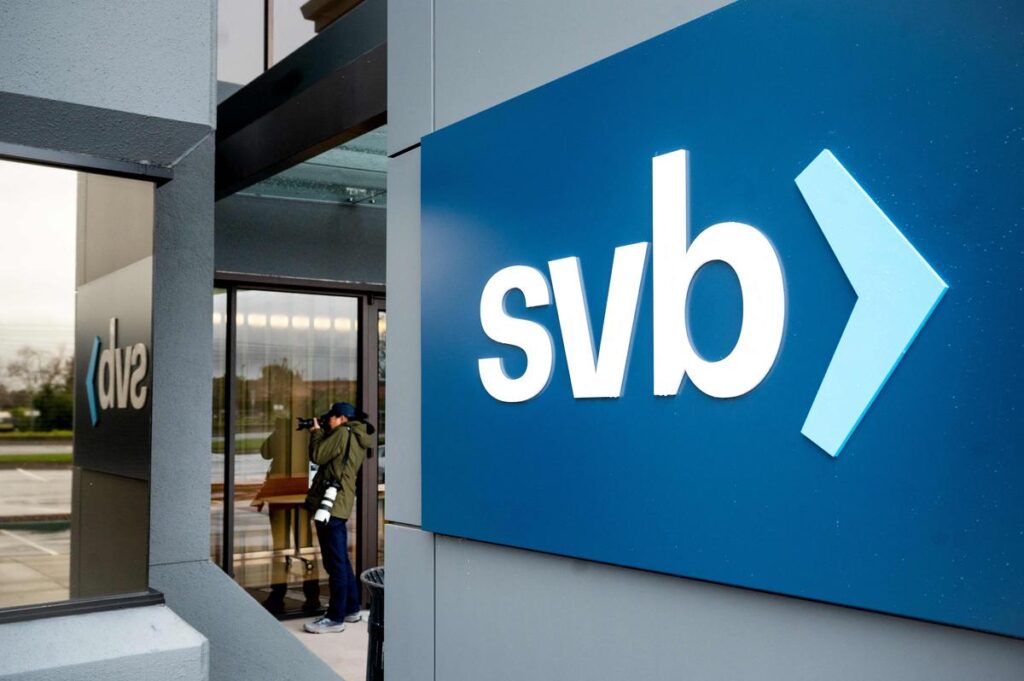
Silicon Valley Bank Financial Group has officially filed for Chapter 11 bankruptcy in the United States, the company revealed in a press release on Friday.
The embattled bank filed its voluntary petition hoping to conserve its assets, but will not include SVB Capital or SVB Securities in its bankruptcy filings.
SVB Financial Group also aims to explore strategic alternatives for its subsidiaries, adding it will no longer affiliate with Silicon Valley Bank NA or SVB Private, its private banking and wealth management operations.
The Federal Deposit Insurance Corporation (FDIC) supervises operations for Silicon Valley Bridge Bank NA.
Currently, SVB Group holds roughly $2.2 billion in liquidity, which includes interests, cash, and other “valuable investment securities accounts and other assets.”
However, according to figures, SVB Group has $3.3 billion in aggregate principal amount of unsecured notes, which do not affect SVB Capital or SVB Securities.
William Kosturos, SVB Group’s chief restructuring officer, said in a statement: “The Chapter 11 process will allow SVB Financial Group to preserve value as it evaluates strategic alternatives for its prized businesses and assets, especially SVB Capital and SVB Securities.”
SVB, Silvergate Fallout
The news comes as the ongoing collapse of SVB, Silvergate Bank, and now-defunct cryptocurrency platform FTX has sent shockwaves across the cryptocurrency community. News of the most recent collapse has severely limited financing options for firms aiming to invest in Web3 technologies.
HSBC Bank purchased SVB’s British wing on Wednesday for just £1, allowing it to operate the former’s business dealings with key tech firms and small and medium enterprises (SMEs) in the United Kingdom.
Silvergate Bank also collapsed earlier in the month after authorities found it had facilitated payments for FTX and Alameda Research, the latter’s subsidiary.
News of the bank’s dealings with FTX forced numerous partners such as Paxos, Galaxy Digital, BitStamp, Coinbase, and Gemini to sever ties to the institution.
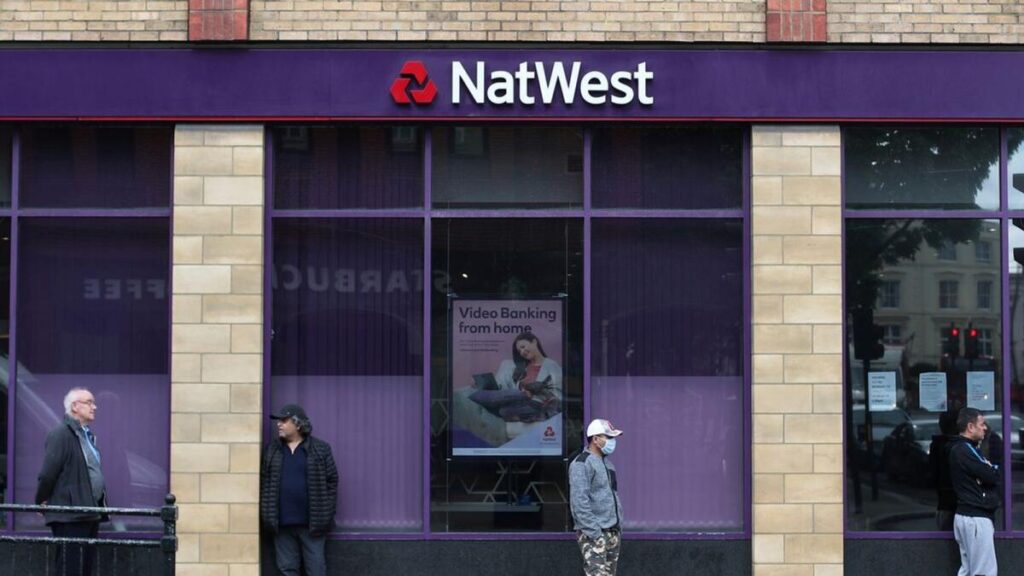
British bank NatWest launched measures this week to limit cryptocurrency exchange transfers, citing fears of “crypto-criminals” and online scams.
The London-based retail and commercial bank said in a press release it had begun capping transfers at £1,000 a day and £5,000 a month. The bank’s fraud protection chief, Stuart Skinner, added NatWest had monitored a rise in cryptocurrency-linked scams totalling £329 million in 2022.
He said at the time: “You should always have sole control of your cryptocurrency wallet and nobody else should have access. If you didn’t set the wallet up yourself or can’t access the money then this is likely to be a scam. We have seen an increase in the number of scams using cryptocurrency exchanges and we are acting to protect our customers.”
The news comes after the banking institution limited cryptocurrency transfers in 2021 based on assessments of crypto exchanges.
Some people on Twitter slammed the move as restrictive and having “nothing to do with scams.”
Small and medium enterprise consultant Mike Cosgrove tweeted at the time: “Nothing to do with scams. A bank has no right to limit how much a person can transfer.”
He added that NatWest customers could transfer their money to rival banks to circumvent the restrictions.
Conversely, career advisor Edgar Enriquems said it was “interesting” to see NatWest follow suit with other British banks.
“It’s important to be aware of the risks associated with investing in volatile assets, and it’s good to see banks taking steps to protect their customers,” he concluded.

HM Treasury has introduced declarations for cryptocurrency assets for future tax returns, it announced in a paper on Wednesday.
The new report, published for the national budget in Spring of this year, notes that the upcoming changes will enter force for 2024-2025. Taxpayers must declare their holdings in self-assessment forms.
People must report their holdings in the fiscal year 2025-2026 for the previous year. It is expected that the Treasury will profit up to roughly £10 million per year from the declarations.
The Chartered Institute of Taxation (CIOT) backed the changes, with its deputy president, Gary Ashford, stating: “Highlighting the need to declare crypto asset transactions in the tax return will help raise awareness of people’s obligations in this area.”
Despite this, he added that the government needed to implement measures to tackle “widespread ignorance” of cryptocurrency taxing and reporting.
The news comes after the Financial Conduct Authority (FCA) backed Parliament’s House of Commons to discuss the latter’s Financial Services and Markets Bill. The new legislation would provide the FCA expanded powers to regulate cryptocurrency firms and investors across the industry.
The UK has also launched numerous plans to regulate and outline cryptocurrency frameworks for future digital asset inclusion in the British economy. The UK treasury recently published a white paper detailing its plans for cryptocurrency regulations shortly before HSBC bought Silicon Valley Bank’s UK division for just £1, allowing Britain’s tech sector to prevent a collapse of funding for key tech firms.

The United States Treasury may soon release its risk assessment for decentralised finance (DeFi), Assistant Secretary for Terrorist Financing and Financial Crimes Elizabeth Rosenberg has revealed.
In an event in Sydney, she told the audience: “Illicit actors are constantly looking for effective ways to hide criminal activity and the laundering of their proceeds. This is a threat to DeFi services or other elements of the virtual asset ecosystem.”
She added that her team was “actively” working on the assessment and would soon release the findings.
She added that the regulatory industry treated “regulations and financial crimes compliance as an afterthought,” citing an “astounding” surge in virtual assets.
Speaking further, she cited North Korean cybersecurity attacks, stating,
“Some of the illicit finance risks pertaining to virtual assets are best illustrated in the North Korea context. North Korea-affiliated actors have conducted ransomware attacks, stolen hundreds of millions of dollars’ worth of virtual assets, and laundered their ill-gotten funds through mixers and other virtual asset service providers to fund North Korea’s illegal nuclear and ballistic missiles programs.”
The news comes after cryptocurrency experts criticised the US Securities and Exchange Commission (SEC) at a Futures Industry Association (FIA) event. An executive from Andreessen Horowitz slammed the SEC as ‘rogue’ and added the ‘clock is ticking’ on the development of clear regulations.
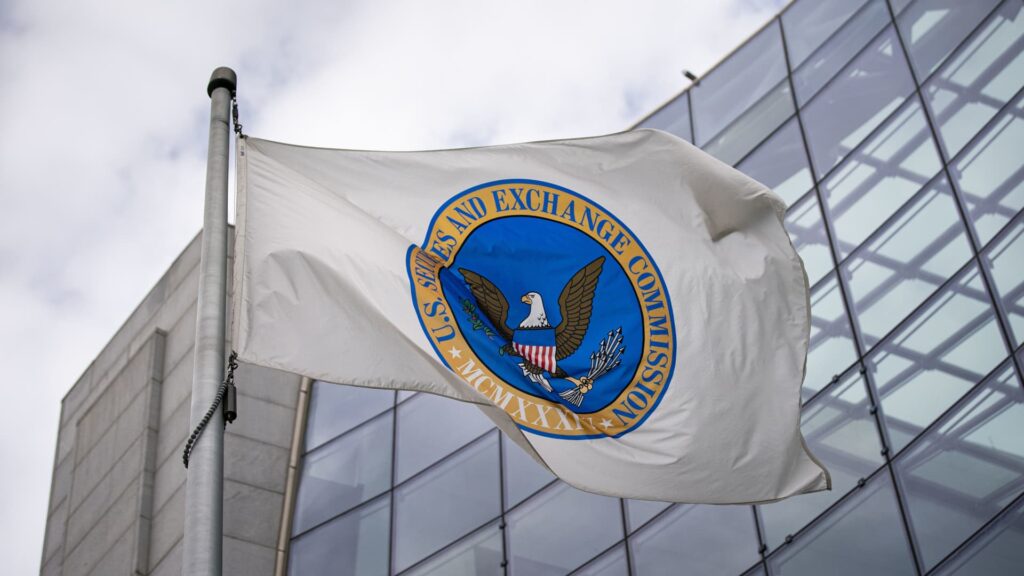
A key executive for venture capital firm Andreessen Horowitz has slammed the United States Securities and Exchange Commission (SEC) for poorly-defined regulatory frameworks, reports show.
The comments come at Tuesday’s Futures Industry Association event, where numerous cryptocurrency executives and thought leaders gathered to discuss the crypto industry.
Andreessen Horowitz (a16z) chief, Brian Quintenz, said: “The SEC is completely out of control. They’re going rogue.”
He said in a panel talk: “The United States has to make a decision about whether or not it will embrace and support innovators in this country. There are jurisdictions that are mindful about this. That is not what we are seeing in the United States, and the clock is ticking.”
CoinFund President Chris Perkins added that locations such as the United Kingdom, Singapore, and Hong Kong surpassed the US in regulatory frameworks.
He added: “We try to advise our founders about regulatory risk, but it’s hard without regulatory clarity. Other countries are not waiting for us.”
Perkins added that industry experts have aimed to build future laws backed with bipartisan support. Julia Hueckel, Coinbase associate general counsel, added: “I see bipartisan interest, and that gives me hope.”
The news comes after New York Attorney General (NYAG) Leticia James sued cryptocurrency trading platform KuCoin, designating its sale of Ether (ETH) as an unregistered security.
US regulators have also targeted cryptocurrency firms such as Binance.us, Binance, Paxos, Ripple, Gemini, CoinEx, and many others. Gemini co-founder Tyler Winklevoss slammed the SEC in January after the latter sued the exchange for selling unregistered securities with its Earn programme.

Shareholders of Silicon Valley Bank Financial Group have sued the now-defunct bank and two of its top executives.
The class action lawsuit involves SVB, chief executive Greg Becker, and chief financial officer Daniel Beck. The group launched the lawsuit in a federal court based in San Jose, California, reports show.
Chandra Vanipenta has led the litigation for shareholders of the bank. In it, the lawsuit alleges the three entities withheld information about the knock-on effects of interest rates on the bank, leading to subsequent bank runs.
SVB Collapse amid Liquidity Scramble
The news comes after the collapse of the 16th-largest bank in the United States. US government authorities seized the company’s assets on Saturday after liquidity issues triggered a massive bank run.
SVB shocked its clients and market watchers after revealing a $1.8 billion USD loss of revenues after taxes due to investment sales. The bank later failed to raise sufficient capital to close the fiscal hole.
Just ahead of its collapse, SVB posted just $209 billion in assets and $175.4 billion in deposits. The bank’s failure is the largest since the 2008 financial crisis.
Fears over subsequent collapses have surfaced across the industry, with many tech startups, venture capitalists, and affiliated regional banks mulling potential such possibilities.
In the United Kingdom, HSBC purchased SVB’s British operations for one pound — the same fee Sir Philip Green charged for the remaining shares of defunct retailer British Home Stores (BHS) in 2015.
The news comes just under a week after Silvergate Capital shuttered its banking division over its alleged ties to FTX. The now-defunct crypto trading platform used Silvergate Banking to facilitate transactions just days before filing for bankruptcy.

Meta Platforms has begun shuttering its non-fungible token (NFT) functionality across its family of social media apps.
Facebook and Instagram will no longer accommodate the feature, just a year after it went live.
According to Stephane Kasriel, commerce and fintech chief for Meta, the Menlo Park-based firm was “winding down digital collectibles (NFTs) for now to focus on other ways to support creators, people, and businesses.”
He thanked partners of the programme for “doing great work in a dynamic space,” referring to Web3 technologies. Kasriel also looked forward to backing “the many NFT creators who continue using Instagram and Facebook to amplify their work.”
He said that Meta would continue to build to support “creators, people, and businesses” across Meta’s apps, “both today and in the metaverse.”
Kasriel added that Meta prioritised supporting opportunities for creatives and businesses to interact with and monetise interactions with fans.
“We’re going to focus on areas where we can make [an] impact at scale, such as messaging and monetization opps for Reels,” he explained.
The Meta executive concluded: “[We’ll] continue investing in fintech tools that people and businesses will need for the future. We’re streamlining payments w/ Meta Pay, making checkout & payouts easier, and investing in messaging payments across Meta.”
The news comes after the product launched in May last year with a select group of users in the United States. The pilot later rolled out across Facebook the following June, with further expansions in July with Instagram NFT tool across 100 countries.
Seoul, South Korea, 15th March, 2023, Chainwire
Wemade Co., Ltd (KOSDAQ:112040), one of the largest publicly-listed gaming companies in South Korea with a market capitalization of US$1.4 billion, has announced a strategic partnership with Space and Time (SxT), a leader in decentralized data warehousing. The partnership will allow Wemade to power its blockchain and gaming services with Space and Time’s decentralized suite of developer tools.
Today, Wemade services more than 20 different play-to-earn (P2E) games across all genres, including MIR M and the world’s no. 1 blockchain game MIR4, on its global open blockchain gaming platform WEMIX PLAY. This is part of the mega-ecosystem that its blockchain developer subsidiary, WEMIX is building which encompasses its own mainnet, WEMIX 3.0; an extensive range of services like NFTs and DeFi; and WEMIX coin – the bridge that connects all of the components of the mega-ecosystem. WEMIX has also announced plans to launch an Ethereum layer-2 utilizing zero knowledge proof (ZKP) protocols that will improve scalability while still ensuring users’ privacy and security. Space and Time and Wemade are planning to closely collaborate in the future with next-generation decentralized infrastructure for more robust and scalable GameFi development.
“We believe that blockchain is the future of gaming, offering gamers greater ownership and control over their digital assets,” said WEMIX CEO Shane Kim. “As the blockchain transformation of traditional games continues to grow, the partnership with Space and Time will help strengthen our blockchain infrastructure capabilities and contribute to our commitment to building an inter-game economy.”
Space and Time packages a full suite of developer tools in a single decentralized deployment. The platform provides developers with real-time, tamperproof indexed blockchain data, a hybrid transactional and analytic (HTAP) data warehouse, and a serverless API gateway for simplified building of fully decentralized applications and faster dApp time-to-market.
Queries run in the Space and Time data warehouse are verifiably tamperproof. Space and Time’s novel cryptography, Proof of SQL, allows smart contracts to run tamperproof queries directly, opening up a wealth of powerful use cases built on blockchain technology and a fully decentralized stack.
Game developers building on Space and Time can join real-time blockchain data with off-chain game-generated data in a single query and connect the results back to smart contracts on-chain. Space and Time will enable Wemade to facilitate more complex earning schemes for its P2E games, run tamperproof analytics against game activity, and reduce on-chain storage costs by connecting a scalable decentralized data warehouse to the blockchain-based platform.
“We’re thrilled to partner with one of the biggest and most respected gaming companies in the world,” said Nate Holiday, CEO and Co-Founder of Space and Time. “Space and Time is committed to advancing the blockchain gaming industry with essential next-generation infrastructure and developer tools. This partnership is a huge step forward for the Web3 gaming industry. Together, Wemade and Space and Time are building a new blockchain gaming ecosystem to onboard the next wave of game developers.”
Wemade is known for its blockbuster title The Legend of Mir 2, which is one of the most successful RPG titles in the history of Chinese gaming. Within years of its 2002 launch in China, The Legend of Mir 2 dominated the Chinese gaming market with a 64% market share.
In addition to its Web3 GameFi initiatives, the Wemade platform also supports DEXs, NFT marketplaces, and more on its L1 mainnet. Wemade remains committed to actively expanding its blockchain ecosystem beyond GameFi. By partnering with Space and Time, Wemade will provide more secure and decentralized services to developers building GameFi, DeFi, and other Web3 applications.
About Wemade
Wemade is a pioneering game developer from Korea, with a focus that shifts towards metaverse and blockchain (NFT, DeFi) technology, emphasizing personalized gaming experiences. Wemade strives to transform everyday games with blockchain technology and establish its WEMIX coin as a key currency in the gaming industry. Wemade aims to become a mega-ecosystem by launching its own mainnet, WEMIX 3.0, introducing its own currency, $WEMIX, and offering a wide range of services and platforms that embrace DeFi and NFT, etc.
For more information, visit: https://www.wemade.com/
For media inquiries, please contact: Kevin Foo, Head of PR, [email protected]
About WEMIX
WEMIX Pte. Ltd aims to accelerate the mass adoption of blockchain technology by building an experience-based, platform-driven, and service-oriented mega-ecosystem to offer a wide spectrum of intuitive, convenient, and easy-to-use Web3 services. Headquartered in Singapore, WEMIX is a subsidiary of Wemade, the developer and owner of “The Legend of Mir” IP, a highly successful game series with over 500 million users.
About Space and Time
Space and Time is the first Web3-native decentralized data warehouse that joins tamperproof on-chain and off-chain data to deliver enterprise use cases to smart contracts. Space and Time has developed a novel cryptography called Proof of SQL™ that allows developers to connect analytics directly to smart contracts, opening up a wealth of powerful new use cases and business logic on blockchain technology. Space and Time is built from the ground up as a multichain data platform for Web3 developers in financial services, gaming, DeFi, or any project requiring next-gen analytics.
For more information, visit: Website | Twitter | Discord | Telegram | LinkedIn | YouTube
For media inquiries, please contact: Spencer Reeves, [email protected]
Contact
Kevin Foo
[email protected]

State authorities have targeted Signature Bank, closing down the cryptocurrency-friendly bank on Sunday.
In a joint statement between the United States Federal Reserve, Treasury, and Federal Deposit Insurance Corporation (FDIC), the three institutions closed Signature Bank to protect the national economy and boost banking system sentiment.
It said in its statement: “All depositors of this institution will be made whole. As with the resolution of Silicon Valley Bank, no losses will be borne by the taxpayer.”
It added it would not protect “shareholders and uncertain unsecured debtholders” and that senior management had “also been removed.”
The statement continued: “Any losses to the Deposit Insurance Fund to support uninsured depositors will be recovered by a special assessment on banks, as required by law.”
According to reports, Signature Bank held $88.6 billion in deposits.
The news comes amid the collapse of Silicon Valley Bank on Saturday after it failed to secure additional capital to resolve a liquidity crisis. Further troubles took place on Thursday last week after Silvergate Bank shut down and liquidated due to ongoing “industry and regulatory developments.”

Therapists providing therapy to people addicted to gambling have spotted a sharp rise in addicts seeking help over cryptocurrency speculation, reports show.
An ITV News report found that cryptocurrency investing became more popular during COVID-19 pandemic lockdowns.
One man interviewed by ITV said, “As it was going on, it was having more of an effect because I was putting a lot more money into it. I was investing before but then after I was gambling. I was just watching this coin go up and down with any money I’d got. I was doing it as a day trade rather than like leaving it for a year or something.”
He added that he would frequently invest in cryptocurrencies to “make quick money,” but soon began to obsess over trading.
“I was constantly on my phone, constantly looking at it, just detached from everyday life,” he said.
Castle Craig rehab centre therapist, Tony Marini, said he had seen roughly 200 people hit by crypto trading addictions since 2016. Many addicts were young men affected by the pandemic and isolation from national lockdowns, he alleged.
Marini explained that he had researched over the last six years, speaking to many people and found similar behaviours and addictions to gambling.
He said: “The isolation, the fantasies about making money, being able to get the fast cars, the big houses, and then that depression starts to come in. You know, they crossed that line into the addiction and they isolate away from everybody. They start telling lies.”
According to Castle Craig, such addictions affect 9 out of 1,000 people while “a further 70 people out of every 1000 participate at risky levels that can become a problem in the future.”