
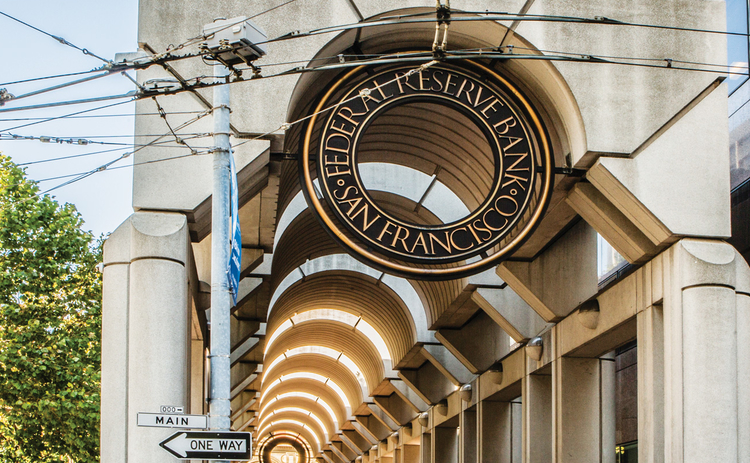
San Francisco’s Federal Reserve Bank has opened a position for a software engineer to build and deploy central bank digital currency (CBDC) infrastructure.
According to an 18 February job posting, the tech hub’s Federal Reserve advertised a “senior application developer” for the digital currency. The job notes that the selected candidate will create and implement systems for CBDC assets.
In the post, it said: “Given the dollar’s important role, Federal Reserve System seeks to further understand the cost and benefits of the potential technologies for central bank digital currencies, and how the system better understand this emerging field.”
The candidate is also expected to improve developed systems and mitigate risks. The job will also pay from $110,300 to $176,300. 46 applicants have applied to the position at the time of writing.
“We are looking for a Sr. Application Developer to implement example systems related to a Central Bank Digital Currency. The software engineer engages directly with management, other developers on the team, development operations teams, and vendors to ensure the Federal Reserve is well-positioned to design, develop, and implement technology to support a CBDC as may be required by the Board of Governors.”
The news comes just weeks after the United Kingdom posted its own job advert in late January for a head of digital currency. Whitehall recruiters for His Majesty’s Treasury aimed to explore the potential for a CBDC capable of diversifying payment options for citizens. The new digital stablecoin could also allow the UK to become a thriving tech hub over the next few years after its implementation.

Bored Ape Yacht Club’s (BAYC) wolf skull logo has reportedly been trademarked without approval or licencing, according to a recent Twitter post.
In a tweet from @Jdotcolombo, BAYC allegedly lifted the artwork from a company’s initial design for illustration tutorials. The firm, Easy Drawing Guides, created the “easy step-by-step drawing tutorial.”
The BAYC Kennel Club launched its collection of non-fungible tokens (NFTs) in June 2021 and trademarked the design as its intellectual property (IP), triggering backlash from Easy Drawing Guides.
In a tweet, the company said: “Thanks for bringing this up @Jdotcolombo. @yugalabs doesn’t have a license to the wolf skull drawing. The intellectual property rights for the drawing belong to Easy Drawing Guides as it’s our original drawing and protected by our Terms and Conditions.”
Shortly after the incident, Yuga Labs co-founder Greg Solano tweeted that Yuga Labs had commissioned a freelancer for the design.
The exec added that he had reached out to the freelancer and Easy Drawing Tutorials to investigate the matter further while also promising to remove the logo in due course.
Bored Ape Yacht Club’s (BAYC) wolf skull logo has reportedly been trademarked without approval or licencing, according to a recent Twitter post.
In a tweet from @Jdotcolombo, BAYC allegedly lifted the artwork from a company’s initial design for illustration tutorials. The firm, Easy Drawing Guides, created the “easy step-by-step drawing tutorial.”
The BAYC Kennel Club launched its collection of non-fungible tokens (NFTs) in June 2021 and trademarked the design as its intellectual property (IP), triggering backlash from Easy Drawing Guides.
In a tweet, the company said: “Thanks for bringing this up @Jdotcolombo. @yugalabs doesn’t have a license to the wolf skull drawing. The intellectual property rights for the drawing belong to Easy Drawing Guides as it’s our original drawing and protected by our Terms and Conditions.”
On the one hand, BAYC supporters believe that no intellectual property was breached in using the logo; however, most agree that Easy Drawing Guides is entitled to some serious compensation.
Shortly after the incident, Yuga Labs co-founder Greg Solano tweeted that Yuga Labs had commissioned a freelancer for the design.
The exec added that he had reached out to the freelancer and Easy Drawing Tutorials to investigate the matter further while also promising to remove the logo in due course.

Helium Network plans to migrate its platform to the Solana blockchain on 27 March, it has announced.
The measures aim to boost reliability and to upscale the technologies, it said in a 17 February blog post. The migration will take 24 hours to complete and temporarily halt Helium’s blockchains.
The process will not affect Helium’s proof-of-coverage and data transfer activities.
Helium’s tech teams added the migration marked a “new era for the Helium Network, enabling it to achiev greater scale and truly become a network of networks.”
It continued that the Helium community had onboarded roughly 1 million hotspots, with growing commercial demand set for future targets.
Helium explained further: “With the ability to power thousands of transactions per second, combined with its massive ecosystem of developers, applications, and integrations, Solana has the speed and scale necessary to take on the blockchain responsibility while the Helium core-developers and community can focus on building wireless protocols and enabling utility on these networks.”
Concluding, it wrote that HNT would becomem “natively compatible with other platforms within Solana’s ecosystem,” namely for HNT, MOBILE, and IOT token holders.
Regarding all digital assets, the firm would also snapshot the blockchain following the migration process to Solana. It would also mint all Hotspots as non-fungible tokens (NFTs).
The news comes after Nova Labs, the company behind Helium, announced in September last year it would partner with US telecom T-Mobile. The joint effort would open a mobile service for subscribers to earn cryptocurrency bonuses and rewards by sharing coverage data to improve the network.
GBBC Digital Finance partnered with the International Organisation of Securities Commissions (IOSCO) on Thursday, becoming an affiliate member of the association.
It joins as the 70th member of the group’s IOSCO Affiliate Members Consultative Committee. The latter offers insights into the IOSCO’s policy and standards
The news comes as the organisation published its Crypto-Assets Roadmap in July last year.
Lawrence Wintermeyer, CBBC Digital Finance chairman, said at the time that the addition was an “important milestone” for his organisation, its members, and the “wider digital finance industry.”
Emma Joyce, CEO of GBBC Digital Finance, added: “We are proud to be an affiliate member of such an esteemed membership organization. Our priority at GDF in 2023 is engagement with regulators and [policymakers] and jointly examining how we might construct a DeFI education and engagement platform.
The news comes after the organisation published a DeFi research paper in March last year. Researchers noted several risks to DeFi systems and later partnered with the Bank for International Settlements to tackle the issues.
As a result, the joint effort outlined potential solutions for safeguarding stablecoin technologies.
The IOSCO creates and backs global securities standards for the finance industry, hosting 35 national securities regulators across 200 partner organisations.

The United States Securities and Exchange Commission (SEC) has launched a lawsuit against Terraform Labs and its co-founder Do Kwon, according to a recent complaint.
Terraform Labs’ created the TerraUSD stablecoin, which collapsed last year due to fraud. Regulators claim that Terraform and Kwon had defrauded investors by misleading them on who used the cryptocurrency for payments and designating LUNA and Anchor Protocol as “crypto asset securities.”
Terraform and Kwon face charges of selling unregistered securities, security-based swaps, and other offences.
The suit alleges: “Terraform and Kwon also misled investors about one of the most important aspects of Terraform’s offering – the stability of UST, the algorithmic ‘stablecoin’ purportedly pegged to the U.S. dollar. UST’s price falling below its $1.00 ‘peg’ and not quickly being restored by the algorithm would spell doom for the entire Terraform ecosystem, given that UST and LUNA had no reserve of assets or any other backing.”
Kwon and Terraform employees worked jointly with an unnamed US trading firm to resolve the digital coin’s peg to USD after dropping nearly 10 cents in May 2021.
The anonymous trading firm later acquired the UST tokens and traded them for LUNA.
SEC Complaint Details, Comments
Explaining further, the complaint continued: “Almost immediately upon UST’s recovery in May 2021, Terraform and Kwon began to make materially misleading statements about how UST’s peg to the dollar was restored.”
The two suspects also mislead invstors on the cause bhind UST’s recoupling with the USD. The digital currency later collapsed last year, triggering bankruptcies across crypto markets.
SEC Director of Enforcement, Gurbir Grewal, said in a press release: “Today’s action not only holds the defendants accountable for their roles in Terra’s collapse, which devastated both retail and institutional investors and sent shock waves through the crypto markets, but once again highlights that we look to the economic realities of an offering, not the labels put on it.”
He concluded: “As alleged in our complaint, the Terraform ecosystem was neither decentralized, nor finance. It was simply a fraud propped up by a so-called algorithmic “stablecoin” – the price of which was controlled by the defendants, not any code.”
Hackers hit Platypus Finance, a platform for decentralised finance (DeFi), with a major flash-loan attack, reports revealed.
Blockchain cybersecurity company CertiK wrote in the report that the thefts cost the crypto protocol roughly $8.5 million.
The hack also cost its native token, Platypus USD (USP), its peg to the US dollar, sending the coin plummeting from $1 USD to 48 cents.
The platform automates stablecoin swaps for crypto traders and hosts $59 million USD in virtual assets. At its peak, the platform held up to $1.2 billion in March last year, according to data.
Flash loans allow traders to profit from arbitrages, but conversely invite exploitative users to drain digital assets on DeFi platforms.
The news comes after CertiK reported in early January that 2023 would continue trends from last year, where cybercrime would remain steady in frequency and number. The report noted that 2022 saw nearly $3.7 billion hacked from victims, up from $3.2 billion in 2021.
Singapore, Singapore, 21st February, 2023, Chainwire
Cartesi (an application-specific rollup execution layer with a Linux runtime) has launched its Community Grants Program for developers looking for support to get their ideas off the ground, and for Web3 enthusiasts interested in helping shape Cartesi’s developing ecosystem. A community-driven program to fund a broad network of contributors, its goal is to help build and expand the Cartesi ecosystem. Reflecting a broader movement towards Cartesi’s decentralization, the Community Grants Program is a step forward in providing increased community involvement in the grants selection process.
For developers who have an incredible idea, but need some extra help to get it off the ground, Cartesi’s Community Grants Program is not only about financial support. By harnessing the power of the Cartesi community, developers are also provided with invaluable technical and strategic advice to ensure the success of projects growing within the Cartesi ecosystem.
With the Community Grants Program, developers can easily refine their proposal for funding their project with community feedback, strengthening its feasibility and potency.
In addition to developers submitting their ideas, the Cartesi Foundation will periodically publish Requests for Proposals (RFPs) for projects that the Foundation believes are of particular relevance and impact to the ecosystem.
The launch of the Cartesi Community Grants Program also ushers in a new governance function for Cartesi’s token, CTSI. The Cartesi Foundation’s decentralized ecosystem will use CTSI as a way for community members to signal approval or disapproval of grants that are proposed.
With the Community Grants Program, the Cartesi community can influence what is being funded and built on Cartesi tech. It also allows the community to more easily connect with the builders in the Cartesi ecosystem, potentially even independently collaborating with any of the projects being built and funded.
About Cartesi
Cartesi Rollups is an application-specific execution layer that elevates simple smart contracts to decentralized Linux runtimes. It allows developers to launch highly scalable rollup chains, and code decentralized logic with their favorite languages and software components.
- Every DApp has its own high-performing rollup chain;
- No cannibalization of resources from other DApps in Cartesi’s ecosystem;
- No network gentrification;
- Enable an entirely new class of DApps that currently cannot run on EVM chains;
- Preserve the strong security guarantees of the underlying blockchain
Contact
Karmen Truong
Cartesi
[email protected]
Rotterdam, Netherlands, 21st February, 2023, Chainwire
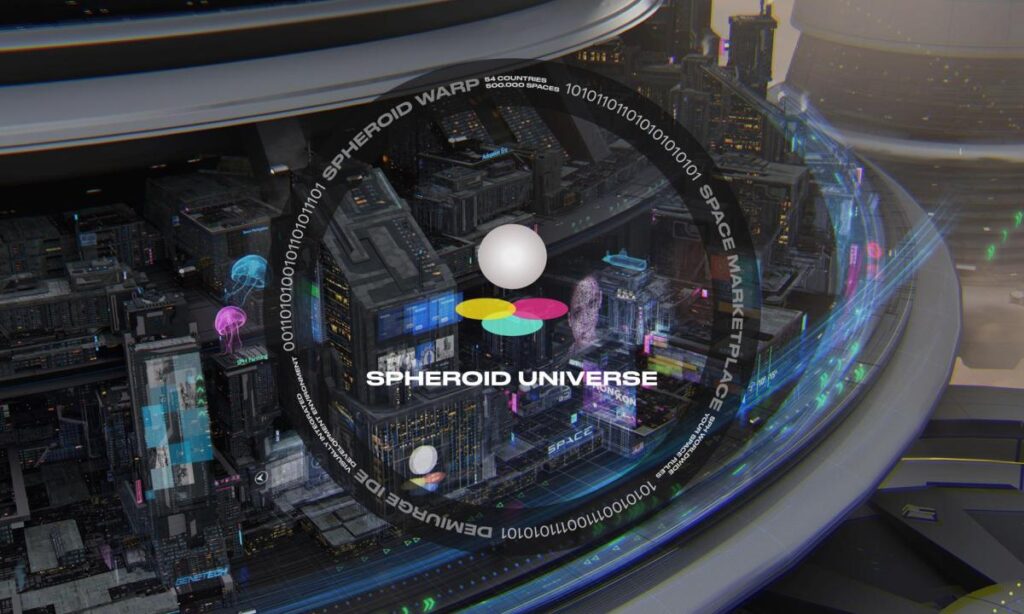
Spheroid is an AR/XR platform that uses the SPH utility token for powering all the activities in its ecosystem.
This funding commitment from ABO Digital marks a significant milestone for Spheroid, which plans on using the funds to continue building tools and capabilities within Spheroid Universe, such as Spheroid Script (A cross-platform programming language developed to speed up and reduce the cost of developing AR/XR applications) and Spheroid Demiurge IDE (Cloud-based integrated development environment for programmers and designers who work together on AR/XR projects), among others.
“This commitment from ABO Digital will enable Spheroid to continue developing and scaling the infrastructure within Spheroid Universe,” said Spheroid Universe Managing Director Andrea De Marco.
“We are excited to work with the Spheroid team going forward,” said Amine Nedjai, Director of ABO Digital, “Spheroid is building essential tools for creators in the AR/XR space which we believe will be seeing increased demand over time.”
About Spheroid
Spheroid Universe (Spheroid), an extended reality metaverse company, has announced that it has secured an investment commitment from ABO Digital for its utility token SPH. Spheroid is a platform for developing extended reality projects. The technological basis of the platform is the Spheroid XR Cloud and the Spheroid Script programming language designed for AR/XR creation.
SPH is the native token of the Spheroid ecosystem that fuels the activities of the platform. It can be exchanged for Spaces (virtual lands of the Spheroid Universe), used for advertising in XR, placing content, and for various platform services. Among the products powered by SPH there is Spheroid Earth – an open global project for creating Earth 3D Digital Twin.
About ABO Digital
ABO Digital is a digital asset investment firm, and part of the Alpha Blue Ocean group which has executed more than $2bn in financing commitments for publicly listed companies across the globe. ABO Digital is based in the Bahamas and invests in cryptocurrency projects globally.
Contact
Managing Director
Andrea De Marco
Spheroid Universe
[email protected]
Zug, Switzerland, 21st February, 2023, Chainwire
Sensorium is announcing that the Sensorium Galaxy metaverse has entered its much-awaited VR multiplayer public playtest as it opens up access to more virtual reality and content features inside virtual worlds, while also laying out a new metaverse doctrine.
Delivering on its promise to develop a full-fledged metaverse with unparalleled entertainment offerings, Sensorium is unveiling PRISM, a virtual world dedicated to music, as the first destination to become available to users. Inside this environment, visitors can experience the 24/7 galactic Sensorium Party where Sensorium’s pioneering AI avatars can be seen performing.
The new stage enables users to become familiar with the metaverse’s VR mechanics, its immersive environments, and avatar customization options.
Users will also have the opportunity of interacting, for the first time, with others in VR and via voice chat, meeting not only other human participants but also AI virtual beings.
Sensorium Galaxy is emerging as the first AAA-inhabited metaverse with a community of AI-powered avatars populating its virtual worlds. Here, social AI is a core technology in powering next-generation networking relationship building and content creation, for users and artists alike.
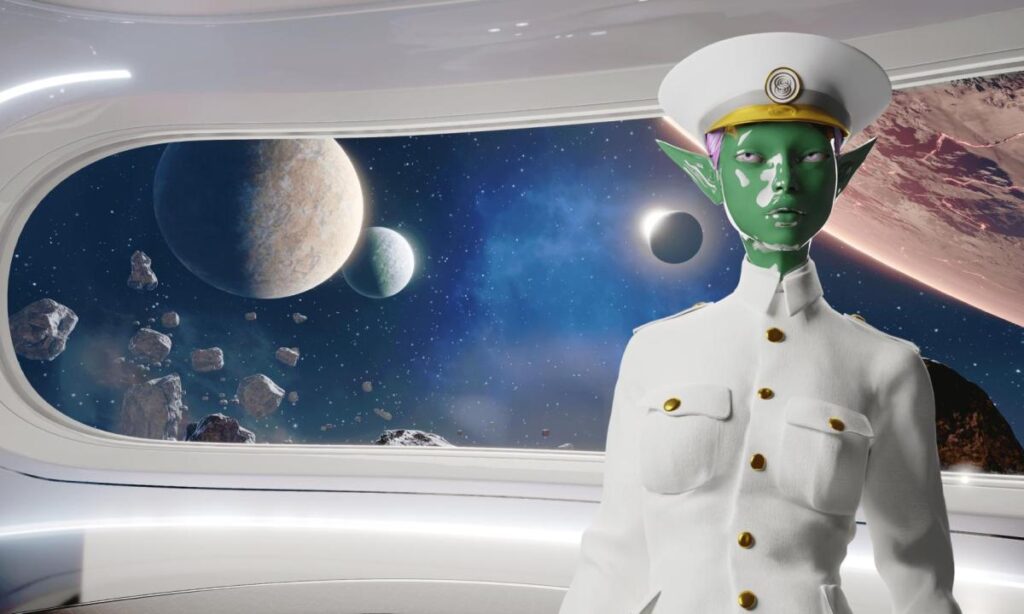
Sensorium’s press secretary, the AI-driven avatar Yonaka, offers a detailed look at the company’s global metaverse doctrine.
In another demonstration of the groundbreaking capabilities of generative AI technology to hold contextual conversations, Sensorium is now also unveiling the Salvador Dali Experience, a VR environment where users are invited to meet the AI avatar of the late genius and chat with Dali’s virtual being across an endless variety of topics.
Based on these features, Sensorium is opening up a pathway for users to live out alternative life scenarios, build a digital self, and attain digital immortality, whereby they choose the digital footprint they’re leaving behind and allow future generations to interact with.
Built on top of Unreal Engine 5 as well as advanced VR and AI technologies, the depths of Sensorium Galaxy unfold across several virtual worlds, each dedicated to different types of entertainment and filled with curated content.
Developed in collaboration with nightlife entertainment visionary, music trendsetter, and Hï Ibiza and Ushuaïa Ibiza founder Yann Pissenem, PRISM world is already a confirmed destination for shows by acclaimed world-class performers, including David Guetta, Carl Cox, and Black Coffee, among others. The first three performances in PRISM are slated to take place during the first half of 2023. The second half of the year will also see the release of MOTION, introducing users to more ‘virtual life’ mechanics of Sensorium Galaxy.
Crucial to all metaverse activities, Sensorium Galaxy’s in-platform token, SENSO, will continue supporting the entirety of the ecosystem, across activities and offerings such as premium content and NFT drops.
NFT drops scheduled for 2023 include DAPP avatars and UNDER land tokens. These assets will be used in Sensorium’s decentralized platform, which ensures that all users have ownership over their digital assets and are the sole entity responsible for decision-making over their virtual possessions. Starship and UNDER will become the first two virtual environments to leverage Web3 capabilities within the Sensorium ecosystem.
All of these blockchain-based activities are now being made compatible with VR.
Sensorium Galaxy is available on Steam, where users can access the metaverse’s public playtest, as well as the Sensorium Galaxy mobile app. Full cross-platform access, including desktop access, will become available later this year.
About Sensorium
Founded in 2018, Sensorium is a Swiss company and a leading metaverse developer, leveraging cutting-edge XR and AI technology to deliver next-generation virtual experiences in entertainment and social interaction.
The award-winning Sensorium Galaxy metaverse project, the company’s flagship product, is currently the only global XR multiplayer platform that immerses users into multi-sensory experiences in virtual worlds, across content hubs of various forms.
These include immersive musical experiences in the epicenter of entertainment, PRISM world, self-discovery programs and guided meditations unfolding within the spiritual environment of MOTION world, and a new type of transversal social interaction enabled by a million-strong community of AI-controlled autonomous virtual beings inhabiting the metaverse.
Sensorium leans on its long-standing collaboration with the world’s best technology and entertainment partners to shape the environments and content of its metaverse.
In addition to the innovative developments in the fields of virtual reality and AI, accessible through a wide variety of interfaces, Sensorium is also a leading Web3 company enabling a stack of pioneering blockchain and decentralized solutions.
Contact
Web3 Marketing Director
Matias
Sensorium
[email protected]
+971552430075
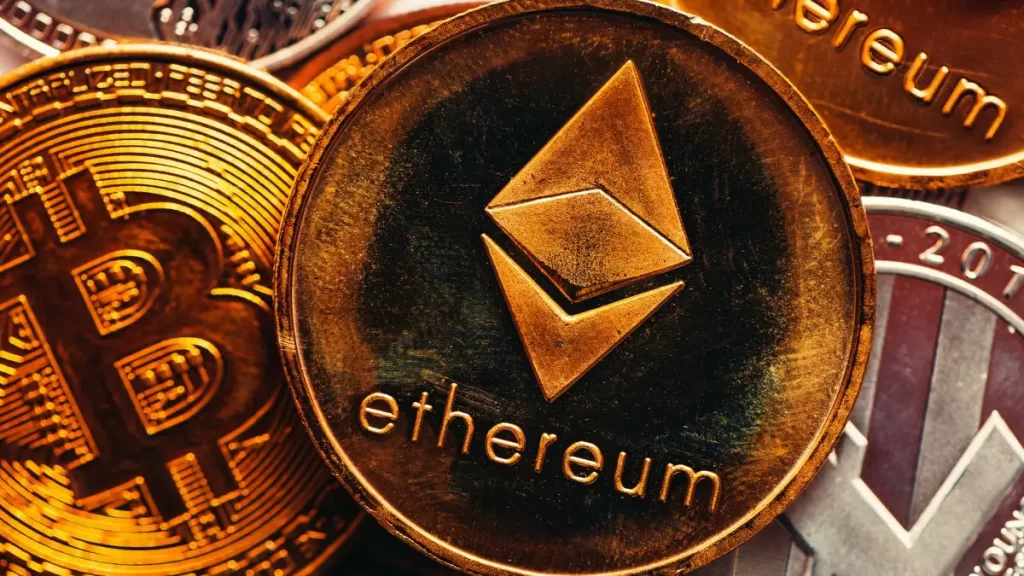
The world’s number two cryptocurrency has plummeted in supply following its Merge update. Reserves nosedived after the network upgraded in September last year, which switched from a Proof-of-Work (PoW) to a Proof-of-Stake (PoS) network.
On-chain data from Glassnode showed that the number of Ethereum (ETH) in exchanges decreased by 37 percent, a significant drop signalling bullish markets.
Fewer ETH in circulation indicates a spike in value for the cryptocurrency, similar to a coin burn.
Currently, there are 13.36 million ETH in circulation valued at $19.7 billion USD in mid-February, significantly down from 19.12 million ETH totalling $31.3 billion in September before the upgrade.
Traders also anticipate the digital coin’s Shanghai upgrade set to launch in March, which will enhance key issues with the network and provide stakers and validators to withdraw Beacon Chain holdings.
Beacon Chain investors have staked 16 million ETH totalling 14 percent of the total number of coins in circulation, or $25 billion at current market prices.