

London, United Kingdom, 8th December, 2022, Chainwire
Metacade, the first-ever community-developed play-to-earn (P2E) blockchain arcade, has announced the launch of its highly anticipated $MCADE token presale.
The sale of Metacade’s native utility token sold over an incredible $670k in under 2 weeks, with their Beta Sale stage now over 60% SOLD OUT.
$MCADE is available to buy on the official Metacade website.
Positioning itself as a Web3 community hub, this gaming-first platform is set to attract gamers, investors, and entrepreneurs alike by offering a multitude of ways to earn, play, and connect. It looks to be a central hangout for all of those interested in GameFi and metaverse.
To ensure investor confidence, $MCADE has been audited by leading blockchain auditing firm CertiK, a security-focused platform that analyzes and monitors blockchain protocols and DeFi projects. Verification and approval from CertiK mean that the code behind Metacade is highly secure and has been scrutinized for any weak spots.
Metacade harnesses the power of Web3 to take blockchain gaming to the next level. The project goes beyond play-to-earn and offers a place to discover what games are trending, view leaderboards, publish game reviews, and access the hottest and most advanced GameFi alpha.
Head of Product for Metacade, Russell Bennet said: “The crypto gaming space is crying out for a single destination where we can all go and learn, earn and play games with fellow enthusiasts without having to jump from platform to platform”.
Metacade isn’t out to just improve the existing P2E and metaverse worlds but also to foster the future of this space. The project’s hallmark feature is Metagrants, a source of funding awarded to game developers to bring new games to the Metacade. The Metacade community will vote on which projects get funded to turn the collective vision into a reality on the platform. The first game developed using the first Metagrant will be launched in 2024.
By the end of 2024, the project intends to transform into a DAO, handing over key roles and responsibilities to the Metacade community and achieving a fully community-staffed business. It looks to achieve this by deploying Play2Earn, Create2Earn, and Work2Earn functionalities with each of these initiatives giving a little more control of the project over to the community in the coming years.
Reflecting on the core ethos of Metacade, Russell said: “We want to create a community that has zero barriers to entry whether you want to work in the space, launch a business or just hang, out, play, and have fun.”
$MCADE has a fixed supply of 2 Billion $MCADE tokens. Seventy percent of these (1.4 billion $MCADE tokens) are being made available during the token’s presale event. The remaining thirty percent will be used on exchange listings, during development, providing liquidity, and funding the competition pool.
$MCADE is the utility and governance token powering the project. It plays a crucial role in the platform’s functionality as holders can use it to vote on the project’s future direction and new game proposals. It will be the main tool for interacting with the Metacade ecosystem: holders can use it to enter tournaments and exclusive prize draws, purchase merchandise, and many other things as the platform develops.
Token holders will have plenty of opportunities to earn rewards through the project. $MCADE holders can earn from activities such as contributing content, reviewing and testing games, and generally engaging within the ecosystem. $MCADE holders may also stake their tokens in liquidity pools to earn rewards and APYs based on the amount staked. Staked rewards are paid in a stablecoin amount rather than in $MCADE to protect the value of the funds from inflation and price swings.
To further promote a deflationary attribute to the token, Metacade plans on introducing a burn mechanism or a buyback scheme. Token burning will help the ecosystem permanently erase a given percentage of supply, thereby lowering the overall supply and boosting the value of $MCADE in the long run.
Right after the $MCADE presale is complete, Metacade will roll out the website and build a founding team. In Q1 2023, the goal is to list the $MCADE token on Uniswap and the top five centralized exchanges, along with popular crypto aggregators. With an ambitious road map, Metacade is on track to revolutionize how a traditional community hub is owned and operated.
The Metacade Beta sale has now sold over $670,000 worth of tokens in under two weeks and at the time of publishing has under 40% remaining.
To buy $MCADE, visit Metacade.co and join the presale now.
About GameFi
GameFi, one of the most talked about and promising sectors of Web3, creates a virtual gaming ecosystem that relies on the use of cryptocurrency, non-fungible tokens (NFTs), and blockchain technology. At the core of the GameFi ecosystem is the play-to-earn (P2E) gaming model. Unlike the traditional pay-to-play model, P2E allows gamers to earn financial rewards by participating in challenges and tasks.
About Metacade
Metacade is the premier destination for gaming in the metaverse. As Web3’s first community arcade that allows gamers to hang out, share gaming knowledge and play exclusive P2E games. The platform offers users multiple ways to generate income, build careers in Web3, and connect with the wider gaming community.
Metacade will be the one-stop destination for users to play, earn, and network with other passionate gamers worldwide. Once the project reaches the end of its roadmap, Metacade will be handed over to the community as a full-fledged DAO. After all, Metacade wants you to have a hand in shaping the GameFi world of tomorrow.
Links
- Website: https://metacade.co
- Whitepaper: https://metacade.co/whitepaper.pdf
- Socials: https://linktr.ee/metacade_
- CertiK Audit: https://www.certik.com/projects/metacade
Contact
Head of Product
Russell Bennett
Metacade
[email protected]
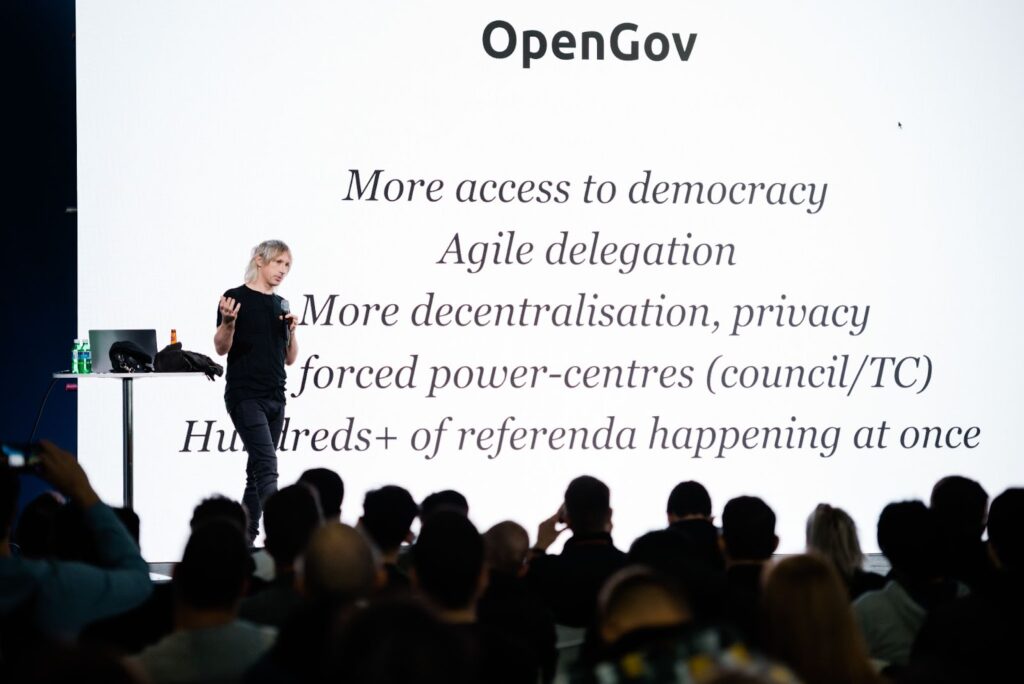
Polkadot co-founder and Parity Technologies chief architect Gavin Wood joined hundreds of the most talented engineers and developers in Web3 at Sub0, the conference for Polkadot developers.
Wood gave an impromptu keynote address providing insights into how the various upgrades already flagged for the network would play out in 2023. In particular, he focused on XCM, the network’s cross-channel and cross-consensus messaging protocol, and OpenGov, the new agile, more decentralized governance process for the network.
A rapt capacity audience — around half of whom were new to the ecosystem and had declared an interest in building on Polkadot — were engrossed by Wood’s surprise address.
Parity’s newly appointed CEO Bjorn Wagner had earlier kicked off the two-day meeting at Lisbon’s LX Factory with an introductory talk before a busy agenda featuring breakout sessions, Q&As and developer workshops wound into gear. Many of the agenda items demonstrated the breadth of use cases being explored by Polkadot developers via XCM as they continue to be among the busiest in Web3. Data from Santiment shows over 14,000 developer contributions on the Polkadot network for every month between August and November 2022.
While some of the talks were explicitly targeted at developers with strong experience of Polkadot, its software development kit Substrate and the Rust programming language, there was also plenty of explanatory material for those still learning about the network.
Some of the event’s highlights include:
- Focusing on the ambition for Polkadot to be a best-in-class offering for a strong user experience, Jakub Panik of Galactic Council spoke of the importance of respecting end users and keeping their requirements front of mind.
- Hector Bulgarini of Parity Technologies provided a case study demonstrating how real-world assets can serve as collateral in the world of DeFi through XCM.
- Sabine Proll of Supercomputing Systems AG explained how blockchain builds efficiencies when managing interlocking railway systems.
- Seun Lanlege of Composable Finance explained some of the cryptographic and game-theoretical components of trustless bridges, and delivered an overview of cross-consensus trustless bridges.
- Alberto Viera of Moonbeam provided details of useful scripts and monitoring tools to consider when exploring XCM for token transfers and remote executions.
- In a talk followed by questions, Bill Laboon of Web3 Foundation explained what differentiates Web3 from Web2 in a philosophical and technical way.
- Jonathan Dunne of Talisman discussed his experience of creating user-centric products with Substrate, including demystifying extrinsics with metadata and creating unstoppable connections with Light Clients.
About Polkadot
Polkadot provides the technical advances necessary to make blockchain technology practical, accessible, scalable, interoperable and future-proof, removing limitations and barriers to entry, and thereby fueling innovation, growing the decentralized technology space and bringing the Web3 vision to life.
About Parity Technologies
Staffed by some of the world’s leading blockchain innovators, core engineers, Rust developers and solutions architects, Parity Technologies has offices in Berlin, London and Lisbon. It launched Polkadot in tandem with Web3 technology.
About Web3 Foundation
Web3 Foundation funds research and development teams building the technology stack of the decentralized web. It was established in Zug, Switzerland by Ethereum co-founder and former chief technology officer Gavin Wood. Polkadot is the foundation’s flagship project.
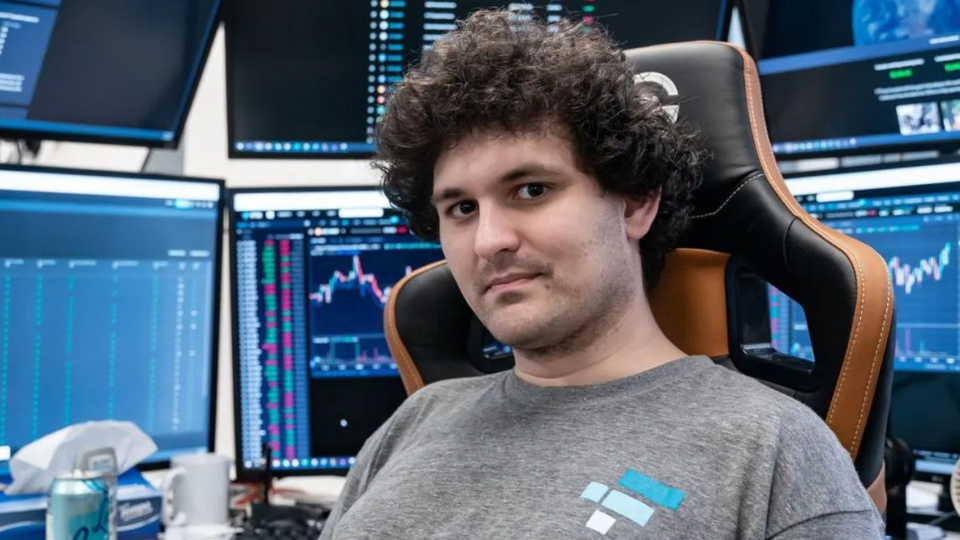
Andrew Vara, the United States Trustee tasked with resolving the FTX bankruptcy, slammed the company as the “fastest big corporate failure in American history,”
The executive has urged regulators to open an independent probe to investigate the company’s collapse, reports showed.
He said in a motion on Thursday that an eight-day period in November market where debtors “suffered a virtually unprecedented decline in value.”
He cited rapid shifts in the market from $32 billion in early 2022 to an unprecedented liquidity crunch which triggered massive bank runs and later, exchange collapses.
“Was this an unsuccessful business or a successful fraud? In other words, is there anything to save here?”
— Brady Dale (@BradyDale) December 2, 2022
Andrew R. Vara
United States Trustree
In a motion to appoint an independent excaminer in the @FTX_Official bankruptcy case
He said in a statement: The result is what is linekly the fastest big corporate failure in American history, resulting in these ‘free fall’ bankruptcy cases.
Independent Investigation Urged for FTX
Acording to Vara, regulators needed to open an independent investigation for FTX, similar to other major high-profile cases, adding: “[it is] especially important because of the wider implications that FTX’s collapse may have for the crypto industry.”
He continued: “Like the bankruptcy cases of Lehman, Washington Mutual Bank, and New Century Financial before them, these cases are exactly the kind of cases that require the appointment of an independent fiduciary to investigate and to report on the Debtors’ extraordinary collapse.”
Concluding, he stated questions regarding he FTX collapse were “simpliy too large and too important” for internal investigations to tackle.
He stated such authoritise could probe the “substantial and serious allegations of fraud, diskhonest, incompetence, misconduct, and mismangement” committed by FTX, Alameda Research, and its former chief executive Sam Bankman-Fried.
Other major concerns include bank runs from customers, reclaiming losses from the exchange, and additional issues involved in the exchange’s collapse, among others.
The Aftermath of the FTX Collapse
According to current FTX chief executive John J Ray III, the firm had concealed its mishandling of customer funds with software and “a complete abscence of trustworthy financial information” that was concentrated “in the hands of a very small group of inexperience, unsophisticated” individuals.
Other authorities, including the Bahamian government and numerous intelligence agencies in the US have launched investigations against FTX after it collapsed on 11 November.
Organisations such as the US Attorney’s Office for the Southern District of New York and the Securities and Exchange Commission (SEC) have requested further information on the disgraced exchange platform.
Other global governments, including Australia, Singapore, South Korea, the United States, and many others have intervened in the aftermath of FTX.
Many governments have demanded expanded powers and controls over cryptocurrency markets with tighter regulations. Others have called for stricter licence requirements for cypto companies operating in their respective nations.

Scam bots have proliferated YouTube, with investigators recording a massive spike in fraudulent videos, data from blockchain security company CertiK found this week.
The company said it its findings that bot-based scams promised high daily returns up to 10 times, but would later steal funds contributed from users.
CertiK found in its report that a massive jump of 500 percent in 84 percent of “front running bot” scam videos, or from 28 to 168 fake over the past year.
NOVEMBER WAS WILD. 🤯
— CertiK (@CertiK) December 1, 2022
~$596M lost to exploits, hacks & scams 😮
2nd worst month in terms of FUNDS LOST in 2022 😬
$29.7M were exit scams 🚩
~$5M were Flashloans 😣
(via @CertiKAlert)
See the details below 👇 pic.twitter.com/i8LwC6h2Ph
The report noted: “There are common themes in all of these videos: free code and huge returns. Successful runners won’t give away free code on a social media site, they will sell it for a large amount on underground forums.”
According to the findings, front running involves insider knowledge of unconfirmed transactions to trade, leading to massive profits.
Bots would later steal assets from users attempting to conduct front-running transactions. They can also scan for unconfirmed transactions by analysing blockchain contents, then pay higher gas fees to advance transactions ahead of others.
Scammers also offered fake tutorials on using the bots, but would also spam comment sections with positive reviews.
Scam Bots, Sham Businesses
According to Bitcoin.com, the rise of trading bots have contributed to immense speculation in the cryptocurrency market, with many promising winning trades or higher returns. Many novice crypto traders have lost significant money to these devices.
The report cited a South African Mirror Trading International (MTI) scam, which stole from tens of thousands of people on claims the bots could earn users consistent returns.
South African and US-based regulators later cracked down on MTI investments, with the company later collapsing after its chief executive Johann Steynberg disappeared with investors’ money. The platform failed to provide high returns and was written off as a scam enterprise.
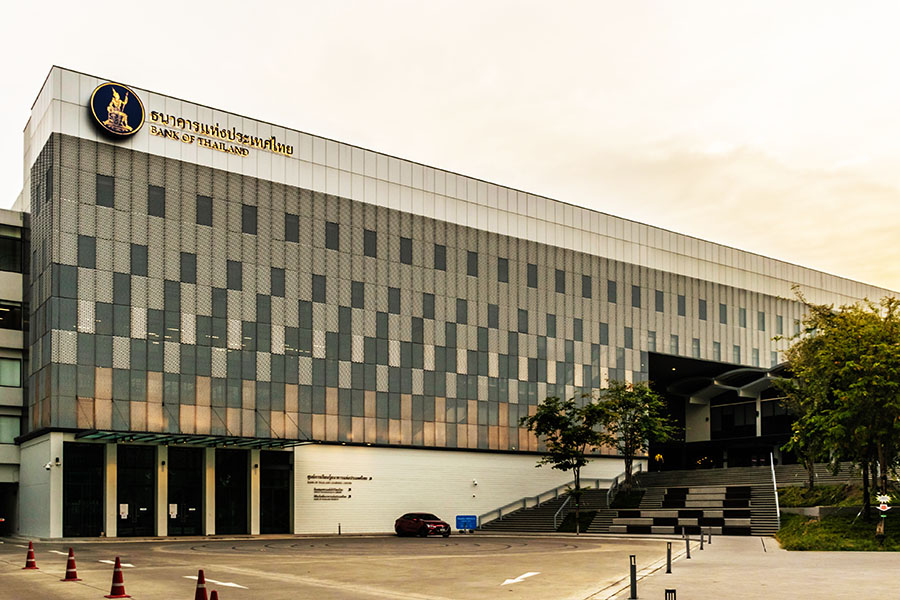
Two central bank governors from the Bank of Thailand (BOT) discussed the future of decentralised finance at a recent event in Thailand.
Representatives from the Bank of Thailand (BOT) and the Bank for International Settlements (BIS) hosted the event.
Panel talks featured Eddie Yue, CEO of the Hong Kong Monetary Authority, Bank of Korea governor Changyong Rhee, and Reserve Bank of New Zealand governor Adrian Orr, and BIS Innovation Hub chief Cecilia Skingsley.
The panel explored central bank digital currencies (CBDCs) and other digital assets. Yue kicked off the talks stating thta stablecoins and CBDCs offered greater, more cost effective benefits for conducting transactions.
Despite this, risks still posed problems for any new financial technology, he added. Continuing, he stataed that blockchain’s decentralised nature created greater challenges for on-chain security. Later, he urged financial regulators to focus on off-chain activities.
Speaking to the audience, he explained that regulators could start by monitoring off-chain activities “like regulating virtual asset exchanges.”
He added: Hong Kong will soon introduce not just [anti-money laundering] aspects but also investor protection.”
The Hong Kong government aimed to create further regulations to build global standards on how to regulate stablecoins, he concluded.
A New Hope for Crypto?
Hitting back, Rhee sad ihe did not see an optimistic future with namely monetary blockchain technologies due to the ongoing FTX and other crises harming the industry.
He cautioned whether the market saw the “benefit of the technological development recently,” citing the ongoing FTX collapse.
Concluding, he said: “I was more positive before, but after seeing the Luna, Terra, and now the FTX issues. I don’t know [if] we will see the real benefit of this new technology, at least for monetary policy.”
The news comes after ther BOT-BIS Conference took place on Friday at the Bank of Thailand on the 80th anniversary of the former bank.
Global leaders gathered to discuss crucial developments among central banking institutions. Key topics included inflation, the global economic crisis, emerging technologies, fintech, and climate change, among others.

Meta Platforms chief executive Mark Zuckerberg remains positive about his firm’s metaverse ambitions despite recent events leading to billions in lost revenues.
He stated in a recent interview at the New York Times DealBook Summit on Thursday that “someone has to build [the Metaverse].”
He explained further: “I think things look very different on a ten-year time horizon than the zone that we’re in for the next few years […] I’m still completely optimistic about all the things that we’ve been optimistic about.”
Despite the major setbacks, he added that “seeing things through” would involve “powering through” doubts on its ambitions and remaining hopeful.
The news comes after Meta’s third quarter (Q3) earnings revealed record-breaking losses for its Reality Labs division, costing $9.44 billion in 2022 and leading to over $10 billion in losses last year.
At the event, he reaffirmed the Metaverse would become the next computing platform, adding: “We’re not going to be here in the 2030s communicating and using computing devices that are exactly the same as what we have today, and someone has to build that and invest in it and believe in it.”
He also stated that his company recently laid off 11,000 workers in early November amid “massive investments” in hardware such as its recent Meta Quest Pro device.
Zuckerberg also admitted Meta Platforms believed the economy and its business operations would “go in a certain direction,” citing eCommerce business performance due to COVID-19 last year.
“Obviously it hasn’t turned out that way,” Zuckerberg said.
Continuing, he added: “Our kind of operational focus over the next few years is going to be on efficiency and discipline and rigor and kind of just operating in a much tighter environment.”
Investments in Meta, Restrictions on Apple
He assured the audience that four-fifths of Meta’s investments remained in its suite of social media applications such as Facebook, Instagram, and WhatsApp, among others. Reality Labs only comprises “less than 20 [percent]” of investments “until the Metaverse becomes a larger thing,” he explained.
40 percent of total Reality Labs investments funded its virtual reality (VR) head-mounted displays and the second half for its “long-term most important form factor,” or smart glasses.
He later slammed Apple for restricting ad revenues on its App Store along with restrictions on cryptocurrency exchanges and non-fungible tokens (NFTs).
Slamming the Cupertino-based firm, Zuckerberg said, “I do think Apple has sort of singled themselves out as the only company that is trying to control unilaterally what apps get on a device and I don’t think that’s a sustainable or good place to be.”
He concluded: “I do think it is it is problematic for one company to be able to control what kind of app experiences get on the device.”

Amsterdam, Netherlands, 5th December, 2022, Chainwire
Pioneering startup The Fabricant has gone live with its boundary-pushing digital fashion storytelling project Wholeland, with a trailer that sets the scene for a provocative world that splices digital couture, mythology and the rave scene.
The ambitious move is designed to raise the bar for the wider digital fashion industry, and lead a shift in focus away from the bear market to building Web3 experiences that create long-term, high-value engagement.
The OG digital fashion player is famous for its world-leading craftsmanship, gaining global prominence when it was founded as the world’s first digital fashion house in 2018. It sold the first-ever digital garment on blockchain for 54 ETH in 2019 ($9,500 at the time). Notable collabs with physical brands such as Off-White, Adidas and World of Women contributed to it raising $14M in Series A funding in April this year.
Wholeland is described as a digital fashion story and a visually rich journey of self-discovery that unfolds across 7 chapters. Each chapter includes digital couture, AR wearables, co-creation, fashion shows, metaverse meet-ups and airdrops.
Access to Wholeland can only be gained through minting one of The Fabricant’s pieces of AR facewear, called XXories, that act as a key to the wider experience.
Anyone can apply to Join the waitlist to mint an XXorie through The Fabricant website.
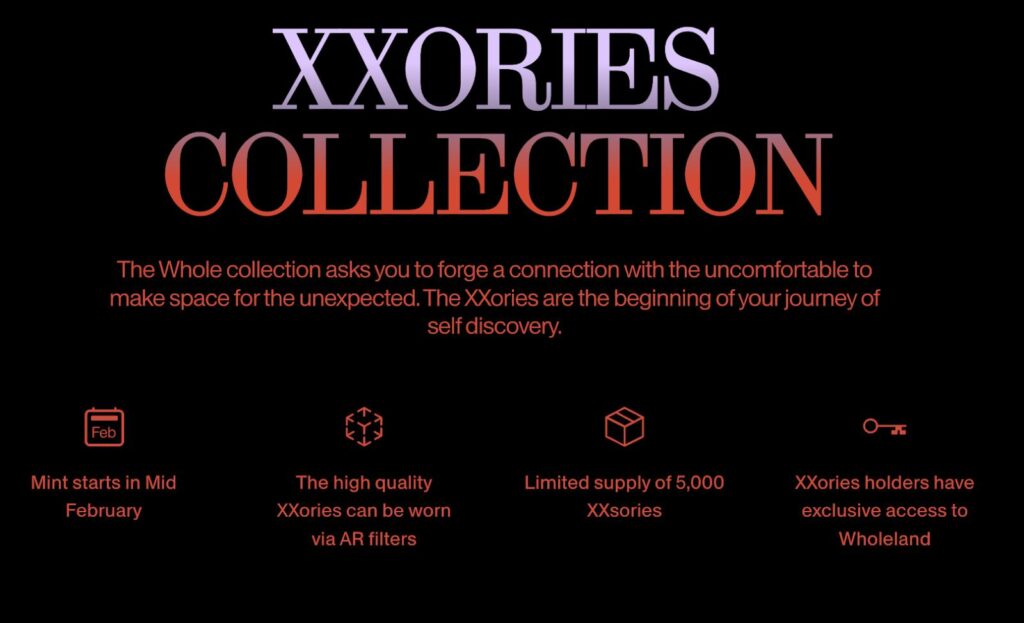
The WHOLELAND concept asks participants to fearlessly express all that they are through digital fashion, exploring parts of their identity that they might not share in the physical world.
Digital fashion fans will see the story unfold as they journey through the different chapters, with the ability to take advantage of various benefits as they progress.
Wholeland’s opening chapter has multiple points of interaction for participants:
- The XXories, 7 pieces of bold digital facewear that elevate virtual self-expression, and act as a key to the experience
- The Kappers – headpieces that mix historic Dutch style with a contemporary clubland aesthetic ready for co-creation
- The Looks, Couture garments that invite fearless digital fashion expression
- Secret Drops and groundbreaking collabs with the hottest digital artists and innovative brands
- And ultimately, the Wholeland metaverse – an immersive digital fashion world of highly crafted visual storytelling
It all starts with the mint of the XXories in February, so sign-up to the waitlist to get access to the most innovative fashion experience in Web3.
About The Fabricant
thefabricant.com | @thefabricant | @the_fab_ric_ant | discord.gg/thefabricant
The Fabricant is a digital-only couture house that splices fashion with tech to redefine craftsmanship for the virtual space. It was founded in 2018 from a desire to sabotage the fashion world’s cultural complacency and reimagine what fashion could be as an entirely non-physical experience. Through its co-creation platform, it is leading a digital fashion revolution that puts creators first and is committed to building a sustainable and equitable fashion industry where everybody thrives.
Contact
Theo Lasserre
The Fabricant
[email protected]

United States Commodity Futures Trading Commission (CFTC) chief Rostin Behnam commented that Bitcoin is the only crypto-based commodity to date, while speaking to an audience at an event at Princeton University.
In a Fortune report, the publication cited Benham’s comments, which contradicted his positive sentiments on Ether as a commodity. According to the interview, he aimed to explain whether a crypto asset was a commodity or security.
Today at Princeton, CFTC Chair Rostin Behnam said that the only cryptocurrency that should be viewed as a commodity is #Bitcoin, walking back from previous remarks made in October when he suggested Ether may also be a commodity.https://t.co/o5NrejDVaU
— Michael Saylor⚡️ (@saylor) December 1, 2022
In the US, Republican lawmakers have slammed the Securities and Exchange Commission (SEC) chairperson of collaborating with the now-bankrupt FTX to “obtain regulatory monopoly.”
Despite this most do not consider Bitcoin a security due to its decentralisation. The news comes after SEC officials targeted Ripple with a massive lawsuit, sparking backlash from blockchain advocate groups such as the Blockchain Association.
SEC Ties to FTX
Conversely, the SEC has been similarly lambasted due to links with FTX. The Digital Commodities Consumer Protection Act (DCCPA) provided the CFTC with oversight capacities, with the CFTC exec defending the Committee’s actions.
He said that it had limited oversight powers and slammed authorities for creating a “matrix of regulators.” The leader also urged better collaboration to manage the growing number of regulations on crypto.
Following the statements, Benham attended a congressional hearing on Thursday to explore the downfall of the FTX exchange, triggered by massive liquidity instability and a major bank run on the FTT cryptocurrency.
Global Crypto Crackdown?
The news comes as the United States, Bahamian, South Korean, Singaporean, and Australian regulators launch a heavy crackdown on crypto platforms to regulate their activities.
Many governments have reconsidered the stability of some cryptocurrencies and aim to require licences of operation for crypto firms in their respective countries, among other measures.
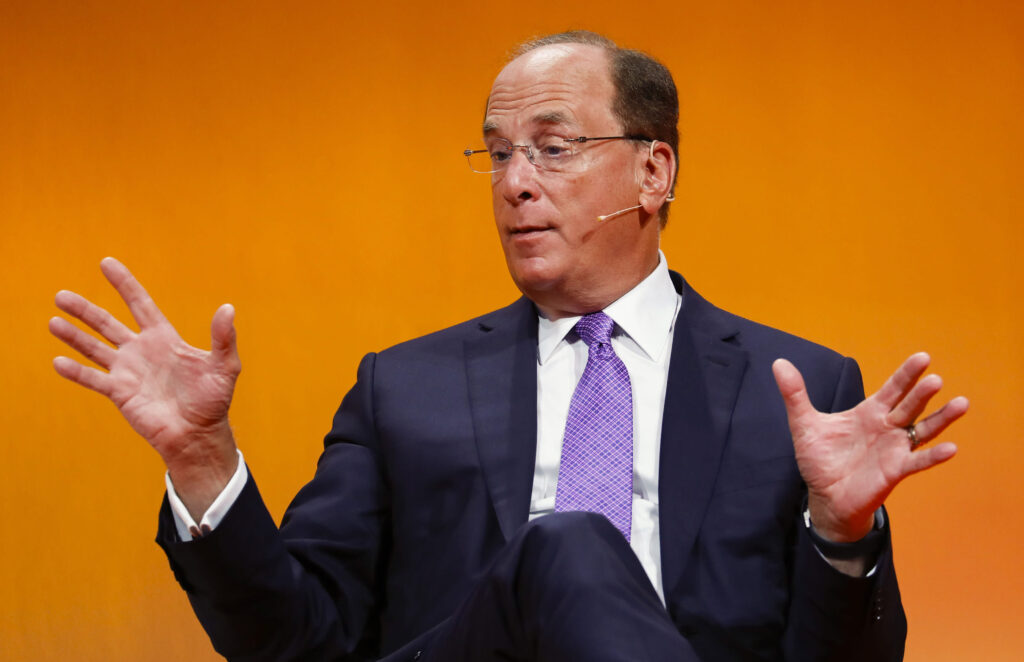
BlackRock, the world’s largest asset management firm, suspects FTX’s creation of its centralised FTT native token led to the company’s collapse.
Larry Fink, BlackRock chairman and chief executive, commented at the New York Times 2022 Dealbook Summit, stating FTX’s crypto coin was at loggerheads with the “whole foundation of what crypto is.”
Despite the accusation, he added that cryptocurrencies and their underlying blockchain technologies would reshape the industry.
BlackRock Inc. CEO Larry Fink said most crypto companies will probably fold in the wake of FTX’s collapse. “I actually believe most of the companies are not going to be around,” Fink said Wednesday at the NYT Dealbook Summit.
— Gary Black (@garyblack00) November 30, 2022
What took you so long to come to that conclusion?
Fink’s criticisms of centralised crypto tokens such as BNB, FTT, XLN, and SOL continued after he said he predicted “most of these companies [controlling the tokens] are not going to be around.”
Currently, native tokens comprise roughly $57 billion out of $862 billion of the crypto market’s total market capitalisation, figures reveal.
Sorkin Speaks with Fink, SBF
Andrew Sorkin hosted the talks with Fink, with the Blackrock executive stating exchange-traded funds would contribute significantly to the development of investments and tokenisation following shortly after.
Social media has also slammed Sorkin for hosting talks with disgraced former chief executive Sam Bankman-Fried at the event. The FTX founder faces investigations from numerous intelligence agencies in the United States, the Bahamas, and others.
Coming up in a moment. The Interview. @SBF_FTX. Hit this to watch for free from anywhere. https://t.co/e8hgFoGDjs
— Andrew Ross Sorkin (@andrewrsorkin) November 30, 2022
He added: “I believe the next generation for markets, the next generation for securities, will be tokenization of securities.”
Tokenisation would benefit investments to change its industry’s ecosystem more than banks by using distributed ledgers to conduct “instantaneous settlement” complete with identifying securities data.
He added: “Think about instantaneous settlement [of] bonds and stocks, no middlemen, we’re going to bring down fees even more dramatically.”
Concluding, he explained in the interview that people could “make all the judgement calls” on FTX regarding “misbehavior of major consequence,” adding: “[If] you look at the Sequoia’s of the world they’ve had unbelievable returns over a long period of time, I am sure they did due diligence.”
FTX Disaster Continues
The news comes after many have stated Bankman-Fried misused funds via Alemeda Research, the company’s research wing, to process funds due to a lack of access to banking institutions.
The company also faced a huge bank run, triggering a liquidity crisis up to its collapse, causing millions of users to lose their entire crypto holdings.

Cryptocurrency proof of reserves has become a major focus for trading exchanges following the bankruptcy of FTX, but some have slammed the measure as “pointless,” according to a Kraken executive.
Jesse Powell, Kraken chief executive and co-founder, said in a recent Twitter post that using proof of reserves failed to disclose liabilities publicly and needed to include them to offer full transparency.
Powell has previously slammed other exchanges for failing to include crypto accounts with negative balances, adding reserves were not wallet listings but rather assets minus their liabilities.
The news comes after Binance and other exchanges published their proof of reserves amid the ongoing FTX collapse, but despite this, Powell called for greater transparency.
I’m sorry but no. This is not PoR. This is either ignorance or intentional misrepresentation.
— Jesse Powell (@jespow) November 25, 2022
The merkle tree is just hand wavey bullshit without an auditor to make sure you didn’t include accounts with negative balances. The statement of assets is pointless without liabilities. https://t.co/b5KSr2XKLB
In a Twitter thread, he called the publication “either ignorance or intentional misrepresentation.”
Powell added: “The merkle tree is just hand wavey b*llshit without an auditor to make sure you didn’t include accounts with negative balances. The statement of assets is pointless without liabilities.”
Further in the thread, he said the point of proof of reserves was to “understand whether an exchange has more crypto in its custody than it owes to clients.”
He also urged global media to avoid “overselling it and misleading consumers,” but rather learn how proof of reserve systems operate.
The news comes after multiple exchanges, including Binance, Kraken, and Coinbase have called for greater evidence to show the financial health of cryptocurrency exchanges. This comes after former FTX chief executive Sam Bankman-Fried’s mishandled crypto assets, leading to the collapse of the exchange.
Crypto owners have begun moving their assets to self-custodial wallets to avoid further issues with trading exchanges, and governments such as Singapore and Australia have begun tightening regulations for platforms operating in their respective nations.