


BaFin, Germany’s Federal Financial Supervisory Authority, has ordered Coinbase to set up Coinbase Germany GmbH over alleged violations “proper business organization.”
In the document, the government body has cited the German Banking Act in the order, which urges Coinbase’s Germany branch to have “suitable arrangements for managing, monitoring and controlling risks and appropriate arrangements by means of which the institution’s financial situation can be gauged with sufficient accuracy at all times.”
The government has also required Coinbase Germany to provide audit certificates for its annual accounts when needed. The order has also stated that the cryptocurrency exchange had outsourced several of its services, stating the latter did so as “essential for conducting banking business or providing financial services.”
The order took effect on 27 October, accusing Coinbase Germany of “organizational deficiencies at the institute.
“The regularity of the business organization was not given in all audited areas,” it added.
What Are Germany’s Rules
The news comes after BaFin issued Coinbase Germany with a licence to conduct exchanges in July last year.
According to Koinly’s assessment of Germany’s Banking Act, cryptocurrency mining is legal pending commercial operators determine whether they need a BaFin approval and licence.
Day trading is considered a commercial activity and may receive different tax breaks compared to private assets. Cryptocurrency futures in Germany have faced intense scrutiny from the European Union (EU) as they do not qualify as responsible investments. Despite this, some cryptocurrency exchanges still offer futures as products.

FTX chief executive San Bankman-Fried tweeted on 8 November to address concerns over potential clashes with rival exchange platform Binance.
In his tweet, Bankman-Fried wrote that his company and Binance had reached an agreement on a “strategic transaction” after the latter firm nearly emptied its withdrawal backlogs. The FTX chief later urged Binance to “clear out liquidity crunches” and secure assets on an equal footing.
In a statement, Bankman-Fried said: “I know that there have been rumors in media of conflict between our two exchanges, however Binance has shown time and again that they are committed to a more decentralized global economy while working to improve industry relations with regulators. We are in the best of hands.”
Responding, Zhao tweeted that FTX had contacted his company due to a “significant liquidity crunch,” adding the transaction was a non-binding letter of intent to acquire FTX.
According to Zhao, Binance had assessed the situation “in real time” and could “pull out from the deal at any time.”
CZ later tweeted “two big lessons,” which were to never use created tokens as collateral and not “borrow if you run a crypto business” and “have a large reserve.”
He concluded: “Binance has never used BNB for collateral, and we have never taken on debt”
FTX Struggles
The news comes just a day after Bankman-Fried slammed claims of liquidity concerns as “false rumours,” adding that FTX’s company assets were in good standing.
He wrote he had contacted the exchanges to collaborate “for the ecosystem.” Despite this, Binance stated it would remain “in the free market” rather than Alameda Research take over its FTT holdings.
Reports have noted that Binance’s acquisition of the exchange would become one of the largest in the industry, namely after Coinbase stated it was interested in buying out BtcTurk for roughly $3.2 billion USD.
If successful, Binance would become the world’s largest cryptocurrency exchange.
According to the Financial Times, the deal poses a huge setback for FTX, namely as people view the platform as stable and assisting other exchanges amid the cryptocurrency collapse this year. FTX has offered bailout loans to several companies, including $250m to BlockFi and $485m to Voyager Digital.
Japan’s top mobile carrier, NTT Docomo, launched a partnership on Wednesday with multichain smart contract platform Astar Network to boost Web3 technologies nationally.
The joint effort will create a consortium tasked with providing individuals and firms with tokenisation technologies for governance platforms, the company said in a statement.
The two enterprises will collaborate on three core processes:
- Research on case studies for sustainable projects based on the environmental impact of Web3 technologies
- Eliminate technology discrepancies for Web3 adoption
- Launch educational initiatives and practical, hands-on experience for professionals
According to Sota Watanabe, Astar Network’s Chief Executive, the initiative aimed to showcase Web3 technologies to the public.
He said: “In this context, more robust cases with excellent user experience on an infrastructure that is accessible to everyone is essential. It is about making a society where more people can truly enjoy the benefits of Web3, not just engineers.”
Japan Warms Up to Crypto
The news comes after Japan’s Digital Agency opened a decentralised autonomous organisation (DAO) research Web3 initiative, with Fukuoka, one of Japan’s largest port cities, teaming up with Aster Labs to build Web3 use cases.
According to the government body, it had mulled easing restrictions on listing cryptocurrencies, the Japan Times reported in February, citing people familiar with the matter.
Potential new rules could allow cryptocurrency exchange platforms to list multiple digital tokens without major screenings, the sources said, adding screenings initially took more than six months to complete. Companies such as Coinbase faced the regulations after launching trading services in August, severely limiting their coin availability to just five cryptocurrencies.
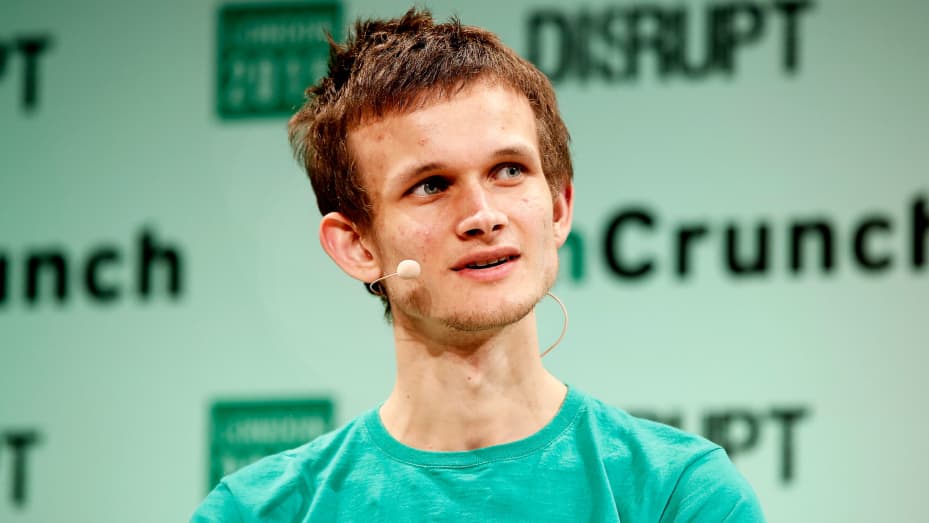
Vitalik Buterin, Ethereum’s co-founder, recently amended his platform’s roadmap to avoid censorship and boost decentralisation of its network, it was found on Saturday.
In a tweet on 4 November, Bukerin stated the addition to the Ethereum technical roadmap, Scourge, aims to expand the number of transactions per second to 100,000 via rollups.
Updated roadmap diagram! pic.twitter.com/MT9BKgYcJH
— vitalik.eth (@VitalikButerin) November 4, 2022
The news comes as Ethereum updated its platform, moving Scourge to the third stage following the platform’s proof-of-stake (PoS) network, where it remained in its Surge stage.
Scourge aims to ensure “reliable and credibly neutral transaction inclusion” while avoiding centralisation and other protocol risks from MEV [maximum extractable value],” namely amid concerns over miners exploiting transactions on its network.
MEV prioritises specific people on networks by selecting transactions to place in a block in a specific order, allowing miners to duplicate winning deals from mempools and execute transactions with priority. This has sparked concerns over Ethereum’s neutrality regarding centralisation and censorship.
The Scourge of Ethereum
In a 2020 blog post, Buterin explained that credible neutrality was where a platform “does not discriminate for or against any specific people.”
Buterin has proposed a “partial block auction” to limit an individual’s decision-making on the contents of a specific block. Additional ideas included the Single Unifying Auctions for Value Expression (SUAVE), developed by Ethereum research and development wing Flashbots.
He also told the Verge in a recent statement that Ethereum would integrate its Succinct Non-Interactive Argument of Knowledge (SNARK) on the blockchain. The new tool will boost privacy while facilitating tracing of anonymous transactions.
Catheon Gaming, the world’s fastest-growing integrated blockchain gaming and entertainment company, is pleased to announce that the Catheon Gaming Center (CGC) is live at https://app.catheongaming.com/.
Catheon’s gaming ecosystem is supported by CGC, a highly scalable and chain-agnostic Web3 gaming distribution platform. The CGC’s mission is to create an interconnected ecosystem for exclusive Catheon Gaming IPs and a growing number of curated publishers, where users have a comprehensive overview of their in-game assets across games and interact with all blockchain elements of the game they are playing are available in one place. As the CGC evolves, it will incorporate the CATHEON token as the primary payment medium for all primary assets sold through the CGC. Users will be offered discounted prices to incentivize its use.
The initial feature set in the CGC will include a game storefront where users can browse our collection of partner games and Catheon Portfolio games and view key information, such as token prices and details on nonfungible token (NFT) collections. Additionally, there will be an NFT marketplace for Catheon Gaming titles and the additional integration of external marketplaces, such as OpenSea and Magic Eden, that can be purchased from the CGC. This process is simplified through a fiat on-ramp that will enable users to purchase assets with credit cards and their on-platform wallets.
Subsequent updates of the CGC will offer various features not yet available to users on a single platform. It will help seamlessly onboard users onto blockchain gaming through participation in NFT mints, initial decentralized exchange offerings and secondary market purchases. It will also provide users with a comprehensive overview of their blockchain assets (NFTs and tokens). With the ultimate goal of having a single place for gamers to interact with blockchain games, the CGC will also provide game-launching functionality and access to game-specific features, such as NFT rentals (scholarship), breeding and staking to improve their earning potential.
William Wu, founder and co-CEO, Catheon Gaming, commented:
“We have an extremely talented team of blockchain developers that have been working extremely closely with our gaming experts to understand the needs of gamers and developers to develop a product that does not yet exist in the market. We are extremely excited to be going live with the Catheon Gaming Center to provide users a simplified platform to interact with blockchain gaming. Looking at competitors in the space, we are confident this product will fill a gap that is truly needed to help further the adoption of blockchain gaming.”
About Catheon Gaming
Catheon Gaming, ranked by KPMG and HSBC as one of the top 10 emerging giants in Asia–Pacific, is the world’s fastest-growing integrated blockchain gaming and entertainment company. Catheon Gaming is the only end-to-end platform providing world-class technical, publishing and partnership capabilities for the world’s leading game studios, companies and brands seeking to navigate their path into Web3. By being the partner of choice, Catheon Gaming has built the industry’s largest portfolio of blockchain games underpinning our vision to revolutionize the way we play, live and earn.
For more information, please visit: https://catheongaming.com/
For media inquiries, please contact: [email protected]
Anatoly Yakovenko, Solana’s co-founder, told audiences at a recent event his cryptocurrency platform had received updates aimed at improving the reliability of its network.
He stated at the Breakpoint 2022 event in Lisbon the Solana network had been plagued by numerous concerns such as network instability and downtime, adding: “We’ve had a lot of challenges over the last year, I would say this whole last year has been all about reliability.”
Did you miss our presentation by @time_composer at @SolanaConf today?
— Clockwork ⚙️ (@clockwork_xyz) November 7, 2022
Here are the highlights! 🧵 pic.twitter.com/ENrYXUrMXt
According to the company, Solana had faced ten outages, with the biggest taking place in January this year. The incident partially shut down the platform and hindered its operations for nearly 20 hours.
The most recent issue occurred at the beginning of October, resulting in over six hours of downtime. Additional problems in May and June triggered clock drifts, or widening gaps in real and block times, causing difficulties in validating blocks on the platform.
Tackling the Timeclock
Yakovenko explained the event that the situation worsened in June after block times “went up to over a second, which is really slow for Solana” compared to average times of 400 milliseconds.
In some cases, confirmation times took from 15 to 20 seconds, he explained.
He continued, stating: “That’s not the experience that we want to deliver and that’s a pretty bad Web2 experience when you’re competing with Google with Facebook with all these other applications.”
Recent updates and doubling the validator count allowed Solana to resolve the issue partially, he said. His company had been in a “constant fight between performance, security, throughput, and decentralization,” which resolved many of the core issues, Yakovenko added.
“[I] think we’ve done an amazing job in solving a bunch of those […] Obviously we still have challenges with outages and bugs,” he told the audience.
Problems Lead to Solutions
According to the company’s Network Performance report in late October, which documented the challenges, developers have launched several upgrades to boost performance as it scales up its platform to accommodate surging user growth.
The company enhanced QUIC for its services, which is a protocol that includes sessions and flow control. Reasons for adding QUIC include resolving UDP issues with flow control and acknowledging receipt, which fails to block abusive behaviour on the platform.
Solana also added stake-weighted Quality-of-Service (QoS), which “extends the utility of stake-weighting to transaction quality, leading to better receipt of blocks “regardless of the amount of traffic coming in from nodes without stake.”
It also introduced fee markets to back priority fees. Initially, Solana’s network processed all transactions on a “first-come-first-serve basis” but did not indicate how urgent transactions were on the platform. Priority fees will allow transactions to indicate urgency following their implementation in July this year.
OpenSea chief executive Devin Finzer revealed in a blog post on Sunday that the company would launch a tool to provide creators with “on-chain enforcement of their non-fungible token (NFT) royalties.”
He noted in his post that for marketplaces with optional fees, voluntary creator fee payments had “dwindle to less than 20 [percent]” or were “simply not paid at all.”
There’s been a lot of discussion over the past few months about business models for NFT creators & whether creator fees (“royalties”) are viable.
— OpenSea (@opensea) November 6, 2022
Given our role in the ecosystem, we want to take a thoughtful, principled approach to this topic & to lead w/ solutions. 🧵
It added that business models from most creators in the NFT market were “subject to enforcement discretion of marketplaces rather than code.”
The post read: “With many marketplaces choosing to stop enforcing creator fees, to put it bluntly, the last few months haven’t felt WAGMI.”
On-Chain Enhancements
To correct the issue, Finzer explained that OpenSea had created the on-chain tool to enforce fees from 12:00 ET on 8 November. It added it would also launch tools and enhancements to enforce the new standard while engaging with the community for feedback.
OpenSea may take further measures on 8 December, including continued enforcement, optional creator fees, and collaborating with other enforcement options.
Explaining further, Finzer added: “We recognize not all creators, collections, and communities are the same and we are looking to create a long-term policy that reflects that.”
Laying Down the Law
According to the CEO, the new measures would include adding a code snippet for creators to facilitate current and future upgradeable contracts and checking new collections to verify if items can sell on marketplaces without creator fee enforcement.
Concluding, he said: “[Technical] decisions like this involve tradeoffs: enforcing creator fees on-chain requires sacrificing some of the censorship-resistance and permissionless nature of NFTs.
OpenSea also believe that creators had the power to “build the collections and communities that they desire” and that buyers and sellers could have the freedom to “choose which collections they do and don’t engage with.”
Singapore, Nov. 7, 2022 – XT.com, the world’s first socially infused trading platform, is thrilled to announce the listing of BIGP on its platform in the Main zone, and the BIGP/USDT trading pair will be open for trading from Nov. 8, 2022, at 14:00 (UTC).
- Users can deposit BIGP for trading on Nov. 7, 2022, at 14:00 (UTC).
- Withdrawals for BIGP will open on Nov. 9, 2022, at 14:00 (UTC).
About BIGP Token
Big Point (BIGP) is an ERC-20 standard governance token issued on the BarterSmart blockchain with a total supply of 11 million. Owners of BIGP are able to participate in the governance of the project, which supports the POINTS stablecoin (pegged to the Thai baht).
For every new subscriber in the Big Point ecosystem, the coin’s value will increase by 20 satangs (1 satang = one-hundredth of a baht). With every membership, the value and demand for BIGP will increase.
About the Big Point ecosystem (BarterSmart)
BarterSmart is a product exchange platform that brings together businesses and entrepreneurs in Thailand who would prefer to exchange goods and services with each other through a barter system. It’s a nonprofit organization that provides tools for business owners.
BarterSmart introduced the idea of combining barter trade and cryptocurrency. The platform uses Points and Big Points as its financial exchange methodology. The ecosystem contains Point and Big Point, two Thai utility tokens. Big Points are digital shares of BarterSmart. Points, on the other hand, are added according to the number of new members (for every new member, 27,500 points are added to the pool). Points can be used as an intermediary to exchange products and services in the BarterSmart community.
On BarterSmart, users can create product presentations, increase sales channels, release stock, exchange, and help and expand business with each other.
XT.com will continue to further strengthen its battle-hardened crypto listing strategies to improve the trading options for all of its users. Deposit, trading and withdrawal options will be available for both BIGP and XT holders. Everyone is encouraged to indulge in BIGP trading seamlessly anytime, anywhere without any limitations. As promised, XT.com will continue welcoming projects for crypto listings and achieve parallel growth with them.
Website: https://bartersmart.co.th/
Facebook: https://www.facebook.com/bartersmartth
Line: https://line.me/R/ti/p/@bartersmart
YouTube: https://www.youtube.com/channel/UCu6UttQn0mbkWOl7i3KTxHg
About XT.COM
By consistently expanding its ecosystem, XT.com is dedicated to providing users with the most secure, trusted and hassle-free digital asset trading services. Our exchange is built from a desire to give everyone access to digital assets regardless of where you are.
Founded in 2018, XT.com now serves more than 6 million registered users, over 500,000 monthly active users and 40 million users in the ecosystem. Covering a rich variety of trading categories together with a nonfungible token-aggregated marketplace, our platform strives to cater to its large user base by providing a secure, trusted and intuitive trading experience.
As the world’s first social-infused digital assets trading platform, XT.com also supports social networking platform-based transactions to make our crypto services more accessible to users all over the world. Furthermore, to ensure optimal data integrity and security, we see user security as our top priority at XT.com.
Website: https://www.xt.com/
Twitter: https://twitter.com/XTexchange
Telegram: https://t.me/XTsupport_EN
Mastercard, one of the world’s top global payment system providers, has onboarded several cryptocurrency and blockchain small and medium enterprises (SMEs) to expand its fintech accelerator programme, it announced on Thursday.
Mastercard’s Start Path programme onboarded seven additional fintech startups in a bid to train, deploy, and grow crypto and blockchain-based companies using its payments system platform.
The latest cohort consists of the following companies:
- Loot Bolt, a US company building communities with Web3-based social payment systems.
- Quadrata, who uses privacy-focused, Sybil-resistant solutions to enhance compliance public blockchains and reduce reputational risk
- Stable, a Colombian company providing peer-to-peer (P2P) payments and global remittances using stablecoin and related technologies.
- Digital Treasures Center (DTC), a Singapore-based company providing transactional technologies via card, crypto, and cash, using its DTC Pay platform
- Fasset, an Abu Dhabi digital asset exchange for emerging markets building Web3 use cases for customers to buy, sell, and own digital assets.
- Take Back the Mic (TBTM) has developed a world-first blockchain media fintech company to reward creatives and fans with monetised content platform.
- Uptop, a US-based company with a place for brands to build customer relationships and provide shoppers with bespoke rewards
In its statement, Mastercard explained that fintech firms played a “major role in digital transformation” with new ideas, customisation, and more choice for enterprises and consumers.
It continued: “We believe collaboration across the crypto ecosystem is essential to delivering the right solutions at the right time. From our experience innovating payments and building a global network, we believe it’s more likely that we’ll see a hybrid economy that combines the benefits of Web3 technology with existing financial infrastructure.”
Start Path Background
Mastercard launched its accelerator programme in 2014 as a six-month course designed to expand and commercialise startup solutions. Over 350 firms have joined the initiative, with startups such as Thought Machine and Zeta and Razorpay reaching unicorn status.
Start Path’s latest cryptocurrency-focused division, Start Path Crypto, opened in 2021 with a three-month programme to back crypto companies receiving seed, Series A, and Series B funding.
The news follows developments in mid-October after Mastercard unveiled its Crypto SourceTM programme, which builds crypto solutions and services for financial institutions.
The fintech giant offered a full suite of services for buying, selling, and holding crypto assets along with security and advisory services, building security and compliance capabilities for the global ecosystem.

The Bitcoin Yardstick, a metric coined by Charles Edwards, chief executive of asset management at Capriole, has hit near record lows following the 2017 bull market run.
He said in a recent tweet that the Bitcoin Yardstick was “a very simple, rule-of-thumb Bitcoin valuation tool”, but was “not investment advice.”
Edwards, whose measurement calculates the ratio of Bitcoin market capitalisation to hash rate, believes that Bitcoin is oversold more than most coins, indicating how cheap buyers can purchase BTC.
Introducing: The Bitcoin Yardstick
— Charles Edwards (@caprioleio) November 2, 2022
Today we are seeing valuations unheard of since Bitcoin was $4K.
A very simple, rule-of-thumb Bitcoin valuation tool.
Bitcoin Yardstick = market-cap / hash-rate, normalized over 2 years of data.
As always: not investment advice.
A short🧵 pic.twitter.com/bsFk0hh9ra
Current figures show that Bitcoin’s hash rate has hit record highs, with prices falling 75 percent since its last price spike in November last year.
Speaking further in his Twitter thread, he said the Yardstick method takes the “ratio of energy work done to secure the Bitcoin network in relation to price.”
He added: “Lower readings = cheaper Bitcoin = better value.”
Concluding, he stated: “This means that on a relative basis, Bitcoin is extraordinarily cheap given the amount of energy being used on what is the most powerful computer network in the world.”
Here’s an application of the Bitcoin Yardstick which identifies when Bitcoin is:
— Charles Edwards (@caprioleio) November 2, 2022
– Cheap: Yardstick > 1 deviation under the mean
– Risky: Yardstick > 2 deviations above the mean
– Expensive: Yardstick > 3 deviations above the mean
3/6 pic.twitter.com/ZVabEBQD3x
Investors interested in following his Bitcoin Yardstick equation can visit Glassnode Studio for updates.
The Bitcoin Yardstick cits the proof-of-work (PoW) concept based on the mining algorithm for the cryptocurrency network’s storage and growth value over time, as evidenced by the Bitcoin Standard authored by Saifedean Ammous.
Sources also indicate the power required for the Bitcoin network is much less than the value of traded cryptocurrencies, with crypto miners and firms alleging of unfair valuation rates.