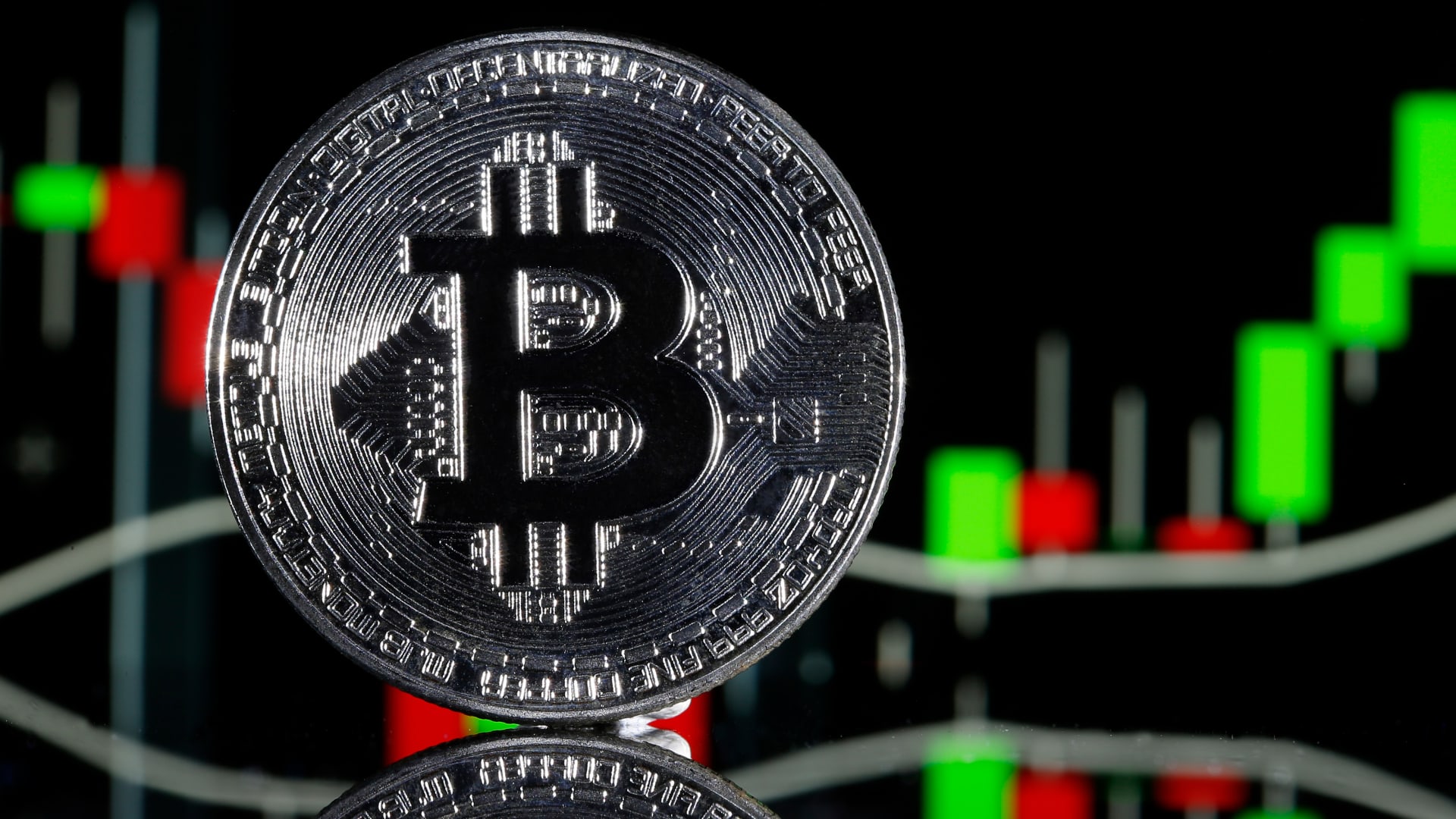
Bitcoin is trading in the $77,000 to $78,000 range on Saturday April 18, posting a gain of approximately 2.8 to 3% over the previous 24 hours as the Strait of Hormuz reopening sparked a broad shift in market sentiment that carried risk assets higher across equities, commodities and crypto simultaneously.
The move builds on a week of gradual recovery from lows near $70,000 in early April, when Trump’s blockade order sent investors into defensive positions across all major asset classes. The total crypto market capitalisation has reached $2.70 trillion, up from $2.63 trillion the previous day, with Bitcoin’s dominance holding at 57.3% as the largest digital asset continues to attract the most institutional interest in a period of elevated uncertainty.
US spot Bitcoin ETF inflows have been one of the more remarkable data points of the current cycle. A single-day inflow figure of $663.9 million was recorded in the days prior to Friday’s session, driven primarily by BlackRock’s IBIT and Fidelity’s FBTC. That figure represents the kind of institutional commitment that structurally changes Bitcoin’s demand profile compared with earlier market cycles, where retail momentum was the primary driver of price swings.
The liquidation dynamic has added further fuel to the move. Approximately $820 to $826 million in total crypto liquidations were recorded in recent sessions, with Bitcoin short positions accounting for more than $350 million of that total. When extended bearish positioning meets a macro catalyst that forces rapid position unwinding, the resulting short squeeze amplifies the directional move well beyond what fundamentals alone would produce.
Bitcoin is now testing a key resistance band in the $77,000 to $79,000 area that aligns with a Fibonacci extension zone and has acted as a ceiling multiple times over the past two months. A clean break above $79,000 on sustained volume would shift the technical picture materially and open conversation about a return to the $80,000 to $85,000 range. The Fear and Greed Index sits at 26, still firmly in the Fear category, which means the sentiment backdrop has not yet shifted to the kind of euphoric positioning that typically precedes meaningful corrections.
Several analysts have noted that the 46-day stretch of negative funding rates on Bitcoin perpetual futures, even as prices moved higher, is a historically unusual configuration that typically precedes sharp upside moves as short sellers are eventually forced to cover. Whether the Hormuz reopening and ETF inflows are sufficient catalysts to force that squeeze is the question the market is working through this weekend.