



French crypto hardware wallet provider Ledger is exploring a potential listing in New York as demand for its devices surges due to escalating cyberattacks.
The company, founded in Paris in 2014, has reported record revenues in 2025, reaching triple-digit millions, driven by both individual and institutional demand.
CEO Pascal Gauthier told the Financial Times that this year has been the company’s strongest yet, as hackers increasingly target digital assets.
“We’re being hacked more and more every day … hacking of your bank accounts, of your crypto, and it’s not going to get better next year and the year after that,” he said.
Crypto Thefts Hit New Highs
The surge in Ledger sales coincides with a record year for crypto-related thefts.
According to Chainalysis, hackers stole $2.2 billion worth of digital assets in the first half of 2025, surpassing the total losses recorded in all of 2024.
Approximately 23% of these attacks targeted individual wallets, highlighting the growing need for secure hardware solutions.
Ledger Secures $100 Billion in Bitcoin
Gauthier revealed that Ledger currently secures around $100 billion worth of Bitcoin for its customers.
He also suggested that the company may benefit from seasonal spikes in sales during Black Friday and the Christmas period.
Looking ahead, Ledger plans to raise funds in 2026, either through a private funding round or a US listing.
The company is increasing its New York headcount, with Gauthier noting, “money is in New York today for crypto, it’s nowhere else in the world, it’s certainly not in Europe.”
Competitors such as Trezor and Tangem offer similar “cold storage” wallets, but Ledger remains the market leader.
The company was last valued at $1.5 billion in 2023, with backing from 10T Holdings and True Global Ventures.
Multisig App Upgrade Sparks Debate
Last month, Ledger launched a new multisignature (multisig) interface, receiving mixed reactions from its user base, as reported by Bitzuma.
While many praised the upgrade as a technical improvement, the new fee structure—including a $10 flat fee per transaction and a 0.05% variable fee for token transfers—drew criticism.
Developers such as pcaversaccio accused Ledger of moving away from its Cypherpunk roots, arguing the app has become a centralized “choke point” aimed at extracting revenue from users.

Binance co-founder Changpeng “CZ” Zhao has denied claims that his presidential pardon from Donald Trump was influenced by financial or political ties, saying he was as surprised as anyone when the news broke.
Speaking to Fox News on Friday, CZ revealed that he had never personally met Trump before or after the pardon was issued in October.
“I never physically met or spoke with Trump,” he said, adding that the only interaction with the Trump family was a single encounter with Eric Trump during the Bitcoin Middle East and North Africa conference in Abu Dhabi.
“There is no business relationship between me, Binance, and World Liberty Finance,” Zhao stated.
He explained that he was unaware of the pardon’s progress throughout the process, saying: “I did not know when or if it was going to happen. I believe my lawyers submitted the petition in April, and it took a few months. I didn’t know the progress. There was no indication of how far it went along, etc. Then, it happened one day.”
Mixed Reactions and Political Backlash
The pardon drew polarized reactions.
Supporters within the crypto community hailed it as a positive signal for digital assets and a break from what they described as the Biden administration’s anti-crypto stance.
However, Democratic lawmakers quickly criticized the decision, accusing Trump of corruption and self-interest.
During a press briefing following the pardon, Trump said he didn’t know CZ personally but was informed that the case against him was politically motivated.
“He had a lot of support, and they said that what he did is not even a crime, it wasn’t a crime. He was persecuted by the Biden administration,” Trump remarked.
Democrats Question Pardon Motives
Representative Maxine Waters led accusations that Trump’s decision may have been linked to financial contributions from the crypto sector.
Waters claimed Trump engaged in a “pay-to-play” arrangement, suggesting the pardon was in exchange for potential investments in ventures tied to the Trump family, such as World Liberty Financial (WLFI).
Several Democratic senators, including Elizabeth Warren and Bernie Sanders, signed a letter addressed to Attorney General Pam Bondi, calling for an investigation into the circumstances surrounding the pardon.
The lawmakers demanded transparency about communications between Trump’s campaign, Binance, and associated financial entities.
While speculation continues, CZ maintains that his pardon was handled legally through his attorneys and that no financial arrangements were made or discussed.

Cathie Wood’s ARK Invest has increased its exposure to Tom Lee’s Ether treasury firm BitMine while reducing its holdings in Tesla.
According to the firm’s daily trading disclosures on Friday, ARK purchased 48,454 shares of BitMine, worth roughly $2 million.
The shares were acquired across three of ARK’s ETFs: ARK Innovation (ARKK), ARK Fintech Innovation (ARKF), and ARK Next Generation Internet (ARKW).
Wood’s funds have been steadily adding to BitMine positions since April, when the company began accumulating Ether as a treasury asset.
BitMine shares rose 7.65% in after-hours trading to $40.23, marking a year-to-date gain of 415%, according to Google Finance.
Tesla stake reduction
At the same time, ARK sold around 71,638 Tesla shares across its funds, a position valued at about $30 million based on Tesla’s closing price of $429.52.
The ARKK and ARKW ETFs both reduced their Tesla holdings.
Tesla has been a cornerstone of ARK’s portfolio since 2018.
The move follows shareholder approval of CEO Elon Musk’s nearly $1 trillion pay package, with 75% of voting shares in favor despite opposition from proxy advisors Glass Lewis and ISS.
The package, announced at Tesla’s annual meeting in Austin, Texas, will boost Musk’s ownership from roughly 13% to 25% if Tesla meets certain milestones.
Musk will receive 12 tranches of stock tied to performance goals, starting at a $2 trillion market cap and scaling to $8.5 trillion.
BitMine faces significant unrealized losses
BitMine is currently sitting on about $2.1 billion in unrealized losses linked to its Ether reserves, following the crypto market downturn, according to CryptoQuant.
The company holds nearly 3.4 million ETH, having acquired over 565,000 in the past month.
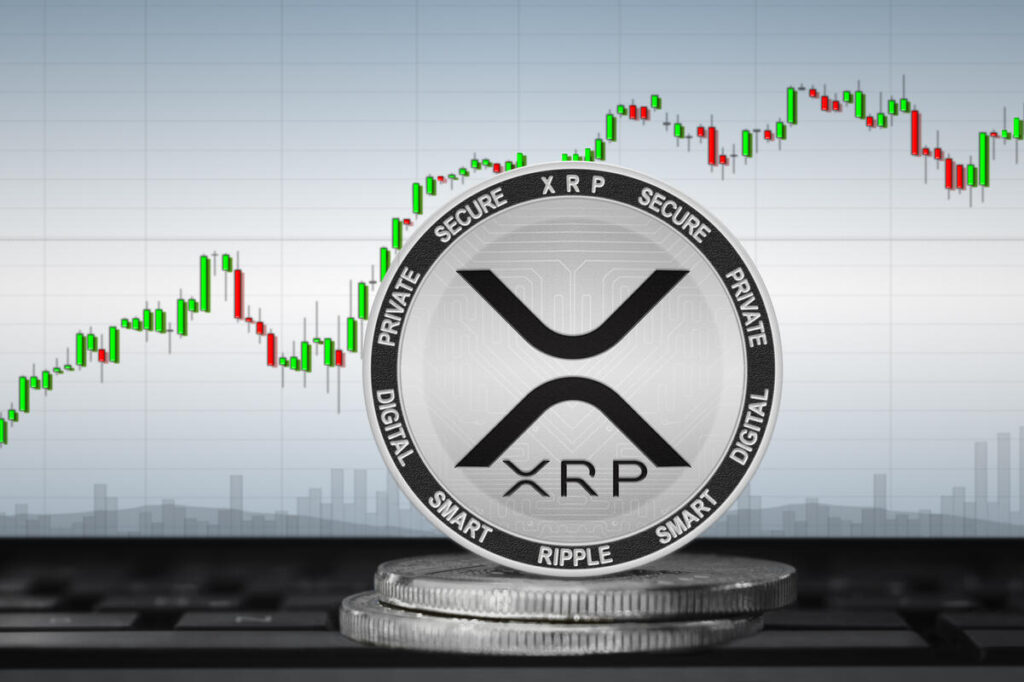
XRP has fallen sharply following Ripple’s annual Swell conference, erasing much of the brief rally seen during the event.
After reaching highs near $2.40 on November 5, XRP dropped over 9% to $2.19, despite several major announcements by Ripple, including a $500 million funding round led by Citadel Securities and Fortress Investment Group.
The company also unveiled new integrations for its RLUSD stablecoin and hinted at a decentralized lending protocol on the XRP Ledger (XRPL).
“Buy the Rumor, Sell the News” Trend Persists
The decline reflects a familiar pattern where XRP tends to fall after Ripple’s flagship event — a trend observed in four of the past five years.
Historically, XRP has posted negative returns between the Swell conference and year-end, as investor excitement fades following the announcements.
Technical Indicators Signal Further Downside
The broader crypto market’s pullback, including Bitcoin’s dip below $100,000, has also weighed on altcoin sentiment.
Technically, XRP’s recent price action has confirmed a bearish “flag” pattern, compounded by an impending death cross — when the 50-period exponential moving average drops below the 200-period EMA.
This setup suggests the potential for XRP to fall toward the $1.65–$1.70 range, aligning with previous support levels from April.
Tokyo-listed Bitcoin treasury company Metaplanet has secured a $100 million loan backed by its Bitcoin holdings.
The funding, disclosed in a Tuesday filing, was borrowed on October 31 under a credit agreement that allows the company to use its Bitcoin as collateral for short-term financing, amid BTC dropping in the last week.
Metaplanet did not reveal the lender’s identity but confirmed the loan carries a benchmark US dollar rate plus a spread and can be repaid at any time.
The company described the structure as conservative, noting it holds 30,823 BTC, valued at roughly $3.5 billion as of the end of October.
Metaplanet said this position is large enough to maintain strong collateral coverage even if Bitcoin’s price declines.
Loan Proceeds to Support Bitcoin Purchases and Share Buybacks
Proceeds from the credit line may be deployed in several areas, the company said.
These include additional Bitcoin purchases, its Bitcoin income business — where holdings are used to earn option premiums — and share repurchases, depending on market conditions.
Shares in Metaplanet fell 2% following the announcement.
The move comes just days after the company unveiled a 75 billion yen ($500 million) share buyback program.
Like the recent loan, the buyback program is also backed by Bitcoin-collateralized financing.
Metaplanet said the program is designed to restore investor confidence after its market-based net asset value (mNAV) fell below 1.0.
mNAV Dip and Company’s Acquisition Plans
The mNAV, a metric comparing the company’s market value to its Bitcoin holdings, briefly dropped to 0.88 last month.
It has since rebounded to above parity, according to the company.
During the dip, Metaplanet temporarily paused new Bitcoin purchases but reiterated its commitment to acquire 210,000 BTC by 2027.
The company expects the financial impact of the $100 million drawdown on its 2025 fiscal results to be minor.
It also pledged to disclose any material changes to investors should they arise.
Market Context: Bitcoin Treasury Companies
Metaplanet’s move occurs amid wider scrutiny of Bitcoin treasury firms.
Last week, S&P Global Ratings assigned a “B-” speculative-grade rating to Michael Saylor’s Bitcoin treasury company, Strategy.
S&P cited heavy Bitcoin concentration, limited liquidity, and a narrow business focus as key weaknesses.
Critics have increasingly questioned the crypto treasury model.
A report from 10x Research noted that some Bitcoin treasury companies have seen their net asset values collapse, erasing billions in paper wealth.
Analysts argued that the boom in Bitcoin treasury firms, which issued shares at multiples of their actual Bitcoin value, has “fully round-tripped,” leaving retail investors with losses while firms accumulated real Bitcoin.
Investor Takeaways
Metaplanet’s $100 million Bitcoin-backed loan and share repurchase program reflect a broader strategy to maintain investor confidence and expand its BTC holdings.
The company’s large Bitcoin position provides a buffer against market volatility, allowing it to secure financing while continuing operations.
Investors should note, however, that Bitcoin treasury companies carry inherent risks, including high concentration in a single volatile asset and dependency on market sentiment.
The recent attention from credit rating agencies and research firms underscores the importance of monitoring liquidity, collateral coverage, and net asset value trends.
The Ethereum Foundation (EF) has restructured its long-running grants initiative, replacing the open application system with a more focused model under the Ecosystem Support Program.
Announced in a blog post Monday, the new structure will channel funding through two avenues: a “wishlist” of focus areas identified by EF teams, and formal requests for proposals (RFPs) addressing specific ecosystem needs.
A Shift Toward Strategic Coordination
The previous open grants process, paused earlier this year, had stretched the Foundation’s administrative capacity due to high demand.
According to EF, the revamped program will better align funding decisions with Ethereum’s long-term priorities by coordinating directly with internal technical and research teams.
“The previous open grants program successfully supported hundreds of projects that contributed key building blocks across Ethereum,” the Foundation said. “But the growing volume of applications limited our ability to pursue strategic opportunities.”
The first batch of wishlist items and RFPs is now available, covering areas such as cryptography, privacy, scalability, and community growth.
In 2024, the Foundation awarded around $3 million to 105 projects and initiatives, continuing its mission to foster open-source innovation since the program’s 2018 launch.
Ethereum’s Technical Upgrades Continue
The update comes just after Ethereum’s Fusaka upgrade went live on its final testnet, Hoodi, ahead of a mainnet launch expected December 3.
Fusaka introduces EIP-7594 (PeerDAS), allowing validators to access smaller data chunks from layer-2 networks, improving efficiency and scalability.
Additional proposals, EIPs 7825 and 7935, aim to increase gas limits and boost performance in preparation for Ethereum’s shift to parallel execution — a critical milestone that will allow multiple transactions to process simultaneously.
Ethereum’s last major upgrade, Pectra, launched on May 7, introduced staking optimizations and wallet enhancements, underscoring the network’s ongoing technical evolution.

While Bitcoin and ETF inflows and anticipated altcoin season are fueling market activity, the barriers to blockchain adoption remain high. To break down this barrier, CryptoEasily has officially launched its innovative mobile application, the “CryptoEasily App,” providing users with mining services for digital assets such as XRP, BTC, and ETH that require no hardware investment, energy consumption, or technical expertise. Now, every user can directly access global green energy computing power through their mobile phone, easily entering a new era of passive income.
Market Background: When Mining Meets the AI and ESG Wave
The current cryptocurrency market is showing strong momentum driven by institutional funds; however, traditional mining models still face core contradictions:
High threshold:ASIC mining rigs and graphics cards are prohibitively expensive, making them inaccessible to ordinary users.
High energy consumption: The Bitcoin network’s annual electricity consumption still exceeds that of some countries, contradicting global ESG trends.
High volatility:Increased market volatility necessitates a more stable revenue stream for users.
CryptoEasily’s AI mining solution was created for this purpose—turning every smartphone into an entry point to a global green computing network, allowing mining to return to its inclusive nature.
Platform core advantages
Zero barriers to entry
No need to buy mining rigs or pay electricity bills; simply download the app to start earning crypto assets.
Smart Revenue Optimization
Built-in AI algorithms analyze the network’s hashrate price and mining pool revenue in real time, automatically switching to the optimal mining strategy.
Green Mining Practices
All computing power comes from renewable energy sources such as Icelandic geothermal energy and North American wind power, which aligns with the direction of sustainable finance development.
Multi-asset allocation support
Simultaneously supports mining of cryptocurrencies such as BTC, ETH, and XRP, helping users naturally achieve distributed computing power configuration.
Automatic settlement of earnings
Daily earnings are automatically credited to the user’s account, supporting instant withdrawal or reinvestment, with complete control over fund flow.
Start your mining journey in four steps
1. Download: CryptoEasily app download.
2. Registration: Complete the quick verification and immediately receive a $15 computing power bonus.
3. Choose: Choose from beginner, standard, or stable computing power contracts based on your preferences.
4. Income:The system automatically starts mining, and the profits are visible and withdrawable daily.
Partial computing power contracts
- Newbie Plan: The contract period is 1 day, the minimum investment amount is $15, and the total profit is $15 + $0.6
- Basic Plan: The contract period is 5 days, the minimum investment amount is $500, and the total profit is $500 + $32
- Stabilization Plan: The contract period is 25 days, the minimum investment amount is $10,000, and the total profit is $10,000 + $4,000
(For more contract details, please click)
Once the contract takes effect, the system will automatically run. You can clearly view your daily earnings in your personal dashboard at any time and freely choose to withdraw or reinvest at any time to maximize the efficiency of your funds.
Technology and security architecture
With RWA tokenization and on-chain transparency receiving significant attention, CryptoEasily ensures user asset security through the following methods:
On-chain verifiable:All computing power allocation and revenue records are stored on the blockchain, ensuring complete transparency and auditability.
Asset storage:User assets are stored in multi-signature cold wallets to protect against network risks.
Compliance Operation:Strictly adhere to global regulatory frameworks such as MiCA to ensure business compliance and sustainability.
Future plans: Building a socialized mining ecosystem
With the rise of Web3 social and autonomous worlds, CryptoEasily is about to launch:
Social mining mechanism:Invite friends to permanently upgrade your computing power level
AI-automated resubmission system:Smart technology converts returns into interest-bearing assets, achieving compound growth.
Web3 Identity Integration:Supports direct login and profit withdrawal for mainstream decentralized wallets
Embracing a New Era of Inclusive Mining
In the current era of accelerated convergence between AI and blockchain, CryptoEasily has achieved a key breakthrough through technological innovation:This allows everyone to participate in building the cryptocurrency network and share in its growth without any cost. This is not just an upgrade to the mining model, but a crucial step towards a truly open and inclusive digital asset ecosystem.
Download the CryptoEasily App now and experience next-generation green mining
App Download:https://cryptoeasily.com/APP
Official website:https://cryptoeasily.com

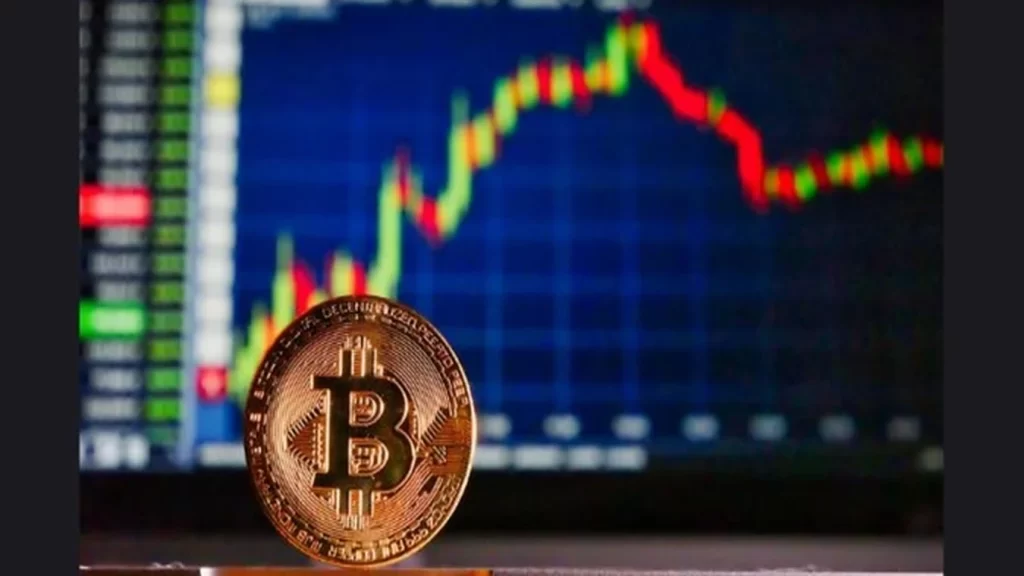
Bitcoin’s onchain data is signaling renewed investor demand, with both institutional buyers and miners increasing their holdings despite a sluggish market backdrop following October’s $19 billion crypto crash.
Over the past week, Bitcoin’s realized capitalization — which measures the aggregate value of all coins based on their last moved price — rose by more than $8 billion to surpass $1.1 trillion.
BTC’s realized price also climbed above $110,000, indicating growing accumulation across the network.
The uptick is being driven primarily by Bitcoin exchange-traded funds (ETFs) and corporate holders such as MicroStrategy, according to Ki Young Ju, CEO of analytics platform CryptoQuant.
ETF and Institutional Momentum Slows, But Could Rebound
Ju noted on X (formerly Twitter) that “demand is now driven mostly by ETFs and MicroStrategy, both slowing buys recently. If these two channels recover, market momentum likely returns.”
He added that the slowdown in ETF inflows and corporate purchases has temporarily capped Bitcoin’s price recovery, even as onchain metrics show consistent inflows.
Miners Expand Operations Amid Hashrate Growth
Bitcoin’s rising hashrate — the measure of total computational power securing the network — also points to optimism among miners.
Ju described this trend as a “clear long-term bullish signal,” emphasizing that miner expansion indicates confidence in the cryptocurrency’s future profitability.
Major mining companies, including American Bitcoin, which has ties to the Trump family, have recently announced large-scale hardware purchases.
In August, the firm acquired 17,280 application-specific integrated circuit (ASIC) mining units worth approximately $314 million.
Analysts See Potential for $140K Bitcoin
Despite the positive onchain data, broader market sentiment remains cautious, with the crypto fear index still in “fear” territory since the early October sell-off.
However, analysts from Bitfinex believe the next catalyst could come from macroeconomic factors, including potential monetary easing by the U.S. Federal Reserve.
“Our base case sees Bitcoin rising towards $140,000, with total ETF inflows between $10 and $15 billion not being surprising,” Bitfinex analysts said.
They added that possible Fed rate cuts, combined with renewed ETF demand and typical Q4 seasonal strength, could help Bitcoin reach new all-time highs by November.
Still, risks remain tied to global trade tensions and the lingering effects of Trump’s tariff policies, they warned.
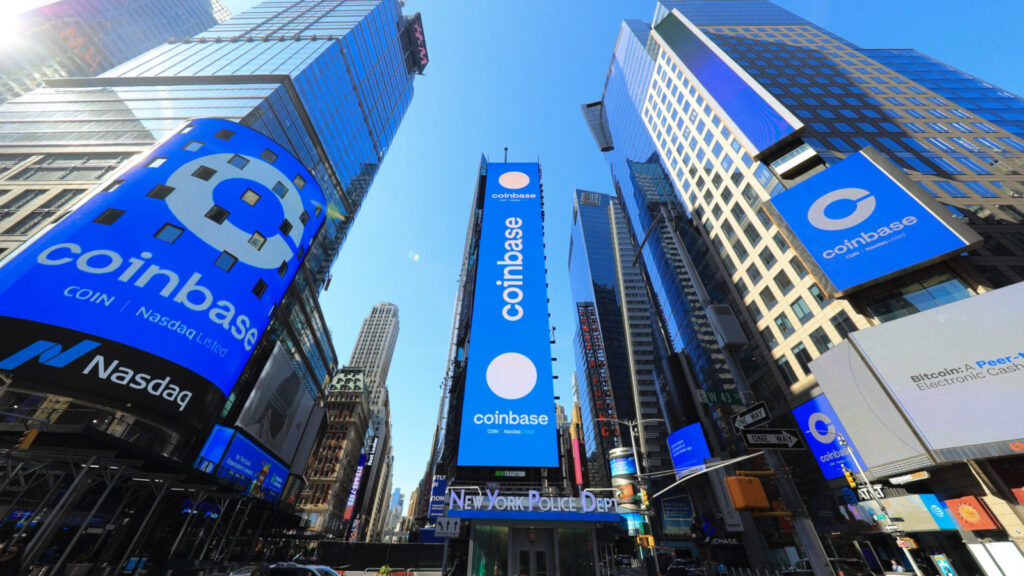
Coinbase’s Chief Policy Officer, Faryar Shirzad, has rejected accusations from U.S. Senator Chris Murphy that the exchange is part of a “corruption factory” connected to Donald Trump’s administration.
In a Thursday post on X, Murphy claimed Coinbase had contributed to political action committee (PAC) Fairshake and helped fund Trump’s 2025 inauguration, implying a link between the donations and the SEC’s decision to drop a previous enforcement action against the company.
Coinbase Pushes Back Against Accusations
Responding to the allegations, Shirzad denied any political bias or wrongdoing.
He explained that Coinbase was “proud to have supported the building of a new ballroom through the Trust for the National Mall,” emphasizing that many companies contributed to the same fund.
“Note that we’re not the general contractor, so we’re not the right target if you’re unhappy about how the project is proceeding,” Shirzad said.
He added that Fairshake was “non-partisan,” stressing that many public donations have supported inauguration events for past administrations.
Trump’s Ballroom Project and Controversy
Trump first announced plans in July to construct a 90,000-square-foot ballroom on White House grounds, estimating the cost at $200 million and assuring the project wouldn’t affect the East Wing.
However, recent photos revealed the East Wing had been demolished as part of the construction, and Trump later said costs had risen to $350 million.
Murphy’s criticism focused on what he saw as corporate favoritism — but Coinbase maintains its involvement was part of a broader civic project, not political influence.
Coinbase’s Growing Political Footprint
The ballroom funding issue isn’t the first time Coinbase’s relationships with Washington have drawn scrutiny.
In June, the company was listed among sponsors for a U.S. Army 250th anniversary parade coinciding with Trump’s birthday. Coinbase said its participation was a one-time contribution to America250, a nonpartisan initiative marking the nation’s semiquincentennial.
Coinbase CEO Brian Armstrong also recently visited lawmakers in Washington to discuss crypto regulation as the U.S. government shutdown entered its 31st day. The visit focused on advancing the “Responsible Financial Innovation Act,” aimed at providing clearer crypto market structure rules.
While the bill was expected to move forward by late October, the ongoing shutdown has stalled legislative progress, leaving Coinbase’s regulatory ambitions uncertain.
Bitcoin’s price dipped to $109,200 on Wednesday, marking a notable decline ahead of the U.S. Federal Reserve’s latest policy announcement.
The Fed confirmed a 25-basis-point interest rate cut, aligning with market expectations, but Bitcoin’s 6% slide from its Monday rally to $116,400 caught traders off guard.
Analysts attributed the drop to short-term risk aversion before Fed Chair Jerome Powell’s press conference, despite the anticipated cut.
Market Expectations vs. Reality
According to the Fed’s latest dot plot, policymakers expect three additional cuts in 2025.
Analysts at Goldman Sachs project at least two more 25-basis-point cuts by mid-2026, potentially bringing the benchmark rate down to the 3–3.25% range.
This outlook should theoretically support risk assets like Bitcoin, yet the crypto’s near-term movements diverged from expectations.
“Recent history has shown that the FOMC leads to a price drop in BTC, followed by a move up,” said analysts at Hyblock, a crypto analytics firm. “If price does dip post-FOMC and signs of bullish confluence emerge, such as bid-heavy orderbooks, it would likely present good opportunities for investors.”
Investors Eye Broader Economic Concerns
With rate cuts largely priced in, traders are now focusing on broader macroeconomic risks.
These include the rise in U.S. layoffs, the potential long-term impact of President Trump’s tariff measures, and uncertainty around whether the booming artificial intelligence sector represents a sustainable trend or a speculative bubble.
These factors could play a more significant role in shaping Bitcoin’s medium-term trajectory than Wednesday’s Fed decision itself.
End of Quantitative Tightening
One key takeaway from the FOMC’s statement was confirmation that the Fed will end its balance sheet reduction on December 1, marking the conclusion of its quantitative tightening program.
This policy shift may inject additional liquidity into markets over the coming months, potentially supporting risk assets like Bitcoin — though near-term volatility is expected to remain high.