


Curve Finance, the decentralized finance (DeFi) protocol, is facing another challenge in addition to recovering from a recent $47-million hack. Concerns have arisen among holders of the protocol’s token regarding a potential massive dump.
On August 1, Delphi Digital, a crypto research firm, revealed in a Twitter thread that Curve Finance founder Michael Egorov had taken loans backed by a significant portion of the circulating supply of Curve DAO (CRV).
These loans amount to around $100 million and are secured by 427.5 million CRV tokens.
One of the loans, on Aave, involves 305 million CRV supporting a 63.2-million Tether (USDT) loan.
Delphi Digital noted that if the CRV token’s price were to drop by 36%, the position could be liquidated at $0.3767, which is below the current trading price of CRV at approximately $0.5975.
On Frax Finance, Egorov holds 59 million CRV supporting a debt of 15.8 million Frax (FRAX).
The loan carries additional risks due to Fraxlend’s time-weighted variable interest rate, which doubles every 12 hours when the loan is at 100% utilization.
The interest rate can reach an alarming 10,000% in just 3.5 days, making liquidation a possibility regardless of the CRV token’s price.
To mitigate these risks, Egorov has been working to reduce the debt and utilization rate by paying 4 million FRAX in the last 24 hours.
However, users have been quick to withdraw their liquidity as soon as Egorov makes payments.
READ MORE: BNB Smart Chain (BSC) Hit by Copycat Attacks
To address this liquidity issue, Egorov implemented a Curve pool to incentivize liquidity in the lending market.
Within four hours of its launch, the pool attracted $2 million in liquidity and decreased the utilization rate from 100% to 89%.
The situation has drawn comparisons to FTX founder Sam Bankman-Fried using FTX Token (FTT) as collateral and raised concerns within the community, with some fearing that it could hinder the DeFi industry’s progress and discourage potential investors.
Cointelegraph attempted to reach out to Egorov for comment, but there was no immediate response.
In summary, Curve Finance’s CRV token holders are now facing worries about a potential massive token dump due to the significant loans taken by the protocol’s founder, backed by a substantial amount of CRV tokens.
Efforts are being made to manage the risks, but the situation has drawn attention and concern from the crypto community.
Other Stories:
2023 Ranking: 4 Best Crypto Projects To Buy
SEC Chairman Gary Gensler Raises Alarm Over Widespread Fraud in Crypto Market
Liquid Staking Tokens Poised to Dethrone Ethereum’s Ether (ETH) as Dominant DeFi Asset
A zero transfer phishing attack recently orchestrated by a scammer resulted in the theft of $20 million worth of Tether (USDT) on August 1.
The incident unfolded when the scammer managed to get hold of 20 million USDT from the victim’s address, which was identified as 0x4071…9Cbc.
The victim intended to send the money to address 0xa7B4BAC8f0f9692e56750aEFB5f6cB5516E90570, but due to the scammer’s cunning manipulation, it was redirected to a phishing address, 0xa7Bf48749D2E4aA29e3209879956b9bAa9E90570.
The scammer’s ploy started with the victim’s wallet receiving $10 million from a Binance account. After sending it to another address, the victim unknowingly fell prey to the scammer’s trickery.
The scammer initiated a fabricated Zero USDT token transfer from the victim’s account to the phishing address.
When the victim later attempted to transfer 20 million USDT, they mistakenly believed they were sending it to their desired address.
However, they were, in fact, transferring the amount to the scammer.
Upon discovering the scam, Tether promptly blacklisted the victim’s wallet, raising concerns about the swiftness of the issuer’s response.
READ MORE: Liquid Staking Tokens Poised to Dethrone Ethereum’s Ether (ETH) as Dominant DeFi Asset
The success of this type of phishing attack is partially attributed to the common practice among users of only checking the first or last five digits of a wallet address, rather than verifying the entire address. This oversight causes them to send assets to a phishing address unknowingly.
The mechanics of the zero transfer scam can be explained as follows: When a victim sends a certain amount of coins to an address for an exchange deposit, the attacker duplicates a similar-looking address under their control.
They then execute a transaction for zero coins from the victim’s wallet to this mimic address.
When the victim reviews their transaction history, they might mistake the phishing address for the actual deposit address and proceed to send their coins to it.
Unfortunately, such zero transfer phishing scams have become increasingly common within the cryptocurrency ecosystem over the past year.
In fact, the first known instance of this type of scam occurred in December 2022, and it has since caused losses exceeding $40 million due to various reported attacks.
In conclusion, the prevalence of zero transfer phishing attacks highlights the need for increased vigilance and awareness among cryptocurrency users.
By verifying complete wallet addresses and staying informed about emerging scam techniques, users can better protect their digital assets from falling into the hands of malicious actors.
Additionally, issuers and platforms within the crypto industry should continue to develop robust security measures to mitigate the impact of these scams and safeguard their users’ funds.
Other Stories:
BNB Smart Chain (BSC) Hit by Copycat Attacks
Bitcoin’s Reduced Volatility Sparks Anticipation for Exciting Long-Term Bull Signal
SEC Chairman Gary Gensler Raises Alarm Over Widespread Fraud in Crypto Market
The BNB Smart Chain (BSC) recently experienced copycat attacks due to a vulnerability in the Vyper programming language, similar to the exploit faced by the decentralized finance (DeFi) protocol Curve Finance.
Blockchain security firm BlockSec reported on July 30 that approximately $73,000 worth of cryptocurrencies on BSC were stolen across three separate exploits.
The exploitation of liquidity pools on Curve Finance also led to significant losses, surpassing $41 million, as estimated by BlockSec.
The root cause of the vulnerability was identified as a malfunctioning reentrancy lock in Vyper versions 0.2.15, 0.2.16, and 0.3.0, which are widely used by various DeFi pools.
Since Vyper is designed for the Ethereum Virtual Machine, it is plausible that other protocols utilizing these versions might also be affected, emphasizing the need for secure BSC RPC configurations to mitigate risks.
Following the news of the exploit, both white hat and black hat hackers engaged in on-chain activities, attempting to thwart each other’s exploit attempts or recover funds.
One individual, known as “c0ffebabe.eth,” seemed to act as a potential white hat and secured some funds for safekeeping.
READ MORE: Worldcoin’s Iris Scanning Project Raises Privacy and Sovereignty Concern
On July 30, this individual issued an on-chain message requesting affected protocols to contact them in order to arrange the return of funds.
To date, “c0ffebabe.eth” has returned nearly 2,900 Ether (ETH), equivalent to approximately $5 million, to Curve in one transaction.
Another transaction saw them moving 1,000 ETH to a seemingly newly-created wallet, likely the cold wallet mentioned earlier for additional safekeeping.
The situation has raised concerns about the security of Vyper and its implications for other Web3 projects.
Given the wide adoption of this programming language, it is crucial for developers and protocols to be vigilant about potential vulnerabilities and promptly address them to protect user funds.
In conclusion, the BNB Smart Chain faced copycat attacks due to a Vyper programming language vulnerability, echoing the exploit witnessed on the Curve Finance DeFi protocol.
The incident has underscored the importance of robust security measures in the rapidly evolving landscape of decentralized finance and serves as a reminder for projects to prioritize the safety of their users’ assets.
Other Stories:
Kyrgyzstan Expands Cryptocurrency Mining with Government Backing at Hydro Power Plant
French Data Protection Agency Investigates Worldcoin
Pro-XRP Lawyer Alleges SEC’s Actions Driven by Safeguarding Corporate Capitalism

Heartland Tri-State Bank of Elkhart, part of the ongoing crisis in the U.S. banking system, was closed on July 29 by the Kansas Office of the State Bank Commissioner, and the Federal Deposit Insurance Corporation (FDIC) took control.
The FDIC stated that on July 31, the bank’s four branches would reopen as branches of Dream First Bank during regular business hours.
Depositors of the failed bank would become customers of Dream First Bank, and all transactions, including withdrawals, deposits, and loans, would be processed through the acquiring bank.
Customers were advised to use their existing branch location until the transition was complete.
This collapse marked the second bank crisis of the week, following the merger of PacWest and Banc of California on July 25, as both institutions attempted to stabilize amid the turmoil in the banking industry.
Rising U.S. interest rates and poor risk management were believed to be the primary reasons behind the bank’s failure, alongside the inflation surge.
READ MORE:Revealed: The Best Crypto Marketing & PR Agency
The U.S. Federal Reserve had raised its benchmark rate to 5.25% in July, the highest rate since 2007, in an attempt to tackle inflation, which reached 4.1% year-over-year in June.
As of March, Heartland Tri-State Bank held approximately $139 million in total assets and $130 million in total deposits.
Dream First Bank agreed to purchase all the assets of the failed bank, with the FDIC estimating that the cost to the Deposit Insurance Fund (DIF) would be $54.2 million.
The DIF, created in 1933 by Congress and managed by the FDIC, aims to protect deposits in the nation’s banks.
The FDIC noted that Dream First Bank’s acquisition was the least costly resolution for the DIF compared to other alternatives.
In response to the recent failures at major banks, Democrats in the House Financial Services Committee introduced several bills in June aimed at strengthening the safety and soundness of the banking system and enhancing bank executive accountability.
Representative Maxine Waters emphasized that Congress must take action to address these failures promptly.
The collapse of Heartland Tri-State Bank follows the troubled First Republic Bank’s acquisition by JPMorgan in May and the dramatic collapse of Silicon Valley Bank in March, both of which had caused significant disruptions in the U.S. banking system.
These events underscore the urgency of addressing the challenges faced by financial institutions and the need for measures to stabilize the banking sector.
Other Stories:
Why Didn’t Bitcoin (BTC) Enter a New Rally?
SEC and Binance Oppose Eeon’s Intervention in Crypto Exchange Lawsuit
3 Best Crypto Projects That Will Boom In 2023 & The Next Bull Run

Margot Robbie, the well-known Australian actress starring in the lead role of the upcoming Barbie movie, has sparked a lively discussion within the crypto community with her recent statement comparing Bitcoin (BTC) to Barbie’s companion, Ken.
During an interview with Fandango on June 22, Robbie shared that whenever she overheard her husband, Tom Ackerley, and television producer, David Heyman, discussing Bitcoin on set, it reminded her of the traits of Ken, the fictional character played by Ryan Gosling in Barbie.
The crypto community on Twitter, including figures like Michael Saylor from MicroStrategy and social media influencer Layah Heilpern, had a mixed response to Robbie’s analogy.
Saylor even declared Bitcoin to be synonymous with “Big Ken Energy,” while others, like Layah Heilpern, saw it as an insult towards men who talk about Bitcoin.
On July 30, Heilpern further explained her interpretation of Robbie’s remarks, suggesting that the actress implied male Bitcoin enthusiasts are weak and pathetic.
However, Mark Travers, a lead psychologist at Awake Therapy, countered this perspective, stating that having Ken’s energy could indicate someone who is selfless and adaptable, challenging traditional gender stereotypes.
Robbie herself acknowledged that defining Ken energy might be subjective, stating that it’s something one can sense rather than precisely define.
READ MORE:Revealed: The Best Crypto Marketing & PR Agency
Despite differing opinions, Steven Lubka, a managing director at Swan Bitcoin, viewed Robbie’s comment as positive for the crypto community, expressing optimism on July 29.
It is worth noting that Robbie’s comments were brief and neutral, taking place amidst ongoing legal actions against celebrities who have promoted cryptocurrencies.
NBA star Jimmy Butler, for instance, sought to be removed from a class-action lawsuit alleging the promotion of unregistered securities by cryptocurrency exchange Binance.
In a filing on July 24, Butler’s lawyers argued that the tweets he appeared in did not promote the named securities and, therefore, could not have contributed to their promotion.
Binance CEO Changpeng “CZ” Zhao and YouTubers Ben Armstrong (BitBoy Crypto) and Graham Stephan are also contesting similar allegations in the same lawsuit.
In conclusion, Margot Robbie’s comparison of Bitcoin to Ken from Barbie sparked a lively debate within the crypto community.
While some embraced the analogy as a positive representation, others interpreted it as demeaning. As discussions continue, it’s evident that the crypto world remains dynamic and subject to ongoing scrutiny.
Other Stories:
Why Didn’t Bitcoin (BTC) Enter a New Rally?
3 Best Crypto Projects That Will Boom In 2023 & The Next Bull Run
SEC and Binance Oppose Eeon’s Intervention in Crypto Exchange Lawsuit

We have evaluated dozens of crypto and blockchain marketing agencies, to reveal which one is best when it comes to fees, results and other factors.
This review covers the full span of services offered by crypto marketing agencies, including public relations (PR), social media management, SEO, content writing, digital marketing, and reputation management.
Which Crypto Marketing Agency is the Best?
We have concluded that Imperium Comms is the best crypto and blockchain marketing agency.
They offer a full suite of marketing services for projects in the cryptocurrency, Web 3.0 and tech space, including:
- Organic media coverage in sites such as Bloomberg, Coindesk and Cointelegraph
- Crypto Press Release distribution to hundreds of leading news sites
- Content writing and digital marketing
- Search engine optimization (SEO)
- Specialized promotions for ICOs and NFTs drops
Their packages start at just $599, and they are the most affordable crypto marketing agency in the market.
Why Are Crypto & Blockchain Marketing Agencies Important?
In the modern world where technology is in constant evolution, crypto and blockchain have quickly emerged as dominant forces. As with any new industry, the need for specialized marketing services is immediate and urgent. Enter crypto and blockchain marketing agencies, a new breed of companies tailoring their marketing strategies to these specific niches.
These agencies blend deep industry knowledge with cutting-edge marketing practices, aiming to help cryptocurrency and blockchain-based companies grow and prosper.
Understanding the complexity of the crypto and blockchain landscape is vital for these agencies. Cryptocurrencies and blockchain technology are more than just buzzwords; they’re multifaceted concepts encapsulating multiple disciplines like finance, technology, and law.
Agencies dedicated to crypto and blockchain marketing need a thorough understanding of these areas, along with expertise in digital marketing strategies, to effectively promote their clients’ brands.
The field of blockchain and crypto marketing is a relatively new and rapidly evolving discipline. It’s characterized by its focus on both crypto-specific techniques like token marketing, community management, and blockchain PR, as well as more traditional digital marketing strategies like SEO, social media marketing, and content creation.
ICOs, IEOs & STOs
Token marketing is an integral part of many agencies’ strategies. Initial Coin Offerings (ICOs), Initial Exchange Offerings (IEOs), and Security Token Offerings (STOs) are key means of raising funds for crypto and blockchain projects.
Therefore, these agencies must master the art of promoting tokens to potential investors. They need to clearly communicate the token’s value proposition, align it with the overall project vision, and follow all necessary legal protocols.
Community management is another pivotal area for crypto and blockchain marketing. Communities form the backbone of many projects, providing support, spreading awareness, and often playing a significant role in the project’s governance. Effective agencies can help nurture these communities, fostering engagement and dialogue through various platforms like Discord, Telegram, and social media networks.
How to Effectively Promote a Blockchain Project
The significance of public relations (PR) in blockchain marketing cannot be overstated. Given the complexity and novelty of blockchain technology, agencies must be able to effectively communicate the advantages of their clients’ products or services to the media, investors, and the public. Through PR efforts, they aim to increase brand visibility, manage reputation, and build credibility within the industry.
However, crypto and blockchain marketing agencies don’t only rely on industry-specific tactics. They also employ traditional digital marketing strategies tailored to the specific needs of the blockchain sector. SEO, for instance, is used to improve the visibility of blockchain companies on search engines, making it easier for potential investors and users to find them.
Agencies employ techniques such as keyword optimization, link building, and creating high-quality content to achieve this.
Content marketing is another core strategy. Agencies create engaging content about their clients’ products or services, educating potential users about the benefits of blockchain technology and cryptocurrencies. This can take the form of blog posts, whitepapers, case studies, videos, infographics, and more. The goal is to build trust and establish the client as a thought leader in the blockchain space.
Social media marketing is also utilized to reach a broader audience. Platforms like Twitter, LinkedIn, Reddit, and Facebook are used to engage with the community, share news, promote events, and more. Given the global nature of the crypto industry, social media plays a vital role in connecting with a geographically dispersed audience.
It’s worth noting that marketing in the crypto and blockchain industry comes with its unique set of challenges. These include the industry’s inherent volatility, regulatory complexities, public skepticism, and the technical nature of the subject.
Crypto and blockchain marketing agencies need to navigate these challenges skillfully, ensuring their clients’ brands resonate with the target audience while adhering to all relevant regulations and guidelines.
Despite these challenges, the opportunity for growth in the crypto and blockchain sector is immense. The industry continues to expand at an unprecedented rate, with an ever-increasing number of businesses leveraging these technologies for various applications.
Final Thoughts
Crypto and blockchain marketing agencies have an essential role to play in this exciting growth story, helping firms in this space reach their potential and make a significant impact.
Crypto and blockchain marketing agencies are the need of the hour in this rapidly expanding industry. Their blend of industry-specific knowledge and marketing expertise is critical in helping companies navigate the intricate landscape of the blockchain world.
By utilizing a mix of crypto-specific techniques and traditional marketing strategies, these agencies can effectively promote their clients, fostering growth and driving success in the fascinating world of crypto and blockchain.

Bitcoin (BTC) remained relatively stable with a ticker down at $29,311 during the Wall Street open on July 28, despite the release of United States inflation data that surpassed expectations.
However, the data on the Personal Consumption Expenditures (PCE) Index, which is considered the Federal Reserve’s preferred metric for inflation, indicated that U.S. inflation was continuing to decrease.
This development led financial analysts, such as The Kobeissi Letter, to speculate that the Fed might finally have inflation under control, as PCE inflation was at its lowest since April 2021.
Despite the significant economic indicators, Bitcoin’s price action saw only a modest boost and did not display significant volatility. Instead, it remained within a range of $29,000 to $29,500.
Traders’ sentiment suggested that there was still a preference for the downside, as the resistance target of $30,000 had been holding for over a week.
Notably, popular trader Crypto Tony expressed his anticipation for BTC to continue moving down to $28,000, although he acknowledged the possibility of a brief consolidation phase before the drop.
Fellow trader Daan Crypto Trades also emphasized the loss of the local range centered around the $30,000 level and suggested preparing for a potential drop to the low $28Ks.
READ MORE: Former Twitter Product Director Exposes Peculiarities of Working Under Elon Musk
However, he cautioned that if BTC managed to retake the $29.5K level, the bearish scenario could be invalidated.
On the other hand, Michaël van de Poppe, the founder and CEO of trading firm Eight, identified a “deviation” on the daily BTC/USD chart, similar to a previous occurrence in February, which was followed by an upward rebound.
He also questioned whether the weekend’s thinner liquidity and increased potential for volatile movements could trigger a “classic” comeback for Bitcoin.
In conclusion, despite the release of positive U.S. inflation data, Bitcoin’s price remained relatively stable and did not show significant volatility.
Traders’ sentiment suggested a preference for the downside, with the $30,000 resistance level still holding.
However, some analysts remained cautious about the potential for a bullish rebound based on technical indicators and historical patterns.
As the weekend approached, market participants kept a close eye on the potential for increased volatility in the cryptocurrency market.
Other Stories:
Crypto.com Receives Approval from Dutch Central Bank
Crypto Mining Firm Explores Initial Public Offering (IPO) in UAE
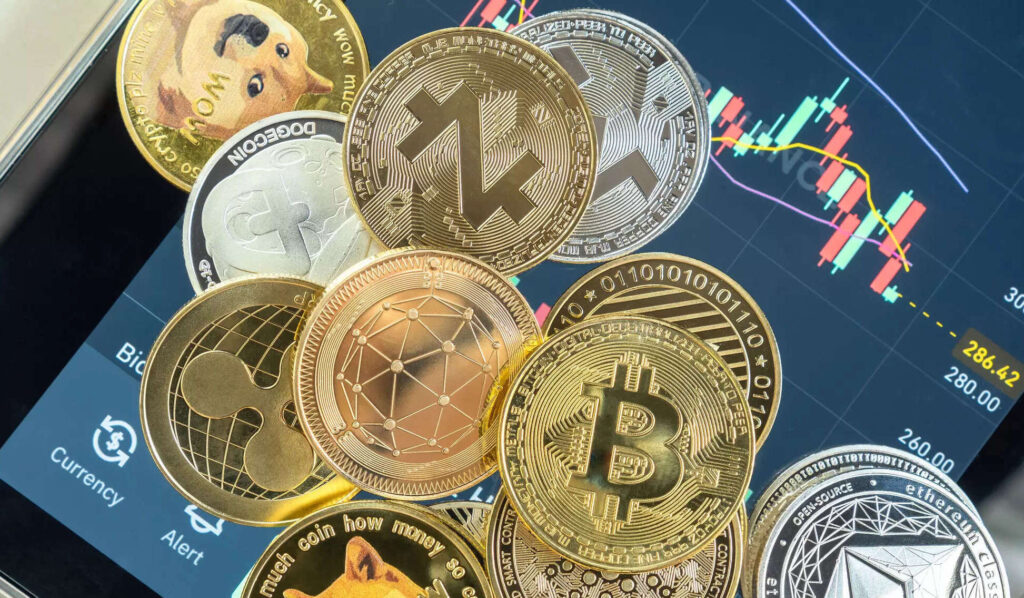
While Bitcoin and Ethereum remain the most popular cryptocurrencies – for retail and institutional investors alike – there are many crypto projects that have more upside potential in 2023.
In this article, we rank some of the best crypto projects that are set to boom this year and/or during the next bull run.
Additionally, we have provided an overview of each project and explain why it has a lot of potential, while also outlining how you can buy each project’s native token.
Solana
Solana is an innovative high-performance, permissionless blockchain that has garnered significant attention from the technology and investment communities alike. Built with the goal of scaling blockchain for global adoption, it features a novel design and a unique set of technologies that set it apart from other blockchain platforms. The backbone of Solana’s performance lies in its architectural innovation.
Unlike traditional blockchain networks, which face scalability issues due to increasing transaction volumes, Solana was built with a vision to support thousands of transactions per second without compromising security or decentralization. Its design includes a unique timestamp system, Proof of History (PoH), which enables high-speed processing while maintaining trust across the network.
Proof of History is essentially a cryptographic timestamp that enables the blockchain to track the order and time of transactions, without the need for every node to observe and agree on the state of the network.
By encoding the passage of time within the blockchain itself, PoH helps increase the speed and efficiency of consensus algorithms. In combination with Solana’s unique PoH-based consensus model, called Tower BFT, the platform achieves unparalleled performance and security.
Alongside PoH, Solana utilizes several other groundbreaking technologies that contribute to its superior performance. One such technology is Turbine, a block propagation protocol that breaks data down into smaller packets, reducing the bandwidth requirements for data transmission and making it easier for validators to process transactions.
This approach is analogous to a high-speed internet connection that allows seamless streaming of high-definition videos.
Another key technology employed by Solana is Gulf Stream, which pushes transaction caching and forwarding to the edge of the network. This enables validators to execute transactions ahead of time, reducing confirmation times, and increasing the network’s capacity for processing transactions.
Sea Level, Solana’s parallel smart contracts run-time, allows for simultaneous transaction processing on the same state block, leading to increased throughput. Moreover, Cloudbreak, Solana’s horizontally-scaled accounts database, and Pipelining, a transaction processing unit for validation optimization, contribute further to the overall performance of the Solana network.
This suite of features allows Solana to process up to 65,000 transactions per second, with sub-second finality, making it one of the fastest blockchain networks in existence. Another distinguishing aspect of Solana is its native cryptocurrency, SOL.
SOL is used for transaction fees and for staking, a process by which users can earn additional SOL by helping secure the network. SOL is also used in Solana’s on-chain governance program, where token holders can vote on various proposals to influence the future development of the platform.
Solana’s dedication to scalability and speed has not gone unnoticed, as it has attracted a variety of applications, from decentralized exchanges to stablecoins and prediction markets. It has garnered significant attention as a potential Ethereum competitor due to its scalability and low transaction costs.
Developers are increasingly attracted to Solana because of its ability to handle sophisticated and high-volume applications with ease, enabling them to create more intricate and scalable DApps. Moreover, Solana’s ecosystem has grown rapidly, with numerous developers, projects, and institutions getting involved. This growth has been facilitated by the Solana Foundation’s grants program, which offers financial support to projects that contribute to the Solana ecosystem.
It is also worth noting that Solana has been backed by top-tier investors, including Multicoin Capital, Foundation Capital, and Andreessen Horowitz, underscoring the significant potential seen in the platform. In summary, Solana is an advanced and innovative blockchain platform, offering unmatched speed and scalability.
Its design and technology suite make it ideal for a wide range of applications, particularly those requiring high transaction throughput and low fees. With a rapidly expanding ecosystem and an impressive track record, Solana presents a compelling case for the future of blockchain technology.
Chainlink
Chainlink is a decentralized oracle network that enables smart contracts on the blockchain to securely interact with real-world data and external APIs.
Developed in 2014, Chainlink is a robust blockchain technology that has emerged as a crucial player in the decentralized finance (DeFi) ecosystem and the wider blockchain space, by solving the problem known as the “oracle problem.”
The oracle problem arises due to the inherent nature of blockchain networks: they are closed systems that can’t natively access off-chain data. Therefore, for blockchain applications to interact with the world outside the blockchain, they require external data sources known as oracles.
However, if a decentralized application relies on a centralized oracle, the entire system risks becoming centralized, which defeats the purpose of blockchain technology. Chainlink solves this problem by providing a network of decentralized oracles that feeds reliable and tamper-proof data to the blockchain.
Chainlink’s decentralized network consists of multiple independent oracles that fetch and validate data before it gets added to the blockchain. The network relies on a reputation system to incentivize honesty and accuracy among its nodes (oracles). Nodes with high accuracy are rewarded with LINK tokens, Chainlink’s native cryptocurrency, while those providing inaccurate information are penalized.
The innovative design of Chainlink extends beyond its decentralized oracle network. The protocol uses something called service level agreements (SLAs) to match smart contracts with the appropriate oracles. The SLA defines the terms for the oracle service such as the type of data, the number of oracles required, the speed of data delivery, and the penalties for non-compliance.
This system of SLAs and the reputation system provide a robust mechanism to ensure that the data fed into the smart contracts is accurate and reliable, thereby mitigating the risks associated with incorrect or tampered data.
Furthermore, through Chainlink, smart contracts can be fed with a multitude of data inputs, including but not limited to market prices, temperature, weather conditions, and other IoT data, vastly expanding the potential use-cases for smart contracts.
Chainlink’s native cryptocurrency, LINK, plays a crucial role in the network. It’s used as the payment currency for data requesters who want to access data services. LINK tokens are also used for incentivizing nodes to maintain data accuracy and to participate in the network.
Nodes are required to stake LINK tokens as collateral, and any deviation from accurate reporting can lead to their stake being slashed. This model creates an economic incentive for the nodes to act in the best interest of the network.
Beyond its core function as a decentralized oracle service, Chainlink has shown remarkable versatility by enabling functionalities like Decentralized Finance (DeFi) applications, gaming, insurance, and more. For instance, in DeFi, Chainlink’s Price Feed services allow for reliable, tamper-proof, high-quality price data to be utilized by decentralized exchanges, lending platforms, and other DeFi applications.
Also, Chainlink’s Verifiable Random Function (VRF) provides a secure and provably fair source of randomness that’s invaluable for blockchain gaming, gambling, and other applications requiring random number generation.
By ensuring the source of randomness is verifiable on-chain, Chainlink brings transparency and trustworthiness to the process, a previously complex task for blockchain developers.
Chainlink has also fostered a strong, vibrant community of developers, enthusiasts, and partners. A variety of projects across multiple sectors, from DeFi to insurance and enterprise, have integrated Chainlink, creating a thriving ecosystem. Notable partnerships include Google Cloud, SWIFT, and many other blockchain-based projects.
By solving the oracle problem in a decentralized, secure, and scalable way, Chainlink has made a significant impact on the blockchain ecosystem.
As the bridge between on-chain and off-chain worlds, it extends the capabilities of smart contracts, making them more functional and closer to realizing their full potential. As blockchain technology matures and finds more real-world applications, the demand for reliable oracle services like Chainlink will only continue to grow.
With its robust and secure solution to the oracle problem, it’s paving the way for a new generation of advanced decentralized applications, ensuring they can interact with real-world data in a reliable and trustworthy manner.
Monero
Monero, denoted by its ticker symbol XMR, is a leading cryptocurrency renowned for its exceptional commitment to privacy and security. Unlike many cryptocurrencies that offer some degree of privacy, Monero was specifically designed to make tracking transactions as difficult as possible for outside observers. Its development and acceptance are underpinned by a community that holds privacy and decentralization in the highest regard.
Monero, introduced in 2014, is based on the CryptoNote protocol, a technology that introduces significant privacy improvements over the Bitcoin protocol. In contrast to Bitcoin’s transparent blockchain, where addresses and transactions can be traced directly, Monero uses a range of mechanisms to obfuscate information and ensure transactional privacy.
One such mechanism is ring signatures, a type of digital signature where a group of potential signers are fused together to produce a distinctive signature that authorizes a transaction. This method makes it virtually impossible to determine which member’s keys were used for the signature and, hence, who initiated the transaction.

Monero also uses stealth addresses, which are one-time addresses created for each transaction on behalf of the recipient.
This makes it impossible to link transactions to the recipient’s actual address, adding another layer of privacy. Additionally, Monero employs Ring Confidential Transactions (RingCT), which hide the transaction amount from everyone except the sender and receiver.
With these features, Monero provides an unmatched level of privacy. Each transaction is secure, untraceable, and unlinkable. This makes it a preferred choice for individuals who place a high value on privacy.
Monero’s block reward does not have a hard cap, unlike many other cryptocurrencies. Instead, once the total number of Monero coins reaches 18.4 million (expected in May 2022), the system will switch to a ‘tail emission,’ releasing 0.6 XMR per block indefinitely. This approach ensures continued incentivization for miners, aiding the security of the network in the long run.
Monero also addresses the issue of fair mining. Many cryptocurrencies face centralization concerns due to the advent of Application-Specific Integrated Circuits (ASICs), which can lead to a concentration of mining power. Monero mitigates this problem by employing an ASIC-resistant proof-of-work algorithm called RandomX. This algorithm is designed to be efficient on consumer-grade hardware, making mining more democratic and preserving the decentralized nature of the network.
Monero’s native token, XMR, serves multiple purposes within the network. It is used as a medium of exchange, a store of value, and also as the reward for miners who validate transactions and secure the network. The focus on privacy and security has led to Monero being adopted for a range of applications where these attributes are particularly valued.
However, it’s worth noting that the emphasis on privacy has not been without controversy. Monero has been used in illicit activities due to its untraceability, leading to debates about its regulation. It’s a challenge faced by the entire privacy coin sector, and many believe that a balance must be struck between maintaining privacy and preventing illegal use.
Despite these challenges, the development and adoption of Monero have been robust. A vibrant community of developers, users, and advocates who believe in the need for private, non-censorable transactions has been actively supporting the project. The Monero community also emphasizes grassroots development and contribution, with numerous initiatives like the Community Crowdfunding System, which helps fund new projects and developments.
In conclusion, Monero stands as a powerful testament to the potential for privacy in the blockchain space. By combining innovative technology like ring signatures, stealth addresses, and RingCT, it provides a level of privacy that few other cryptocurrencies can match.
Summary
- Chainlink, Solana, and Monero are some of the best crypto projects to invest in this year.
- As the Chainlink network and community continue to grow, the potential applications for this technology are almost limitless.
- With a rapidly expanding ecosystem and an impressive track record, Solana presents a compelling case for the future of blockchain technology.
- The strength of the Monero network is not just in its technology, but also in its community, which remains committed to the principles of privacy, decentralization, and open development.
- As the discourse around privacy and digital security becomes increasingly vital in our digital age, Monero’s relevance seems set to grow.
Crypto.com has been granted approval by the Dutch central bank, De Nederlandsche Bank (DNB), to provide cryptocurrency services in the Netherlands.
The exchange has successfully registered as a cryptocurrency service provider after undergoing a thorough review of its business operations and compliance with the country’s Anti-Money Laundering and counter-financing of terrorism requirements.
At present, there are 36 cryptocurrency-related businesses registered with the DNB, which include prominent players like Coinbase Europe, eToro, and Bitstamp.
Tobias Oudejans, the DNB press officer responsible for supervision, fintech, cryptocurrencies, resolution, and payment systems, shared insights on the matter with Cointelegraph.
Due to legal obligations tied to supervisory laws, he refrained from commenting on specific registrations.
It’s crucial to note that the registration obtained by Crypto.com specifically permits the company to offer cryptocurrency wallets to customers and facilitate the processing of fiat currency on cryptocurrency exchanges.
This move ensures that the company’s services are in compliance with the country’s regulations.
It is worth mentioning that even before the registration announcement, Crypto.com’s services were already accessible to users in the Netherlands. Oudejans clarified that Dutch residents are legally allowed to sign up for the company’s services.
READ MORE: KuCoin Denies Layoff Rumors Amidst Crypto Industry Stabilization
However, any unregistered company soliciting or advertising its cryptocurrency services to Dutch users would be considered operating illegally.
In contrast, Binance, another major cryptocurrency exchange, faced challenges in obtaining approval from the DNB.
As a result, Binance made the decision to forgo further efforts to register as a cryptocurrency service provider in the Netherlands and ceased its operations within the jurisdiction.
With the green light from the Dutch central bank, Crypto.com is set to expand its presence and offerings in the Netherlands, providing Dutch users with a legally compliant platform for cryptocurrency transactions and services.
As the cryptocurrency industry continues to evolve, regulatory compliance is becoming increasingly important for businesses seeking to operate in various countries and jurisdictions.
Other Stories:
Ripple’s Chief Legal Officer Dismisses Concerns of SEC Appeal, Predicts Further Victory
Best Crypto Projects to Invest in For The Next Bull Run
Tennessee Realtor Couple Charged in $6M ‘Blessings of God Thru Crypto’ Investment Fraud

In the wake of the recent flood of scam tweets on the Twitter account of pro-XRP lawyer Jeremy Hogan, which was hacked, the XRP community rallied together to raise awareness and report the malicious activity.
Since July 24, the account had been relentlessly tweeting fraudulent links, claiming to offer an XRP giveaway.
However, as of 1 am UTC on July 28, all the tweets related to the XRP giveaway were removed, indicating that Hogan might have regained control of his account or that Twitter support had intervened.
The last deleted tweet from Hogan’s account expressed false generosity, promising to return double the amount of XRP sent to a specified address.
On analyzing the blockchain data, it was found that the mentioned address received 784 XRP, valued at approximately $561 at the time, from 12 users in a span of three hours.
The hackers utilized various tactics during the attack, including sharing links to a fraudulent website called “Ripplex.win,” which has now been suspended, making it difficult to determine how much XRP may have been misappropriated through it.
In response to the incident, Hogan apologized for any inconvenience caused and expressed his efforts to regain control of his account.
He acknowledged the malicious hackers’ proficiency and hoped that no one had suffered financial losses due to the hack.
READ MORE: KuCoin Denies Layoff Rumors Amidst Crypto Industry Stabilization
Fortunately, the “XRP Army” community actively warned potential victims about the scam, with influential figures within the crypto community, such as pro-XRP lawyer John Deaton and XRPcryptowolf, cautioning their combined 591,000 followers against engaging with Hogan’s compromised account.
Hogan is not the first prominent figure to have fallen prey to such cyber attacks.
On June 4, lawyer John Deaton’s account also faced a similar hack where hackers promoted a fraudulent token called “LAW” before Deaton regained control.
The dissemination of false and deceptive financial information in the cryptocurrency sector poses substantial risks to investors and markets.
Traders often rely on guidance from influential figures, and such scams can lead to financial losses and tarnish the reputation of legitimate projects.
Vigilance and quick action from the crypto community are essential in combating such fraudulent activities and protecting investors.
Other Stories:
Best Crypto Projects to Invest in For The Next Bull Run
Tennessee Realtor Couple Charged in $6M ‘Blessings of God Thru Crypto’ Investment Fraud
Ripple’s Chief Legal Officer Dismisses Concerns of SEC Appeal, Predicts Further Victory