



Sturdy Finance, a decentralized finance (DeFi) platform, recently endured an exploit that led to the temporary suspension of its stablecoin market. The lending platform, on June 16, reinstated the stablecoin market, enabling users to regain access to their assets.
The precautionary halt was emphasized as a measure of “an abundance of caution,” assuring users that their funds were never jeopardized.
The exploit, which cleverly manipulated a flawed price oracle, led to significant drain of funds from Sturdy’s platform.
Post-exploit, the team at Sturdy Finance is engaging in collaborative efforts with security specialists, focusing on on-chain analysis to reclaim the lost funds. An alliance with global law enforcement has been formed to aid in information collection and potential asset recovery.
To incentivize the return of the funds, Sturdy Finance has proposed a bounty of $100,000 to the perpetrator. The DeFi protocol’s team pledged to put the issue to rest if the stolen funds are returned to their crypto wallet. If this fails to occur, the same bounty is offered to anyone who can aid in either arresting the hacker or recovering the stolen funds.
Simultaneously, as digital theft grows in complexity, hackers are devising increasingly cunning techniques to obscure their ill-gotten wealth. According to a report by blockchain analytics company, Chainalysis, published on June 15, hackers have been found utilizing mining pools to camouflage their stolen assets.
This method transforms the stolen funds into what appears to be legitimate earnings from mining activities, effectively diverting suspicion from illicit ransomware activities.

Celsius, the bankrupt crypto lender, has adjusted its bankruptcy filing and awaits approval from a New York court, following an acquisition by the Fahrenheit crypto consortium. The reorganized plan, filed on June 15, involves conversion of all customer altcoins, barring those in “Custody and Withhold accounts,” into Bitcoin and Ethereum, commencing from July 1.
The restructuring agenda also proposes to manage retail borrowers’ claims using the ‘set off treatment’, which involves balancing losses against profits in the same year. Any losses not offset against income could be rolled over for offsetting against future years’ income.
However, David Adler of law firm McCarter & English, warned that Celsius’ approach might not sit well with borrowers. Despite demanding repayment of loans, Celsius plans not to honor certain contractual obligations, such as returning borrowers’ collateral. Adler warned, “This proposed ‘treatment’ violates every consumer lending law out there (state, federal) and the ad hoc Borrower group will be opposing this plan.”
As part of its restructuring strategy, Celsius seeks to appoint Chris Ferraro as the foreign representative to handle its U.K. assets in line with the U.K.’s Cross-Border Insolvency Regulations. This would secure the company’s U.K. assets and recognize the U.S. Chapter 11 as the “foreign main proceedings” for a global solution.
On May 25, the Fahrenheit crypto consortium, including venture capital firm Arrington Capital and US Bitcoin Corp, secured the bid to purchase Celsius’s assets, valued at around $2 billion. The new agreement anticipates the new company will garner about $450–500 million in liquid cryptocurrency, while US Bitcoin Corp has plans for a 100-megawatt Bitcoin mining plant.
Celsius suspended withdrawals on June 13, 2022, after it was caught up in poor investments and a crypto market downturn following the failure of the Terra ecosystem.
Other Stories:
TrueUSD loses its USD peg after minting suspension
Bybit completes integration with Copper’s ClearLoop network
SEC and Binance working together on Changpeng Zhao asset freeze

Bybit, one of the largest crypto exchanges in the world, has announced that its integration with Copper’s ClearLoop network has been completed.
This integration will allow investors to trade on Bybit’s exchange while settling off-chain, to ensure the near-instant settlement of their trades. This is especially useful during periods of heightened market volatility, as blockchain transaction confirmation times typically increase significantly during such periods.
As the assets will be safeguarded under secure Multi-Party Computation custody at Copper, Bybit’s integration with ClearLoop also empowers institutions with its clear English Law trust structure.
Copper’s ClearLoop network provides clients with off-exchange settlement which mitigates counterparty risk and improves capital efficiency.
Clients can also benefit from Copper’s market-first trust documentation, which mitigates both exchange counterparty and insolvency risk.
By joining the ClearLoop network, Bybit has demonstrated its commitment to transparency, accountability, safety, and effective governance.
Ben Zhou, co-founder and CEO of Bybit, hailed the integration, saying: “Bybit now sits alongside major industry players within the ClearLoop network that honor the pillars of good governance by being transparent, accountable, and, above all, secure.
“A little over a year ago, security was the biggest concern for institutional investors, but we are now removing concerns by partnering with custodians like Copper that offer the right set of tools for our institutional clients,” Zhou added.
Meanwhile, Copper CEO Dmitry Tokarev said his company is “excited to join forces with Bybit, who share our commitment to asset security, user experience and to setting higher standards for the crypto industry to reach its full growth potential.”
Amidst the lawsuits by US regulators against leading competitors Binance and Coinbase, cryptocurrency exchange Bitget has observed a significant upsurge in new account registrations from Latin America. The platform reported a 43% increase in new users from the region between June 6 and 9 compared to the daily averages, with Brazil and Argentina driving the growth, as per a Bitget spokesperson.
In Brazil, the number of new Bitget clients soared by 54%, with total deposits experiencing a 208% spike. In Argentina, the customer base and total deposits grew by 33% and 87% respectively. The crypto exchange, which also operates in Venezuela, Colombia, and Mexico, reported a 134% rise in total regional deposits during this period.
With over 8 million customers in 100 countries, Bitget didn’t disclose the total user count in Latin America. The uptick in figures is attributed to the recent regulatory developments in the US, where the SEC sued Binance on June 5 on 13 charges, leading to Binance net outflows of $3.128 billion over the past week, while Bitget’s deposits increased by $14.8 million.
Gracy Chen, Bitget’s Managing Director, expressed her confidence in the industry’s resilience despite recent upheavals, stating that “favorable policies are being implemented in places like Hong Kong, Dubai, Singapore and new opportunities are emerging.”
On June 6, Coinbase, another major crypto exchange, was sued by the US SEC for allegedly dealing in unregistered securities. The SEC Chair accused Coinbase of failing to provide adequate protection against fraud, manipulation, and conflicts of interest, leading to an overnight change of 113.06% in Coinbase’s trade volume, which reached $1.5 billion.
Interestingly, both Binance and Coinbase have been actively expanding their local operations in Brazil, a market of significant importance to these exchanges.
READ: Hackers steal almost $1 million after hijacking crypto influencers’ accounts
Crypto.com, the Singapore-based cryptocurrency exchange, has announced the suspension of its service to institutional clients in the United States, effective from June 21. The move is attributed to limited demand from institutional customers, a situation that has been aggravated by challenging market conditions. The platform’s institutional users were given advance notice about the service suspension.
Despite this, Crypto.com’s retail mobile application and platform will continue to operate in the U.S. The retail customers can still access cryptocurrency derivatives trading regulated by the Commodity Futures Trading Commission, as well as the exchange’s UpDown Options feature. This allows users to speculate on the future movements of various cryptocurrencies, by opening long or short trading positions.
The company remains open to the possibility of reinstating its institutional exchange service in the U.S. in the future.
While the firm’s U.S. institutional offering is being suspended, Crypto.com recently received a major payment institution license from the Monetary Authority of Singapore for digital payment token services. This enables the company to continue offering its services in Singapore.
June 2023 has been a volatile month for cryptocurrency exchanges operating in the U.S. The Securities and Exchange Commission (SEC) initiated legal actions against Binance.US and Coinbase, citing various alleged violations of securities laws.
These developments come as part of a growing regulatory crackdown on the cryptocurrency industry in the U.S., which has been intensifying over the past eight months, following the collapse of the FTX exchange. The wider cryptocurrency ecosystem has responded critically to the SEC’s actions, highlighting the ongoing tension between the crypto industry and regulatory authorities.
READ: Moody’s downgrades Coinbase to ‘negative’ amid SEC lawsuit

In a recent spate of attacks, fraudsters have taken over at least eight Twitter accounts of crypto influencers, promoting phishing scams and swindling nearly $1 million in digital assets, reports blockchain investigator ZachXBT. He identified several wallets connected to these scams through on-chain links associated with the hijacked accounts.
Among the victims are high-profile individuals like Pudgy Penguins’ Cole Villemain, DJ and NFT collector Steve Aoki, and Bitcoin Magazine’s Pete Rizzo. Even staunch crypto critic Peter Schiff’s account was exploited to push a suspicious link related to tokenized gold in DeFi.
ZachXBT suggests some of these breaches might have occurred through a Twitter admin panel, in addition to SIM swapping. Once the scammers gained control, they instantly began posting phishing scams. Lackluster response times from Twitter allowed some fraudulent tweets to remain active for several hours, sometimes even days.
OpenAI’s CTO Mira Murati and The Sandbox co-founder Arthur Madrid were also among those targeted. The scams often involved promoting fake airdrops of ERC-20 tokens, with Murati’s account used to promote a counterfeit OPENAI token airdrop.
The investigator urged users to adopt security keys for two-factor authentication rather than SMS-based options. He called on Twitter to thoroughly investigate these incidents, given the substantial amount stolen.
Interested in writing for Crypto Intelligence News? Submit a crypto guest post

Poloniex is one of the most well-known names in the world of cryptocurrency, launched in 2014. Since its inception, it has established a reputation for being a leading digital asset exchange offering a wide range of cryptocurrency trading options, including spot trading, margin trading, and lending.
Aesthetics and User Interface
On first landing on Poloniex’s platform, it’s evident that they’ve put effort into developing an appealing and easy-to-navigate interface. The overall look is clean and modern, with a dark theme that is friendly to the eyes, especially for those who tend to spend long hours trading. The layout is intuitive and self-explanatory, with tabs and dropdown menus providing easy access to different functions and markets.
The trading interface, complete with charts, order books, and trading history, offers all the critical information on one screen. Advanced traders will appreciate the extensive range of technical analysis tools integrated into the charting feature. On the flip side, beginners may initially find the interface slightly overwhelming due to the wealth of information displayed.
Security
Security is always a key consideration when assessing any cryptocurrency exchange. Poloniex has learned from past experiences, like the Bitcoin hack back in 2014, and made substantial strides in this area. All deposits are now stored in air-gapped cold storage. Additionally, they offer two-factor authentication (2FA) for accounts, email confirmations for withdrawals, and have stringent AML and KYC checks to prevent illicit activity.
However, it’s worth noting that, like all centralized exchanges, it’s not fully immune to risks. Users must exercise individual security measures, such as enabling 2FA, regularly updating passwords, and not clicking suspicious links.
Trading Options and Liquidity
Poloniex stands out due to its extensive variety of trading options. Its margin trading feature allows users to borrow funds to leverage their trades. Their lending feature allows users to earn interest by lending their assets.
In terms of cryptocurrency pairs, Poloniex offers a wide selection, making it an attractive option for those looking to trade less popular or more niche cryptocurrencies. The platform’s liquidity is generally strong, ensuring quick trade execution and lower slippage. However, the liquidity can vary across different pairs, with lesser-known pairs potentially having lower liquidity.
Fees
Poloniex operates a maker-taker fee schedule, which is dependent on the user’s 30-day trading volume. The fees are competitive, particularly for more active traders who benefit from lower fees as their volume increases.
However, the fee structure can be complex for new users or those not trading regularly. While the fees are generally lower compared to other exchanges, it’s always important to understand the costs associated with trading on the platform.
Customer Support
Customer support is an area where Poloniex has faced criticism in the past. The platform offers 24/7 support and a comprehensive knowledge base, but the response times can vary significantly, leading to some frustration among users. However, the company appears to be addressing this, with noticeable improvements in response times and resolution efficiency.
Regulation
Poloniex is a US-based exchange, and it adheres to the regulatory environment. It was acquired by Circle in 2018, a company with a strong focus on compliance and regulation. Since October 2020, it’s been operated by Polo Digital Assets, Ltd., who have pledged to continue focusing on compliance with all relevant laws and regulations.
Mobile App
The Poloniex mobile app offers a seamless experience, mirroring the desktop platform’s functionality. The design remains consistent, ensuring that users can easily navigate and execute trades on the go. The app is responsive, user-friendly, and offers real-time updates, making it a reliable tool for traders.
Conclusion
Overall, Poloniex remains a prominent player in the cryptocurrency exchange arena. With its wide selection of cryptocurrencies, array of trading options, and focus on security, it’s an appealing option for both novice and experienced traders.
However, it’s essential for potential users to understand the platform’s intricacies, particularly in terms of fees and the sometimes complex trading interface.
Improvements in customer support and a continued focus on security will be vital for Poloniex moving forward, given the intense competition within the industry. That said, Poloniex’s solid track record, established reputation, and commitment to staying at the forefront of cryptocurrency innovation make it a compelling choice for anyone seeking a versatile and secure trading platform.
Other Stories:
Sam Bankman-Fried fires key evidence allegation at US prosecutors
Is crypto mining legal in the UK?
Jack Dorsey branded a ‘clown’ after admitting he considers Ethereum to be a security

Jack Dorsey, an outspoken Bitcoin proponent, has found himself in a Twitter debate with crypto industry personalities after confirming in a reply that he views Ether as a security. Udi Wertheimer, a Bitcoin Ordinals developer at Taproot Wizards, labeled Dorsey as a “clown” in a June 6 tweet.
In response, Dorsey challenged, “ETH is not a security? Teach me wizard,” causing Wertheimer to post a five-year-old clip of SEC chair Gary Gensler declaring that ETH was “sufficiently decentralized” and therefore not a security.
Gabor Gurbacs, strategy advisor to Tether and VanEck, countered by suggesting that Ethereum’s recent shift to a proof-of-stake consensus algorithm could have reactivated securities laws. This dispute occurred amidst the SEC’s lawsuits against cryptocurrency exchanges Binance and Coinbase on June 5 and 6, accusing them of offering unregistered securities tokens.
Dorsey seemed to support a 2015 post by Coinbase CEO Brian Armstrong, suggesting that altcoins were a “distraction” and that Coinbase should primarily focus on Bitcoin. Continuing his Bitcoin-centric tweets, Dorsey retweeted a video by Jack Mallers, CEO of Bitcoin Lightning app Strike, criticising Armstrong’s prioritization of altcoins over Bitcoin and the Lightning Network development.
Despite Twitter selling 140 Ethereum-based non-fungible tokens (NFTs) when Dorsey was at the helm in 2021, Dorsey had dismissed investing in Ether. He also expressed skepticism about Ethereum’s potential to disrupt big tech in August 2021.
Most recently, Dorsey has backed and championed Nostr, a decentralized network designed to compete with Twitter. This network incorporates Bitcoin Lightning-based payments on its “Damus” platform.
Interested in writing for Crypto Intelligence News? Submit a crypto guest post
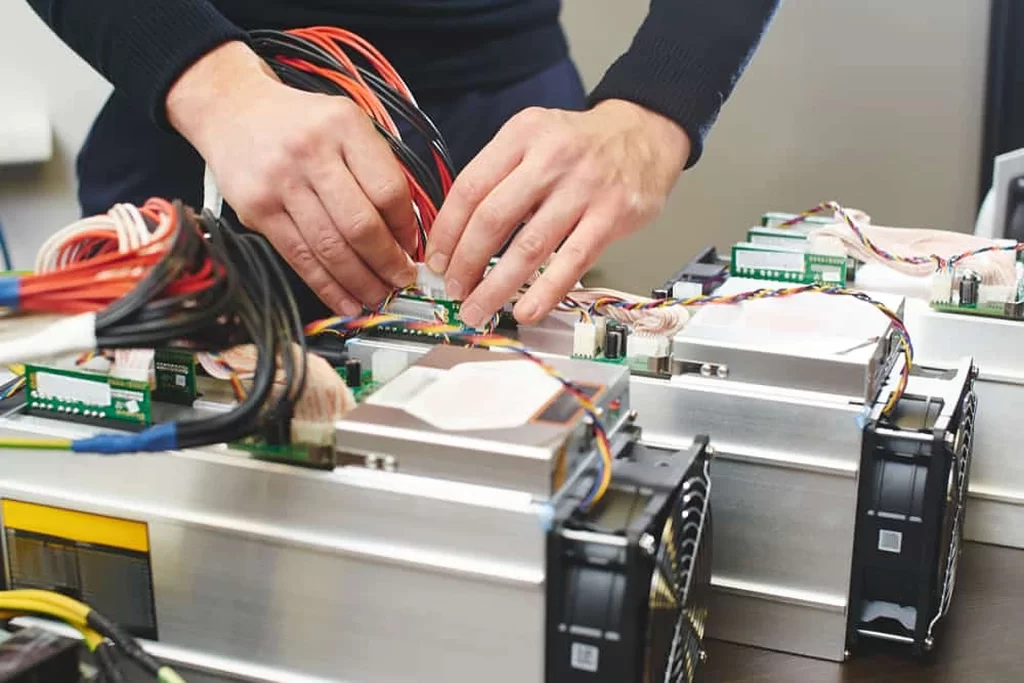
Cryptocurrency, with Bitcoin leading the way, has revolutionized the financial landscape worldwide. Given the potential for profits, the practice of cryptocurrency mining has become widespread. One of the countries witnessing significant cryptocurrency activities, including mining, is the United Kingdom (UK). This article provides an in-depth examination of the legal status of cryptocurrency mining in the UK.
Cryptocurrency mining is legal in the UK. The government neither restricts nor encourages the activity; instead, it treats cryptocurrency operations much like any other form of business. Cryptocurrency miners in the UK, like all businesses, must comply with the applicable tax laws, specifically the Her Majesty’s Revenue and Customs (HMRC) tax regulations.
The primary guidance for cryptocurrency miners comes from the HMRC’s policy paper on “Cryptoassets for Individuals”, updated in December 2019. According to this paper, when the mining activity amounts to a trade, the miner must pay income tax and National Insurance contributions on the mining profits. Conversely, if the mining does not amount to a trade, the miner may be liable to pay Capital Gains Tax when they sell the coins.
An essential aspect to note is the criteria HMRC uses to determine whether the mining activity amounts to a trade. Factors such as the degree of activity, organization, risk, and commerciality are considered. Given the complexity of these regulations, miners are often advised to seek legal counsel to ensure compliance.
Legal Risks of Crypto Mining in the UK
While mining itself is not illegal, certain activities associated with mining can fall foul of the law. In the case of cryptojacking (using someone else’s computer to mine cryptocurrency without their consent), the Computer Misuse Act 1990 comes into play. Cryptojacking is illegal in the UK as it involves unauthorized access to another person’s computer and electricity.
The UK, like many jurisdictions worldwide, has been focusing on the regulation of cryptocurrencies, primarily to prevent money laundering and terrorism financing. The 5th Anti-Money Laundering Directive (5AMLD), which came into effect in January 2020, was implemented into UK law. The law mandates that all cryptocurrency platforms, including those involved in exchanging between cryptocurrencies and fiat currencies, must register with the Financial Conduct Authority (FCA) and comply with stringent anti-money laundering (AML) and counter-terrorist financing (CTF) regulations.
While these regulations do not directly impact cryptocurrency miners, the law’s broad interpretation could potentially classify certain mining activities, particularly those involving pooling resources, as financial services. Therefore, miners should be aware of these regulations and their implications.
Despite the legality of cryptocurrency mining, the UK government and regulatory bodies have continuously issued warnings about the risks associated with cryptocurrencies. These warnings primarily highlight the volatility of cryptocurrencies, lack of consumer protection, potential for facilitating illicit activities, and environmental concerns.
On the environmental front, cryptocurrency mining, notably Bitcoin mining, is often criticized for its high energy consumption and carbon footprint. In response to global climate change concerns and the UK’s commitment to achieving net-zero carbon emissions by 2050, it’s plausible that stricter regulations could be implemented in the future to govern energy-intensive industries, including cryptocurrency mining.
In Summary
Cryptocurrency mining is legal in the UK, but it comes with responsibilities, primarily related to tax obligations. However, given the fast-paced evolution of the cryptocurrency landscape and increasing regulatory focus on cryptocurrencies, miners are advised to keep abreast with the latest laws and regulations.
Moreover, they should be aware of the associated risks, including the potential for criminal liability in cases of cryptojacking or non-compliance with AML and CTF regulations. The future of cryptocurrency mining in the UK, like in many other countries, could be shaped by an array of factors ranging from regulatory changes, technological advancements, to environmental concerns.
Other Stories:
Is crypto haram or halal? Everything Muslims need to know
Is Big Eyes Coin a scam? Why investors should be wary of this crypto presale
ArbitrageScanner – the best scanner for cryptocurrency arbitrage between exchanges
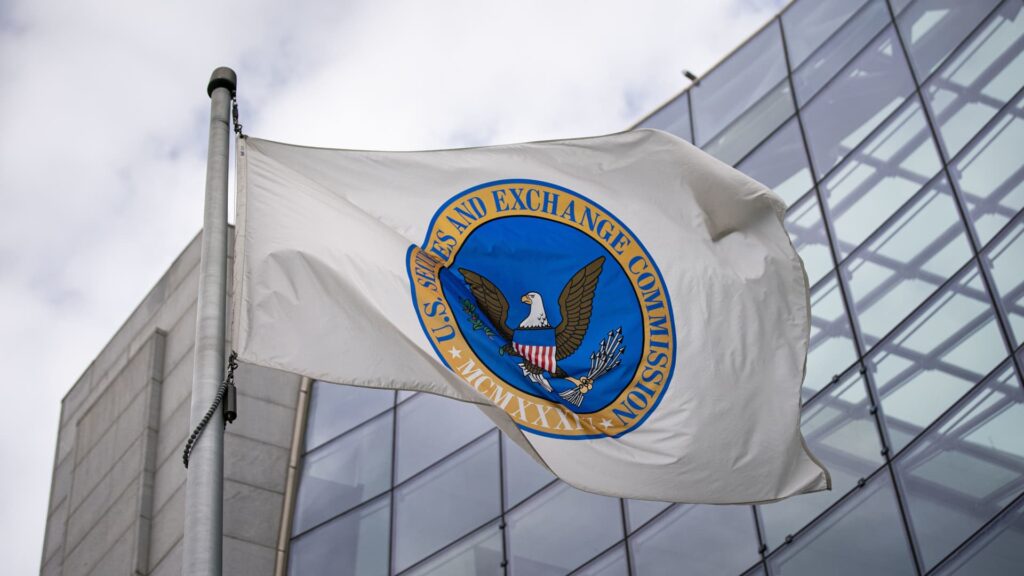
In the wake of the United States Securities and Exchange Commission’s (SEC) recent lawsuits against leading cryptocurrency exchanges, Coinbase and Binance, trading volumes on the top three decentralized exchanges (DEX) have seen an impressive leap.
Data from CoinGecko reveals that trading volumes across Uniswap v3 (Ethereum), Uniswap v3 (Arbitrum) and PancakeSwap v3 (BSC) have grown by an astounding 444% within the past 48 hours. These DEX platforms collectively represent 53% of total DEX trading volume. Between June 5 and June 7, the platforms’ daily trading volumes rose by over $792 million.
Curve, a decentralized exchange specializing in stablecoin trades, also witnessed a surge, with volumes rising by 328%. The majority of activity on Curve revolved around USD Coin and USDT, both tied to the value of the U.S. dollar.
May’s memecoin phenomenon had previously caused a brief surge in DEX volumes, outperforming Coinbase. Investors flocked to tokens like Pepe (PEPE) and Turbo (TURBO), available on decentralized platforms like Uniswap, as they were not listed on traditional exchanges.
Interested in writing for Crypto Intelligence News? Submit a crypto guest post
Notably, amid the DEX trading boom, Binance saw net outflows—calculated as the difference between incoming and outgoing assets—reach $778 million. Still, the exchange’s overall reserves are strong, holding over $8 billion in stablecoin balances.
This trading frenzy corresponds with increased regulatory scrutiny from the SEC. On June 6, Coinbase was sued by the SEC, which claimed it offered unregistered securities and acted as an unregistered securities broker. A similar suit was filed against Binance, its U.S. arm, and CEO Changpeng Zhao on June 5. Allegations suggest Binance has been operating illegally in the U.S., having failed to register as a securities exchange, and that Zhao is a ‘controlling person’ in this scenario.
Other Articles:
Is Big Eyes Coin a scam? Why investors should be wary of this crypto presale
ArbitrageScanner – the best scanner for cryptocurrency arbitrage between exchanges
Bored Ape Yacht Club (BAYC) utility – Why are investors spending millions on these NFTs?