

A Pacific Island nation has adopted a pro-Bitcoin prime minister.
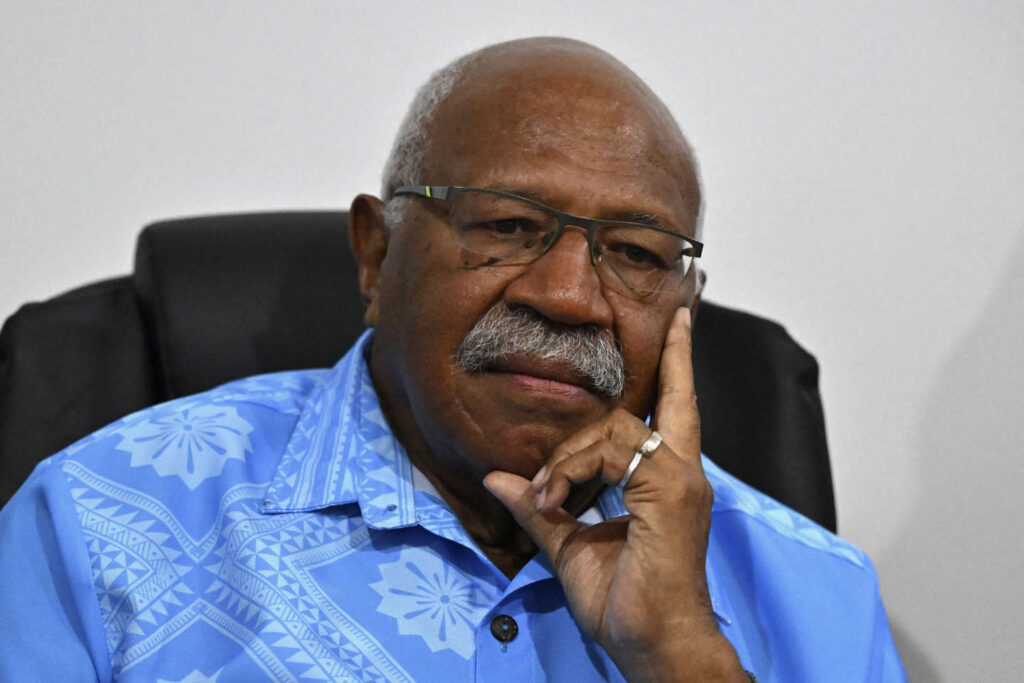
Tongan native Lord Fusitu’a assumed office on 24 December and tweeted support for Fiji’s Bitcoin adoption. In the recent past, Tonga set new regional records by using Bitcoin as a legal tender.
According to the new prime minister, he believes that “Fiji can do bitcoin legal tender like Tonga” and that there would be two “Legal Tender Bills for the Pacific in 2023.”
Due to economical and geographical differences, Tonga and Fiji face challenges to building their economies and national development agendas. Bitcoin adoption aims to boost financial inclusivity to eliminate high poverty, crime, and fossil fuel reliance rates.
Similar countries such as El Salvador and the Central African Republic (CAR) have passed similar measures for crypto to become a nationally-recognised legal tender.
One of the advantages to Fiji is its use of geothermal and volcanic power, which the nation can use for its Bitcoin mining activities, offering a competitive advantage over Tonga.
Lord Fusitu’a continued: “Like Tonga, how to do nationalized Bitcoin mining, specifically how we were going to do geothermal volcano mining so they could both do the same but also make use of their massive hydro and other renewable stranded energy they have, which we don’t.”
The news comes amid the archipelagic country’s National Development Plans to provide only renewable energy to all islands by 2030. The country must generate an additional 120 megawatts to reach its goal, which authorities aim to achieve with Bitcoin mining.

Several debates over the value of cryptocurrencies such as Bitcoin and gold have erupted across media. One discussion involved Dallas Mavericks owner Mark Cuban and Bill Mahar on his 26 December Club Random podcast.
In the talks, he staunchly backed Bitcoin over gold, stating he was “rooting for Bitcoin.”
He said: “I want Bitcoin to go down a lot further so I can buy some more [..] If you have gold, you’re dumb as fuck.” He concluded that people should “just get Bitcoin.”
Despite some lauding his comments, others voiced outrage on social media, slamming him for his alleged lack of knowledge of virtual currencies.
Peter Schiff, chief economist and global strategist for Euro Pacific Asset Management, hit back at his comments. He said:
“After Bitcoin crashes I hope [Mark Cuban] does buy more as he told [Bill Mahar] he would. It’ll give others an opportunity to sell. His lack of understanding of Bitcoin is only exceeded by his lack of understanding of #gold. He proves that you don’t have to understand money to make it.”
Stalwart Crypto Supporters
The news comes after
In late November, US lawmaker Cynthia Lummis doubled down on her support for including Bitcoin and other currencies in her 401(k) retirement plans, despite backlash from other Senators.
In a Semafor article, she stated that she was “very comfortable” with allowing people to include Bitcoin in retirement funds, adding, “it’s just different than other cryptocurrencies.”
Pershing Square Capital Management founder Bill Ackman also tweeted support for cryptocurrencies amid the ongoing aftermath of the FTX scandal.
In late November, he said the “crypto is here to stay” but added regulators should tighten restrictions and remove “fraudulent actors.”
He added: “I am making the case that crypto can facilitate potentially useful and important businesses that heretofore could not exist. That said, the success of any individual project is a function of the ultimate.”

Bitcoin (BTC) miners publicly listed on exchanges have sold nearly their entire mined BTC in 2022, sparking discussion on the gains for Bitcoin prices previously stated in media reports.
According to Tom Dunleavy, an analyst for Messari, a blockchain research company, cryptocurrency miners sold roughly 40,300 out of 40,700 BTC mined in the crypto space.
Involved crypto miners include Riot, Core Scientific, Marathon, Hive, Bit Digital, and others, with transactions taking place from 1 January to 30 November this year.
This has significantly lowered reserves in the second half of the year, with lows peaking in November due to the ongoing FTX collapse. This has caused Bitcoin prices to slump, Dunleavy added.
Despite this, numerous reports have evidenced Dunleavy’s claims, with Bitcoin Visuals noting on 26 December that Bitcoin’s daily trade volumes topped $12.2 billion. Conversely, CryptoQuaint figures showed outflows reached $15.35 million the same period, or 0.13 percent of total trading volumes.
December saw miner reserves recover by roughly 1 percent despite ongoing challenges such as skyrocketing electricity costs, a turbulent crypto market, several collapsed cryptocurrency platforms such as FTX, and increasing difficulty mining digital coins.
Core Scientific Sell-Off
The news comes after numerous mining firms were forced to sell reserves for their operations and expansion plans, namely due to declining hash rates, reports have shown.
Core Scientific, one of the biggest firms to date, sold 9,618 in Bitcoin in April 2022 to cover the costs of plummeting revenues.
It reportedly filed for Chapter 11 bankruptcy despite efforts to bail out the embattled company. While facing its earnings crisis, it stated it would continue cryptocurrency mining operations.
B Riley proposed a $72 million non-cash lifeline as Core Scientific nosedived from $4.3 billion USD in July 2021 to $78 million as of December.

Bitcoin (BTC) hit a fresh six-month low for exchange outflows over the holiday season, Glassnode data shows.
BTC volatility indexes have reached a new low after users adopted the cryptocurrency following trends in the ongoing bear market. The ongoing FTX bankruptcy and crisis have also failed to slow down cryptocurrency withdrawals and outflows.
Glassnode data also showed outflow peaks of around 143,000 BTC but have subsided tenfold from 14 November, when FTX filed for Chapter 11 bankruptcy, to 25 December.
Christmastime saw outflows slow to just 9,352 BTC, nosediving to 93.5 percent. On-chain data also reveals a trend of holding onto coins and a stronger conservative approach to transactions.
According to a HODL Waves metric, based on unspent transaction outputs (UTXOs) categorised by age, users have begun moving coins, featuring wallets unused for one to two years, in December.
The news comes after PeckShieldAlert noted a massive transfer from accounts on crypto trading platforms Poloniex and Genesis, totalling 9.878 Ether (ETH) and 13,103 ETH, respectively.
The account transactions took place on 19 December and had not seen any activities for roughly four years, triggering speculation across social media.
MicroStrategy, a software analytics firm based in the United States, recently acquired more Bitcoin (BTC) holdings, triggering mixed reactions from social media.
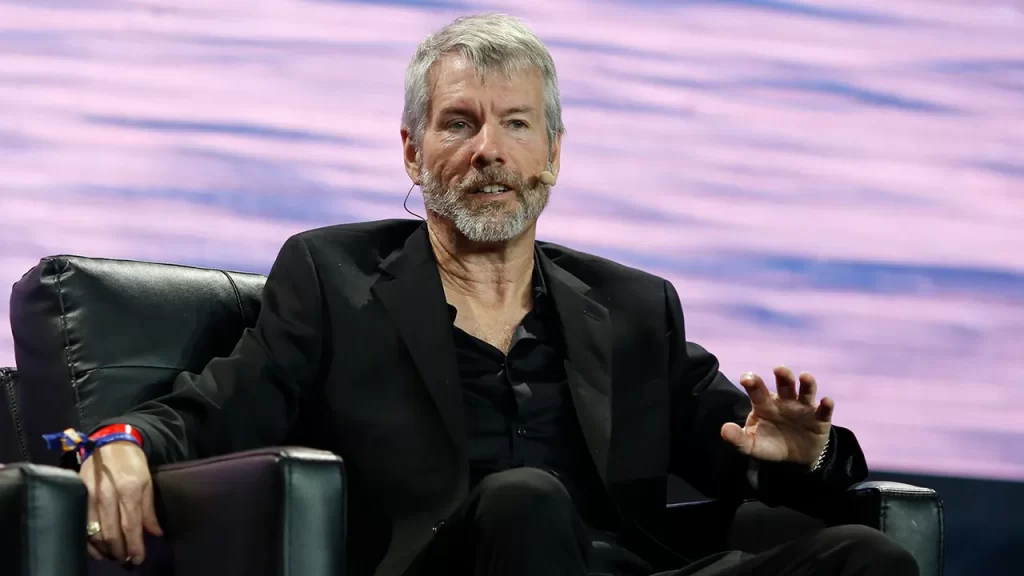
Company executive chairman Michael Saylor tweeted recently that his business had bought more Bitcoin, with its total holdings reaching 132,500 BTC at $4.03 billion at the time of purchase.
Its total holdings plummeted to just $2.1 billion to date, sparking discussions on Twitter.
While some praised him as a “rock star,” others stated Bitcoin backers should not celebrate the extra purchase as it could centralise ownership of the cryptocurrency.
Massive Bitcoin Sale Strategy?
The news comes after a recent sale of its Bitcoin holdings on Thursday, revealing further scrutiny from Bitcoin supporters. In a Yahoo! Finance analysis, the executive cited tax purposes for the sale.
He said at the time: “I think that this is going to be really helpful for Bitcoin because this is an educational moment. And people are realizing the benefits of buying a crypto asset that’s backed by the world’s most powerful computing network and by 10 gigawatts of energy and the difference between that and the 20,000 other cryptos that are, in essence, backed by nothing, and they’re just like other fiat currencies”
According to Yahoo!’s David Hollerith, MicroStrategy had launched a tax loss harvesting strategy by buying Bitcoin and later partially selling it. This allows it to use the losses at the middle selling period to hedge against capital gains taxes for the current fiscal tax year.
Recently, Saylor also stated his firm planned to adopt the Lightning Network in 2023, adding it was searching for software solutions to facilitate the measures.
The Lightning Network is a Layer-2 feature that helps boost Bitcoin capacity and faster transaction rates at scale. Exchanges such as CoinCorner and Bitnob adopted the Lightning Network in mid-December to facilitate cryptocurrency transactions and global remittances for African users.

Bitcoin enthusiasts have seen the cryptocurrency’s network hash rates recover to normal levels following a massive cold snap across the United States.
Due to the adverse weather, US power grids faced disruptive strains, forcing hash rates to dip temporarily. The country battled sub-zero temperatures, killing more than 28 people.
Bitcoin’s hash rate fell from up to 300 exahashes per second (EH/s) to around 170.60 EH/s on Christmas Day (25 December). It returned the following day to 241.29 EH/s, Blockchain.com data found.
Bitcoin (BTC) mining operations in Texas, where much of the nation’s hash rate takes place, temporarily halted or slowed to help with power shortages.
Bitcoin Capitals of the World
Texas is one of the leading producers of Bitcoin hash rates and is now one of the largest places in the world for Bitcoin mining.
As with many locations, power grid operations must accommodate the huge power consumption rates of BTC mining industries. Locations dependant on such sectors can affect global markets if hash rates slide due to power consumption problems or grid instability.
Data from Sunbird DCIM shows that countries with the largest Bitcoin hash rates include Dalian, China, the Genesis Mining Farm in Reykjavik, Iceland, Moscow, Russia, the GigaWatt Factory in Washington State, US, Linthal, Switzerland, and the Bitfury crypto facility in Amsterdam, Netherlands.
The top four locations produce 360,000 terahertz, 1,000 gigahertz, 38 petahertz, 1.3 petahertz, respectively.
The report also found that 65 percent of all BTC hash rates come from China. Firms such as Beowulf Mining aim to boost crypto mining capacities to 500 megawatts by 2025.

Binance, the world’s largest cryptocurrency exchange platform, has hit back at critics it claims have spread fear, uncertainty, and doubt (FUD) over its operations in a recent blog post.
In the post, it addressed seven key issues as it remains under severe scrutiny due to what it states are accusers that would like to see the exchange fail.
It aimed to firstly explain concerns over the stablecoin USD Coin (USDC), which was suspended earlier in December. A spokesperson from Binance said it wanted to consolidate all stablecoins to the ones with the most liquidity, including its native Binance USD (BUSD).
It also responded to claims it did not have sufficient liquidity to allow users to continue withdrawals.
According to the Chinese firm, Binance kept sufficient reserves between 12 and 14 December, with net withdrawals topping $6 billion at the time.
In a subsequent audit, CryptoQuant later confirmed Binance reserves were roughly 99 percent accurate. The latter confirmed it had entered talks with firms to provide services to verify reserves, adding that the world’s Big Four—Deloitte, KPMG, Ernst and Young (EY), and PricewaterhouseCoopers (PwC)–could not properly audit encrypted company reserves.
According to Binance’s fourth counterpoint, it addressed why it provided just Bitcoin (BTC) verification, stating it “takes the most cautious attitude towards” work involving user assets.
Due to the massive number of currencies, volumes, teams, and reserves needed to conduct verification processes, it needed to carefully conduct such verifications. The company added it did not have to disclose financial information as it was a private firm.
It also added: “Binance does not need to disclose detailed financial status for two reasons: First, listed companies must disclose company financial details to their investors, but Binance is a private company, not a listed company; second, Binance is financially healthy [and] self-sufficient, [has] no external financing needs and external investors, and no intention to go public at this stage.”
Citing a Reuters report, it stated in its sixth counterargument that mainstream media sources stated “ambiguities” and accused readers of only seeing “eye-catching headlines.”
It assured that it had the world’s largest number of approvals and licences, and aimed to tackle crime, responding to over 47,000 requests from law enforcement agencies since last year.
Concluding, Binance hit back at firms claiming it had “destroyed FTX,” stating the latter had “destroyed itself” due to misappropriation of user assets, citing a 6 December tweet from company chief executive Changpeng Zhao (CZ).
It said: Binance will not regard other exchanges as ‘competitors’. The current industry touches less than 6% of the population. We are more focused on continuously promoting and expanding industry adoption. We also hope to see more exchanges, blockchain, Wallet, etc. coexist in this ecosystem, so that more people can enter the field of blockchain cryptocurrency, without spending time and resources on any unhealthy ‘competition’ within the existing scope.”
A key United States Securities and Exchange Commission (SEC) official has cautioned investors to avoid fully trusting claims of proof-of-reserves (PoR) from global centralised crypto firms.
Paul Munter, SEC acting chief accountant, said in a Wall Street Journal interview that investors should remain “very wary of some of the claims that are being made by crypto companies.”
Munter added ongoing audits did not indicate companies were in a sound financial position, stating, “Investors should not place too much confidence in the mere fact a company says it’s got a proof-of-reserves from an audit firm.”
He continued that PoR lacked sufficient information to allow stakeholders to determine if companies held enough assets to cover liabilities.
The news comes as numerous crypto companies, including Binance, Crypto.com, and Kraken, among others, have offered to show customers their PoR data amid the ongoing FTX collapse.
The measures aim to ease fears of further bankruptcies and ensure customers of financial liquidity.
The news comes after Munster voiced concerns over cryptocurrency platforms at a recent conference in the US Capitol in mid-December.
In the subsequent WSJ article, he stated that, should the SEC find additional patterns in the industry, it could escalate matters with law enforcement agencies.
Earlier claims from former SEC Internet Enforcement chief John Reed Stark accused Binance of failing to address internal financial controls over its proof-of-reserves.
The news comes after three key crypto exchanges—Celsius, Three Capital Arrows, and FTX—have filed for administration in their respective markets over severe liquidity crunches triggering bank runs, among other problems.
As some people face account lock-outs from their banks, some have turned to Bitcoin and other cryptocurrencies to receive their salaries.
One such Bitcoin enthusiast, SVN, received his entire salary in Bitcoin for 2022, paid in fortnightly instalments.
In a Twitter thread, he stated that he used Coinbase’s direct deposit method, then migrated to Bitwage, Cash App, where his company paid him directly in cryptocurrency.
Took my entire salary in #Bitcoin this year. 100% net wage paid bi-weekly.
— svn ⚡️ (@rarepassenger) December 20, 2022
Started off with Coinbase direct deposit, migrated to Bitwage, Cash App, then got the company to pay me directly.
He stated direct deposit services were “simple and straightforward” from then.
He said: “Payment would go direct to wallet. Would send a % straight to cold storage for saving, the rest would use as needed.”
Explaining further, he stated the benefits of receiving his yearly wage in Bitcoin was that “accountants didn’t need to know [Bitcoin]” and that tax reporting was “easy.”
Conversely, he stated Know Your Customer (KYC) coins were a challenge.
Continuing, he said: “Getting the company to pay direct was a better experience. Because I was taking 100% net every other week, it required the business to change strategies for accumulation and earning.”
On the positive, he did not have to use KYC and was paid directly to his wallet. Despite this, he faced an “accounting nightmare.”
Getting the company to pay direct was a better experience. Because I was taking 100% net every other week, it required the business to change strategies for accumulation and earning.
— svn ⚡️ (@rarepassenger) December 20, 2022
Benefits:
Non-KYC coin
Direct to wallet
Cons:
Accounting nightmare
SVN added that obstacles to receiving his coins were transition tracking, with several wallets such as Sparrow Wallet and Mobile LN wallets offering separate transaction record-keeping.
Concluding, he wrapped up his analysis of a year’s worth of Bitcoin salaries, stating,
“Anyway, a whole year of accepting #BTC as pay has been interesting. Some days there’s a gain, some days a loss, other days neutral. It makes you take care of responsibilities faster, purchases are more considerable during drops and builds time horizon. Savings increases too.”
Anyway, a whole year of accepting #BTC as pay has been interesting.
— svn ⚡️ (@rarepassenger) December 20, 2022
Some days there’s a gain, some days a loss, other days neutral.
It makes you take care of responsibilities faster, purchases are more considerable during drops and builds time horizon. Savings increases too.
He added he would do things differently such as using less “off-ramps” or avoid automatic clearing house (ACH) payments, which conduct transactions between banks and credit unions.
Finally, he recommended using stablecoins more than other cryptocurrencies.
He concluded: “Haven’t had ANY banking issues considering I don’t have a bank account anymore. Would I go back? No. I really love the freedom having custody of my [hard-earned] funds feels.”

The United Kingdom has categorised “designated crypto assets” for Investment Manager Exemption (IME) for the 2022-2023 fiscal tax year.
Commissioners for His Majesty’s Revenue and Customs (HMRC) have enacted the legislation which lawmakers announced in April this year. The tax body of the UK government passed the new regulation this week, which will enter force on 1 January next year.
While the government has not defined “designated crypto assets,” the new regulations refer to “investment transactions” cited in Section Two of the Investment Transactions (Tax) Regulations 2014.
IME allows the UK to boost its status as a financial hub and allows non-UK investors residing in the country the right to select British investment managers. The latter can conduct some investments on their behalf without becoming subject to British taxation rules.
The new IME will place “designated cryptoassets” as stocks, included in Whitehall’s FinTech Sector Strategy in early April.
According to the consultancy paper, the measures,
“will provide certainty of tax treatment to U.K. investment managers and their non-U.K. resident investors who are seeking to include cryptoassets within their portfolios, and we anticipate that this will also encourage new cryptoasset investment management businesses to base themselves in the U.K.”
The news comes as multiple countries recommend financial regulations tighten across their respective governments. Countries such as Israel, South Korea, Australia, and the United States have submitted recommendations linked to the collapse of several key crypto exchanges.
This comes after FTX, one of the world’s largest cryptocurrency exchange platforms, filed for Chapter 11 bankruptcy after mismanaging billions in funding. Bahamian authorities have arrested the company’s former chief executive, Sam Bankman-Fried, who awaits extradition to the United States for his malfeasance.