



President Donald Trump’s tariff strategy is creating turbulence across global supply chains — and at the same time, some of his administration officials are profiting from industries directly impacted by those very policies.
Recent disclosures show that top members of Trump’s team, including Commerce Secretary Howard Lutnick, have financial ties to Bitcoin and technology firms affected by tariff shifts.
Tariff delays and new measures
On Tuesday, the administration extended tariff relief on certain Chinese imports but confirmed new levies on over 400 products.
The list spans wind turbines, motorcycles, construction machinery, railcars and more.
While the tariffs are projected to generate billions in revenue, trade groups argue the measures are slowing growth and disrupting operations.
The National Foreign Trade Council (NFTC) warned the policies are “delaying growth, disrupting operations, and raising legal concerns among companies.”
Lutnick’s firm invests in Bitcoin
Filings with the Securities and Exchange Commission show Lutnick, via Cantor Fitzgerald, has been making significant investments in sectors exposed to Trump’s economic agenda.
On July 8, Lutnick received a federal waiver allowing him to engage in matters that could directly affect Cantor Fitzgerald.
That waiver has drawn scrutiny from watchdogs.
The firm has invested more than $120 million in Fidelity’s Wise Origin Bitcoin Fund and nearly $117 million in trading platform Robinhood, according to Quiver Quantitative.
It also holds stakes in Tesla, AMD and Alibaba.
Critics argue these holdings create a clear conflict of interest, given Lutnick’s influence over trade and commerce policy.
Bartlett Naylor of Public Citizen said: “When the Oxford English Dictionary next updates its conflict-of-interest definition, it’ll use Cantor Fitzgerald’s crypto ventures and the Lutnick connection as prime example.”
Other officials under scrutiny
David Sacks, Trump’s AI and crypto adviser, sold roughly $200 million in digital assets early in Trump’s second term to avoid conflict claims.
However, Sacks later received a similar waiver, allowing him to retain ties to firms seeking federal contracts.
In July, AI firm Vultron announced $22 million in funding from Sacks’ venture firm, Craft Ventures, noting its alignment with the administration’s AI strategy.
Trump has made AI development a national priority, unveiling an action plan in July that included support for semiconductor production.
Trade impacts on the economy
While Treasury Secretary Scott Bessent has described the tariff policy as “working pretty well,” industry voices remain skeptical.
The NFTC said the levies are raising raw material costs and threatening innovation in advanced manufacturing.
A Yale University Budget Lab study estimated that the tariffs will increase household costs by an average of $2,400 in 2025.
Everyday items are also being hit.
Wholesale vegetable prices were nearly 39% higher in July than a year earlier, while retailers like Home Depot report delayed home renovation projects due to tariff-driven material costs.
Despite the administration’s optimism, analysts say the long-term effects of the tariffs remain uncertain.
For now, one thing is clear: while businesses and consumers bear rising costs, some within Trump’s circle appear well-positioned to benefit.

Bitcoin faced renewed downward pressure on Wednesday as the Wall Street session opened with heavy selling.
The leading cryptocurrency slipped below $113,000, extending losses from earlier in the week and threatening a move toward fresh local lows.
Data from Cointelegraph Markets Pro and TradingView showed that BTC/USD was unable to maintain stability after a brief reclaim of the $113,000 mark.
Bid liquidity continued to thin across major exchanges.
Traders Point to Key Price Zones
According to data provider CoinGlass, $112,300 emerged as an immediate zone of interest.
Popular trader Daan Crypto Trades said Bitcoin has been testing liquidity across both sides of the range for the past six weeks.
“$BTC took out a bunch of liquidity on both sides for the past 6 weeks, as it ranged around this same price region,” he explained.
He pointed to $120,000 as the largest nearby liquidity cluster and identified $112,000 as the key support level to watch.
“These areas often act as local reversal zones and/or magnets when price gets close to them,” he added.
“Spoofy the Whale” Returns
Other analysts flagged potential manipulation in the order book.
Keith Alan, co-founder of Material Indicators, said recent movements suggest that large players may be using artificial bids to push prices lower.
Alan referred to the return of figures he dubbed “Spoofy the Whale” and the “Notorious B.I.D.” — entities known for shifting liquidity to influence market direction.
“Too soon to make any assumptions, but the influence on price direction will be the same,” he said.
“Bids moving lower invites price to move lower.”
Altcoins at Risk
Beyond Bitcoin, analysts warned of ripple effects across the altcoin market.
TheKingfisher, a well-followed commentator, said a prolonged slide in BTC could trigger disproportionate losses for smaller tokens.
“Still, we could see a gradual bleed, cascading block by block. While majors remain stable, a 5% BTC move could trigger 10–30% drops in alts,” he said.
Historical Parallels Offer Hope
Some traders see reasons for optimism despite the current decline.
Analyst Rekt Capital compared the latest correction to similar moments in prior bull cycles.
“One of the most positive things about this current pullback is that this same type of retrace took place at this same moment in the cycle in both 2017 and 2021,” he noted.
“In both 2017 and 2021, each of those retraces preceded upside to new All Time Highs.”
Focus Turns to Fed
The downturn also coincides with a key week for macroeconomic signals.
Minutes from the Federal Reserve’s July policy meeting were due to be released, and traders were awaiting Jerome Powell’s speech at Jackson Hole later in the week.
Last year, Powell used the symposium to signal policy shifts, and markets are closely watching for confirmation that interest rate cuts could be on the horizon.
With Bitcoin testing support zones and macro pressures looming, the next few days could prove decisive for market sentiment.

A senior U.S. Federal Reserve official has suggested that central bank employees should be allowed to hold small amounts of cryptocurrency to better understand the technology.
Michelle Bowman, the Fed’s Vice Chair for Supervision, made the remarks Tuesday at a blockchain event in Wyoming.
Push for practical experience
Bowman argued that firsthand exposure is crucial for staff tasked with regulating digital assets.
“We will soon be establishing a framework for supervising issuers of these assets,” she said.
“There’s no replacement for experimenting and understanding how that ownership and transfer process flows.”
Currently, Fed staff and their spouses are barred from holding crypto, ETFs tied to digital assets, or shares in crypto-related companies.
That restriction was put in place in 2022 after disclosures revealed unusual trading activity by several top officials during the early COVID-19 market turmoil.
Recruitment and expertise concerns
Bowman warned that strict prohibitions could make it harder for the Fed to attract and retain skilled examiners.
“These restrictions may be a barrier to recruiting and retaining examiners with the necessary expertise,” she said.
Allowing limited holdings, she argued, would help staff develop deeper insights into how digital assets function.
“I certainly wouldn’t trust someone to teach me to ski if they’d never put on skis,” Bowman added.
Call for regulatory flexibility
Bowman used the speech to urge regulators to adopt a more open approach toward emerging technologies.
She said regulators often display an “overly cautious mindset” and risk being left behind if they resist innovation.
“We must choose whether to embrace the change and help shape a framework that will be reliable and durable… or to stand still and allow new technology to bypass the traditional banking system altogether,” Bowman said.
“From a regulator’s perspective, the choice is clear.”
While acknowledging risks, she emphasized that many could be mitigated if regulators recognized the broader benefits of blockchain adoption.
Political backdrop
Bowman’s remarks reflect a broader shift in tone under the Trump administration.
Earlier this month, the Fed announced it would end a special supervision program for banks’ crypto activities, reversing a Biden-era initiative.
President Donald Trump has also directed banking regulators to investigate debanking claims raised by crypto firms and conservative groups.
Bowman did not specify which crypto products or how much exposure she believes staff should be permitted, but her remarks highlight growing recognition inside the Fed of the need for direct experience with digital assets.

Google has emerged as the largest shareholder of Bitcoin miner TeraWulf after securing a 14% equity stake through an expanded financial arrangement tied to AI infrastructure provider Fluidstack.
The deal centers on a 10-year colocation lease agreement between TeraWulf and Fluidstack.
To support Fluidstack’s obligations, Google agreed to increase its backstop, a financial guarantee that ensures long-term lease commitments are met.
In return, Google received warrants to purchase over 73 million shares of TeraWulf.
The new holdings place the tech giant ahead of other shareholders.
TeraWulf Confirms $3.2 Billion Guarantee
During a shareholder call, TeraWulf revealed that Google’s backstop commitment now totals $3.2 billion.
Kerri Langlais, chief strategy officer of TeraWulf, explained that the agreement gives Google a meaningful equity position.
“Google’s new equity makes it TeraWulf’s largest shareholder, providing a powerful validation from one of the world’s leading technology companies,” she said.
Langlais emphasized that the arrangement reflects “the strength of our zero-carbon infrastructure and the scale of the opportunity ahead.”
Deal Supports Lake Mariner Data Center Expansion
As part of the agreement, Fluidstack exercised an option to expand operations at TeraWulf’s Lake Mariner campus in New York.
The expansion includes a new purpose-built data center expected to go live in the second half of 2026.
Langlais clarified that Google’s $3.2 billion guarantee applies strictly to Fluidstack’s lease commitments.
“This is not a guarantee of TeraWulf’s corporate debt, nor do we have access to those funds,” she said.
“The backstop is tied exclusively to contracted AI and high-powered computing lease revenues and is unrelated to our Bitcoin mining operations.”
Mining Operations Continue, But AI Takes Priority
The deal comes as many Bitcoin miners diversify into artificial intelligence and high-performance computing (HPC) services.
The April 2024 halving reduced block rewards to 3.125 Bitcoin, cutting into profits and encouraging miners to explore other revenue streams.
Langlais noted that while TeraWulf intends to maintain its mining platform, the company sees more potential in AI workloads.
“In the near term, mining generates cash flow and provides a valuable resource to the electrical grid,” she said.
However, she added that long-term growth lies in redirecting energy capacity toward AI and HPC contracts with partners such as Fluidstack and Google.
Market Outlook for AI Integration
Industry observers see the shift as transformative for miners.
VanEck estimated in 2024 that if mining firms redirected 20% of their energy to AI and HPC by 2027, they could collectively earn an additional $13.9 billion annually over 13 years.
TeraWulf projects its deal with Fluidstack alone could generate $6.7 billion in revenue, with potential to reach $16 billion through lease extensions.
These figures underscore why miners increasingly view AI as a growth driver.
TeraWulf Shares See Volatility
News of the Google-backed agreement boosted TeraWulf’s stock (WULF) in Monday’s trading session.
Shares rose 17% to $10.57 from a prior close of $8.97 before retreating later in the day.
By the end of the session, the stock settled at $9.38, with a further decline of 1.28% in after-hours trading.
Despite the pullback, the involvement of Google has given TeraWulf new visibility and reinforced its strategy of blending Bitcoin mining with AI infrastructure.

Bitcoin remains just below its all-time high of over $124,000, and institutional investors are closely watching its movements.
Strategy, the largest corporate holder of Bitcoin, has signaled plans to expand its holdings further even as the cryptocurrency consolidates.
Co-founder Michael Saylor recently indicated that more purchases are on the horizon.
The company already added 155 BTC on Monday for $18 million, lifting its total stash to 628,946 BTC worth more than $74.2 billion.
Strategy’s Investment Record
Strategy has become the go-to proxy for funds and retail investors who cannot or do not want to hold Bitcoin directly.
Its Bitcoin-first strategy has made the company one of the most prominent players in the digital asset space.
According to SaylorTracker, the firm is sitting on unrealized gains exceeding $28 billion, representing a return of more than 60% on its investment.
This strong performance underscores the success of its long-term accumulation model.
Accelerated Purchases Since 2024
Strategy’s Bitcoin buying spree accelerated after the U.S. presidential election in November 2024.
Since then, the firm has acquired 376,726 BTC in just nine months.
For perspective, it took more than four years to accumulate 252,220 BTC before this aggressive phase of buying began.
This shift shows how political and market conditions have influenced corporate treasury strategies.
Saylor’s Focus on Bitcoin
Despite the rise of companies adopting altcoin treasury strategies, Saylor remains firmly committed to Bitcoin.
“I still think the vast majority of the capital flowing into the space is flowing into Bitcoin,” he told Bloomberg in August.
“We’ve gone from about 60 companies capitalizing on Bitcoin to 160 companies just in the past six months; so, I’m laser-like focused on Bitcoin,” he added.
Saylor has repeatedly dismissed concerns about diversification, arguing that Bitcoin’s position as the dominant cryptocurrency gives it a unique moat.
Institutional Interest and Market Impact
Strategy’s accumulation strategy has positioned it as a cornerstone of Bitcoin’s corporate adoption.
Institutional funds unable to buy BTC directly often use Strategy shares as a proxy investment.
Retail investors also favor the stock as an alternative to self-custodying crypto.
The company’s commitment has sparked a wave of imitators, though none have matched its scale.
According to BitcoinTreasuries.NET, Strategy’s holdings surpass the combined total of the next 10 largest Bitcoin treasury firms.
This dominance has given the company significant influence in the sector.
Strategy’s Market Legacy
Since it began accumulating Bitcoin in 2020, Strategy’s share price has risen nearly 2,600%.
This growth has drawn a wide spectrum of investors, from institutional funds to everyday traders.
While Bitcoin’s future remains uncertain, Strategy’s conviction has created a template for how corporations can leverage digital assets.
With more purchases on the horizon, the company shows no signs of slowing down.
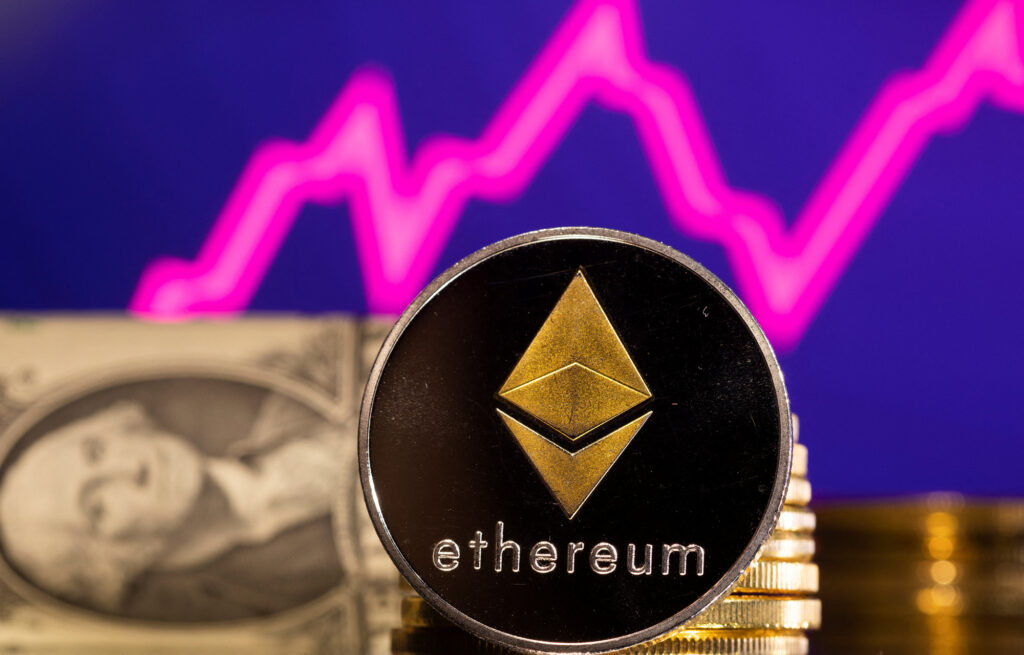
Institutional demand for Ether (ETH) continues to accelerate, with two entities acquiring a combined $882 million worth of the cryptocurrency in recent days.
Leading the wave of purchases is BitMine Immersion Technology, a publicly listed Bitcoin mining firm. In a matter of hours, the company acquired 106,485 ETH, valued at $470.5 million. These acquisitions, tracked by blockchain analytics firm Lookonchain, bring BitMine’s total holdings to 1.29 million ETH—worth approximately $5.75 billion.
The transactions reveal that BitMine relied on large over-the-counter deals and transfers from major intermediaries, including Galaxy Digital, FalconX, and BitGo.
Whale Activity Adds to Market Momentum
Adding to the surge, an unidentified whale accumulated 92,899 ETH—around $412 million—over a four-day period. On-chain data shows the entity created three new wallets before withdrawing funds from Kraken, indicating a strategy to secure assets for long-term storage.
This aligns with a broader trend of whales aggressively accumulating Ether during its recent rally. Last week, one entity purchased $1.3 billion worth of ETH across multiple wallets, setting a new benchmark for whale accumulation.
Corporate Capital Raises Highlight Market Confidence
The institutional push has been supported by major fundraising efforts. BitMine Immersion Technology is in the process of raising $24.5 billion through an at-the-market stock offering, while SharpLink announced the completion of a $389 million raise via common shares.
These developments reflect the growing acceptance of Ether as a corporate treasury asset, following a similar trajectory once seen with Bitcoin.
Banks Boost Long-Term ETH Forecasts
The intensified institutional activity has prompted traditional financial institutions to raise their projections for Ether’s price. Standard Chartered recently lifted its 2025 target from $4,000 to $7,500.
The bank also provided a long-term roadmap, forecasting ETH to hit $12,000 by 2026, $18,000 by 2027, and $25,000 by 2028. Analysts cited stronger institutional adoption and stablecoin growth under clearer U.S. regulations as primary drivers.
Early Profit-Taking Emerges
Despite this bullish momentum, signs of profit-taking have started to appear. The whale group known as “7 Siblings” sold 19,461 ETH—worth $88.2 million—within a single day at an average price of $4,532.
The Ethereum Foundation also took part, selling 2,795 ETH worth approximately $12.7 million through two transactions earlier in the week.
While these moves signal caution at higher price levels, the broader institutional inflows suggest long-term confidence in Ether’s role as a key digital asset.

Venture capital firm Digital Currency Group (DCG) has launched fresh legal action against two of its subsidiaries, intensifying the ongoing fallout from the collapse of Three Arrows Capital (3AC).
In a filing to the US Bankruptcy Court for the Southern District of New York, DCG alleged that Genesis Global Capital and Genesis Asia Pacific profited unfairly from a $1.1 billion promissory note tied to the 2022 default of 3AC.
The complaint argues that instead of suffering losses, the Genesis entities received “hundreds of millions of dollars” in gains, creating an obligation to return overpayments to their parent company.
Background to the Promissory Note
DCG issued the 10-year note in June 2022 to cover a potential equity shortfall in Genesis Asia Pacific following 3AC’s failure to meet obligations.
At the time, concerns loomed that the collapse of 3AC — one of Genesis’ largest borrowers — would trigger significant liquidity issues.
However, according to DCG, cryptocurrency markets later rebounded, increasing the value of collateral held against the loans.
That included shares in Grayscale’s Bitcoin Trust, which surged alongside Bitcoin’s recovery.
DCG claimed Genesis not only avoided financial damage but ultimately profited from 3AC’s collapse.
“[T]he incremental amounts realized by Genesis after issuance of the Note were … far more than sufficient to overcome the prior $1.1 billion collateral shortfall — and, on information and belief, allowed Genesis to profit from [3AC]’s default by recovering nearly $2.8 billion on the original $2.36 billion in [3AC] Loans,” the filing said.
Genesis Pushes Back
Genesis, however, has rejected the latest complaint, accusing DCG of attempting to rewrite history.
“DCG’s unfounded, haphazard and convenient about-face to withhold 3AC distributions is meritless,” said Luke Barefoot, partner at Cleary Gottlieb and counsel to Genesis.
“It flatly contradicts the written agreements, DCG’s representations to the bankruptcy court, and the fact that DCG already handed over $100M+ in distributions.”
This legal clash follows earlier suits filed by Genesis against DCG, its affiliates, and CEO Barry Silbert.
In May, Genesis sought $3.3 billion in damages, accusing its parent company of fraudulent transfers and insider enrichment in the lead-up to bankruptcy.
The Wider Market Context
The 3AC default was one of several shocks that rattled crypto markets in 2022.
The collapse of the Terra ecosystem triggered a cascade of failures, leaving investors with heavy losses and exposing vulnerabilities across the industry.
That same year, FTX — once one of the largest exchanges — imploded in spectacular fashion, with executives later indicted for fraud.
DCG’s filing referenced the wider turmoil, noting that even without 3AC’s collapse, Genesis would have struggled to survive.
“Even had [3AC] not defaulted in June 2022, [Genesis Global Capital] would not have had sufficient capital to withstand the unexpected and devastating market rout that followed the collapse of FTX in November 2022,” the filing stated.
Genesis halted withdrawals that month before officially declaring bankruptcy on January 19, 2023.
Restructuring and Recovery
After months of proceedings, Genesis completed its restructuring in August 2024.
The plan involved distributing approximately $4 billion to creditors and other affected parties.
While this was seen as a significant step toward closing one of the darkest chapters in crypto lending, disputes between Genesis and DCG remain unresolved.
DCG is now seeking more than $105 million plus interest from its subsidiaries, arguing the terms of the promissory note require repayment given the profits made from 3AC’s collateral.
Ongoing Legal Battle
The latest filing highlights the complex financial web left by crypto’s 2022 crash, with companies still grappling over responsibility for billions lost and gained.
For DCG and Genesis, the courtroom has become the battleground for settling questions of accountability.
The outcome of this case could have major implications, not just for the firms involved but also for creditors seeking clarity on how recoveries from failed borrowers are handled.
With tensions high, the dispute underscores how the ripple effects of 3AC’s collapse and the wider market downturn continue to haunt the sector.
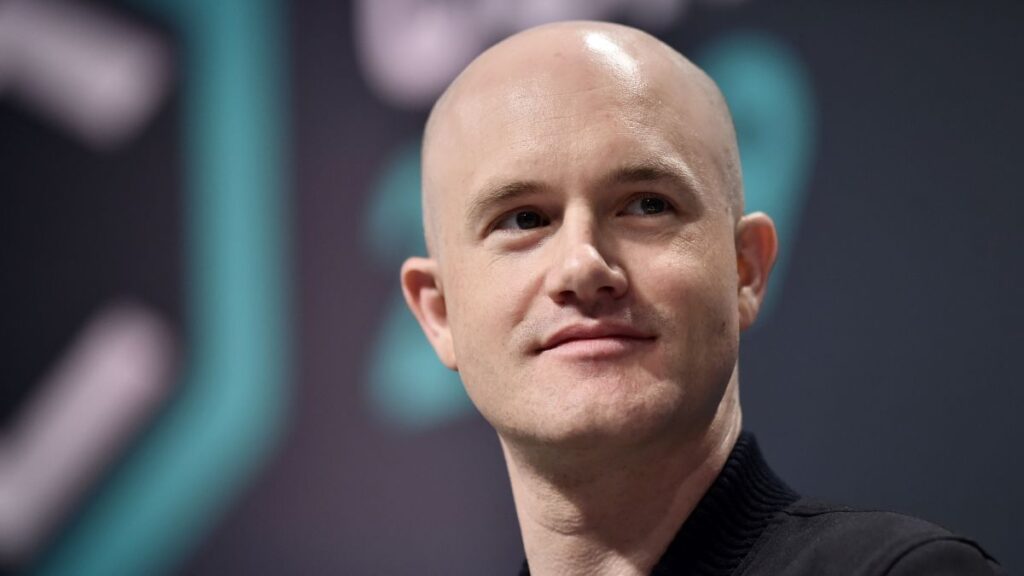
Coinbase has completed its acquisition of Deribit, the world’s largest crypto options trading platform by volume, marking another significant step in the company’s efforts to broaden its global presence.
The $2.9 billion deal, first announced in May, officially closed this week.
Deribit recorded over $1 trillion in trading volume in 2024, drawing a dedicated base of institutional and sophisticated traders.
Coinbase said the platform’s strong client loyalty and market leadership made it a strategic addition to its expanding suite of services.
Building a One-Stop Crypto Hub
Coinbase has been steadily growing its offerings to serve diverse segments within the crypto sector.
The exchange now provides a perpetual futures platform, prime brokerage services, retail spot trading, institutional lending, and secure asset custody.
By integrating Deribit’s operations, Coinbase aims to bolster its derivatives capabilities while reinforcing its ambition to become a one-stop destination for digital asset services.
Despite the milestone, Coinbase’s stock slipped by roughly 2.5% in intraday trading following the deal’s closure.
This minor dip follows a broader pattern of market adjustments after major acquisitions.
Six Acquisitions in 2025
The Deribit purchase is one of six acquisitions made by Coinbase so far in 2025.
In January, the exchange acquired Spindle, a blockchain-based advertising platform designed to help creators boost their visibility online.
The same month, Coinbase brought on the team behind Roam, a blockchain-based web browser project.
In July, it added Liquifi, a platform focused on supporting early-stage token startups with management tools and resources.
These deals reflect Coinbase’s strategy of expanding into complementary areas of blockchain and crypto infrastructure.
Industry-Wide Expansion Trends
Coinbase’s aggressive growth mirrors a wider trend among major crypto exchanges branching into adjacent markets.
Kraken, for instance, launched tokenized stock trading for non-US residents in May, tapping into the emerging tokenized securities space.
The company also offers crypto futures, staking, asset custody, and over-the-counter services for institutions.
Robinhood has been blurring the line between traditional and digital finance by providing mixed-asset trading and announcing a layer-2 blockchain for tokenized stock trading in Europe.
Meanwhile, Binance continues to diversify its portfolio with retail and institutional offerings, including options, futures, and token launch platforms.
Since 2018, Binance has been actively acquiring crypto wallets, blockchain development teams, exchanges, and analytics firms.
Coinbase’s move for Deribit underscores the competitive race among major exchanges to expand capabilities and secure market share in the evolving global crypto economy.

Thumzup Media Corporation has announced plans to dramatically expand its presence in the cryptocurrency sector following a $50 million funding round.
The firm, which began as a social media marketing business, is now pivoting toward large-scale crypto mining and targeted blockchain investments.
New Strategy and Investments
The company revealed it will use part of the funding from its $10-per-share offering to develop “state-of-the-art cryptocurrency mining infrastructure.”
It is currently engaging with mining technology providers to accelerate the buildout.
Thumzup also confirmed it now holds 19.1 Bitcoin, having first entered the crypto market in early January.
This move aligns with a trend among public companies seeking to bolster their share value through cryptocurrency holdings.
Trump Family Connection
A notable shareholder in Thumzup is Donald Trump Jr., who purchased 350,000 shares in July for nearly $3.3 million, according to regulatory filings.
The purchase adds to the Trump family’s growing presence in the crypto space.
Bitcoin Price Surge
Thumzup’s expansion comes as Bitcoin hit an all-time high of $124,128 before slightly cooling to $123,683.
Market optimism has traders eyeing a potential push above $125,000.
Thumzup has also outlined plans to diversify its holdings to include Dogecoin, Litecoin, Solana, XRP, Ether, and USDC, with approval to hold up to $250 million in crypto.
Stock Market Performance
Shares in Thumzup rose 7.62% in after-hours trading on Wednesday to $10.87, recovering from earlier losses.
The stock is up nearly 195% in 2025, with its latest all-time high of $15.46 recorded on August 8.
However, it faced a sharp drop earlier in the week after announcing a preferred stock offering, which was later amended.
Global Crypto Holdings Trend
Other firms are also increasing their Bitcoin reserves despite the recent price surge.
Sweden’s H100 Group recently bought 45.8 BTC, bringing its total to 809.1 BTC — the fourth-largest holding among European public companies.
The move cements the ongoing trend of corporate Bitcoin accumulation, even at record-high prices.
Cryptocurrency investment products attracted $572 million in inflows last week, rebounding after the prior week saw the end of a record-breaking 15-week inflow streak totaling $27.8 billion.
The data, published by European crypto asset manager CoinShares on Monday, shows that global crypto exchange-traded products (ETPs) benefited from a market recovery that pushed both Bitcoin and Ether prices higher.
Ether crossed the $4,000 mark for the first time since December 2024, while Bitcoin climbed back above $120,000.
Year-to-Date Flows Hit All-Time High
With last week’s inflows, total year-to-date (YTD) investment into crypto ETPs reached a record $30.7 billion.
Assets under management (AUM) also hit a historic peak of $226 billion.
These figures reflect renewed investor optimism following a volatile start to August.
401(k) Policy Shift Boosts Sentiment
James Butterfill, CoinShares’ head of research, attributed much of the week’s late inflows to a major policy announcement in the United States.
“In the latter half of the week, however, we saw $1.57 billion of inflows, likely spurred by the government’s announcement permitting digital assets in 401(k) retirement plans,” Butterfill said.
Earlier in the week, however, the market saw $1 billion in outflows, which he linked to concerns about slowing economic growth after weak U.S. payroll data.
Ether ETPs Lead the Market
Ether-based ETPs continued to outperform, bringing in nearly $270 million in inflows last week.
“This pushed year-to-date inflows to a new record of $8.2 billion, while recent price gains have driven total assets under management to an all-time high of $32.6 billion, up 82% so far this year,” Butterfill said.
The surge follows strong July performance, during which ETH-based products also led the market.
Bitcoin ETPs Recover After Outflows
Bitcoin ETPs saw $265 million in inflows, ending a two-week streak of outflows.
This recovery suggests that investors are regaining confidence in BTC’s near-term trajectory, particularly as institutional adoption deepens.
Altcoins Attract Investor Interest
ETPs tracking Solana (SOL), XRP, and Near Protocol (NEAR) also saw meaningful inflows.
Solana products brought in $21.6 million, XRP attracted $18.4 million, and NEAR saw $10.1 million in new investments.
BlackRock Approaches $100B in Crypto AUM
Among issuers, BlackRock’s iShares crypto ETFs led the way with $294 million in inflows.
While that’s down 61% from the prior week’s $749 million, the funds are now close to the $100 billion AUM milestone, ending Friday at $98.9 billion.
Grayscale Investments, the second-largest issuer with $35.4 billion in AUM, recorded $87 million in inflows.
Bitwise posted $95 million, while Fidelity Investments experienced the largest issuer-level outflows, losing $55 million.
Market Outlook
The return of inflows across multiple asset categories signals improving sentiment ahead of key macroeconomic events this quarter.
With U.S. policy shifts favoring broader crypto integration into retirement accounts, analysts expect ETP inflows to remain strong in the near term.