



VMS Group, a Hong Kong-based multi-family office managing $4 billion in assets, is preparing to enter the cryptocurrency space for the first time.
According to a Bloomberg report, the firm plans to allocate up to $10 million to crypto investment strategies operated by Re7 Capital, although the exact amount is still under consideration.
The move signals VMS Group’s efforts to diversify its portfolio toward more liquid asset classes, as stated by managing partner Elton Cheung.
“The decision is part of recent moves by VMS to diversify into more liquid investments,” Cheung said.
Shifting from Illiquid Investments
Cheung noted that while VMS has enjoyed success in private equity and other long-term holdings, these investments have become increasingly difficult to exit due to a growing trend of companies delaying public listings.
This shift in market dynamics has influenced VMS Group’s strategy toward more agile asset classes such as crypto.
Indirect Exposure Through Re7 Capital
Rather than investing directly in digital tokens, VMS is opting for an indirect approach by allocating funds to Re7 Capital.
The firm specializes in digital asset strategies, focusing on decentralized finance (DeFi) and other yield-generating crypto opportunities.
This strategy allows VMS to gain exposure to the digital asset ecosystem while maintaining a degree of risk control.
Favorable Regulatory Environment
Cheung emphasized that the firm’s move is also supported by improving global regulations and rising institutional interest in the sector.
“We thought this was the right time because of growing demand and because we see clearer legislative and government support from various jurisdictions, as well as large institutional support and endorsement,” he said.
Hong Kong’s Regulatory Push for Crypto
Hong Kong has taken active steps in recent months to encourage innovation in the digital asset space.
In early June, regulators approved a framework allowing professional investors to trade crypto derivatives.
Around the same time, the government reportedly began using Chainlink’s Cross-Chain Interoperability Protocol in its central bank digital currency (CBDC) research.
Additionally, legislation passed in May allows the issuance of fiat-backed stablecoins by the end of the year.
Growing Corporate Interest in Crypto
Several Hong Kong-based firms are already adding digital assets to their treasuries.
Last week, MemeStrategy—an investment firm managed by 9GAG—became the first publicly listed company in the region to purchase Solana (SOL), acquiring over 2,400 tokens for approximately $368,000.
Earlier in May, DDC Enterprise, a ready-meal seller, purchased 21 Bitcoin as part of a larger plan to accumulate 5,000 BTC over the next three years.
These developments reflect a broader shift among businesses in Hong Kong towards embracing crypto assets.
Awaiting Comment
VMS Group has yet to respond to media inquiries regarding the investment and was unreachable for comment at the time of publication.

Semiconductor and IoT module developer Sequans Communications has announced plans to raise $384 million to fund a strategic investment in Bitcoin, underscoring growing corporate interest in using the cryptocurrency as a treasury asset.
The company said it would raise the funds through a combination of equity and convertible debt, with $195 million in equity issuance and $189 million in convertible debentures.
Sequans is collaborating with Swan Bitcoin, a firm that specializes in Bitcoin treasury management, for the execution of this plan.
“Our bitcoin treasury strategy reflects our strong conviction in bitcoin as a premier asset and a compelling long-term investment,” said Sequans CEO Georges Karam.
Corporate Bitcoin Adoption Accelerates
Sequans joins a growing list of companies diversifying their treasuries with Bitcoin.
Over the weekend, Nakamoto Holdings raised $51.5 million for the same purpose, while Metaplanet added 1,111 BTC to its balance sheet on Monday, putting it just shy of Tesla’s Bitcoin holdings.
According to BitcoinTreasuries.NET, roughly 240 companies now hold Bitcoin on their balance sheets.
That figure has nearly doubled in recent weeks.
Together, these firms control around 4% of the global Bitcoin supply.
Market Veteran Sees Trend Shift
Adam Back, CEO of Blockstream and a prominent figure in the early Bitcoin community, commented on the trend on X (formerly Twitter).
“Time to dump ALTs into BTC or BTC treasuries,” Back posted, referring to an emerging pattern where institutions are shifting away from altcoins and favoring Bitcoin.
He characterized the surge in Bitcoin-focused treasuries as a new kind of “alt-season.”
Big Tech Stays on the Sidelines
Despite the growing momentum, many major technology firms are still hesitant.
Amazon, Meta, and Microsoft have refrained from adding Bitcoin to their treasuries, largely due to concerns over its price volatility and ongoing regulatory uncertainty.
Unlike traditional assets, Bitcoin’s market swings can expose shareholders to risks that typical corporate treasuries are designed to avoid.
Strategy Remains the Largest Holder
MicroStrategy, now known as Strategy, continues to dominate corporate Bitcoin holdings.
The company holds approximately 592,345 BTC, valued at about $60.2 billion at current prices.
Strategy has consistently used convertible debt to acquire Bitcoin, underscoring its commitment to a long-term accumulation strategy.
Growing Institutional Confidence
While the debate over Bitcoin’s role in corporate finance continues, the rising number of firms entering the space suggests that institutional confidence in the cryptocurrency is growing.
Sequans’ move marks another major step in the ongoing integration of Bitcoin into mainstream financial strategy.
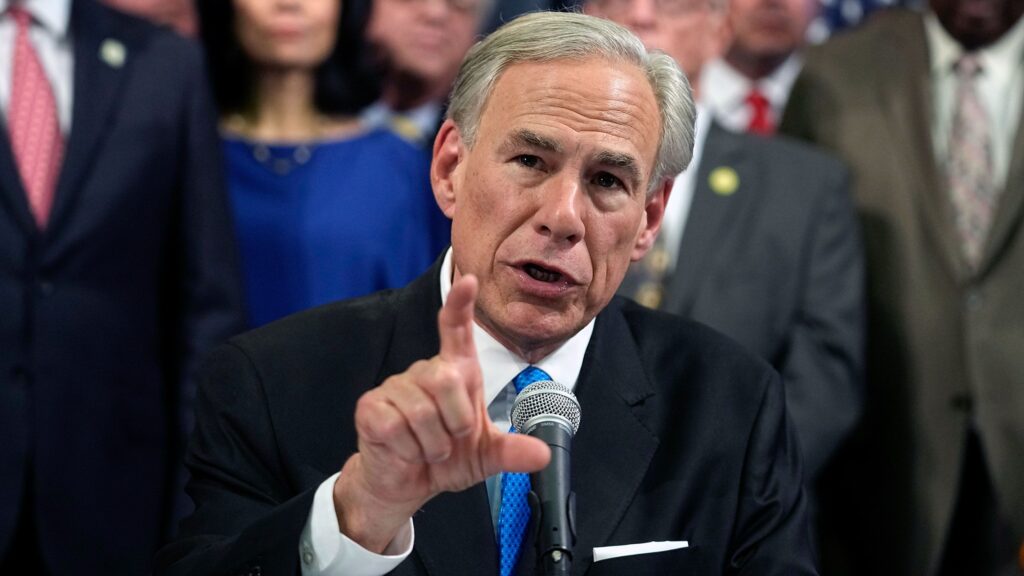
Texas Governor Greg Abbott has officially signed Senate Bill 21 (SB21), creating the Texas Strategic Bitcoin Reserve, a state-operated fund that will hold Bitcoin as a long-term financial asset.
The move makes Texas the first U.S. state to not only legalize a Bitcoin reserve but also to directly allocate public funds toward building digital asset holdings.
Unlike traditional state investments, the reserve will function outside Texas’ general treasury, serving as a hedge against inflation and a new tool to bolster the state’s financial resilience.
Strict Criteria Ensures Bitcoin-Only Holdings
According to the bill, only assets with a market capitalization exceeding $500 billion are eligible for inclusion in the fund.
Currently, Bitcoin is the only cryptocurrency meeting that requirement.
The Texas Comptroller of Public Accounts will manage the fund with guidance from a three-member advisory board composed of cryptocurrency investment experts.
Reserve Can Grow Through Airdrops and Donations
The legislation allows for the Bitcoin reserve to expand through various mechanisms beyond direct purchases.
These include blockchain forks, investment gains, and even airdrops or public donations.
A transparency provision mandates that a comprehensive report on the fund’s holdings and performance be published every two years.
Legal Protections Cement Reserve Independence
The passage of SB21 follows the earlier signing of House Bill 4488, which protects the reserve from being transferred into the general revenue fund.
This measure ensures the fund remains insulated from broader budgetary shifts and fiscal pressures.
Texas now joins Arizona and New Hampshire as the third U.S. state to approve a Bitcoin reserve policy.
However, Texas is unique in that it is the first to use state funds and establish an independent structure for its holdings.
Corporate Adoption of Bitcoin Continues to Grow
Public interest in Bitcoin reserves is being mirrored in the corporate world.
Nakamoto Holdings, a Bitcoin investment firm founded by David Bailey, a crypto adviser to former President Donald Trump, recently raised $51.5 million through a PIPE (private investment in public equity) transaction to increase its Bitcoin portfolio.
Meanwhile, France’s Blockchain Group has added 182 BTC worth approximately $19.6 million to its reserves, bringing its total to 1,653 BTC.
Growing Institutional Demand Signals Enduring Bitcoin Interest
Recent data from BitcoinTreasuries.NET shows that more organizations have begun holding Bitcoin as a treasury asset over the past month.
This aligns with a broader trend pioneered by Michael Saylor’s Strategy, which has been at the forefront of public company Bitcoin adoption.
The Texas Bitcoin reserve may mark a pivotal step in further institutionalizing Bitcoin’s role within public finance.

Norway is exploring the possibility of imposing a temporary ban on cryptocurrency mining operations as part of a broader effort to safeguard national energy resources and improve the allocation of electricity.
The country’s government announced Friday that it will conduct a detailed investigation this autumn to evaluate the impact of crypto mining on power consumption and local infrastructure.
This process could ultimately lead to a temporary halt in mining operations.
Officials cited the Planning and Building Act, a national legal framework that enables the government to control energy use and zoning policies, as the basis for such an action.
“It is uncertain how big a problem crypto mining will become in Norway in the future,” the government said in a statement.
They added that new regulations requiring registration of data centers involved in mining would provide authorities with greater insight into the scale and scope of the industry.
Rising Energy Demands Prompt Policy Review
The proposal comes amid growing energy concerns across Europe.
Many residents in Norway have experienced significant increases in electricity costs, a trend exacerbated by the ongoing war in Ukraine and the sanctions imposed on Russian oil and gas supplies.
Local communities have also raised objections to crypto mining facilities due to noise pollution and their impact on residential life.
In response to these pressures, some Norwegian regions have already begun pushing for tighter regulations or outright shutdowns of such operations.
A Broader Pattern of Global Crackdowns
Norway’s deliberation reflects a growing international trend.
Countries around the world are becoming increasingly wary of the environmental and energy consequences of crypto mining.
Russia, for example, enacted a ban on mining in ten regions earlier this year in an effort to prevent blackouts and lower electricity usage.
In China, a sweeping nationwide ban introduced in 2021 forced miners to migrate their operations to other jurisdictions, including parts of the United States.
Despite environmental concerns and public scrutiny, crypto mining remains legal across most U.S. states, making the country one of the leading contributors to the global Bitcoin hashrate.
However, voices within the U.S. political landscape have continued to criticize the industry’s environmental footprint, fueling calls for greater regulatory oversight.
Energy Policy and Environmental Impact Under Scrutiny
For Norway, the challenge lies in balancing its goals for digital innovation and energy conservation.
As the country continues to support a digital economy, policymakers appear to be reevaluating how much power can be devoted to non-essential or highly energy-intensive sectors like crypto mining.
The government emphasized that the upcoming investigation will help it make data-driven decisions regarding the sustainability and scale of mining activities.
While no immediate bans have been enforced, the potential for such measures signals a growing readiness to act if crypto mining begins to overwhelm Norway’s power grid or interfere with long-term environmental goals.
BlackRock’s spot Bitcoin ETF has surged in popularity, closing in on $70 billion in assets under management and reinforcing the growing dominance of institutional investors in the crypto market.
As of the latest data, the iShares Bitcoin Trust (IBIT) has accumulated $69.7 billion in Bitcoin, representing more than 3.25% of the entire circulating BTC supply.
The fund now holds over 54.7% of the U.S. spot Bitcoin ETF market share, which collectively manages 6.12% of all existing Bitcoin, according to Dune Analytics.
Institutional Players Cement Their Presence
IBIT’s rapid rise has come just 18 months after the debut of U.S. spot Bitcoin ETFs on January 11, 2024.
The milestone indicates that large financial institutions are playing an increasingly influential role in Bitcoin’s market dynamics.
“Large institutions like BlackRock are a big part of the price action, and supply scarcity is an important driver right now,” said Emmanuel Cardozo, market analyst at Brickken.
He added that institutional accumulation tends to ramp up following periods of geopolitical uncertainty, a pattern seen in past Bitcoin cycles.
Sustained Inflows and Record ETF Positioning
The ETF market has seen eight straight days of net positive inflows, with U.S. Bitcoin ETFs drawing in $388 million on Wednesday alone, according to Farside Investors.
That trend reflects consistent demand even as retail interest appears to cool.
BlackRock’s IBIT fund has now become the 23rd largest ETF in the world, surpassing many traditional finance products in terms of assets under management, based on data from VettaFi.
Despite these achievements, some analysts caution that investor sentiment may need another catalyst to drive prices substantially higher.
According to Nexo’s Iliya Kalchev, “A breakout may need a new catalyst or sentiment shift.”
He pointed out that dormant wallets are currently absorbing more supply than miners are producing, and that accumulation by corporates and whales is helping to counteract recent selling pressure.
Whales Drive Most Bitcoin Activity
Glassnode’s on-chain data further reinforces the dominance of high-net-worth investors in the market.
While the number of Bitcoin transactions has decreased, the average transaction size has risen to $36,200.
“This trend implies that larger entities continue to utilize the Bitcoin network, with the throughput per transaction rising even as overall activity by count declines,” said Glassnode in a report published Thursday.
More strikingly, transactions exceeding $100,000 now represent over 89% of all activity on the network.
Glassnode noted that this pattern shows high-value participants are becoming the dominant force in Bitcoin’s transaction landscape.

U.S.-listed spot Bitcoin exchange-traded funds (ETFs) attracted $412.2 million in net inflows on Monday, marking the sixth consecutive day of gains and lifting total cumulative inflows to $46.04 billion.
The strong inflow streak began on June 9 and has now drawn in more than $1.8 billion in fresh capital, according to figures compiled by SoSoValue.
These inflows have persisted despite ongoing geopolitical instability, including renewed military tensions between Iran and Israel.
The run started with a $386.27 million inflow on June 9, followed by a spike to $431.12 million the next day.
Midweek activity saw a minor pullback, but interest resumed with $322.60 million on Friday and a fresh surge on Monday.
Total net assets across all U.S. spot Bitcoin ETFs have reached $132.5 billion.
This figure now represents 6.13% of Bitcoin’s entire market capitalization.
Meanwhile, daily trading volumes have also remained high, with $3.12 billion worth of trades executed on Monday alone.
BlackRock and Fidelity Continue to Lead the ETF Race
Among the ETFs, BlackRock’s iShares Bitcoin Trust (IBIT) remains the frontrunner.
It pulled in $266.60 million on Monday alone and has now amassed $50.03 billion in total net inflows.
Fidelity’s FBTC also performed strongly, adding $82.96 million in net flows.
Grayscale’s GBTC, however, lagged behind significantly with just $12.84 million in inflows and continues to reflect a total net outflow of $23.23 billion since its inception.
Vincent Liu, Chief Investment Officer at Taiwan-based Kronos Research, emphasized that institutional investors appear to be focusing on long-term strategies.
“Despite rising tensions between Israel and Iran, institutions are looking past short-term volatility and focusing on long-term positioning,” Liu told Cointelegraph.
He added, “Steady Bitcoin ETF inflows reflect growing trust in BTC’s resilience, accessibility, and role as a hedge in a shifting macro environment.”
Bitcoin Price Volatile, But Underlying Structure Intact
While ETF inflows remain strong, Bitcoin’s price has faced some turbulence.
A surprise Israeli strike on Iran last Friday triggered a broader sell-off, pushing Bitcoin down more than 7% and ending the week in the red.
Bitfinex analysts noted that the market showed signs of capitulation, with Net Taker Volume hitting a multi-week low of $197 million.
“This selling, however, combined with a spike in liquidations, resembles past capitulation-style setups that often mark local bottoms,” they stated in a report released Monday.
They also observed that if Bitcoin can maintain support between $102,000 and $103,000, it may indicate that downward pressure is being absorbed and could suggest a potential rebound in the near term.
Despite the brief price dip, the continued inflows into ETFs suggest growing institutional confidence in Bitcoin as a resilient asset class, even amid uncertain global conditions.

Bitcoin is currently consolidating around $105,000, but sentiment among traders remains firmly bullish.
Despite recent geopolitical and macroeconomic disruptions, many analysts believe the bull market is far from over.
Rather than signaling a top, the current pause is seen by many as the prelude to further upside.
Well-known trader Alan Tardigrade is one of several voices pointing to an optimistic future.
“Bitcoin is trending upward in an Ascending Broadening Wedge,” he said in his latest market analysis on June 15.
He believes this bullish chart pattern could lead the price to $170,000 in the near future.
Technical Indicators Support Bullish Forecasts
Tardigrade also noted that a golden cross — when the 50-day moving average crosses above the 200-day moving average — has reappeared on the daily chart.
According to him, this pattern has historically boosted BTC by 49%, 125%, and 68% since early 2023.
“If $BTC experiences its worst and best gains from this point, it could reach $152k and $229k. These targets are reasonable given the recent uptrend,” he explained.
His analysis of weekly and daily timeframes suggests that Bitcoin’s bullish structure is still intact, even amid temporary slowdowns.
Other Traders Echo Bullish Sentiment
Other prominent figures in the trading community are voicing similar expectations.
A trader known as BigMike7335 suggested on June 14 that a potential pullback to $92,000 could set the stage for a breakout to $270,000 by October.
This would reflect a typical second-wave corrective move within Elliott Wave theory, followed by a strong continuation of the trend.
Merlijn, another active trader, pointed to an inverse head-and-shoulders pattern on the three-day chart.
He believes a breakout from this formation could push BTC to $140,000 or more.
“Neckline at $113K is the only thing standing in the way,” he told his followers.
Warning Signs Still Present for Some
While bullish sentiment dominates the trading discourse, some are issuing reminders of the market’s inherent risks.
“The Bitcoin Standard” author Saifedean Ammous spoke candidly at the Bitcoin 2025 conference, warning that the asset’s history of sharp downturns cannot be ignored.
“I just hope my message out there to everybody in this business is, Bitcoin has done -70% and -80% before, and it can do it again,” he said during an appearance on the Coin Stories podcast.
Such comments serve as a cautionary note amid widespread optimism, particularly for new corporate buyers or institutions entering the market at current levels.
With Bitcoin hovering near previous all-time highs, comparisons to the 2021 cycle peak have begun to circulate, prompting some to consider downside risks more seriously.
Conclusion
Despite concerns from a few corners of the market, the broader narrative among analysts and traders remains centered around significant further upside.
Technical patterns, historical comparisons, and sentiment indicators continue to paint a picture of strength as Bitcoin prepares for another phase of price discovery.
Bitcoin is under renewed pressure as markets respond to the latest developments in the US-China trade deal.
The proposed tariffs—now reportedly at 55%—are raising concerns among traders and economists, putting Bitcoin’s stability under the microscope just as it consolidates below all-time highs.
Keith Alan, co-founder of Material Indicators, suggests that these geopolitical tensions may be more influential on Bitcoin’s short-term price than recent macroeconomic data, such as the CPI inflation report.
Tariffs Seen as Major Economic Headwind
“Despite having a relatively positive economic report, and news that we almost have a trade deal with China, TradFi and Crypto Markets were slightly down on Wednesday,” Alan wrote on X.
He pointed to the sudden jump in tariffs from 30% to 55% as a likely driver of uncertainty.
“55% is going to be felt throughout every aspect of the U.S. economy and it isn’t going to feel good,” he added.
Liquidity Data Offers Some Optimism
Despite the pressure, Alan remains cautiously optimistic.
He reviewed order book data from Material Indicators’ proprietary FireCharts tool and found significant ask liquidity from $111,000 to $120,000.
This data, paired with less bid liquidity below the current price, suggests bullish market structure remains intact.
“TLDR: When in doubt, zoom out,” he advised, indicating that broader patterns are still favorable.
Yearly Open Emerges as Key Support Level
Alan identified the 2025 yearly open as a critical technical level for Bitcoin to maintain.
“Support at the 2025 Yearly Open is my line in the sand,” he stated, implying that any move below this level would challenge bullish sentiment.
Despite the lack of strong bids, he does not expect the market to sharply decline in the near term.
“Support tests are healthy,” Alan said, showing confidence that the price structure will hold.
$100,000 Psychological Level Remains Crucial
Analysts across the market are now closely watching the $100,000 price level.
This threshold has become a key psychological support, with potential long-term implications if it fails to hold.
Alan, who has previously highlighted this level, reiterated its importance.
“As I stated back in December when Bitcoin first started flirting with $100k, it will be important to see some consolidation above $100k with no wicks below to validate the R/S Flip,” he noted.
Preparing for the Bear Market Ahead
Beyond the current rally, analysts are considering how these support levels might serve Bitcoin in the next downtrend.
Alan emphasized the role of $100,000 as a foundational level that could help structure future price floors during less bullish periods.
“More importantly, this will build some structural support that could come into focus during the next bear market,” he said.
Bitcoin at a Crossroads
With the market digesting both macroeconomic data and trade-related uncertainty, Bitcoin’s future in the short term may hinge on its ability to hold $100,000.
For now, bulls are defending that ground, with eyes on key liquidity zones and technical levels as the next chapter unfolds.

Ukrainian lawmakers have submitted a draft bill that would allow the National Bank of Ukraine (NBU) to include cryptocurrencies like Bitcoin in its official reserves.
The proposal was introduced as bill number 13356 in the Verkhovna Rada this Tuesday.
It seeks to amend the law “On the National Bank of Ukraine” by authorizing the central bank to hold crypto assets alongside gold and foreign currencies.
Discretionary Power for the Central Bank
Unlike mandatory reserve requirements, this draft bill gives the NBU full discretion over crypto holdings.
According to MP Yaroslav Zhelezniak, the bill neither compels nor directs the bank to invest in Bitcoin or other crypto assets.
“How, when and how much should be the decision of the regulator itself,” Zhelezniak said on his Telegram channel.
A Move to Strengthen Economic Stability
Lawmakers behind the bill argue that managing crypto reserves could bolster Ukraine’s macroeconomic stability.
It would also support the development of the nation’s digital economy.
“Proper management of crypto reserves will help strengthen macroeconomic stability and create new opportunities for the development of the digital economy,” Zhelezniak posted on Telegram.
Industry Involvement in Drafting
The draft bill received input from notable stakeholders.
Early in the week, Zhelezniak appeared in a video with Kyrylo Khomiakov, Binance’s regional head for Central & Eastern European and Central Asian countries.
Khomiakov was one of the bill’s contributors, following reports that Binance advises several governments on establishing crypto reserves.
Legal experts were also involved.
Co‑author Petr Bilyk, head of AI practice at Juscutum Legal Engineering and a member of Ukraine’s AI expert committee, helped draft the legislation.
A Thoughtful, not Rushed, Initiative
Zhelezniak emphasized this isn’t an aggressive push by Kyiv to adopt crypto.
Rather, it is a strategic move to avoid being left behind as global interest in digital asset reserves grows.
“This story has the right to life, and, as we see, many countries are implementing it,” he said, citing experiments by the U.S., El Salvador, and others.
The draft follows earlier reports that Ukraine is nearing final stages of crafting a bill on state crypto reserves.
This development comes amid ongoing discussions about peace with Russia, suggesting Ukraine is preparing financially for post-war stability.
What Comes Next
Broad parliamentary review and debate are expected before the bill advances.
If approved, Ukraine would join a small but growing group of nations exploring digital assets as part of sovereign reserves.
Observers will be watching how the NBU responds, and whether reserve allocations will remain symbolic or evolve into meaningful financial strategies.
Ukraine’s willingness to explore this frontier reflects an appetite for financial innovation, while also recognizing the need for careful oversight.

Americans are returning to Bitcoin in force this year, as indicated by the Coinbase Premium reaching its highest level since February.
This metric, showing the price gap between Coinbase’s BTC/USD and Binance’s BTC/USDT quotes, is a popular proxy for gauging U.S. retail buyer appetite.
On Friday, the Coinbase Premium touched $109.55—its largest spread since February 3.
Earlier this week, CryptoQuant contributor “Crypto Dan” in a Quicktake update described the pattern as characteristic of early-cycle recovery after correction, without signs of overheating.
This suggested continued bullish momentum into the second half of 2025.
Simultaneously, institutional interest appears to be rebounding. U.S. spot Bitcoin ETFs, especially BlackRock’s iShares Bitcoin Trust (IBIT), are drawing significant inflows and currently lead in assets under management.
CryptoQuant also highlighted a notable decline in on‑chain BTC reserves on exchanges. Since July 2024, over 500,000 coins have exited spot exchange holdings.
Baykuş, another CryptoQuant contributor, noted this trend is no accident.
“People aren’t selling—they’re holding. They’re not day trading, they’re holding for the long term.”
He framed this movement as a hidden foundation supporting the current rally toward $110,000.
Taken together, increasing retail premiums on Coinbase, strengthening institutional inflows into ETFs, and dwindling exchange supply paint a bullish outlook for Bitcoin’s price.
If these trends persist, analysts predict sustained momentum through mid‑2025 and possibly beyond.