

The futuristic animated series, Futurama, known for its comedic take on science fiction, took a humorous jab at cryptocurrency mining in its latest installment, demonstrating the show’s knack for predicting trends well before they materialize.
The show’s third episode of its recent version, titled “How the West Was 1010001,” was released on Hulu on August 6, where the characters found themselves indebted to the Robot Mafia.
In a clever parody, they embarked on a journey to “Crypto Country,” a fictional representation of the Wild West, reminiscent of Bitcoin mining’s resource-intensive nature.
Set in the year 3023, Futurama’s portrayal of the cryptocurrency landscape remained true to its comedic nature.
The price of BTC remained volatile, and people scoured the land for sources of “cheap, filthy electricity” to facilitate their mining operations.
The episode’s humor manifested through absurd scenarios, like collecting thallium for crypto mining chips, relocating to the comically named “Doge City,” and BTC miners consuming such massive energy that it started ionizing the atmosphere.
Not solely focused on Bitcoin, the show humorously touched upon “danged Ethereum” and depicted robots’ heads repurposed for mining crypto.
READ MORE: Binance’s Proof-of-Reserves Discloses Strong Financial Position
Remarkably, Futurama had been on air since March 1999, a decade before the inception of Bitcoin.
While the show had rarely delved into cryptocurrency discussions, its recent episode underscores the growing presence of digital assets in mainstream media, spanning from animated series like South Park to blockbuster films like Mission: Impossible – Dead Reckoning Part One.
Curiously, the episode left unaddressed the rationale behind the characters’ persistence in Bitcoin mining in 3023, despite the widely-known BTC halving process.
This process indicates that the final Bitcoin block would likely be mined around the year 2140, making the episode’s comedic depiction divergent from the actual cryptocurrency timeline.
In its characteristic style, Futurama’s latest episode has managed to weave an amusing tale around cryptocurrency mining, showcasing the series’ enduring relevance and its ability to lampoon emerging trends with a comedic touch.
Other Stories:
PayPal’s Ethereum-Based Stablecoin PYUSD Divides Crypto Community
Governments Remain Wary About Worldcoin Amid Privacy Concerns
XRP Price Fails to Reach Anticipated Levels Despite Favorable Court Ruling

In the week ending on August 4, cryptocurrency asset flows recorded a total of $107 million in outflows, continuing a three-week negative trend that amounted to $134.8 million.
Once again, the primary factor behind this movement was Bitcoin (BTC), which experienced $111 million in outflows. These outflows offset the majority of inflows seen in the market during the week.
According to CoinShares’ “Digital Asset Fund Flows” weekly report, this trend indicates further “profit taking” following the gains from the previous market cycle.
In the month leading up to the recent outflows, crypto funds had seen inflows of $742 million, with a significant 99% of those inflows directed towards Bitcoin.
Weekly trading volumes in investment products experienced a decline below the year-to-date average, with broader on-exchange market volumes down by 62% compared to the relative average.
Regionally, only Australia and the United States demonstrated inflows of $0.3 million and $0.2 million, respectively.
Conversely, Canada and Germany witnessed the largest outflows, with $70.8 million and $28.5 million, respectively.
READ MORE: Chamber of Digital Commerce Releases Report on SEC vs Ripple Ruling
Despite the outflows from Bitcoin, the total weekly outflows were partially offset by inflows into Solana (SOL), amounting to $9.5 million, a significant increase from the previous week’s $0.6 million inflows.
Additionally, investment products related to XRP (XRP) also experienced inflows of $0.5 million.
However, Ether (ETH) funds continued their negative trend, with an additional $5.9 million in outflows following the previous week’s $1.9 million.
These outflows offset the prior inflows of $6.6 million, further distinguishing Ether from the current bullish trend of Solana.
Bitcoin has maintained its overall value since the beginning of the year compared to its January opening, but market experts believe that the sideways movement observed since April, mostly below $30,000, is a result of market uncertainty.
Data from Switzerland-based investment adviser 21e6 Capital AG revealed that “hodlers” of Bitcoin, those who held funds in BTC, outperformed crypto funds by 69% in the first half of 2023.
The 2022 implosion of FTX and regulatory and legal uncertainties surrounding several other exchanges may have prompted crypto fund investors to increase their cash reserves rather than investing further, contributing to the current decline.
The report from 21e6 Capital AG also noted a slight increase in investor sentiment compared to the first half of 2023.
Other Stories:
Digital Currency Group Faces Regulatory Scrutiny Over Transactions with Genesis Global Capital
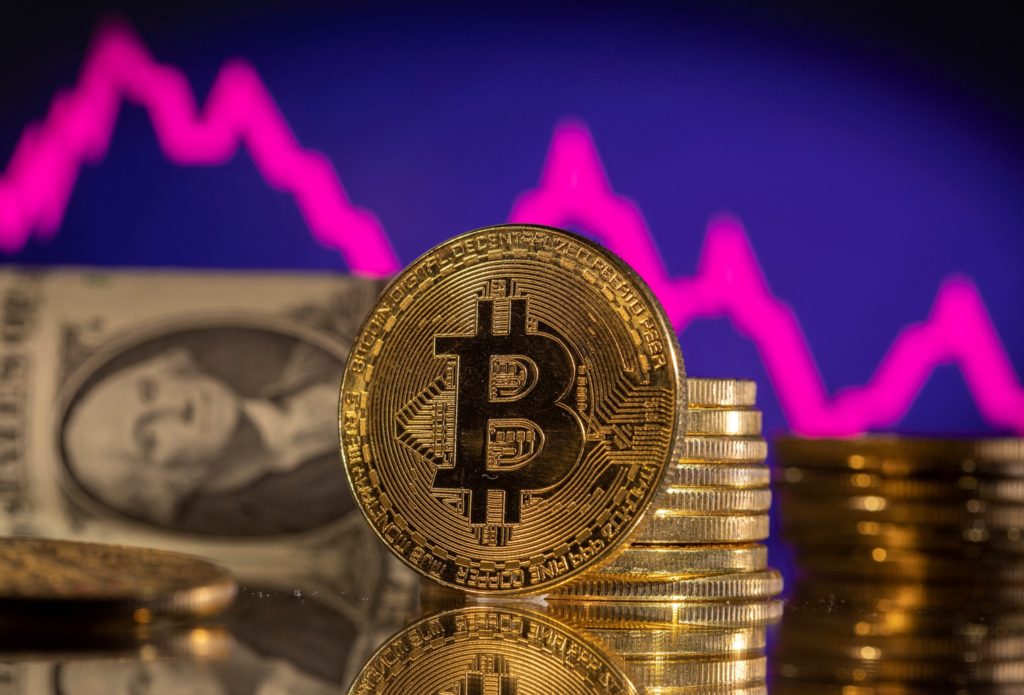
Bitcoin (BTC) managed to bounce back above the $29,000 mark on August 8, as one trader detected signs of a potential breakout in progress.
Following a slight rebound from local lows of $28,670, Bitcoin remained within a narrow range and seemed to mirror movements in the United States equities during the August 7 Wall Street trading session.
Although there was no significant momentum in either direction, market participants were eager to identify signals indicating a possible return of a trend.
Trader Jelle spotted a potential falling wedge breakout on daily timeframes, noting that this formation could lead Bitcoin’s price to a target of $32,000.
This wedge pattern had emerged at the beginning of July, marking the second such formation in two months, the first one appearing from April to the end of June.
Michaël van de Poppe, the founder and CEO of trading firm Eight, characterized the previous day’s dip as a standard correction.
He observed that the market quickly bounced back, resulting in a decent daily candle. However, market participants were also keeping a close eye on the July print of the U.S. Consumer Price Index (CPI), which has historically been a catalyst for crypto market volatility.
On intraday timeframes, the situation was more complex as market makers and takers engaged in a dynamic interplay on exchanges.
Skew, a popular trader, highlighted that failure to break down the price forced spot takers to bid, particularly since they had led the sell-off around the $29,000 level.
In a more optimistic analysis, Yann Allemann and Jan Happel, co-founders of on-chain analytics firm Glassnode, argued that the dip below $28,000 held more significance as a local bottom than many realized.
According to Glassnode’s Risk Signal metric, Bitcoin was at its highest-risk trading level in several months.
Coupled with a neutral signal on altcoins and overall volatility near its lowest-ever values, the market was poised for potential bullish activity.
As the market approached being oversold, there were indications that bulls might step in, particularly if Bitcoin tapped the liquidity pool at around $28,500.
This was viewed as a potential reversal point that market participants had been hoping for.
However, given the volatile nature of the cryptocurrency market, caution was advised as fluctuations could quickly alter the landscape.
Other Stories:
2024 Presidential Candidates’ Mixed Views on Crypto
Chamber of Digital Commerce Releases Report on SEC vs Ripple Ruling
Digital Currency Group Faces Regulatory Scrutiny Over Transactions with Genesis Global Capital

Tech entrepreneur Ilya Lichtensteind, a dual Russian-American citizen, has confessed to perpetrating the original 2016 Bitfinex hack, according to CNBC.
Along with his wife, Heather Morgan, the couple admitted to attempting to launder a staggering $4.5 billion worth of Bitcoin stolen from Bitfinex.
Until Thursday’s admission, the identity of the hacker responsible for the 2016 cryptocurrency heist had remained undisclosed.
Interestingly, while the couple confessed to attempting to launder the stolen funds, they were not charged with the actual hacking incident itself.
Heather Morgan, also known by the alias “Razzlekhan,” added an unusual twist to their criminal escapade by venturing into the realms of rap music and tech entrepreneurship while evading law enforcement.
Her music videos and rap lyrics depicted her as a “bad-ass money maker” and a “crocodile of Wall Street,” while Forbes articles portrayed her as a successful tech magnate, economist, serial entrepreneur, software investor, and rapper.
The duo’s sophisticated money laundering operation involved meticulously dividing the stolen Bitcoins into smaller amounts and routing them through thousands of different crypto wallets using false identities.
They further intertwined these funds with other criminal cryptocurrency proceeds on the darknet marketplace Alphabay, purchased gold coins, and channeled them through shell companies to legitimize their ill-gotten gains.
However, investigators managed to trace the couple’s criminal proceeds back to the Bitfinex hack when they discovered a trail leading to Walmart gift cards purchased with stolen funds. The veil of anonymity the couple hoped for through complex transactions between various exchanges and cryptocurrencies began to unravel.
A breakthrough came when law enforcement raided the couple’s Manhattan residence, uncovering a wealth of incriminating evidence, including mobile phones hidden in hollowed-out books, disposable handsets, USB drives, and $40,000 in cash.
READ MORE: Best Crypto Casinos In 2023
Decrypting a meticulously crafted spreadsheet revealed their intricate web of money laundering strategies, leading to the recovery of almost the entire stolen amount.
Communication records exposed the couple’s plans to flee to Russia, Ilya Lichtenstein’s country of birth, to avoid arrest.
Thankfully, law enforcement thwarted their escape, potentially preventing them from evading justice.
The 2016 hack had severely impacted Bitfinex customers, resulting in a collective loss of 36% of their holdings on the crypto exchange.
By 2019, the exchange managed to reimburse the affected customers, offering hope for a financial recovery once the recovered Bitcoins were returned to the rightful owners.
As legal proceedings unfold, Ilya Lichtenstein faces a maximum 20-year prison sentence, while Heather Morgan could be sentenced to up to 10 years behind bars.
The U.S. Department of Justice reported seizing an additional approximately $475 million tied to the hack since the couple’s arrest in February 2022, indicating the ongoing efforts to recover the stolen funds.
Other Stories:
JPEG’d DeFi Protocol Recovers $10 Million in Stolen Crypto After Hacker Returns Funds
Chamber of Digital Commerce Publishes Impactful Analysis on SEC’s Ripple Lawsuit
Bitcoin’s Hodl Strategy Outperforms Crypto Funds by 68.8% in H1 2023
Bitcoin (BTC) appears to be gearing up for a full-fledged bull phase, according to market analyst Cole Garner.
Despite its current price stagnation at around $29,033, many experts believe that this cycle will follow the classic pattern of previous bull runs.
One of the key indicators of optimism is the activity among the largest-volume cohort of Bitcoin investors, known as whales.
Garner considers whale accumulation trends to be the backbone of a bull market.
Analytics team Jarvis Labs also reported an ongoing “multi-month buying frenzy” among whales, as well as smaller investors (referred to as fish) increasing their BTC exposure.
The behavior of whales during this cycle has been notable, with some experts calling them “diamond hands” for holding onto their BTC positions rather than selling aggressively like they did in the previous cycle.
This shift in whale behavior is seen as a positive sign for the market.
Another significant factor in predicting a potential BTC price breakout is the Bitcoin-to-stablecoin ratio on Bitfinex, which has historically preceded major bull runs.
Garner emphasizes that Bitfinex is considered the “smart money exchange” and that the behavior of its whale traders can strongly influence short-to-medium-term price action in the crypto market.
While Garner expects a bullish breakout in the third quarter, he acknowledges that summer seasonality could potentially cause a shakeout before that.
Nonetheless, he believes that the markets still have several weeks to run before any potential downturn.
To invalidate the bullish outlook, Bitcoin would need to close below its 200-week simple moving average (SMA), which currently stands at $27,235.
As long as BTC remains above this level, the positive momentum is likely to continue.
Overall, analysts like Garner remain optimistic about the future of Bitcoin and the broader crypto market.
With whale accumulation and investor behavior supporting the bullish thesis, many in the crypto community are anticipating significant upside potential for Bitcoin in the coming months.
However, as with any market, unpredictability and potential risks remain, and traders should approach the situation with caution.
Other Stories:
U.S. Senators Call for Crackdown on North Korea’s Cryptocurrency Funding of Nuclear Program
Coinbase CEO Affirms Commitment to US Amid Regulatory Uncertainty
Latvia Sees Decline in Crypto Asset Purchases Amidst Concerns Over Fraud and Money Laundering
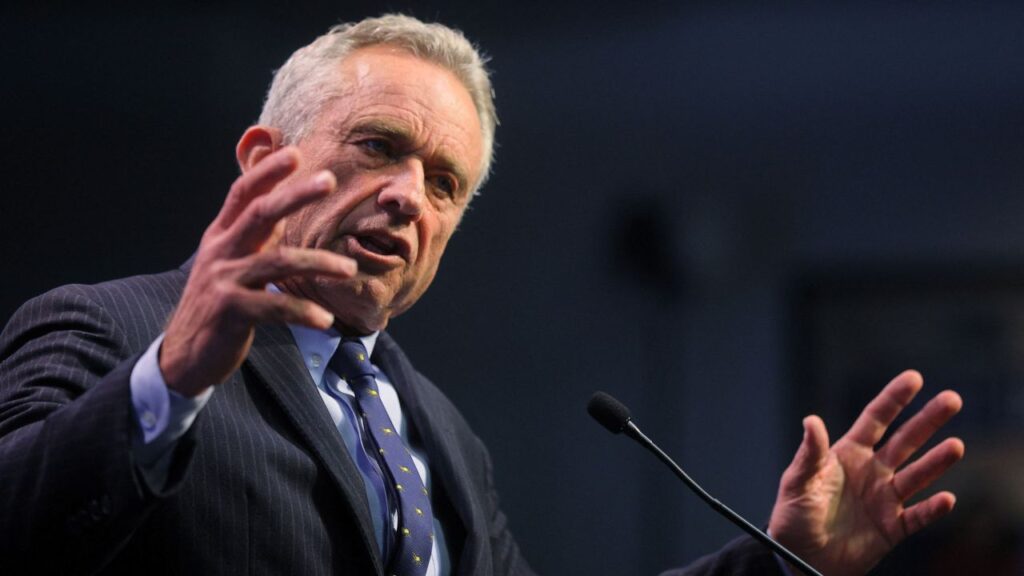
Crypto asset manager Grayscale has expressed the belief that the next U.S. President will be supportive of central bank digital currencies (CBDCs), as stated in a recent blog post.
Grayscale highlights that the current frontrunners of both major political parties, Joe Biden and Donald Trump, have shown a willingness to explore CBDCs, though they are less enthusiastic about Bitcoin.
Trump has publicly called Bitcoin a “scam,” once tweeting his discontent with the cryptocurrency, criticizing its volatile value.
Similarly, Biden’s stance towards Bitcoin can be deduced from his support for a 30% tax on Bitcoin mining, a move that could negatively impact the U.S. mining industry.
Grayscale also pointed out Trump’s favorability towards non-fungible tokens (NFTs), with Trump having launched and sold two NFT collections.
Biden’s support for digital assets can be inferred from his “Executive Order on Ensuring Responsible Development of Digital Assets,” although the 2023 Economic Report of the President did not share the same enthusiasm for cryptocurrencies.
Other crypto-friendly candidates include Robert Kennedy Jr. and Ron DeSantis, both of whom rank second in their respective party’s polls.
READ MORE: JPEG’d DeFi Protocol Recovers $10 Million in Stolen Crypto After Hacker Returns Funds
Kennedy recently bought two Bitcoins for each of his seven children and endorsed Bitcoin as a “bulwark” against government intrusion at the Miami Bitcoin Conference.
He promised, if elected, to preserve the right to hold and use Bitcoin.
In contrast, both Kennedy and DeSantis have expressed opposition to CBDCs. DeSantis even signed a bill prohibiting the use of CBDCs in his state and encouraged other states to follow suit.
Among the Republican contenders, more pro-crypto candidates are emerging. Vivek Ramaswamy, with a 7% support level compared to Trump’s 63%, is viewed as pro-Bitcoin and anti-CBDC.
Republican Miami Mayor Francis Suarez, a vocal supporter of crypto technology, has been labeled the most ardent crypto advocate among all candidates.
In summary, Grayscale’s analysis indicates a complex and varied landscape in the 2024 presidential race regarding digital currencies.
While there is a consensus among leading candidates on the exploration of CBDCs, their stance on cryptocurrencies like Bitcoin varies widely.
The emergence of more crypto-friendly candidates further adds to this multifaceted picture.
Other Stories:
Chamber of Digital Commerce Publishes Impactful Analysis on SEC’s Ripple Lawsuit
Elon Musk Puts Rumors to Rest: X Has No Plans to Launch Crypto Tokens
Bitcoin’s Hodl Strategy Outperforms Crypto Funds by 68.8% in H1 2023
Bitcoin (BTC) appears to be gearing up for a powerful bull phase, according to market analyst Cole Garner. Despite the current stagnant BTC price action, Garner believes that the cryptocurrency market is on the verge of a significant upward trend reminiscent of past cycles.
Garner draws his optimism from the behavior of major Bitcoin investors, often referred to as “whales.” He emphasizes that whale accumulation trends are a crucial indicator of a bull market.
Jarvis Labs, an analytics team, corroborates this sentiment, reporting an ongoing “multi-month buying frenzy” among whales.
Notably, smaller investors, referred to as “fish,” have also been increasing their exposure to Bitcoin. This trend, coupled with whales’ unwavering positions, leads popular technical analyst CryptoCon to label the whales as “diamond hands” during the current cycle.
In contrast to the relentless selling by whales in Bitcoin’s last cycle, the current situation portrays a stark difference.
Retail investors were the ones selling during the bear market, while whales stood their ground.
This phenomenon contributes to the conviction that the current cycle is different and that the market is poised for substantial growth.
One critical factor on which the entire bullish scenario hinges is the Bitcoin-to-stablecoin ratio on Bitfinex, known as the Bitfinex Whale.
This ratio has historically preceded major Bitcoin bull runs. Garner emphasizes the significance of this metric, considering Bitfinex the “smart money exchange” and a key driver of short-to-medium-term price movements in the crypto market.
READ MORE: JPEG’d DeFi Protocol Recovers $10 Million in Stolen Crypto After Hacker Returns Funds
While Garner favors a potential bullish breakout in the third quarter, he acknowledges the potential counter-argument of summer seasonality.
Nevertheless, he believes that any shakeout is likely to occur in September, giving the markets more time to rally.
To invalidate the bullish outlook, Garner highlights the importance of the 200-week simple moving average (SMA) for Bitcoin’s price.
A weekly close below this level, currently at $27,235, would be a critical sign that the bullish phase might not materialize.
In conclusion, Garner’s analysis indicates a strong belief in a forthcoming bull market for Bitcoin and the broader crypto market.
The increasing accumulation by whales and smaller investors, coupled with the historical significance of certain metrics like the Bitfinex Whale, provides an optimistic outlook for BTC’s future price trajectory.
Nonetheless, the 200-week SMA remains a crucial level to watch for potential bearish developments.
Other Stories:
Chamber of Digital Commerce Publishes Impactful Analysis on SEC’s Ripple Lawsuit
Elon Musk Puts Rumors to Rest: X Has No Plans to Launch Crypto Tokens
Bitcoin’s Hodl Strategy Outperforms Crypto Funds by 68.8% in H1 2023
Tether developers are gearing up for the launch of cutting-edge JavaScript libraries designed to streamline the transmission of commands and signals to Bitcoin (BTC) mining hardware, such as WhatsMiner, AvalonMiner, and Antminer.
Paolo Ardoino, the chief technology officer of Bitfinex and Tether, shared the exciting news on X (formerly Twitter). He hinted that certain parts of the mining software might become available on open-source platforms in the future.
The primary goal of Tether’s BTC mining software is to optimize mining capacity management, leading to more efficient operations.
Ardoino highlighted his role as a core contributor to Moria, an orchestration instrument for mining farms. He proudly mentioned that all recent advancements are built using the innovative Holepunch technology.
Previously, Ardoino offered insights into Moria’s functionalities.
This remarkable mining instrument enables seamless communication between components within the BTC mining ecosystem.
It facilitates interactions through streamlined, secure, attack-resistant, and cost-efficient means.
To ensure secure data streaming and command reception, each miner will possess a unique public/private key.
This encryption mechanism will utilize hyper cores for data streaming and hyper swarms for command reception.
Notably, this approach simplifies firewall configuration, bolsters resilience to failures, enables easy replication across multiple sites, and enhances maintainability and modularity compared to previous attempts.
READ MORE: Chamber of Digital Commerce Publishes Impactful Analysis on SEC’s Ripple Lawsuit
Despite facing legal and regulatory challenges, Tether has remained actively engaged in the cryptocurrency mining sector.
The company announced its intention to allocate a portion of its monthly profits towards acquiring BTC.
Moreover, Tether has invested in energy production and sustainable BTC mining in Uruguay, partnering with a local firm.
Uruguay’s renowned robust infrastructure in the renewable energy sector makes it an ideal location for sustainable mining operations.
The country takes pride in its abundant natural resources, allowing it to derive nearly 100% of its electricity from renewable sources.
In conclusion, Tether’s forthcoming JavaScript libraries hold promise for revolutionizing the efficiency of BTC mining operations.
Their commitment to open-source initiatives and sustainable mining practices in Uruguay showcases their dedication to driving positive change in the cryptocurrency industry.
Other Stories:
JPEG’d DeFi Protocol Recovers $10 Million in Stolen Crypto After Hacker Returns Funds
Bitcoin’s Hodl Strategy Outperforms Crypto Funds by 68.8% in H1 2023
Elon Musk Puts Rumors to Rest: X Has No Plans to Launch Crypto Tokens
According to the 2023 “Financial Stability Report” by Latvijas Banka, the number of individuals purchasing crypto assets in Latvia has witnessed a decline.
The central bank attributes this drop in interest to various factors, including negative sentiment stemming from fraud and insolvency issues among major players in the market, unwise investment decisions that have been made previously, and the association of cryptocurrencies with money laundering.
Furthermore, the report points out the increasing involvement of crypto-asset companies with supervised financial sector participants, which has added to the waning interest in cryptocurrencies.
Based on data from payment card usage, the report reveals that in February 2023, only 4% of the population had bought crypto assets, compared to 8% in the previous year.
It is important to note that Latvia has a total population of 1.84 million people.
The report also sheds light on the declining transfer of funds to crypto wallets from Latvia. In 2022, Latvians transferred 51.8 million euros ($57 million) to crypto wallets, but this figure dwindled to 10.7 million euros ($11.8 million) in the first quarter of 2023.
Most of these transactions were directed towards companies based in other European countries, particularly in those countries where the fintech ecosystem, including crypto technologies, is flourishing. Notable examples include Lithuania, Estonia, Malta, and Ireland.
READ MORE: Binance-Backed Solv Protocol Raises $6M in New Funding
The report contrasts Latvia’s crypto adoption ranking with that of its neighboring country, Lithuania. According to the “2022 Geography of Cryptocurrency Report” by Chainalysis, Latvia was ranked 92nd out of 148 countries in terms of crypto adoption, while Lithuania secured the 102nd spot.
The Latvian central bank acknowledges that its nonbank financial sector is relatively less significant compared to other European countries.
This is mainly attributed to the population’s lower level of long-term savings, which have accumulated over a shorter period compared to many other euro area nations.
Despite the declining interest in crypto assets for investment purposes, the report highlights that retail crypto payments continue to dominate in Latvia.
However, these payments are typically small in size, with 44% of retail payments worth 60 euros ($66) or less, and 97.5% valued at under 1,000 euros ($1,100).
However, the specific monetary value of these transactions was not provided in the report.
Other Stories:
Bitcoin to Breach $100,000 by 2024 Amidst Mining Industry Challenges
Adam DeVine Joins Forces with Bitget in Year-Long Crypto Ad Partnership
Gulf Nation Nears Implementation of Virtual Asset Regulations
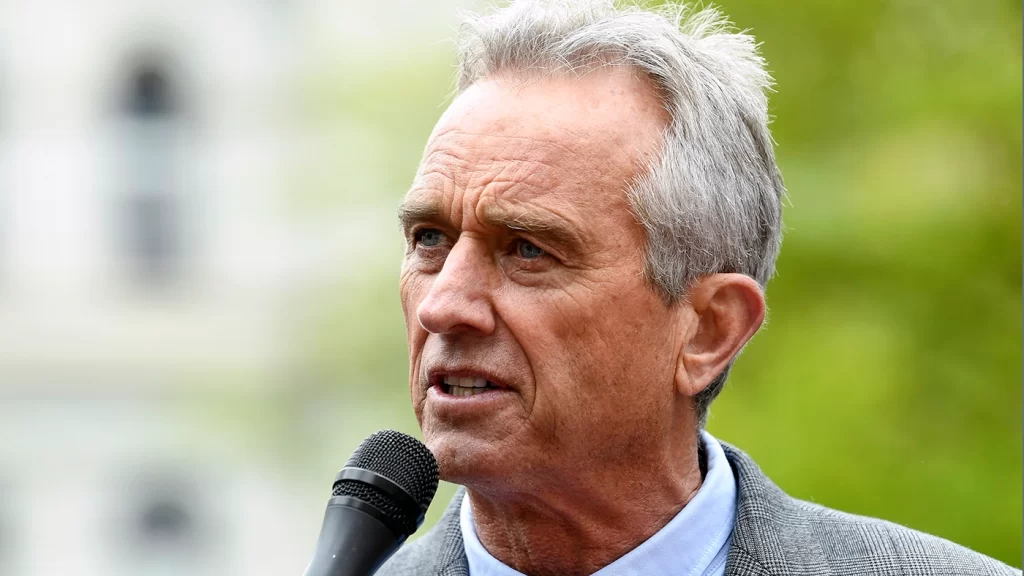
According to crypto asset manager Grayscale, the next president of the United States is likely to support the implementation of a central bank digital currency (CBDC), as both frontrunners from the major political parties have expressed their favor towards exploring CBDCs.
However, it is worth noting that neither Joe Biden nor Donald Trump seems to hold a positive view of Bitcoin (BTC).
As the 2024 presidential polls currently stand, Joe Biden and Donald Trump hold significant leads in their respective parties. Both candidates have shown interest in exploring CBDCs, a sentiment that aligns with Forbes’ previous analysis earlier in 2023.
Former President Trump has publicly criticized Bitcoin, labeling it a “scam,” while President Biden’s position on the matter has been inferred from his support for imposing a 30% tax on Bitcoin mining.
Grayscale did not comment on Trump’s overall stance towards other cryptocurrencies and digital assets, although it has been noted that he is somewhat favorably inclined towards nonfungible tokens (NFTs).
President Biden’s Executive Order on Ensuring Responsible Development of Digital Assets further supports the notion that he is generally supportive of the crypto industry.
However, the 2023 “Economic Report of the President” issued by the White House was not as optimistic about cryptocurrencies.
Among the candidates polling in second place are Democratic candidate Robert F. Kennedy, Jr. and Republican candidate Ron DeSantis.
Both of them have been vocal about their support for cryptocurrencies but remain opposed to the idea of a CBDC.
READ MORE: Binance-Backed Solv Protocol Raises $6M in New Funding
It is worth mentioning that Ron DeSantis is not the only pro-crypto candidate within the Republican contenders. Vivek Ramaswamy, with 7% support compared to Trump’s 63%, is also perceived as pro-Bitcoin and anti-CBDC.
One of the most ardent supporters of cryptocurrencies from either party is Republican Miami Mayor Francis Suarez.
He has been vocal about his love for the technology long before his presidential ambitions came into the picture, though some consider his chances of becoming president as “improbable.”
In conclusion, the 2024 presidential race in the United States seems to have a majority of candidates expressing interest in exploring CBDCs.
While both Biden and Trump have indicated support for CBDCs, they have shown disfavor towards Bitcoin.
Other candidates, like DeSantis, Kennedy, Ramaswamy, and Suarez, have varying degrees of support for cryptocurrencies, making the upcoming election a critical juncture for the future of digital assets in the country.
Other Stories:
Gulf Nation Nears Implementation of Virtual Asset Regulations
Adam DeVine Joins Forces with Bitget in Year-Long Crypto Ad Partnership
Bitcoin to Breach $100,000 by 2024 Amidst Mining Industry Challenges