



Core Scientific (CORZ), one of the world’s biggest Bitcoin (BTC) mining firms, has struck a deal on a $70 million loan from investment bank B Riley.
The company said in its filing it would request the loan from bankruptcy courts in Houston, Texas as part of its financing plan outlined in December.
Receiving the funds will allow the troubled firm to pay off its debtor-in-possession (DIP) offices, providing the firm up to 15 months of additional time.
It will also use the funds to replace its current facility and maintain its operations amid a massive bankruptcy, reports showed on Tuesday.
According to Core Scientific, the new loan conditions were “reasonable and generally superior” to its DIP facility terms. A hearing is set to take place on 1 February, the document revealed.
“The Replacement DIP Facility lays the foundation on which the debtors will seek to negotiate a consensual Chapter 11 plan with all of their key constituents and maximize value for all stakeholders,” it added.
Crypto Crisis Contagion Spreads
The news comes after last year’s cryptocurrency bear market sent markets reeling due to the collapse of disgraced crypto exchange FTX. The crisis triggered further issues with Core Scientific’s operations due to plummeting cryptocurrency prices and rising gas and electricity fees.
Prior to the collapse, the company held 10 percent of computing shares on Bitcoin’s network. To date, it owes up to 5,000 creditors and faces liabilities from $1 billion USD to $10 billion USD.
Core Scientific continued its operations despite filing for Chapter 11 bankruptcy, financing its operations by selling over 6,900 BTC. Additional firms such as Genesis, Voyager, and Three Arrows Capital (3AC) also failed due to ongoing crises in the crypto market.

A key member of the United States Federal Bureau of Investigation (FBI) stated authorities cracked down on the Hive crypto ransomware collective.
In a 26 January statement, FBI Director Christopher Wray stated the FBI in Tampa, Florida had received “clandestine, persistent access to Hive’s control panel.”
This allowed authorities to exploit access to Hive’s data, identifying victims and providing more than 1,300 of them keys to decrypt their ransomware-infected networks. To date, the recovered networks total more than $130 million in ransomware payments.
FBI agents also secured additional ghost servers on Wednesday evening. The operation included US personnel, the German Federal Criminal Police, German Reutlingen Police Headquarters, the Netherlands National High Tech Crime Unit, and Europol.
The teams tracked ransomware payments, recovered the assets for victims, and dismantled Hive’s networks, the statement added.
“So, a reminder to cybercriminals: No matter where you are, and no matter how much you try to twist and turn to cover your tracks—your infrastructure, your criminal associates, your money, and your liberty are all at risk. And there will be consequences,” he said in his statement.
Stirring up the Hive
The comments come after Hive launched several cybercrime offences, including attacks on Costa Rica’s Public Health Service and Social Security Fund. Taking place from April to May last year, Hive criminals seized infrastructure with a $5 million Bitcoin ransom.
This caused roughly 4,800 people to miss critical doctors appointments. Wray explained that over the past seven months, victims only reported around 20 percent of attacks.
The news comes after a CertiK report that outlined potential cybercrime set to take place in 2023, where it expected the number of crimes to remain consistent.
Last year, online criminals such as hackers, phishers, scammers, and others stole up to $3.7 billion, with $595 million in thefts taking place in November.
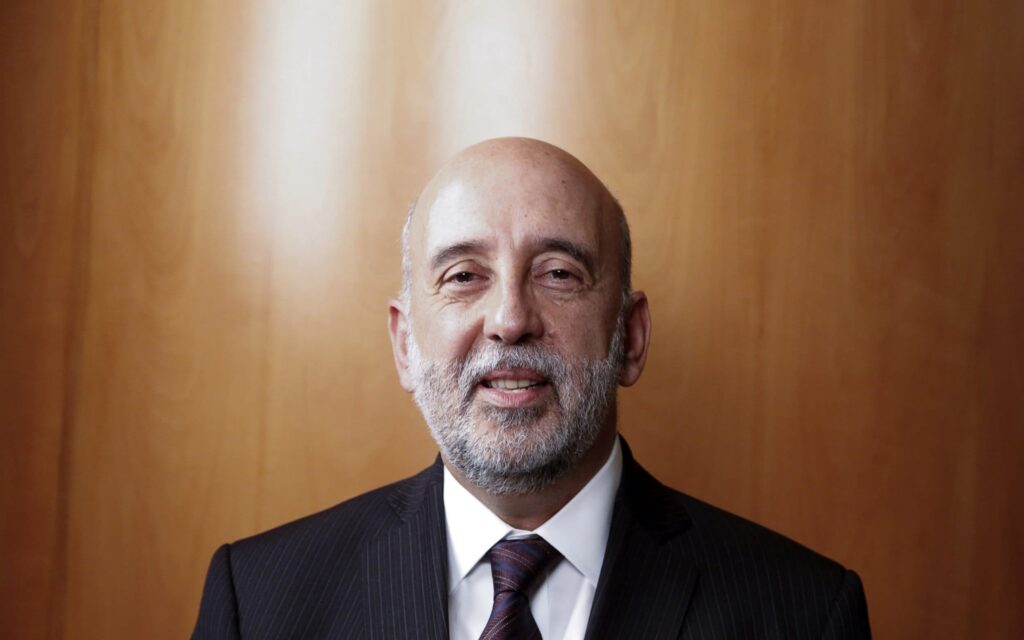
Irish central bank governor Gabriel Makhlouf called on legislators to ban cryptocurrency firms from advertising digital assets to young adults, reports revealed.
The longstanding crypto critic slammed digital coins not backed by underlying assets as Ponzi schemes. Despite this, he claimed they posed a small risk to financial stability but could negatively impact retail customers.
Speaking further, Makhlouf explained to an Irish parliamentary committee that there was a number of young adults that had invested in crypto. There was also an “uncomfortable level of advertising” targeting the group.
“I would recommend that adverts to that cohort are banned,” he said.
He added: “Unbacked crypto is essentially a Ponzi scheme… People who put their money into unbacked crypto, and most of the significant stock of crypto out there is unbacked, they are essentially gambling. When you gamble you can win, but most of the time when you gamble, you’re actually losing.”
MiCA and EU Crypto Markets
The European Central Bank governing councillor urged EU regulators to impose “guardrails” for emerging stablecoins. These types of coins include central bank digital currencies (CBDCs) and provide stable trading values.
In July, European lawmakers passed rules requiring cryptocurrency firms to obtain licences and customer safeguards to buy and sell digital currencies across the bloc.
Regulators in Brussels called the cryptocurrency market the “Wild West.” To date, the EU aims to pass regulations to fight fraud and money laundering, among others. Parliament passed the deal at the time as its Markets in Crypto-Assets (MiCA) law.
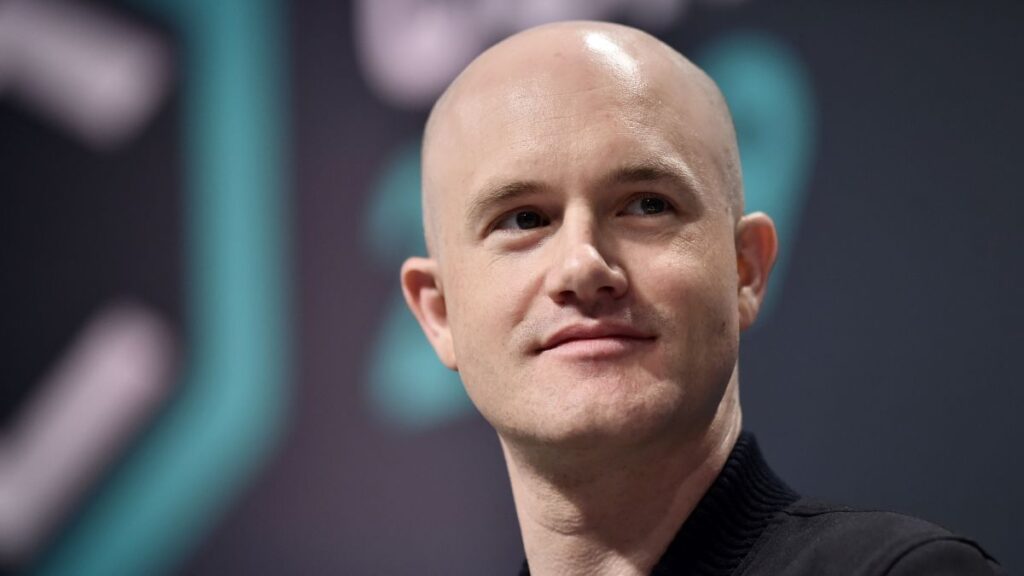
Coinbase chief executive Brian Armstrong has hinted Brazil and Argentina should adopt Bitcoin (BTC) as a sovereign currency, according to a recent report.
The two South American nations announced on Saturday they had launched plans to use the digital coins along with their respective national currencies.
The report noted that both nations would soon invite other Latin American nations to join the world’s second-largest currency bloc. It added that it planned to outline its efforts at a summit in Buenos Aires and later, invite additional nations on the continent to join.
Brazil aims to create potentially the “Sur,” or South, to reduce dependence on the US dollar. Countries such as Venezuela have created similar currencies such as the Petro in recent years for similar reasons.
Speaking to the Financial Times (FT), Argentinian economy minister Sergio Massa said,
“There will be . . . a decision to start studying the parameters needed for a common currency, which includes everything from fiscal issues to the size of the economy and the role of central banks.”
Replying to the news, Armstrong tweeted the following day that it could be a “right long-term bet” and hoped both countries would consider the option.
Crypto as Legal Tender
His comments come after numerous countries have begun adopting BTC as sovereign currencies. El Salvador has long remained a supporter of Bitcoin as its national currency after it adopted it in 2021.
In late November last year, the Brazilian Chamber of Deputies approved measures to legalise cryptocurrencies for payments across the nation. Former president Jair Bolsonaro signed off on the bill last month, which will enter force in June this year.
The Argentinian province of San Luis also passed a bill for a future US dollar-linked stablecoin for adults 18 and over and backed by government assets.
Nations such as Fiji and Tonga have also pushed for similar legislation. In late December, the former nation’s new prime minister, Lord Fusitu’a, announced support for Bitcoin adoption in Fiji.
He stated at the time that Fiji could “do bitcoin legal tender like Tonga,” allowing two Pacific islander nations to have two legal tenders for 2023.

Bitcoin (BTC) prices have seen a massive rally at the weekend after surging past $23,000 USD and settling later on Sunday. BTC’s market capitalisation reached up to $23,051.72, according to data from CoinMarketCap.
Despite this, the crypto comeback also comes amid a major price adjustment following a bearish 2022, which saw the collapse of Three Arrows Capital (3AC), Voyager, and disgraced crypto platform FTX.
The news has restored optimism for many crypto traders and investors, namely as many laud its return to over $20,000 following a massive slump from July to December.
Crypto intelligence platform Santiment tweeted on Friday: “Bitcoin has now surpassed $22.7k for the first time since August 18, 2022. The price rise has come as the large whale tier group of addresses holding 1,000 to 10,000 $BTC has collectively accumulated 64,638 ($1.46 billion) $BTC in the past 15 days.”
Other major cryptocurrencies such as Ethereum, Dogecoin, Cardano, Solana, and many others jumped amid the huge rally.
Potential Contributors to BTC Rally
The news comes amid an email Binance sent to its users that SWIFT would not allow transfers less than $100,000 USD. The new rule will take effect on 1 February, Bloomberg reported on Sunday.
Signature Bank, Binance’s banking partner, initiated the measures, prompting Binance to seek a new banking partner. The news also comes amid allegations from US authorities that Binance helped contribute to transactions linked to crypto exchange Bitzlato and Russian darkweb space Hydra.
Additional market contributions have fuelled skyrocketing prices, including the collapse of Genesis Holdings. The cryptocurrency lending firm filed for Chapter 11 bankruptcy on Friday.
The enterprise remains locked in a massive row with crypto trading firm Gemini over its Earn programme, which ceased withdrawals in mid-November. Over 340,000 clients have lost access to over $900 million USD in online holdings.
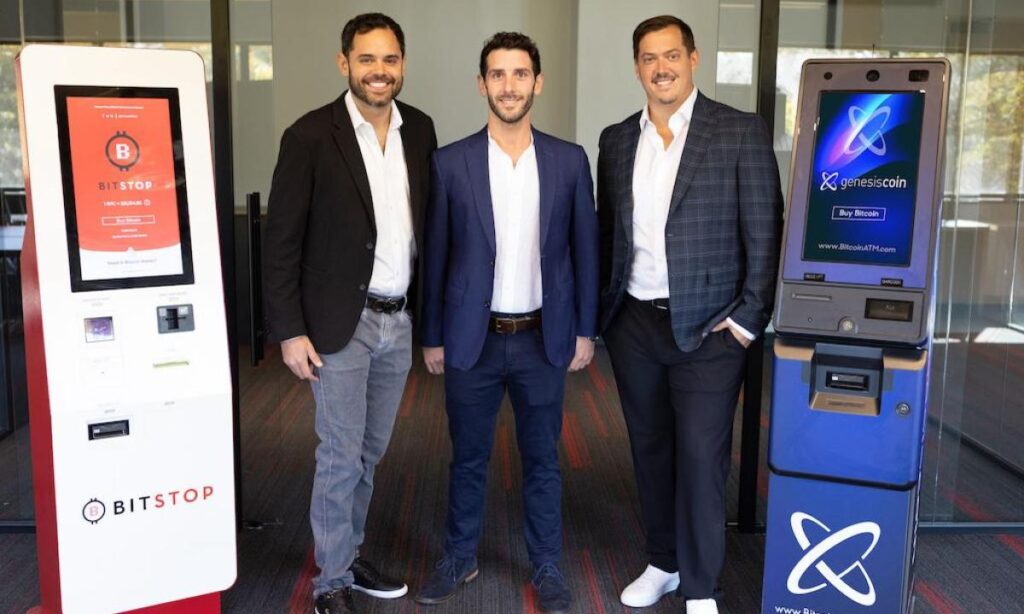
Miami, Florida, 24th January, 2023, Chainwire
Genesis Coin Inc, the first and largest Bitcoin ATM software platform worldwide announced today that they have been acquired by early Bitcoin ATM pioneers Andrew Barnard and Doug Carrillo.
Founded in 2013, Genesis Coin’s technology powers approximately 35% of global Bitcoin ATM transactions. Barnard and Carrillo, who also founded Bitstop, built the first and largest private-label Bitcoin ATM platform based in Miami, FL with over 2,500+ Bitcoin ATMs worldwide. Genesis Coin and Bitstop represent over 75+ operators operating 12,000+ Bitcoin ATMs in the United States and international markets powering billions of dollars in annual sales volume.
As part of the acquisition, Andrew Barnard will become Chief Executive Officer and Doug Carrillo will become Chief Strategy Officer and both will join the Board of Directors of Genesis Coin. Evan Rose, Genesis Coin’s founder, will stay on as a technical advisor and remain a member of the company’s Board of Directors. The Genesis Coin headquarters will move to Miami, Florida.
“Genesis Coin gave birth to the Bitcoin ATM industry,” said Barnard. “It’s the first and largest Bitcoin ATM software platform in The World. Evan built a platform trusted by some of the largest Bitcoin ATM operators in our industry, both domestically and internationally, including the Chivo network in partnership with the Government of El Salvador.
Our industry is now rapidly changing and Genesis Coin will lead the way into the future. Accomplishing this requires a solid team of world-class visionaries and developers. At Bitstop, we built an incredible software team and platform which has partnered with some of the largest companies both private and publicly traded from the traditional ATM industry. We plan to bring our background and expertise in building the best technology and team in the Bitcoin ATM industry to Genesis Coin. We believe this is a win-win for all stakeholders,” furthered Barnard.
“Andrew, Doug, and I have been friends for a long time and have also been friendly competitors,” commented Rose. “They have a reputation for their innovative and creative thinking. In addition, they have been successful in establishing key relationships in the Bitcoin space and their technical expertise and knowledge of Bitcoin is very impressive. In turn, this has allowed them to attract and retain top-tier talent and build great products. This transaction represents the coming together of the two leading software platforms in the industry and creates value for both companies’ stakeholders. It combines the best product, engineering, and leadership teams in the space. I’m thrilled to work alongside them and look forward to introducing very exciting new products and services we have planned for this year,” commented Rose.
Barnard, Carrillo and Rose stressed the importance of continuing to provide stability to both platforms and continuing to service the needs of operators on both platforms. For the time being, both the Genesis Coin and Bitstop platforms will continue to run independently while exploring technical synergies. Genesis Coin has already made several key hires to its development team with a core focus on product development.
“This acquisition represents the most significant event in the Bitcoin ATM industry to date,” said Carrillo. “Our commitment is to provide Genesis Coin with the proper resources it needs to pave the way for continued growth and innovation. We truly believe that this new combination of the best minds in our space will be the catalyst for the Bitcoin ATM industry evolving into its next phase. We are hyper-focused on building the best software for Bitcoin ATMs in the world. Today, the most sophisticated operators in our industry rely on Genesis Coin and Bitstop technology to power their businesses. As a result, we have become ‘The Standard’ in the Bitcoin ATM space where virtually all industry organic M&A activity today is occurring on the Genesis Coin and Bitstop networks.” concluded Carrillo.
“Leverage dominated the entire cryptocurrency space over the last two years. Many other platforms in our industry couldn’t resist the siren song,” said Barnard. “This is a capital-intensive industry where you do not want to be in a lot of debt. Genesis Coin is financially secure with a strong balance sheet, no debt, and strong cash flow. The company does not have external investors. The result of this is that operators can build their future on the Genesis Coin platform with confidence. In a volatile industry, we are a beacon of stability. We are bullish on the potential of this industry. We see significant market growth from here over the next 10 years. We believe we are in the best position in the industry to unite the very best operators and support their growth. Our goal is to listen to our operators and deliver the very best products and features to them so they can deliver maximum value to their customers at scale,” concluded Barnard.
About Genesis Coin
Genesis Coin is the first and largest white-label Bitcoin ATM network worldwide. We are the premier provider of autonomous vending solutions for bitcoin. Genesis Coin’s proprietary managed infrastructure software solution has propelled it to become the largest provider of Bitcoin ATMs and software facilitating self-service buying and selling billions of dollars in cryptocurrencies across the world annually. Genesis Coin’s software provides customers with a reliable, tailored operating platform. Genesis Coin delivers its software by selling BTMs to third-party operators who provide opportunities for businesses looking to diversify their revenue and drive foot traffic to their locations. Our machines make bitcoin simple for everyone. www.bitcoinatm.com
Contact
CEO
Andrew Barnard
Genesis Coin Inc
[email protected]
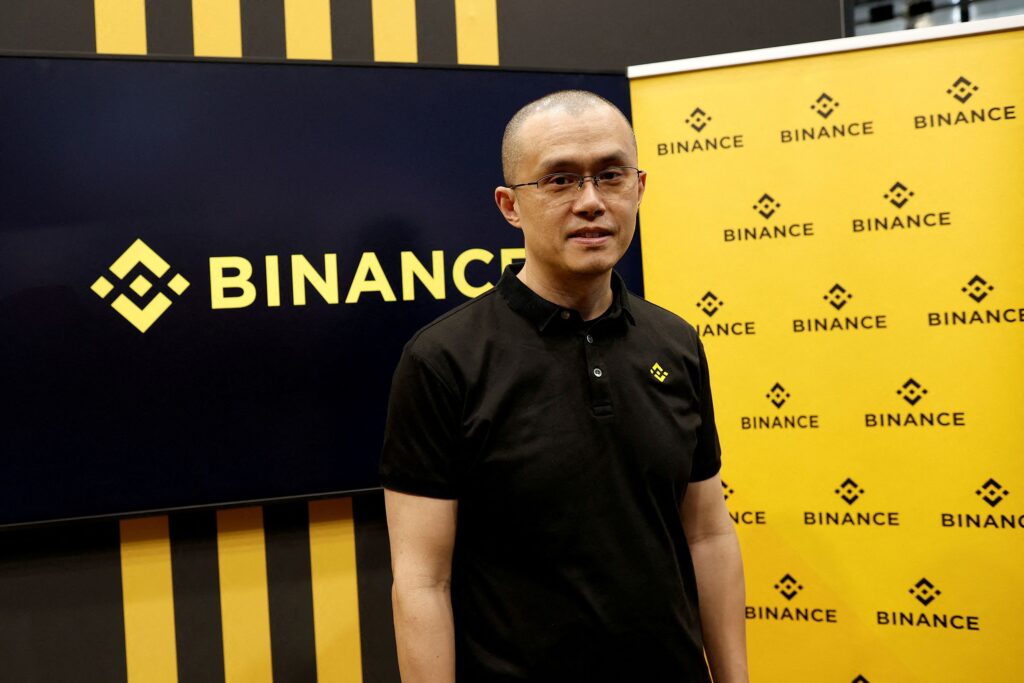
Binance’s charity division has planned to invest in roughly 30,665 scholarships for students seeking Web3 careers this year.
Crypto heavyweight Binance announced its Binance Charity Scholar Programme (BCSP), which aims to train and upskill Web3 enthusiasts while supporting funding for each student.
The company said: “At Binance, we believe knowledge is wealth that cannot be stolen, and crypto literacy is the cornerstone of mass adoption. Education is a huge part of what we do and who we are, especially in support of our mission to advance the adoption of digital assets.”
It added that digital education and skills development were “out of reach for many, resulting in a blockchain industry that lacks diversity and talent.”
Binance Cohort and Affiliates
More than 82,000 people had registered interest in the programme for the next cohort with a roughly 37 percent acceptance rate.
Institutions such as the University of Western Australia, the University of Nicosia in Cypress, Nigermain tech hub Utiva, and the Frankfurt School of Finance and Management have joined the initiative.
The Kyiv IT Cluster and the Ukrainian Ministry of Digital Transformation have also collaborated with the initiative. Binance Charity also partnered with members of the Ukrainian government to upskill citizens due to the ongoing Russo-Ukrainian war.
Binance’s History of Philanthropy
The news comes after Binance Charity raised over $3.5 million USD to back 290,000 hours of training for Web3 students via courses and instruction.
Binance Charity head, Helen Hai, added: “The response to our Web3 education projects has been unprecedented, showing the keen appetite of so many people to learn about blockchain, De-Fi, NFTs, coding and much more,” said Helen Hai, Head of Binance Charity.
She concluded: “We’re seeing interest from a diverse range of people, including a great ratio of women, which is something I feel particularly passionate about. With so many more education initiatives with amazing partners in the pipeline, we’ve never been more excited to build a more inclusive Web3 world.”

Insolvent cryptocurrency trading firm FTX said in a statement that hackers stole roughly $415 million in digital assets from centrally-held accounts.
The theft comprises a large number of assets the company hopes to recover, it said in a presentation.
According to the bankrupt firm’s “Maximizing FTX Recoveries” presentation, its total liquid assets for recovery to $5.5 billion USD. This also includes “unauthorized third-party transfers” totalling $323 million from its global platform, FTX.com. FTX hedge fund Alameda Research lost a further $2 million to hackers.
It added,
“FTX Debtors have identified approximately $181 million of digital assets associated with FTX US as of the Petition Date, $90 million of which was subject to unauthorized third-party transfers post-petition, $88 million of which is in cold storage under the control of the FTX Debtors, and $3 million of which is pending transfer to cold storage under the control of the FTX Debtors.”
Conversely, the company outlined in its presentation that $529 million in FTT, the firm’s native token, were classified as liquid assets. FTT collapsed amid a massive liquidity crunch in mid-November last year.
John Ray, acting chief executive for the restructuring firm, said in a statement as cited by CNBC,
“We are making important progress in our efforts to maximize recoveries, and it has taken a Herculean investigative effort from our team to uncover this preliminary information.”
Hack Job at FTX?
The news comes after the company faced security breaches in November last year, potentially leading to the stolen funds. At the time, the phishing attacks forced FTX to suspend transactions after it reported more than $570 million in losses. Roughly $100 million of the funds remain missing.
Currently, FTX’s former and disgraced CEO, Sam Bankman-Fried, faces charges of fraud and misappropriation of funds, among others. Total charges could hit him with up to 115 years in prison. A US-based task force has been deployed to recover the stolen funds, including those in the presentation.
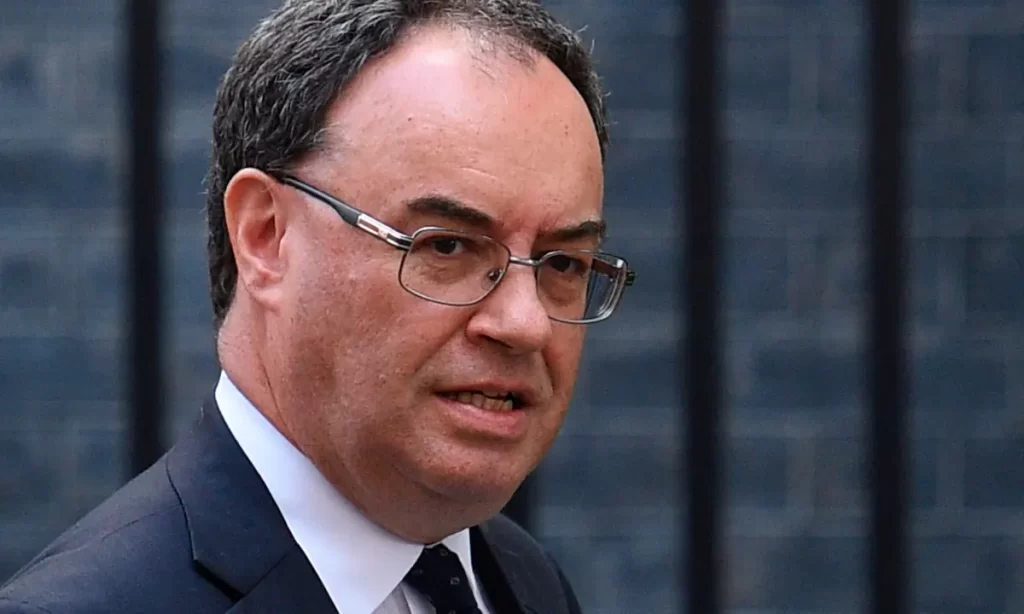
Bank of England (BoE) governor Andrew Bailey has cautioned people on adopting a digital pound for the United Kingdom, reports revealed.
In a Parliament Treasury Select Committee meeting, he stated he was not sure if the country currently needed a British digital pound.
He said that the Bank of England currently had a “wholesale central bank money settlement system” with further upgrades.
Bailey added the Bank of England did not plan to replace physical money with digital currencies, adding retail payment changes were not needed.
Speaking further, he said: “We have to be very clear what problem we are trying to solve here before we get carried away by the technology and the idea.”
Eurozone Crypto Euphoria
The news comes just after finance ministers in the European Union voiced support for a digital euro on Monday. Finance ministers issued a document outlining plans to back a future CBDC.
Such efforts would need further talks at the political level, it said, adding it would first need to assess environmental, privacy, cybersecurity, and other factors.
Despite the forward movement, Tony Yates, a former advisor to Britain’s central bank, said in a Financial Times article that costs and risks linked to creating CBDCs were “suspect.”
He said in his article,
“CBDC accounts may drain money from the banks, particularly during a period of heightened financial risk. This would force banks either to find new sources of funds, or shrink their loans. That could amplify tightening in financial conditions when the central bank is trying to loosen them. The central bank could respond by simply reinvesting CBDC deposits back in the banks. But would this leave us in a better place?”
Crypto Coins and CBDBs for the People
The news comes as several countries, including China, El Salvador, Venezuela, Russia, the Bahamas, Sweden, and many others have begun piloting national cryptocurrencies.
El Salvador approved legislation in 2021 to determine how it plans to use bitcoin at the national level. Shortly after, President Nayib Bukele tweeted that he backed the cryptocurrency after his country purchased several waves of Bitcoin.
Conversely, China has rolled out several test pilots of its national digital yuan, which people can use at physical and online retail stores. Locations such as Beijing, Guangzhou, and others have begun using the cryptocurrency feature. Alipay and WeChat Pay have also accommodated the CBDC with app features.

Texas A&M, a major university for technological and medical innovation, has launched a cryptocurrency course set to start in January, tweets revealed on Friday.
Associate Professor Korok Ray of the university’s Mays Business School announced that over 74,000 students could access the Bitcoin Protocol course offered at the university.
According to his tweets, the Bitcoin Protocol will segue into a Programming Bitcoin course, allowing students to “build a Bitcoin library from scratch.”
He said in a statement: “It took months to get this class approved, but we made it! Getting Bitcoin into the curriculum is important for the long game.”
Crypto Class is in Session
The news comes amid a growing number of cryptocurrency courses at universities. This aims to develop a stronger educational system for fostering emerging technologies.
The Canes Connection facilitates name, image, and likeness (NIL) opportunities for students at the University of Miami. Spokespeople revealed in September the programme would integrate the Reserve Block Foundation’s blockchain protocol for non-fungible tokens (NFTs).
The Foundation will offer RBX masternodes to the Canes Connection organisation, allowing students at the university to join the RBX Network, earn blockchain rewards, and verify transactions.
Tuition Coin is a project aimed at boosting the Cardano blockchain via a Teach to Earn platform. This will create fresh partnerships with education technologies to increase awareness of cryptocurrencies.
Instructors can join the Tuition Coin initiative to earn cryptocurrency rewards and learn about cryptocurrency and blockchain technologies. Teachers can register on the platform to and use a Know-Your-Customer (KYC) procedure to validate their identities.