

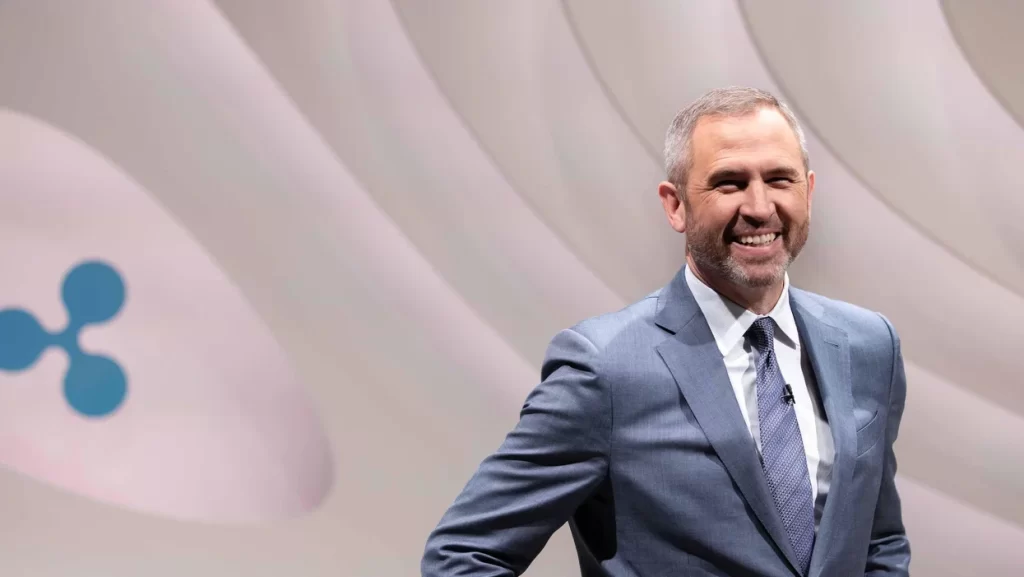
Ripple CEO Brad Garlinghouse criticizes Michael Saylor’s approach to funding Bitcoin purchases, arguing it has added pressure to the wider crypto market during the recent downturn.
Strategy recently authorized up to $1.25 billion in Bitcoin sales to support dividends, reserves and buybacks. The move marked a shift from the company’s long standing refusal to sell any of its holdings.
Garlinghouse addressed the topic in a CNBC interview shared by Squawk on the Street. “I think team Michael Saylor wasn’t focused on the right stuff, and that has hurt the overall market.”
He reinforced the point afterward on X, framing his criticism around a broader principle. “Financial engineering doesn’t drive long-term value. Utility does.”
Garlinghouse argues that lasting value in digital assets should come from real world use rather than complex capital structures built to keep buying Bitcoin.
His comments place XRP and Ripple’s strategy in direct contrast with Strategy’s model. Garlinghouse has positioned XRP at the center of Ripple’s 2026 push into payments, custody and treasury management.
Strategy’s enterprise value recently fell below the value of its own Bitcoin holdings for the first time. Its mNAV ratio sits at 0.99, a milestone that could weaken confidence in the company’s long running bet.
The company’s STRC preferred stock, designed to trade near a $100 reference level, has continued sliding well below that mark. Investor demand for the product has come under increasing scrutiny.
Strategy has approved a new Digital Credit Capital Framework allowing it to monetize up to $1.25 billion of Bitcoin if needed. The company still holds 847,363 BTC bought for roughly $64 billion.
That average cost sits near $75,650 per coin, leaving the position billions of dollars underwater whenever Bitcoin trades below $60,000.
Garlinghouse was careful to separate his criticism of Strategy’s financing method from his broader view on Bitcoin itself, saying he remains bullish on the asset long term.
His remarks land as both Bitcoin and XRP stay under pressure following months of weak price action across the wider crypto market.
Ethereum treasury firm Sharplink has acquired 5,000 ETH at a cost of approximately $7.85 million, representing the company’s first ether purchase in eight months. The move is drawing attention as a sign of renewed corporate demand for the asset during a period of sustained selling pressure.
The purchase is particularly notable given the timing. Crypto equities and digital asset treasury companies have faced persistent headwinds through the second quarter of 2026, making fresh balance sheet buying a more deliberate signal than it might otherwise appear.
Sharplink operates as one of a small group of listed companies that hold Ethereum as a primary treasury asset, mirroring the strategy that Strategy popularised with Bitcoin. The company’s decision to resume accumulation suggests internal conviction that current price levels represent value.
Ethereum has traded around the $1,560 to $1,580 range in recent sessions, well below peaks seen in prior cycles. Open interest in ETH derivatives has fallen nearly 30 percent over the past 30 days, reflecting broad deleveraging and a market that has been shedding leveraged long positions.
The Fear and Greed Index for the crypto market sat at 17 at the time of the purchase, firmly in extreme fear territory. Contrarian buyers have historically viewed such readings as potential entry points, though the current macro environment has complicated that playbook.
Liquidation data from the past 24 hours showed Ethereum longs absorbing particularly heavy losses, with more than 82 percent of ETH liquidations on the long side. Against that backdrop, Sharplink’s purchase signals a willingness to take a contrary position in a market shedding risk.
The company has not publicly stated a price target or accumulation schedule. However, the resumption of buying after an eight-month gap suggests a strategy that is responsive to price levels rather than operating on a fixed time-based buying programme.
Corporate Ethereum treasury strategies remain far less common than their Bitcoin equivalents. Sharplink is among the few public companies to have built its identity around ETH accumulation, and its return to buying will be tracked by others in the sector watching whether institutional appetite for the asset is returning.
The purchase adds approximately 5,000 ETH to Sharplink’s holdings at a moment when the broader market remains under pressure. Whether the move marks a turning point or simply reflects one company’s assessment of value at current levels will depend heavily on how Ethereum trades in the weeks ahead.

Circle Internet Financial has announced a partnership with Japanese financial giant Nomura Holdings to launch a blockchain-based foreign exchange settlement service in Japan, with a planned rollout targeting 2027.
The collaboration will allow Japanese businesses to convert yen directly into USDC, Circle’s US dollar-pegged stablecoin, enabling cross-border payments and FX transactions to clear in near real time.
Japan’s FX market processes roughly $440 billion in daily transactions, according to Bank for International Settlements data.
Traditional bank wire transfers between yen and foreign currencies currently take two to three business days to settle.
The new system aims to bring that timeline down to minutes by routing transactions over a blockchain network.
Nomura will take responsibility for client onboarding, regulatory compliance, and integration with existing Japanese banking infrastructure.
Circle will supply the USDC payment rails through Circle Japan, its local entity that already works with SBI Holdings on domestic distribution.
The move follows Japan’s Financial Services Agency clearing USDC under updated payment rules, making it the first global dollar stablecoin approved for domestic corporate use in the country.
Target use cases include cross-border supplier payments, transfers between overseas subsidiaries, and corporate foreign exchange settlement.
Circle issued USDC carries a market capitalisation of approximately $73.8 billion, ranking it as the second-largest dollar-backed stablecoin globally.
The Circle-Nomura deal follows Ripple’s own Japanese expansion, with the company launching its RLUSD stablecoin through SBI VC Trade just one day earlier after securing separate approval from the Financial Services Agency.

Bitcoin steadied above $64,000 this weekend as traders monitored competing signals from the Middle East, with US-Iran peace discussions set to continue in Switzerland alongside a renewed Iranian threat to close the Strait of Hormuz.
The cryptocurrency (BTC) traded around $64,200 on Sunday, up roughly 0.9% over 24 hours but essentially flat across the week. BTC had dipped below $63,000 on Friday before clawing back losses as risk sentiment improved slightly heading into the weekend.
Most major digital assets posted modest gains alongside Bitcoin. Ether rose 0.5% on the day and 3.3% across the week to approximately $1,734, while Solana added 1.5% to reach $73. Tron gained 1.2% while Hyperliquid’s HYPE token emerged as the week’s standout performer, surging 14.8% over seven days despite a small Sunday decline. Dogecoin lagged the broader market, dropping 4.9% across the week.
Geopolitical developments continue to dominate sentiment across crypto markets. US and Iranian officials including Vice President JD Vance are due to open permanent ceasefire talks in Switzerland, though Iran’s separate order to close the Strait of Hormuz has complicated expectations around a lasting resolution.
The Hormuz strait carries approximately 20% of global seaborne oil and its closure would push energy prices higher, raising inflation concerns and increasing pressure on risk assets including Bitcoin. Analysts note that a confirmed reopening would remove a significant overhang, while any genuine disruption to oil flows could drag prices back lower.
Bitcoin has effectively tracked the arc of Middle East diplomacy in recent weeks. The token initially rallied on early ceasefire news before selling off when a prior truce collapsed, then again when US strikes followed a brief agreement in June. Traders have grown increasingly cautious about pricing in deals before they are formally signed.
Markets are also watching exchange volumes. Combined crypto exchange activity fell 3.45% in May to $4.41 trillion, the lowest monthly figure since September 2024. Real-world asset perpetual futures were a notable exception, with volumes rising 10.4% against the broader trend and hitting a new record high.
With Swiss talks now underway, the market’s next direction will largely depend on whether a durable agreement takes hold or tensions escalate further. Analysts say a ceasefire that holds would clear the macro uncertainty weighing on Bitcoin, while a breakdown would likely trigger renewed selling across risk assets.
Traders are watching the $63,000 level as near-term support, with a reclaim of $66,000 on strong spot volume seen as the key signal of a recovery in underlying demand.
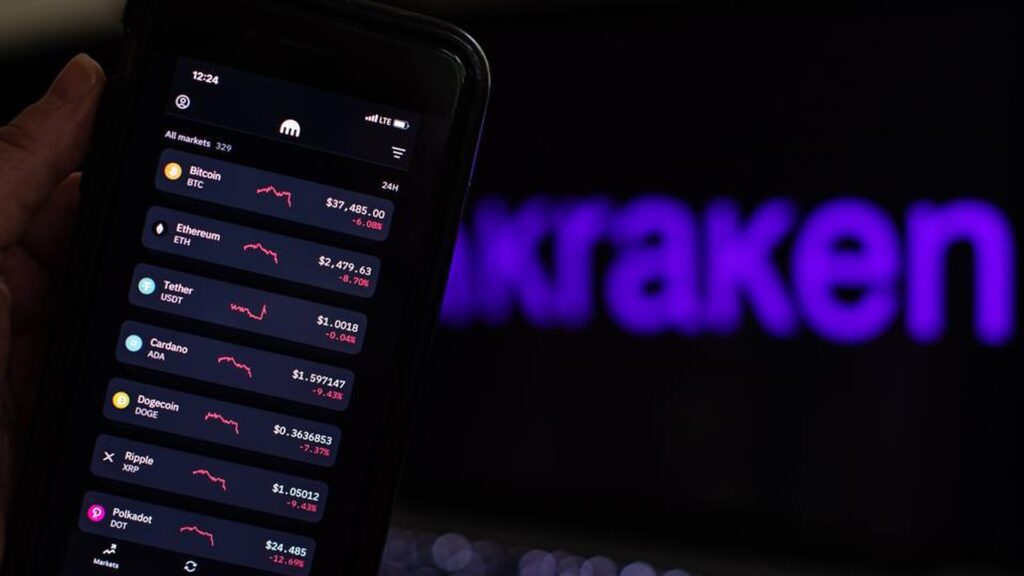
Cryptocurrency is making its most prominent mainstream sports appearance to date at FIFA World Cup 2026, with Kraken holding the role of official crypto exchange supporter and blockchain-powered prediction markets processing over two billion dollars in trading volume since the tournament kicked off on June 11.
The scale of crypto’s involvement in the 2026 World Cup marks a meaningful shift from previous editions, where digital asset brands participated primarily through peripheral advertising. This time, blockchain infrastructure is woven directly into the operational fabric of the event.
Kraken secured FIFA’s Official Crypto Exchange Supporter designation on June 9, becoming the first cryptocurrency exchange to hold a formal sponsorship title in World Cup history. The partnership is focused on fan activation across North America and Europe, aligning with the tournament’s expanded footprint across Canada, the United States, and Mexico. This edition is also the largest World Cup ever staged, featuring 48 competing nations, up from the traditional 32-team format.
Prediction markets have emerged as one of the most closely watched crypto use cases tied to the tournament. Over two billion dollars in volume has been processed since June 11, with Chainlink’s oracle infrastructure providing the real-world data feeds that connect match outcomes to on-chain settlement. ADI Predictstreet holds an official partnership for World Cup prediction markets, adding an institutional layer to what has historically been a fragmented and unregulated segment of the market.
Today’s slate of matches, which includes Czechia versus South Africa in Atlanta, Canada versus Qatar in Vancouver, and Mexico versus South Korea, is serving as a live stress test for several blockchain projects that have staked meaningful positioning on the tournament.
Chiliz needs to demonstrate that fan tokens can sustain genuine engagement beyond the initial novelty of tournament fever. Avalanche, whose infrastructure is supporting ticketing and digital collectible systems, faces a peak demand test across multiple high-traffic venues simultaneously. Chainlink’s oracle network must settle prediction markets accurately and at speed throughout the remainder of the group stage.
Fan tokens have a historically volatile track record around major football tournaments. They tend to spike ahead of event kick-offs and decline sharply as the tournament progresses and attention dissipates. Whether the scale and official integration of this World Cup changes that pattern is one of the more consequential questions for the broader fan engagement token sector in the second half of 2026.
For investors tracking CHZ, AVAX, and LINK, the coming weeks will provide an unusually clear data set on whether blockchain-based sports engagement products can hold value under sustained mainstream exposure.

Two of crypto’s most closely watched research desks have reached opposite conclusions on Bitcoin’s cycle low.
Standard Chartered says the bottom is already behind us, while Galaxy Research argues it is still ahead.
Geoffrey Kendrick, Standard Chartered’s global head of digital asset research, made his call in a Friday note.
He wrote that the cycle low for Bitcoin (BTC) has likely already been set at fifty nine thousand dollars.
That figure represents a fifty three percent drawdown from Bitcoin’s all time high near one hundred twenty six thousand dollars.
Kendrick pointed to three catalysts behind the turn, including the SpaceX initial public offering on Nasdaq.
He noted that some exchange traded fund holders sold positions to free up cash for the SpaceX listing.
Falling oil prices and an anticipated Bitcoin purchase from Strategy were cited as the other supporting factors.
Standard Chartered is watching for net positive spot Bitcoin exchange traded fund inflows as a confirmation signal.
Renewed corporate treasury buying and continued declines in oil prices are the other signals on its checklist.
The bank maintains a year end target of one hundred thousand dollars for Bitcoin and four thousand for Ethereum (ETH).
Galaxy Research, led by Alex Thorn, reached a markedly different conclusion in a separate cycle study this week.
Thorn argued that the traditional four year cycle is compressing, which shifts where the eventual floor sits.
Galaxy’s base case places the bottom between forty thousand and forty six thousand dollars by late this year.
The firm found that only four of thirteen historical indicators tied to past cycle bottoms have triggered so far.
Bitcoin’s current decline of around fifty one percent remains shallower than the seventy seven to eighty five percent drops of past cycles.
Galaxy also outlined a harsher scenario in which a deeper washout could push prices toward thirty to thirty seven thousand dollars.
A milder outcome was also flagged, with steady buying potentially holding a floor near fifty one to fifty four thousand dollars.
Despite their disagreement on timing and price levels, both firms reject the steep eighty percent style collapses of prior cycles.
Bitcoin traded near sixty three thousand eight hundred dollars as the competing forecasts circulated among traders this weekend.
The split highlights how differently major research desks are reading the same on chain and flow based data.

SBI Shinsei Bank, part of Japanese financial conglomerate SBI Group, is preparing to launch a crypto rewards programme that will allow deposit account holders to receive cryptocurrency vouchers based on the interest earned on their savings.
Under the scheme, depositors will receive exchange vouchers equivalent to 20% of their deposit interest payments. Those vouchers will be redeemable for Bitcoin, Ethereum, or XRP through SBI VC Trade, the group’s dedicated crypto trading arm, with conversion carried out at prevailing market rates at the time of redemption.
A three-month trial campaign is set to begin on June 10, covering fixed-term deposits and savings accounts with maturities ranging from three months to five years. Customers will be required to hold or open an SBI VC Trade account to access the voucher conversion feature. SBI Shinsei currently holds approximately 4.33 million individual deposit accounts.
The programme is designed primarily as a customer acquisition tool for the group’s digital asset business, offering existing bank customers a low-friction entry point into crypto rather than a direct investment mechanism. Given that the bank’s headline deposit rate stands at around 0.42% annually, the voucher amounts will be modest in absolute terms.
The move comes as Japanese financial institutions accelerate their engagement with digital assets. Japan’s three largest banks — MUFG, SMBC, and Mizuho — are separately reported to be in discussions around a joint stablecoin issuance, with a basic agreement expected before the end of fiscal 2026.

Hyperliquid’s native token HYPE has broken into the top ten cryptocurrencies by market capitalisation, briefly surpassing Dogecoin (DOGE) to reach as high as ninth on global rankings. The token hit a new all-time high of $75.51 on June 2, capping a week that saw it post gains exceeding nine percent and attracting fresh attention from institutional participants and prominent industry voices alike.
HYPE’s market capitalisation ranged between $15.4 billion and $18.5 billion across late May and early June, with the token trading in the $69 to $75 range depending on intraday moves. Daily trading volume on the Hyperliquid protocol has routinely exceeded $1 billion, while cumulative protocol revenue has now crossed $1.16 billion since the platform launched. Both metrics represent all-time highs for the project.
Hyperliquid operates a high-performance Layer-1 blockchain built specifically for decentralised perpetual futures and spot trading. Its architecture delivers sub-second transaction finality, an on-chain central limit order book, and gasless trading, allowing it to compete with centralised exchange speeds while remaining fully decentralised. Nearly all trading fees are channelled into an Assistance Fund that conducts continuous HYPE buybacks and token burns, creating a direct link between platform usage and token value accrual.
Four factors are driving the current price momentum. The first is a regulatory shift in the United States. The Commodity Futures Trading Commission recently approved the first regulated perpetual futures contract for the US market, historically a product that regulators had viewed with deep scepticism and effectively forced offshore. That decision materially widens the addressable market for Hyperliquid’s core product. The second catalyst is the launch of spot exchange-traded funds, including Bitwise’s BHYP product, which has brought new institutional inflows into the token. Third, the platform has now accumulated more than two million wallet addresses, a user growth rate that validates demand beyond speculative trading. Fourth, the deflationary buyback mechanism ensures that rising revenue translates directly into reduced circulating supply.
BitMEX co-founder Arthur Hayes stated publicly on June 1 that HYPE should at a minimum overtake Solana’s market capitalisation before the current bull market cycle ends. At the time of his comments, Solana’s market cap stood at approximately $47.7 billion against HYPE’s roughly $15 billion, implying a potential tripling in value if his thesis proves correct.
The token’s rise signals a broader shift in market preferences. Dogecoin, which HYPE has now surpassed, is a meme-driven asset with no protocol revenue, governance function, or deflationary mechanism. The fact that a decentralised exchange token has overtaken it in value ranking is being interpreted across the industry as evidence that the 2026 market cycle favours assets with clear revenue streams and on-chain utility over legacy meme coins.
Looking ahead, a significant supply event is approaching. Data from Tokenomist shows that approximately $684 million worth of HYPE tokens are scheduled for unlock on June 6, part of a broader week of over $700 million in token releases across the market. How HYPE absorbs that supply event will be closely watched as a test of whether the current momentum has fundamental depth behind it.

The bankrupt cryptocurrency exchange Mt. Gox transferred more than 10,400 Bitcoin worth approximately $739 million to a new wallet on Tuesday, its largest single movement of funds in months and the biggest on-chain transfer it has made ahead of the looming October 2026 creditor repayment deadline.
Blockchain analytics platform Arkham Intelligence recorded the transaction at 04:47 UTC in Bitcoin block 952,072. The total movement split into two streams. The majority, 10,306 Bitcoin worth around $730.78 million, was routed to a previously unseen address with no prior transaction history. A smaller portion of 116 Bitcoin, valued at approximately $8.25 million, was sent to a known Mt. Gox hot wallet and has already been marked as spent. A separate follow-up transaction moved an additional 116 Bitcoin to another address, with a small test transfer also recorded to a Bitstamp cold wallet.
The structure of the transfer closely mirrors earlier administrative movements the estate has made ahead of creditor distributions. Despite the scale, analysts noted the funds have not yet reached any custodian or exchange, meaning no confirmed selling activity has occurred.
Mt. Gox still controls roughly 34,504 Bitcoin, valued at approximately $2.43 billion, making it the largest unresolved concentrated holding tied to any failed crypto exchange. Repayments to creditors began in mid-2024 through registered partner exchanges including Kraken and Bitstamp, and around 19,500 creditors have received funds to date.
Rehabilitation trustee Nobuaki Kobayashi has pushed back the final distribution deadline twice. A Tokyo court approved the most recent extension in October 2025, moving the cutoff from October 31, 2025 to October 31, 2026, citing incomplete creditor procedures and unresolved processing issues.
The transfer landed at a sensitive moment. Bitcoin had already been under pressure from sustained ETF outflows and weakening market sentiment before the news broke, and the announcement accelerated the sell-off. The price broke below $70,000 and at one point touched levels near $68,950, its lowest since April.
The concern circulating across markets relates to what happens when the remaining creditors eventually receive their Bitcoin. Most of those claims were purchased before the exchange collapsed in 2014, meaning any distribution at current prices would represent extraordinary gains. The potential for profit-taking at scale has loomed over the market as a recurring overhang for more than a year.
However, some analysts argued the Mt. Gox dynamic is now far less dangerous than it once appeared. One market commentator suggested the issue has become closer to a recurring headline than a genuine source of meaningful downside pressure, noting that the market has grown more sensitive to ETF flows, macroeconomic signals, and institutional positioning than to the estate’s remaining holdings. Earlier rounds of creditor distributions in 2024 did not seriously disrupt Bitcoin trading.
Strive Asset Management has also moved to reduce the potential market impact by purchasing approved but undistributed Mt. Gox creditor claims worth an estimated $8 billion, with the firm targeting a Bitcoin treasury of up to 75,000 BTC. Under that approach, some creditors may sell claims directly to institutional buyers rather than receiving and then selling Bitcoin on the open market.
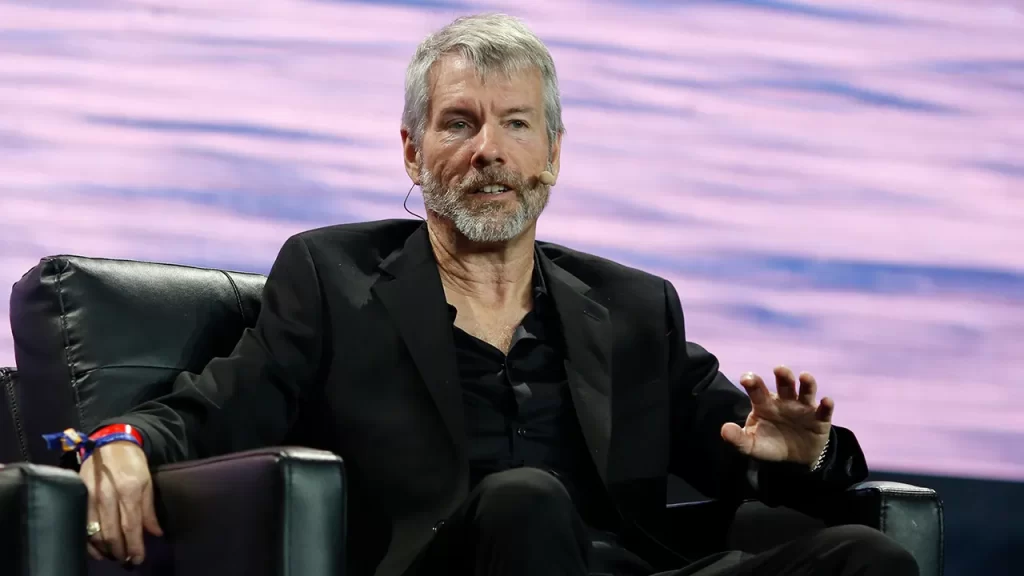
Strategy, the largest publicly traded corporate holder of Bitcoin (BTC), has sold a portion of its digital asset reserves for the first time since December 2022, sparking a wave of debate across markets about whether the company’s famous accumulation strategy is beginning to shift.
An 8-K filing submitted to the Securities and Exchange Commission on June 1 revealed that Strategy sold 32 Bitcoin between May 26 and May 31, generating approximately $2.5 million at an average net price of $77,135 per coin. The proceeds are earmarked to fund dividend distributions on the company’s STRC perpetual preferred stock, known as Stretch.
The scale of the disposal is almost comically small relative to the company’s overall position. Strategy still held 843,706 Bitcoin as of May 31, acquired at a blended average cost of $75,699 per coin, making the 32 coins sold just 0.004 percent of its total holdings. In dollar terms, the position is worth roughly $61 billion at recent prices.
That context did not stop markets from reacting. Strategy shares fell around five percent on Monday, while Bitcoin itself slipped to a near two-month low near $71,000. The combination of the disclosure and broader market weakness rattled sentiment among retail traders who had come to view Strategy as a reliable accumulation signal for the asset.
Analysts were quick to add perspective. TD Cowen analyst Lance Vitanza said reports framing Strategy as a meaningful Bitcoin seller were overstated and that the sale was a tactical financing decision rather than a policy pivot. A second Wall Street analyst described the transaction as economically immaterial. A third, however, suggested the move could indicate something broader was developing within the company’s capital strategy.
Executive Chairman Michael Saylor did not address the Bitcoin disposal directly in his first public comment after the filing. Instead, he promoted STRC on social media, writing that the company’s goal was to make the product the best credit instrument in the world. That framing placed attention on Strategy’s preferred stock infrastructure rather than on the Bitcoin sale itself.
The company had previously paused Bitcoin purchases last week while it moved to repurchase its 2029 convertible notes, spending $1.5 billion in that process. During the same period, Strategy raised $128.3 million through its at-the-market common stock programme and increased its US dollar cash reserve from $871 million to $900 million.
The announcement coincided with growing pressure on the broader corporate Bitcoin treasury model that Strategy pioneered. Dozens of firms had raised capital through stock and debt offerings to replicate Saylor’s playbook, but most have now slowed or halted purchases as market conditions deteriorated since October. Among the few still actively buying is Bitmine, Tom Lee’s Ethereum treasury company, which purchased roughly $53 million worth of ETH last week and now holds more than 5.4 million tokens.
The symbolism of the sale matters more than its size. For years Saylor publicly insisted he would never sell Bitcoin, and the company built its identity around that unconditional accumulation posture. The disclosure that it has now done so, even for a fraction of a percent of its holdings, marks a meaningful shift in how Strategy communicates its relationship with the asset. Whether that shift has lasting consequences for Bitcoin treasury firms or for broader market confidence in the corporate buying thesis remains to be seen.