


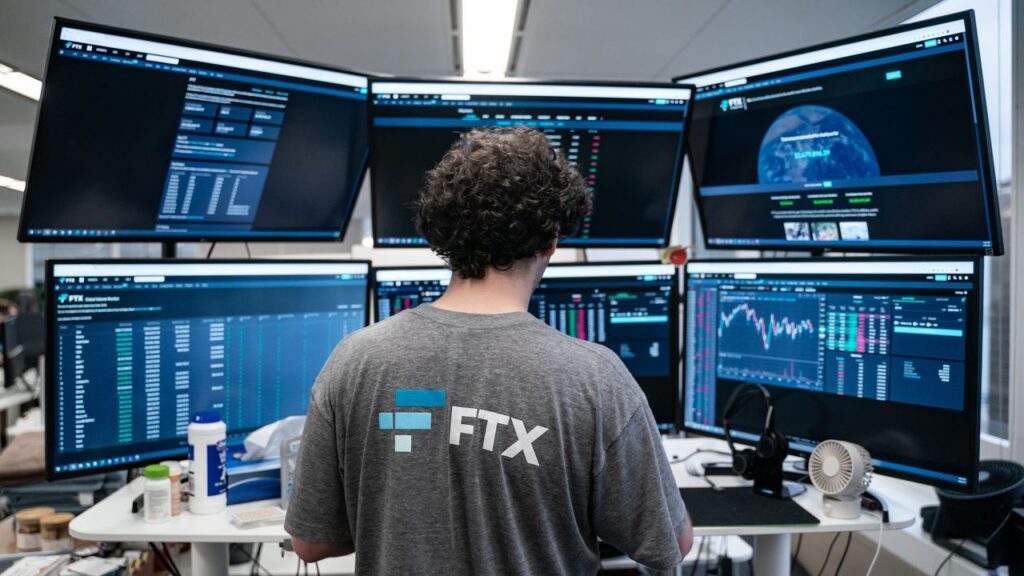
In a recent court testimony on October 19, former FTX CEO Sam Bankman-Fried was alleged to have instructed his former general counsel, Can Sun, to find a legal explanation for the glaring $8 billion discrepancy in Alameda Research’s financial records.
Sun, who had flown from Japan as part of a non-prosecution agreement with the United States Department of Justice, disclosed this startling information during the ongoing trial.
Sun revealed that he became aware of the substantial financial hole between the two companies on November 7, when he received a spreadsheet detailing the debt.
He expressed his astonishment to the jurors, saying, “I was shocked.” The spreadsheet was initially intended for asset manager Apollo Capital, as FTX was seeking new funding during the tumultuous financial period of early November.
When Apollo Capital inquired about the $8 billion discrepancy, Bankman-Fried reportedly urged Sun to “come up with a legal justification.”
During his testimony, Sun admitted that he had explored various legal options, such as dormancy fees and collateral liquidations during the market downturn.
However, the missing funds were too substantial to be easily explained away. Moreover, FTX’s terms of service explicitly stated that users’ funds were not the property of FTX Trading.
This further complicated efforts to justify the discrepancy.
READ MORE: Ripple Fuels Speculation of Potential IPO Amidst Legal Battles
Sun claimed that Bankman-Fried appeared unfazed by the situation, while former engineering director Nishad Singh seemed deeply troubled by it.
On the same day, Sun learned from Singh about Alameda’s $65 billion line of credit with FTX. Following this revelation, Sun resigned from his position at the exchange, more than a year after joining.
During his tenure at FTX, Sun had relied on Bankman-Fried’s assurances that user funds were segregated, and he had produced legal documents for FTX while responding to inquiries from regulators.
Sun emphasized that he would never have approved such discrepancies.
The trial of Sam Bankman-Fried has been marked by a series of testimonies from witnesses, including Can Sun. Prosecutors are expected to conclude their case on October 26 after hearing from two more witnesses. It remains uncertain whether Bankman-Fried’s defense will present its case.
Bankman-Fried is facing seven counts of fraud and conspiracy to commit fraud in connection with FTX customers and investors.
If found guilty, he could potentially face a maximum sentence of 115 years in prison. The trial continues to unfold, and the legal community is closely following the developments.
Other Stories:
Coinbase’s Chief Legal Officer Urges Cryptosphere to Oppose Proposed U.S. Tax Regulations
Binance.US Shifts Withdrawal Options, Encourages Users to Convert USD to Crypto
Explosive Growth in Ethereum Liquid Staking Derivatives Finance (LSDFi) Ecosystem

On October 20th, Bitcoin made a significant move, surging to $30,000 as Wall Street opened its doors. Analysts were closely monitoring the weekly closing price to gauge the strength of this rally.
BTC’s price reached a two-month high of $30,233 on Bitstamp, maintaining its strength during the Asian trading session.
However, as of the time of writing, it experienced a slight dip, dropping just below $29,500.
The ongoing volatility in the market had experts emphasizing the importance of a strong weekly candle close to confirm the sustainability of the rally.
One key metric being watched closely was the 100-week moving average (MA) at $28,627. Keith Alan, co-founder of Material Indicators, emphasized the significance of the weekly candle closing above this level, with subsequent candles staying above it without any downward wicks.
He noted that Bitcoin would need to overcome resistance levels at $30.5k, $31.5k, and ultimately $33k to validate a bull breakout.
Trader Pentoshi identified $28,900 as a critical support level that bulls needed to maintain. Meanwhile, another trader, Skew, suggested that a sweep of late long positions could create an entry opportunity before the upside resumed.
Taking a longer-term perspective, the trading team at Stockmoney Lizards remained optimistic, predicting that the resistance just above $30,000 would soon be breached.
READ MORE:Binance.US Shifts Withdrawal Options, Encourages Users to Convert USD to Crypto
They pointed to a chart fractal comparing BTC/USD in 2023 to its 2020 breakout, suggesting that significant upward movement was imminent.
The approval of the United States’ first Bitcoin spot price exchange-traded fund (ETF) was seen as a potential catalyst for this surge.
In their commentary, Stockmoney Lizards addressed concerns about the timing relative to the 2020 halving event, stating that the current circumstances, including mass adoption and potential ETF approval, would be the driving forces behind Bitcoin’s price movement.
They also mentioned the upcoming block subsidy halving scheduled for April 2024, which could further impact the cryptocurrency landscape.
In conclusion, Bitcoin’s price surged to $30,000 on October 20th, with market participants closely monitoring the weekly candle close to confirm the strength of the rally.
Key support and resistance levels were identified, and traders remained optimistic about the cryptocurrency’s future, especially in the context of potential ETF approval and upcoming halving events.
Other Stories:
Ripple Fuels Speculation of Potential IPO Amidst Legal Battles
Coinbase’s Chief Legal Officer Urges Cryptosphere to Oppose Proposed U.S. Tax Regulations
Explosive Growth in Ethereum Liquid Staking Derivatives Finance (LSDFi) Ecosystem

Binance, the prominent cryptocurrency exchange, has recently revealed its new partners to facilitate euro-related transactions, marking a significant development in the aftermath of losing its previous fiat collaborator, PaySafe, in September.
In an announcement on October 19th, Binance disclosed that it had inked agreements with fresh fiat partners to manage euro-based payments, deposits, and withdrawals.
This strategic maneuver comes in the wake of challenging regulatory and financial hurdles within the European Union, prompting Binance to seek alternative banking partnerships after parting ways with PaySafe the previous month.
While the exchange did not divulge the identities of these new partners, it indicated that users have already started transitioning to the services offered by these regulated and authorized fiat collaborators.
These newly secured fiat partners will offer an array of services, including euro deposits and withdrawals facilitated through Open Banking and SEPA/SEPA Instant.
Additionally, users will have the ability to purchase and trade cryptocurrencies through the Single Euro Payments Area (SEPA), bank cards, and fiat balances, as well as engage in trading euro spot pairs.
In late September, Binance had urged its European user base to convert their euros into Tether (USDT) by the end of October.
However, this recent announcement may signal a shift in this strategy.
READ MORE: AI + Blockchain: Crafting the Blueprint for the Future
Despite the positive news, some users continue to experience difficulties depositing euros, while inquiries about fiat partners for the British pound in the United Kingdom persist.
It should be noted that PaySafe had ceased support for transactions involving British pounds in May due to concerns raised by U.K. financial regulators.
Furthermore, on October 16th, Binance took the decision to suspend access to its exchange for new users residing in the United Kingdom.
This move followed the termination of a third-party partnership responsible for authorizing communications on the platform, a response to new local regulations imposed by the Financial Conduct Authority (FCA).
As of now, Binance has not yet established fiat partnerships for its U.K. exchange, leaving British users unable to deposit pounds.
In an attempt to gather more information, Cointelegraph reached out to Binance, but a detailed response was not immediately forthcoming.
These recent developments underscore the cryptocurrency industry’s ongoing challenges in navigating regulatory landscapes and establishing secure financial partnerships.
Other Stories:
Coinbase’s Chief Legal Officer Urges Cryptosphere to Oppose Proposed U.S. Tax Regulations
Binance.US Shifts Withdrawal Options, Encourages Users to Convert USD to Crypto
Explosive Growth in Ethereum Liquid Staking Derivatives Finance (LSDFi) Ecosystem

In the ongoing fraud trial of Sam Bankman-Fried, prosecutors have taken a significant step by requesting the judge to clarify to the jury that the defendant’s claim of being an effective altruist should not serve as a valid defense.
Bankman-Fried stands accused of embezzling billions of dollars from FTX customers for personal purposes, including political contributions, real estate investments, and other ventures.
In a letter submitted to the court, the prosecution pointed out that Bankman-Fried’s legal team has attempted to argue that he should not be charged with fraud because he intended to reimburse customers through strategies like FTX’s growth and profitable investments.
However, the prosecution strongly contends that this line of argument lacks relevance and does not absolve him of the serious fraud allegations he faces.
Bankman-Fried’s defense strategy has been centered around portraying him as a philanthropist deeply committed to creating a positive global impact.
They argue that his support for effective altruism, a philosophical movement that advocates for impactful ways of helping others, such as charitable donations or pursuing meaningful careers, reflects his underlying motivations.
The prosecutors, on the other hand, maintain that effective altruism cannot serve as a valid defense against fraud.
READ MORE:Coinbase’s Chief Legal Officer Urges Cryptosphere to Oppose Proposed U.S. Tax Regulations
They describe it as an “unconventional philosophy regarding the ethics of deception and theft” and assert that it has no bearing on the necessary mental state (mens rea) required for committing fraud.
The trial, which is currently in its third week in New York, has featured several key witnesses presented by the prosecution. These witnesses include Caroline Ellison, former CEO of Alameda Research; Nishad Singh, former engineering chief of FTX and Alameda; and Gary Wang, a co-founder of the now-defunct FTX.
According to their testimonies, Bankman-Fried directed them to acquire funds from FTX customers without their knowledge or consent for purposes unrelated to FTX’s regular operations.
Furthermore, they contend that Bankman-Fried was well aware of the potential risks and consequences of his actions and actively concealed them from regulatory authorities, auditors, and the public.
The prosecution has backed up these claims with a trove of evidence, including emails, messages, spreadsheets, and bank records that expose the extent of Bankman-Fried’s deceptive scheme.
The trial is approaching its conclusion, with the finalization of jury instructions expected next week, followed by closing arguments. Subsequently, the jury will begin deliberations to determine the legal fate of Sam Bankman-Fried.
Other Stories:
Binance.US Shifts Withdrawal Options, Encourages Users to Convert USD to Crypto
Explosive Growth in Ethereum Liquid Staking Derivatives Finance (LSDFi) Ecosystem
Thor Technologies and its founder, David Chin, have encountered a significant legal setback in an ongoing dispute with the United States Securities and Exchange Commission (SEC) concerning the unapproved sale of $2.6 million in cryptocurrency securities.
On October 19th, the SEC announced a victory in the case, as a default judgment was issued against Chin and Thor by the U.S. District Court for the Northern District of California, San Francisco, on October 18th.
A default judgment is issued by a court when one party in a lawsuit fails to respond or defend their case within the legal timeframe.
This typically happens when the defendant doesn’t file a response to the plaintiff’s complaint or fails to appear in court as required.
According to the SEC’s complaint filed on December 21, 2022, Chin and Thor Technologies raised $2.6 million from around 1,600 investors between March and May 2018.
This capital was intended for a software platform targeting gig economy workers and companies.
The SEC’s argument is that the sale of Thor tokens was not registered with the SEC and was promoted as investment opportunities.
READ MORE:Coinbase’s Chief Legal Officer Urges Cryptosphere to Oppose Proposed U.S. Tax Regulations
These funds were generated by selling the Thor (THOR) cryptocurrency, with approximately 200 investors in the United States.
The SEC accused Chin and Thor of violating federal securities laws by issuing and selling unregistered Thor tokens without meeting the necessary exemption requirements.
Moreover, the SEC alleged that Chin and Thor provided investors with false and misleading information about the project’s progress, collaborations, and earnings.
Despite Chin’s commitment to repay investors after halting operations in April 2019 due to regulatory issues, the SEC found no reimbursements to investors. Instead, some earnings were redirected into Chin’s personal bank account.
As part of the judgment, Chin and Thor have been ordered to pay a total of $903,193.06, which includes disgorgement of $744,555 and prejudgment interest of $158,638.06.
This amount reflects the total funds raised from investors minus any repayments made.
Additionally, permanent injunctions have been imposed on Chin and Thor, prohibiting their involvement in future offerings of cryptocurrency securities.
However, Chin is still permitted to buy or sell securities from his personal account.
Other Stories:
AI + Blockchain: Crafting the Blueprint for the Future
Explosive Growth in Ethereum Liquid Staking Derivatives Finance (LSDFi) Ecosystem
Binance.US Shifts Withdrawal Options, Encourages Users to Convert USD to Crypto
On October 16, Ripple, the fintech payments company, posted a new job opening for the position of Senior Manager of Shareholder Communications, which can be based in various locations within and outside the United States.
This announcement has stirred speculation among cryptocurrency enthusiasts, leading many to believe that it could be a subtle indication of Ripple’s intention to go public.
The job posting outlines that the selected candidate will play a crucial role in direct communication with shareholders, a duty typically associated with publicly traded companies.
Their primary responsibility will involve crafting and executing communication and relationship management strategies aimed at both existing and potential investors, as well as financial analysts.
One of the key highlights of the job description is the need to develop strategic plans tailored for significant events such as mergers and acquisitions, investments, liquidity events, and other pivotal moments in the company’s journey.
Additionally, the role involves the creation of investor-centric materials, including presentations, fact sheets, case studies, and analyses.
These materials serve the critical purpose of informing and educating prospective investors about the company’s performance, a necessary step in the preparations for an initial public offering (IPO).
READ MORE:Bitcoin Price Predicted to Soar to $128,000 by 2025
Routine communications, such as quarterly updates, and the maintenance of a comprehensive shareholder database, also fall under the purview of this role.
The job posting has sparked excitement within the XRP community and among Ripple supporters, with many speculating that it may indeed be a hint at an impending IPO.
While some key executives within the company have hinted at the possibility of going public, no specific timing has been disclosed.
Ripple has been in the spotlight recently due to an ongoing lawsuit brought forth by the U.S. Securities and Exchange Commission (SEC) alleging that XRP, the cryptocurrency associated with Ripple, is a security.
However, in a significant victory for Ripple, a judge ruled in July that XRP does not qualify as a security when traded on digital asset exchanges.
Despite the legal challenges in the United States, Ripple has emphasized that the majority of its remittance business operates outside of America, underscoring its global reach and potential for growth.
In conclusion, Ripple’s job posting for a Senior Manager of Shareholder Communications has sparked speculation about the company’s intentions, with many interpreting it as a potential sign of an upcoming IPO.
This development comes amid ongoing legal battles with the SEC, highlighting Ripple’s resilience and determination to thrive in the cryptocurrency industry.
Other Stories:
SYS Labs Unveils Rollux Phase 2
U.S. Government Holds Over 194,000 Bitcoin, Valued at $5.3 Billion
Ethereum Co-Founder Vitalik Buterin Clarifies $15 Million USDC Transaction

Coinbase’s Chief Legal Officer, Paul Singh Grewal, has issued a rallying cry to the cryptocurrency community, urging them to unite against the United States Treasury’s proposed tax reporting regulations on cryptocurrencies.
Grewal argues that these regulations could establish a concerning precedent for extensive surveillance.
Taking to the platform formerly known as Twitter (referred to here as “X”), Grewal expressed his apprehensions about the proposed crypto tax reporting rules, asserting that they exceed the congressional mandate aimed at setting tax reporting guidelines.
He warned that if these regulations were to become law, they could place “digital assets at a disadvantage and threaten to harm a nascent industry when it’s just getting started.”
On August 25, the U.S. Internal Revenue Service (IRS) unveiled a draft of proposed regulations for crypto tax reporting.
These rules would mandate crypto brokers to utilize a new form for reporting, simplifying tax filing and combatting tax evasion.
The regulations encompass both centralized and decentralized exchanges, crypto payment processors, select online wallets, and crypto brokers.
The U.S. Treasury Department asserts that this new form would streamline the tax filing process, helping taxpayers ascertain their tax liabilities without requiring intricate calculations or relying on digital asset tax preparation services.
READ MORE: Ethereum Co-Founder Vitalik Buterin Clarifies $15 Million USDC Transaction
If approved, the new tax regime is scheduled to take effect in 2026, with brokers obliged to commence reporting 2025 transactions starting in January 2026, using Form 1099-DA.
Nevertheless, several U.S. lawmakers have urged the IRS to implement crypto tax reporting requirements before the year 2026.
Contrary to the Treasury Department’s claims that these crypto tax reporting rules align digital assets with traditional financial reporting, Coinbase’s legal officer contends otherwise.
Grewal, in his X post, pointed out that the proposed rules could establish a “dangerous precedent for surveillance of the everyday financial activities of consumers by requiring nearly every digital asset transaction – even the purchase of a cup of coffee – to be reported.”
Grewal also raised concerns about the substantial user data collection mandated by these regulations, emphasizing that it serves no “legitimate public purpose.”
He argued that this data collection burden would disproportionately affect Web3 startups, imposing costly requirements while inundating the IRS with an overwhelming amount of data that they may struggle to process and analyze.
Other Stories:
Bitcoin Price Predicted to Soar to $128,000 by 2025
SYS Labs Unveils Rollux Phase 2
U.S. Government Holds Over 194,000 Bitcoin, Valued at $5.3 Billion

Binance.US, a prominent cryptocurrency exchange, has recently made significant updates to its terms of service, signaling a significant change in its withdrawal options for users.
The modifications, which were introduced on October 16th, mainly pertain to the “BAM Fiat Wallet” section, focusing on services related to the custody of United States dollars.
In the revised terms of service, Binance.US explicitly states that users now have the option to “convert” their holdings in U.S. dollars into stablecoins or other digital assets in order to facilitate withdrawals from their accounts.
This shift has raised concerns among cryptocurrency enthusiasts, with some expressing their apprehensions on social media platforms like Twitter.
One observer on Twitter commented, “Binance seizes USD. Don’t worry, you can buy Tethers printed out of thin air or other questionable cryptocurrencies.”
This sentiment reflects the unease among users about the changing dynamics of USD withdrawals on the platform.
It’s worth noting that, consistent with previous updates, Binance.US emphasizes that digital assets held on the platform are not covered by insurance protection provided by the Federal Deposit Insurance Corporation (FDIC).
READ MORE: Bitcoin Price Predicted to Soar to $128,000 by 2025
The company states that in the event of terminating its relationship with a USD custodian without finding a replacement, it will notify users and provide a window for withdrawing their U.S. dollar deposits.
Any funds not withdrawn by the specified deadline will be converted into stablecoin digital assets and transferred to users’ digital asset accounts.
This recent update differs significantly from the terms of service in May 2023, where Binance.US had previously indicated that it had been working with USD custodians to ensure the safety of U.S. dollar deposits in omnibus accounts at FDIC-insured banks, potentially making them eligible for FDIC insurance coverage.
Binance.US has been undergoing a transition to becoming a “crypto-only exchange” since June 2023, leading to the suspension of USD deposits and withdrawals.
This suspension has been in place until the exchange can establish secure banking partnerships, and it reflects the ongoing challenges the platform faces in maintaining its fiat on-ramps and off-ramps.
In summary, the recent changes to Binance.US’s terms of service indicate a significant shift in its withdrawal options for users, moving away from direct USD withdrawals and encouraging the conversion of USD holdings into digital assets.
This aligns with the platform’s transition towards becoming a crypto-only exchange and the ongoing challenges it faces in its fiat operations.
Other Stories:
Ethereum Co-Founder Vitalik Buterin Clarifies $15 Million USDC Transaction
U.S. Government Holds Over 194,000 Bitcoin, Valued at $5.3 Billion

The Ethereum Liquid Staking Derivatives Finance (LSDFi) ecosystem has experienced remarkable growth in the current year as Ethereum (ETH) holders have opted to stake their tokens rather than liquidate them.
Even though ETH withdrawals were made possible with the Ethereum Shapella upgrade in April 2023, a recent report from CoinGecko, a crypto data aggregator, revealed that the LSDFi sector has expanded by an astounding 58.7 times since January.
As of August 2023, LSDFi protocols accounted for a substantial 43.7% of the total 26.4 million ETH staked.
Among these protocols, Lido emerged as the dominant player, securing nearly a third of the total staked market.
These growth statistics indicate that ETH holders are choosing to re-stake their assets to capitalize on better yield opportunities, rather than liquidating them after withdrawing.
Notably, CoinGecko highlighted that despite the availability of withdrawals, the exit queue remained at zero for more than half of the time (55%) and stayed below 10 validators for 77% of the time.
This trend demonstrates the preference for staking within the LSDFi ecosystem.
READ MORE:Ethereum Co-Founder Vitalik Buterin Clarifies $15 Million USDC Transaction
Liquid Staking Derivatives (LSDs) were introduced to enable smaller ETH holders to participate in staking and unlock liquidity following the launch of the Ethereum Beacon Chain in December 2020.
In the first months of this year, the Total Value Locked (TVL) across the top 10 LSDFi protocols, excluding Lido, surged to over $900 million, according to the report.
This represents a remarkable 5,870% increase in TVL since January 2023.
In contrast, the total TVL in decentralized finance (DeFi) contracted by around 8% over the same period, as reported by DefiLlama.
The average yield for LSD protocols since January 2022 has been 4.4%, though it is expected to decline as more ETH is staked.
Presently, there are approximately 27.6 million ETH staked, valued at around $43.4 billion, according to Beaconcha.in.
Recent weeks have seen Ethereum enthusiasts celebrating the rise of the LSDFi platform Diva, which is perceived to be conducting a “vampire attack” on Lido.
Diva has been enticing users and liquidity away from Lido by offering more attractive incentives.
Since the start of October, Diva’s TVL has surged by an astonishing 650% to 15,386 stETH, with a total value of around $24 million, according to Divascan.
Other Stories:
Regulated Crypto Casinos May Accelerate Web3 Adoption
Australian Government Proposes New Regulations for Cryptocurrency Exchanges
Proposed Settlement Offers Hope of Over 90% Asset Recovery for FTX and FTX.US Customers

In today’s digital era, two equally ground-breaking technologies have emerged as heralds of change: Artificial Intelligence (AI) and blockchain tech.
Separately, these technologies have already left lasting imprints on how we process data, interact with the digital world, and carry out transactions.
However, the fusion of AI with blockchain technology has the potential to revolutionise whole industries: Healthcare, the financial sector, the pharmaceutical industry, and even the democratic processes that underpin our nations.
In order to understand the beneficial impact of this synergy, we must confront their individual flaws.
The Downfalls
· Biases: AI can inherit society’s biases from data inputs. A prime example is Amazon’s 2015 experience when it discarded CVs containing the term ‘women’ due to an algorithm built upon predominantly male-centric historical data.
· Lack of Transparency: Most AI systems are closed, they operate as “black boxes”. We can’t always understand how they get from A to B which can hinder accountability. We need to be able to identify its decision-making processes to trust its recommendations.
· Data Privacy Concerns: AI algorithms thrive on vast data troves. The issue is, we can’t always know where this data is gathered from.
As for the blockchain:
· Scalability: As more transactions are added to the blockchain, it can be increasingly challenging for the network to process them in a cost-effective and timely manner.
· Security Risks: Although the cryptographic features of the blockchain make it highly secure, it’s still not immune to security breaches.
· Complexity: The intricate complexity of Blockchain code creates a barrier for organisations seeking to integrate the technology into their operations.
It’s essential to grasp the limitations of these impressive technologies when they operate separately, in order to appreciate the immense potential they unlock when combined.
The Perfect Synergy
AI and the blockchain both have the ability to compliment each other’s issues and have subsequently become a formidable pairing in our era.
Full Transparency
As a digital ledger that holds permanent records of all transactions of and movements, Blockchain’s hallmark is its transparency..
By integrating blockchain into AI frameworks, we can establish a complete audit trail, demonstrating the decision-making processes behind algorithmic outcomes. This also empowers us to assess the fairness of algorithms and identify potential biases.
Digital Verification
The rise of AI generated content has provoked understandable unease. But Blockchain can ensure authenticity and traceability: providing a timestamp and permanent record of the origin of any AI-generated content.
Bias Mitigation
Smart contracts, self-executing digital contracts built on blockchain technology, can enforce ethical guidelines for AI algorithms to reduce biases.
Scalability
AI can boost blockchain scalability by analysing usage patterns, adjusting network parameters, and optimising data compression, boosting the blockchain’s ability to handle a higher volume of transactions efficiently.
Cyber Security and Fraud Prevention
AI’s real-time analysis of blockchain transactions can swiftly detect suspicious patterns or outliers, a task beyond human monitoring in the rapidly changing world of cryptocurrencies.
Additionally, AI-driven natural language processing can dissect social media and online forums for discussions related to fraudulent crypto schemes, such as influencer-driven ‘Pump and Dumps’.
Data Privacy
Blockchain’s highly secure, decentralised data storage aligns with AI’s vast data requirements.
Blockchain’s transparency facilitates an audit trail of all data employed by AI models, enhancing accountability.
The Future
AI and the blockchain fit together like a two-piece puzzle.
Using the blockchain’s power, we can make AI far more transparent, ethical and trustworthy – and it’s not a one-way street. AI can solve blockchain’s scalability issues and improve its overall efficiency.
Challenges such as regulation and ethical dilemmas loom on the horizon with any emerging technology. But by harnessing the potential of blockchain technology and AI, we can embrace these challenges with unwavering resolve.
There’s no doubt that this dynamic duo will draft a blueprint for a world that is safer, more transparent, and decentralised, paving the way to a brighter digital future.