

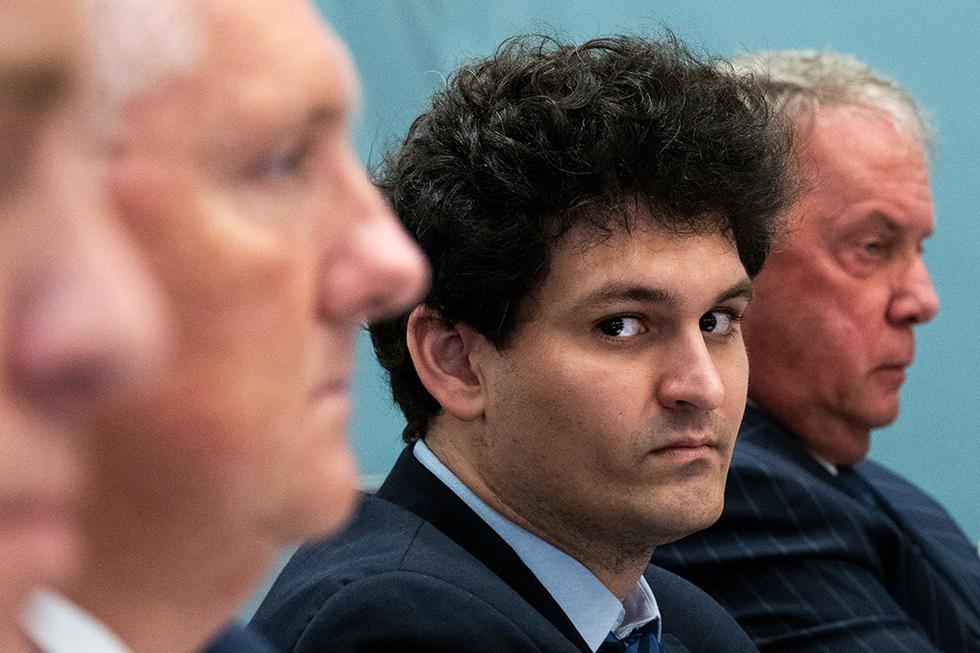
FTX co-founder, Sam Bankman-Fried, has reached out to a United States judge in a plea for long-release Adderall, citing difficulties in maintaining concentration during his ongoing criminal trial.
Bankman-Fried’s legal team submitted a letter to New York District Judge Lewis Kaplan on October 15th, requesting permission for him to take a “12-hour extended-release 20mg dose of Adderall” before he’s transported to the trial on October 16th.
In their letter, the lawyers emphasized that the absence of the prescribed stimulant during trial hours has severely impacted Bankman-Fried’s ability to focus at his usual level.
As the crucial moments of his defense strategy and the decision of whether he will testify loom closer, there are growing concerns that the FTX founder won’t be able to actively participate in presenting his defense without his medication.
The letter revealed that despite the absence of medication, Bankman-Fried has been making diligent efforts to remain focused during the trial.
However, even if he is granted the requested medication, there remains uncertainty about whether the extended-release dose will be effective.
To address this situation, Bankman-Fried’s legal team proposed two potential solutions to Judge Kaplan.
Firstly, they requested that the trial be paused for one day on Tuesday, October 17th, if Bankman-Fried cannot receive the long-release dose or if it proves ineffective.
READ MORE:MetaMask Temporarily Removed from Apple’s App Store
This would allow time to find an alternative solution for the remainder of the trial. Alternatively, they asked for permission to provide Bankman-Fried with his prescription of Adderall at the District Court during the trial.
The lawyers noted that they had attempted to resolve this issue with the Bureau of Prisons but had received no response to their five attempts to contact them between October 5th and October 12th.
Judge Kaplan had previously approved a motion to allow Bankman-Fried access to Adderall and anti-depressant medication while in prison on August 14th.
This decision was based on his history of major depressive disorder and attention deficit hyperactivity disorder (ADHD) and his psychiatric care since early 2019.
However, in an August 22nd hearing, Bankman-Fried’s legal team had complained about his lack of access to Adderall, stating that he had not received the medication for 11 days.
As Bankman-Fried’s criminal trial enters its third week, various witnesses, including former associates and his ex-girlfriend, have provided testimonies. Bankman-Fried has pleaded not guilty, maintaining his innocence throughout the trial.
Other Stories:
Secret Audio Exposes Alameda Research’s Misuse of FTX User Funds, Unveiling Shocking Details
SEC Opts Not to Appeal Ruling Favoring Grayscale’s Bitcoin ETF Application
Bitcoin Holds Steady at $26,800 as SEC’s Grayscale Decision Looms

Grayscale Bitcoin Trust (GBTC) is currently experiencing its lowest discount in almost two years, with its discount to Bitcoin’s net asset value (NAV) narrowing to 15.87% as of October 13, according to data from YCharts.
This metric measures how much a mutual fund or ETF is trading below its actual net asset value, offering insights into its true market value.
The narrowing of GBTC’s discount began when financial giants like BlackRock and several other institutions filed applications for spot Bitcoin ETFs in mid-June.
1From a high of 44% on June 15, the discount steadily decreased to 26.7% by July 5. Since then, it has continued to shrink.
The last time GBTC’s discount was at a similar level was in early December 2021, shortly after Bitcoin reached its all-time high price of $69,000 in November, as reported by CoinGecko.
Many in the cryptocurrency community, including Bitcoin advocate Oliver Velez, speculate that the market is factoring in the approval of spot Bitcoin ETFs by the end of the year.
READ MORE:Secret Audio Exposes Alameda Research’s Misuse of FTX User Funds, Unveiling Shocking Details
Lyle Pratt, a cryptocurrency investor, believes that GBTC’s discount will continue to decrease over the next week or two as spot Bitcoin ETFs approach regulatory approval.
Recent reports suggest that the United States Securities and Exchange Commission (SEC) chose not to appeal the Grayscale decision on October 13.
This development has led Bloomberg ETF analyst James Seyffart to describe spot Bitcoin ETF approvals as a “done deal.”
On October 15, Grayscale issued a statement indicating that the SEC’s 45-day period for seeking a rehearing had elapsed.
Consequently, the court is expected to issue its “final mandate” within the next seven calendar days.
Grayscale expressed its operational readiness to convert GBTC into an ETF upon SEC approval and pledged to share further details as soon as possible.
Cointelegraph attempted to reach out to Grayscale for additional comments but had not received an immediate response at the time of reporting.
Other Stories:
MetaMask Temporarily Removed from Apple’s App Store
Bitcoin Holds Steady at $26,800 as SEC’s Grayscale Decision Looms
SEC Opts Not to Appeal Ruling Favoring Grayscale’s Bitcoin ETF Application
On October 13th, the FTX estate demonstrated its optimistic outlook on Solana (SOL) by staking an impressive 5.5 million SOL tokens.
This move, captured in on-chain data, involved an FTX-associated wallet sending the tokens to Figment, a staking validator firm catering to institutional investors.
The blockchain tracker Whale Alert initially detected the transaction, later confirmed as originating from an FTX estate address by the pseudonymous on-chain researcher, Ashpool.
In monetary terms, the staked coins amounted to a substantial $122 million, although they represent only a fraction of FTX’s overall SOL holdings.
Staking is a process in which a specific quantity of cryptocurrency is locked up for a predetermined period.
In return, stakers receive SOL coin rewards for contributing to the security and maintenance of the network through their stakes.
FTX’s history with Solana runs deep, as it was an early investor in the cryptocurrency.
Consequently, it regularly receives significant volumes of unlocked SOL tokens in line with the established vesting schedule.
The FTX estate, under the supervision of a bankruptcy trustee, retains the option to liquidate these holdings when deemed appropriate.
Its primary responsibility, however, revolves around asset recovery for the exchange’s creditors.
READ MORE:SEC Opts Not to Appeal Ruling Favoring Grayscale’s Bitcoin ETF Application
In a noteworthy development from September, a United States court greenlit the sale of $1.3 billion worth of SOL from FTX.
This decision initially raised concerns among SOL holders regarding a potential price slump.
To mitigate any undue pressure on the crypto market, the bankruptcy court mandated that the sale occur through an investment adviser in weekly installments.
This directive led to SOL’s price dipping to a two-month low of $17.34 on September 11th.
Notably, FTX boasts holdings of $3.4 billion in Digital Assets A, a portfolio comprising some of the company’s top 10 assets, including Solana, Bitcoin (BTC), Ethereum (ETH), Aptos, and various other cryptocurrencies.
As indicated in court filings from September, over $7 billion has been successfully recovered since the exchange filed for bankruptcy protection in November 2022.
In a separate and significant development, Sam Bankman-Fried, co-founder of FTX, currently finds himself on trial at a district court in Manhattan, facing allegations of fraud and conspiracy to commit fraud.
If proven guilty, he could potentially face a prison sentence of up to 115 years.
This ongoing legal battle casts an additional layer of complexity over the future of FTX and its involvement in the cryptocurrency market.
Other Stories:
Why BFG Might Be a Hidden Gem of the Next Bull Run?
Bitcoin Holds Steady at $26,800 as SEC’s Grayscale Decision Looms
Secret Audio Exposes Alameda Research’s Misuse of FTX User Funds, Unveiling Shocking Details
Latin America, according to a recent report by blockchain analytics firm Chainalysis, exhibits a strong preference for centralized exchanges (CEXs) over decentralized exchanges (DEXs) when it comes to cryptocurrency trading.
Despite having the seventh-largest crypto economy globally, Latin America lags behind regions like the Middle East and North America (MENA), Eastern Asia, and Eastern Europe.
The report, published on October 11, reveals that the crypto community in Latin America has a distinct leaning towards CEXs.
Chainalysis notes, “Latin America shows the highest preference for centralized exchanges of any region we study, and tilts slightly away from institutional activity compared to other regions.”
In some countries within the region, this preference for CEXs is even more pronounced when compared to the global average.
Worldwide, 48.1% of crypto users prefer CEXs, 44% opt for DEXs, and 5.9% engage in other decentralized finance (DeFi) activities.
However, in Venezuela, an astonishing 92.5% of users prefer CEXs, while only 5.6% favor DEXs.
The report attributes Venezuela’s strong adoption of crypto to its unique circumstances, particularly a “complex humanitarian emergency.”
READ MORE:Why BFG Might Be a Hidden Gem of the Next Bull Run?
During the COVID-19 pandemic in 2020, cryptocurrency played a crucial role in providing direct assistance to healthcare professionals in the country.
Traditional payment methods were impractical due to the government’s reluctance to accept international aid for political reasons.
Colombia also exhibits a significant preference for CEXs, with 74% of users favoring them over DEXs, which account for just 21.1% of preferences.
Meanwhile, Argentina leads in terms of cryptocurrency transaction volume in Latin America, with an estimated $85.4 billion received in a 12-month period ending on July 1.
However, the country has faced regulatory challenges, with its central bank banning payment providers from offering crypto transactions to reduce exposure to digital assets.
This move aimed to subject fintech companies to the same regulations as traditional financial institutions.
Despite these challenges, three Latin American countries secured positions in the top 20 ranks on Chainalysis’ Global Crypto Adoption Index.
Brazil holds the ninth position, followed by Argentina at 15th and Mexico at 16th.
The top position globally was claimed by India, with Nigeria and Vietnam ranking second and third, respectively.
Other Stories:
Secret Audio Exposes Alameda Research’s Misuse of FTX User Funds, Unveiling Shocking Details
SEC Opts Not to Appeal Ruling Favoring Grayscale’s Bitcoin ETF Application
Bitcoin Holds Steady at $26,800 as SEC’s Grayscale Decision Looms
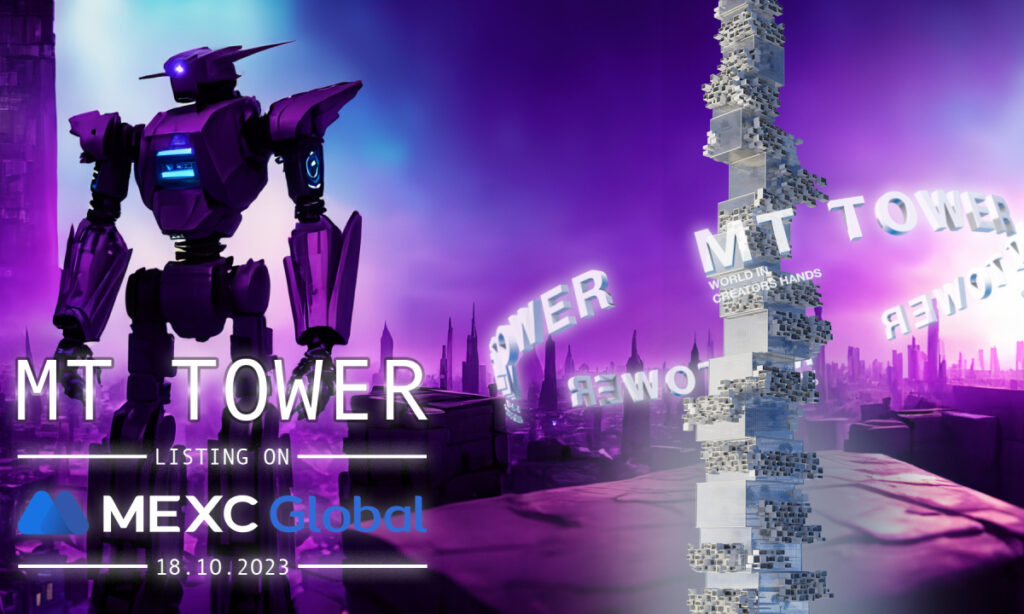
Madrit, Spain, October 16th, 2023, Chainwire
MT Tower is poised to transform the influencer and social media landscape into a vibrant and immersive wonderland. With a commitment to cutting-edge innovation, MT Tower aims to deliver an unparalleled experience that captivates and delights.
A New Era of Engagement
MT Tower, or Meta Tower, isn’t just any run-of-the-mill metaverse platform; it’s a lifestyle and gaming sensation. At its core, it’s all about redefining how influencers connect with their audiences and how social media comes to life in this immersive digital universe.
Authenticity Unleashed
MT Tower’s unique feature that sets it apart from the rest is its unwavering dedication to authenticity. Unlike other metaverse platforms that rely solely on avatars and artificial environments, MT Tower introduces the groundbreaking concept of “Real-World Bridges.” It’s like teleporting to real-world locations that have been scanned, and for influencers, this opens doors to a world of exciting possibilities. Influencers can now take their followers on a journey that feels more genuine and relatable than ever before.
Creating Unique Experiences
In MT Tower, influencers become the ultimate creators. Influencers are given a blank canvas to craft experiences that go beyond traditional social media boundaries. The platform’s immersive nature lets Influencers host events, interact with fans, and create unique virtual spaces for their audiences. For example, a concert on the peak of a digital mountain or a Q&A session in a meticulously replicated historic landmark. MT Tower empowers influencers to bring their creative visions to life like never before.
Empowering Creators and Influencers
In the ever-evolving metaverse, Gen Z and creators are all about self-expression. Traditional social media platforms often limit avatar customization options, stifling creators’ authenticity online. MT Tower addresses this issue by offering a dedicated space for creators to design, showcase, and trade virtual assets. This not only empowers influencers to create avatars that truly reflect their identities but also provides a unique avenue for content creation that resonates deeply with their audiences.
Privacy and Security
As influencers and users venture through the metaverse, concerns about privacy and security take center stage. MT Tower has taken a proactive approach to address these concerns, ensuring influencers can confidently engage with their followers. With the perfect blend of immersive experiences and robust privacy measures, MT Tower is setting the gold standard for secure interactions in the metaverse.
Governance and Inclusivity
Navigating the intricate metaverse landscape requires effective governance, given its decentralized structures and diverse participants. MT Tower is committed to establishing fair and transparent rules, providing a stable environment for influencers to thrive. Furthermore, the platform prioritizes inclusivity, ensuring that everyone can participate, regardless of their background or resources. This commitment broadens the reach of influencers and fosters diverse and engaged audiences.
The MT Token
MT Tower isn’t just about influencers and creators; The MT token, the heartbeat of this metaverse, is gearing up to make a splash as it gets listed on prestigious cryptocurrency exchanges, including Kanga.Exchange and MEXC. MT token will be listed on the MEXC exchange on October 18th. This exciting development opens up new avenues for influencers and users to explore the metaverse’s economic potential, further expanding their presence and opportunities.
Xsolla – metaverse contractor
Another exciting news is that Xsolla is all set to be the contractor for the entire MT Tower metaverse. The contract has been signed, and the parties have marked the first beta release for April 2024. What’s even more thrilling is that Xsolla and MT Tower are inviting 50 lucky beta testers as they eagerly seek feedback from their community. It’s all about inclusivity and innovation, and MT Tower looks forward with anticipation to the future.
In addition, an audit of the MT token has been conducted by Solidproof, and the team is currently in the process of undergoing a Know Your Customer (KYC) procedure.
About MT Tower media
MetaTower was founded in 2021 in response to the growing interest and demand in the metaverse, the upcoming changes in the influencer space as well as the growing need for new sales channels for e-commerce. The company is co-founded by individuals with many years of experience in the blockchain space, who have worked on numerous crypto projects, are associated with cryptocurrency media and have extensive experience in financial markets. The company MetaTower is registered in Estonia.
Website: https://metatower.com
Social Media: https://linktr.ee/metatower
Contact
COO
Bartek Juraszek
MetaTower
[email protected]
California Governor Gavin Newsom has given the green light to a new cryptocurrency bill that will usher in stricter regulations for businesses engaged in cryptocurrency activities, slated to take effect in July 2025.
In an announcement made on October 13th, Newsom revealed that the legislation, officially titled the Digital Financial Assets Law, will necessitate both individuals and companies to obtain a Department of Financial Protection and Innovation (DFPI) license if they intend to participate in digital asset-related business activities.
This move builds upon California’s existing money transmission laws, which already prohibit financial and transfer services from operating without proper licensing from the DFPI commissioner.
The Digital Financial Assets Law goes a step further by empowering the DFPI to impose robust audit requirements on cryptocurrency firms and compel them to maintain detailed financial records.
According to the bill, licensees must maintain records, including a comprehensive general ledger updated at least monthly, listing all assets, liabilities, capital, income, and expenses for a minimum of five years following each activity.
The legislation also underlines that non-compliance will result in enforcement actions against offending firms.
READ MORE: Secret Audio Exposes Alameda Research’s Misuse of FTX User Funds, Unveiling Shocking Details
Interestingly, in a similar timeframe in 2022, Governor Newsom declined to endorse a comparable bill designed to establish a regulatory framework for digital assets within California.
Even though the bill had garnered unanimous support in the California State Assembly, Newsom opted not to sign it, explaining that it lacked the adaptability needed to keep pace with the swiftly evolving cryptocurrency landscape.
Instead, he expressed his preference for waiting until federal regulations were in place before collaborating with the legislature to formulate comprehensive cryptocurrency licensing measures.
This development aligns with broader discussions within the United States about extending existing financial regulations, like the Electronic Fund Transfer Act, to encompass cryptocurrencies as a means of combating fraudulent transfers.
Rohit Chopra, the director of the Consumer Financial Protection Bureau, recently voiced his intention to grant such authorization, aiming to minimize the risks associated with errors, hacks, and unauthorized cryptocurrency transfers.
In summary, California’s Digital Financial Assets Law, set to take effect in July 2025, represents a significant step forward in regulating cryptocurrency activities, requiring licensing for individuals and businesses and introducing stringent audit and record-keeping requirements to ensure compliance with financial regulations.
Other Stories:
SEC Opts Not to Appeal Ruling Favoring Grayscale’s Bitcoin ETF Application
Bitcoin Holds Steady at $26,800 as SEC’s Grayscale Decision Looms
On October 14, 2023, Ethereum wallet MetaMask experienced a temporary removal from Apple’s App Store, sparking concerns within the cryptocurrency community about the possibility of a permanent expulsion from the marketplace.
MetaMask, a popular wallet known for its integration with various Web3 decentralized applications (DApps), boasts a user base of over 30 million individuals worldwide.
Reports emerged on that day, indicating that the MetaMask app had vanished from the App Store, leaving Apple users unable to download it directly from the MetaMask website.
However, MetaMask promptly reassured its users that the situation did not stem from any security breaches or malicious activity.
A MetaMask spokesperson stated, “We’re aware that MetaMask isn’t currently available for download on the App Store.
This issue is unrelated to any malicious activity. Our dedicated team is working diligently to resolve it as quickly as possible.
Importantly, this is not a security concern, and there is no compromise or action required on users’ part.
Additionally, it’s not related to the app’s functionality.”
READ MORE: Secret Audio Exposes Alameda Research’s Misuse of FTX User Funds, Unveiling Shocking Details
The likely cause behind MetaMask’s removal was Apple’s stringent service policies, which prohibit apps from running “unrelated background processes,” including cryptocurrency mining.
MetaMask expressed confidence that this removal was temporary and expected the app to return to the App Store shortly.
They also urged users to report any fake MetaMask apps that might have appeared during the removal.
This incident marked the second time that MetaMask faced challenges from major tech marketplaces.
In December 2019, the company encountered suspension from Google Play’s app store, with allegations of violating the platform’s financial services guidelines. Google cited its policy against cryptocurrency mining on mobile devices and rejected MetaMask’s appeal to reverse the ban.
Apple’s guidelines, which necessitate app developers to share 30% of transaction revenues with the platform, pose another obstacle for crypto firms.
This requirement has been a point of contention for companies, particularly those that wish to provide iOS users with the capability to purchase nonfungible tokens (NFTs) and engage in cryptocurrency-related activities.
In conclusion, while MetaMask’s temporary removal from the App Store raised concerns, the company remains committed to resolving the issue and returning to the platform.
The incident highlights the ongoing challenges faced by cryptocurrency-related apps in complying with the policies of major tech giants.
Other Stories:
SEC Opts Not to Appeal Ruling Favoring Grayscale’s Bitcoin ETF Application
Bitcoin Holds Steady at $26,800 as SEC’s Grayscale Decision Looms
A clandestine 75-minute audio recording has unveiled a shocking revelation involving Caroline Ellison and 15 former Alameda Research employees.
The recording exposes the precise moment when they discovered that the trading firm had been “borrowing” user funds from FTX.
The complete audio, obtained by Cointelegraph, sheds light on the intense tension that Ellison and the Alameda staff experienced leading up to FTX’s eventual collapse.
During an all-hands meeting in Hong Kong on November 9, 2022, Ellison disclosed, “Alameda was kind of borrowing a bunch of money via open-term loans and using that to make various illiquid investments.
So like a bunch of FTX and FTX US equity… Most of Alameda’s loans got called in in order to meet those recalls.”
She further confessed, “We ended up borrowing a bunch of funds from FTX, which led to FTX having a shortfall in user funds.”
Ellison made this revelation to the approximately 15 staff members present at the meeting, shocking them with the news that FTX had essentially allowed Alameda to borrow user funds.
Segments of this audio recording were played in court on October 12, during the eighth day of Sam Bankman-Fried’s criminal trial. Christian Drappi, a former software engineer at Alameda, provided witness testimony following three days of Ellison’s testimony.
READ MORE:Former Engineer Exposes Multi-Million Dollar Scams at Alameda Research Amidst FTX Fraud Trial
Prior to this meeting, Drappi and many other Alameda employees had no knowledge of the alleged misappropriation of FTX customer deposits by the hedge fund.
The recording captures Drappi asking Ellison when she first became aware of Alameda’s misuse of FTX user deposits and who else within the company was privy to this information.
Initially hesitant to respond, Ellison was pressed by Drappi, who queried, “I’m sure this wasn’t, like, a YOLO thing, right?”
This audio playback resulted in a humorous moment in court, as Drappi had to explain the term “YOLO” to everyone present. He sought confirmation from Ellison that the use of FTX deposits wasn’t merely a spontaneous decision.
In his testimony, Drappi described Ellison’s demeanor during the meeting as “sunken” and lacking confidence in addressing Alameda employees.
Shocked by the extent of the relationship between FTX and Alameda, Drappi quit the following day.
Alameda Research engineer Aditya Baradwaj, who also attended the meeting, revealed that the room was “extremely tense.”
Ellison disclosed a wealth of previously undisclosed information, including the abandoned acquisition of FTX by its largest competitor, Binance. Baradwaj stated, “It became pretty clear that there was no future for the company, and that we all had to leave. And we did that right after.”
Other Stories:
Cardano Founder Equates FTX’s Bankman-Fried to Bernie Madoff Amid Controversial Trial
FTX Collapse Tied to Bankman-Fried’s Financial Maneuvers, Reveals Ex-Alameda CEO
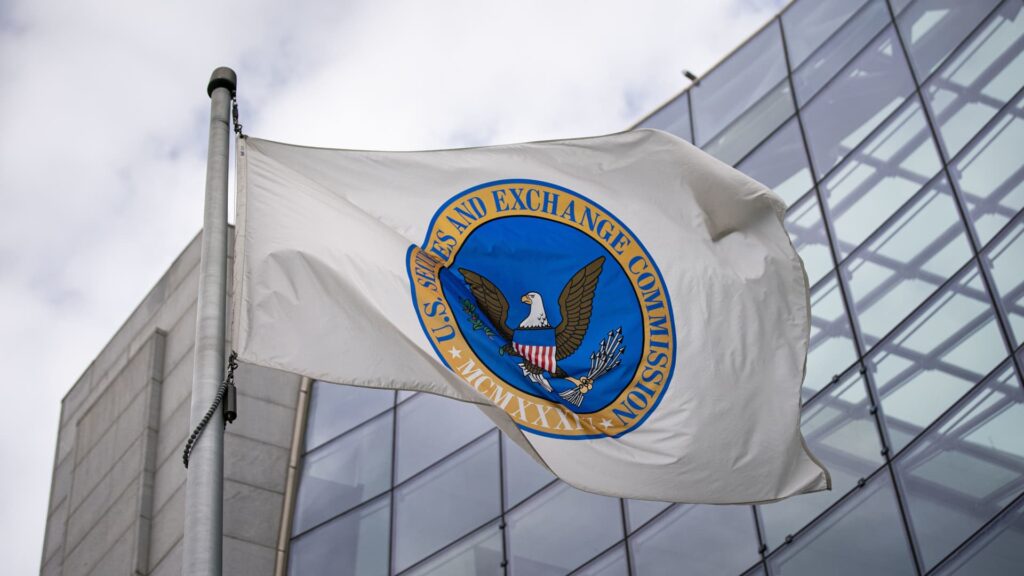
The United States Securities and Exchange Commission (SEC) has reportedly opted not to appeal a recent court ruling in favor of Grayscale Investments.
The decision stems from the U.S. Court of Appeals for the District of Columbia Circuit, which directed the SEC to review Grayscale’s application for a spot Bitcoin exchange-traded fund (ETF).
This development was disclosed in an October 13 report by Reuters, citing an insider source. Bloomberg analysts, too, anticipate that the SEC will refrain from taking the matter to the Supreme Court, although this doesn’t guarantee automatic approval for Grayscale’s ETF application.
If these reports hold true, the SEC is obligated to comply with the court’s August order, requiring a thorough evaluation of Grayscale’s request to transform its Grayscale Bitcoin Trust into a spot Bitcoin ETF. Reuters anticipates that the appeals court will soon provide a detailed mandate outlining how the SEC should execute this ruling.
In response to these unfolding events, Bloomberg ETF analyst James Seyffart expressed his perspective via X (formerly Twitter), suggesting that the SEC is unlikely to appeal further.
READ MORE: Former Engineer Exposes Multi-Million Dollar Scams at Alameda Research Amidst FTX Fraud Trial
Seyffart anticipates that discussions between Grayscale and the SEC will commence in the coming week, with the hope of shedding more light on the next steps.
Looking ahead, Seyffart posits that we may learn in the next week or two about the deadline for the SEC to either approve or deny Grayscale’s spot Bitcoin ETF application.
Should the SEC reject the application, Grayscale would retain the option to appeal, potentially prolonging the process.
Approximately seven spot Bitcoin ETF applications currently await the SEC’s decision, indicating substantial interest in this investment vehicle.
In a separate X post on October 13, Seyffart reiterated his belief in a 90% probability of a spot Bitcoin ETF application receiving approval in January 2024, with specific reference to Cathie Wood’s ARK Invest.
Seyffart and Eric Balchunas, Bloomberg’s senior ETF analyst, previously estimated a 75% likelihood of an ETF application gaining approval in 2023, underscoring the growing momentum and expectations surrounding this evolving financial instrument.
Other Stories:
FTX Collapse Tied to Bankman-Fried’s Financial Maneuvers, Reveals Ex-Alameda CEO
Cardano Founder Equates FTX’s Bankman-Fried to Bernie Madoff Amid Controversial Trial
On October 13, Bitcoin (BTC) remained steady around the crucial $26,800 level for a second consecutive day as United States regulators prepared to make a decision in their ongoing battle with crypto investment giant Grayscale.
Data from Cointelegraph Markets Pro and TradingView indicated that Bitcoin’s price exhibited minimal change from the previous day, trading within a narrow range.
Analysts closely monitored several potential catalysts, including the pending decision by the U.S. Securities and Exchange Commission (SEC) regarding the appeal of a court ruling related to its refusal to approve a Bitcoin spot exchange-traded fund (ETF).
Michaël van de Poppe, the founder and CEO of MN Trading, emphasized the significance of the day, stating in a social media post, “Today is an important day with the SEC Appeal on the Grayscale ruling.
If nothing happens, we might be seeing a case where Bitcoin reverses upwards in the coming weeks. I’m positioned long.”
Amidst a week filled with economic data releases that consistently revealed higher-than-expected inflation, macroeconomic data releases were taking a temporary break.
READ MORE: Former Engineer Exposes Multi-Million Dollar Scams at Alameda Research Amidst FTX Fraud Trial
Renowned trader and analyst Credible Crypto expressed cautious optimism about Bitcoin’s future price trajectory, highlighting a pattern of controlled price declines and suggesting that a reversal might occur once certain levels were cleared.
Meanwhile, trader Daan Crypto Trades observed Bitcoin moving within a range defined by two liquidity levels, anticipating a reaction should the spot price reach either boundary.
Trader and analyst Rekt Capital set a price target of $25,000 for Bitcoin if bulls failed to regain lost exponential moving averages (EMAs) during the week.
Leading up to the appeal deadline, Grayscale’s flagship investment fund, the Grayscale Bitcoin Trust (GBTC), continued to perform well.
Grayscale anticipated that the ongoing legal proceedings would result in GBTC becoming a spot ETF. An early victory for the company in Q2 had already boosted its fortunes. ]
On October 11, GBTC reached its narrowest discount to the net asset value (NAV), which equates to the Bitcoin spot price, since December 2021.
The discount, technically a negative premium, bottomed out at -16.44% before slightly decreasing, as reported by CoinGlass, a monitoring resource.
Other Stories:
FTX Collapse Tied to Bankman-Fried’s Financial Maneuvers, Reveals Ex-Alameda CEO
Cardano Founder Equates FTX’s Bankman-Fried to Bernie Madoff Amid Controversial Trial