


Mixin Network, a decentralized peer-to-peer network, recently fell victim to a devastating hack, resulting in the loss of approximately $200 million in cryptocurrency assets.
The breach, which occurred on September 23, triggered an immediate response from Mixin Network, prompting the suspension of all deposit and withdrawal services on its platform.
In an effort to investigate the hack and recover the stolen assets, Mixin Network enlisted the expertise of blockchain investigator SlowMist and tech giant Google.
At the time of the security breach, Mixin Network’s holdings included $94.48 million in Ether, $23.55 million in Dai, and $23.3 million in Bitcoin, totaling $141.32 million in crypto assets, as revealed by PeckShield’s independent investigation.
Web3 SaaS analytics platform 0xScope conducted an additional investigation, uncovering the hacker’s historical ties to Mixin Network.
In 2022, an address associated with the hacker received 5 ETH from Mixin, which was subsequently deposited into Binance.
The hacker demonstrated sophistication by converting the stolen Tether (USDT) into DAI to prevent potential asset freezing.
READ MORE: FTX Files $157.3 Million Lawsuit Against Former Employees Over Alleged Fraudulent Withdrawals
Mixin Network has assured users that deposit and withdrawal services will resume once the vulnerabilities in their system are confirmed and rectified.
However, specific plans for recovering the lost assets have yet to be disclosed.
Initially, Mixin Network’s founder, Feng Xiaodong, had promised to provide an explanation for the incident in a public Mandarin livestream on September 25 at 1:00 pm Hong Kong Time.
Unfortunately, official links to the livestream were conspicuously absent from the network’s social media channels and its official website, raising questions about the transparency of their response to the hack.
As of the time of this report, Mixin Network had not responded to inquiries from Cointelegraph, leaving the crypto community eagerly awaiting updates on the situation.
The incident also serves as a reminder of the ongoing threats faced by prominent figures in the crypto space, as Ethereum co-founder Vitalik Buterin recently fell victim to a SIM swap attack, highlighting the need for heightened security measures in the cryptocurrency industry.
Buterin’s social media profile on X was compromised when attackers executed a SIM swap, demonstrating the importance of safeguarding mobile numbers to protect against unauthorized access to digital assets and personal information.
Other Stories:
Binance and CEO CZ Zhao Seek Dismissal of SEC Lawsuit Overreach
Bitmain and Core Scientific Forge Multi-Million Dollar Deal
IRM Report Highlights Bitcoin’s Potential as a Driver of Global Energy Transition

Shortly after the crypto exchange HTX, formerly known as Huobi, reported an $8 million hack, Binance’s CEO Changpeng “CZ” Zhao stepped forward to offer the assistance of Binance’s security team in investigating the breach.
Swift intervention is essential when dealing with crypto thefts, as hackers often employ tactics to cover their tracks, such as using mixers or converting stolen assets into privacy tokens.
On September 24th, the blockchain analytics platform Cyvers detected a hack that siphoned off 5,000 Ether from one of HTX’s hot wallets.
In a proactive effort to mitigate the damage, HTX extended an olive branch by offering a “white-hat bonus” equivalent to 5% of the pilfered funds, totaling nearly $400,000, to the hacker.
However, the hacker was granted a seven-day window to comply with the offer. HTX communicated this proposition in Mandarin (Chinese).
In a more lighthearted vein, CZ humorously remarked on the striking similarity between the rebranded HTX and Sam Bankman-Fried’s infamous crypto exchange, FTX.
Nevertheless, the comparison ends there, as HTX suffered a hack while FTX was embroiled in allegations of being a scam.
Responding to a tweet from Justin Sun, the founder of Tron and an adviser to HTX, CZ enlisted Binance’s security team to assist in tracking the stolen funds.
READ MORE: Couple Faces Trial Over $10.5 Million Mistakenly Sent to Them
Sun confirmed that HTX would cover all losses incurred by its users, stating, “The $8 million represents a relatively small sum compared to the $3 billion in assets held by our users and just two weeks’ revenue for the HTX platform.”
HTX also implemented real-time monitoring systems to avert future losses.
While Sun denied holding a significant stake in HTX, he committed to conducting live streams in both English and Chinese to discuss exchange security.
As for the ongoing HTX hack investigation, Binance had not responded to Cointelegraph’s request for comment at the time of this report.
A day before the HTX breach, the decentralized peer-to-peer network Mixin Network experienced a hack that led to losses of nearly $200 million, stemming from a compromise of a third-party cloud service provider’s database.
Independent investigations by Web3 SaaS analytics platform 0xScope revealed the hacker’s previous interactions with Mixin Network.
In 2022, an address linked to the hacker had received 5 ETH from Mixin, which was later deposited into Binance.
Deposits and withdrawals on Mixin Network would resume once vulnerabilities were confirmed and rectified, but plans for recovering the lost assets for users were not immediately disclosed.
Other Stories:
Terra Classic Community Votes to Halt USTC Minting for Stable Peg Restoration
Bitcoin Holds Steady at $26,500 as Accumulation Continues Amid Market Stability
Coinbase’s Layer-2 Network Base Surpasses Solana with $397.32 Million TVL Surge

Blockchain investigators have raised concerns over a series of Ethereum (ETH) transactions originating from a wallet linked to Vitalik Buterin, one of the co-founders of Ethereum, in September 2023. These transactions collectively amount to a staggering $3.9 million.
On September 25th, a distinct 400 ETH transaction from Vitalik’s wallet to Coinbase was scrutinized by various blockchain monitoring profiles.
The estimated value of this transaction was approximately $632,000. In a tweet, the transaction was succinctly summarized: “@VitalikButerin deposited 400 $ETH to #Coinbase at $1,579 ($632K) 2hrs ago.”
What’s particularly noteworthy is that over the past ten days leading up to this transaction, Vitalik Buterin has deposited a total of 2,421 ETH, valued at $3.94 million, into multiple centralized exchanges.
Spot On Chain, a blockchain analytics platform, provided these insights.
Spot On Chain also highlighted that this recent deposit is part of a broader trend.
It revealed that Buterin had initiated a sequence of ETH deposits into centralized exchanges starting from September 15th, amassing an impressive 2,421 ETH, equivalent to $3.94 million.
READ MORE: Bitmain and Core Scientific Forge Multi-Million Dollar Deal
Among these deposits, 321 ETH were sent to Kraken between September 15th and September 19th. Furthermore, several transactions involving a total of 1,700 ETH were made to Bitstamp on September 17th and September 20th, while an additional 500 ETH was deposited to Paxos on September 19th.
In an effort to independently verify these transactions, Cointelegraph used Nansen 2 beta’s wallet profiler. The blockchain data unequivocally corroborated the validity of these transactions.
Additionally, it unveiled that a substantial 2,000 ETH, worth $4.9 million, had been transferred to the address responsible for these transactions.
This address has long been associated with Vitalik Buterin.
Spot On Chain further noted that the source of the 2,000 ETH transaction is a more well-known address, identified as 0xD04daa65144b97F147fbc9a9B45E741dF0A28fd7, belonging to Vitalik Buterin, compared to the middle address, 0x5567A4bE2D5b77F5Fd870f99Ed9167Feab8831B1, which had been facilitating the transfer of funds to exchanges.
This development comes in the wake of a prior on-chain monitoring discovery where a 600 ETH ($1 million) transaction from the address “vitalik.eth” on August 21st had also raised eyebrows.
Clearly, Vitalik Buterin’s Ethereum transactions continue to captivate the blockchain community’s attention, sparking curiosity and speculation.
Other Stories:
FTX Files $157.3 Million Lawsuit Against Former Employees Over Alleged Fraudulent Withdrawals
IRM Report Highlights Bitcoin’s Potential as a Driver of Global Energy Transition
Binance and CEO CZ Zhao Seek Dismissal of SEC Lawsuit Overreach
Stablecoin issuer Tether has made significant alterations to its terms of service (ToS) in Singapore, according to an email disclosed by Julian Hosp, the CEO of decentralized finance platform Cake DeFi, on September 25th.
These amendments impose restrictions on specific customer groups, preventing them from redeeming Tether.
In the email from Tether, it was explicitly stated that the company could no longer facilitate the redemption of USDT for United States dollars due to the adjustments in its ToS.
This modification raised concerns for Cake DeFi, headquartered in Singapore, as its CEO Julian Hosp expressed uncertainty regarding the platform’s ability to redeem USDT into U.S. dollars under the new terms.
The principal changes in Tether’s ToS revolve around tightening onboarding standards and introducing a clause stating that “corporates controlled by another entity, directors, and shareholders residing in Singapore are no longer permitted to be Tether customers.”
The ambiguity of the term “controlled by another entity” baffled many within the cryptocurrency community, including Cake DeFi, which was informed that it fell under this category, rendering it ineligible for issuance or redemption through the Tether platform.
This adjustment in Tether’s ToS has attracted significant attention from X users, formerly known as Twitter, especially considering its timing in light of a major cryptocurrency money laundering scandal in Singapore.
READ MORE:Binance and CEO CZ Zhao Seek Dismissal of SEC Lawsuit Overreach
The assets seized during the investigation have now ballooned to an astonishing $2 billion, further intensifying scrutiny on cryptocurrency activities within the country.
Some speculate that the changes pertaining to USDT redemption could be specific to Cake DeFi, suggesting that the decentralized finance protocol may have triggered enhanced due diligence (EDD) measures, potentially signaling an underlying partnership issue between the two entities.
Cointelegraph made efforts to reach out to Tether for comments regarding the email shared by Cake DeFi’s CEO and the recent adjustments to its ToS but had not received a response as of the publication of this article.
In conclusion, Tether’s revised terms of service in Singapore have caused uncertainty and speculation within the cryptocurrency community, particularly with regards to USDT redemption.
The implications of these changes, and their potential impact on Cake DeFi and other affected parties, remain unclear pending further clarification from Tether.
Other Stories:
FTX Files $157.3 Million Lawsuit Against Former Employees Over Alleged Fraudulent Withdrawals
IRM Report Highlights Bitcoin’s Potential as a Driver of Global Energy Transition

The Terra Classic community has taken a significant step to restore stability by voting to halt all minting and reminting activities associated with TerraUSD Classic (USTC).
This decision is driven by the community’s determination to reestablish a secure peg between USTC and the United States dollar.
In a recent community proposal, the vote results revealed that 59% were in favor of discontinuing the minting of USTC, while approximately 40% opposed this change.
The primary objective behind this move is to protect the interests of both the community members and external investors.
By reducing the supply of USTC, the community aims to facilitate a return to a robust peg with the U.S. dollar.
The backdrop to this crucial decision lies in the events of May 2022 when USTC disengaged from its peg with the U.S. dollar.
This event triggered a catastrophic collapse within the Terra ecosystem, especially affecting Luna Classic (LUNC), which had a close association with USTC.
The value of LUNC plummeted by nearly 100%, triggering a wider downturn in the crypto markets and resulting in an overall loss of approximately $40 billion in total market capitalization.
The proposal to cease minting and reminting activities also involves major crypto exchanges burning USTC.
READ MORE: IRM Report Highlights Bitcoin’s Potential as a Driver of Global Energy Transition
This action not only helps restore faith in the Terra ecosystem but also encourages institutions like Binance to initiate the burning of USTC, knowing that the process of minting and reminting has come to an end.
This decision comes in the wake of growing concerns within the Terra Classic community regarding an increase in spam activities, which coincided with the decline in LUNC prices.
It reflects the community’s determination to take proactive measures to ensure the sustainability of the Terra ecosystem.
In another recent development, the Terra Classic community voted on various proposals, including one that sought to raise the minimum deposit requirement from 1 million LUNC to 5 million LUNC.
The outcome of this proposal was resounding, with 93.22% in favor of increasing the minimum deposit requirement amount.
This move is expected to further bolster the stability and integrity of the Terra ecosystem as it continues to evolve and adapt to the dynamic crypto landscape.
Other Stories:
FTX Files $157.3 Million Lawsuit Against Former Employees Over Alleged Fraudulent Withdrawals
Bitmain and Core Scientific Forge Multi-Million Dollar Deal
Binance and CEO CZ Zhao Seek Dismissal of SEC Lawsuit Overreach

The Miss Universe Organization has vehemently disavowed any affiliation with the Miss Universe Coin initiative, which was unveiled at the Philippine Blockchain Week (PBW) earlier this month.
The PBW has assured the public that it is actively engaged with all stakeholders in this matter and is committed to providing further updates shortly.
During the PBW event earlier this month, Donald Lim, the founder of the organization overseeing the PBW, made a stunning announcement, declaring that the PBW was preparing to launch the Miss Universe Coin.
However, in a surprising turn of events, the official Miss Universe Organization has distanced itself from the coin project and categorically labeled it as fraudulent.
On September 22, the official Miss Universe Facebook page issued a statement asserting that neither the Miss Universe Organization nor JKN Global Group, the entity responsible for the beauty pageant, has any ties to the coin project showcased at the PBW event.
They further stated their intent to explore all available legal options to address this infringement.
READ MORE: FTX Files $157.3 Million Lawsuit Against Former Employees Over Alleged Fraudulent Withdrawals
The Miss Universe Organization clarified, “There is currently no Miss Universe cryptocurrency or blockchain offering, and these products are in no way involved with the voting or selection process for Miss Universe or the Miss Universe Philippines pageants.”
A spokesperson for the Miss Universe Organization went on to describe the Miss Universe Coin as a “fraud” and expressed concerns that it may surface at other international blockchain conferences, including those in Dubai and Singapore.
They urged media outlets to exercise caution and refrain from covering it if encountered at these events.
In response to the unfolding situation, PBW issued a statement via its X platform (formerly Twitter), affirming that it is actively communicating with all parties involved.
They have promised to share updates as soon as they become available. Cointelegraph reached out to the Philippine Blockchain Week for further clarification but had not received an immediate response at the time of reporting.
As the Miss Universe Coin project’s legitimacy hangs in the balance, the cryptocurrency and blockchain communities eagerly await additional information and clarification on this perplexing turn of events.
Other Stories:
Bitmain and Core Scientific Forge Multi-Million Dollar Deal
Binance and CEO CZ Zhao Seek Dismissal of SEC Lawsuit Overreach
IRM Report Highlights Bitcoin’s Potential as a Driver of Global Energy Transition

Arkham, a blockchain intelligence platform, recently unveiled a startling revelation: cryptocurrency giant Coinbase boasts an astonishing stash of nearly 1 million Bitcoins within its wallets.
In the current volatile crypto market, these coins carry a staggering valuation of over $25 billion.
To put this revelation into perspective, Arkham’s findings indicate that Coinbase’s holdings represent approximately 5% of the entire global Bitcoin supply.
Their meticulous analysis discerned a grand total of 947,755 BTC under Coinbase’s control, while the circulating supply of Bitcoin stands at approximately 19,493,537 according to CoinGecko, a trusted source for crypto data.
What’s more, Arkham’s investigations didn’t stop at the sheer volume of holdings.
They went on to identify a staggering 36 million Bitcoin deposit and holding addresses linked to the exchange.
In particular, Arkham pointed out that Coinbase’s largest cold wallet alone shelters around 10,000 BTC.
Remarkably, the intelligence experts at Arkham speculate that Coinbase might have undisclosed Bitcoin holdings that remain off the radar, eluding identification.
However, there’s a twist in the tale. Despite Coinbase’s colossal BTC holdings, the exchange technically only “owns” a fraction of this digital goldmine.
READ MORE: South Korean City Aims to Become a Leading Blockchain Hub with $75 Million Investment
In fact, recent data shows that Coinbase has direct ownership of roughly 10,000 of the Bitcoins it houses, which translates to a value of approximately $200 million.
This revelation highlights the complex dynamics of cryptocurrency exchanges and their role as custodians of user assets.
The cryptocurrency community erupted in a flurry of reactions upon learning about Coinbase’s substantial Bitcoin reserves.
Some individuals took it as a warning sign, advocating for the withdrawal of BTC from centralized exchanges, cautioning against waiting until withdrawals are suspended.
Others argued that concerns surrounding the security of cold wallets make it challenging for holders to find a truly safe storage solution for their digital assets.
It’s worth noting that when it comes to corporate Bitcoin ownership, MicroStrategy, a business intelligence firm, continues to reign supreme.
As of the latest available data, MicroStrategy’s co-founder Michael Saylor proudly declared the company’s possession of a staggering 152,800 BTC, with a valuation exceeding $4 billion.
This further underscores the growing trend of institutional adoption of Bitcoin as a store of value.
Other Stories:
IRM Report Highlights Bitcoin’s Potential as a Driver of Global Energy Transition
Alchemy Pay Secures Key U.S. Money Transmitter License, Expanding Crypto-to-Fiat Services
CBDC Anti-Surveillance State Act Clears Hurdle, Advances to Congressional Vote

Fenwick & West, a United States-based law firm, has vehemently refuted allegations in a recent class-action lawsuit brought against it in connection with its past legal services provided to the now-defunct cryptocurrency exchange, FTX.
The firm stands accused of aiding and abetting FTX’s purported fraudulent activities.
In a court filing dated September 21, Fenwick & West firmly denies any wrongdoing, invoking the legal principle that attorneys cannot be held liable for their clients’ misconduct as long as their actions remain within the scope of the client’s representation.
The plaintiffs allege that while Fenwick rendered standard legal services in compliance with the law, FTX’s founder, Sam Bankman-Fried, allegedly misused this advice to further fraudulent activities.
Furthermore, the plaintiffs contend that Fenwick went beyond the typical scope of services provided to FTX, potentially making them liable.
According to the filing, Fenwick “provided services to the FTX Group entities that went well beyond those a law firm should and usually does provide.”
The filing also claims that some Fenwick employees willingly left the firm to join FTX, suggesting that their actions were not coerced.
READ MORE: IRM Report Highlights Bitcoin’s Potential as a Driver of Global Energy Transition
The lawsuit asserts that Fenwick played a role in establishing corporations that Bankman-Fried allegedly used in his fraudulent activities.
Additionally, it provided advice to FTX regarding regulatory compliance in the evolving cryptocurrency landscape.
Fenwick & West, however, maintains that it should not be held solely responsible for FTX’s actions, asserting that it played a relatively minor role in providing various legal advice components to the exchange.
The firm argues that if the plaintiffs’ allegations were to hold, it would set a dangerous precedent where lawyers could be held accountable for their clients’ misconduct.
This legal dispute follows FTX’s own legal action against former employees of Salameda, a Hong Kong-incorporated company previously affiliated with the FTX group.
FTX seeks to reclaim $157.3 million, alleging that these funds were illicitly withdrawn shortly before the exchange filed for bankruptcy.
In essence, the legal battle between Fenwick & West and the plaintiffs hinges on whether the law firm’s actions can be directly linked to FTX’s alleged fraudulent activities or if they were merely providing standard legal services within the boundaries of their representation.
Other Stories:
Alchemy Pay Secures Key U.S. Money Transmitter License, Expanding Crypto-to-Fiat Services
South Korean City Aims to Become a Leading Blockchain Hub with $75 Million Investment
CBDC Anti-Surveillance State Act Clears Hurdle, Advances to Congressional Vote
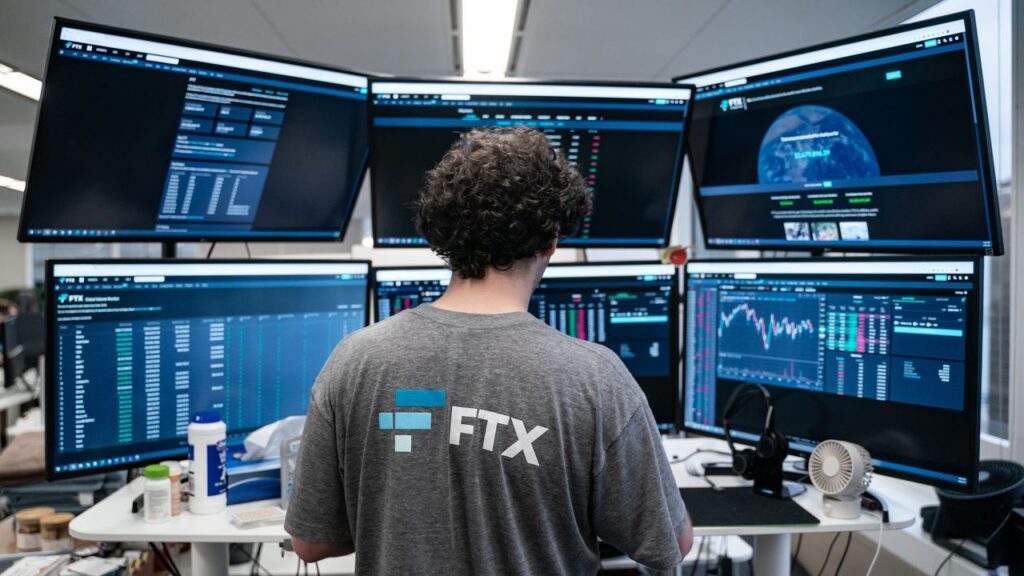
Coinbase, a prominent cryptocurrency exchange, made two attempts to acquire FTX Europe, with the intention of expanding its derivatives business internationally.
However, it has now been revealed that Coinbase has decided against pursuing this acquisition, as reported by Cointelegraph.
These acquisition endeavors occurred in November 2022, shortly after FTX’s parent company experienced a significant setback, and again in September 2023.
A spokesperson from Coinbase confirmed the reports, stating, “We’re always evaluating opportunities to strategically expand our business and meet with many teams around the world.”
Besides Coinbase, other entities expressing interest in acquiring FTX Europe include Crypto.com and Trek Labs.
The sale deadline for FTX Europe has been extended until September 24. FTX had previously invested nearly $400 million in its European branch.
FTX Europe conducted its derivatives trading activities under a regulatory license from Cyprus. At the time of its parent company’s downfall, it was the sole provider of several popular derivatives products, including perpetual futures.
Derivatives are financial instruments whose value is derived from an underlying asset, such as Bitcoin (BTC).
READ MORE: Creators Embrace Decentralized Platforms as Web3 Reshapes Adult Content Industry
They encompass various types, including options, futures, and swaps, and are commonly used by investors for hedging, leverage, and market speculation, making them a favored strategy among traders and institutional investors.
The potential acquisition of FTX Europe could have significantly boosted Coinbase’s fee revenue, given the growing popularity of crypto derivatives trading, even during bear markets.
Coinbase’s latest quarterly earnings report revealed $707 million in revenue for the second quarter of 2023, with $327 million attributed to spot trading—a 13% decline from the previous quarter.
Simultaneously, global derivatives trading volumes on centralized exchanges experienced a 13.7% surge in June, reaching $2.13 trillion, as per CCData.
Binance emerged as the leading platform for cryptocurrency derivatives trading, with a trading volume exceeding $1.21 trillion in June, followed by OKX exchange at $416 billion, marking a 44.9% increase in activity.
Bitcoin futures trading also spiked on the CME exchange, reaching $37.9 billion, a 28.6% increase in the same month.
Notably, Coinbase has also ventured into the derivatives markets in the United States. In August, it received regulatory approval to offer crypto futures investments to eligible customers in the country.
This approval enabled Coinbase to introduce Bitcoin and Ether (ETH) futures contracts through its Commodity Futures Trading Commission-regulated derivatives exchange, FairX.
The global crypto derivatives market, according to Coinbase, represents nearly 75% of crypto trading volume worldwide and serves as a critical access point for traders.
Other Stories:
ASIC Launches Legal Action Against Kraken’s Australian Operator Bit Trade
South Korea’s Cryptocurrency Holdings Surpass $98 Million, Dominating Overseas Assets
Bitcoin Holds Steady at $27,000 as Crypto Community Awaits Fed’s Decision
Recent data reveals that the notorious North Korean hacking collective, Lazarus Group, possesses a staggering $47 million in various cryptocurrencies, primarily dominated by Bitcoin.
This information, compiled from Dune Analytics through 21.co, the parent company of 21Shares, exposes the group’s holdings.
As of now, Lazarus Group’s wallets comprise $42.5 million in Bitcoin (BTC), $1.9 million in Ether (ETH), $1.1 million in Binance Coin (BNB), and an additional $640,000 in stablecoins, primarily Binance USD.
It is notable that the group’s crypto assets have decreased considerably since September 6, when they held $86 million, just days after their alleged involvement in the Stake.com hack.
The Dune dashboard meticulously monitors 295 wallets linked to the Lazarus Group, as identified by the United States Federal Bureau of Investigation (FBI) and the Office of Foreign Assets Control (OFAC).
What stands out is the absence of privacy coins, such as Monero (XMR), DASH, or Zcash (ZEC), within Lazarus’ portfolio.
These cryptocurrencies are renowned for their enhanced anonymity features, making tracking transactions notably challenging.
In contrast, Lazarus Group’s crypto wallets continue to exhibit high activity, with the most recent transaction recorded on September 20.
READ MORE: Bitmain and Core Scientific Forge Multi-Million Dollar Deal
Additionally, 21.co suggests that the actual holdings of the group might exceed the reported figures, cautioning, “We should note that this is a lower-bound estimation of Lazarus Group’s crypto holdings based on publicly available information.”
Notably, on September 13, Cointelegraph reported that Lazarus Group orchestrated an attack on the crypto exchange CoinEx, resulting in a loss of at least $55 million.
The FBI has also linked Lazarus to hacks on Alphapo, CoinsPaid, and Atomic Wallet, collectively amounting to over $200 million stolen in 2023.
However, a report by Chainalysis indicates an 80% decline in crypto thefts by North Korea-linked hackers from 2022.
As of mid-September, these groups had pilfered $340.4 million in crypto, a significant drop from the record $1.65 billion stolen digital assets in 2022.
In a recent development, U.S. federal authorities issued a warning of a “significant risk” of potential attacks on U.S. healthcare and public health sector entities by the Lazarus Group, emphasizing the group’s persistent threat to various sectors.
Other Stories:
Binance and CEO CZ Zhao Seek Dismissal of SEC Lawsuit Overreach
IRM Report Highlights Bitcoin’s Potential as a Driver of Global Energy Transition
FTX Files $157.3 Million Lawsuit Against Former Employees Over Alleged Fraudulent Withdrawals