



The United States Securities and Exchange Commission (SEC) has escalated its confrontation with Binance.US, alleging a lack of cooperation on September 14th.
In a recent court filing, the SEC criticized Binance.US, accusing its holding company, BAM, of providing only a paltry 220 documents during the discovery process.
Many of these documents, as per the SEC’s assertion, were plagued by unintelligible content, lacking essential dates or signatures.
The SEC further accused BAM of evading the production of vital witnesses for deposition, opting to cooperate with only four depositions it considered suitable.
Moreover, the regulatory body claimed that Binance.US responded to requests for pertinent communications with blanket objections, and conveniently asserted that certain documents crucial to their business operations did not exist.
Ironically, the SEC later obtained some of these supposedly non-existent documents from alternative sources, raising serious concerns about the exchange’s transparency.
The SEC also voiced apprehensions about Binance.US’s utilization of Ceffu, a wallet custody software provided by global entity Binance Holdings Ltd.
Inconsistent statements from BAM regarding Ceffu’s role in wallet and customer funds management drew the SEC’s attention.
Initially, BAM had declared Ceffu as its wallet custody software and service provider but later switched its stance to claim that Binance fulfilled this role.
READ MORE: Binance.US Challenges SEC’s ‘Unreasonable’ Demands in Legal Showdown
This inconsistency led the SEC to question whether Binance.US’s use of Ceffu contravened a prior agreement designed to prevent fund diversion overseas.
The SEC’s legal battle against Binance commenced on June 5th, with the regulatory body leveling 13 charges against the crypto exchange.
These charges encompassed unregistered securities offerings, as well as allegations related to the Simple Earn and BNB Vault products and its staking program.
According to the SEC, Binance.com, Binance.US, and BAM Trading should have registered as clearing agencies, broker-dealers, and exchanges, respectively.
Furthermore, the unregistered sale of Binance.US’ staking-as-a-service program necessitated BAM Trading to register as a broker-dealer.
These fresh allegations by the SEC come amidst a backdrop of internal turmoil at Binance.US.
The departure of CEO Brian Shorder and a string of high-ranking executives, including the head of legal and the chief risk officer, have raised questions about the exchange’s stability and management. Binance.US has yet to provide a response to these latest accusations.
Other Stories:
Prominent Executives Predict Bitcoin Could Surpass $100,000 in 2024
Former PayPal President Predicts Bitcoin Lightning Network Revolutionizing Global Payments
2023 Crypto Venture Capital Funding Plummets As Industry Faces Uncertain Times

John Deaton, a prominent attorney representing numerous XRP token holders in the Ripple-Securities Exchange Commission (SEC) lawsuit, has taken a significant step by officially submitting his notice of appearance as an Amicus Curiae in the LBRY lawsuit.
This noteworthy development transpired on September 14, 2023, when Deaton formally lodged his Notice of Appearance on behalf of Amicus Curiae Naomi Brockwell, who is widely recognized as the founder of Crypto Law.
Crypto Law is a dedicated platform offering invaluable insights and updates on legal and regulatory developments pertaining to cryptocurrencies in the United States, and it operates in collaboration with Deaton.
John Deaton has earned a reputation for his unwavering advocacy for the rights of cryptocurrency investors and his active participation in legal proceedings and discussions related to cryptocurrency regulations and legal actions. His involvement in the LBRY lawsuit marks another significant stride in his commitment to the cryptocurrency community.
The LBRY lawsuit originated in March 2021 when the United States SEC initiated legal action against LBRY.
The SEC alleged that LBRY had unlawfully sold LBC tokens without complying with the agency’s registration requirements, as mandated by law.
READ MORE: Prominent Executives Predict Bitcoin Could Surpass $100,000 in 2024
On September 7, 2023, LBRY filed a notice of appeal with the United States Court of Appeals for the First Circuit, seeking to challenge the final judgment delivered on July 11.
This judgment had ordered LBRY to pay a civil penalty and imposed a prohibition on its participation in unregistered offerings of crypto asset securities in the future.
In July 2023, the United States District Court for the District of New Hampshire issued its final judgment in the US SEC vs. LBRY lawsuit, determining LBRY’s liability for violating Section 5 of the Securities Act of 1933.
The outcome of this case was closely watched for its potential implications for the ongoing XRP lawsuit.
However, on July 14, 2023, U.S. District Judge Analisa Torres handed down a summary judgment in favor of Ripple.
The judgment established that the sale of XRP tokens to retail buyers did not qualify as securities, providing a significant legal victory for Ripple and its supporters.
John Deaton’s involvement as Amicus Curiae in the LBRY lawsuit underscores the interconnectedness of legal actions within the cryptocurrency space and the growing influence of individuals dedicated to safeguarding the rights and interests of cryptocurrency investors.
Other Stories:
Binance.US Challenges SEC’s ‘Unreasonable’ Demands in Legal Showdown
2023 Crypto Venture Capital Funding Plummets As Industry Faces Uncertain Times
Former PayPal President Predicts Bitcoin Lightning Network Revolutionizing Global Payments

Despite fresh data indicating rising inflation in the United States, Bitcoin (BTC) continued its upward trajectory as it entered the Wall Street trading session on September 14.
The cryptocurrency reached new highs for September, reaching a peak of $26,762.
Bitcoin’s strength persisted from the previous day’s closing, seemingly unfazed by the resurgence of U.S. inflation as confirmed by the Consumer Price Index (CPI) and Producer Price Index (PPI) August reports.
The PPI, in particular, exceeded market expectations by coming in at 1.6% year-on-year, while analysts had predicted 1.3%.
Interestingly, the crypto market aligned itself with traditional financial markets in rejecting the notion that U.S. macroeconomic policy might tighten further to combat inflation.
CME Group’s FedWatch Tool indicated a lack of consensus on the Federal Reserve raising interest rates later in the month, with odds of a rate hike pause standing at 97% at the time of this report.
The European Central Bank (ECB) added to this paradox by increasing rates by 0.25% on the same day.
This marked the ECB’s 10th consecutive rate hike, bringing rates to 4.5%, their highest since 2001. Notably, the ECB also downgraded its growth forecasts for the years leading up to 2025, emphasizing the ongoing battle against inflation.
READ MORE: Binance.US Challenges SEC’s ‘Unreasonable’ Demands in Legal Showdown
Market sentiment surrounding Bitcoin remained optimistic, with many participants hopeful for further price gains, aiming for a target of $27,000.
Traders closely watched the $26.4K level, considering it crucial to break through to escape the current trading range and aim for an upward move toward approximately $27,000.
Popular trader Jelle observed that Bitcoin was following the Power of Three setup, pressing against local resistance. He suggested that a break above $26,400 could pave the way for a push towards $27,600.
However, trader and analyst Rekt Capital adopted a more conservative stance, drawing parallels with a chart fractal from 2021, which coincided with Bitcoin’s previous all-time high.
He noted that as long as Bitcoin maintained support around $26,000, the Phase A-B of the fractal could come into play.
Nevertheless, he cautioned that past occurrences of this fractal had sometimes led to a relief rally followed by rejection, potentially indicating weakening support around the $26,000 level.
In summary, despite concerning inflation data in the U.S. and global central banks anticipating prolonged rate hikes, Bitcoin remained resilient, with market participants eyeing further price gains, albeit with varying degrees of caution.
Other Stories:
Prominent Executives Predict Bitcoin Could Surpass $100,000 in 2024
Former PayPal President Predicts Bitcoin Lightning Network Revolutionizing Global Payments
2023 Crypto Venture Capital Funding Plummets As Industry Faces Uncertain Times

Decentralized stablecoins could potentially dominate the stablecoin market in the future, according to Rune Christensen, the co-founder of MakerDAO, a pioneering decentralized finance (DeFi) platform.
In an interview with Cointelegraph’s Andrew Fenton at Token 2049 in Singapore, Christensen shared his insights on the role of decentralized stablecoins, like Dai (DAI), within the broader cryptocurrency ecosystem.
Christensen referenced a presentation by Nic Carter, a partner at Castle Island Ventures, during the conference.
Carter had suggested that interest-bearing stablecoins might capture 30% of the market within two years.
While Christensen agreed with this prediction, he emphasized that the outcome might hinge on macroeconomic conditions.
If high inflation and high interest rates persist, the dominance of stablecoins could increase.
When asked whether decentralized stablecoins could compete with their centralized counterparts, Christensen expressed confidence in their potential.
He stated that if the cryptocurrency space fulfills its potential, decentralized stablecoins could come to dominate the entire market, while centralized stablecoins would serve as the bridges to the legacy financial system.
Christensen highlighted the unique advantage of decentralized stablecoins, particularly those like Maker, which rely on real-world data.
He noted that these coins have the capacity to gamify savings, making them more engaging for users.
In mid-2022, Christensen proposed MakerDAO’s “Endgame Plan.”
READ MORE: Prominent Executives Predict Bitcoin Could Surpass $100,000 in 2024
The plan outlines the transition of DAI from a stablecoin pegged to the dollar to a free-floating asset, initially collateralized by real-world assets (RWA).
Over a three-year period, DAI would gradually shift from its dollar peg, with a focus on accumulating Ether (ETH) as decentralized collateral.
Christensen acknowledged that MakerDAO had established a strong and stable foundation but expressed concerns about the proliferation of fraudulent and illegitimate projects in the crypto space.
To address this, he envisioned making the protocol more appealing and enjoyable for younger users by incorporating gamification elements.
He believed that designing interfaces akin to games would attract users and enhance the protocol’s overall appeal.
In summary, Rune Christensen, co-founder of MakerDAO, sees a promising future for decentralized stablecoins like Dai.
Their potential dominance in the stablecoin market depends on various factors, including macroeconomic conditions and the ability to gamify savings, which could make them more attractive to users.
MakerDAO’s “Endgame Plan” represents a strategic shift toward greater decentralization and adaptability in the evolving cryptocurrency landscape.
Other Stories:
Binance.US Challenges SEC’s ‘Unreasonable’ Demands in Legal Showdown
2023 Crypto Venture Capital Funding Plummets As Industry Faces Uncertain Times
Former PayPal President Predicts Bitcoin Lightning Network Revolutionizing Global Payments

August marked a somber chapter in the world of cryptocurrencies, echoing the depths of despair seen since Bitcoin’s slump in November 2022.
Initially dismissed as a typical summer downturn, this month took a grave turn as liquidations rippled through the derivatives market, erasing 7.3% of Bitcoin’s value and 6.9% of Ether’s.
Even Grayscale’s court victory proved ephemeral as prices reverted to their August beginnings, resulting in a staggering $1 billion in liquidation losses when Bitcoin plummeted to $26,000.
Adding to the industry’s woes, venture capital (VC) investments declined by 42.7% from July to August, amassing a mere $401.9 million across 77 transactions. What had been a thriving crypto investment landscape until May this year is now dwindling.
The Cointelegraph Research “Investor Insights Report” offers a comprehensive monthly overview of the crypto realm, encompassing venture capital, derivatives, decentralized finance (DeFi), regulation, mining, and more.
VC investments in blockchain have been on the decline since Q2 2022, plummeting to a new low of $401 million in 2023.
Infrastructure projects secured 18 separate deals, accumulating $107 million in August, while centralized finance (CeFi) raised $100 million across just three deals.
These investments are typically lagging indicators, suggesting a potential resurgence when overall market sentiment shifts positively.
Yet, as Tim Draper aptly noted in a Cointelegraph Research interview, investors often miss the mark, implying that investing during the downturn may present opportunities to discover quality projects for the future bull market.
The expiration of $1.9 billion in monthly Bitcoin options on August 25 spurred market speculation.
READ MORE: Binance.US Challenges SEC’s ‘Unreasonable’ Demands in Legal Showdown
Although Bitcoin’s price remained relatively stable, excitement swirled when news of the SEC’s court loss against Grayscale surfaced, hinting at a future spot Bitcoin ETF.
The resulting price surge to $28,000 was short-lived, reverting to $26,000. Nonetheless, this range shows signs of market support.
Cointelegraph Research’s team boasts expertise in various fields, merging academic rigor with practical experience.
Their dedication ensures the delivery of the most precise and insightful content in the blockchain domain.
In conclusion, August brought crypto markets to their knees, with dwindling VC investments and a rollercoaster of price fluctuations.
While the landscape may appear bleak, seasoned investors see potential in these trying times, keeping an eye on quality projects for the impending bull market resurgence.
Remember, these opinions serve as general information and are not intended as specific financial advice or recommendations.
Other Stories:
Prominent Executives Predict Bitcoin Could Surpass $100,000 in 2024
Former PayPal President Predicts Bitcoin Lightning Network Revolutionizing Global Payments
2023 Crypto Venture Capital Funding Plummets As Industry Faces Uncertain Times
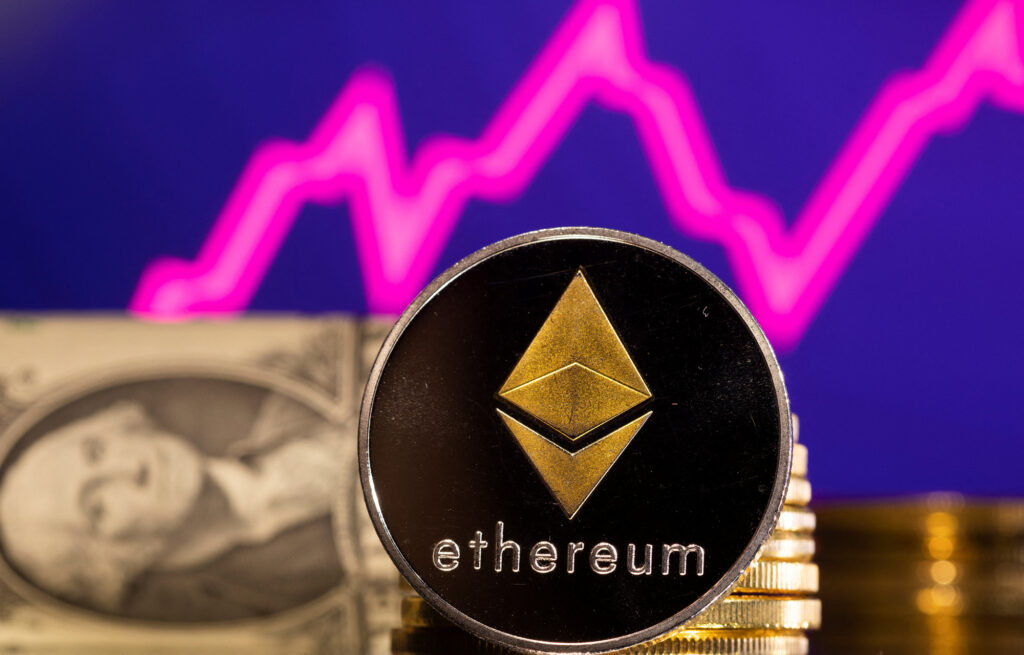
One year after Ethereum’s momentous shift to a proof-of-stake (PoS) consensus mechanism, the network has undergone a profound transformation.
On September 15, 2022, Ethereum executed “The Merge,” an event where the Ethereum mainnet merged with the Beacon Chain, a separate PoS blockchain.
The most striking change post-Merge was the reduction in energy consumption.
Data from The Cambridge Centre for Alternative Finance reveals that Ethereum’s energy use plummeted by over 99.9%, dropping from approximately 21 terawatt hours under proof-of-work (PoW) to a fraction of that.
Beyond energy efficiency, The Merge introduced an economically deflationary aspect to Ethereum.
The amount of Ether (ETH) issued to secure the network has been surpassed by the ETH removed from circulation.
Ultrasound.money data indicates that over 300,000 ETH (valued at $488 million) has been burned since The Merge, reducing the total ETH supply at a rate of 0.25% annually.
Despite expectations of a price surge due to this deflationary trend, Ethereum faced challenges in the form of macroeconomic factors, including banking crises and rising inflation.
While ETH’s growth lagged behind Bitcoin’s in the first quarter of the year, Bitcoin appeared to benefit from traditional financial instability.
The essence of the PoS upgrade was the shift from miners to stakers for network security.
The subsequent Shapella upgrade in April 2023 drove a significant portion of ETH towards staking. Liquid staking providers like Lido and Rocket Pool became key players in this ecosystem.
READ MORE: Prominent Executives Predict Bitcoin Could Surpass $100,000 in 2024
Currently, these providers hold over $19.5 billion worth of ETH, with Lido accounting for 72% of all staked ETH.
However, the rise of liquid staking raised concerns about the level of control granted to providers like Lido Finance.
Some providers sought to impose a 22% limit rule to ensure network decentralization, but Lido voted against this measure, raising worries about centralization of validation on Ethereum.
Beyond staking, Ethereum grappled with regulatory pressures, especially in the United States.
Regulatory bodies in the U.S. appeared to be targeting blockchain companies, posing potential threats to Ethereum and the global blockchain community.
Additionally, client diversity remained a central issue for Ethereum.
The majority of active Ethereum nodes were run through centralized web providers like Amazon Web Services, leaving the network exposed to centralized points of failure.
Vitalik Buterin suggested statelessness as a solution to promote decentralization by reducing data requirements for node operators.
However, he acknowledged that these challenges might take another 10 to 20 years to fully address.
Other Stories:
Binance.US Challenges SEC’s ‘Unreasonable’ Demands in Legal Showdown
2023 Crypto Venture Capital Funding Plummets As Industry Faces Uncertain Times
Former PayPal President Predicts Bitcoin Lightning Network Revolutionizing Global Payments

Representative Tom Emmer, along with 49 original co-sponsors, has reintroduced the “CBDC Anti-Surveillance State Act” in the United States House of Representatives, aimed at preventing what they perceive as excessive control by unelected officials in Washington over central bank digital currency (CBDC) issuance.
Their primary objective is to safeguard the financial privacy rights of American citizens.
In a statement, Emmer expressed concerns about the Biden administration’s willingness to compromise financial privacy for the sake of a surveillance-style CBDC.
He emphasized the importance of upholding American values such as privacy, individual sovereignty, and free-market competitiveness.
Emmer initially introduced this legislation in January 2022, and it was formally presented to Congress in February 2023.
The bill seeks to curtail the Federal Reserve’s authority to create a programmable digital dollar, which Emmer perceives as a tool for surveillance that could undermine American society.
The legislation has specific provisions aimed at limiting the Federal Reserve’s powers.
Firstly, it prohibits the issuance of CBDCs directly to individuals, a measure designed to prevent the central bank from transforming into a retail bank capable of collecting individuals’ personal financial data.
READ MORE: CFTC Commissioner Calls for Tech-Driven Investor Protection Reforms
Additionally, the bill bars the central bank from utilizing CBDCs as a means of implementing monetary policy.
Emmer has previously voiced concerns about the potential weaponization of money by the federal government in its quest to expand financial control.
He has been joined in these concerns by U.S. presidential candidate Robert F. Kennedy Jr., who argued that CBDCs would grant the government unprecedented power to stifle dissent by denying access to funds at the click of a button.
Several notable figures, including Senators French Hill, Warren Davidson, and Mike Flood, also support the CBDC Anti-Surveillance State Act.
Their united front reflects a growing apprehension within certain political circles regarding the potential risks associated with CBDCs and their implications for individual privacy and government control over financial transactions.
Other Stories:
Federal Reserve Vice Chairman Highlights CBDC Research and Stablecoin Oversight in Fintech Speech
SEC Pursues Appeal in Ripple Labs Lawsuit Over XRP’s Security Classification

Popular messaging app Telegram has introduced a long-awaited crypto wallet, marking a significant step towards realizing its vision of building a Web3 ecosystem.
The announcement came during the Token2049 event in Singapore, generating considerable excitement among the platform’s 800 million global users.
This crypto wallet operates on The Open Network (TON) blockchain, providing Telegram users with a seamless and secure way to manage their digital assets.
The integration of the TON wallet into Telegram had an immediate impact on the crypto market, causing Toncoin’s value to surge by approximately 7% upon the unveiling.
The TON Foundation has unveiled a compelling incentive for projects built on the TON blockchain.
These projects will receive preferential access to Telegram’s advertising platform, Telegram Ads.
While the wallet feature is currently accessible in the app’s settings for existing users, a worldwide rollout is scheduled for November this year, with the notable exception of the United States and a few other countries.
READ MORE:CFTC Commissioner Calls for Tech-Driven Investor Protection Reforms
Telegram’s journey towards integrating a TON-based crypto wallet began as far back as 2019. However, the project faced substantial obstacles when the U.S. Securities and Exchange Commission (SEC) filed a lawsuit against Telegram in 2020.
The SEC alleged that Telegram’s $1.7 billion initial coin offering (ICO) was an unregistered security.
In response, Telegram reached a settlement with the SEC, agreeing to pay an $18.5 million fine and refund any unspent funds to investors.
Now, with their renewed collaboration, the TON Foundation and Telegram aim to forge a strong partnership and develop the Web3 infrastructure within the messaging platform.
Their vision is clear: to eliminate onboarding barriers and establish a user-friendly gateway to cryptocurrency for all Telegram users.
In summary, Telegram’s crypto wallet, built on the TON blockchain, is set to reshape the landscape of digital asset management within the messaging app.
With a global rollout on the horizon and a commitment to Web3 development, Telegram is poised to become a prominent player in the world of cryptocurrency.
Other Stories:
Federal Reserve Vice Chairman Highlights CBDC Research and Stablecoin Oversight in Fintech Speech
SEC Pursues Appeal in Ripple Labs Lawsuit Over XRP’s Security Classification
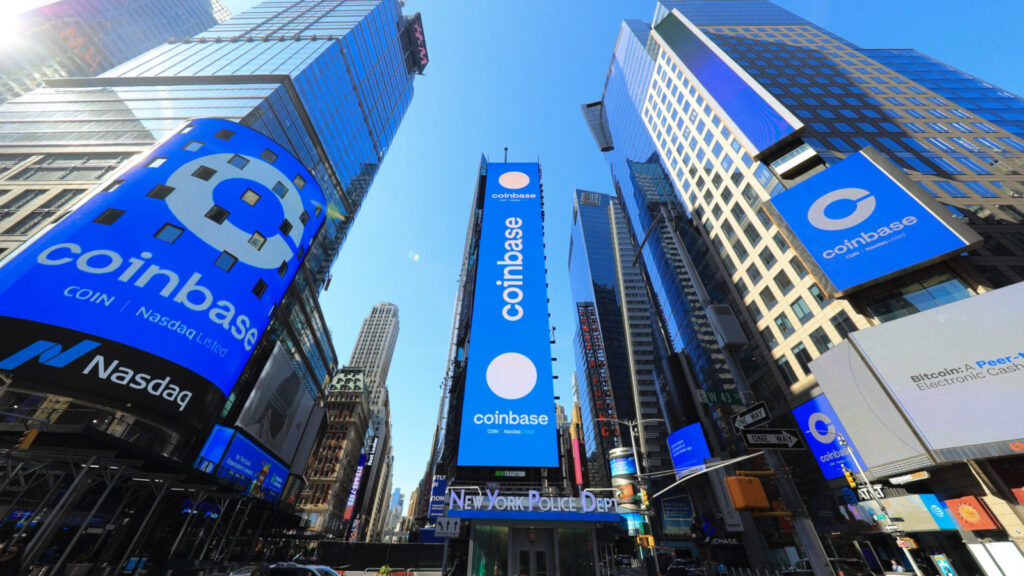
Coinbase, a prominent cryptocurrency exchange, has officially embraced the Lightning Network (LN), a layer-2 payment protocol.
This integration is in response to user demands for swifter and more cost-effective Bitcoin transactions.
The Lightning Network was conceived as a solution to Bitcoin’s scalability issues and to compete with newer cryptocurrencies that promised quicker and cheaper transactions.
For a considerable period, major crypto exchanges like Coinbase and Binance had hesitated to adopt this layer-2 solution.
Many community members argued that integrating the Lightning Network would offer fewer financial incentives for exchanges.
Contrary to the prevailing sentiment, Brian Armstrong, the CEO of Coinbase, confirmed the exchange’s decision to integrate the Lightning Network.
In his statement, he emphasized the importance of Bitcoin in the crypto world and expressed excitement about enabling faster and cheaper Bitcoin transactions.
Armstrong also acknowledged that the integration process would take some time and requested patience from users.
READ MORE: Federal Reserve Vice Chairman Highlights CBDC Research and Stablecoin Oversight in Fintech Speech
This decision followed a month of exploration by Viktor Bunin, a protocol specialist at Coinbase, into the feasibility of integrating the Lightning Network.
During this period, influential figures in the crypto industry, such as Michael Saylor of MicroStrategy and Jack Dorsey of Square, publicly questioned Armstrong’s stance on the Lightning Network.
The crypto community welcomed Coinbase’s announcement, as the integration of the Lightning Network will make affordable and efficient Bitcoin microtransactions accessible to a broader audience.
In a related development, on July 17th, Binance, another major cryptocurrency exchange, revealed that it had successfully integrated the Lightning Network for Bitcoin withdrawals and deposits.
Binance users now have the option to choose “LIGHTNING” when withdrawing or depositing Bitcoin.
This additional option enhances the flexibility of users and contributes to the growing adoption of layer-2 solutions in the cryptocurrency ecosystem.
Other available options for withdrawals and deposits on Binance include BNB Smart Chain (BEP-20), Bitcoin, BNB Beacon Chain (BEP2), BTC (SegWit), and Ethereum ERC-20.
Overall, these integrations mark a significant step forward in addressing Bitcoin’s scalability issues and making cryptocurrency transactions more efficient and cost-effective for users on these platforms.
Other Stories:

The Nasdaq stock exchange has made a significant move by submitting an application to the Securities and Exchange Commission (SEC) in hopes of gaining approval to list an Ethereum Exchange-Traded Fund (ETF) offered by Hashdex, a reputable asset management company.
What sets this ETF apart is its innovative approach to cryptocurrency investment within the boundaries of regulatory compliance.
Dubbed the Hashdex Nasdaq Ethereum ETF, this investment vehicle marks a milestone as the first Ethereum futures filing under the ’33 Act.
It is administered and overseen by Toroso Investments, a registered commodity pool operator with the Commodity Futures Trading Commission (CFTC) and a member of the National Futures Association.
The recent influx of cryptocurrency ETF applications has put a spotlight on whether these proposed funds will include futures contracts or spot assets.
While the SEC has given the green light for the former, the latter remains unapproved.
Fund managers are now exploring a middle-ground strategy, testing the waters in this evolving regulatory landscape.
The primary objective of the Hashdex fund is to ensure that its shares closely reflect the daily fluctuations in the Nasdaq Ether Reference Price.
READ MORE: Federal Reserve Vice Chairman Highlights CBDC Research and Stablecoin Oversight in Fintech Speech
To achieve this, the fund plans to diversify its assets by investing in ether, ether futures contracts traded on the CME, and maintaining cash and cash equivalents.
According to Nasdaq’s 19b-4 form, the fund’s approach is to reduce its dependence on the spot market, which could be susceptible to price manipulation, by incorporating a mix of Spot Ether, Ether Futures Contracts, and cash.
Hashdex’s strategy differs from recent filings in the cryptocurrency ETF space.
Notably, it will not rely on the Coinbase surveillance sharing agreement, opting instead to acquire spot Bitcoin from physical exchanges within the CME market.
In recent developments, both Ark Invest and 21Shares have also submitted applications to the SEC for spot ether ETFs, a type of ETF also sought after by VanEck.
The SEC has yet to make determinations on all the applications it has received for spot cryptocurrency funds, keeping investors and enthusiasts eagerly awaiting further developments in the evolving landscape of cryptocurrency investments.
Other Stories:
CFTC Commissioner Calls for Tech-Driven Investor Protection Reforms
Bitcoin Rebounds from Three-Month Lows Amid Traders’ Doubts
SEC Pursues Appeal in Ripple Labs Lawsuit Over XRP’s Security Classification