


Crypto holders must always be on their toes, as scammers are continuously looking for opportunities to trick users into giving up the all-important private keys that can unlock their digital assets.
These dangers were highlighted once again in a recent report by the Web3 security firm Beosin. In June, it reported that $656 million worth of crypto was stolen through scams, hacks and rug pulls in the first half of the year. The majority, $471.43 million, was lost in 108 confirmed protocol attacks. More worrying for individual users though is that $108 million was stolen through a variety of “phishing” scams.
Crypto users can’t do much about protocol attacks, but they can definitely take steps to secure their wallets and protect themselves from scammers. Bad actors use phishing to direct crypto holders to fake websites, applications and other forms of malware, and there’s no telling when and where they might strike. The good news is you can protect yourself using the following essential crypto wallet security tools.
FairSide
First off, it’s important to understand that no matter what security tools you use, you can never be totally sure you won’t fall victim to a scam. So it makes sense to have an insurance policy if you are holding significant digital assets, and that’s exactly where FairSide stands out with its comprehensive wallet protection.
The startup’s decentralized crypto insurance is available to any user who’s looking to protect themselves against wallet theft, covering almost every kind of digital asset in virtually any wallet. Should anyone with a policy fall victim to a phishing attack, they can immediately make a claim. Once the theft has been verified, users can expect to receive a payout within 72 hours.
Fairside is committed to offering full coverage, regardless of what tokens users hold. It partners with multiple reliable insurance industry firms to offer its coverage, and uses professional security researchers to properly investigate and vet every claim. It charges an annual fee of just 1.95% of all covered assets, up to a maximum of 100 ETH per policy. In addition, Fairside also offers bespoke coverage solutions for investors that need to protect higher amounts.
Umbra
Many ingenious scammers will use blockchain explorer tools to identify high-value crypto wallets they wish to target, and so it makes sense to try and mask the value of the assets you hold. Umbra enables users to do this through anonymous transactions.
It has created a smart contract and a set of standards that allow users to create “stealth” wallet addresses on the Ethereum network. Using a stealth address, it’s possible to send any ERC20 token to a wallet controlled by the receiver, without revealing its identity. To anyone who’s studying the blockchain, the transaction will look like a simple transfer to an unused address. However, off-chain, the sender can generate a new, encrypted address using a public key. Tp date, Umbra claims to have processed more than 85,000 anonymous transactions since launching in June 2021.
Fire
It’s all too easy to make a mistake when engaging in a complicated DeFi transaction, and so it pays to understand exactly what will happen when you engage with a smart contract. This is what Fire aims to do, and it’s really an essential tool for users who are in the habit of making multiple transactions each day.
Fire is a Chrome browser extension that allows you to preview what assets will enter and exit your wallet before they sign any transaction. Essentially, it simulates each transaction before you go through with it, showing you exactly how much will leave, and what will be deposited into your wallet. This way, you can confirm you aren’t making any mistakes.
Blowfish
Crypto is all about self-custody, and there’s no comeback if someone is able to access your wallet and authorize transactions. Because of this, crypto security begins with your choice of digital wallet. But how do you know which wallet you should choose? How can you trust its safety features and security?
Blowfish is the answer. It’s a risk-assessment tool for every Web3 wallet. It relies on built-in machine learning algorithms to comprehensively scan any crypto wallet and detect all of the possibilities for fraudulent transactions that may exist when interacting with Web3 protocols. Developers can also use Blowfish to assess their own wallets before making them available to users. It’s compatible with any wallet on Ethereum, Polygon and Solana.
Carapace
The risk of phishing attacks is one thing, but self-custody also means that you need to ensure you can always access your cryptocurrency holdings. If you lose access to your smartphone or laptop and cannot find the seed phrase required to access your wallet to another device, you’re basically screwed.
But not if you use Carapace, which is a decentralized social recovery protocol that provides fallback options. It works by creating an abstraction between users and its smart contracts. Users can define rules to shape specific use cases, such as wallet recovery in the event the seed is lost, crypto inheritance and more.
Pocket Universe
Because there have been so many scams affecting crypto users in the past, security researchers have created databases that list all known malicious URLs and smart contracts. Pocket Universe leverages these to ensure that you’ll never transact with a known scammer.
It’s a free, Chrome-based browser extension that provides peace of mind for every transaction you make. If you’re about to sign off on a transaction to a suspicious wallet address, or visit a risky URL, it will pop-up with a red alert warning you of the danger. Pocket Universe claims it can protect against almost any kind of phishing scam, as well as honeypot NFTs, counterfeit tokens and malicious seaport transactions.
urToken
You can never have too many lines of defense, and urToken provides a way for security-conscious crypto holders to safeguard their ERC20 and BEP20 tokens by converting them to something that’s more secure.
The way it works is it wraps your tokens and converts them into digital assets based on stricter security standards that will resist any malicious approvals in your wallet. In this way, it offers protection against Transferform exploits in smart contracts that are used to drain user’s wallets of their funds.
Security Is YOUR Problem
The risks of buying, holding and transacting with crypto are ever-present and the decentralized nature of the industry means that the onus is on you, and only you, to secure your assets. The smartest crypto users will be aware of the never-ending risk and use multiple available tools to ensure they don’t become the next victim.
If you’re invested in crypto and possess more than you can afford to use, be sure to protect yourself with the best available crypto wallet security tools.
New York, NY, September 20th, 2023, Chainwire
cheqd, the startup that allows users and organizations to gain control and portability of their identity data, has announced the launch of Credential Payments, a new feature of its decentralized network and SaaS product, Credential Service. With its launch, organizations and individuals now have a way to get paid for providing their identity data while maintaining privacy, building infrastructure to create Trusted Data markets as an entirely new industry category.
Credential Payments is a pioneering capability for Self-Sovereign Identity (SSI), enabling the settlement of on-chain payments for Trusted Data that is stored off-chain to ensure privacy. Thus, making it possible for users to exchange and transact their verifiable Trusted Data in a privacy-preserving way.
cheqd has built products and tools to help companies plug into the network’s identity and payments functionalities. One product is Credential Service, a scalable solution that removes all of the complexity required to build or integrate decentralized identities into existing applications. For more complex features, there are an array of SDKs available for power users.
This paves the way for organizations to create new business models and has clear potential to boost the adoption of SSI by solving the market supply side cold-start problem.
Organizations now have a direct financial incentive to issue credentials/Trusted Data, as with cheqd network Credential Payments it’s possible to create recurring revenue based on a credential being reused. As credentials become available to more verifiers and receivers at a lower cost than existing alternatives, more issuers will enter the market to increase their coverage. Since each side of the market has an incentive to get more organizations and users to join, a flywheel network effect is created.
SSI promises to be an effective solution at a time of increasing regulation pushing global organizations to be more responsible and accountable in dealing with users’ data. Businesses need a way to be compliant with upcoming regulations such as the EU’s eIDAS 2.0, which will govern electronic identification and support Verifiable Credentials as a means to exchange identity data and attestations. In addition, the rise of generative artificial intelligence has led to heightened concerns over fraud, due to its potential to create distrust at an enormous scale. More than ever, businesses need a reliable way to prove that someone is real using verifiable Trusted Data.
It’s for these reasons that cheqd’s research shows the global market for SSI could eventually reach more than half a trillion dollars in value. By offering its industry-first Credential Payments that allow owners of verifiable data to retain full privacy, cheqd sets itself apart from other identity networks. Already, it has forged key partnerships with more than 70% of the SSI application vendor market to date.
Example use-cases
There are a paramount of use cases for an identity network for payments but the two hottest ones are Finance and Education.
In Finance, regulations are being adopted worldwide for the crypto and DeFi industry with a heavy focus on enforcing Know Your Customer (KYC) or qualified investor status. Credentials allow DeFi protocols to set KYC and investor acceptance requirements whilst allowing users to re-use their information seamlessly, aiming to meet regulations whilst maintaining smooth user experience. Issuers of KYC and qualified investor credentials can now be paid for these whenever protocols need to check investor statuses.
And, in Education, certifying accomplishments and achievements can be used for providing more tangible trust around accreditations, with a price to establish trust.
To trust accomplishment credentials, verifiers need to be sure that the issuers are legitimate. Being able to pay to check a list of trusted issuer identifiers gives verifiers the ability to build higher levels of assurance in the credential presented to them, and helps to prevent fraudulent actors. Verifiers can pay the issuers of said credentials, similar to the current operation of university registry offices for checking the veracity of degrees.
Going forward, cheqd is positioned to play a pivotal role in growing the adoption of verifiable, trusted credentials and ensuring that SSI breaks into the public consciousness.
About cheqd
cheqd (cheqd.io) is a privacy-preserving payment and credential network that allows users and organizations to gain control and portability of their data. cheqd builds upon Decentralised Identity (DID), Self-Sovereign Identity (SSI), and Digital or Verifiable Credentials (VCs) with payment infrastructure to create Trusted Data markets as an entirely new industry category.
With its technology, cheqd is creating a new paradigm around Trusted Data economies such as reusable KYC in Web3, preference data markets, and others where the user is at the center. It empowers consumers and businesses with full ownership, portability, and control over their data and identities. In addition, this data can be transacted within a payment network that prioritizes individual privacy and market-first principles. The scale of distribution is unmatched as cheqd engages with organizations across Lending, Supply Chain, eCommerce, Education, Manufacturing, Gaming, and other sectors.
cheqd also features a decentralized reputation platform (creds.xyz) to incentivise and engage Web3 communities through quest or learning credentials, as well as protect users from fraud and scamming across Discord, Telegram and beyond.
Contact
Avishay Litani
[email protected]

Dubai-based cryptocurrency exchange, JPEX, has found itself entangled in a liquidity crisis, prompting a series of actions that have stirred controversy within the cryptocurrency community.
In a blog post on September 17, JPEX attributed this crisis to what it termed as “unfair treatment” by certain institutions in Hong Kong, compounded by negative news coverage.
The exchange claimed that these factors led to its third-party market makers freezing funds and demanding additional information for negotiation, thus restricting liquidity and increasing operational costs to unsustainable levels.
In response to this predicament, JPEX announced the delisting of all operations affiliated with its Earn product, effective September 18.
This decision prevents users from initiating new Earn orders, allowing only existing orders to continue until their respective product end dates.
While regular spot trading activities remain unaffected for now, reports have emerged that JPEX is imposing a hefty 999 Tether withdrawal fee, capped at 1,000 USDT, further unsettling its user base.
JPEX, however, did not provide a direct explanation for the high withdrawal fee but assured users that it plans to gradually restore normal withdrawal fee levels once negotiations with third-party market makers conclude.
The exchange stated its commitment to reclaiming liquidity from these market makers and promised to share the revised withdrawal fee details after these negotiations.
READ MORE: BitQuant Predicts Bitcoin Will Hit $250,000 After Halving
Additionally, JPEX revealed plans to utilize a decentralized autonomous organization (DAO) to gather suggestions from users on its restructuring efforts.
This move reflects the exchange’s desire to engage its community in reshaping its future direction.
Despite these announcements, JPEX has faced scrutiny from regulators.
On September 13, the Hong Kong Securities and Futures Commission (SFC) issued a warning against JPEX for allegedly marketing its services to Hong Kong residents without obtaining the necessary license.
The SFC highlighted various irregularities in JPEX’s practices, including offering exceptionally high returns and other discrepancies in its marketing strategies.
Concerns deepened as an attendee at the Token 2049 conference in Singapore reported that the JPEX booth had been abandoned shortly after the SFC’s warning was issued.
Subsequently, local authorities in Hong Kong received numerous complaints about the exchange, further intensifying the regulatory scrutiny surrounding JPEX’s operations.
As this situation unfolds, the cryptocurrency community and regulatory bodies continue to closely monitor developments with JPEX, with both sides eager to see how the exchange addresses its liquidity crisis and regulatory issues.
Other Stories:
Bitcoin Miner Returns $500,000 in Fees to Paxos After Transaction Mistake
DeFi Advocacy and Market Dynamics: A Week of Intense Developments in Decentralized Finance

Bitcoin has shown signs of a positive turnaround as it formed successive Doji candlestick patterns on the weekly chart over the last three weeks.
This indicates a resolution of the uncertainty between the bulls and bears in favor of the bulls.
However, the upcoming Federal Open Market Committee meeting on September 20 could introduce volatility, depending on the outcome of Fed Chair Jerome Powell’s press conference following the rate decision.
Most market participants anticipate the Federal Reserve to maintain the current interest rate levels.
Bitcoin’s recovery from strong support near $24,800 has sparked interest in select altcoins, which present trading opportunities.
For these altcoins to sustain their upward trajectory, Bitcoin must remain above $26,500.
Bitcoin has recently surpassed the 20-day exponential moving average ($26,303), indicating a reduction in selling pressure.
The bulls have successfully defended against several bearish attempts to push the price below the 20-day EMA.
If buyers manage to push the BTC/USDT pair past the 50-day simple moving average ($27,295), it may reach $28,143, though this level is expected to face resistance from bears.
Conversely, if the price drops below the 20-day EMA, it could retest the pivotal support at $24,800.
Similarly, altcoins like MKR and AAVE have displayed bullish signs, with MKR above the 50-day SMA ($1,162) and AAVE surging past moving averages on September 16.
MKR/USDT could head towards $1,370, though the level may witness a battle between bulls and bears.
Conversely, if the 20-day EMA ($1,162) is breached, the pair might consolidate within the range of $980 to $1,370.
READ MORE: Bitcoin Miner Returns $500,000 in Fees to Paxos After Transaction Mistake
As for AAVE/USDT, a sustained price above the 50-day SMA ($59) could drive it towards $70 and $76, but a drop below the 20-day EMA ($56) could lead to a decline to the solid support at $48.
THORChain’s RUNE has made a smart recovery, nearing the resistance at $2.
If it breaks through, it may initiate a new uptrend to $2.30 and eventually $2.80.
However, a sharp downturn from $2 could push the price down to the 20-day EMA ($1.62).
Lastly, RNDR broke out and closed above the 50-day SMA ($1.58), suggesting reduced selling pressure.
The moving averages are on the verge of a bullish crossover, and a bounce from the 20-day EMA ($1.50) could lead to a stronger recovery to $1.83 and $2.20.
On the contrary, a drop below the moving averages could send RNDR/USDT down to $1.38 and later to $1.29.
In summary, these cryptocurrencies show promising signs, but their paths forward depend on key support and resistance levels, as well as broader market factors like the Federal Reserve’s decisions.
Other Stories:
BitQuant Predicts Bitcoin Will Hit $250,000 After Halving
DeFi Advocacy and Market Dynamics: A Week of Intense Developments in Decentralized Finance

In recent times, the realm of gaming has experienced a notable shift with the incorporation of cryptocurrency. This convergence of technology and entertainment has resulted in the emergence of a novel phenomenon that merges enthusiasm and expertise, leading to financial benefits.
Notably, this evolutionary process highlights the importance of both transparency and security. Also, the utilisation of blockchain technology’s unalterable ledger guarantees the verifiability and fairness of game outcomes, addressing worries regarding potential manipulation that have historically afflicted conventional gaming companies. To make it more attractive, the decreased transaction costs linked to cryptocurrencies enhance the cost-efficiency of the process for both participants and operators.
This article examines the complex sphere of cryptocurrency gambling, highlighting reliable companies that offer their users the best perks and help them make the best-informed decision.
Crypto Betting Firms Catching the Eye
Dexsport
Dexsport is an ultra-modern Web 3 cryptocurrency betting platform. The platform operates on BNB, Polygon, OKC, Avalanche, Arbitrium, and ETH blockchains, providing users with a secure and transparent betting process.
The platform is designed to provide individuals with a secure and transparent environment for their gambling adventures. Powered by blockchain technology, it ensures that transactions are fast, reliable, and anonymous, giving users peace of mind while they explore a wide range of crypto-betting options.
Whether one is a seasoned gambler or new to the world of crypto gambling or crypto betting, Dexsport caters to players of all levels and also offers the best odds for its users.
Funarcade
Funarcade, a game-changer in the crypto gambling industry, is a fresh design concept that bridges web2 and web3 technologies. Backed by a team with 50 years of industry expertise in gambling, Funarcade aims to offer a complete suite of products ranging from casino games to lotteries and sports betting.
What sets it apart is its commitment to creating original games, potentially offering the most comprehensive product range in the industry. Funarcade’s community-first model distributes up to 90% of profits back to users, cutting out intermediaries and rewarding players fairly through Player Incentive Programs (PIPs).
Funarcade is set to redefine the crypto gambling industry, promising a transparent gaming experience. The company prioritizes trust with the pioneering and industry-first public accounting portal. Stay tuned for their unique token sale format. Here’s to the future of gaming in the industry!
Bets.io
Bets.io, offers a platform for crypto-gambling enthusiasts with a wide range of betting features. Users can fund their accounts with over 510 cryptocurrencies on various networks, including P2P fiat exchange. The platform provides the highest level of security with 128-bit SSL and additional encryption systems for seamless and secure deposit and withdrawal of funds.
Bets.io offers options such as low minimum deposits and large betting limits. It emphasizes player privacy, responsive 24/7 support, and user-friendly navigation. As a Curacao-licensed brand, Bets.io provides access to a wide selection of over 10,000 games from official providers, catering to slots, table games, live dealer options, and specialty games. Bets.io is known for its bonuses, especially within the VIP program where players enjoy personal managers, increased payout limits, and exclusive offers.
The casino continually evolves, introducing features like lost deposit recovery and crypto-powered sports betting to enhance the gaming experience.
CryptoGames
CryptoGames, established in 2020, is a premier online cryptocurrency casino licensed by the Government of Curacao. Offering 10 unique in-house games, including Dice, Roulette, and Blackjack, the platform boasts competitive house edges for each game.
Players have the flexibility to bet using 11 major cryptocurrencies and can utilize the “ChangeNow” feature for seamless altcoin deposits. With a steadfast commitment to fairness, every game on CryptoGames is provably fair.
The platform celebrates its community with enticing bonuses such as the Faucet Bonus, Random Vouchers, and monthly wagering contests with rewards reaching up to $250,000 USD. For the elite players, the VIP Membership provides exclusive perks, from lower house edges to special vouchers. CryptoGames promises a transparent, rewarding, and exhilarating gaming journey.
CyberDice
CyberDice is an innovative online cryptocurrency dice game that offers an engaging and exciting gaming experience. This platform has been meticulously crafted by a highly experienced team, the same individuals responsible for creating OneHash, a renowned mutual bitcoin betting platform.
One of the standout characteristics of CyberDice is its top-tier features. The platform is equipped with cutting-edge technology and functionalities, ensuring a smooth and fair gaming environment for its users. These features not only enhance the gameplay but also contribute to the overall security and transparency of the platform.
Moreover, CyberDice boasts a unique and captivating design. Its user-friendly interface is visually appealing and easy to navigate, providing players with an immersive and enjoyable gaming experience. The platform’s aesthetic appeal adds an extra layer of excitement to the gameplay.
Wrapping Up
The emergence of cryptocurrency gaming has caused significant disruption within the conventional gambling sector, presenting a variety of advantages, including enhanced privacy, expedited transaction processing, and more accountability. Nevertheless, it is important to acknowledge the inherent risks associated with volatility, regulation, and security in this context. In light of the dynamic nature of the sector, it is imperative for anyone engaging in crypto gaming activities to show prudence and undertake thorough research.
The potential of this dynamic discipline in the next years is considerable; nonetheless, it is imperative to approach it with a sense of responsibility and a comprehensive comprehension of the distinctive obstacles it presents.
Hong Kong, Hong Kong, September 20th, 2023, Chainwire
OKX, a leading crypto exchange and Web3 technology company, today announced that it has successfully completed the Service Organization Control (SOC) 2 Type II audit, demonstrating that the company’s processes for governing its services, managing sensitive data and protecting data privacy meet the highest global standards.
The internationally recognized SOC 2 Type II report, a framework developed by the American Institute of Certified Public Accountants, is one of the most comprehensive audits in the market. The report, completed by an independent external auditor, reviews a company’s policies, procedures and controls over an extended period of time.
Achieving SOC 2 Type II certification is a testament to OKX’s unwavering efforts in ensuring the highest possible standards of safety, security and compliance. It also mirrors OKX’s core operating philosophy and commitment to security, transparency and trust.
This certification underscores the protocols and safety measures OKX has implemented to ensure a premium experience on its industry-leading platform. Moreover, these measures affirm that OKX’s infrastructure specifications, service availability and robustness adhere to stringent criteria, solidifying its position as one of the world’s most secure platforms.
OKX President Hong Fang said: “Completing the SOC 2 Type II audit is an important achievement for OKX, because of the reassurance it provides to all our users, and the diligence and time commitment required in the pursuit of this certification. It demonstrates that OKX is operating at standards comparable to tech giants and traditional finance services firms, as well as our commitment to implementing such standards and practices throughout OKX’s global operations. OKX’s goal is to build the world’s most secure and reliable Web3 ecosystem, and this latest milestone is another crucial step towards our vision.”
About OKX
OKX is a leading global crypto exchange and Web3 ecosystem. Trusted by more than 50 million global users, OKX is known for being the fastest and most reliable crypto trading app for traders everywhere.
As a top partner of English Premier League champions Manchester City FC, McLaren Formula 1, Olympian Scotty James, and F1 driver Daniel Ricciardo, OKX aims to supercharge the fan experience with new engagement opportunities. OKX is also the top partner of the Tribeca Festival as part of an initiative to bring more creators into web3.
Beyond OKX’s exchange, the OKX Wallet is the platform’s latest offering for people looking to explore the world of NFTs and the metaverse while trading GameFi and DeFi tokens.
OKX is committed to transparency and security and publishes its Proof of Reserves on a monthly basis.
To learn more about OKX, download our app or visit: okx.com
Disclaimer
This announcement is provided for informational purposes only. It is not intended to provide any investment, tax, or legal advice, nor should it be considered an offer to purchase, sell, hold or offer any services relating to digital assets. Digital assets, including stablecoins, involve a high degree of risk, can fluctuate greatly, and can even become worthless. You should carefully consider whether trading or holding digital assets is suitable for you in light of your financial condition and risk tolerance. OKX does not provide investment or asset recommendations. You are solely responsible for your investment decisions, and OKX is not responsible for any potential losses. Past performance is not indicative of future results. Please consult your legal/tax/investment professional for questions about your specific circumstances.
Contact
Media
[email protected]

In August, the decentralized finance (DeFi) ecosystem faced a series of challenges, witnessing a decline in on-chain economic activity, as revealed by an analysis conducted by the investment management firm VanEck.
During this period, exchange volume plummeted to $52.8 billion, marking a 15.5% decrease compared to July.
VanEck based its findings on the MarketVector Decentralized Finance Leaders Index (MVDFLE), which monitors the performance of the most substantial and liquid tokens on various DeFi platforms, including Uniswap, Lido DAO, Maker, Aave, THORChain, RUNE, and Curve DAO (CRV).
August proved to be a tough month for the DeFi index, which dropped by 21%, underperforming Bitcoin and Ether.
This decline was further exacerbated by the negative performance of the UNI token, which saw a staggering 33.5% decrease as investors offloaded their tokens to capture profits earned in July.
Despite the underwhelming performance of DeFi tokens in August, the ecosystem did witness some notable positive developments throughout the month.
These included the dismissal of a class-action lawsuit against Uniswap Labs and the remarkable growth of Maker and Curve’s stablecoin.
Following a significant exploit in late July, Curve Finance’s stablecoin, crvUSD, experienced substantial growth in August, reaching an all-time high of $114 million borrowed.
CrvUSD is pegged to the U.S. dollar and operates on a collateralized debt-position (CDP) model, where users deposit collateral like ETH to borrow crvUSD.
“The growth of crvUSD has allowed it to become a significant contributor of revenue for the platform, with crvUSD fees exceeding fees collected from all non-mainnet liquidity pools in 3 of the 4 last weeks,” noted the report.
READ MORE:Ethereum’s Energy Efficiency Soars: The Aftermath of The Merge
However, Curve Finance’s governance token struggled to recover from the exploit, with its price falling by 24% in August to $0.45.
The report also highlighted the concerns surrounding Michael Egorov, the founder of Curve Finance, who had around $100 million in loans backed by 47% of the circulating supply of CRV tokens.
As the CRV price dropped nearly 30% following the hack, there were fears of Egorov’s collateralized loan liquidation, raising concerns of a potential contagion effect within the DeFi ecosystem.
To reduce his debt position, Egorov sold 39.25 million CRV tokens to notable DeFi investors during the crisis.
Furthermore, VanEck pointed out that current global interest rates, particularly in the United States, continued to put pressure on stablecoins.
The aggregate market capitalization of stablecoins declined by 2% in August, reaching $119.5 billion.
This drop was attributed to elevated interest rates in traditional finance, prompting investors to shift from stablecoins to money market funds offering approximately 5% risk-free yield.
Other Stories:
Bitcoin Bucks Inflation Worries, Surges to New September Highs
DeFi Pioneer Rune Christensen Envisions Decentralized Stablecoins Dominating the Crypto Market
Crypto Markets Brace for Uncertainty as Regulatory Storm Looms
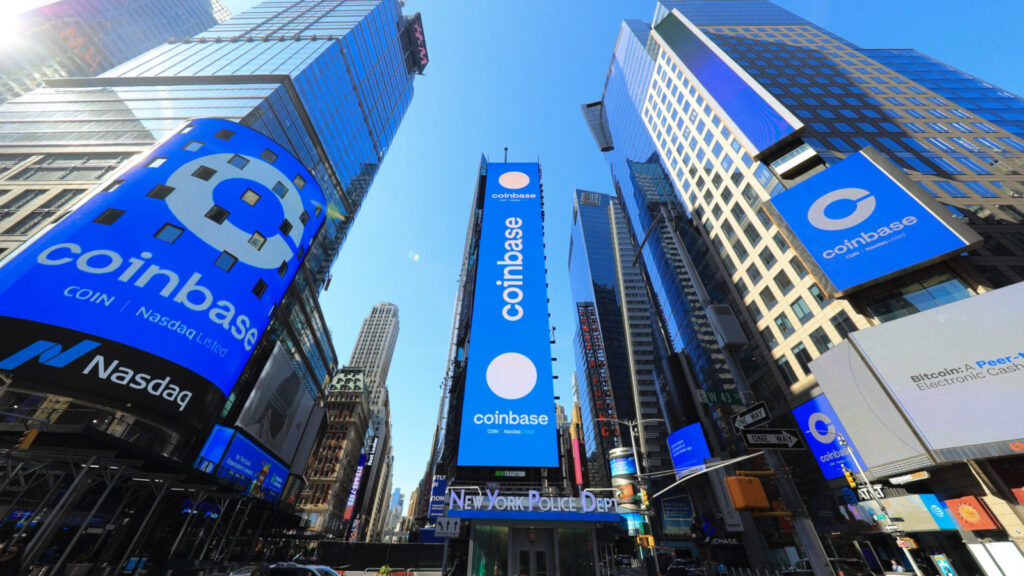
Coinbase’s layer-2 network, known as Base, recently achieved a remarkable milestone by recording its highest number of daily transactions to date.
Data obtained from the blockchain explorer BaseScan revealed that on September 14th, the layer-2 blockchain processed a staggering 1.88 million transactions, surpassing its previous record of 1.41 million transactions set on August 21st, the month of its launch.
Notably, Base outperformed competing networks like Optimism and Arbitrum, which combined for 878,000 transactions on the same day.
However, despite this achievement, Base still lags behind more prominent blockchain platforms like Polygon and BNB Smart Chain (BSC). On the same date, Polygon recorded 2.1 million transactions, while BSC boasted an impressive 3.1 million transactions.
It’s important to note that while Base surpassed its previous transaction record, it did not see a comparable increase in daily active users compared to its August 21st milestone.
On that day, the platform had 136,000 daily active users, while on September 14th, the number was significantly lower at around 86,000, as reported by Dune Analytics.
READ MORE: Bitcoin Bucks Inflation Worries, Surges to New September Highs
Base was officially launched on August 9th, offering users a range of functionalities, including token bridging, token swapping, liquidity provision, NFT minting, and more, all within the layer-2 network.
Since its launch, Base has garnered considerable support from the cryptocurrency community.
On September 6th, over 700,000 NFTs were minted by more than 268,000 unique wallets on the platform.
In its first two weeks, Base facilitated the bridging of over $242 million worth of crypto assets to its blockchain, attracting 130,000 unique wallets daily.
In conclusion, Coinbase’s Base layer-2 network has set a new daily transaction record, demonstrating its growing popularity within the crypto space.
While it faces competition from other established blockchains, its rapid growth and adoption suggest a promising future for the platform in the evolving crypto landscape.
Other Stories:
DeFi Pioneer Rune Christensen Envisions Decentralized Stablecoins Dominating the Crypto Market
Crypto Markets Brace for Uncertainty as Regulatory Storm Looms
Ethereum’s Energy Efficiency Soars: The Aftermath of The Merge
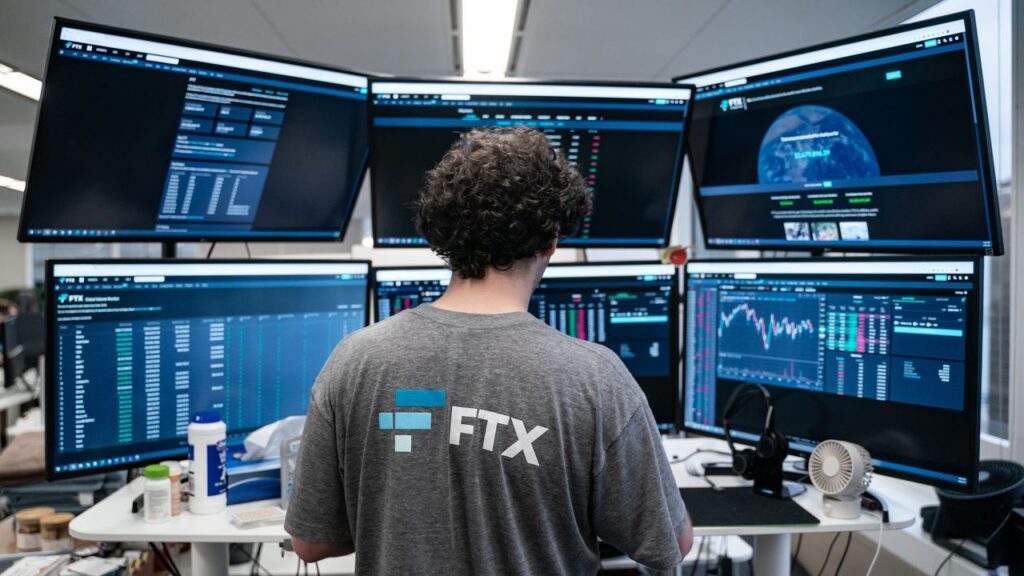
NFL quarterback Trevor Lawrence and YouTube influencers Kevin Paffrath and Tom Nash have reportedly reached a settlement in a lawsuit concerning alleged insufficient disclosure of compensation in their promotions for the now-defunct cryptocurrency exchange, FTX.
Although the details of the settlement have not been made public, a Bloomberg report on September 16 confirmed that the three prominent figures have entered into proposed agreements, making them the first among the high-profile defendants to do so.
The lawsuit had ensnared several other celebrities and influencers, including Tom Brady, Gisele Bündchen, Kevin O’Leary, Shaquille O’Neal, Naomi Osaka, and David Ortiz.
These individuals had all been accused in the class-action lawsuit of failing to adequately disclose their compensation for promoting FTX.
Notably, Kevin Paffrath and Tom Nash were part of a group of eight YouTubers accused of withholding compensation information in their FTX promotions.
The other six individuals included Graham Stephan, Andrei Jikh, Jaspreet Singh, Brian Jung, Jeremy Lefebvre, and Erika Kullberg.
The talent management agency responsible for orchestrating the FTX promotions, Creators Agency, is also named as a defendant in the lawsuit.
READ MORE: Bitcoin Bucks Inflation Worries, Surges to New September Highs
On September 11, a court filing indicated that FTX was contemplating ways to recover the millions of dollars it had paid to celebrity athletes and sports teams for promoting the cryptocurrency exchange before its financial downfall in November 2022.
The filing disclosed that Trevor Lawrence had received $205,555, Shaquille O’Neal approximately $750,000, and Kevin O’Leary the highest sum of $2,348,338.
The class-action lawsuit, filed on March 15, alleged that the influencers had failed to adequately reveal the true nature of their FTX endorsements. These promotions were characterized as paid content rather than authentic endorsements stemming from genuine interest.
The lawsuit stated that, despite receiving substantial payments from FTX, the defendants had not properly disclosed the details of their sponsorships, endorsement deals, payments, or compensation, nor had they conducted sufficient due diligence.
While the settlement terms remain undisclosed, the resolution of this case may have broader implications for the regulation and transparency of cryptocurrency endorsements and influencer marketing in the future.
Other Stories:
Ethereum’s Energy Efficiency Soars: The Aftermath of The Merge
Crypto Markets Brace for Uncertainty as Regulatory Storm Looms
DeFi Pioneer Rune Christensen Envisions Decentralized Stablecoins Dominating the Crypto Market
Bitcoin (BTC) concluded the week ending on September 17th with a price of approximately $26,500, showcasing a sense of stability after reaching new highs earlier in the month.
This weekend marked a period of relative calm for the leading cryptocurrency, as indicated by data from Cointelegraph Markets Pro and TradingView.
Just a couple of days prior, Bitcoin had surged to $26,880, marking its highest level for the month.
Credible Crypto, a renowned trader and analyst, examined the state of the Binance BTC/USD order book and observed a cluster of bid liquidity supporting the market.
He noted that some seller absorption was occurring at this level, suggesting a defense of this price point.
Amid this period of consolidation, another trader named Crypto Tony identified two potential scenarios. He highlighted that $26,000 was still acting as a strong support level.
Tony mentioned, “I am still looking for that dip down to $26,100 and a bounce for a long trigger.” Alternatively, he would consider going long if Bitcoin managed to reclaim the $26,600 highs.
READ MORE: DeFi Pioneer Rune Christensen Envisions Decentralized Stablecoins Dominating the Crypto Market
Examining exchange behavior, trader Skew pointed out specific short-term trends among traders, particularly spot entities selling into bounces.
This indicated a pattern of aggressive positions being hunted heading into the next week.
Beyond Bitcoin’s weekly close, participants in the crypto market were eagerly anticipating a crucial macroeconomic event from the United States Federal Reserve scheduled for September 20th.
The Federal Open Market Committee (FOMC) meeting would decide on benchmark interest rates, with the prevailing expectation in the markets being that they would remain unchanged.
CME Group’s FedWatch Tool assigned a mere 2% probability to a surprise scenario.
It’s worth noting that Bitcoin had recently displayed a decreased sensitivity to macroeconomic data, and many believed that it would continue to trade within the range of $25,000 to $27,000 in the short term, even in the face of the upcoming FOMC meeting.
As popular trader Crypto Santa concluded, “Next week’s FOMC and Interest Rate decisions should induce some volatility, but BTC will likely continue to trade within $25k – $27k in the short-term.”
Other Stories:
Ethereum’s Energy Efficiency Soars: The Aftermath of The Merge
Crypto Markets Brace for Uncertainty as Regulatory Storm Looms
Bitcoin Bucks Inflation Worries, Surges to New September Highs