


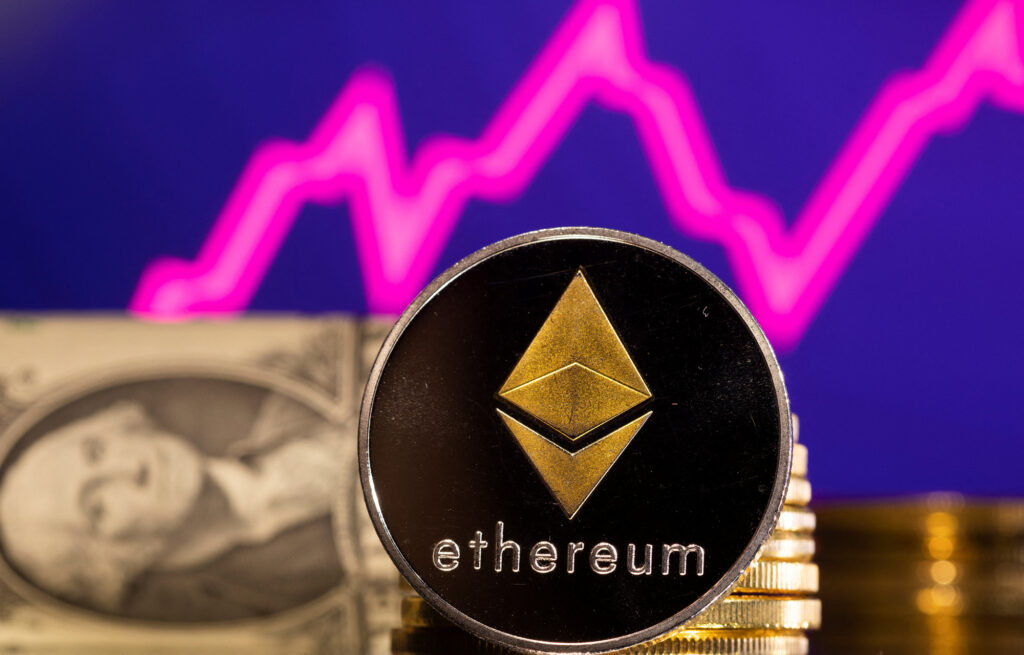
Grayscale, a prominent cryptocurrency investment firm, has recently made a significant move by relinquishing all rights to post-Merge proof-of-work (PoW) Ethereum tokens (ETHPoW).
This decision, announced on September 18, entails Grayscale’s complete abandonment of ETHPoW tokens on behalf of its record date shareholders.
After a thorough evaluation, Grayscale concluded that ETHPoW tokens had failed to develop substantial liquidity, and the custodian responsible for these products did not offer support for such tokens.
In their official statement, Grayscale explained, “As such, it is not possible to exercise the rights to acquire and sell the ETHPoW tokens, and on behalf of the record date shareholders, Grayscale is abandoning the rights to these assets.”
This decision comes over a year after the Ethereum Merge, a monumental event that signified Ethereum’s full transition from proof-of-work (PoW) to proof-of-stake (PoS).
The Merge took place on September 15, 2022, effectively splitting the Ethereum blockchain into the primary PoS-based Ethereum and a secondary PoW-based Ethereum network.
READ MORE: Cryptocurrency Market Sees Bullish Momentum Amidst Bitcoin’s Recovery
In the aftermath of the Merge, Grayscale deliberated whether to acquire EthereumPoW tokens and subsequently sell ETHW on behalf of its record date shareholders.
However, uncertainty regarding the support for ETHW tokens by digital asset custodians and trading platforms led the company to take an additional six months before reaching a decision.
It’s worth noting that while Grayscale opted to abandon ETHPoW rights, other cryptocurrency investment firms like ETC Group ventured into launching dedicated EthereumPoW exchange-traded products (ETPs).
Nonetheless, ETC Group discontinued its PoW-based ZETW ETP merely six weeks after its launch due to the lack of eligible custody providers.
Interestingly, Grayscale’s decision to forego ETHPoW tokens was revealed just one day before the firm proposed launching a new Ether futures exchange-traded fund.
On September 19, Grayscale filed an application with the United States Securities and Exchange Commission to list and trade shares of the Grayscale Ethereum Futures Trust (ETH) ETF on the New York Stock Exchange Arca Rule 8.200-E.
This move underscores Grayscale’s ongoing commitment to exploring and participating in the evolving landscape of cryptocurrency investment opportunities.
Other Stories:
Dubai-Based Cryptocurrency Exchange Faces Liquidity Crisis Amid Regulatory Scrutiny
DeFi Ecosystem Faces Challenges as On-Chain Activity Declines and Stablecoins Feel the Pressure

Binance CEO Changpeng Zhao has refuted claims made in a recent Decrypt report alleging that he had taken a $250 million loan from BAM Management, a company affiliated with Binance.US.
The report, which emerged on September 19, cited court documents pertaining to the ongoing legal dispute between Binance and the United States Securities and Exchange Commission (SEC).
According to Decrypt, Binance.US’ legal team had asserted in these documents that BAM Management US Holdings had issued a $250 million convertible note to Zhao in December.
However, Zhao took to social media to challenge the accuracy of this report.
In a post shared on X (formerly Twitter), Zhao presented a screenshot of the Decrypt article and asserted that the report had misconstrued the situation.
Contrary to the report’s claims, Zhao clarified that he had actually provided BAM Management with a $250 million loan and had not yet received repayment.
Throughout his response, Zhao hinted at the presence of additional inaccuracies in the report but refrained from specifying which details were erroneous.
This lack of clarification left room for speculation regarding the extent of inaccuracies within the original article.
READ MORE: DeFi Ecosystem Faces Challenges as On-Chain Activity Declines and Stablecoins Feel the Pressure
The backdrop to this dispute is the ongoing legal battle between Binance and the SEC. The SEC has repeatedly voiced its difficulties in obtaining information from Binance and Binance.US since the inception of the lawsuit.
In response, the SEC filed a motion demanding that Binance make its executives more available for depositions and furnish detailed information.
Nevertheless, during a recent hearing regarding the SEC’s motion, a judge expressed hesitance to grant the inspection request at the current juncture.
This episode underscores the high-stakes nature of the legal wrangling between Binance and the SEC, as well as the potential for conflicting narratives and interpretations to emerge from court documents and reports.
The intricacies of financial dealings and legal disputes within the cryptocurrency industry continue to captivate and challenge both regulatory authorities and market participants, leaving many questions unanswered and contested.
Other Stories:
Cryptocurrency Market Sees Bullish Momentum Amidst Bitcoin’s Recovery
Blockchain Betting: The New Way to Invest in Digital Assets
Dubai-Based Cryptocurrency Exchange Faces Liquidity Crisis Amid Regulatory Scrutiny

Joseph Bankman, the father of former FTX CEO Sam “SBF” Bankman-Fried, found himself embroiled in a family dispute over salary matters.
This familial clash spilled into the public eye as FTX debtors filed a complaint on September 18 in the United States Bankruptcy Court for the District of Delaware, accusing Bankman and Barbara Fried, SBF’s parents, of allegedly misappropriating millions of dollars within the FTX exchange’s operations.
According to official court documents, Bankman’s employment contract with FTX US had stipulated a $200,000 annual salary after his leave of absence from Stanford Law School in December 2021.
However, a puzzling discrepancy emerged as Bankman claimed to both FTX US and his son that he was anticipating a more substantial $1-million annual salary.
This confusion raised eyebrows, and Bankman seemed to imply that Barbara Fried might have influenced their son to endorse the salary alteration.
The complaint contends that Bankman’s influence did indeed have an impact, as SBF subsequently granted his parents numerous financial benefits.
These perks included a $10 million allocation from Alameda, a $16.4-million property in the Bahamas financed by FTX Trading, the ability to charge approximately $90,000 to FTX Trading in the Bahamas, and options to acquire company stock.
READ MORE: Dubai-Based Cryptocurrency Exchange Faces Liquidity Crisis Amid Regulatory Scrutiny
As of the time of this publication, there has been no response from the legal team representing Bankman and Fried to these allegations.
This legal action represents the latest development in the ongoing bankruptcy case involving FTX and several of its subsidiaries, a case initiated in November 2022.
Meanwhile, Sam Bankman-Fried faces a series of 12 criminal charges, to be divided into two trials scheduled for October 2023 and March 2024.
Since his bail was revoked by a federal judge in August, Bankman-Fried has been primarily confined to the Metropolitan Detention Center in Brooklyn as he awaits his October trial.
On September 19, a three-judge panel entertained an appeal from SBF’s legal team, who sought his release from incarceration to adequately prepare for trial, citing concerns such as limited internet access and potential First Amendment issues in his current confinement.
Other Stories:
Cryptocurrency Market Sees Bullish Momentum Amidst Bitcoin’s Recovery
Blockchain Betting: The New Way to Invest in Digital Assets
DeFi Ecosystem Faces Challenges as On-Chain Activity Declines and Stablecoins Feel the Pressure

Hong Kong regulators are intensifying their scrutiny of the cryptocurrency market following the arrest of six individuals in connection with an alleged fraud case centered around an unlicensed crypto exchange known as JPEX.
On September 19th, Hong Kong Chief Executive John Lee Ka-Chiu addressed the media, emphasizing the government’s commitment to bolstering investor awareness.
He urged investors to exclusively utilize platforms authorized by the Securities and Futures Commission (SFC), as reported by the Associated Press.
The JPEX controversy first came to light on September 13th when the SFC alerted the public to more than 1,000 complaints regarding the unregistered crypto exchange.
These complaints alleged losses exceeding 1 billion Hong Kong dollars, equivalent to $128 million.
In its official warning, the SFC pointed out that JPEX had aggressively marketed its services and products to the Hong Kong public, leveraging online celebrities and over-the-counter money changers for promotion.
READ MORE: NFL Quarterback Trevor Lawrence and YouTube Influencers Settle FTX Lawsuit
As the problems surrounding JPEX gained public attention, numerous platform users found themselves unable to withdraw their funds, while others lamented reductions in their wallet balances.
In response to the regulatory warning, JPEX reportedly raised its withdrawal fee to an exorbitant $1,000 in a bid to dissuade users from liquidating their assets.
Subsequently, the crypto exchange attributed the ongoing liquidity crisis to third-party market makers.
Hong Kong police also apprehended influencer Joseph Lam, also known as Lin Zuo, in connection with JPEX.
Hong Kong had positioned itself as a burgeoning crypto hub in 2023, fostering a pro-crypto regulatory environment and facilitating access to the crypto trading market for retail investors.
However, unlicensed platforms like JPEX exploited the lack of knowledge and awareness among many users in the country.
In response, the regulatory authority has embarked on an educational campaign, aiming to enlighten individuals about the importance of exclusively engaging with licensed platforms for their cryptocurrency trading activities.
This proactive stance underscores Hong Kong’s commitment to fostering a safe and transparent crypto ecosystem, protecting investors, and maintaining its position as a reputable global financial center.
Other Stories:
Magic Eden Unveils Solana’s cNFT Support
FTX Reopens Secure Customer Claims Portal Following Cyberattack
Bitcoin Stabilizes at $26,500 After Hitting September Highs: Eyes on Federal Reserve’s FOMC Meeting

Hong Kong-based cryptocurrency exchange, CoinEx, recently disclosed that compromised private keys led to a significant theft of tokens totaling more than $70 million.
Despite this substantial loss, the exchange has reassured its users that the stolen amount represents only a small portion of its overall assets under management.
CoinEx has pledged to fully compensate affected users for their lost funds as it actively works to recover and enhance platform functionality.
The exchange is diligently investigating the security breach, with several blockchain security firms attributing the incident to North Korean Lazarus Group hackers.
CoinEx has taken the unusual step of initiating direct communication with the hackers in an effort to reach a mutually agreeable resolution.
Preliminary findings from the investigation point to a compromised private key for the exchange’s hot wallets, which are used to store assets for deposits and withdrawals.
To mitigate further losses, CoinEx suspended its withdrawal service, patched system vulnerabilities, and transferred remaining assets from the compromised hot wallets.
READ MORE: Magic Eden Unveils Solana’s cNFT Support
The exchange anticipates gradually resuming withdrawals within seven business days.
In response to the breach, CoinEx has prioritized the development and deployment of an entirely new and robust wallet system capable of handling activities across its extensive portfolio of 211 chains and 737 assets.
The incident began when CoinEx initially noticed “anomalous withdrawals” from one of its hot wallets on September 12, starting with a transfer of 4,947 ETH.
Subsequently, the hackers executed significant withdrawals of other tokens to the same address. Initially estimated at $27 million, the value of the stolen funds has since doubled in the week following the breach.
North Korean hackers have been a persistent threat to the cryptocurrency space in recent years, orchestrating some of the largest thefts in the industry’s history.
In 2022, they masterminded the Axie Infinity Ronin Bridge hack, resulting in the theft of over $650 million.
Chainalysis, a blockchain analytics firm, estimates that North Korean hackers have already stolen approximately $340 million in cryptocurrency in 2023.
This figure is expected to rise with the addition of the CoinEx hack and a $41 million hack of the cryptocurrency gambling platform Stake on September 4.
Other Stories:
NFL Quarterback Trevor Lawrence and YouTube Influencers Settle FTX Lawsuit
Bitcoin Stabilizes at $26,500 After Hitting September Highs: Eyes on Federal Reserve’s FOMC Meeting
FTX Reopens Secure Customer Claims Portal Following Cyberattack

The United Kingdom is inching closer to strengthening its efforts against illicit cryptocurrency activities as the Economic Crime and Corporate Transparency Bill progresses through the final stages of approval in the House of Lords.
Introduced in September 2022, this bill has been carefully crafted to combat financial crimes linked to cryptocurrencies, reflecting the government’s commitment to address this burgeoning concern.
During the bill’s review process, the House of Lords made certain amendments aimed at clarifying its intentions.
These amendments underscore the bill’s core objective: targeting the monetary proceeds derived from fraudulent activities and other financial crimes.
In addition to its anti-fraud measures, the bill seeks to introduce provisions promoting corporate transparency and regulating overseas business registrations.
These initiatives represent a comprehensive approach to combating financial misconduct and ensuring a level playing field for businesses operating within the UK.
As the bill nears its final stage, it awaits the verdict of the House of Commons.
This parliamentary body will have the option to either accept the proposed amendments or suggest further modifications.
Once approved by both houses of Parliament, the bill will receive royal assent, a formal endorsement by the monarch, thus becoming law.
In a parallel development, the Financial Conduct Authority (FCA), the UK’s financial regulator, has expressed its willingness to collaborate with cryptocurrency companies.
READ MORE: NFL Quarterback Trevor Lawrence and YouTube Influencers Settle FTX Lawsuit
The aim is to create a much-anticipated regulatory framework for the cryptocurrency industry. FCA Executive Director Sarah Pritchard, speaking at London’s City Week conference, emphasized the importance of cooperation in shaping rules and regulations that will benefit not only the markets but also consumers and firms.
Pritchard clarified that the FCA’s role primarily involves ensuring that cryptocurrency firms operating in the UK adhere to Anti-Money Laundering and Counter-Terrorist Financing legislation.
This approach demonstrates the FCA’s commitment to striking a balance between fostering innovation within the cryptocurrency sector and safeguarding against potential financial crimes.
In conclusion, the Economic Crime and Corporate Transparency Bill’s advancement through the UK’s legislative process underscores the government’s dedication to combatting illicit cryptocurrency activities.
Simultaneously, the FCA’s willingness to collaborate with cryptocurrency firms reflects a balanced approach, seeking to regulate the industry while facilitating its growth in the UK’s financial landscape.
Other Stories:
FTX Reopens Secure Customer Claims Portal Following Cyberattack
Bitcoin Stabilizes at $26,500 After Hitting September Highs: Eyes on Federal Reserve’s FOMC Meeting
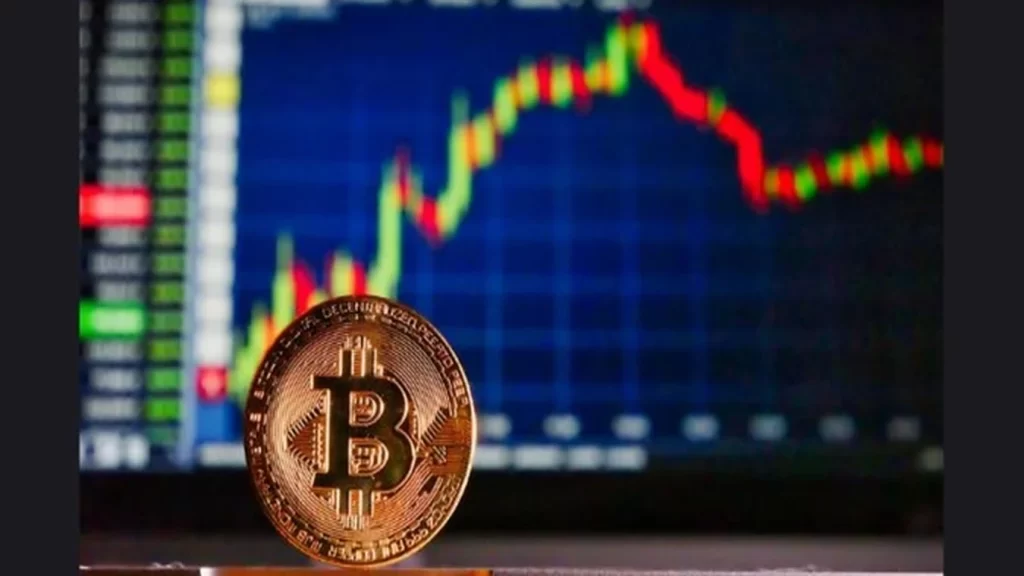
Bitcoin may experience a surge in upside volatility, according to John Bollinger, the creator of the Bollinger Bands volatility indicator.
In a recent post on X (formerly Twitter), Bollinger pointed out that Bitcoin was poised for a significant breakout.
Bitcoin had reached new highs in September, challenging resistance levels that had eluded it since mid-August, as reported by data from Cointelegraph Markets Pro and TradingView.
Bollinger, however, found these developments encouraging, relying on his Bollinger Bands indicator, which utilizes standard deviation around a simple moving average to gauge price ranges and volatility.
Currently, BTC/USD is exhibiting daily candles that touch the upper band of the Bollinger Bands, which can signify an impending reversal back to the center band or a surge in upside volatility.
The recent narrow Bollinger Bands on Bitcoin contribute to the optimism that the latter scenario will prevail.
Bollinger noted, “And there is the first tag of the upper Bollinger Band after a new set of controlling bars was established at the lower band.”
However, he cautioned that it’s too early to predict if Bitcoin will continue its upward trajectory along the upper band.
READ MORE: NFL Quarterback Trevor Lawrence and YouTube Influencers Settle FTX Lawsuit
This narrowing of the Bollinger Bands was previously observed in July and preceded a return to lower price levels.
Bollinger’s analysis aligns with the sentiments of seasoned Bitcoin traders and analysts on shorter timeframes.
Despite the recent strength in Bitcoin’s performance, there is a sense of caution in the market.
Various trendlines that previously acted as support are still above the current spot price.
On-chain monitoring resource Material Indicators advised X subscribers to be skeptical of bullish momentum.
The commentary from Material Indicators highlighted the presence of technical resistance at the Key Moving Averages and support at the LL (likely low).
It suggested that Bitcoin might trade within a range and emphasized the importance of upcoming tests of R/S (Resistance/Support) levels to gain clarity about Bitcoin’s direction in the coming week.
Additionally, Material Indicators referenced the impending decision by the United States Federal Reserve regarding interest rates.
This decision could potentially introduce sudden volatility and unreliable short-term trading signals, further complicating Bitcoin’s near-term outlook.
Other Stories:
Magic Eden Unveils Solana’s cNFT Support
FTX Reopens Secure Customer Claims Portal Following Cyberattack
Bitcoin Stabilizes at $26,500 After Hitting September Highs: Eyes on Federal Reserve’s FOMC Meeting
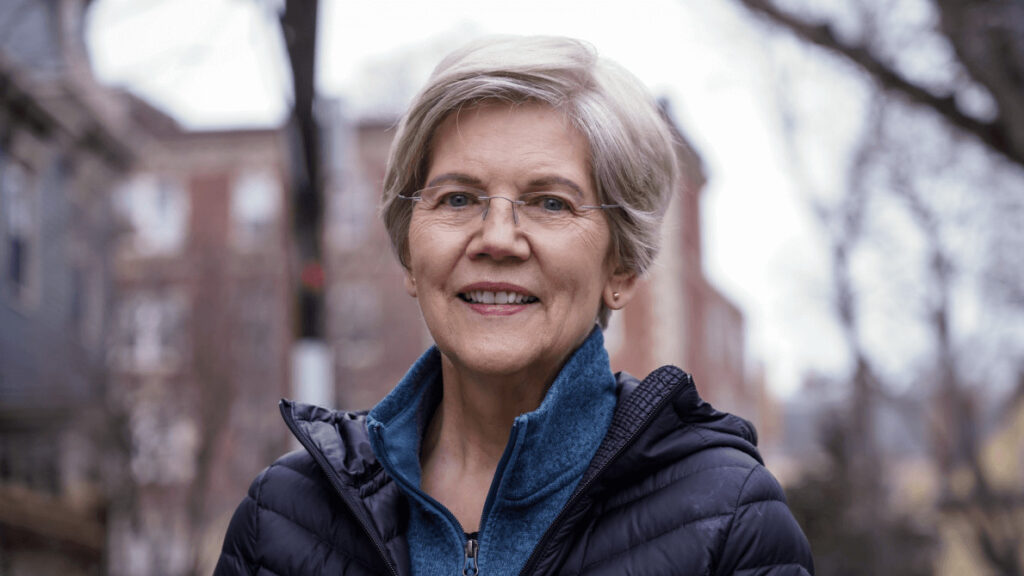
Nine United States Senators have thrown their support behind Senator Elizabeth Warren’s Digital Asset Anti-Money Laundering Act, marking a significant step in the bipartisan fight against illicit cryptocurrency activities, according to a statement from Warren’s office.
Among the notable senators who have joined the coalition supporting the bill are prominent Democratic Party members: Gary Peters, Dick Durbin, Tina Smith, Jeanne Shaheen, Bob Casey, Richard Blumenthal, Michael Bennet, and Catherine Cortez Masto. Independent Senator Angus King has also lent his support to this bipartisan effort.
Notably, Peters chairs the Senate Homeland Security and Governmental Affairs Committee, while Durbin serves as the chair of the Senate Judiciary Committee.
Senator Warren, the driving force behind the bill, expressed her satisfaction with the growing support, affirming that it demonstrates Congress’s readiness to take action.
She highlighted the strength of their bipartisan proposal, which is touted as the most robust solution to combat the illicit use of cryptocurrencies, equipping regulators with essential tools to enforce compliance.
READ MORE: FTX Reopens Secure Customer Claims Portal Following Cyberattack
This legislation has garnered endorsements from various organizations dedicated to combating financial crimes, including Transparency International U.S., Global Financial Integrity, the National District Attorneys Association, the Major County Sheriffs of America, the National Consumer Law Center, and the National Consumers League.
Warren originally introduced the Digital Asset Anti-Money Laundering Act in July 2023, collaborating with Senators Joe Manchin, Roger Marshall, and Lindsey Graham.
The current version of the bill encompasses several key provisions.
Notably, it seeks to crack down on noncustodial digital wallets, expand the responsibilities under the Bank Secrecy Act, and establish a framework for Anti-Money Laundering/Combating the Financing of Terrorism compliance examinations and other legal mechanisms to combat the illicit use of digital currencies.
Senator Warren has underscored the urgency of addressing what she terms as a “$50 billion crypto tax gap.”
She asserts that unless there is a timely update to tax policies, the Internal Revenue Service and the U.S. Treasury could potentially miss out on approximately $1.5 billion in tax revenue for the 2024 financial year.
As such, the Digital Asset Anti-Money Laundering Act represents a critical step in enhancing oversight and regulation in the rapidly evolving cryptocurrency landscape.
Other Stories:
NFL Quarterback Trevor Lawrence and YouTube Influencers Settle FTX Lawsuit
Bitcoin Stabilizes at $26,500 After Hitting September Highs: Eyes on Federal Reserve’s FOMC Meeting

Recent on-chain data reveals a compelling narrative in the world of Bitcoin (BTC) as holders continue to accumulate the digital asset. The statistics depict a scenario where exchange holdings have plummeted to yearly lows, while the proportion of dormant BTC supply has surged to unprecedented levels.
Glassnode’s Bitcoin supply last active chart highlights this trend, showcasing that the amount of inactive BTC, untouched in addresses for one, three, and even five years, has reached historic highs since July 2023.
These findings resonate with Bitcoin analytics from CoinMarketCap, which tracks wallet addresses based on the duration of BTC holding. Remarkably, a staggering 69% of addresses, equivalent to 36.8 million, have maintained their BTC holdings for over a year.
CryptoQuant’s data further reinforces this trend by indicating a consistent decline in Bitcoin outflows from exchanges since July 2021.
Currently, a meager 2 million BTC remains on various exchanges, reflecting a substantial decrease over time.
For a more granular view, the CoinGlass Bitcoin on exchanges tracker dissects the circulating BTC holdings among major centralized exchanges.
Leading the pack is Binance, boasting 543,281 BTC on its platform. However, it’s worth noting that Binance has experienced a notable exodus of Bitcoin in the past month, with 21,645 BTC withdrawn.
Coinbase Pro secures the second position with a BTC balance of 435,530.
READ MORE: Cryptocurrency Market Sees Bullish Momentum Amidst Bitcoin’s Recovery
Similar to Binance, this U.S.-based exchange has witnessed 3,612 BTC being withdrawn over the last 30 days.
Interestingly, OKX stands out as the only exchange in the top 10 to have observed a substantial inflow of Bitcoin in the same period, with 4,630 BTC flowing onto its platform.
The broader context of these developments involves market commentators and analysts making bullish predictions about Bitcoin’s potential value.
These sentiments are fueled by the anticipation of the highly-awaited mining reward halving, scheduled for 2024.
As Bitcoin holders increasingly opt to store their assets securely in non-exchange wallets, the crypto community is left to speculate on the potential for further price appreciation in the coming years.
These accumulating patterns suggest a strong belief in Bitcoin’s long-term value and utility as a digital store of wealth.
Other Stories:
Dubai-Based Cryptocurrency Exchange Faces Liquidity Crisis Amid Regulatory Scrutiny
DeFi Ecosystem Faces Challenges as On-Chain Activity Declines and Stablecoins Feel the Pressure
Bybit, globally recognized as the third most frequented crypto exchange, has unveiled a groundbreaking risk management tool unique to the crypto exchange realm, dubbed “Perp Protect.”
This pioneering tool procures options contracts automatically, providing a convenient hedge for both long and short positions, thus ensuring uncomplicated downside protection.
Developed exclusively by Bybit, Perp Protect is unparalleled and unavailable on other leading crypto platforms. It assures traders a semblance of serenity by proposing options contracts that shield investments from unfavorable price movements, without hampering the underlying investment strategy.
This innovative tool is crucial for traders who foresee market fluctuations, allowing them to fortify their positions amidst volatile market conditions.
Perp Protect distinguishes itself with its automatic options acquisition, delivering intelligent recommendations and allowing traders to proficiently traverse market vicissitudes.
Perp Protect serves as a dependable protection layer for novice perpetual traders, instilling confidence and allowing them to delve into perpetual trading with minimized risk of losses. This tool is notable for its user-friendly design, necessitating just a couple of clicks to activate, thus making its myriad of benefits seamlessly accessible.
Furthermore, it employs a smart algorithm which incessantly assesses market situations, providing optimal protection at minimal costs, starting at 2% of a user’s initial margin.
Ben Zhou, Bybit’s CEO and co-founder, emphasized the importance of providing traders with tools that augment their trading experience and reduce inherent market risks. “In the evolving crypto landscape, it’s imperative for traders to have access to instruments that not only enrich their experience but also lessen the risks intrinsic to this vibrant market,” Zhou stated. “We are elated to present Perp Protect, a revolutionary solution ensuring tranquility and security to traders across the spectrum.”
Established in 2018, Bybit stands as a top-tier cryptocurrency exchange offering a professional environment replete with an ultra-fast matching engine, round-the-clock customer service, and multilingual community support.
Bybit, having etched a partnership with the eminent Oracle Red Bull Racing team of Formula One, continues to stride forth in the crypto domain, offering state-of-the-art services and solutions like Perp Protect, signifying a monumental stride in facilitating secure and informed trading for users ranging from novice to experienced, ensuring protection and peace of mind amidst the dynamic crypto market.
Other Stories:
SEC Faces Setback as Judge Denies Immediate Access to Binance.US Software
Binance.US Faces Record-Low Trading Activity Amid Mounting Regulatory and Internal Challenges
US House Financial Services Committee Advances Bills to Regulate Central Bank Digital Currency