


Alchemy Pay, the cryptocurrency payment gateway, is making significant strides in its global expansion efforts following the acquisition of a substantial payment license in the United States.
On September 20th, the company proudly revealed that it had secured a Money Transmitter License from the Arkansas Securities Department, granting it the authority to engage in various financial activities.
This newly acquired license empowers Alchemy Pay to offer services encompassing the issuance and sale of payment instruments, stored value, prepaid access, as well as the transmission and reception of money, digital currency, or monetary value.
Notably, this development marks a historic moment for Alchemy Pay as it represents the company’s very first Money Transmitter License in the United States.
The license aligns Alchemy Pay with other cryptocurrency firms, such as Coinbase, Block (founded by Jack Dorsey), MoonPay, and bitFlyer exchange, that are permitted to facilitate crypto-to-fiat transactions within the state of Arkansas.
For Alchemy Pay, this milestone is a testament to its commitment to compliance and its strategy to navigate local regulatory landscapes in key global markets.
The company has already obtained licenses in countries like Indonesia and Lithuania and is actively pursuing additional Money Transmitter Licenses in various U.S. states.
Robert McCracken, Alchemy Pay’s ecosystem lead, emphasized the company’s dedication to regulatory compliance, noting the significant investments made in securing licenses worldwide.
He articulated the company’s aspirations to expand its presence and services in the United States, further advancing its mission of bridging the gap between fiat and crypto economies.
Founded in 2018 in Singapore, Alchemy Pay operates a crypto-to-fiat payment platform that facilitates seamless transactions between fiat currencies like the U.S. dollar and the euro and cryptocurrencies like Bitcoin and Ether.
Currently, their platform supports payments in 173 countries, including regions such as Australia, Canada, Hong Kong, the United Arab Emirates, and India.
Notably, this announcement follows Alchemy Pay’s recent recognition as a compliant service provider within Mastercard’s Site Data Protection program in June 2023.
Earlier in the year, in January 2023, Alchemy Pay was officially listed as an official service provider by Visa, further solidifying its position in the global payment ecosystem.
Other Stories:
Secure Your Crypto Wallet Against Scams With These Essential Tools
Demystifying the Crypto Tax Headache: A Guide to Navigating Tax Obligations
3LAU’s Exit Sparks Debate Over Regulatory Risks on Decentralized Social Platform

Busan, South Korea’s second-largest city, is actively paving the way to become a cutting-edge blockchain hub by developing a public blockchain network that can seamlessly integrate with major blockchain platforms like Ethereum and Cosmos.
The city’s ambitious goal is to create a unified platform at the city level that can support a wide range of blockchain-based services and ultimately transform Busan into a thriving blockchain city.
To finance this transformative initiative, Busan City has earmarked an impressive budget of 100 billion Korean won (equivalent to $75 million) under the Blockchain Innovation Fund (BIF).
These funds will primarily be sourced from investments by public financial institutions within Busan, and there has already been substantial interest from nearly 100 private companies.
The BIF serves as a private fund dedicated to bolstering Busan’s blockchain industry and reinforcing its infrastructure, with strong collaboration between financial and public institutions within the city.
This monumental public blockchain development is a part of the broader Busan Digital Asset Exchange Establishment Promotion Plan and Future Schedule plan, which has a clear mission to position Busan as a leading blockchain city.
READ MORE: 3LAU’s Exit Sparks Debate Over Regulatory Risks on Decentralized Social Platform
The decision to pursue this path was partly due to the challenges faced by businesses operating within the city’s trade-free zone, as they found it cumbersome to navigate multiple blockchain networks for various projects.
Hence, the move towards a unified public blockchain network that can seamlessly interface with global counterparts like Ethereum was a strategic choice to enhance efficiency and user experience.
In addition to these efforts, Busan City is actively participating in the establishment of the Blockchain Trust Framework technology standard under the auspices of the Korea Internet & Security Agency.
This initiative seeks to elevate the quality of private services and facilitate greater interoperability among services by establishing standards in key areas such as blockchain technical systems, performance, and security.
These standards will also be extended to public services offered within Busan City, further solidifying its commitment to blockchain technology.
Looking ahead, the long-term blockchain development plan includes the creation of the Busan digital asset exchange in the first half of 2024.
This exchange will not only support digital assets but also facilitate the trading of tokenized securities, including valuable commodities such as precious metals (e.g., gold), industrial materials (e.g., copper), and energy resources (e.g., oil).
Moreover, the visionary administration behind these projects has its sights set on tokenizing and trading global intellectual property rights and carbon emissions rights in the future, marking Busan’s determination to be at the forefront of the blockchain revolution.
Other Stories:
Secure Your Crypto Wallet Against Scams With These Essential Tools
Demystifying the Crypto Tax Headache: A Guide to Navigating Tax Obligations

The CBDC Anti-Surveillance State Act, designed to thwart the issuance of a central bank digital currency (CBDC) by “unelected bureaucrats in Washington,” has advanced in its legislative journey, securing a significant milestone by passing through the House Financial Services Committee.
Representative Tom Emmer, the bill’s author, revealed in a press release on September 20 that the CBDC Anti-Surveillance State Act had successfully cleared the committee and received a favorable report for consideration on the House floor.
The next crucial step for the bill is a congressional vote.
Emmer highlighted that the legislation has already garnered support from 60 members of Congress.
He reiterated his concerns about the dangers associated with state-controlled currency and how it contradicts fundamental American values.
Emmer emphasized the importance of maintaining a financial system that aligns with American principles, emphasizing the need for a CBDC to be open, permissionless, and private, akin to traditional cash.
He warned against the risk of a central bank digital currency becoming a tool for surveillance and potential oppression, drawing parallels with the practices of the Chinese Communist Party.
The CBDC Anti-Surveillance State Act was reintroduced to the United States House of Representatives on September 14 by Emmer and 49 original co-sponsors.
Its initial introduction to Congress occurred in February 2023.
Key provisions within the bill aim to restrict the Federal Reserve from issuing a CBDC to individuals and prohibit the Fed from utilizing any CBDC for implementing monetary policy.
In a recent interview with Cointelegraph, Emmer highlighted the significance of digital assets in U.S. politics, characterizing them as a “sleeper issue” that resonates at both state and federal levels.
Emmer observed a generational divide within the United States, suggesting that citizens could resist policies that hinder the development of the digital space.
He believed that such resistance could expose lawmakers lacking technological expertise.
As the CBDC Anti-Surveillance State Act progresses through the legislative process, it remains a focal point of debate and contention in the evolving landscape of digital finance and government control over currency.
Other Stories:
3LAU’s Exit Sparks Debate Over Regulatory Risks on Decentralized Social Platform
Demystifying the Crypto Tax Headache: A Guide to Navigating Tax Obligations
Secure Your Crypto Wallet Against Scams With These Essential Tools
Tether, the leading issuer of stablecoins in the cryptocurrency market, has experienced a surge in stablecoin lending activity during 2023, despite having previously declared its intention to phase out such loans entirely by December 2022.
In its most recent quarterly report, Tether disclosed that its assets included a total of $5.5 billion in loans as of June 30, marking an increase from the $5.3 billion reported in the previous quarter.
A spokesperson from Tether explained to The Wall Street Journal (WSJ) that this upturn in stablecoin lending was primarily driven by a few short-term loan requests originating from clients with whom the company had established long-standing relationships.
It was emphasized that Tether remains committed to reducing these loans to zero by 2024, as initially announced.
Stablecoin loans had previously gained popularity as a lending product offered by Tether, permitting customers to borrow USDT while providing collateral in return.
Nevertheless, these secured loans had often been surrounded by controversy due to a lack of transparency concerning both the collateral and the borrowers.
The WSJ’s report in December 2022 had raised substantial concerns regarding these lending products, asserting that they were not fully collateralized.
Doubts were also cast on Tether’s ability to meet redemption requirements during times of market instability.
Tether addressed these controversies during 2022, prior to announcing its plan to phase out secured loans in 2023.
At the time, the stablecoin issuer dismissed concerns surrounding these loans as “FUD” (Fear, Uncertainty, Doubt) and insisted that they were overcollateralized.
The recent resurgence in secured loans for Tether coincides with the firm’s expanding market dominance and profitability.
Tether reported a surplus reserve of $3.3 billion in September, a notable increase from the $250 million figure reported in 2022.
Despite reaching out to Tether for comment, Cointelegraph has not yet received a response.
Nonetheless, Tether did issue a response to the WSJ article, asserting that the publication’s concerns regarding stablecoin loans were unwarranted.
Tether emphasized that as a company boasting $3.3 billion in excess equity and projecting an annual profit of $4 billion, it was effectively offsetting the secured loans and retaining such profits within its corporate balance sheet.
Tether remained steadfast in its commitment to eventually eliminate secured loans from its reserves.
Other Stories:
3LAU’s Exit Sparks Debate Over Regulatory Risks on Decentralized Social Platform
Secure Your Crypto Wallet Against Scams With These Essential Tools
Demystifying the Crypto Tax Headache: A Guide to Navigating Tax Obligations

A novel development has taken the cryptocurrency world by storm as the Alpha project has introduced a groundbreaking community-based social token ecosystem within the Bitcoin network.
Alpha, positioned as a decentralized social network protocol, shares similarities with the well-known Ethereum-based platform Friend.tech.
Its primary function is to enable users to monetize their online presence and content creation by utilizing social tokens.
Distinguishing itself from Friend.tech, Alpha employs a unique structural composition.
It hinges on the security and immutability of the Bitcoin blockchain for finality, while data storage is facilitated through the Polygon blockchain.
Notably, the project has introduced Trustless Computer as its proprietary scaling network for Bitcoin. Co-founder Punk3700, operating under a pseudonym, eloquently described Alpha as “a rollup that rolls up to another rollup that rolls up to Bitcoin.”
In an exclusive conversation with Cointelegraph, Punk3700 shed light on the intricate architecture of Alpha. He explained, “Alpha implies a layered architecture that includes NOS-TC.
Trustless Computer (TC) is an optimistic rollup layer that directly integrates with the Bitcoin blockchain. NOS is implemented as another optimistic layer, enhancing scalability on the Bitcoin network.”
These optimistic rollup layers, he emphasized, collaborate harmoniously to ensure both security and efficiency in the deployment of decentralized applications.
Punk3700 elucidated further, stating, “NOS adopts a hybrid design that leverages Bitcoin for data validity and Polygon for data storage, ultimately settling on Bitcoin.”
This ingenious approach not only enhances flexibility in data storage but also serves to mitigate the exorbitant transaction fees associated with Bitcoin.
The user-centric ethos of Alpha is exemplified by its community-driven development approach.
Punk3700 revealed that the project was conceived and launched in an astonishingly brief 48-hour window.
To further incentivize user engagement, a referral program is currently in development, allowing users to earn 1% of their friends’ trading volume.
This move is poised to encourage user participation and motivate content creators to produce valuable content.
Meanwhile, Alpha is experiencing rapid user growth, contrasting with recent developments at Friend.tech.
The latter platform recently announced penalties for users engaging with forked or copycat versions of its platform, as it seeks to reward loyal users during its beta phase.
This decision followed concerns about a decline in key metrics, including user activity, inflows, and volume.
Additionally, Friend.tech grappled with rumors of a data breach, which the platform vehemently denied, assuaging fears regarding the exposure of over 100,000 user’s personal data.
Other Stories:
Secure Your Crypto Wallet Against Scams With These Essential Tools
Demystifying the Crypto Tax Headache: A Guide to Navigating Tax Obligations
3LAU’s Exit Sparks Debate Over Regulatory Risks on Decentralized Social Platform
Adult content creators are increasingly turning to decentralized alternatives like Only1 and Friend.tech as they grapple with payment challenges and the constant fear of deplatforming.
Leon Lee, the founder and CEO of Only1, a decentralized counterpart to OnlyFans, sees a significant shift of power from intermediaries to content creators, thanks to Web3 technology.
He notes that intermediaries are diminishing in significance while creators’ roles and earnings are on the rise.
Patreon faced issues in August when creators encountered difficulties withdrawing their earnings due to payment flagging by banks. Moreover, the memory of OnlyFans’ attempt to ban sexually explicit content in 2021 still lingers.
Lee argues that as long as creators remain on centralized platforms with traditional payment systems, they remain susceptible to deplatforming and are unable to realize their full earning potential.
Only1, launched on the Solana blockchain in March 2023 with backing from Animoca Brands, is just one example of startups seeking to reinvent adult subscription platforms with a crypto twist.
In 2022, Allie Rae introduced WetSpace, a crypto-powered adult content platform, to provide an alternative to OnlyFans.
Rae identified banks as a driving force behind platform decisions and saw crypto as a solution to circumvent their influence.
READ MORE: Secure Your Crypto Wallet Against Scams With These Essential Tools
More recently, creators began migrating to Friend.tech, a new decentralized social media platform on Coinbase’s layer-2 network Base.
Lee predicts a mass migration as creators reject censorship rules imposed by centralized intermediaries. While TV producers, advertisers, and brands will maintain a presence in the creator economy, blockchain-based peer-to-peer payment systems offer a logical progression for creators.
By eliminating the reliance on traditional payment processors, Web3 platforms empower communities to exercise full autonomy over the types of content allowed.
Lee emphasizes that since the OnlyFans adult content censorship debacle, creators have been establishing “backup accounts” on various platforms due to deplatforming risks.
In the Web3 space, Proof of Peach, SEXN, and Keyhole are among the adult entertainment platforms joining the decentralized movement.
Lee envisions a future where creators gravitate toward platforms that provide complete autonomy over their content and ownership rights to their earnings.
He believes this shift away from intermediaries is the natural progression facilitated by blockchain technology, enabling an inevitable future where there are no intermediaries between creators and their fans.
Other Stories:
3LAU’s Exit Sparks Debate Over Regulatory Risks on Decentralized Social Platform
Demystifying the Crypto Tax Headache: A Guide to Navigating Tax Obligations
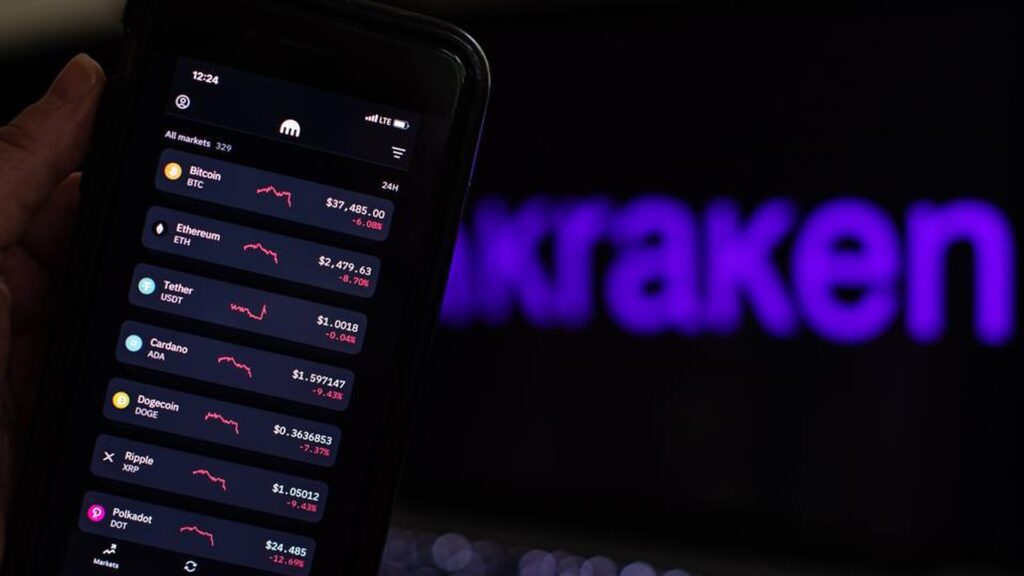
Bit Trade, the provider of the Kraken cryptocurrency exchange in Australia, is facing legal action from the Australian Securities and Investments Commission (ASIC) for allegedly failing to meet design and distribution obligations for one of its trading products.
ASIC, in a statement released on September 21, asserted that Bit Trade did not establish a target market determination before making its margin trading product available to Australian customers.
Design and distribution obligations are mandatory requirements imposed on financial product providers in Australia.
These obligations entail designing financial products that align with the predefined needs of customers and distributing them through a targeted strategy.
ASIC claimed that since the introduction of these obligations in October 2021, over 1,160 Australian customers utilized Bit Trade’s margin trading product, resulting in a collective loss of approximately $8.35 million (12.95 million Australian dollars).
The regulator communicated Bit Trade’s non-compliance with these obligations to the company in June 2022.
Despite this warning, ASIC alleges that Bit Trade continued to offer the product without fulfilling the necessary determinations.
Jonathon Miller, the managing director of Kraken’s Australian operations, expressed surprise at ASIC’s actions, believing the product to be in compliance with local regulations.
READ MORE: Secure Your Crypto Wallet Against Scams With These Essential Tools
Miller emphasized that they had been actively trying to engage with ASIC to ensure their product offering remained compliant.
Bit Trade’s margin trading product provides customers with a “margin extension” service, enabling them to access credit up to five times the value of their collateralized assets.
ASIC, however, contends that this product qualifies as a “credit facility,” as it extends credit for purchasing and selling specific cryptocurrencies on the Kraken exchange.
Sarah Court, ASIC’s deputy chair, stressed that these legal proceedings serve as a reminder to the cryptocurrency industry that regulators will continue to scrutinize financial products to ensure compliance with consumer protection laws in Australia.
“ASIC’s action should be a reminder of the importance of adhering to design and distribution obligations to ensure appropriate distribution of financial products to consumers,” Court stated.
In summary, ASIC has initiated civil proceedings against Bit Trade, the operator of Kraken in Australia, accusing the company of failing to meet design and distribution obligations related to one of its trading products.
The regulator alleges that Bit Trade did not establish a target market determination and continued to offer the product despite being notified of non-compliance.
Bit Trade contends that its product complies with Australian law, while ASIC emphasizes the importance of compliance with consumer protection laws in the cryptocurrency industry.
Other Stories:
3LAU’s Exit Sparks Debate Over Regulatory Risks on Decentralized Social Platform
Demystifying the Crypto Tax Headache: A Guide to Navigating Tax Obligations
Cryptocurrencies, primarily Bitcoin, have emerged as a dominant component of South Korea’s overseas assets, according to the latest report released by the country’s National Tax Service (NTS).
In an official announcement made on September 20, the NTS disclosed that a total of 1,432 individuals and corporations had reported overseas accounts denominated in cryptocurrencies during the current year.
The cumulative value of these reported cryptocurrency holdings amounted to a staggering 130.8 trillion South Korean won, which equates to approximately $98 million.
This remarkable figure represents more than 70% of the overall reported value of all overseas assets.
The official data revealed that a total of 5,419 entities had filed reports regarding their offshore financial accounts, encompassing a diverse range of assets, such as cryptocurrencies, stocks, deposits, and savings.
The aggregate worth of these assets was measured at 186.4 trillion won, or around $140 million.
Although cryptocurrencies were the single largest category in terms of the value of assets reported, deposits and savings accounts were predominant in terms of the number of reports filed.
A total of 2,952 individuals and companies reported holdings worth 22.9 trillion won, equivalent to $17 million.
Additionally, another 1,590 entities disclosed the possession of stocks valued at 23.4 trillion won, or approximately $17.6 million.
READ MORE: Dubai-Based Cryptocurrency Exchange Faces Liquidity Crisis Amid Regulatory Scrutiny
To ensure compliance with tax regulations, the NTS has outlined its intention to intensively scrutinize individuals and entities that fail to report their overseas financial accounts.
The agency has been collecting comprehensive cross-border information exchange data, foreign exchange data, and notifications from relevant agencies, and it is prepared to levy fines on those who breach the reporting rules.
The NTS emphasized the global trend of tax authorities collaborating to exchange information, as part of efforts to counter potential tax base erosion resulting from virtual assets.
South Korea, known for its crypto-friendly environment, has become increasingly vigilant regarding cryptocurrency tax regulations, even confiscating significant amounts of cryptocurrency from tax evaders.
In August 2023, the city of Cheongju in South Korea reiterated its commitment to seizing cryptocurrency from local tax delinquents.
Previously, the South Korean government had postponed the implementation of a 20% tax on crypto gains, originally scheduled for early 2023, now rescheduled for 2025.
These actions underscore the evolving landscape of cryptocurrency taxation in South Korea.
Other Stories:
Blockchain Betting: The New Way to Invest in Digital Assets
DeFi Ecosystem Faces Challenges as On-Chain Activity Declines and Stablecoins Feel the Pressure
Cryptocurrency Market Sees Bullish Momentum Amidst Bitcoin’s Recovery

On September 20, Bitcoin stood firm at $27,000 as the cryptocurrency world awaited a critical macroeconomic event.
Cointelegraph Markets Pro and TradingView data indicated a shift in focus towards higher BTC prices compared to the previous week.
The crypto markets demonstrated confidence in the upcoming decision regarding interest rates by the United States Federal Reserve.
The Federal Open Market Committee (FOMC) was scheduled to announce its latest changes at 2 pm Eastern Time on that very day.
As of the report, the consensus was overwhelmingly in favor of the rates remaining unchanged, with a 99% probability according to CME Group’s FedWatch Tool.
Financial commentator Tedtalksmacro noted that core CPI inflation was aligning with the Fed’s target, suggesting a potential acknowledgment by the Fed that inflation was trending as desired.
However, the event was expected to bring about short-term market volatility.
Analyzing the BTC/USD order book on Binance, Material Indicators highlighted thin liquidity around the spot price, indicating potential for increased volatility.
They also anticipated that the speech and press conference by Fed Chair Jerome Powell would further impact Bitcoin’s price.
Looking at the order book, there were bid-side liquidity levels around $26,650, with substantial bids at $25,000.
On the upside, sellers were positioned at $27,450, which marked the local BTC price high for September.
READ MORE: Blockchain Betting: The New Way to Invest in Digital Assets
Traders had their eyes on key levels and expected the FOMC’s decision to trigger various reactions in the market.
Some traders foresaw challenges to range levels as part of the FOMC’s impact.
Popular trader Daan Crypto Trades anticipated that stop-loss orders might be triggered during the volatility.
Others, like trader Jelle, predicted “choppy waters” for Bitcoin. Trader Skew also anticipated an active trading environment following the FOMC announcement.
Crypto Tony emphasized the importance of the $26,800 support zone for Bitcoin bulls. He noted that maintaining this level was crucial for his long position, highlighting the potential risk of creating a deviation below it.
In conclusion, Bitcoin remained stable at $27,000 on September 20, with the crypto community eagerly awaiting the outcome of the FOMC’s interest rate decision, which was expected to have short-term effects on market volatility and key price levels.
Other Stories:
Dubai-Based Cryptocurrency Exchange Faces Liquidity Crisis Amid Regulatory Scrutiny
DeFi Ecosystem Faces Challenges as On-Chain Activity Declines and Stablecoins Feel the Pressure
Cryptocurrency Market Sees Bullish Momentum Amidst Bitcoin’s Recovery
Stanford University, headquartered in California, has announced its intention to refund all funds it had received from the now-defunct cryptocurrency exchange FTX, as reported by Bloomberg.
The university disclosed that it had received a sum of $5.5 million in donations from various FTX-associated entities between November 2021 and May 2022.
In a statement released via email on September 19th, a spokesperson from Stanford revealed their plan, stating, “We have been in discussions with attorneys for the FTX debtors to recover these gifts and we will be returning the funds in their entirety.”
Stanford clarified that the donations it had received were primarily intended for pandemic-related prevention and research purposes and had been given by the FTX Foundation and FTX-related companies.
Interestingly, the parents of Sam “SBF” Bankman-Fried, the former CEO of FTX, both have affiliations with Stanford Law School and are legal scholars. This connection adds an intriguing layer to the story.
Stanford’s decision to sever financial ties with FTX comes in the wake of allegations against SBF’s parents, Alan Bankman and Barbara Fried, who are accused of embezzling millions from the cryptocurrency exchange.
READ MORE: Dubai-Based Cryptocurrency Exchange Faces Liquidity Crisis Amid Regulatory Scrutiny
The FTX debtors initiated a lawsuit on September 18th, alleging that the duo had inappropriately diverted funds from their involvement with the exchange for personal enrichment, totaling millions of dollars.
The court documents reveal that Bankman had concerns about his annual salary, which was set at $200,000, and these concerns went unaddressed by SBF or FTX US. Bankman had reportedly expected an annual salary of $1 million.
On September 19th, SBF’s legal team sought his early release from jail to prepare for his upcoming trial scheduled for October.
During the hearing, one of the judges pointed out that SBF’s arguments about his First Amendment rights were no longer relevant due to his alleged attempts to intimidate a witness, Caroline Ellison, who is the former CEO of Alameda Research.
In sum, Stanford University’s decision to return the funds it received from FTX-related entities is an interesting development amidst the legal troubles facing SBF’s parents and the ongoing investigations into FTX’s financial dealings.
Other Stories:
Cryptocurrency Market Sees Bullish Momentum Amidst Bitcoin’s Recovery
Blockchain Betting: The New Way to Invest in Digital Assets
DeFi Ecosystem Faces Challenges as On-Chain Activity Declines and Stablecoins Feel the Pressure