


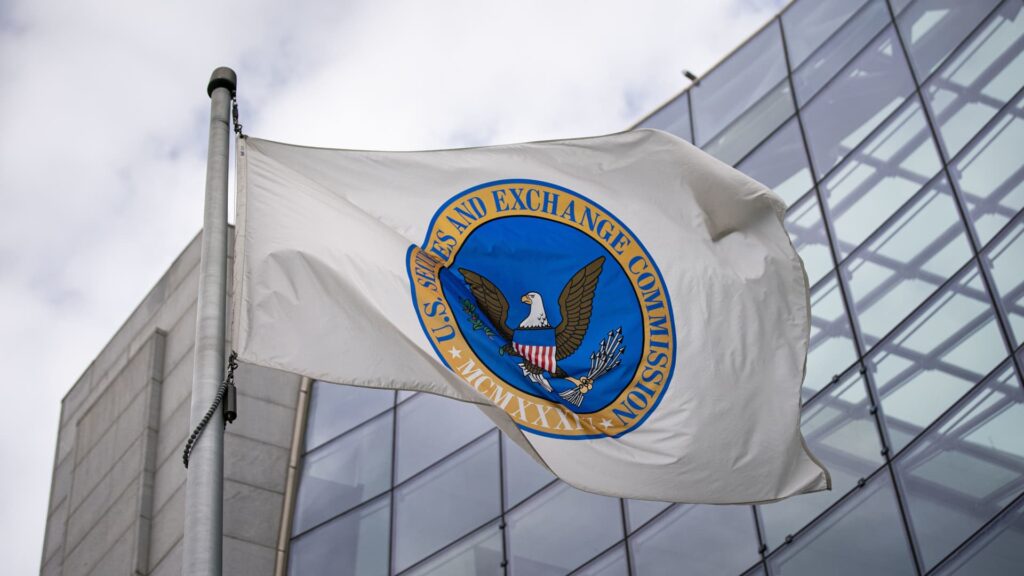
The United States Securities and Exchange Commission (SEC) encountered a setback in its pursuit of immediate access to Binance.US’s software during a hearing held on September 18.
The SEC had filed a motion to compel Binance to provide detailed information and make its executives more available for depositions, a contentious issue in their recent interactions.
Judge Faruqui presided over the hearing and expressed reluctance to grant immediate access, stating that he was “not inclined to allow the inspection at this time.”
Instead, he suggested that the SEC should formulate more specific discovery requests and engage with a broader array of witnesses, as reported by Bloomberg on September 18.
The SEC has been vocal about its difficulties in obtaining information from Binance.US ever since it filed a lawsuit against the American branch of the cryptocurrency exchange, along with its global affiliate Binance Holdings Ltd and CEO Changpeng “CZ” Zhao on June 5.
The lawsuit alleges their involvement in the sale of unregistered securities.
On September 15, the SEC accused Binance.US of noncooperation in the investigation.
READ MORE:Magic Eden Unveils Solana’s cNFT Support
The regulator pointed out that Binance.US’s parent company, BAM Trading, had produced a mere 220 documents during the discovery process.
Many of these documents were described as “unintelligible screenshots and documents without dates or signatures.”
Furthermore, BAM had been reluctant to make crucial witnesses available for deposition, agreeing only to four depositions of their choosing.
Binance, on the other hand, argued that the SEC’s repeated discovery requests were “unduly burdensome.”
The SEC countered by accusing Binance of uncooperative behavior, despite having previously consented to a discovery order in the SEC’s case regarding unregistered securities operations and other allegations.
Judge Faruqui’s decision to deny immediate access to Binance.US’s software and documentation represents a partial setback for the SEC in its ongoing case against the exchange.
The SEC’s primary concern revolves around the custody of Binance.US customer assets and the need for a more comprehensive investigation to uncover potential connections with the global arm of the exchange.
Other Stories:
NFL Quarterback Trevor Lawrence and YouTube Influencers Settle FTX Lawsuit
Bitcoin Stabilizes at $26,500 After Hitting September Highs: Eyes on Federal Reserve’s FOMC Meeting
FTX Reopens Secure Customer Claims Portal Following Cyberattack
The United States House Financial Services Committee is taking significant steps to address the issue of central bank digital currencies (CBDCs).
Chairman Patrick McHenry has announced that the committee will hold markups for two bills related to a potential digital dollar on September 20.
Markups serve as essential sessions where lawmakers thoroughly discuss the specifics of a proposed bill before it progresses to the House floor.
One of the key bills under consideration is the Digital Dollar Pilot Prevention Act, known as H.R. 3712.
This legislation, introduced by Representative Alex Mooney in May, seeks to restrict the Federal Reserve from launching pilot programs to test CBDCs without prior approval from Congress.
This move is aimed at ensuring that any steps towards a CBDC are subject to proper oversight and authorization.
Although the Federal Reserve has recently asserted that it has not made any concrete decisions regarding the issuance of a CBDC, it clarified that any such move would require authorization through legislation.
Interestingly, the Federal Reserve of San Francisco has been actively recruiting technical personnel for a CBDC project in recent months, suggesting that the digital dollar remains a topic of serious consideration.
The second piece of legislation being discussed is an amendment to the Federal Reserve Act, which carries multiple provisions.
READ MORE: DeFi Advocacy and Market Dynamics: A Week of Intense Developments in Decentralized Finance
It prohibits Federal Reserve banks from directly offering certain products or services to individuals. Additionally, it bars the use of CBDCs for monetary policy purposes and other similar objectives.
The bill explicitly states that “a Federal reserve bank shall not offer a central bank digital currency, or any digital asset that is substantially similar under any other name or label, indirectly to an individual through a financial institution or other intermediary.”
The issue of a digital dollar has sparked considerable debate within the United States.
Prominent figures like presidential candidates Robert F. Kennedy Jr. and Ron DeSantis have voiced their concerns, particularly regarding financial privacy, in opposition to the establishment of a CBDC in the country.
Meanwhile, proponents of CBDCs argue that such a digital currency would help maintain the global relevance of the U.S. dollar and potentially facilitate increased adoption of cryptocurrencies.
As the debate continues, the House Financial Services Committee’s actions represent a pivotal moment in shaping the future of digital currency in the United States.
Other Stories:
BitQuant Predicts Bitcoin Will Hit $250,000 After Halving
Bitcoin Miner Returns $500,000 in Fees to Paxos After Transaction Mistake
In September, Binance.US, the American arm of the global cryptocurrency exchange Binance, grappled with a series of challenges that sent its trading activity plummeting to historic lows.
On September 16th, Binance.US reported a mere $5.09 million in trading volume, as disclosed by Amberdata on The TIE Terminal.
The lowest point of the month was recorded on September 9th when trading activity dipped to a paltry $2.97 million.
This stark decline is a stark contrast to September 17, 2022, when the exchange’s trading volume comfortably hovered around $230 million.
The turmoil surrounding Binance.US can be traced back to a lawsuit filed by the Securities and Exchange Commission (SEC) on June 5. The SEC accused both Binance and Binance.US of various infractions, including unregistered securities offerings and wash trading.
The allegations included Binance.US’s failure to register as a broker-dealer and to properly register its staking-as-a-service program.
In response to the lawsuit, Binance.US took the drastic step of suspending trading for more than 100 token pairs.
This move had a substantial impact on the exchange’s overall trading activity.
Internal challenges have further compounded the situation. Brian Shorder, the former CEO of Binance.US, resigned recently, joining a growing list of global executives who have departed the organization in recent weeks.
READ MORE: BitQuant Predicts Bitcoin Will Hit $250,000 After Halving
Following Shorder’s departure, Head of Legal Krishna Juvvadi and Chief Risk Officer Sidney Majalya also announced their resignations.
Speculation is rife that these departures are linked to an ongoing investigation by the U.S. Department of Justice into Binance, its CEO Changpeng “CZ” Zhao, and Binance.US. CZ, in a statement on X (formerly Twitter), indicated that Shorder’s exit was due to a “deserved break” and praised his contributions to the company.
The troubles for Binance.US appear to be far from over.
The SEC has accused the exchange of non-cooperation in the ongoing investigation, citing a meager production of 220 documents during the discovery process.
Additionally, a judge granted the SEC’s request to unseal previously sealed or redacted documents related to the case on September 15.
These documents are expected to shed further light on the ongoing legal challenges faced by Binance.US and are anticipated to become publicly available in the near future.
Other Stories:
DeFi Advocacy and Market Dynamics: A Week of Intense Developments in Decentralized Finance
Bitcoin Miner Returns $500,000 in Fees to Paxos After Transaction Mistake
London, England, September 21st, 2023, Chainwire
Delegated liquid staking protocol stake.link has announced a major expansion to its forthcoming staking program. A suite of new features and optimizations have been unveiled that will reinforce stake.link’s position as the preeminent Chainlink staking solution.
The new features revealed by stake.link are designed to take advantage of the next iteration of Chainlink Staking, v0.2, that will go live in Q4. Among the various upgrades developed by stake.link is a feature known as the Priority Pool. This will deliver a seamless and highly efficient process for users to stake LINK ahead of Chainlink expanding capacity from 25M to 45M tokens. The priority pool automates LINK staking on behalf of depositors, creating a “set and forget” staking experience.
stake.link has also announced that it will be migrating its stSDL (staked SDL) receipt tokens to reSDL (reward escrow SDL), an NFT representation of the SDL token. This will be undertaken with the aim of promoting long term participation in the platform by increasing boosts and governance votes.
Jonny Huxtable, a Founding Member of stake.link said “This new major iteration of the stake.link platform brings revamped tokenomics and, for the first time, a set-and-forget LINK staking option. Never before has it been so easy for users to participate in Chainlink Staking, creating a dynamic that benefits both the economic security of the Chainlink Network and the long-term stakers of the native stake.link token: SDL. This major release marks a milestone for stake.link, seeing growth that will cement its position in the industry to support the next wave of major infrastructure advancements powered by the Chainlink Network.”
The 20M LINK that will be made available to the Chainlink staking pool in Q4 will be rolled out in three phases as per the Chainlink roadmap. Once phase three activates, the LINK from the stake.link priority pool will be staked against the community pool, and there will likely be less than 20M LINK available to be deposited. LINK deposited by holders of reSDL will thus be prioritised over LINK held by non-reSDL holders when staking in the priority pool.
Finally, stake.link has announced that it will be releasing its own AI-powered chatbot, “SergAI.” As an expert in all things Chainlink and stake.link, SergAI will answer questions concerning topics such as liquid staking thresholds, the priority pool, and how receipt tokens operate.
About stake.link
stake.link is a delegated liquid staking protocol for Chainlink Staking. Powered and governed by the protocol token SDL, with DeFi interoperability enabled by the liquid staking receipt token stLINK, the stake.link protocol enables anyone to provide LINK collateral to and receive a share of rewards from the most reliable and performant Chainlink node operators.
Learn more: https://stake.link/
Contact
Avishay Litani
[email protected]
Singapore, Singapore, September 21st, 2023, Chainwire
Oasys, a game-focused blockchain, is pleased to announce a collaboration with GMO Media, a subsidiary of Japanese internet giant GMO Internet Group, to introduce “GESOTEN Verse” (tentative name) on Oasys. As part of the collaboration, three titles have been confirmed for release in December 2023, in conjunction with the new Verse.
GMO Media started its crypto business in 2014, working on technical development using smart contract and IEO support for business among other services. “GESOTEN Verse” (tentative name) will allow users of the “GESOTEN by GMO” gaming platform to seamlessly play blockchain games using their existing IDs from the platform. “GESOTEN byGMO” has formed partnerships with various domestic point services and e-commerce services, and is planning to develop a system where users can earn cryptocurrencies and various points as rewards while playing games.
The following titles are among the initial ones to be confirmed:
1. “UNIVERSAL STALLION” (Provided by HashLink)
- This is a play-to-earn horse racing game that pursues realism. You can raise your own racehorse, the only one in the world, on the blockchain. You can earn in-game currency and items by winning races with your racehorses, and you can also earn in-game currency by breeding and trading.
2. “KITARO ~ YOKAI STREET ~” (Provided by Fuji Games)
- A nurturing social game where players who have wandered into the world of GeGeGe no Kitaro work with Yokai to defeat the evil Yokai, develop Yokai Alley, and create a paradise where cute Yokai gather. Playing within “GESOTEN byGMO” allows players to acquire NFTs on “GESOTEN Verse” and introduces Play-to-Earn elements into traditional gameplay.
3. “YOLO FOX” (Provided by MetalistGame)
- Yolofox game is the world’s first travel-themed development placement game that uses the concept of “AI + co-creation”, and builds a unique AI-driven game world with players.
- Yolofox Game cooperates with a top AI organization. Players will participate in creating AIGC game content and gameplay, train and train exclusive AI NPCs, and share the game revenue brought by AI creation.
Additionally, “GESOTEN byGMO” will be featured at the Oasys booth during the Tokyo Game Show 2023, starting on September 21st. Attendees can participate in mini-games to earn OAS tokens and receive original merchandise.
We hope you’re as excited as we are for the arrival of “GESOTEN Verse” and the new titles!
About “GESOTEN by GMO” (URL: https://gesoten.com/):
“Gesoten by GMO” is an online game and community service that allows you to play various online games, for free, with a community function that allows users to interact with each other.
It also works with services operated by GMO Media, such as “Point Town by GMO,” allowing players to earn points while playing games.
About Oasys
Oasys is a blockchain project with a focus on gaming, operating under the concept of “Blockchain for Games.” Over 20 members serve as Oasys validators (chain operators), including major gaming companies like Bandai Namco Research and Web3 companies. Oasys uses a PoS (Proof of Stake) consensus mechanism that also considers environmental factors.
The project aims to provide blockchain gamers with fee-free transactions and accelerated transaction processing through its unique Oasys architecture, ensuring a comfortable gaming environment.
Website: https://www.oasys.games/
Twitter(英語): https://twitter.com/oasys_games
Discord: http://discord.gg/oasysgames
Telegram: https://t.me/oasysen
Contact
Akari Oeda
[email protected]

A dedicated group of Ethereum enthusiasts is on the cusp of unveiling their groundbreaking project, Scroll, a zero-knowledge Ethereum Virtual Machine (zkEVM) that has been two years in the making.
While other zero-knowledge EVMs already exist, Scroll’s co-founder, Ye Zhang, emphasized that their endeavor is driven by a deep commitment to Ethereum’s core values.
For Zhang and his team, Scroll represents more than just solving computational puzzles; it’s a labor of love rooted in Ethereum’s ethos of decentralization.
They’ve approached this project with an open-source, community-driven philosophy, nurturing organic growth and eschewing aggressive marketing tactics.
The zkEVM’s launch is imminent, following rigorous testing and code audits.
Zhang anticipates Scroll’s release after critical projects like Uniswap and Aave are primed to deploy on its platform.
Zhang, a mathematician, holds zk-rollups in high regard, considering them the “holy grail” of layer-2 scaling solutions due to their cost-effectiveness and robust security.
Scroll’s entry into the zero-knowledge EVM arena coincides with other solutions from industry players like Polygon, Immutable, StarkWare, zkSync Era, and ConsenSys’ Linea, which debuted in August.
Zhang expressed confidence in Scroll’s superiority, citing “complete proof” of all Ethereum “opcodes” and transaction components, unlike some competing systems with “unproven” elements.
READ MORE: DeFi Advocacy and Market Dynamics: A Week of Intense Developments in Decentralized Finance
Scroll is fundamentally a layer-2 scaling project developed over a two-year span.
It leverages zero-knowledge proofs to offload data compression off-chain, ensuring that only proofs are submitted on-chain, thereby enhancing throughput.
As part of their commitment to the ecosystem, Scroll regularly publishes updates, spotlighting new projects within their ecosystem.
They recently focused on DeFi aggregators and permissionless lending protocols.
Crucially, Scroll’s EVM component offers full native compatibility with existing Ethereum software and applications.
While initial setup involves some centralization, with sequencers playing a role, Zhang envisions a decentralized roadmap unfolding gradually over time.
In conclusion, Scroll’s imminent launch as a zero-knowledge Ethereum Virtual Machine reflects a passionate commitment to Ethereum’s principles, offering a promising addition to the expanding landscape of layer-2 scaling solutions.
Other Stories:
BitQuant Predicts Bitcoin Will Hit $250,000 After Halving
Bitcoin Miner Returns $500,000 in Fees to Paxos After Transaction Mistake

SVB Financial Group, formerly the parent company of Silicon Valley Bank, is edging closer to finalizing a deal that would involve the sale of its venture capital division, SVB Capital.
Recent reports from The Wall Street Journal on September 15, citing insider sources, indicate that Anthony Scaramucci’s SkyBridge Capital and Atlas Merchant Capital are in competition with San Francisco’s Vector Capital in the latter stages of the bidding process.
While estimates suggest SVB Capital could fetch between $250 million and $500 million in the sale, it’s important to note that the transaction’s completion is not guaranteed and remains subject to the scrutiny of the creditor’s committee.
A decision regarding the sale is expected to be rendered in the upcoming weeks.
Remarkably, SVB Capital was not encompassed within SVB’s broader Chapter 11 bankruptcy proceedings.
The bank has affirmed that SVB Capital will continue its regular business operations despite being put on the market.
READ MORE: BitQuant Predicts Bitcoin Will Hit $250,000 After Halving
SVB Capital is recognized for its investment capital activities, including backing prominent Silicon Valley venture capital firms like Sequoia and Andreessen Horowitz (a16z).
As of December 2022, SVB Capital held assets totaling $9.5 billion, spread across 20 funds and 760 companies, which encompassed blockchain analytics service Chainalysis.
In parallel, SkyBridge Capital, overseen by Anthony Scaramucci, manages approximately $1.8 billion in assets, with a significant portion, around $580 million, allocated to cryptocurrencies and other digital asset-related investments.
Cointelegraph reached out to both SkyBridge Capital and SVB Capital for comments but had not received responses as of the publication time.
Earlier this year, Silicon Valley Bank faced regulatory action from California’s financial watchdog, leading to its closure on March 10 and subsequent bankruptcy filing on March 17.
Before its collapse, Silicon Valley Bank was among the few institutions offering banking services to crypto companies in the United States.
Its downfall coincided with that of other crypto and tech-friendly banks, including Signature Bank and Silvergate Bank, marking one of the most significant banking crises since 2008.
Furthermore, earlier this year, SVB Financial’s investment-banking arm, SVB Securities, completed its sale to its founder, Jeff Leerink, and senior managers for a sum of $100 million, underscoring the ongoing changes and developments within the organization.
Other Stories:
DeFi Advocacy and Market Dynamics: A Week of Intense Developments in Decentralized Finance
Bitcoin Miner Returns $500,000 in Fees to Paxos After Transaction Mistake

James Tromans, Google Cloud’s Web3 lead, has raised a crucial point about the cryptocurrency industry’s excessive fixation on token prices at the expense of exploring the practical applications of smart contracts in real-world business scenarios.
In a recent interview with Cointelegraph, Tromans emphasized the importance of shifting the focus from token dynamics to the actual business logic embedded within smart contracts.
Tromans highlighted the need to identify and address specific business challenges that smart contracts can resolve.
He asserted that tokens should be seen as tools to execute business logic, rather than the central focus of Web3 technology.
He stated, “It’s the business problem that’s the thing, not the token.” Tromans urged the industry to move beyond discussions of tokens and speculative trading, as they do not constitute the essence of Web3.
Google Cloud plays a significant role in the blockchain space through its Blockchain Node Engine, providing users with self-hosted nodes for accessing blockchain data, conducting transactions, developing smart contracts, and running decentralized applications.
Tromans emphasized that blockchain and smart contracts can drive innovation, reduce operational costs, and create new revenue streams.
Despite the crypto bear market, Google Cloud has experienced robust demand from enterprises seeking to integrate blockchain technology into their operations.
Tromans noted that traditional enterprises continue to express interest in leveraging blockchain to enhance efficiency, reduce costs, and accelerate innovation.
Most of this demand stems from the traditional finance (TradFi) sector, where blockchain technology is employed to address fundamental financial and accounting challenges.
READ MORE: DeFi Advocacy and Market Dynamics: A Week of Intense Developments in Decentralized Finance
Additionally, Google Cloud customers are increasingly exploring blockchain solutions for digital identity and supply chain management.
Digital identity has garnered significant attention in the Web3 space, with the recent launch of Worldcoin, a biometric cryptocurrency project founded by OpenAI CEO Sam Altman in 2019.
However, Tromans cautioned that blockchain technology may not achieve mass adoption until the user experience improves.
He argued that complex concepts like private keys must be abstracted away to make blockchain technology accessible to non-technical users.
Tromans drew parallels with everyday technology like web browsers, highlighting the need for similar user-friendly interfaces in Web3.
He emphasized the importance of building frictionless solutions for key recovery and data management to enhance the overall user experience.
Ultimately, Tromans envisioned a future where blockchain technology seamlessly addresses challenges in various industries, including payments, gaming, and the arts, without users needing to understand the underlying technology.
He concluded that once Web3 achieves mass adoption, it will become synonymous with the web itself, transcending its current distinct identity.
Other Stories:
BitQuant Predicts Bitcoin Will Hit $250,000 After Halving
Bitcoin Miner Returns $500,000 in Fees to Paxos After Transaction Mistake

Renowned DJ and crypto enthusiast Justin Blau, better recognized as 3LAU, has ignited ripples within the crypto community by abruptly disengaging from the decentralized social media platform, Friend.tech.
This unexpected departure from the platform was primarily attributed to 3LAU’s growing apprehensions regarding its regulatory implications.
In a Twitter thread dated September 15, 3LAU unveiled his decision to distance himself from Friend.tech, citing a newfound awareness of the associated risks.
Despite acknowledging the platform’s potential, he confessed that it was excessively precarious for his liking.
In a gesture of goodwill, 3LAU pledged to donate the approximately 8 ETH he had accumulated to the Paid In Full Foundation, a charity close to his heart.
The core concern that drove 3LAU’s exit from Friend.tech revolved around the automated market maker (AMM) feature, responsible for facilitating the trading of user keys, formerly known as shares, on the platform.
He raised concerns that such a feature on a social media platform could potentially find itself in a regulatory gray area, posing future problems for users.
He stressed his commitment to maintaining a clear regulatory track record and opted to distance his brand from any association with an AMM mechanism.
READ MORE: Renowned Crypto Advocate Joins LBRY Lawsuit
3LAU’s departure sent shockwaves across the X platform, where the #3LAU hashtag trended as users shared diverse opinions ranging from supportive sentiments to critical viewpoints.
Some individuals accused him of offloading his shares onto his followers or using them as “exit liquidity.” However, 3LAU promptly reassured everyone that he would reimburse those who had purchased his keys.
Friend.tech, which had only been launched in mid-August, introduced a unique concept that allowed users to tokenize their social presence by buying or selling keys among one another.
Given that these keys held financial value and fluctuated based on various factors, 3LAU’s decision underscored the complexities surrounding users who wished to discontinue their engagement with this novel form of social media.
In a subsequent post, 3LAU addressed the concerns and controversies that had arisen in the wake of his initial announcement.
He proposed the creation of a split contract to return all the ETH he received from 3LAU Friend.tech key holders pro-rata, effectively resolving the issue and emphasizing his commitment to charitable contributions. This clarification marked a step towards amicably concluding the matter.
Other Stories:
DeFi Pioneer Rune Christensen Envisions Decentralized Stablecoins Dominating the Crypto Market
Bitcoin Bucks Inflation Worries, Surges to New September Highs
Crypto Markets Brace for Uncertainty as Regulatory Storm Looms

From the U.S. to the U.K. and Kenya, governments worldwide are looking at solutions to introduce crypto taxes and avoid tax evasion. We look at some of the solutions that could help crypto taxation simpler and how centralized exchanges such as Binance are pushing the industry to be more tax compliant.
The introduction of crypto taxation laws has been a recurring theme across jurisdictions worldwide, with the blockchain space showing the potential of raising billions of dollars for these countries. Crypto taxation proponents argue that well-implemented crypto tax regulations could help push for mass adoption of digital assets worldwide – building trust amongst regulators and individuals alike. Opponents feel taxing cryptocurrencies would go against the decentralization and anonymity ethos of blockchain technology – as centralization is needed to report taxes correctly.
The wild growth of the crypto industry – topping $3 trillion in less than 14 years – makes it difficult for regulators to turn a blind eye to the market, given the billions lost in taxes every year. As such, several governments are increasingly implementing solutions to ensure tax collection from crypto investors.
The 2021 Infrastructure Investments and Jobs Act introduced new tax reporting standards for crypto brokers in the U.S. – set to go into effect in 2025 for the 2026 season. These rules are the latest step by the U.S. Treasury Department to tighten tax reporting on the crypto industry to generate nearly $28 billion in tax revenue from the industry by 2030. Under these new tax regulations, crypto brokers, exchanges, and payment processors will follow the same reporting regulations as traditional financial brokers.
In July 2023, Kenyan tax regulators introduced a 3% digital asset tax on all cryptocurrency transactions to help the crippling East African economy reach its $21 billion tax collection goals for 2023-2024. Other nations, such as Switzerland, UAE, Portugal, and Germany, impose a 0% tax on crypto for individuals – aiming to drive innovation in the blockchain space.
Despite the decentralized and pseudonymous nature of cryptocurrencies, taxation must be implemented to drive mass adoption of these digital assets while bringing regulators worldwide to the fold.
The headache in crypto tax compliance
The fractured nature of crypto taxation across different jurisdictions poses a challenge to taxing cryptocurrencies. Moreover, the pseudonymous nature of crypto poses a fundamental challenge to taxation. This means transactions use public addresses that are extremely difficult to link with individuals or firms. This can make tax evasion easier.
Governments can easily address this by coercing centralized exchanges to provide details via the standard “know your customer” tracking rules and possibly withholding taxes. However, tax reporting obligations could be easily avoided by crypto users who may select to use centralized exchanges abroad that do not follow the tax reporting obligation by their governments.
Even more troubling is that tough reporting rules and obligations could induce crypto users to transact increasingly via decentralized exchanges (DEXs) or peer-to-peer platforms. As there is no centralized collection of tax obligations, regulators find it difficult to collect taxes from these decentralized platforms.
What needs to be done to ensure crypto tax compliance
- Tax regulators setting up clear rules
One of the most important steps to crypto taxation is the implementation of clear rules on how cryptocurrencies can be taxed. Crypto taxation standards differ from country to country, which makes it difficult for governments to tax these global digital assets correctly. Implementing a standard global standard could help improve the global taxation of crypto.
Additionally, jurisdictions should have a standard classification of crypto as either property or cash. Various countries categorize cryptocurrencies as property, exposing them to capital gains taxes when users sell or trade the assets. In others, they are regarded as a currency, potentially liable to income tax.
- Introducing crypto tax-friendly tools of centralized exchanges
Another challenge for crypto tax collection is the lack of crypto reporting tools. Most people have problems reporting their regular taxes, and crypto could pose a similar challenge. Luckily, centralized exchanges are increasingly making it easier for customers to report their taxes.
For instance, Binance, the world’s largest crypto exchange in trade volumes, introduced its Binance Tax reporting tool to help users with crypto tax reporting, depending on their tax jurisdiction. The tool, launched in Canada and France, supports up to 100,000 transactions on the Binance platform. In the future, the tool aims to add other jurisdictions and will allow customers to import transactions from other wallets and blockchains into Binance Tax.
- Setting up a fair tax regime
Finally, governments must set fair taxes on these digital assets to entice users to pay their taxes. A blanket ban on crypto or extraordinarily high taxes (circa Kenya crypto tax laws) could push users to find ways to evade taxes, such as using DEXs or P2P platforms.
Setting up a fair crypto tax regime should involve consultations with the users to ensure the taxes are implemented correctly without exploiting the users or taxing their losses etc. The volatility of crypto values should be accounted for in the tax obligations.