

Zurich, Switzerland, September 7th, 2023, Chainwire
The world of investing in art and exclusive collectibles is undergoing significant change with Web3 technology and DeFi. Well-known decentralized tokenized markets’ infrastructure provider AllianceBlock introduces the high-value real-world asset (RWA) investment platform Arkefi in the Avalanche ecosystem. Backed by reputed art investment company ARTBANX, Arkefi’s unique approach aims to reshape the realm of real-world asset (RWA) investments, providing an accessible path for both High-Net-Worth Individuals (HNWIs) and crypto investors to invest in exclusive art, cars, and collectibles.
Despite the high value of the exclusive collectibles featured on Arkefi, the platform’s inclusive approach means anyone can get involved. For example, the first listing will accept investments of as little as 100 USD.
Arkefi’s inaugural luxury collectible investment will feature the renowned Danish-Vietnamese installation artist Danh Võ, who is based in the vibrant art hub of New York City. Võ’s work has earned him global recognition, with his art showcased at prestigious events and institutions such as La Biennale di Venezia, the Solomon R. Guggenheim Museum in New York City, and Palazzo Grassi in Venice. Notably, Võ’s works have experienced consistent annual appreciation rates exceeding 10%.
Arkefi leverages blockchain technology and decentralized finance (DeFi) to unlock liquidity for illiquid and unbankable assets while making high-value art and exclusive art, cars and collectibles more accessible in a transparent and user-friendly platform. Backed by the art industry experience of ARTBANX and the blockchain technology expertise of AllianceBlock, Arkefi will transform how individuals invest in tangible assets.
Arkefi – Fractionalized Investments
Key Features of Arkefi
Arkefi stands out through its focus on user accessibility, transparency, and convenience, all powered by AllianceBlock’s decentralized technology:
- Unlocking Liquidity for High-Value RWAs: Arkefi enables HNWIs to unlock the liquidity of their valuable yet otherwise illiquid assets, using them as collateral to access these funds.
- Earnings on Investment: Arkefi ensures clear benefits for investors. In case of a buy-back, the principal and pre-agreed return are directly added to the digital wallet. If not executed, buyers gain full ownership, offering additional profit potential.
- Digital Twins of RWAs: Through the Nexera Protocol, the Arkefi platform tokenizes and fractionalizes the high-value art piece with a digital representation on-chain, enabling fractional ownership and investment in art.
- Partial Ownership in Digital Twins: Arkefi’s partial ownership feature enables small capital investments in a fraction of a tokenized art piece, opening art investment to a broader audience of investors and art enthusiasts.
- Guided Steps: Arkefi offers user-friendly guidance with step-by-step instructions, ensuring seamless platform navigation.
Enhancing Value with Curation and Preservation
Beyond its investment capabilities, Arkefi enhances value through curation, authentication, and preservation:
- Secure RWA Storage: Only artworks meeting stringent standards are available for sale, stored securely in bonded warehouses in Switzerland, ensuring asset preservation.
- Investor-Friendly Holding Terms: Sellers can access liquidity from their collections. An artwork is tokenized and showcased on the platform for funding. If not repurchased, buyers retain ownership, presenting additional profit opportunities.
What’s Next for Arkefi
The fusion of AllianceBlock’s technology and ARTBANX’s experience sets a new standard for tokenizing RWAs. Upcoming upgrades include integrating AllianceBlock’s identity management and compliance solution, NexeraID; secondary market trading; dynamic pricing mechanisms; insurance pools; and expanding offerings to include other high-value asset classes like cars and diamonds.
Arkefi’s user-friendly approach, backed by AllianceBlock, is reshaping the investment landscape for RWAs, democratizing access to art and exclusive collectibles. The platform’s launch furthers AllianceBlock’s mission of creating the infrastructure for a decentralized tokenized market by bringing together the worlds of high-value art and decentralized finance.
“I’m thrilled to witness DeFi’s potential in reshaping high-value real-world asset investment. Arkefi’s launch on the Avalanche network brings an already established model into the dynamic world of Web3. By combining our innovative tokenization infrastructure with ARTBANX’s expertise, we’re democratizing investment in art and collectibles, making it more equitable, efficient, and accessible for all.” said Matthijs de Vries, CTO and Founder of AllianceBlock.
About Arkefi
Arkefi serves as a pioneering platform that levels the playing field in the financing of art, cars, and collectibles by utilizing on-chain options. It offers a guaranteed return of up to 50%, allowing investors to acquire portions of these high-value assets at half their market price. This approach provides a compelling alternative to conventional methods of fractional ownership.
About AllianceBlock
AllianceBlock is an infrastructure provider for decentralized tokenized markets. It empowers businesses with liquidity provisioning and allows them to compliantly issue, manage, and trade tokenized digital assets, including real-world assets (RWAs).
The AllianceBlock ecosystem of partners, clients, and ventures consists of top stakeholders from the financial industry and the decentralized finance (DeFi) sector. Their unique product suite complies with global regulations and seamlessly integrates with legacy systems.
Follow AllianceBlock on Twitter and join the Telegram Community to stay updated on the latest AllianceBlock news and updates.
Contact
Avishay Litani
[email protected]

Scammers are capitalizing on MetaMask users in the crypto space through the use of government-owned website URLs to deceive victims and illicitly gain access to their cryptocurrency wallet holdings.
MetaMask, a cryptocurrency wallet based on the Ethereum network, has persistently been a prime target for fraudsters.
Their modus operandi involves redirecting unsuspecting users to fabricated websites that cunningly request access to their MetaMask wallets.
Cointelegraph’s thorough investigation into the matter uncovered a disturbing trend – numerous government-owned websites from India, Nigeria, Egypt, Colombia, Brazil, Vietnam, and other jurisdictions were discovered redirecting visitors to counterfeit MetaMask websites.
Upon discovering this alarming pattern, Cointelegraph promptly alerted MetaMask, receiving an immediate response.
The MetaMask security team acknowledges that the remarkable growth potential of the Web3 ecosystem serves as a magnet for scammers and criminals.
The scam typically begins with rogue links subtly embedded within government website URLs. When users inadvertently click on these links, they are rerouted to counterfeit URLs that mimic the legitimate “MetaMask.io” website.
Subsequently, Microsoft Defender, the built-in security solution, intervenes by issuing alerts to users, cautioning them about potential phishing attempts associated with these fake URLs.
For those who choose to disregard the warnings, they are met with websites bearing a striking resemblance to the official MetaMask site.
These fraudulent platforms gradually coax users into linking their MetaMask wallets, promising access to various platform services.
READ MORE: Binance CEO Makes Massive Claim About Upcoming Crypto Bull Run
The uncanny similarity between the genuine and counterfeit MetaMask websites plays a significant role in the success of the scam.
Investors are lured into linking their MetaMask wallets on these counterfeit sites, unwittingly granting scammers complete control over the assets stored in their MetaMask wallets.
MetaMask’s security team is determined to combat these phishing websites by integrating detection mechanisms that can swiftly identify and counter such attacks before they harm users.
In the face of escalating attacks on cryptocurrency investors, MetaMask strongly encourages potential victims to promptly report any suspected scams they come across.
In situations where a seed phrase compromise occurs, MetaMask advises users to cease using the compromised recovery phrase and create a new one using an uncompromised device.
It’s also worth noting that MetaMask does not collect Know Your Customer (KYC) information from its users.
In April, MetaMask refuted claims of an exploit that allegedly siphoned over 5,000 Ether.
The wallet provider clarified that the stolen Ether originated from various addresses across 11 blockchains, emphasizing the inaccuracy of attributing the hack to MetaMask.
Co-founder of Wallet Guard, Ohm Shah, revealed that the MetaMask team has been diligently researching the situation, highlighting that a conclusive explanation for the incident is yet to be determined.
Other Stories:
Pro-XRP Lawyer Outlines Potential Settlement Scenarios Amid Ripple-SEC Speculation
Cathie Wood Envisions Transformational Potential in the Convergence of Bitcoin and AI

A recent development in the legal saga surrounding former Celsius CEO Alex Mashinsky has seen a federal judge issue an order to freeze specific bank accounts and properties associated with him, following a motion from the United States Justice Department.
This judicial decision, dated September 5 and emanating from the U.S. District Court for the Southern District of New York, has approved the unsealing of a restraining order pertaining to Mashinsky’s assets.
Under this order, the Justice Department has been granted the authority to freeze accounts held under the names of various holding companies at Goldman Sachs and Merrill Lynch, in addition to accounts registered under Mashinsky’s own name at First Republic Securities, SoFi Bank, and SoFi Securities.
Notably, the order extends to include a property owned by Alex Mashinsky and his wife, Kristine, situated in Austin, Texas.
The Mashinskys acquired this residence in 2021, and it had been on the market for over a year, a period coinciding with Celsius’s filing for bankruptcy in July 2022.
This Austin property has garnered attention as it is being sold by Alex Mashinsky, the co-founder and former CEO of the cryptocurrency lending platform, Celsius, which declared bankruptcy.
Mashinsky cited his resignation in September 2022, asserting that his role had become a significant distraction, particularly amidst the backdrop of Celsius users grappling with “difficult financial circumstances.”
Even prior to this development, Celsius had been under scrutiny by both state and federal authorities for purportedly offering unregistered securities.
The legal entanglements intensified in July when U.S. authorities arrested Mashinsky, alleging that he had deceived Celsius investors and defrauded users of substantial sums.
Mashinsky pleaded not guilty to all charges and was subsequently released on $40 million bail, with certain restrictions such as electronic monitoring and stringent financial transaction controls in place.
In a parallel legal course, the U.S. Commodity Futures Trading Commission and the Securities and Exchange Commission initiated civil cases against Mashinsky in July, ultimately reaching settlements with Celsius amidst the backdrop of the former CEO facing criminal and civil charges.
Furthermore, the Federal Trade Commission imposed substantial fines amounting to $4.7 billion on Celsius for alleged misconduct in “duping” its users.
However, these penalties were temporarily suspended to facilitate the use of assets in the context of Celsius’s ongoing bankruptcy proceedings.
Other Stories:
Micro Bitcoin Mining Devices: Embracing Transparency and Community Over Profits
Japanese Financial Regulator FSA Proposes Tax Code Overhaul for Crypto Assets
Legal Industry Rakes in Over $700 Million from Cryptocurrency Bankruptcies
Seoul, South Korea, September 5th, 2023, Chainwire
- Aims to create a vast ecosystem to drive common growth of global blockchains
- Complete user-customized omnichain network to easily and conveniently utilize services across multiple blockchains
- All platforms and dApps are connected as one with blockchains bringing complementary strengths to the ecosystem
WEMIX has unveiled unagi, short for Unbound Networking & Accelerating Growth Initiative, which aims to construct an all-encompassing ecosystem that goes beyond the limitations of diverse blockchains by seamlessly integrating, connecting and encompassing multiple networks, fostering an environment where they coexist harmoniously. This need for an omnichain ecosystem that taps the potential for innovative synergy between blockchains is increasingly important amid the growing number and diversity of emerging blockchains.
Overcoming existing integration challenges
Proposed by the WEMIX Foundation, the launch of unagi marks a pivotal turning point with the potential to overcome existing challenges. unagi is designed to accelerate the mass adoption of blockchain by seamlessly integrating diverse blockchains and services, helping to address the multifaceted challenges that arise during chain interactions, and providing a seamless immersion into a wide array of blockchain experiences. With unagi, you can transcend the boundaries between chains and experience integrated transactions and comprehensive asset management.
Core Mechanism
At its core, unagi accomplishes a highly accessible omnichain, spanning on-chain and off-chain domains, through a messaging protocol known as unagi(x). This protocol supports decentralized off-chain messaging in addition to on-chain messaging, surmounting the computational limitations associated with contracts running on specific blockchains.
This is achieved through a decentralized validation method, ensuring swift and secure transactions across heterogeneous chains that are completely reliable, both on-chain and off-chain. unagi enhances various aspects of blockchain activity, aiding in optimal route discovery for dApps, reducing fees, and supporting gas fee delegation services.
Connecting 8 major blockchains
Moreover, unagi(x) will initially support EVM networks and expand its compatibility to Non-EVM environments in the future, reducing entry barriers and enabling utilization of existing smart contracts. An initial group of 8 major blockchains are connected by unagi including Arbitrum, Avalanche, BNB Smart Chain, Ethereum, Kroma (WEMIX L2 project), Optimism, Polygon, and WEMIX3.0.
Core Applications
unagi’s core functionalities, supporting the omnichain, are accessible through the una Wallet, which provides a secure and speedy wallet authentication service that allows users to search and manage assets of various chains as if they were stored using a single wallet.
It facilitates access to the services of these chains swiftly and securely through robust authentication mechanisms, and enables efficient management of assets across various chains through one wallet. Notably, unagi’s authentication will not only utilize MPC technology but also introduce Account Abstraction for unprecedented authentication speed and ease of use.
- una Wallet: natively manage assets on multiple chains through one single wallet with easy utilization of complicated concepts such as gas fee, seed phrase, network, etc.
- unagi Swap: A service that provides high liquidity and stability, and low fees using various cross-chain protocols, enabling users to potentially utilize dApp services at the lowest cost.
- unagi Scan: Get easy and direct access to transaction histories of various chains. Transactions that occur both on and between chains can all be recorded and searched through unagi.
In addition to delivering user convenience, unagi will also provide support for partners and dApp builders using a Standard SDK/API that will simplify effective and efficient development of services for builders.
This will create an environment where disparate blockchain services and assets effectively become interwoven as part of a single massive ecosystem and achieve what was once deemed unattainable in cross-chain transactions.
Wemade showcases unagi at Korea Blockchain Week
Experience unagi up close and personal at the Wemade booth on-site from 5 – 6 September at The SHILLA Seoul during Korea Blockchain Week 2023. Wemade is returning as the main sponsor for IMPACT, the key event headlining this year’s KBW. You can also watch the introduction to unagi on YouTube or visit unagi’s official website for more information.
About WEMADE
A renowned industry leader in game development with over 20 years of experience, Korea-based WEMADE is leading a once-in-a-generation shift as the gaming industry pivots to blockchain technology. Through its WEMIX subsidiary, WEMADE aims to accelerate the mass adoption of blockchain technology by building an experience-based, platform-driven, and service-oriented mega-ecosystem to offer a wide spectrum of intuitive, convenient, and easy-to-use Web3 services. Visit www.wemix.com/communication for more information.
Contact
Global PR
Kevin Foo
WEMIX
[email protected]
On September 5th, the value of Synapse (SYN), the native token of the decentralized finance (DeFi) cross-chain bridge, experienced a substantial drop due to an unexpected event.
A liquidity provider, whose identity remains unknown, executed a considerable sell-off of approximately 9 million SYN tokens on the platform.
This action also involved the withdrawal of all stablecoin liquidity from the Synapse bridge.
Synapse’s official Twitter account, known as X, acknowledged this event as a “liquidity rug” pulled by an anonymous liquidity provider.
However, they emphasized that the security of the Synapse bridge remained intact and unaffected by this incident.
Further investigation revealed that the unidentified liquidity provider responsible for the dramatic token dump was linked to Nima Capital, a venture capital entity that had established itself as a long-term capital partner within the Synapse project.
As part of their involvement, Nima Capital had received a grant from Synapse, committing to lock in $40 million worth of liquidity in SYN tokens.
Intriguingly, analysis of Etherscan data indicated that the same entity received 10 million SYN tokens (equivalent to $3.4 million) from the “Synapse: Executor 2” wallet on April 5th.
As of now, the wallet in question holds no remaining SYN tokens.
Curiously, Nima Capital initiated the rug pull mere months before the scheduled governance proposal.
The company’s actions became evident when its website went offline and the project’s official X account disappeared from online platforms, leading to speculation of a venture capital-driven rug pull.
While rug pulls are frequently observed scams in DeFi ecosystems, characterized by developers altering the project’s code or discontinuing it after the token’s value reaches a certain level, the involvement of a venture capital firm in such an event is relatively uncommon.
The consequences of this event were significant, causing the price of SYN to plummet by more than 20%.
The token reached a multi-week low of $0.30 before eventually rebounding to a level above $0.35 later on the same day.
It’s important to note that DeFi bridges, despite facilitating interoperability among various protocols, are often prime targets for malicious exploitation.
Some of the most notable DeFi hacks have occurred within the realm of cross-chain bridge protocols, underscoring the need for heightened security measures in this space.
Other Stories:
Cathie Wood Envisions Transformational Potential in the Convergence of Bitcoin and AI
Pro-XRP Lawyer Outlines Potential Settlement Scenarios Amid Ripple-SEC SpeculationFTX Debtor
Disclosures Reveal Pre-Collapse Transactions Benefiting Executives and Robinhood Share Acquisitions
The legal sector has capitalized on the downfall of cryptocurrency giants like FTX and Celsius, reaping substantial gains totaling hundreds of millions of dollars in fees.
Professionals such as lawyers, accountants, consultants, and analysts have collectively earned at least $700 million through their involvement in the bankruptcy proceedings of prominent crypto companies over the past year.
This lucrative trend is detailed in a report by The New York Times, which analyzed the financial outcomes of the crypto bankruptcies.
The sum encompasses expenses incurred during the resolution of five major crypto firms’ bankruptcy cases: FTX, Celsius Network, Voyager Digital, BlockFi, and Genesis Global.
This assessment covers the period from July 5, 2022, to July 31, 2023, with an expectation of further escalation as pending cases unfold, including the impending trial of Sam Bankman Fried scheduled for October.
The most substantial beneficiaries in the realm of cryptocurrency bankruptcy are the legal experts tied to the FTX case, amassing a significant sum of $326 million. Notably, the law firm Sullivan & Cromwell, overseeing FTX’s bankruptcy, has been at the forefront, charging a remarkable $110 million in legal fees and an additional $500,000 in expenses.
The complex nature of cryptocurrency regulations, or the lack thereof, has played a pivotal role in driving up costs.
Andrew Dietderich acknowledged that the intricacies of crypto regulations have led to a protracted and multifaceted legal landscape, contributing to higher fees.
Kirkland & Ellis, entrusted with handling bankruptcies for Celsius, Genesis, and Voyager, have accounted for $101 million in billed fees and $2.5 million in expenses.
READ MORE: Binance CEO Makes Massive Claim About Upcoming Crypto Bull Run
Additionally, Alvarez & Marsal, specializing in turnaround management, has reportedly invoiced over $125 million for their involvement in FTX, Celsius, and Genesis cases.
Initial reports in January 2023 indicated the substantial financial gains anticipated for firms like Sullivan & Cromwell engaged in crypto bankruptcy proceedings.
The firm allocated an extensive workforce of over 150 professionals to the FTX case, including 30 partners charging rates surpassing $2,000 per hour.
Acknowledging concerns over exorbitant legal fees, Katherine Stadler was appointed by the United States bankruptcy court to oversee fee examination for the FTX case.
In June, Stadler confirmed that the fees requested by the FTX team, which exceeded $200 million since the November bankruptcy, were justifiable.
Continuing the legal saga, Sam “SBF” Bankman-Fried’s legal team is actively opposing the United States Department of Justice, seeking to counter recent requests by the authority.
These requests encompass an appeal to exclude all seven of SBF’s expert witnesses from testifying in court, a move that could potentially cost up to $1,200 per hour for these witnesses.
Other Stories:
Pro-XRP Lawyer Outlines Potential Settlement Scenarios Amid Ripple-SEC Speculation
Cathie Wood Envisions Transformational Potential in the Convergence of Bitcoin and AI
Japan’s primary financial regulator, the Financial Services Agency (FSA), has taken a proactive stance on crypto regulation, proposing alterations to the tax code governing digital assets.
The FSA’s request, submitted on August 31, aims to revise the taxation framework in a bid to stimulate the growth of domestic firms in the crypto sector.
The most significant recommendation within the FSA’s comprehensive 16-page proposal is the exemption of domestic companies from the “unrealized gains” tax on cryptocurrencies that is currently applicable at the end of each fiscal year.
While some nations only levy taxes when crypto assets are exchanged for fiat currency, Japan imposes yearly taxes on these digital holdings.
Crucially, the proposed amendment enjoys potential acceptance prospects, with the FSA highlighting that the Ministry of Economy, Trade and Industry has already provided its backing to the suggested changes.
The FSA’s rationale for these regulatory adjustments, as outlined in its official statement, revolves around enhancing the ecosystem for the advancement of Web3 technologies.
The proposed changes aim to foster an environment conducive to blockchain-based business startups.
The crypto industry’s proponents within Japan have long been advocating for a recalibration of the national tax structure concerning digital assets.
The Japan Blockchain Association (JBA), an independent entity separate from the government, recently submitted a set of three key requests aimed at reshaping the regulatory landscape for cryptocurrencies.
Among these requests, the foremost is the elimination of the year-end unrealized gains tax imposed on corporations holding crypto assets.
Additionally, the JBA has proposed transitioning from the prevailing tax structure, which taxes individual crypto trading profits, to a system of separate self-assessment taxation, with a standardized tax rate of 20%.
Furthermore, the JBA seeks to eradicate income tax on profits resulting from the exchange of crypto assets by individuals.
Japan’s financial landscape appears to be adapting to the evolving digital asset sector, as regulatory entities like the FSA and advocacy groups such as the JBA actively collaborate to ensure a favorable environment for blockchain innovation and entrepreneurial endeavors.
Other Stories:
Binance CEO Makes Massive Claim About Upcoming Crypto Bull Run
Cathie Wood Envisions Transformational Potential in the Convergence of Bitcoin and AI
Pro-XRP Lawyer Outlines Potential Settlement Scenarios Amid Ripple-SEC Speculation
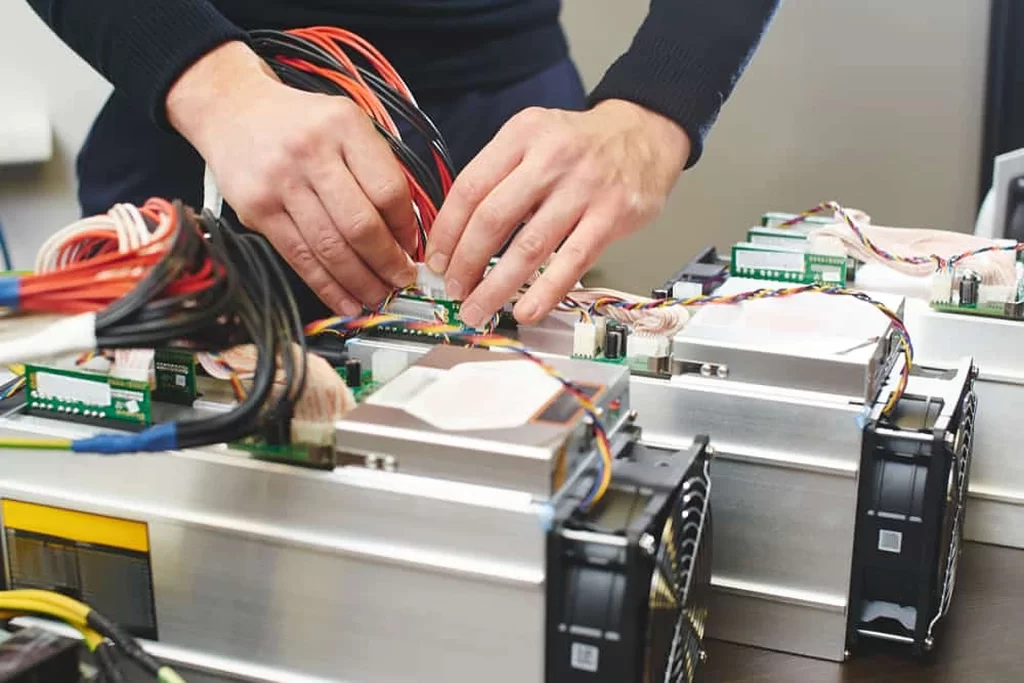
Micro Bitcoin mining devices, despite their limited performance, are being positioned by their creators as a countermeasure against what they perceive as the predominant flaw in the Bitcoin ecosystem.
These compact devices, often open-source and conveniently sized to fit in a pocket, have carved out a niche within the market by providing users with options to either purchase fully assembled units or acquire do-it-yourself kits for individual Bitcoin mining endeavors.
While the developers behind these micro mining kits acknowledge that substantial profits are unlikely, they emphasize the significance of challenging the perceived “secrecy and exclusivity” that characterizes the Bitcoin mining industry.
BitMaker, a notable company in this realm, recently asserted that manufacturing a micro mining device could cost as little as $3, delivering a throughput of 50 kilohashes per second.
BitMaker’s spokesperson, reflecting on their involvement in micro mining since June 2022, drew attention to a key distinction between mainstream Bitcoin ASIC mining rigs and the open-source nature of Bitcoin’s underlying code.
This difference, they argued, has led to a situation where commercialized entities control the production and distribution of Bitcoin mining hardware, fostering a lack of transparency.
Data reveals that a significant portion of the Bitcoin hash rate originates from the United States (35.4%), followed by Kazakhstan (18.1%), Russia (11.2%), and Canada (9.6%).
Leading mining companies such as Marathon Digital and Riot Blockchain, based in the U.S., along with Bitdeer Technologies Group from Singapore, dominate the global mining landscape.
Skot, an individual involved in crafting Bitaxe miners, echoed similar sentiments regarding the importance of open-sourcing designs to introduce much-needed transparency into the mining industry.
READ MORE: Cathie Wood Envisions Transformational Potential in the Convergence of Bitcoin and AI
The traditional aura of secrecy surrounding mining is being dismantled by these open-source initiatives, allowing greater visibility and accessibility for the general public.
Bitaxe representatives emphasized that by sharing documents detailing the construction of hashboards and mining equipment, they enable interested parties to independently build their miners.
This contributes, albeit in a limited manner, to the decentralization of the system.
It’s understood, however, that immediate substantial Bitcoin gains are not the primary focus for buyers.
Skot indicated that while efforts are being directed towards enhancing the efficiency of these miners, the primary purpose is educational, communal, and centered on understanding the technology.
Importantly, Skot highlighted that these portable miners are not aimed at competing with established players in the commercial sphere.
Instead, they offer an avenue for individuals to engage in home-based mining without investing in cumbersome, costly, and heat-intensive setups.
Additional miniature Bitcoin miners in the market include the Bitmain AntRouter and Mars Lander. Meanwhile, innovators are also exploring unconventional methods such as mobile phone-based Bitcoin mining.
Other Stories:
Binance CEO Makes Massive Claim About Upcoming Crypto Bull Run
Pro-XRP Lawyer Outlines Potential Settlement Scenarios Amid Ripple-SEC Speculation
The London Stock Exchange (LSE) Group is reportedly embarking on a groundbreaking venture by establishing a blockchain-based platform catering to conventional financial assets.
This endeavor follows a year of meticulous exploration into the feasibility of a blockchain-driven trading arena, as unveiled in a report by the Financial Times.
Spearheading this initiative is Murray Roos, the Head of Capital Markets at LSE Group, who disclosed that their extensive research has propelled them to forge ahead with their plans.
It is important to note that the company’s focus is not on cryptocurrencies but rather on harnessing the potential of blockchain technology to optimize the handling, acquisition, and sale of traditional financial assets.
Roos emphasized that their goal is to leverage digital innovations in order to cultivate a more seamless, cost-effective, and transparent process surrounding these conventional assets.
This approach will be subject to rigorous regulatory oversight, affirming the Group’s commitment to compliance.
Roos also underscored that LSE Group exercised prudence by awaiting the readiness of investors and the maturation of public blockchain technology before advancing their project.
If successfully executed, Roos asserts that LSE Group would stand as a pioneering global stock exchange, setting a precedent by offering a comprehensive blockchain-powered ecosystem for investors.
READ MORE: Ripple Challenges SEC’s Appeal Bid, Asserting Insufficient Grounds in Ongoing Lawsuit
Concurrently, other stalwarts within the traditional financial realm are also warming up to the concept of integrating blockchain technology.
SWIFT, the bank messaging network, recently disclosed a report detailing how it aims to interface with blockchain networks to tackle the challenge of interoperability among diverse blockchain platforms. Furthermore, even sectors beyond finance are dipping their toes into the blockchain waters.
Lufthansa Airlines, for instance, unveiled a non-fungible token (NFT) loyalty program on the Polygon network, an innovative move that empowers NFT holders with rewards ranging from exclusive lounge access to flight upgrades.
In summation, the London Stock Exchange Group’s pioneering endeavor to establish a blockchain-driven platform for traditional financial assets marks a significant step towards enhancing the efficiency and transparency of conventional asset transactions.
As the broader landscape of various industries recognizes the potential of blockchain technology, the path towards more streamlined and interconnected processes gains momentum.
Other Stories:
Warren Buffett’s Strategy vs. Bitcoin: Analyzing Performance and Potential in a Shifting Landscape
Former SEC Chair Expresses Confidence in Eventual Approval of Spot Bitcoin ETFs
MakerDAO Co-Founder Proposes Solana Codebase for NewChain, Diverging from Ethereum Affiliation

OKX, a prominent cryptocurrency exchange, is on the cusp of securing a virtual asset service provider license (VASP) in Hong Kong, marking a significant stride towards formal approval.
The exchange anticipates the green light for its VASP license by March 2024.
Li Zhikai, the Global Chief Commercial Officer of OKX, conveyed in an interview that the exchange is actively engrossed in conversations with banks, eagerly awaiting the issuance of the license to initiate operations.
The preparatory groundwork, including technology integration, has already commenced.
Hong Kong, having embraced a pro-crypto stance in 2023, unveiled a regulatory framework to enable crypto exchanges to cater to retail customers.
While a slew of over 80 cryptocurrency firms initially demonstrated interest in establishing a presence within the nation, only a handful, notably HashKey and OSL, successfully procured the requisite licenses to commence retail crypto trading services.
On August 28, HashKey effectively launched retail crypto trading services for Hong Kong users.
To mitigate risks associated with nascent crypto tokens, the regulatory body exclusively sanctioned Bitcoin and Ether trading for retail customers.
READ MORE: Warren Buffett’s Strategy vs. Bitcoin: Analyzing Performance and Potential in a Shifting Landscape
Additionally, regulatory guidelines enforced a 30% cap on investments, limiting individuals to allocate no more than one-third of their net income.
In tandem with HashKey and OSL, Huobi and Gate.io have also submitted applications for retail crypto trading services, awaiting regulatory endorsement.
A representative from Gate.io previously divulged that the Hong Kong Securities and Futures Commission imposes rigorous prerequisites on virtual asset service providers, emphasizing the necessity of insurance and compensation arrangements for client safeguarding.
Moreover, the regulator mandates crypto exchanges to maintain a substantial 98% of assets in cold wallet storage.
Inquiries made to OKX by Cointelegraph for insights into their regulatory journey and prospects in the Hong Kong retail market yielded no immediate response.
The unfolding developments underscore the cryptocurrency landscape’s growing convergence with traditional financial systems and the pursuit of responsible and secure trading environments.
Other Stories:
Ripple Challenges SEC’s Appeal Bid, Asserting Insufficient Grounds in Ongoing Lawsuit
MakerDAO Co-Founder Proposes Solana Codebase for NewChain, Diverging from Ethereum Affiliation
Former SEC Chair Expresses Confidence in Eventual Approval of Spot Bitcoin ETFs