



Binance, a prominent cryptocurrency exchange, is facing a series of executive departures amidst mounting regulatory scrutiny from global authorities.
Mayur Kamat, the Head of Product at Binance, has officially confirmed his departure from the crypto exchange after a tenure of almost two years.
Kamat revealed his decision, stating, “The time has come for me to step down and transition product leadership to the next generation of leaders at Binance.
I’ve worked closely with the product teams to ensure a smooth transition,” as conveyed to Cointelegraph on September 4th.
Kamat, who had previously held positions at renowned companies such as Google and Agoda, expressed that this juncture is personally opportune for him to take a break, following two decades of continuous involvement in product-related endeavors.
He expressed gratitude for his time at Binance and for witnessing the exponential growth of the user base.
Kamat conveyed his appreciation to Changpeng Zhao (CZ) and the entire leadership for the remarkable opportunity and mentioned that he will continue to support Binance from a distance.
Before joining Binance as the Head of Product in January 2022, Kamat had been a Product Manager at Google and Agoda.
During his tenure at Binance, he led global product and design teams, playing a pivotal role in the expansion of the user base from 80 million to over 150 million within just 18 months.
READ MORE: Warren Buffett’s Strategy vs. Bitcoin: Analyzing Performance and Potential in a Shifting Landscape
Kamat is recognized as an early advocate of Bitcoin (BTC), having acquired his first two Bitcoins in 2011, a mere two years after Bitcoin’s launch.
He clarified that the acquisition was driven by the need to purchase a VPN connection rather than for investment purposes.
This recent departure follows a series of resignations from Binance, including key figures such as Patrick Hillmann, the Chief Strategy Officer, who cited personal reasons for his exit.
However, market observers speculate that the departure could be linked to the United States Department of Justice’s investigation into Binance.
Other notable departures include Han Ng, the General Counsel, and Steven Christie, the Senior Vice President for Compliance, who left Binance in early July.
The evolving landscape at Binance reflects the challenges posed by regulatory inquiries, causing changes within the executive ranks.
The departure of Mayur Kamat adds to the list of high-profile exits and underscores the heightened scrutiny faced by Binance on the global stage.
This dynamic situation continues to shape the future trajectory of the cryptocurrency exchange.
Other Stories:
MakerDAO Co-Founder Proposes Solana Codebase for NewChain, Diverging from Ethereum Affiliation
Former SEC Chair Expresses Confidence in Eventual Approval of Spot Bitcoin ETFs
Ripple Challenges SEC’s Appeal Bid, Asserting Insufficient Grounds in Ongoing Lawsuit
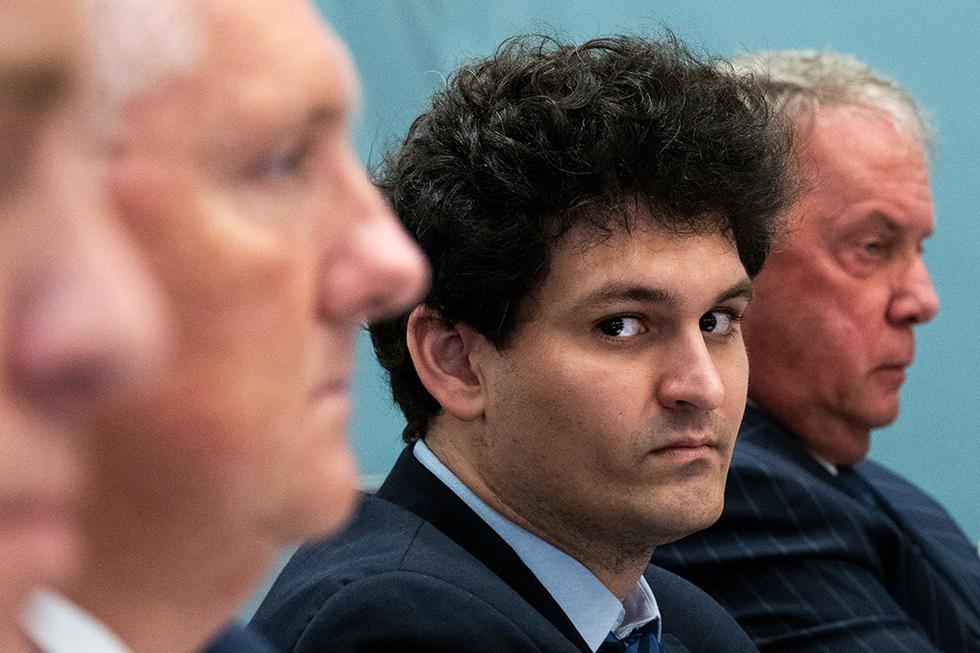
Sam Bankman-Fried, the founder and former CEO of the now-defunct cryptocurrency exchange FTX, has submitted a memorandum on September 1st, urging the court to reject the in limine requests put forth by the United States Department of Justice (DOJ).
Drafted by SBF’s attorney Mark Cohen, the memorandum asserts that the DOJ’s requests are not only unfounded but also overly broad.
Cohen contends that several of the issues raised by the government are not appropriate for consideration at the current stage of the proceedings.
Furthermore, he highlights that the requests seek to introduce irrelevant and prejudicial evidence related to uncharged or past conduct.
This tactic is perceived as an attempt to weaken potential defense strategies and to admit a wide array of hearsay and other inappropriate evidence.
The memorandum goes on to assert that the prosecutor’s requests lack legal support and are practically unworkable, rendering them unfit for approval.
This memorandum follows a series of recent filings by the DOJ, wherein they requested the court’s intervention in multiple aspects of the case.
READ MORE: Ripple Challenges SEC’s Appeal Bid, Asserting Insufficient Grounds in Ongoing Lawsuit
On August 28th, the government motioned to disallow all of SBF’s proposed expert witnesses from testifying during the trial.
The DOJ argued that these experts and their accompanying disclosures were plagued by various shortcomings, warranting their exclusion from the proceedings.
A day later, on August 29th, the prosecutor submitted yet another motion, describing SBF’s defense against fraud allegations as “irrelevant” in its present state.
They requested additional disclosures to supplement the already planned defense strategy.
Concurrently, SBF’s legal team has been advocating for his temporary release, asserting that the provided accommodations are inadequate for adequately preparing for the trial scheduled for October.
Additionally, they are in the process of appealing the court’s decision to revoke SBF’s bail, a determination made on August 11th.
The defense argues that the bail revocation was an act of “retaliation” in response to SBF’s exercise of his First Amendment rights.
Other Stories:
Warren Buffett’s Strategy vs. Bitcoin: Analyzing Performance and Potential in a Shifting Landscape
Former SEC Chair Expresses Confidence in Eventual Approval of Spot Bitcoin ETFs
MakerDAO Co-Founder Proposes Solana Codebase for NewChain, Diverging from Ethereum Affiliation

The South Korean government is reportedly preparing to introduce a bill aimed at monitoring and freezing North Korean cryptocurrency and virtual assets utilized for funding illicit weapons programs.
As reported by the Korea JoongAng Daily, local media sources have confirmed that the bill is currently in development, with insights provided by multiple unnamed government officials on August 3rd.
The proposed legislation is said to align with the president’s belief that the nation’s cybersecurity infrastructure requires refurbishment.
A government insider, preferring anonymity, indicated that the bill’s revised version includes provisions for the tracking and neutralization of cryptocurrency and virtual assets pilfered by North Korea through hacking and exploitative activities.
This addition had not been present in the initial bill put forward by the National Intelligence Service (NIS) in November 2022.
Beyond the scope of the new cybersecurity legislation, there are purported plans to establish a national cybersecurity committee that would operate directly under the president’s oversight.
This committee is intended to enforce a range of measures aimed at bolstering the country’s defenses against hacking attempts originating from foreign entities.
The National Security Office’s chief is slated to head the committee, with the participation of the NIS director.
READ MORE: MakerDAO Co-Founder Proposes Solana Codebase for NewChain, Diverging from Ethereum Affiliation
The concerning trend of North Korean hackers targeting victims and amassing digital assets through various exploits has raised alarm.
According to data from blockchain intelligence firm TRM Labs on August 18th, it is estimated that North Korean cyberattacks have resulted in a staggering loss of approximately $2 billion since 2018.
Furthermore, statistics from 2023 alone suggest that North Korea was responsible for the theft of $200 million worth of cryptocurrency, constituting 20% of the total stolen funds for the year.
Parallelly, the United States Federal Bureau of Investigation (FBI) is actively engaged in efforts to monitor North Korean state-sponsored hackers.
On August 23rd, the FBI issued alerts regarding six Bitcoin wallets linked to the North Korean hacking group Lazarus.
These wallets were found to contain 1,580 Bitcoin (BTC), equivalent to around $40 million, believed to be the proceeds of various hacking operations.
Other Stories:
Ripple Challenges SEC’s Appeal Bid, Asserting Insufficient Grounds in Ongoing Lawsuit
Warren Buffett’s Strategy vs. Bitcoin: Analyzing Performance and Potential in a Shifting Landscape
Former SEC Chair Expresses Confidence in Eventual Approval of Spot Bitcoin ETFs
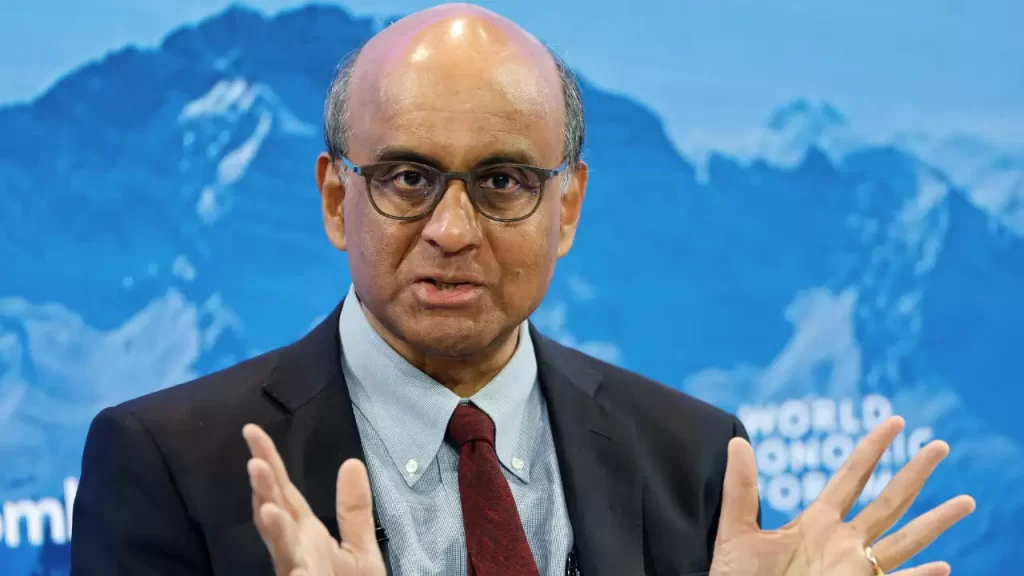
Tharman Shanmugaratnam, the former chair of the Monetary Authority of Singapore, has emerged victorious in the recent presidential election of the city-state, securing over 70% of the total votes cast.
The election results, announced on September 2, confirm Shanmugaratnam’s win against his opponents, Ng Kok Song and Tan Kin Lian.
The inauguration ceremony is scheduled for September 14, a mere fortnight after the election.
In preparation for his presidential campaign, Shanmugaratnam made the decision to step down from his roles in Singapore’s parliament and at the Monetary Authority of Singapore (MAS), where he held the position of chair from 2011 to 2023.
Notably, he also served as the country’s finance minister from 2007 to 2015.
During his tenure, Singapore’s financial regulatory landscape underwent significant events, including the 2022 market crash which saw the collapse of Three Arrows Capital and Terraform Labs.
A distinctive aspect of Shanmugaratnam’s previous stance on financial matters was his perspective on cryptocurrency assets. In 2021, while serving as the chair of MAS, he characterized crypto assets as “highly volatile” and deemed them “highly risky as investment products.”
However, MAS also demonstrated a balanced approach by granting in-principle approval for Crypto.com’s operations in Singapore in June 2022, along with exemptions for Bitstamp, Coinbase, and Gemini Trust.
Taking on the role of the President of Singapore, Shanmugaratnam will assume the position of head of state and will represent the nation in diplomatic engagements, although this role is largely ceremonial.
His ascent to the presidency marks the end of Halimah Yacob’s term, who had held the position since 2017.
In the wake of Shanmugaratnam’s departure from MAS, the regulatory body unveiled a revised framework for stablecoins in Singapore.
This framework was presented as part of a public consultation initiated in 2022.
Furthermore, a significant legal development occurred in July when Singapore’s high court ruled that cryptocurrencies could be treated as personal property, similar to traditional fiat money.
In sum, Tharman Shanmugaratnam’s resounding victory in the presidential election has secured his place as the next head of state for Singapore.
His extensive experience in finance and regulation, coupled with his prior engagements in the government, has positioned him to lead the nation through diplomatic functions in his new ceremonial role.
Other Stories:
Binance CEO Makes Massive Claim About Upcoming Crypto Bull Run
Cathie Wood Envisions Transformational Potential in the Convergence of Bitcoin and AI
Pro-XRP Lawyer Outlines Potential Settlement Scenarios Amid Ripple-SEC Speculation

Binance CEO Changpeng “CZ” Zhao envisions a future where decentralized finance (DeFi) surpasses centralized finance (CeFi) during the upcoming bull market.
Speaking on a live X Spaces event (formerly Twitter Spaces) on September 1, CZ expressed his optimism about DeFi’s trajectory.
He emphasized that an increasingly decentralized industry would be beneficial and indicated that DeFi’s trading volumes, currently comprising 5% to 10% of CeFi volumes, could soon eclipse CeFi:
“Crypto’s future lies in DeFi; with its volume accounting for a significant portion of CeFi trading, the forthcoming bull run could potentially elevate DeFi beyond CeFi.”
In early June, following legal actions against centralized exchanges Coinbase and Binance by the U.S. Securities and Exchange Commission (SEC), the trading volume on the top three decentralized exchanges (DEXs) surged by 444% within 48 hours.
At present, DEXs exhibit a combined 24-hour trading volume of $722,776,226.
CZ also praised the recent dismissal of a lawsuit against decentralized protocol Uniswap. He found the outcome to be reasonable, logical, and positive.
On August 30, a U.S. federal court rejected a class-action lawsuit against Uniswap, highlighting that regulatory uncertainty impacts investor protection.
READ MORE; MakerDAO Co-Founder Proposes Solana Codebase for NewChain, Diverging from Ethereum Affiliation
The case centered on plaintiffs’ claims of losses due to scam tokens on the decentralized exchange.
During the event, a participant recalled a judge’s ruling that developers cannot be held accountable for misuse of DeFi platforms, a stance deemed favorable for DeFi builders. CZ concurred, asserting that code written by developers is a form of free speech and emphasized the significance of developer support.
Recent data suggests a shift in venture capital investments from CeFi to DeFi projects. A March 1 CoinGecko report revealed that investment firms directed $2.7 billion towards DeFi initiatives in 2022, marking a 190% increase from 2021.
Concurrently, investments in CeFi projects declined by 73% to $4.3 billion during the same period.
This trend potentially indicates DeFi’s emergence as the new high-growth domain within the crypto sector, while the waning investments in CeFi could be attributed to saturation.
Changpeng Zhao’s outlook on DeFi’s potential dominance in the forthcoming bull market resonates with the ongoing shifts in the crypto landscape, with decentralized finance poised to redefine the industry’s dynamics.
Other Stories:
Ripple Challenges SEC’s Appeal Bid, Asserting Insufficient Grounds in Ongoing Lawsuit
Warren Buffett’s Strategy vs. Bitcoin: Analyzing Performance and Potential in a Shifting Landscape
Former SEC Chair Expresses Confidence in Eventual Approval of Spot Bitcoin ETFs
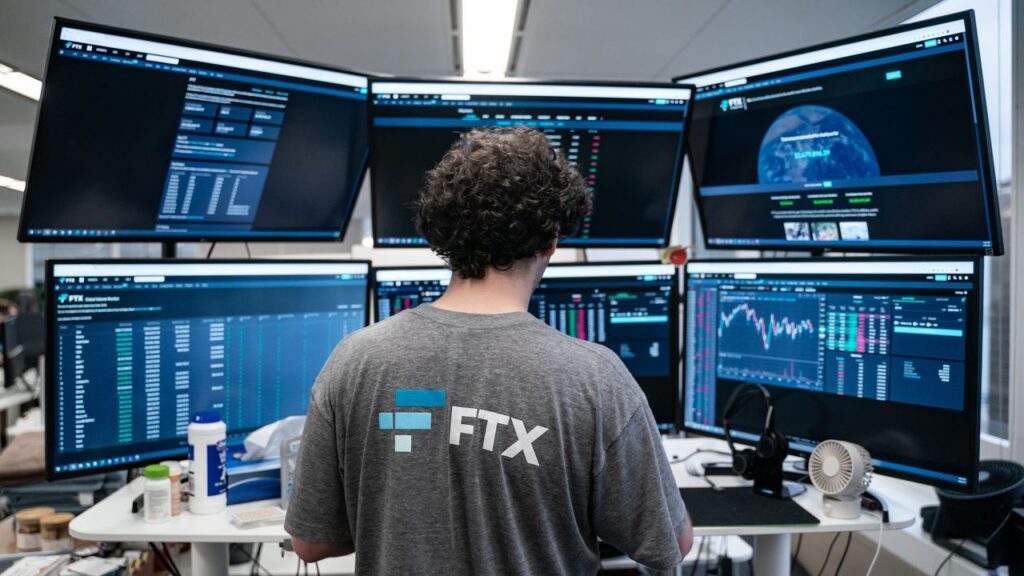
FTX debtors have recently unveiled a set of financial documents that shed light on transactions favoring company executives just before the significant downfall of the major cryptocurrency exchange in November 2022.
According to a recent submission to the United States Bankruptcy Court for the District of Delaware, a number of payments directly benefiting high-ranking executives at FTX and Alameda Research have been exposed.
These payments or transfers of assets took place within a year leading up to the FTX collapse.
It is important to note that FTX debtors have cautioned about the absolute accuracy and comprehensiveness of the data disclosed, absolving themselves of any responsibility for inaccuracies or omissions.
Among the transactions, a transaction of $2.51 million was channeled from the company to the American Yacht Group in March 2022, providing gains to former Alameda Research co-CEO Sam Trabucco.
Shortly following this transaction, Trabucco openly claimed ownership of a boat while announcing his resignation in an August 2022 tweet.
In response, Caroline Ellison, Alameda’s former co-CEO alongside Trabucco, expressed her well-wishes and anticipated Trabucco’s enjoyment of his leisure time on the boat.
Additionally, a series of cash payments were uncovered, directed to former FTX executives including Sam Bankman-Fried and Gary Wang, along with former FTX engineering director Nishad Singh, former chief marketing officer Darren Wong, and former chief operating officer Constance Wang.
READ MORE: UK MPs Call for Global Alliance to Safeguard Against AI Misuse and Deepfakes
These payments occurred within a year prior to the FTX collapse.
It’s worth noting that the disclosures exclusively focus on fiat currency and the traceability of crypto transactions is limited.
The document clarifies, “Responses to this question do not currently include all transfers of cryptocurrency, other digital assets, or other assets.”
The filing also highlighted the acquisition of Robinhood shares by Bankman-Fried and FTX co-founder Gary Wang in April and May 2022, amounting to $35,185,242 and $19.45 million, respectively.
Bankman-Fried held a 90% stake, while Wang possessed the remaining 10% through their company, Emergent Fidelity Technologies.
However, the U.S. Department of Justice seized these shares from them in January.
In a recent development, Robinhood repurchased all shares previously owned by FTX and Alameda Research.
The company completed the acquisition of 55,273,469 shares for about $606 million, as announced on August 31.
Robinhood’s CFO, Jason Warnick, expressed contentment with the outcome and looked ahead to executing growth strategies for the benefit of customers and shareholders.
Other Stories:
Robinhood Acquires Over 55 Million Shares From Former FTX CEO SBF in $606 Million Deal
Bitwise Surprises Market by Withdrawing Bitcoin and Ether ETF Application Amid SEC Delays
Amidst ongoing speculation surrounding a possible resolution between Ripple and the United States Securities and Exchange Commission (SEC), attorney John Deaton, a staunch advocate for the pro-XRP camp, has outlined potential courses of action that may unfold if the two parties decide to reach a settlement.
Drawing attention to the ongoing legal battle between Coinbase and the SEC, Deaton underscored the significance of the situation.
He elucidated that should the judge presiding over the Coinbase case grant the motion to dismiss put forth by the exchange, it would signal that transactions involving tokens on the platform aren’t subject to U.S. securities regulations.
It’s important to note, however, that this ruling would not extend to crypto staking activities.
In his words:
“The scenario in which Ripple and the SEC could potentially settle before the year’s end hinges on Judge Failla granting Coinbase’s motion to dismiss or partially granting it.
This would involve a determination that token sales occurring on an exchange through blind bid/ask transactions fall outside the purview of U.S. securities laws.”
Should the motion to dismiss receive approval, the SEC’s scope for pursuing an appeal would be substantially limited, thereby making the prospect of a settlement a plausible option.
READ MORE: Robinhood Acquires Over 55 Million Shares From Former FTX CEO SBF in $606 Million Deal
Deaton further clarified that even if the possibility of an appeal remained viable in such circumstances, the agency’s authority would be significantly curtailed.
Ripple’s recent filing on September 1 revealed that the summary judgment had not adequately addressed the foundational basis for an interlocutory appeal.
The opposition from Ripple stemmed from the argument that the SEC had deviated from established legal interpretations, particularly in relation to the application of the Howey test to sales of XRP tokens.
In December 2020, the SEC launched a lawsuit against Ripple, its CEO Brad Garlinghouse, and co-founder Chris Larsen, resulting in the removal of XRP from several exchanges to preempt potential legal ramifications.
However, a favorable ruling by Judge Analisa Torres in July prompted numerous exchanges to express their intentions to relist the XRP token.
Throughout 2023, the SEC has pursued various cryptocurrency firms on allegations of violating securities regulations, including prominent entities such as Binance and Coinbase.
Recent developments saw asset management company Grayscale achieve a legal victory over the SEC through an appeal, compelling a reevaluation of its application for a Bitcoin exchange-traded fund.
Other Stories:
Crypto Community Joins Forces with Oprah and The Rock
UK MPs Call for Global Alliance to Safeguard Against AI Misuse and Deepfakes
Bitwise Surprises Market by Withdrawing Bitcoin and Ether ETF Application Amid SEC Delays
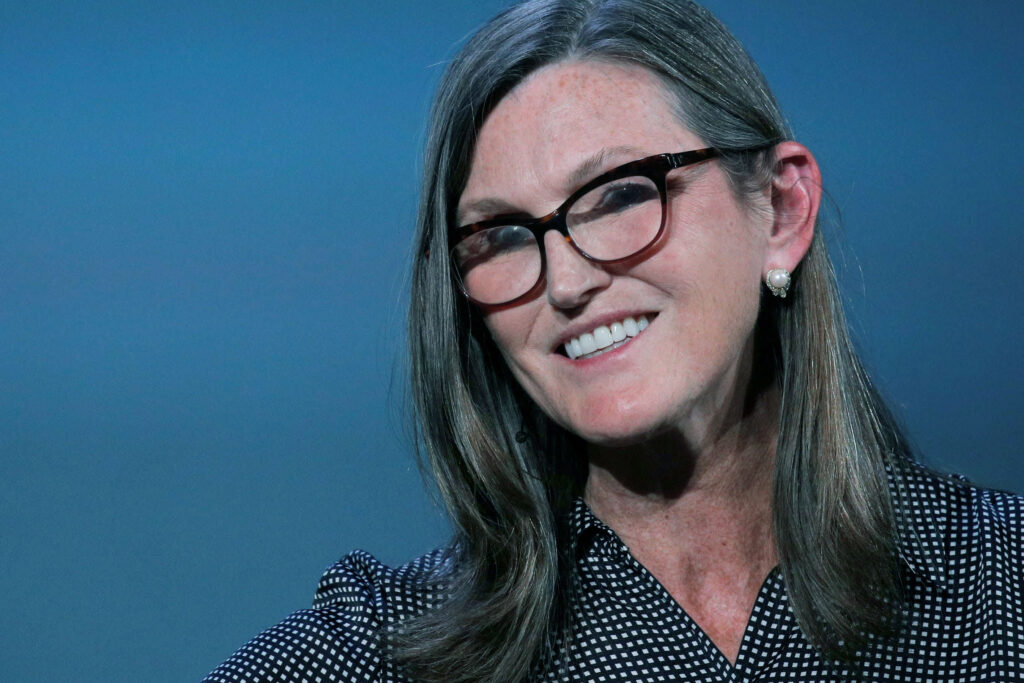
Cathie Wood, CEO of ARK Invest, recently shared an encouraging perspective on the convergence of Bitcoin and artificial intelligence (AI) through an X (previously Twitter) post.
She accentuated the revolutionary potential that arises from integrating AI with Bitcoin, underscoring the boundless prospects and positive impacts they can impart on various sectors and the broader economy.
This upbeat sentiment is corroborated by an ARK Invest research report named “Investing In Artificial Intelligence: Where Will Equity Values Surface?”.
This paper reveals that both Wood and ARK Invest are keenly assessing AI’s value in investment frameworks.
Wood’s investment history reflects her confidence in AI. She has consistently channelled funds into AI-centric stocks over the years, showcasing her commitment to this emergent technology.
Moreover, Wood’s fervor for Bitcoin is unmistakable.
READ MORE: Crypto Community Joins Forces with Oprah and The Rock
This is showcased by ARK’s pursuits related to a Bitcoin exchange-traded fund (ETF). ARK’s acumen in digital assets is further manifested by their considerable investments in platforms like Coinbase and Robinhood.
Highlighting ARK Invest’s successful strategies, their investments in AI tech stocks have borne fruit.
The ARK Disruptive Innovation ETF, which is centered on AI and other groundbreaking technologies, has surpassed the Nasdaq 100 Index, registering an impressive mid-year gain of 41.2%.
Wood’s commentary, complemented by ARK’s insightful research, underscores AI’s escalating prominence in the investment domain.
The amalgamation of Bitcoin and AI is poised to instigate a seismic shift in corporate functionalities, possibly revolutionizing productivity and cost structures.
With investors continually scouting for novel growth trajectories, the interplay of Bitcoin and AI, championed by Wood, could witness heightened investment interest in the coming times.
Other Stories:
Robinhood Acquires Over 55 Million Shares From Former FTX CEO SBF in $606 Million Deal
UK MPs Call for Global Alliance to Safeguard Against AI Misuse and Deepfakes
Bitwise Surprises Market by Withdrawing Bitcoin and Ether ETF Application Amid SEC Delays

Bitcoin (BTC) closed the week below the $26,000 mark on Sep. 3, despite a dismissive stance on overly pessimistic trader sentiment by analysts.
Data derived from Cointelegraph Markets Pro and TradingView revealed that BTC exhibited minimal volatility over the weekend, maintaining a narrow range of $200.
The lack of definitive direction led to a feeling of déjà vu among market participants, reminiscent of the behavior observed during the previous month’s August closing.
The effects of two major volatility-inducing events from the previous week, involving Grayscale, a crypto asset manager, and regulators in the United States, were wiped clean from the charts. Consequently, traders evaluated the potential implications of different levels of weekly closure.
Prominent trader Skew offered insight into the market structure by highlighting the absence of a candle body closure below the Higher Low (HL) established in June, or below the $25.9K mark.
He stressed the significance of this point, suggesting that a 1-week closure below and subsequent price resistance in this range could lead to a downward move towards the prior 1-week resistance at approximately $24.3K.
READ MORE: Robinhood Acquires Over 55 Million Shares From Former FTX CEO SBF in $606 Million Deal
Looking ahead, Skew presented a “bearish scenario” that could bring about levels below $20,000.
Conversely, he expressed skepticism regarding a bullish revival that would involve reclaiming the $26,000 level and maintaining a higher low into the fourth quarter of the year.
Summarizing the events of the previous week, Keith Alan, co-founder of Material Indicators, advised against making definitive judgments on Bitcoin’s bullish or bearish nature.
He acknowledged the recent volatility resulting from Grayscale’s legal victory over the SEC and the SEC’s decision to delay judgment on the first U.S. Bitcoin spot price exchange-traded funds (ETFs).
Alan contended that despite these external events, the fundamental structure of the Bitcoin market remained unaltered.
He emphasized that neither a confirmed breakout nor a breakdown had occurred from a technical perspective, citing $24,750 as the crucial support zone to monitor.
A chart accompanying his analysis depicted the BTC/USD order book on Binance, showing increased buy liquidity just below the spot price at the $24,750 zone of interest.
Other Stories:
Crypto Community Joins Forces with Oprah and The Rock
UK MPs Call for Global Alliance to Safeguard Against AI Misuse and Deepfakes
Bitwise Surprises Market by Withdrawing Bitcoin and Ether ETF Application Amid SEC Delays
Decentralized finance (DeFi) has revolutionized the financial landscape, offering an array of innovative services challenging traditional finance (TradFi).
However, the main stumbling block to widespread DeFi adoption remains the user experience.
The DeFi sector has long sought an entry point to onboard new users effectively.
A potential solution to this issue lies in the realm of fintech.
By creating a financial technology app that caters to both TradFi and DeFi users, it becomes possible to showcase the advantages of self-custody—where users safeguard their digital assets without relying on intermediaries like banks.
While the self-custody movement gained momentum, the Web3 space introduced hybrid services that merge elements of centralized and decentralized finance.
Changex, an all-in-one mobile wallet, embraces this approach through its CeDeFi model, providing users from traditional services a familiar environment.
Changex’s app facilitates non-custodial crypto trading, empowering users to retain control of their crypto assets.
It supports buying, selling, and transferring crypto, even enabling debit card and bank transfer purchases.
Multiple blockchains, including Ethereum, Polygon, and Binance Smart Chain, are seamlessly integrated into the exchange.
READ MORE; Crypto Community Joins Forces with Oprah and The Rock
For DeFi enthusiasts, Changex offers a range of alternative financial practices such as staking, with plans to introduce lending and stablecoin interest features.
The platform’s native token, CHANGE, provides additional APR on staking rewards.
The app is also making strides in bridging the gap between traditional finance and the crypto world.
It plans to issue European Union-regulated IBANs for fiat asset management, facilitating cross-border transactions within the EU.
Moreover, the upcoming Changex Visa Debit Card promises cashback benefits and the ability to spend staked assets without affecting APR.
Changex’s selection by Cointelegraph Accelerator underscores its expertise, boasting a team of over 20 members, a Bulgaria office, and a track record of delivering robust financial solutions.
With an average of 25,000 monthly active users and nearly $3 million in staked assets, the platform has gained strong traction.
The roadmap ahead includes the integration of the Avalanche blockchain, accompanied by Avalanche-based staking pools.
Additionally, Changex plans to introduce a unique leveraged staking feature.
The forthcoming Changex Visa Debit Card and IBAN, scheduled for Q4 2023, represents a major update.
This release aims to provide users complete control over their finances, solidifying Changex as a comprehensive one-stop solution for both crypto and fiat needs.
Other Stories:
Robinhood Acquires Over 55 Million Shares From Former FTX CEO SBF in $606 Million Deal
Bitwise Surprises Market by Withdrawing Bitcoin and Ether ETF Application Amid SEC Delays
UK MPs Call for Global Alliance to Safeguard Against AI Misuse and Deepfakes