


Robinhood, the cryptocurrency and stock trading platform, has made a significant move by acquiring over 55 million shares that were formerly owned by Sam Bankman-Fried, known as SBF, the ex-CEO of FTX.
In a recent blog post on August 31, Robinhood disclosed that it successfully completed the purchase of 55,273,469 shares for an estimated cost of $606 million, following an official filing with the U.S. Securities and Exchange Commission (SEC).
These shares were originally held by Bankman-Fried and Gary Wang through their company Emergent Fidelity Technologies, but were confiscated by the U.S. Department of Justice in January.
The acquisition had been anticipated, as Robinhood’s board of directors had approved the deal in the company’s Q4 2022 report.
An SEC filing on August 30 confirmed that the U.S. District Court for the Southern District of New York had granted approval for the purchase, liberating the shares from any claims, liens, or encumbrances.
The transaction was facilitated through an agreement with the U.S. Marshals Service.
Jason Warnick, the Chief Financial Officer of Robinhood, expressed satisfaction with the successful completion of the share acquisition.
He voiced the company’s eagerness to continue realizing growth plans for the benefit of both its customers and shareholders.
READ MORE: Ronaldinho Denies Involvement in Alleged $61 Million Crypto Pyramid Scheme
Bankman-Fried’s holding company, Emergent Fidelity Technologies, filed for bankruptcy in February, with its financial troubles exacerbated by its involvement with crypto lending firm BlockFi.
The latter faced its own bankruptcy situation following the downfall of FTX.
Notably, BlockFi had initiated legal action to claim ownership over the 55 million Robinhood shares that had been pledged as collateral.
This situation unfolded amid bankruptcy proceedings for FTX, and legal battles involving SBF, BlockFi, and FTX creditor Yonathan Ben Shimon over control of the approximately $600 million worth of Robinhood shares.
Bankman-Fried’s legal team argued that he had a right to these assets to fund his criminal defense.
Following the revocation of his bail on August 11, Bankman-Fried has been in custody, awaiting his first trial scheduled to commence on October 3.
In response to the acquisition news, the value of Robinhood shares on the Nasdaq stock exchange witnessed a rise of around 4%, climbing from $10.85 to $11.34.
Additionally, recent findings from crypto experts unveiled that Robinhood possessed the fifth-largest Ether wallet, with an estimated value surpassing $2.5 billion.
This development further underlines Robinhood’s presence and engagement in the cryptocurrency landscape.
Other Stories:
OKX Cryptocurrency Exchange Expands into India, Focusing on Web3 Potential and Local Talent
Ethereum Liquid Staking Providers Embrace 22% Cap to Safeguard Decentralization
US Crypto Industry Sees Hope in Court Rulings Restraining SEC

A cohort of influential Members of Parliament (MPs) in the United Kingdom has recommended that the government collaborate with democratic allies to address potential misuses of artificial intelligence (AI), underlining London’s aspiration to play a pivotal role in advancing this burgeoning technology.
The Science, Innovation, and Technology Committee (SITC), an advisory body to the government, released a report on August 31 urging Britain to align itself with like-minded nations.
This collaborative effort aims to collectively counteract any misuse of AI by state-affiliated or non-affiliated entities that may have ulterior motives.
In a bid to establish AI guidelines, UK Prime Minister Rishi Sunak plans to host a summit at Bletchley Park, a historically significant World War Two code-breaking center, in early November.
This summit will bring together global leaders and tech influencers to not only regulate AI more effectively but also position the UK as a central hub for the AI industry.
The interim report from the SITC highlights the potential for AI to propagate deepfakes, deceptive content that could mislead the public.
Additionally, it underscores the risks posed by malevolent actors who might exploit AI to create novel biological and chemical weaponry.
READ MORE: OKX Cryptocurrency Exchange Expands into India, Focusing on Web3 Potential and Local Talent
The House of Commons Culture, Media, and Sport Committee has recently advised the government to reconsider granting AI developers unrestricted access to employ existing music, literature, and art in their training datasets.
An alternate report issued on August 30th raises concerns that excluding AI-driven text and data mining from copyright protections could devalue arts and culture, relegating them to mere resources for AI’s progress.
Discussions within the government have surfaced regarding the participation of China in the November meeting.
The gathering will convene leaders from the Group of Seven nations and industry leaders, as reported by Bloomberg, citing informed sources.
The SITC report has advised the government to draft an AI bill for deliberation during the upcoming parliamentary session on November 7.
The report emphasizes that failing to do so could cause the UK to lag behind other legislative endeavors, especially the ongoing discussions concerning the EU’s AI Act.
Other Stories:
US Crypto Industry Sees Hope in Court Rulings Restraining SEC
Ronaldinho Denies Involvement in Alleged $61 Million Crypto Pyramid Scheme
Ethereum Liquid Staking Providers Embrace 22% Cap to Safeguard Decentralization
The crypto community has united in solidarity with the Maui community, rallying behind a relief fund endorsed by renowned celebrities Oprah Winfrey and Dwayne “The Rock” Johnson, which now accepts contributions in various cryptocurrencies.
During the initial days of August in 2023, the serene Hawaiian island of Maui was engulfed in destructive wildfires, inflicting considerable damage to both properties and lives as a staggering 2,500 acres were consumed by the blaze.
In response, The Rock and Oprah jointly inaugurated the People’s Fund of Maui, a charitable initiative designed to extend direct financial assistance to those grappling with the aftermath of the disaster.
In a tweet, The Rock unequivocally affirmed that the entirety of the donations would be channeled towards the victims.
He elaborated, “Each adult resident residing within the impacted regions of Lahaina and Kula, displaced by the ferocious wildfires, will be eligible to receive $1200 per month.
This endeavor aims to facilitate their journey towards recovery.”
The People’s Fund of Maui demonstrates its versatility by welcoming donations not only in traditional fiat currencies but also in an array of cryptocurrencies.
Bitcoin, Ether, and Dogecoin are just a few examples of the digital alternatives that can be contributed to the fund.
Beyond merely global fiat donations, the fund’s scope encompasses these digital assets, creating a diverse range of avenues for individuals to provide their support.
Oprah elucidated that the rationale behind placing the donations directly in the hands of the survivors is to empower them to chart their own course towards normalization.
READ MORE: What’s New in Crypto Staking This Year
She expounded, “Empowering individuals to exercise their autonomy, enabling them to determine their requirements and those of their families, constitutes the cornerstone of our objective.”
Running parallel to the commendable efforts initiated by these A-list celebrities, multiple relief initiatives are diligently endeavoring to ameliorate the predicament faced by the wildfire victims.
The All Hands and Hearts disaster relief organization has been at the forefront of collecting both cryptocurrency and fiat donations to assist the local denizens of Maui as they grapple with the aftermath of the devastating fires.
Olga Ruggiero, Chief of Organizational Integration and Events at All Hands and Hearts, emphasized the significance of cryptocurrency contributions, asserting that they are a vital means of offering essential support in the aftermath of such catastrophic events.
She noted, “Cryptocurrency, much like any other form of donation, plays a pivotal role in rendering indispensable aid after the ravages of wildfires.
The crypto industry consistently rallies alongside communities across the globe that find themselves in distress.”
The unity displayed by the crypto community in partnership with influential personalities like Oprah Winfrey and Dwayne “The Rock” Johnson serves as a testament to the potential of leveraging cryptocurrencies to extend a helping hand to communities in dire need.
Other Stories:
BlockFi Advances Fund Recovery Efforts with Court Application
South Korean Parliamentary Subcommittee Rejects Expulsion Motion Over Cryptocurrency Controversy
Bitcoin Holds Strong Above $27,000 as Traders Maintain Bullish Outlook

Bitwise, the asset management firm, has taken an unexpected step by withdrawing its application for a Bitcoin and Ether Market Cap Weight Strategy exchange-traded fund (ETF) from the United States Securities and Exchange Commission (SEC).
Initially filed on August 3, the move came as a surprise given the recent positive market sentiment following Grayscale’s success with the SEC.
The withdrawal statement contained a cautious tone, stating that while the fund aimed to achieve capital appreciation, there were no guarantees of meeting this investment objective.
Matt Hougan, Bitwise’s chief investment officer, had recently voiced support for SEC approval of all ETFs in a Bloomberg interview.
The ETF in question was designed to invest in either Bitcoin or Ether futures contracts, selected based on their respective market capitalizations.
In conjunction with ProShares, Bitwise had also planned to launch another ETF around the same time.
Bitwise clarified in the withdrawal statement that the Trust had abandoned its plans to pursue the effectiveness of the Fund.
The Trust did not sell or intend to sell any Fund securities as part of the process.
This development aligns with the SEC’s continued delay in deciding on various Bitcoin ETF applications, including those from WisdomTree, Invesco Galaxy, Valkyrie, VanEck, BlackRock, Bitwise, and Fidelity.
READ MORE: BlockFi Advances Fund Recovery Efforts with Court Application
The SEC’s recent filing on August 31 disclosed an extended review timeline for several spot Bitcoin ETF applications.
WisdomTree, VanEck, Invesco Galaxy, Bitwise, Valkyrie, Fidelity’s Wise Origin Bitcoin Trust, and BlackRock’s Bitcoin ETF face a longer evaluation period.
Upcoming deadlines for the SEC are set for mid-October, but potential delays could push them to the third batch of deadlines in January or to final decisions in the subsequent months.
Bitwise had previously been at the forefront of asset management firms seeking Bitcoin ETF products.
Its initial application in January 2019 aimed to create a BTC-backed ETF tracking the Bitwise Bitcoin Total Return Index, derived from BTC transaction values across various exchanges.
The firm’s proposal sought to provide a reliable representation of the broader cryptocurrency market, with data sourced from multiple cryptocurrency exchanges.
Additionally, third-party custodians were to be responsible for physically holding Bitcoin.
Notably, this is not Bitwise’s first ETF withdrawal. Earlier this year, the company pulled back an application for an Ethereum Strategy ETF.
The ETF had been designed to invest in both front-time and back-time Ethereum futures, but the withdrawal occurred only a week after the initial application was submitted.
Other Stories:
South Korean Parliamentary Subcommittee Rejects Expulsion Motion Over Cryptocurrency Controversy
Bitcoin Holds Strong Above $27,000 as Traders Maintain Bullish Outlook
BlockFi Advances Fund Recovery Efforts with Court Application

In the month of August 2023, the crypto space witnessed a disturbing trend as malicious actors targeted digital assets, resulting in losses exceeding $45 million, as reported by CertiK, a blockchain security firm.
This adds to the year-to-date (YTD) total of $997 million in losses due to crypto-related incidents.
CertiK’s report sheds light on the breakdown of these losses, attributing $26 million to exit scams, $6.4 million to flash loan attacks, and $13.5 million to various exploits during August.
These combined attacks confirmed an overall loss exceeding $45 million, underscoring the vulnerability of the crypto landscape.
Several significant incidents stand out among the contributors to this substantial amount of loss.
The attack on the Zunami Protocol resulted in losses of $2.2 million, while the Exactly Protocol exploit took a toll of $7.3 million.
Additionally, the PEPE withdrawal incident inflicted a staggering $13.2 million in losses, revealing the multifaceted nature of threats facing the crypto community.
Throughout 2023, CertiK’s data reveals a disturbing upward trajectory in losses attributed to exploits, hacks, and scams.
This year alone, the accumulated losses exceed $997 million. Among these losses, flash loan attacks accounted for approximately $261 million, exit scams amounted to over $137 million, and exploits constituted a staggering $596 million.
Despite the grim statistics, it is noteworthy that the losses in August exhibited a relative decrease when compared to the previous month. In July 2023, Web3 data outlet De.Fi recorded a total loss of approximately $486 million.
READ MORE: South Korean Parliamentary Subcommittee Rejects Expulsion Motion Over Cryptocurrency Controversy
The Multichain exploit, a significant contributor, alone accounted for around $231 million of this total. Following these unfortunate events, Multichain made the difficult decision to halt its operations on July 14 due to a lack of operational funds and alternative sources of information.
The company cited the inability to communicate with its CEO, who had been detained by Chinese authorities, as a significant impediment to its operations.
In summary, the crypto space faced substantial losses of more than $45 million in August 2023 due to malicious activities, contributing to a year-to-date total of over $997 million in losses.
Despite a slight decline from the previous month, these losses underscore the pressing need for enhanced security measures within the crypto industry to protect against a range of threats, including exit scams, flash loan attacks, and exploits.
Other Stories:
BlockFi Advances Fund Recovery Efforts with Court Application
What’s New in Crypto Staking This Year
Bitcoin Holds Strong Above $27,000 as Traders Maintain Bullish Outlook

Cryptocurrency exchange OKX is set to penetrate the Indian market and engage local talents as part of its strategy to advance the realm of Web3 applications, as reported by CoinDesk.
OKX’s Chief Marketing Officer, Haider Rafique, revealed that the company’s intention is to significantly expand its wallet services by tapping into India’s developer community.
Despite having 200,000 OKX Wallet users in India, this number accounts for only 5% of the country’s total Web3 user base.
Rafique expressed the company’s commitment to collaborating with the local community and identifying avenues to provide value.
Presently ranked as the sixth-largest cryptocurrency exchange worldwide in terms of trading volume, OKX operates from regional hubs in Dubai, Singapore, Hong Kong, and the Bahamas, rather than having a central global headquarters.
While OKX does not plan to establish a physical office in India, it intends to rely on local experts to lead its endeavors within the nation.
Rafique outlined a strategy to understand and engage with the developer community in India, thus determining the optimal approach for entering the local market.
In a notable move, OKX recently joined forces with blockchain platform Neo for an APAC Hackathon held in Bengaluru, India.
This partnership aimed to validate assumptions, comprehend the local culture, and provide support to the indigenous Web3 ecosystem.
READ MORE:BlockFi Advances Fund Recovery Efforts with Court Application
Although cryptocurrency trading is legal in India, no comprehensive regulations have been put in place by a central authority.
The sector operates with associated risks for investors, as cryptocurrencies lack legal tender status and cannot be utilized for banking purposes.
A 30% tax is currently imposed on crypto transactions within the country.
India’s Supreme Court, on July 27, criticized the Union government for the absence of crypto regulations and urged it to outline plans for regulating digital currencies due to a surge in criminal activities related to cryptocurrencies.
Rafique noted a shift in regulatory focus, highlighting that Indian authorities are distinguishing between Web3 and centralized finance (CeFi).
He clarified that their concerns lie more with platforms that provide fiat on-ramps, a service not offered by OKX in India at present.
Looking forward, Rafique expressed readiness to lead the way once India establishes a regulatory framework for cryptocurrencies.
In the backdrop of this, while OKX plans to recruit local staff to aid its Indian expansion, other Indian cryptocurrency exchanges like CoinSwitch and CoinDCX have faced staffing reductions due to the ongoing market downturn.
Other Stories:
What’s New in Crypto Staking This Year
Bitcoin Holds Strong Above $27,000 as Traders Maintain Bullish Outlook
South Korean Parliamentary Subcommittee Rejects Expulsion Motion Over Cryptocurrency Controversy

Former professional soccer legend Ronaldinho Gaúcho has provided his testimony during a congressional hearing in Brazil, disavowing any involvement in a purported cryptocurrency pyramid scheme that bore his name and is claimed to have defrauded $61 million.
Appearing before a parliamentary committee inquiry on August 31, Ronaldinho staunchly rejected any connection to the scheme dubbed “18kRonaldinho,” which had promised daily crypto returns of 2%.
A legal suit was initiated against the company in pursuit of $61 million in restitution for damages.
Ronaldinho asserted that he had never entered into any partnership with the company and that it had exploited his name and likeness without obtaining his consent.
He argued that he, too, was a victim of the alleged fraudulent enterprise.
During the hearing, visual materials were presented showcasing the promotional materials of 18kRonaldinho, featuring images of Ronaldinho himself.
One such image displayed Ronaldinho alongside the phrase “Enjoy up to 2% daily returns on your money.” Ronaldinho clarified that these images had been captured as part of a contract he signed with a company subsidiary engaged in watch sales.
However, he emphasized that the contract was eventually nullified in October of the same year, having never been acted upon.
READ MORE: BlockFi Advances Fund Recovery Efforts with Court Application
In response to inquiries from Aureo Ribeiro, the president of the inquiry, Ronaldinho refrained from commenting on whether he intended to reimburse those who had invested in the company.
Likewise, he chose not to respond when questioned about the pending $61 million lawsuit.
Ronaldinho’s nonattendance at two prior hearings linked to the inquiry, most recently on August 24, was addressed during the proceedings.
He explained that unfavorable weather conditions had prevented his participation.
The hearing held on August 31 represented Ronaldinho’s final opportunity to appear before the congressional committee.
Failure to attend could have resulted in potential fines or even arrest, with authorities authorized to compel his presence at the hearing.
The inquiry was launched in June with the objective of examining allegations of crypto pyramid schemes.
Conducted by Brazil’s lower house, the Chamber of Deputies, the investigation focuses on 11 companies accused by the country’s Securities and Exchange Commission of making false promises of lucrative returns through cryptocurrency investments.
Other Stories:
What’s New in Crypto Staking This Year
Bitcoin Holds Strong Above $27,000 as Traders Maintain Bullish Outlook
South Korean Parliamentary Subcommittee Rejects Expulsion Motion Over Cryptocurrency Controversy
Georgetown, Cayman Islands, September 1st, 2023, Chainwire
Kava Chain, a decentralized Cosmos-Ethereum interoperable Layer 1 blockchain, is now available on Fireblocks, an enterprise platform to manage digital asset operations and build innovative businesses on the blockchain. The integration will enable safe and secure access for Fireblocks customers to the expanding Cosmos DeFi ecosystem via the Kava Chain.
“With the integration of Kava Chain onto the Fireblocks Network, we’re excited to bring Kava’s innovative suite of DeFi app protocols and Cosmos DeFi access to our customers,” said Idan Ofrat, Co-founder and Chief Product Officer at Fireblocks. “In the past year, we have seen growing institutional interest in DeFi. Fireblocks’ defense-in-depth security and customizable Transaction Authorization Policy (TAP) allow our customers to safely explore and innovate in the DeFi arena without compromising their compliance and security requirements. We look forward to unlocking more opportunities for our customers in the future.”
Kava Chain has been steadily building and growing through the bear market. However, without a robust connection to an MPC (multi-party computation) custody technology provider, top-tier crypto institutions have not been able to engage with the dApps on-chain. The Fireblocks integration enables over 1,800 leading digital asset and crypto institutions to now custody KAVA tokens and access Kava-native assets, including Cosmos-native USDt — selected by Tether to be issued exclusively on Kava Chain.
This integration not only enhances institutional access to Kava but also allows Fireblocks customers to:
- Engage in DeFi opportunities on platforms within the Kava ecosystem, such as Curve, Kinetix, and Hover.
- Participate in market-making using Cosmos-native USDt on major exchanges.
- Explore new USDt DeFi opportunities on prominent Cosmos appchains.
“Kava Chain’s role in arbitrage market making is becoming increasingly significant. With the Fireblocks integration, centralized exchanges (CEXs) and major market makers have a more capital-efficient option for cross-chain arbitrage,” said Scott Stuart, Co-founder of Kava Chain. “Instead of incurring high gas fees on Ethereum, they can now utilize Kava to transfer USDt between ecosystems efficiently. We’re excited about the future and the value this integration brings to our community!”
For more updates, follow Kava Chain and Fireblocks on X (fka Twitter).
About Kava
Kava Chain (is a secure, lightning-fast Layer-1 blockchain that combines the developer power of Ethereum with the speed and interoperability of Cosmos in a single, scalable network. Committed to fostering innovation and growth, Kava Chain is a trusted choice for developers and users worldwide.
Contact
Marketing Manager
Guillermo
Kava
[email protected]
Several Ethereum liquid staking providers are taking steps to uphold decentralization by imposing a self-imposed cap of 22% on their share of the Ethereum staking market.
This strategic move aims to prevent any single entity from gaining too much control over the network.
Among the providers embracing or considering this self-limitation approach are Rocket Pool, StakeWise, Stader Labs, Diva Staking, and Puffer Finance.
Ethereum core developer Superphiz reported these commitments. Puffer Finance, a liquid staking service, also declared its dedication to the self-imposed cap.
Notably, Rocket Pool, StakeWise, Stader Labs, and Diva Staking are actively engaged in committing to this limitation.
The motivation behind setting the cap at 22% is linked to Ethereum’s consensus mechanism, which requires 66% agreement among validators to establish the state of the network.
By capping at 22%, the goal is to ensure that at least four significant entities must conspire in order to influence the finalization of transactions on the blockchain.
Finality signifies the point at which transactions become unalterable within a block.
Superphiz introduced this concept in May 2022, raising questions about whether staking pools would prioritize the network’s well-being over their profits.
Notably, Lido Finance, the largest Ethereum liquid staking provider, did not align with the proposal, voting with a 99.81% majority against self-imposed limitations in June.
Lido Finance currently dominates the Ethereum staking market, controlling 32.4% of staked Ether, in contrast to Coinbase, which holds only an 8.7% market share.
Data from Dune Analytics illustrates the distribution of Ethereum stakers by staking amount and market share, with Lido being the sole entity above the 22% threshold.
READ MORE: BlockFi Advances Fund Recovery Efforts with Court Application
Industry commentators have offered differing perspectives. Some, like “Mippo,” argue that the self-limitation proposal doesn’t concern Ethereum’s alignment principle.
Mippo claims that those pushing for this proposal wouldn’t adopt the same stance if they were in Lido’s position. In their view, these actions reflect rational economic decisions based on market dynamics.
Another observer urges the Ethereum community not to label more user-friendly solutions as greedy products.
Yet, some express apprehensions about potential centralization risks, criticizing Lido’s substantial market share dominance as “disgusting and selfish.”
In summary, multiple Ethereum liquid staking providers are embracing or considering a self-imposed cap of 22% on their Ethereum staking market share.
This initiative aims to maintain decentralization and prevent any single entity from gaining excessive control over the network.
The rationale behind the 22% cap is tied to Ethereum’s consensus mechanism, which necessitates agreement among validators for network state confirmation.
While some observers view these actions as economically rational, others express concerns about centralization and dominance within the market.
Other Stories:
What’s New in Crypto Staking This Year
Bitcoin Holds Strong Above $27,000 as Traders Maintain Bullish Outlook
South Korean Parliamentary Subcommittee Rejects Expulsion Motion Over Cryptocurrency Controversy
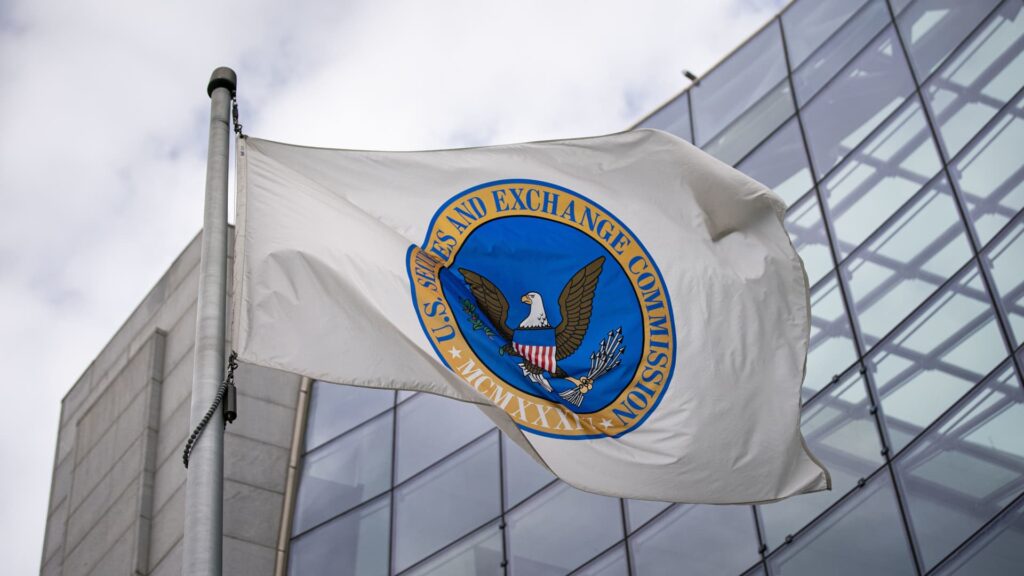
The United States may be poised for a resurgence in the cryptocurrency sector, as recent court rulings appear to be reining in the Securities and Exchange Commission (SEC), according to a digital asset attorney from K&L Gates.
Jeremy McLaughlin, a partner at the international law firm, highlighted the trend during his participation in the Intersekt23 conference in Melbourne on August 31.
McLaughlin noted that a series of U.S. court cases have challenged SEC Chair Gary Gensler’s stance that nearly all digital assets should be classified as securities.
He explained that while initial crypto regulations were primarily established at the state level and relatively straightforward, the involvement of federal bodies like the SEC and the Commodity Futures Trading Commission led to increased market restrictions.
The attorney pointed out that due to the SEC’s aggressive approach, many tokens were delisted, and some companies even exited the U.S. market.
However, recent court decisions have begun to curtail the SEC’s assertiveness, rekindling optimism within the industry.
Recent examples of the SEC facing setbacks include its loss in a lawsuit brought by a crypto firm and a separate case where a crypto firm prevailed against the SEC.
A noteworthy instance occurred on August 29 when a U.S. District Court judge ruled against the SEC’s denial of Grayscale Investments’ application to convert its flagship Bitcoin fund into an exchange-traded fund.
READ MORE: Digital Currency Group Reaches Agreement with Genesis Creditors for Potential Recovery
Similarly, a judge ruled in July that Ripple Labs’ XRP was not a security when sold to retail traders, leading to a partial loss for the SEC.
Despite these developments, McLaughlin acknowledged the challenges of providing legal advice in such a rapidly evolving landscape and lamented the lack of clear guidance for clients.
However, he expressed optimism that the chaos in crypto regulation was subsiding as court decisions increasingly favored the digital asset industry.
Regarding Australia’s crypto legislation, panelists at the conference discussed its comparative state.
Effie Dimitropoulos, Chief of payment services firm Novatti, described Australia’s regulations as “lagging” in comparison to new frameworks in Hong Kong and the European Union.
She highlighted the uncertainty faced by local crypto businesses due to the evolving legal landscape, resulting in the potential obsolescence of legal advice.
Dimitropoulos further emphasized the need for clear resolutions from regulatory bodies such as the Australian Securities and Investments Commission and the Treasurer to alleviate the ongoing uncertainty.
In conclusion, the U.S. crypto industry is showing signs of renewal as court rulings moderate the SEC’s regulatory zeal, while Australia’s crypto regulations are criticized for falling behind international standards.
Other Stories:
Grayscale Bitcoin Trust’s Negative Price ‘Discount’ Expected to Reverse by 2024
Federal Judge Overturns SEC’s Denial of Grayscale’s Bitcoin ETF
dYdX Unlocks $14.02 Million in DYDK Tokens for Community and Trader Rewards