



OpenAI, the creator of ChatGPT, is promoting the integration of artificial intelligence (AI) into content moderation processes, highlighting its potential to optimize operational efficiency within social media platforms by accelerating the handling of complex tasks.
The organization asserted that its latest innovation, the GPT-4 AI model, has the capacity to drastically condense the duration of content moderation efforts, reducing timelines from months to mere hours and thereby ensuring heightened consistency in content categorization.
For social media giants like Meta, the parent company of Facebook, content moderation proves to be a formidable challenge.
This task involves orchestrating the efforts of numerous global moderators to prevent the dissemination of harmful materials like explicit imagery and violent content.
The conventional content moderation process, known for its sluggishness, places a considerable mental burden on human moderators.
OpenAI’s system promises to streamline the formulation and customization of content policies, significantly reducing the timeline from months to hours.
OpenAI is actively exploring the potential of leveraging large language models (LLMs) to address these challenges.
READ MORE: Voyager Digital’s Massive Token Transfers Spark Speculation of Impending Sell-Off
The adeptness of their language models, such as GPT-4, positions them as viable tools for content moderation, as they can make decisions based on established policy guidelines.
The predictive capabilities of ChatGPT-4 can refine smaller models to handle vast volumes of data, leading to improved content moderation in various aspects, including label consistency, a rapid feedback loop, and alleviation of cognitive strain on human moderators.
The organization’s statement emphasized ongoing efforts to enhance GPT-4’s prediction accuracy.
This involves investigating the integration of chain-of-thought reasoning or self-critique mechanisms.
Furthermore, OpenAI is experimenting with methods to identify unfamiliar risks, drawing inspiration from constitutional AI.
OpenAI’s primary objective is to employ these models to identify potentially harmful content based on broad definitions of harm.
The insights garnered from these endeavors will contribute to the evolution of existing content policies and the development of novel ones in unexplored risk domains.
On August 15th, OpenAI CEO Sam Altman clarified the organization’s stance on not utilizing user-generated data to train its AI models.
Other Stories:
Former FTX CEO Sam Bankman-Fried Detained in Notorious Brooklyn Jail
Zunami Protocol Issues Warning Amidst Attack on Stablecoin Pools on Curve Finance
Pro-Bitcoin Politician Surges Ahead in Argentine Presidential Primaries

The launch of the Digital Energy Council on August 15 marks a significant development in the United States’ crypto mining sector, aiming to debunk misunderstandings about its environmental impact among policymakers.
The council’s primary objective is to champion policies that foster the expansion of digital asset mining and energy innovation.
Thomas Mapes, the founder and president of the council, emphasized the pressing need for a united voice for digital asset miners in the corridors of power in Washington.
Drawing from his past role as the director of energy at the Chamber of Digital Commerce and his experience as the chief of staff at the U.S. Department of Energy’s Office of International Affairs, Mapes underlined the crucial role of crypto mining companies in the energy ecosystem.
He highlighted how these entities contribute by either supplying energy to the grid during peak demand periods or purchasing excess energy that would otherwise go to waste.
Mapes envisions a future where crypto mining firms evolve into energy companies, alongside established players like utility companies and major power providers.
However, he acknowledged that many lawmakers have yet to share this perspective. Over the past year, legislative measures have been introduced that cast a shadow on the industry’s reputation.
READ MORE: Pro-Bitcoin Politician Surges Ahead in Argentine Presidential Primaries
For instance, in March, the chair of the Senate Environment and Public Works Subcommittee reintroduced legislation alleging that crypto miners strain public grids and release substantial greenhouse gas emissions solely for personal profit.
Mapes further referenced President Biden’s proposal for a 30% excise tax on digital asset mining and the White House’s report on the environmental impact of crypto mining as additional instances that have generated concerns.
Mapes disclosed that the association already boasts a roster of founding members, encompassing both crypto mining and energy companies, some of which are publicly traded entities.
While the association’s initial focus will be on the U.S., Mapes emphasized that both membership and lobbying efforts are concentrated within the country.
In summary, the inauguration of the Digital Energy Council on August 15 signifies a pivotal step in the U.S. crypto mining realm, as it endeavors to correct misconceptions surrounding the sector’s sustainability while advocating for policies conducive to its growth and technological innovation.
Other Stories:
Voyager Digital’s Massive Token Transfers Spark Speculation of Impending Sell-Off
Zunami Protocol Issues Warning Amidst Attack on Stablecoin Pools on Curve Finance
Former FTX CEO Sam Bankman-Fried Detained in Notorious Brooklyn Jail

On August 1, the BetFury platform released an epic feature – Bonus Combats. Now players worldwide can invite friends to compete against each other and create gaming battles on their terms. The main winner of each Combat gets all his opponents’ rewards and multiplies his crypto assets. Let’s briefly review Bonus Combats and find out how profitable it is.
What Are Bonus Combats?
Bonus Combats are PvP user competitions based on a Bonus Buy feature in Slots. Each Bonus Combat lasts no more than 10 minutes, but there are many unexpected twists and turns during this time. The winner is determined by the amount of crypto won during this round. The lucky one who won more crypto in the Bonus Game than others takes all his opponents’ winnings.
How to Win in Bonus Combats?
It needs to create an account to play on BetFury. The platform has an exclusive Welcome Pack for newbies, which helps everyone get a decent starting capital. Sign up to get up to 1 000 Free Spins and $3 500.
Every user can join PvP or create a unique Bonus Combat according to his preferences: favorite games, the Bonus Game price, and the maximum number of opponents. If someone joins this competition in five minutes, the system will launch the created PvP.
Bonus Combat offers to choose a Slot with a certain price of the Bonus Game. After the start of the battle, the user is given one and a half minutes to buy the Bonus Game and ten minutes for playing.
Each win is recorded in the table at the end of the round. The lucky one with the highest win amount in this table receives the reward.
The main winner gets his winning amount in the cryptocurrency he used. Opponents’ rewards can be received in the currency opponents used or in BFG (internal BetFury token). In the last case, the system will charge a 3% Performance Fee for transferring. However, the choice of BFG is more universal and convenient because this token becomes a cryptocurrency with strong potential. It’s explained by the end of BFG Mining, a limited supply of tokens, and many profitable utilities.
How to become a participant:
⚔️NEW Bonus Combats Activity⚔️
About BetFury
BetFury is an ecosystem of crypto products for entertainment and additional income. The platform has a native BFG token with many utilities. BFG is listed on many crypto exchanges: PancakeSwap, Biswap, etc. The token has over 55 000 holders, and more than 3B BFG are in circulation. The most profitable utility for using tokens is BetFury Staking, with up to 50% APY and the ability to flexibly withdraw Staking payouts.
BetFury offers over 8 000 Slots and 18 Original games with one of the highest RTPs on the market (up to 99.02% RTP). BetFury also has 80+ kinds of Sports to bet for true fans. Along with huge events, the platform provides profitable bonuses: Rakeback, FuryCharge, and Cashback up to 25%.
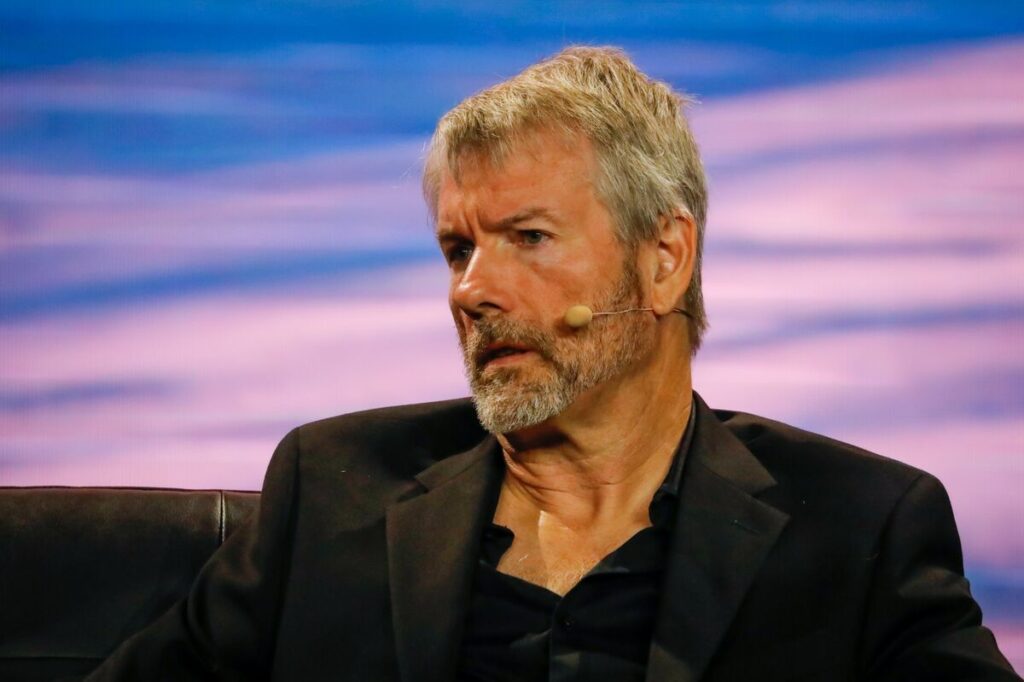
During a recent podcast discussion, Michael Saylor of MicroStrategy conveyed his belief that the involvement of major corporations in purchasing and holding Bitcoin should not be viewed as a worrisome development.
Speaking on the Coin Stories podcast with Natalie Brunell, released on August 7, Saylor highlighted the inevitable expansion of third-party and corporate engagement within the Bitcoin domain.
While acknowledging the aspiration of Bitcoin enthusiasts for complete self-control or sovereignty over their holdings, Saylor proposed that this might not be the exclusive solution, given the diverse applications of Bitcoin.
He expressed the idea that as Bitcoin further intertwines with society, its utility will diversify, negating a one-size-fits-all approach.
Saylor enumerated three primary factors substantiating the need for custodial services: technical, political, and natural considerations.
On a political basis, he argued that certain circumstances necessitate reliance on third-party custodians.
He pointed out that unless fundamental changes occur, political factors tied to regions such as New York City, California, or Iceland will demand custodial solutions.
From a technical perspective, Saylor highlighted the inevitability of trusting layer-3 third parties for transactions, particularly those involving mobile devices.
READ MORE: Former FTX CEO Sam Bankman-Fried’s Bail Revoked Over Witness Intimidation Allegations
He painted a vision of Bitcoin as a foundational layer, accompanied by layer-2 systems like the Lightning Network for speed, and layer-3 services provided by entities like Bank of America and Apple to enhance functionality.
Saylor also introduced the concept of natural reasons for custodial reliance.
He postulated that certain individuals, like an elderly person dealing with Alzheimer’s or someone wanting to secure assets for a future grandchild, might find it safer to entrust their holdings to others.
Drawing an analogy to childhood experiences, he cited that the absence of car keys didn’t necessarily invoke complaints, suggesting a comparable situation with Bitcoin custody.
Emphasizing adaptability, Saylor underlined that the market will ultimately dictate the optimal blend of Bitcoin integration methods.
He asserted that a diverse array of ways to incorporate, wrap, embed, or transact with Bitcoin should not evoke fear, as the right combination of integrations will naturally emerge through market dynamics.
In conclusion, Michael Saylor, during a recent podcast exchange, expressed his viewpoint that the involvement of large corporations in Bitcoin custody shouldn’t raise alarm.
He highlighted the inevitability of Bitcoin’s expansion across various sectors and delineated reasons for custodial arrangements based on technical, political, and natural factors.
Saylor stressed the importance of embracing multiple integration approaches, with the market determining the most suitable amalgamation of Bitcoin functionalities.
Other Stories:
Hacker’s Tether Address Blacklisted with Police and Cyber Support, Stolen Crypto Recovery Progresses
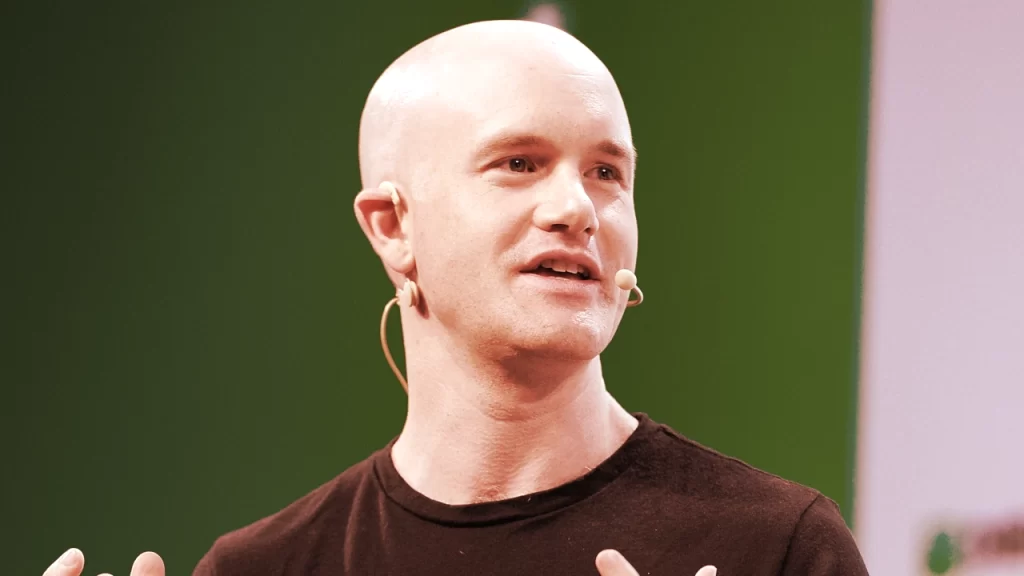
A consortium of six accomplished legal experts, specializing in the realm of securities law and its interconnected domains, have formally presented an amicus brief in a show of support for cryptocurrency exchange giant, Coinbase.
This legal endeavor takes place within the context of Coinbase’s ongoing legal tussle with the United States Securities and Exchange Commission (SEC).
In the sphere of law, an amicus brief is a significant document filed in court by an entity that is not directly enmeshed in the specific litigation.
The primary purpose of such a document is to contribute auxiliary arguments to one side of the case.
Notably, it underscores the far-reaching implications of the case beyond just the immediate litigants.
This collective of legal scholars submitted their amicus brief to the U.S. District Court for the Southern District of New York on August 11th.
Coinciding with this development, Senator Cynthia Lummis also extended an amicus brief in favor of the cryptocurrency exchange.
The cadre of scholars participating in this filing includes renowned names like Stephen Bainbridge from the University of California, Los Angeles; Tamar Frankel representing Boston University School of Law; Sean Griffith hailing from Fordham University School of Law; Lawrence Hamermesh associated with Widener University’s Delaware Law School; Matthew Henderson linked with the University of Chicago Law School; and Jonathan Macey, a distinguished personality from Yale Law School.
Within their filing, these scholars assert that established federal legal precedents and the well-regarded Howey test collectively recognize that investment agreements inherently entail expectations of business-generated income, profits, or assets.
In light of this, they beseech the court to uphold the recognized legal definition of an “investment contract” when interpreting the boundary of its application.
READ MORE: Hacker’s Tether Address Blacklisted with Police and Cyber Support, Stolen Crypto Recovery Progresses
Elaborating on this, they elucidate that for an investment contract to be in play, investors must be assured, by virtue of their investment, an ongoing contractual claim to the enterprise’s income, profits, or assets.
In the documentation, the scholars delve into an examination of pertinent cases that bolster their stance.
Importantly, these legal scholars explicitly emphasize that their connections to various universities or law schools hold no bearing on their involvement in the amicus brief.
In summation, the collaborative effort of these accomplished legal minds underlines a poignant testament to the complexity and significance of the ongoing legal dispute between Coinbase and the SEC, while striving to elucidate the intricate legal frameworks that encompass this scenario.
Other Stories:
Curve Finance Vows Reimbursement After $62 Million Hack
Former FTX CEO Sam Bankman-Fried’s Bail Revoked Over Witness Intimidation Allegations

Tel Aviv, Israel, August 17th, 2023, Chainwire
Open Campus, a community-led protocol for educators, content creators, parents, and students, and TinyTap, a subsidiary of Animoca Brands and the leading edtech platform for user-generated educational games, today announced a strategic partnership with Code Green, the trailblazing Web3 organization driven by a commitment to the planet’s health. The collaboration aims to help more children learn about climate change by leveraging the power of tokenized educational content, interactive gaming, and blockchain technology.
Open Campus, TinyTap, and Code Green are all dedicated to supporting the efforts of the United Nations Convention to Combat Desertification (UNCCD). This new collaboration exemplifies their commitment to fighting climate change and their belief in the power of education to shape a more sustainable future.
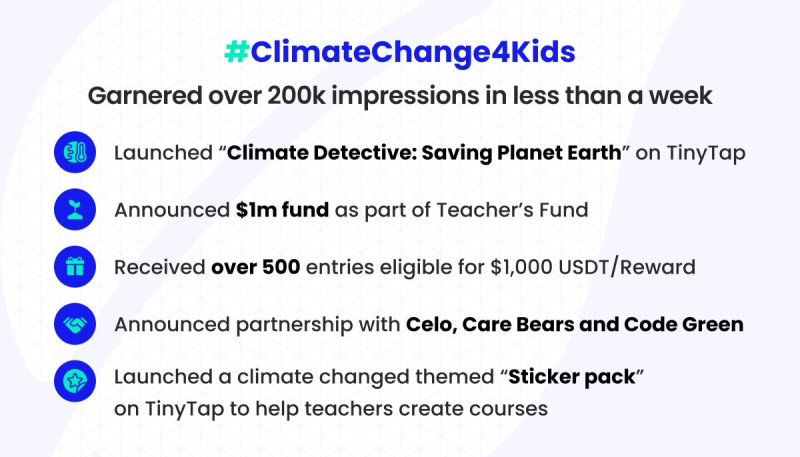
The partnership follows the successful launch of the Open Campus “Climate Change for Kids” initiative, which aims to foster knowledge and awareness of climate change among the younger generation. The #ClimateChange4Kids campaign, first launched on X (formerly Twitter), has received over a combined 200,000 impressions. The initiative includes a proposal for a US$1,000,000 fund incentivizing teachers to create climate change courses; the “Living Stories” project that encourages communities to share their experiences and climate-conscious practices; a climate-themed sticker pack developed by TinyTap to aid educators in course creation; and a new game called “Climate Detectives: Saving Planet Earth” available for free on TinyTap.
As part of the new alliance announced today, TinyTap will create a new climate change course utilizing the rich lore and avatars from Code Green’s HEALV3RSE game designed by MCSK. HEALV3RSE is a ‘play-to-heal’ game available on The Sandbox platform that allows players to explore and learn about eco-friendly activities such as planting trees, cleaning oceans, and installing solar panels, thereby promoting a deep understanding of climate change and its solutions.
“We are excited to work with Code Green, which is a partner to the United Nations’ efforts to combat climate change and desertification, by educating our kids about what is going on in our planet,” said Yogev Shelly, CEO of TinyTap. “By taking HEALV3RSE avatars to TinyTap, we develop a perfect companion to its metaverse game on The Sandbox, and offer parents and kids multiple ways to learn about our changing world in a fun and engaging way.”
Open Campus and Code Green also announced that they will be giving away 100 HEALV3RSE avatar and equipment NFTs to users who engage in an upcoming joint giveaway campaign, and help spread the message to friends and families. Campaign details will be announced on Open Campus’ Twitter.
Inna Modja, CEO of Code Green, Malian actress, singer, environmental activist, and Goodwill Ambassador for the UNCCD, expressed her excitement about this partnership: “By combining education, technology, and gaming, we’re creating a unique platform to engage children and empower them with the knowledge and awareness to tackle this urgent crisis for our planet.”
About Open Campus
Open Campus is a community-led protocol for educators, content creators, parents, and students. It puts decisions about learning back into the hands of educators and their students by fostering a collaborative environment, enabling teachers to create materials that appeal to the exact needs of students. Additionally, Open Campus recognizes the achievements of teachers and content creators who help students seek new knowledge, opening new revenue streams for effective educators around the world.
About TinyTap
TinyTap, a subsidiary of Animoca Brands, was founded in 2012 and is the world’s largest educational games library with more than 250,000 activities made by educators and publishers including Sesame Street and Oxford University Press. Games are created using TinyTap’s code-free authoring platform and can be accessed by parents as part of TinyTap’s subscription or sold directly to families as bundles. A portion of subscription revenue is shared with content creators based on the user engagement generated by their content. TinyTap is among the top 10 grossing kids apps worldwide, delivering educational content to families all over the world with a focus on young learners (Pre-K to Grade 6), serving 10 million registered family members with content created by over 100,000 creators. Learn more at https://www.tinytap.com.
About Animoca Brands
Animoca Brands, a Deloitte Tech Fast winner, a Fortune Crypto 40 company, and one of the Financial Times’ High Growth Companies Asia-Pacific 2023, is a leader in digital entertainment, blockchain, and gamification that is working to advance digital property rights and contribute to the establishment of the open metaverse. The company develops and publishes a broad portfolio of products including original games such as The Sandbox, Phantom Galaxies, Life Beyond, Crazy Kings, and Crazy Defense Heroes, and products utilizing popular intellectual properties including Disney, WWE, Snoop Dogg, The Walking Dead, Power Rangers, MotoGP™, and Formula E. It has multiple subsidiaries, including The Sandbox, Blowfish Studios, Quidd, GAMEE, nWay, Pixowl, Forj, Lympo, Animoca Brands Japan, Grease Monkey Games, Eden Games, Life Beyond Studios, Notre Game, TinyTap, Be Media, PIXELYNX, and WePlay Media. Animoca Brands has a growing portfolio of more than 380 Web3 investments, including Colossal, Axie Infinity, OpenSea, Dapper Labs (NBA Top Shot), Yield Guild Games, Harmony, Alien Worlds, Star Atlas, and others. For more information visit www.animocabrands.com or follow on Twitter or Facebook.
About Code Green
Code Green is a mission-driven web3 organization that utilizes the power of art and blockchain technology to ignite a healing revolution for the planet. Their work supports the United Nations Convention to Combat Desertification (UNCCD).
Contact
Elie Wiesel
[email protected]

Voyager Digital, the cryptocurrency lender that recently filed for bankruptcy, has made significant token transfers raising eyebrows within the crypto sphere.
On August 11th, according to Etherscan, the company sent 1,500 Ether (ETH) valued at approximately $2.77 million and a staggering 250 billion Shiba Inu (SHIB) tokens worth about $2.7 million to Coinbase, a renowned crypto exchange.
The intention behind these sizeable transactions has ignited a wave of speculation throughout the cryptocurrency community.
One prevailing theory suggests the likelihood of a massive sell-off, stemming from the fact that these transfers have significantly depleted Voyager’s distressed wallet holdings to a mere $81.63 million in digital assets.
Notably, these transfers were executed at precise one-hour intervals, as recorded by Etherscan. This sudden movement of tokens has prompted intense discussions about the potential initiation of a liquidation process.
However, insider sources have countered these notions, asserting that Voyager is simply consolidating its tokens from various addresses into a central primary address for streamlined management.
The prevailing conjecture of an imminent sell-off gains traction from Voyager’s ongoing pattern of divestment in SHIB holdings since the commencement of 2023.
READ MORE: Curve Finance Vows Reimbursement After $62 Million Hack
A telling instance occurred in February when the company orchestrated a series of transfers totaling nearly $10 million worth of digital assets across several cryptocurrency exchanges in a single day.
These transfers encompassed an assortment of tokens, including 270 billion SHIB tokens valued at $3.2 million, 4.9 million Voyager Tokens (VGX) amounting to $2.1 million, 3,050 ETH equating to $3 million, and 221,000 Chainlink (LINK) tokens with a valuation of $1.5 million.
The context surrounding Voyager’s financial state is further accentuated by the backdrop of Binance.US’s legally sanctioned acquisition of the lender’s assets.
Blockchain analytics platform Lookonchain divulged that Voyager had liquidated an aggregate of over $56 million in digital holdings across three distinct cryptocurrency exchanges.
A mere three months later, the insolvent exchange continued its involvement in an intricate web of transactions, transferring approximately 350 billion SHIB tokens.
In summation, the recent movement of a significant volume of tokens by Voyager Digital, coupled with its prior divestment activities and the broader context of its financial status, has spurred vigorous speculation within the cryptocurrency domain.
The community keenly observes these developments for insights into the future trajectory of both Voyager Digital and the cryptocurrency market as a whole.
Other Stories:
Hacker’s Tether Address Blacklisted with Police and Cyber Support, Stolen Crypto Recovery Progresses
Former FTX CEO Sam Bankman-Fried’s Bail Revoked Over Witness Intimidation Allegations

Decentralized finance platform Zunami Protocol has issued a cautionary advisory against the purchase of its Zunami Ether (zETH) and Zunami USD (UZD) stablecoins.
This move comes in the wake of a security breach that targeted the protocol’s “zStables” pools on Curve Finance.
On August 13th, Zunami Protocol officially acknowledged the attack on its stablecoin pools via a post on its Twitter account.
While ensuring the safety of collateral, the protocol has initiated a thorough investigation to assess the scope and impact of the potential exploit.
Blockchain security firm PeckShield has approximated the stolen amount to be more than $2.1 million from Zunami’s Curve Pool.
The breach is attributed to a price manipulation vulnerability, a sentiment shared by the security experts at Ironblocks, who arrived at a similar conclusion.
The initial detection of the exploit was made by PeckShield on August 13th at 10:47 UTC, with Zunami Protocol confirming the incident about 20 minutes later, underscoring the urgency and swiftness with which the situation unfolded.
READ MORE: Hacker’s Tether Address Blacklisted with Police and Cyber Support, Stolen Crypto Recovery Progresses
Zunami Protocol operates as a decentralized revenue aggregator, offering users the opportunity to yield stake stablecoins. The protocol’s major stablecoin pools are housed within the Curve platform.
The impact of the breach is notably seen on the Zunami USD stablecoin as well as Zunami Ether.
In response to the attack, the zETH and UZD Curve pools operated by Zunami have been prominently marked with red exclamation symbols on the Curve platform, serving as a visual indication of the compromised status.
Cointelegraph, seeking further insights, reached out to Zunami Protocol for commentary on the incident.
However, as of the time of reporting, a response from the protocol has not been received.
As Zunami Protocol grapples with the aftermath of this attack, the broader community is reminded of the ongoing security challenges facing decentralized finance platforms.
This event underscores the significance of robust security measures in the DeFi space to safeguard users’ funds and maintain the trust necessary for the ecosystem’s growth.
Other Stories:
Curve Finance Vows Reimbursement After $62 Million Hack
Former FTX CEO Sam Bankman-Fried’s Bail Revoked Over Witness Intimidation Allegations

Former FTX CEO Sam Bankman-Fried finds himself in an unexpected predicament, spending his third night alongside over 1,500 inmates within the confines of New York’s infamous jail.
This stark contrast emerges from his earlier life in a luxurious California home owned by his parents, valued in the millions and boasting five bedrooms.
The abrupt change in his circumstances transpired following a bail revocation during an August 11th court hearing, presided over by Judge Lewis Kaplan.
The Brooklyn Metropolitan Detention Center, the facility where he now resides, was labeled by the judge as far from a luxury establishment.
Built to accommodate a maximum of 1,000 inmates, the MDC currently holds more than 1,500 individuals under federal custody.
Bankman-Fried anticipates an extended stay, at least two months, while awaiting his impending criminal trial. Nonetheless, his legal team has swiftly lodged an appeal in a bid to overturn this bail revocation.
Regrettably for Bankman-Fried, the detention center has a history marred by scandal, encompassing instances of inmate mistreatment and corruption.
In 2019, former warden Cameron Lindsay referred to the MDC as one of the most problematic facilities under the Bureau of Prisons’ jurisdiction.
Recent incidents have fueled this perception.
A guard faced charges in April for accepting bribes to facilitate the smuggling of contraband such as phones, cigarettes, and drugs.
READ MORE: Curve Finance Vows Reimbursement After $62 Million Hack
In a chilling winter of 2019, the facility suffered a week-long power outage, subjecting inmates to freezing conditions.
Reports from The Intercept painted a grim picture, illustrating inmates resorting to banging on cell windows to gain attention from onlookers.
Those protesting non-violently against dire conditions faced repercussions like pepper spray, solitary confinement, and even closure of their toilets.
The Brooklyn MDC has housed several high-profile individuals in the past, including artists like 6ix9ine, R. Kelly, and Fetty Wap.
Martin Shkreli, known as “pharma bro,” and Ghislaine Maxwell, an accomplice in Jeffery Epstein’s sex trafficking, also spent time within its walls.
Until recently, Bankman-Fried enjoyed bail, residing in a luxurious $4 million Palo Alto, California home with numerous amenities, including a pool.
The bail’s revocation stemmed from a leak of a diary belonging to former Alameda Research CEO Caroline Ellison.
The diary contained her sentiments towards Bankman-Fried and her role in the company. Prosecutors alleged that Bankman-Fried leaked the diary to undermine Ellison’s credibility as a witness and to intimidate her.
In response, his legal team countered the claims, asserting his right to engage with reporters and comment on an ongoing article. An appeal to reverse the bail revocation has been initiated.
Other Stories:
Hacker’s Tether Address Blacklisted with Police and Cyber Support, Stolen Crypto Recovery Progresses
Former FTX CEO Sam Bankman-Fried’s Bail Revoked Over Witness Intimidation Allegations

In a significant political development, an Argentine politician advocating for Bitcoin adoption and the dismantling of the central bank has surged ahead in the country’s presidential open primary elections.
With more than 90% of the votes counted, Javier Milei, a prominent libertarian with pro-Bitcoin sentiments, has taken the lead with an impressive nearly 32% of the votes.
This places him ahead of the conservative Together for Change party, which has secured just under 30% of the votes, according to data from Bloomberg.
The Union for the Homeland coalition, representing the incumbent government, stands at the third position with slightly over 28.5% of the total votes.
Milei, a central figure in the Liberty Advances coalition (La Libertad Avanza), has been associated with views that span from libertarian to far-right ideologies.
Milei, who identifies as an anarcho-capitalist, has been a vocal proponent of abolishing Argentina’s central bank, labeling it a fraudulent institution.
He has also controversially stated that the trading of human organs should be treated as a regular market transaction.
He attributes the rise of Bitcoin to a response against what he terms “central bank scammers.”
READ MORE: Hacker’s Tether Address Blacklisted with Police and Cyber Support, Stolen Crypto Recovery Progresses
Furthermore, he argues that fiat currency enables politicians to exploit Argentinians through inflation, a message that has struck a chord with the country’s populace.
The resonance of Milei’s rhetoric among voters is driven by Argentina’s staggering annual inflation rate of 116%, the highest in over 30 years.
This dire economic situation has exacerbated the country’s ongoing cost of living crisis, making the call for alternative financial mechanisms like Bitcoin more appealing to a frustrated electorate.
The culmination of this political landscape will be Argentina’s general presidential election scheduled for October 22nd.
In the event that no candidate secures a minimum of 45% of the votes, a runoff election is slated for November.
As the nation grapples with economic challenges and increasing public support for unconventional approaches, the upcoming election holds the potential for a significant shift in Argentina’s political trajectory.
Other Stories:
Former FTX CEO Sam Bankman-Fried’s Bail Revoked Over Witness Intimidation Allegations