
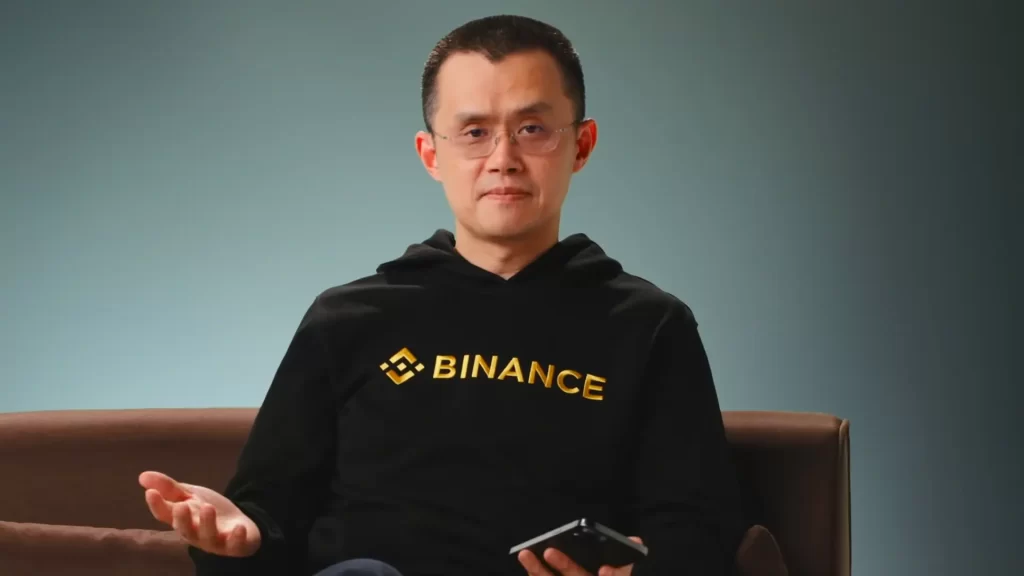
Binance, renowned as the world’s leading cryptocurrency exchange in terms of trading volume, is said to have initiated the process of registering within Taiwan’s regulatory framework, as mandated by the Money Laundering Control Act and the Financial Supervisory Commission (FSC).
As reported by local media, the FSC has reportedly reached out to numerous domestic crypto service providers, informing them of Binance’s pursuit of Anti-Money Laundering (AML) compliance.
The details stem from insights shared by Chen Peiyun, co-founder of BitShine, a cryptocurrency exchange based in Taiwan.
Chen Peiyun disclosed that Binance has been identified by the FSC as a potential participant in the Taiwanese crypto market.
Requests for comments from Binance, regarding these recent developments, have yet to be addressed as of this time.
Taiwan’s cryptocurrency sector has mostly existed without comprehensive regulation.
However, to bolster security and transparency, the FSC introduced AML guidelines in July 2021, mandating all cryptocurrency exchanges operating within or providing services to the nation to adhere to these regulations.
Operating in Taiwan through a local subsidiary known as Binance International Limited Taiwan Branch (Seychelles), the exchange’s registration records indicate the formal establishment of this entity on May 12, 2023.
READ MORE: Cryptocurrency Asset Flows Continue Negative Trend with $107 Million Outflows
In addition to formalizing its presence through registration, Binance has also formed collaborations with local governmental bodies to combat cybercrime, emphasizing their commitment to security.
Notably, the FSC took on the role of being the primary overseer of cryptocurrency-related activities within the country earlier in March.
This transition was accompanied by an announcement from the regulatory body’s leader, affirming their intentions to develop substantial regulations and policies.
These efforts encompass safeguarding customer assets, segregating them from company funds, and bolstering investor protection practices.
It’s pertinent to mention that Taiwan’s cryptocurrency policies will remain separate from those of mainland China, which, since 2021, has imposed a comprehensive ban on all cryptocurrency-related operations.
These reports of Binance’s intent to engage with the Taiwanese cryptocurrency market coincide with the exchange facing heightened regulatory scrutiny within the United States and Europe.
The company is presently confronted with numerous legal actions in the United States, coupled with the withdrawal from various European jurisdictions following regulatory confrontations.
Other Stories:
Top VC Firms Face Class-Action Lawsuit for Alleged Role in FTX Crypto Exchange Fraud
Futurama’s Hilarious Take on Crypto Mining: A Wild West Adventure in ‘Crypto Country’
PayPal’s PYUSD Stablecoin Launch Triggers Flood of Imposter Tokens and Honeypot Scams
The rapid advancement of high-level artificial intelligence (AI) technology has ignited a competitive race between the United States and China, each striving to lead in the development of the most formidable AI systems.
This pursuit has sparked escalating tensions between the two global superpowers.
The Biden Administration, in a decisive move, has imposed limitations on Chinese tech investments pertaining to semiconductors, quantum computing, and AI.
This initiative has triggered apprehensions among regulators in various nations.
The European Union and the United Kingdom are deliberating their responses to this U.S. action.
On August 9, The White House issued two executive notices addressing AI advancements.
The first highlighted a novel opportunity for hackers to employ AI in fortifying U.S. infrastructure against cybersecurity threats, with monetary incentives as rewards.
Conversely, the second note designated China, Hong Kong, and Macau as “countries of concern.”
This classification empowers the U.S. to regulate investments within these regions, particularly in sectors pertinent to national security, including semiconductors, microelectronics, and quantum information technologies.
The document underscored the role of these sectors in military, intelligence, surveillance, and cyber-enabled capabilities.
READ MORE: Governments Remain Wary About Worldcoin Amid Privacy Concerns
The scope of the note presently encompasses the mentioned countries; however, a Biden administration official hinted at the possibility of adding other nations in the future.
The U.S. has already undertaken measures to curtail Chinese technological investments and restrict Chinese access to American services and products.
In a significant development, U.S. regulators imposed bans on semiconductor chip exports to China in October 2022, as these chips are integral to the creation of high-performance AI systems.
China responded swiftly to the U.S. pronouncement through an official statement from the Chinese Embassy in the U.S.
The Chinese Ministry of Foreign Affairs denounced the U.S.’s unilateral decisions regarding investments in China, decrying them as economic coercion and tech bullying.
China perceived these actions as an attempt to sideline it from the global arena.
To counter previous U.S. moves, China announced tightened controls on AI chip-making material exports.
Reports indicated that prominent Chinese tech giants, such as Baidu, ByteDance, Tencent, and Alibaba, have placed significant orders for Nvidia A800 processors, anticipating stricter controls from the U.S.
The U.S. stance had immediate repercussions abroad.
The U.K.’s Prime Minister’s office indicated that the U.S. measures would be taken into consideration while assessing potential national security risks linked to specific investments.
The European Commission also pledged to analyze the U.S. decision, given its proactive involvement in monitoring and regulating AI developments.
As the AI race intensifies, the actions of these influential players hold significant implications for the global technological landscape.
Other Stories:
PayPal’s Ethereum-Based Stablecoin PYUSD Divides Crypto Community
XRP Price Fails to Reach Anticipated Levels Despite Favorable Court Ruling
Binance’s Proof-of-Reserves Discloses Strong Financial Position
Lawyers specializing in cryptocurrency matters are expressing strong confidence in Ripple Labs’ legal position as the United States Securities and Exchange Commission (SEC) pursues an interlocutory appeal in their ongoing case.
This has prompted discussions within the crypto community regarding the significance of the appeal, with some speculating whether it aims to challenge the classification of XRP as a non-security token.
However, legal experts in the field are assuring observers that this appeal doesn’t specifically address that matter.
On August 9th, the SEC formally notified Judge Analisa Torres of its intention to appeal the court’s ruling, seeking a fresh evaluation from an appellate court.
In response, community members have been pondering whether this move is tied to the SEC’s quest to challenge the “non-security” status of XRP.
Notably, Jeremy Hogan, a prominent crypto lawyer, delineates the distinction between the SEC’s appeal on sales-related matters and the broader classification of XRP as a security.
Hogan emphasizes that a win for the SEC in this appeal could restrict Ripple’s ability to conduct sales via exchanges.
However, he posits that exchanges might still list XRP as long as these sales aren’t facilitated by Ripple.
Oscar Franklin Tan, a crypto lawyer and Chief Legal Officer at Enjin, a non-fungible token (NFT) platform, provides further insight into the complexities of the SEC’s appeal strategy.
Tan explains that appeals typically occur once a case concludes, but the SEC is pursuing an interlocutory appeal, which means it aims to appeal even though the case remains ongoing.
Regarding the potential impact of this appeal on the main case, Tan underscores the concept of momentum.
READ MORE: Top VC Firms Face Class-Action Lawsuit for Alleged Role in FTX Crypto Exchange Fraud
He clarifies that if the interlocutory appeal is permitted, the prevailing party in that appeal would gain momentum in the primary case.
While Hogan is of the view that the appeal won’t significantly impact XRP’s security classification, Tan suggests that the SEC’s underlying objective remains focused on overturning the earlier July decision by Judge Torres, which affirmed that XRP is not a security under certain circumstances.
Tan reveals that the SEC is drawing from the Terraform Labs case to bolster its argument against Judge Torres in the XRP case.
The SEC contends that a higher court should resolve discrepancies between different rulings.
Nonetheless, Tan asserts that the SEC should have provided clearer regulatory guidance prior to resorting to legal action.
He advocates for the normal progression of the court process to gain clarity on these matters.
Meanwhile, Ripple’s Chief Legal Officer, Stuart Alderoty, has encouraged anticipation, stating that Ripple will file its response with the court in the upcoming week.
This development underscores the ongoing dynamism in the legal landscape surrounding cryptocurrency classification and regulation.
Other Stories:
Futurama’s Hilarious Take on Crypto Mining: A Wild West Adventure in ‘Crypto Country’
PayPal’s PYUSD Stablecoin Launch Triggers Flood of Imposter Tokens and Honeypot Scams
Cryptocurrency Asset Flows Continue Negative Trend with $107 Million Outflows

FC Barcelona, the renowned Spanish soccer club, has sealed a significant investment worth 120 million euros (approximately $132 million) for its pioneering Web3 endeavor, Barça Vision.
The landmark deal was revealed on August 11 and entails Libero Football Finance AG and Nipa Capital B.V. as the investing entities.
The transaction’s crux involves FC Barcelona trading a 29.5% ownership interest in Bridgeburg Invest, the parent company overseeing Barça Vision, in return for the substantial capital infusion.
This strategic move is aimed at propelling the Club’s ambitious Barça Vision initiative, which seeks to seamlessly amalgamate all facets of digital content within the realms of Web3 and blockchain.
Notably, this includes the burgeoning domains of NFTs (non-fungible tokens) and the metaverse, pivotal components in the Club’s blueprint for erecting the digital haven of Espai Barça.
Libero Football Finance AG, a publicly traded firm based in Germany, is well-regarded for its expertise in advising soccer clubs on financial matters.
In a complementary fashion, Nipa Capital B.V., a venture capital entity headquartered in the Netherlands, contributes to this investment partnership.
READ MORE: Futurama’s Hilarious Take on Crypto Mining: A Wild West Adventure in ‘Crypto Country’
However, it is worth noting that the completion of this transaction is contingent upon the approval of FC Barcelona’s shareholders and is anticipated to finalize in the fourth quarter of 2023.
FC Barcelona’s voyage into the realm of blockchain and digital assets commenced in February 2020, with a collaboration with Chiliz blockchain, resulting in the creation of FC Barcelona Fan Tokens (BAR) on the Ethereum platform.
The partnership’s ascendancy saw Chiliz’s acquisition of a 24.5% stake in Barça Vision’s digital content arm for a sum of $100 million in August 2022.
Notably, FC Barcelona has actively ventured into the world of NFTs.
In May, the Club’s debut NFT collection, named “Unleash Your Passion,” was launched in collaboration with Plastiks.
This compilation, encompassing 3,000 NFTs, was priced at $30 each and carried an eco-conscious theme, vowing to aid in the reduction of 35,000,000 kilograms of plastic waste from the planet.
Building on this momentum, FC Barcelona accomplished remarkable milestones in the NFT arena. The Club’s inaugural NFT, “Masterpiece #1 In A Way,” was auctioned at Sotheby’s New York in July 2022, fetching a staggering $693,000.
Subsequently, the sequel to this series, titled “Masterpiece #2 – Empowerment,” was traded on the OpenSea platform on June 28, 2023, for an impressive sum of $300,231.
Other Stories:
Top VC Firms Face Class-Action Lawsuit for Alleged Role in FTX Crypto Exchange Fraud
Cryptocurrency Asset Flows Continue Negative Trend with $107 Million Outflows
PayPal’s PYUSD Stablecoin Launch Triggers Flood of Imposter Tokens and Honeypot Scams

Crypto Intelligence, a leading crypto and Web 3.0 news portal, has announced the launch of its Blockchain Council today, with 12 initial members.
The Crypto Intelligence Blockchain Council is made up of pioneers, visionaries and experts of the Web 3.0 space.
Members have the privilege of being able to share their insights via op-eds and thought leadership articles published in Crypto Intelligence and their affiliated partners, which include CoinMarketCap, CoinGecko, and CryptoPanic.
Members are also invited to industry panels and events organised throughout the year by Crypto Intelligence.
The founding members of the Crypto Intelligence Blockchain Council include current and former executives and employees of several leading blockchain companies, including Tezos, Kraken, Coinbase, and IoTeX.
Namely, the 12 initial Blockchain Council members are:
Deepak Garg – Chief Compliance Officer & MLRO (MENA) at Kraken
Jakob Linus Stammler – Product Owner & Operations Manager at Tezos Foundation
Miles Anthony – Chief Executive Officer and Founder of Decentral Games
Mark Zalan – CEO of GoMining, formerly a Silicon Valley network security engineer
Dr Raullen Chai – CEO of IoTeX, previously Lead of Crypto R&D and Engineering Security at Uber
Gagan Gehani – Former Product Manager at Coinbase
Martin Petkov – Head of Marketing at LandVault, Formerly of HSBC
Radovan Vukotic – Head of Finance at CoinFantasy
Suliman Mulhem – Founder of Imperium Comms and member of the Forbes Business Council
Alex Thurston – Chief Executive Officer of Bitcoin PR Buzz
Haris Khan – Group Vice President of Growth at Rain
Ehab Khattab – Content Manager at the Dubai Future Foundation
Commenting on the much-anticipated launch of the Blockchain Council, David Prior, Head of Partnerships and Sales at Crypto Intelligence, hailed it as an effective way to encourage more innovation and debate in the crypto and broader Web 3.0 space.
“Our Blockchain Council provides a platform for industry leaders and visionaries to share their expertise with the cryptoshere and encourage the sharing of ideas,” he said.
“We are looking forward to adding more members to our Blockchain Council in the coming weeks and months.”
Join the Crypto Intelligence Blockchain Council
While the majority of Blockchain Council members are invited to join directly by Crypto Intelligence, crypto pioneers and experts are able to apply to join the waiting list and to be considered for admission.
To apply, you can send an email to [email protected].
Eighteen prominent venture capital (VC) investment firms, including Temasek, Sequoia Capital, Sino Global, and Softbank, are now defendants in a class-action lawsuit that has been lodged in the United States District Court for the Northern District of California.
This lawsuit is connected to their involvement with the defunct cryptocurrency exchange FTX, which has gone bankrupt.
Filed on August 7th, the lawsuit alleges that these investment firms played a role in “aiding and abetting” the fraudulent activities linked to FTX.
The suit asserts that these entities utilized their significant influence, power, and substantial resources to facilitate the rapid expansion of FTX’s fraudulent practices, which led to its eventual multibillion-dollar collapse.
The lawsuit contends that FTX, the cryptocurrency exchange, violated multiple securities laws and engaged in misappropriation of customer funds.
Simultaneously, the venture capital firms in question portrayed an inaccurate image of the exchange, asserting that they had diligently conducted their assessments.
As a result, the lawsuit claims that these VC firms were directly involved in the “perpetration, conspiracy, and aiding and abetting” of FTX Group’s substantial fraudulent activities, all for their personal financial gain.
READ MORE: PayPal’s Ethereum-Based Stablecoin PYUSD Divides Crypto Community
In the lawsuit’s discussion of the VC firms’ role in facilitating FTX’s fraudulent practices, the plaintiffs highlight Temasek’s involvement and its statements regarding the financial status of FTX.
Temasek maintained that it underwent an extensive eight-month review of FTX’s financial records, audits, and regulatory compliance, finding no concerning indications. The lawsuit reads:
“The multinational VC defendants also propagated numerous false and deceptive statements about FTX’s operations, finances, business, and future prospects to entice customers into investing, trading, and depositing assets with FTX.”
The lawsuit further alleges that these VC firms endorsed FTX’s stability and safety, showcasing the exchange’s purported efforts to attain proper regulation.
One of FTX’s initial investors was Temasek, which invested $275 million.
However, following the cryptocurrency exchange’s collapse in November 2022, Temasek completely wrote off its investment and even reduced compensation for the executives responsible for the FTX investment.
Singapore-based Temasek’s involvement also casts a spotlight on the Singaporean government’s lack of oversight.
FTX’s downfall had a domino effect within the cryptocurrency industry, triggering doubts about the entire crypto ecosystem and leading to a prolonged dearth of institutional crypto investments for several months.
Other Stories:
Binance’s Proof-of-Reserves Discloses Strong Financial Position
Governments Remain Wary About Worldcoin Amid Privacy Concerns
XRP Price Fails to Reach Anticipated Levels Despite Favorable Court Ruling
The futuristic animated series, Futurama, known for its comedic take on science fiction, took a humorous jab at cryptocurrency mining in its latest installment, demonstrating the show’s knack for predicting trends well before they materialize.
The show’s third episode of its recent version, titled “How the West Was 1010001,” was released on Hulu on August 6, where the characters found themselves indebted to the Robot Mafia.
In a clever parody, they embarked on a journey to “Crypto Country,” a fictional representation of the Wild West, reminiscent of Bitcoin mining’s resource-intensive nature.
Set in the year 3023, Futurama’s portrayal of the cryptocurrency landscape remained true to its comedic nature.
The price of BTC remained volatile, and people scoured the land for sources of “cheap, filthy electricity” to facilitate their mining operations.
The episode’s humor manifested through absurd scenarios, like collecting thallium for crypto mining chips, relocating to the comically named “Doge City,” and BTC miners consuming such massive energy that it started ionizing the atmosphere.
Not solely focused on Bitcoin, the show humorously touched upon “danged Ethereum” and depicted robots’ heads repurposed for mining crypto.
READ MORE: Binance’s Proof-of-Reserves Discloses Strong Financial Position
Remarkably, Futurama had been on air since March 1999, a decade before the inception of Bitcoin.
While the show had rarely delved into cryptocurrency discussions, its recent episode underscores the growing presence of digital assets in mainstream media, spanning from animated series like South Park to blockbuster films like Mission: Impossible – Dead Reckoning Part One.
Curiously, the episode left unaddressed the rationale behind the characters’ persistence in Bitcoin mining in 3023, despite the widely-known BTC halving process.
This process indicates that the final Bitcoin block would likely be mined around the year 2140, making the episode’s comedic depiction divergent from the actual cryptocurrency timeline.
In its characteristic style, Futurama’s latest episode has managed to weave an amusing tale around cryptocurrency mining, showcasing the series’ enduring relevance and its ability to lampoon emerging trends with a comedic touch.
Other Stories:
PayPal’s Ethereum-Based Stablecoin PYUSD Divides Crypto Community
Governments Remain Wary About Worldcoin Amid Privacy Concerns
XRP Price Fails to Reach Anticipated Levels Despite Favorable Court Ruling

In the wake of PayPal’s recent launch of its stablecoin, PYUSD, the crypto community has witnessed a surge in opportunists, speculators, and potential scammers attempting to capitalize on the hype by creating their own copycat tokens.
Data from DEX Screener, a decentralized exchange scanner, reveals that nearly 30 new token pairs with the “PYUSD” ticker have emerged within hours of PayPal’s announcement.
These imposter tokens have been minted on various blockchain networks, including BNB Smart Chain, Ethereum, and Coinbase’s newest layer 2 solution, Base.
It is crucial to note that the authentic PayPal USD token was introduced in November 2022 and can be verified through a specific contract address.
PayPal has explicitly stated that PYUSD can only be sent between verified PayPal accounts and compatible wallets, making it highly unlikely that any of the tokens listed with the same ticker on platforms like UniSwap are genuine.
Despite this clarity, the largest imposter PYUSD token, created on Ethereum, has witnessed a staggering $2.6 million in trading volume since its inception, which occurred minutes after PayPal announced its stablecoin launch.
However, the token’s value has since plummeted more than 66% from its all-time high.
Interestingly, some of these fake PYUSD tokens have taken a humorous approach, adopting names like “PepeYieldUnibotSatoshiDoge.”
This particular imposter token experienced an increase of over 3,000% in value within four hours.
Unfortunately, many of the counterfeit PYUSD tokens are likely “honeypots,” a term used to describe scams where investors purchase a token but cannot sell it, effectively losing their crypto holdings.
Investors often discover these honeypots only when they attempt to sell their assets.
Such scenarios are not entirely new in the crypto world, as speculators, known as “degens,” frequently rush to create new meme coins in response to trending stories and events.
For instance, there was an “LK-99” token created after the superconductor craze, and over 50 UFO-themed meme coins emerged when the U.S. Congress held a hearing on alien visitation cover-ups.
In conclusion, the launch of PayPal’s stablecoin has sparked a wave of imposter tokens, with some experiencing significant price fluctuations before losing value.
As crypto enthusiasts and investors navigate this space, caution and vigilance are essential to avoid falling victim to scams and honeypots that are prevalent in the current market.
Other Stories:
2024 Presidential Candidates’ Mixed Views on Crypto
Chamber of Digital Commerce Releases Report on SEC vs Ripple Ruling
Digital Currency Group Faces Regulatory Scrutiny Over Transactions with Genesis Global Capital
In the week ending on August 4, cryptocurrency asset flows recorded a total of $107 million in outflows, continuing a three-week negative trend that amounted to $134.8 million.
Once again, the primary factor behind this movement was Bitcoin (BTC), which experienced $111 million in outflows. These outflows offset the majority of inflows seen in the market during the week.
According to CoinShares’ “Digital Asset Fund Flows” weekly report, this trend indicates further “profit taking” following the gains from the previous market cycle.
In the month leading up to the recent outflows, crypto funds had seen inflows of $742 million, with a significant 99% of those inflows directed towards Bitcoin.
Weekly trading volumes in investment products experienced a decline below the year-to-date average, with broader on-exchange market volumes down by 62% compared to the relative average.
Regionally, only Australia and the United States demonstrated inflows of $0.3 million and $0.2 million, respectively.
Conversely, Canada and Germany witnessed the largest outflows, with $70.8 million and $28.5 million, respectively.
READ MORE: Chamber of Digital Commerce Releases Report on SEC vs Ripple Ruling
Despite the outflows from Bitcoin, the total weekly outflows were partially offset by inflows into Solana (SOL), amounting to $9.5 million, a significant increase from the previous week’s $0.6 million inflows.
Additionally, investment products related to XRP (XRP) also experienced inflows of $0.5 million.
However, Ether (ETH) funds continued their negative trend, with an additional $5.9 million in outflows following the previous week’s $1.9 million.
These outflows offset the prior inflows of $6.6 million, further distinguishing Ether from the current bullish trend of Solana.
Bitcoin has maintained its overall value since the beginning of the year compared to its January opening, but market experts believe that the sideways movement observed since April, mostly below $30,000, is a result of market uncertainty.
Data from Switzerland-based investment adviser 21e6 Capital AG revealed that “hodlers” of Bitcoin, those who held funds in BTC, outperformed crypto funds by 69% in the first half of 2023.
The 2022 implosion of FTX and regulatory and legal uncertainties surrounding several other exchanges may have prompted crypto fund investors to increase their cash reserves rather than investing further, contributing to the current decline.
The report from 21e6 Capital AG also noted a slight increase in investor sentiment compared to the first half of 2023.
Other Stories:
Digital Currency Group Faces Regulatory Scrutiny Over Transactions with Genesis Global Capital
Singapore’s Monetary Authority (MAS) has granted a major payment institution (MPI) license to crypto exchange Blockchain.com, making it the twelfth digital payment token service provider in the country.
The license, received on August 1, enables Blockchain.com to offer digital payment token services to institutional and accredited investors.
This approval comes after the exchange received in-principle approval from MAS in September of the previous year.
Other providers in the country offering similar services include Circle, Independent Reserve, Paxos, Revolut, and DBS Vickers.
The growing number of licensed crypto service providers demonstrates Singapore’s commitment to becoming a prominent crypto hub.
MAS has been actively supporting the fintech sector in the country, pledging $112 million to further strengthen the financial technology industry, including Web3 entities.
In July, the regulator introduced new regulations aimed at enhancing customer protections.
These rules include a requirement for crypto service providers to hold customer funds in a statutory trust by the end of the year.
Moreover, additional proposals are being developed to prevent crypto providers from facilitating lending or staking of retail customer assets.
READ MORE: 2024 Presidential Candidates’ Mixed Views on Crypto
Singapore’s efforts to bolster its crypto industry have been showing results.
According to a report by Galaxy Digital in July, while the United States still led in crypto startup funding in Q2 2022, Singapore-based crypto firms secured the third position, trailing only the United Kingdom.
Notably, Blockchain.com’s license comes in the wake of MAS granting an in-principle approval for a similar MPI license to Ripple, a blockchain-based payments firm, in June.
These developments signal the government’s commitment to fostering a favorable environment for the crypto industry’s growth in Singapore.
With robust funding commitments and updated industry regulations focusing on customer protection, the country aims to solidify its position as a leading global hub for cryptocurrencies and related services.
Other Stories:
Chamber of Digital Commerce Releases Report on SEC vs Ripple Ruling
Digital Currency Group Faces Regulatory Scrutiny Over Transactions with Genesis Global Capital