


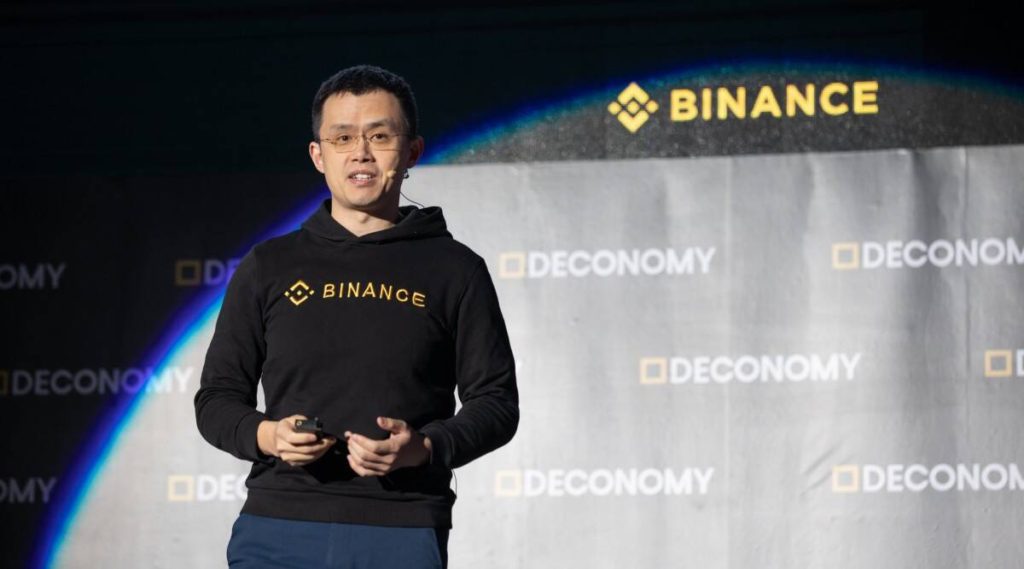
Over the past six years, Binance has grown into a household name, becoming the largest crypto exchange in trade volume – transacting billions of dollars worth of crypto daily. Nonetheless, the exchange has faced a torrid six months since the turn of the year, with the exchange facing regulatory pressure from various jurisdictions, including the United States and Denmark, recently.
The regulatory troubles, however, have not slowed the development of the platform one bit. In the past year, the Binance development team has launched over 200 upgrades to improve the trading experience, introduced hundreds of new tokens through its Innovation Zone, and integrated futuristic technologies to enhance security and provide a more seamless and frictionless exchange.
In a letter penned to its customers this July, Binance stated its mission as “building an ecosystem of tools and information for anything you need in crypto”, and so far, the exchange is beating expectations in all areas. From providing users with educational content from Binance Academy and Binance Research to building a whole NFT marketplace with Binance NFT to offering a range of wallets and ways to pay with Binance DeFi Wallet, Binance Pay, Binance Card and Binance Gift Card, the exchange is building for the future.
Notwithstanding, the exchange also introduced several updates based on real customer issues and feedback in the past year, aligning with its goal to make products for its community.
A safer and secure exchange with new technologies
Binance has always worked to secure its clients’ funds and promote a safer transaction channel within the crypto ecosystem. Over the years, the exchange has introduced new technologies that make trading, staking, earning and getting information simpler than before. In the same breath, Binance is exploring new technologies to keep users “SAFU” – artificial intelligence (AI) and machine learning (ML) being the latest to be integrated into the exchange.
The exchange uses advanced machine learning to help the team detect suspicious language in communications on its peer-to-peer (P2P) exchange. Additionally, Binance leverages AI and ML technology to help detect potential payment scams, impersonation of customer service agents and other cases of malicious activity on its P2P chat, P2P feedback and P2P advertisements.
Notwithstanding, Binance introduced computer vision (CV) and AI to improve its customer screening during the KYC process. AI and CV verify documents and videos when Binance users register with Binance. This technology has reduced the number of forged documents, hence reducing cases of money laundering on the platform.
As well as bolstering security, Binance creatively leverages AI to help build new exciting and engaging features for its clients. In April, Binance launched its Chat GPT-like platform, Binance Sensei, allowing users to enhance their crypto knowledge by prompting the tool using text or voice commands. In addition, Binance also launched Bicasso, an AI-powered tool that generates your avatar, which can be minted to NFTs.
Customer-driven upgrades on Binance
As alluded to, Binance gives its users an opportunity to contribute to the project’s development. Over the past year, the exchange has improved its features based on customer feedback, including Binance ID, integration of its DeFi Wallet, and building a faster, more efficient futures trading engine.
Binance ID integrated the passkey technology to add a layer of security to users’ funds and accounts and protect them from potential scams and malicious activity. The passkey works on all devices and does not require a password, just other login systems such as Facial recognition or fingerprint.
Following the improvements on Binance ID, the team also introduced a new upgraded DeFi wallet that integrates Binance ID and paskey technology, removing the complexity surrounding DeFi wallets by removing the need for a passphrase or seed phrases entirely.
The exchange’s engineering team improved the Futures trading matching engine to make trading faster and more efficient for their users. The upgrades saw the engine’s capacity increase by 50%, increasing the transaction throughput, which allows more traders and bigger trade orders to be placed on the exchange.
Finally, Binance oversees the continuous development of its platform – whether a small tweak or a big upgrade – to ensure it offers the best trading experience for the user. Since the start of the year, Binance has launched nearly 200 new updates to make it easier to trade and access all the info a user needs on Binance.
Other Stories:
President Xi Jinping Advocates for CBDC Expansion
Arkham Introduces World’s First On-Chain Intelligence Exchange Amidst Huge Controversy
Bitcoin Attempts Fresh Breakout as Battle for Yearly Highs Intensifies

Arkham, a company specializing in blockchain intelligence, made headlines on July 10 with the announcement of the world’s first on-chain intelligence exchange.
Simultaneously, they introduced a new coin called ARKM through Binance’s Launchpad service.
The reaction on Crypto Twitter has been divided, with some expressing concern about Arkham’s goal of “deanonymizing the blockchain,” leading to criticisms of the company being seen as a centralized intelligence agency.
READV MORE: Presidential Candidate Robert F. Kennedy Jr. Admits Owning Up to $250,000 in Bitcoin
Arkham emphasized the positive potential of their Intel Exchange as a means for blockchain sleuths to act as information brokers.
However, experts are apprehensive about potential misuses resulting from the exchange’s proposed business model. Arkham’s plan allows users to post and accept bounties anonymously for information related to blockchain transactions.
The entity that initiates a bounty will have exclusive access to the data for 90 days upon completion. After this initial period, Arkham intends to release the data to the public.
Some commentators raised concerns about how a bounty marketplace could make wealthy individuals susceptible to targeting.
They questioned whether Arkham had taken this into account during their planning.
Controversy surrounding Arkham grew when it was accused of leaking the email addresses of users who signed up for their waitlist and shared the link on social media.
It was discovered that the web form encoded the user’s email address in a simple BASE64 format, allowing easy association of an email address with the corresponding Twitter account.
This raised speculation that the encoding was intentional rather than an oversight.
A Twitter user claimed that the alleged doxing was deliberate, suggesting that Arkham’s ultimate goal was to reveal the identities of prominent players in the blockchain space.
The user implied that Arkham intentionally made it easy to decode the email addresses via the referral link.
In summary, Arkham’s announcement of the world’s first on-chain intelligence exchange and the launch of ARKM coin has garnered a mixed response from the crypto community.
While some recognize the potential benefits of the exchange, concerns have been raised about Arkham’s role as a centralized intelligence agency.
Additionally, allegations of leaking email addresses have added fuel to the controversy, with speculations that it may have been a deliberate move by the company.

The Chinese government is considering additional regulations on artificial intelligence (AI) development, focusing on content control and licensing.
According to the Financial Times, the Cyberspace Administration of China (CAC) plans to implement a system that requires local companies to obtain a license before releasing generative AI systems.
This move indicates a tightening of the initial draft regulations released in April, which allowed companies a 10-day registration period after product launch.
READ MORE: Crypto Firms Struggle to Attract Local Talent in Hong Kong Despite Regulatory Changes
Sources suggest that the new licensing scheme will be included in forthcoming regulations expected to be released by the end of this month.
The April draft regulations also included mandatory security reviews of AI-generated content.
The government emphasized that all content should reflect “core socialist values” and should not undermine national unity, advocate the overthrow of the socialist system, or incite the splitting of the country.
Cointelegraph reached out to the CAC for comment, but no response was received at the time of publication.
Chinese tech and e-commerce giants Baidu and Alibaba both launched AI tools this year, with the latter introducing a rival to the popular AI chatbot ChatGPT.
According to sources in the FT report, both companies have been engaging with regulators in recent months to ensure compliance with the new rules.
In addition to the aforementioned implications of the upcoming regulations, the draft states that Chinese authorities hold tech companies accountable for any content generated using their AI models.
Regulating AI-generated content has become a global concern, with various countries taking steps in this direction.
In the United States, Senator Michael Bennet penned a letter urging tech companies developing AI technology to label AI-generated content. Vera Jourova, the European Commission’s vice president for values and transparency, recently highlighted the need to label generative AI tools’ content to combat disinformation.
The article concludes by suggesting readers collect it as an NFT (non-fungible token) to preserve this moment in history and support independent journalism in the crypto space.

Bitcoin (BTC) made a fresh breakout attempt on July 11, as the battle for yearly highs intensified.
The cryptocurrency briefly surpassed $31,000 before the daily close on July 10, signaling a potential leverage crunch.
BTC/USD approached resistance but lost momentum and retraced over $800. However, some continuation was observed, and at the time of writing, Bitcoin was trading around $30,500.
READ MORE: Hacker Exploits Code Vulnerability, Drains $455,000 from Arcadia Finance
According to Michaël van de Poppe, the founder and CEO of trading firm Eight, the recent overnight move resembled a leverage crunch.
He cautioned traders about the choppy market and highlighted that while Bitcoin revisited previous highs, it did not make new lows, with $30,200 acting as a strong support level.
Crypto Daan, a popular trader, compared the recent price behavior with the Bart Simpson pattern, where Bitcoin’s price would spike and then retrace. However, the current market structure resembled the Burj Khalifa, indicating a different pattern.
Meanwhile, Rekt Capital, a trader and analyst, identified $30,600 as a crucial level for Bitcoin. He stated that BTC needed to turn this level into support in the coming days to confirm its breakout.
The market’s ability to hold above this level would be a significant indicator of Bitcoin’s upward momentum.
Glassnode, an analytics firm, noted that Bitcoin’s price cycles often exhibit repetitive patterns.
The $30,000 price level in the current cycle resembled a mid-point, similar to levels observed in previous cycles.
Glassnode referred to the current price action as “re-accumulation,” indicating a consolidation phase before potential further upward movement.
In conclusion, Bitcoin made a fresh breakout attempt, reaching above $31,000 before retracing. The market exhibited characteristics of a leverage crunch, with BTC finding support at $30,200.
Traders analyzed various price patterns and identified crucial levels, such as $30,600, to determine Bitcoin’s future direction. Glassnode suggested that the current price action resembled a phase of re-accumulation, similar to previous Bitcoin price cycles.
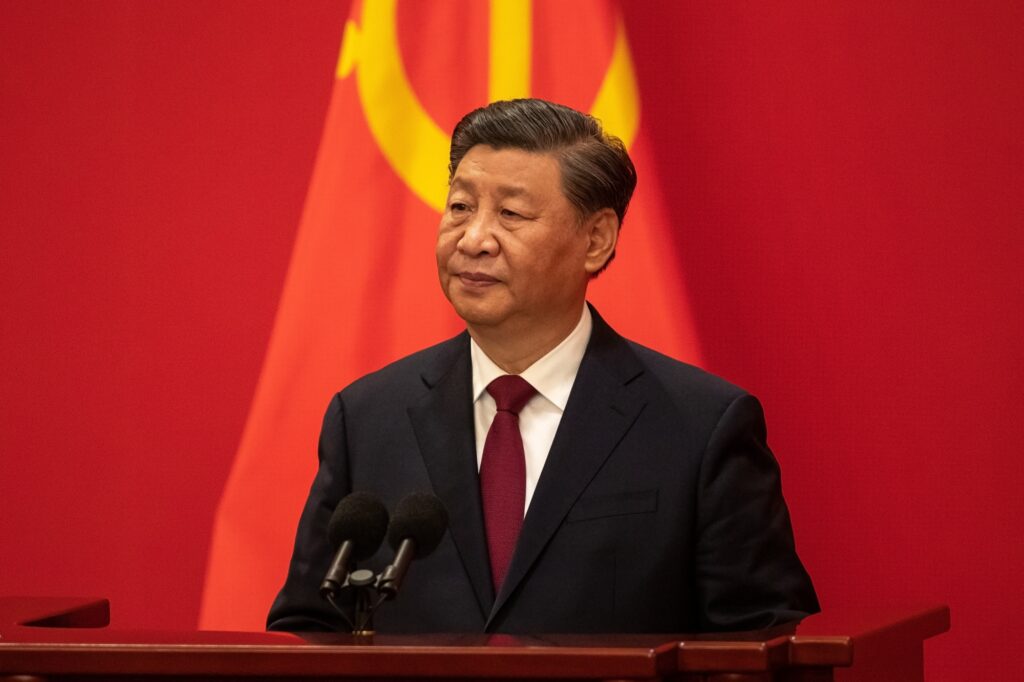
Xinhua News Agency, the state broadcaster of China, recently released a transcript of President Xi Jinping’s address at the 2023 Shanghai Cooperation Organisation (SCO) Summit.
The SCO, established by China and Russia in 2001, is a significant regional organization focused on political, economic, and security cooperation.
During his speech, President Xi expressed his appreciation for Iran becoming a full member of the organization and praised the inclusion of Belarus.
READ MORE: Crypto Firms Struggle to Attract Local Talent in Hong Kong Despite Regulatory Changes
He also emphasized the importance of central bank digital currencies (CBDCs) and proposed expanding the use of local currency settlements among SCO countries, fostering cooperation in sovereign digital currencies, and establishing SCO development banks.
The People’s Bank of China reported in January that there were 13.61 billion digital yuan CBDCs in circulation, accounting for approximately 0.13% of the monetary supply.
Since then, the use of the digital yuan has expanded to include China’s Belt and Road Initiative, consumer airdrops, and everyday transportation payments.
However, experts caution that despite promotional efforts, the currency has struggled to gain widespread adoption.
In another development, it was reported on July 10 that Chinese consumers would soon have access to a SIM card linked to the digital yuan CBDC.
With the digital wallet embedded in the SIM card, individuals can make payments for their phone bills using point-of-sale machines, even when their phones have no power.
Moving to Hong Kong, the cost of obtaining a crypto exchange license has skyrocketed to HK$100 million ($12.77 million), according to a report by Tencent News on July 5.
While some teams have relocated to Malaysia due to lower costs and favorable conditions for crypto projects in Southeast Asia, several exchanges, including Huobi, OKX, BitgetX, Hashkey Pro, and Gate.io, have applied for licensing in Hong Kong to comply with the requirement that all crypto exchanges obtain a regulatory license or cease operations by mid-2024.
Meanwhile, a concerning incident occurred on July 7 when the developers of Multichain, a Chinese cross-chain bridge protocol, announced a halt in their services.
This was followed by a security firm’s warning that over $126 million had been drained from Multichain. Circle and Tether froze significant amounts of USDC and USDT, respectively, in response.
The hack affected Multichain’s token price, which dropped by 20% and now trades at $2.62 per token. It is worth noting that Multichain had experienced a previous hack in July 2021.
The Monetary Authority of Singapore (MAS) announced new regulations requiring Digital Payment Token (DPT) providers to place clients’ assets in a statutory trust by the end of the year.
Retail investors will be prohibited from accessing crypto lending and staking services, while institutional and accredited investors will still have access to these services.
The MAS highlighted the importance of enhancing investor protection and market integrity in DPT services and is seeking public feedback on the proposed rule changes.
In Thailand, Bitkub, the country’s largest cryptocurrency exchange, raised $17.1 million by selling 9.22% of its equity to Asphere Innovations PLC.
Bitkub reported holding substantial assets and customer deposits, as well as liabilities. The exchange’s total assets experienced a significant decline from 2021 to 2022.
Finally, Line Next, a South Korean non-fungible tokens firm, signed a memorandum of understanding with Sega, a renowned Japanese video game company, to remake one of Sega’s classic games on its Web3 gaming platform, Game Dosi.
Sega, known for franchises such as Sonic the Hedgehog, is venturing into the blockchain gaming space through this partnership with Line Next, which already has several titles on its platform.
These recent developments reflect the ongoing advancements and challenges in the digital currency, crypto regulation, and blockchain gaming sectors in the Asian region.
A blockchain developer claims to have reverse-engineered the source code of Brazil’s pilot central bank digital currency (CBDC) and discovered certain functions that could allow a central authority to freeze funds or reduce balances.
However, the developer argues that there might be situations in which these functions could be beneficial.
On July 6, the source code of Brazil’s digital real pilot project was made available on the GitHub portal by the country’s central bank.
READ MORE: Presidential Candidate Robert F. Kennedy Jr. Admits Owning Up to $250,000 in Bitcoin
It was clarified that the pilot project was solely intended for testing purposes and that the presented architecture could undergo further changes.
Pedro Magalhães, a blockchain developer and the founder of tech consulting firm Iora Labs, claimed to have successfully reverse-engineered the open-source code of Brazil’s digital real.
He revealed several functions in the code, including freezing and unfreezing accounts, adjusting balances, transferring currency between addresses, and minting or burning digital real from a specific address.
Magalhães suggested that Brazil’s central bank would likely retain these functions for secured loans and other financial operations based on decentralized finance (DeFi) protocols.
However, he pointed out that the code lacks clarity regarding the circumstances under which tokens can be frozen and who holds the authority to execute such actions.
These aspects should be publicly disclosed in the smart contracts and discussed with the population, which has not been done yet, according to Magalhães.
The cryptocurrency community has expressed concerns that a CBDC could infringe upon financial freedom and privacy.
However, Magalhães noted that while these concerns are understandable, a CBDC could also offer certain benefits.
For example, it would make taxes more traceable, allowing the public to inspect the allocation of tax funds and purchases made by the state on-chain. This could enhance transparency in parliamentary amendments as well.
In July 2022, Fabio Araujo, an economist at the Brazilian central bank, stated that the digital real has the potential to prevent bank runs and provide a safer and more reliable environment for entrepreneurial innovation.
The digital real pilot is reportedly running on Hyperledger Besu, a privately operated Ethereum Virtual Machine (EVM)-compatible blockchain.
Since it is not permissionless like the Bitcoin or Ethereum mainnets, users would require the central bank’s approval to become a node, as explained by Magalhães on July 7.

The digital asset industry experienced significant growth, reaching a peak of over $3 trillion in November 2021. However, the custodial sector of the market remained more modest, totaling $447.9 billion in 2022.
These figures are derived from a joint report on digital asset custody by consulting firm PricewaterhouseCoopers (PwC) and wealth tech platform Aspen Digital. The 39-page report was published on July 11.
The report identifies 120 custody service providers as of April 2023, categorized into two main groups: third-party service providers and self-custody solutions.
It highlights key institutional developments such as increased interest in crypto staking, driven by the Ethereum Merge, as well as the emergence of nonfungible tokens (NFTs) and the metaverse, attracting institutional investors.
READ MORE: Crypto Firms Struggle to Attract Local Talent in Hong Kong Despite Regulatory Changes
Security is cited as the primary challenge faced by the custody industry, as demonstrated by FTX’s failure in 2022, attributed to inadequate governance, risk management, and internal controls.
Consequently, institutions are increasingly seeking to safeguard their assets through reputable digital asset custodians or self-custody solutions rather than solely relying on exchange platforms for holding their assets.
Insurance policies present another challenge for custodians.
Self-custody solutions lack insurance coverage, leaving users uncompensated for any loss of digital assets resulting from negligence.
The report emphasizes that sound insurance policies are a critical factor when selecting digital asset custodians, as recognized by sources within family offices.
To assist investors, the report suggests a five-step approach to selecting a custody service provider.
These steps include mapping the market, creating a grading system, conducting performance reviews, and other necessary preliminary procedures.
In recent developments, Canada’s financial authority released guidance to aid fund managers in complying with legal requirements for investment funds holding crypto assets.
Additionally, it expressed confidence in the regulated futures market for cryptocurrencies, which it believes promotes greater price discovery.
The joint report by PwC and Aspen Digital sheds light on the state of digital asset custody, highlighting the challenges faced by the industry and offering recommendations for investors.
As the digital asset market continues to evolve, addressing security concerns and ensuring robust insurance policies will be crucial for the custodial sector to thrive.

The Virtual Assets Regulatory Authority (VARA), the cryptocurrency regulator in Dubai, has taken action against BitOasis, a crypto exchange, by suspending its license.
The suspension was a result of BitOasis failing to meet the required conditions within the specified timeframes set by the authority.
BitOasis was granted a conditional license on April 12, allowing it to operate under certain conditions within 30-60 days.
READ MORE: Canadian Judge Makes Controversial Ruling About Thumbs-Up Emoji
However, VARA revealed that the exchange did not fulfill these key conditions, although the specific details were not disclosed.
Consequently, BitOasis’ “License for Institutional and Qualified Retail Investors” has been deemed non-operational until the conditions are met.
Earlier, in May, BitOasis received one of Dubai’s “minimum viable product operational licenses” from VARA, enabling the exchange to provide broker-dealer services to qualified institutional and retail investors.
This license represents a crucial step in the process before obtaining a full market product (FMP) license. Presently, no firm has been granted an FMP license by VARA.
In order to apply for the FMP license, BitOasis must satisfy the conditions outlined in its current license, as clarified by VARA.
This recent action by VARA follows its previous reprimand in April, when it addressed the co-founders of Three Arrows Capital, Su Zhu and Kyle Davies, for operating and promoting their new OPNX crypto exchange in Dubai without the necessary license.
BitOasis, in a blog post on July 11, acknowledged the regulatory concerns regarding its Operational MVP License and assured that it is actively working with VARA to fulfill the remaining conditions.
The exchange also emphasized that the issue with its Operational MVP license does not affect other services provided to existing retail users, such as broker-dealer services.
Cointelegraph reached out to both BitOasis and VARA for comments but did not receive any responses at the time of publication. VARA stated that it will continue to monitor the situation to ensure compliance with regulatory requirements.
The forthcoming Bitcoin halving event is expected to bring a new wave of momentum to Bitcoin-focused stocks, particularly MicroStrategy, the technology firm founded by Michael Saylor.
Berenberg Capital Markets, a New York-based investment firm, has expressed its optimistic outlook on MicroStrategy in a research note shared with Cointelegraph, setting a price target of $430 for the company.
Berenberg analysts believe that the majority of MicroStrategy’s value lies in the 152,333 Bitcoin it currently holds.
They suggest that a Bitcoin halving rally could result in a significant increase in the price of MicroStrategy shares.
READ MORE: Hacker Exploits Code Vulnerability, Drains $455,000 from Arcadia Finance
The Bitcoin halving, scheduled for April 26, 2024, reduces the issuance rate of BTC by 50%, thereby slowing down the rate at which new Bitcoin enters the crypto market.
The research note states that based on historical patterns, Bitcoin’s price tends to rally before and after each halving event.
The analysts predict that the pre-halving rally for the fourth halving could begin around four months from now.
Previous halving cycles have seen Bitcoin’s price surge by at least 682%. For instance, during the first halving on November 28, 2012, Bitcoin was valued at around $12, but 367 days later, it reached a peak of $1,164.
While Bitcoin’s supply follows a predetermined path, gauging the overall demand for Bitcoin is crucial in predicting the potential magnitude of a future rally.
To assess this, the research note points to the recent surge in spot Bitcoin ETF applications from major asset managers, indicating an increasing institutional adoption of Bitcoin.
Additionally, the note highlights the pro-Bitcoin statements made by BlackRock CEO Larry Fink on July 5, suggesting growing conviction in Bitcoin.
The research report was authored by equity analyst Mark Palmer, along with associates Matthew Laflash and Hassan Saleem.
Currently, MicroStrategy shares are trading at $408, marking a nearly 180% gain since the beginning of 2023. Meanwhile, the price of Bitcoin has risen by 84% since the start of the year.
As a reminder of this significant moment in history and as a show of support for independent journalism in the crypto space, readers are encouraged to collect this article as an NFT (Non-Fungible Token).
Paradigm, a crypto investment firm, has criticized the United States Securities and Exchange Commission (SEC) for its pursuit of crypto exchange Bittrex, arguing that the regulator is unjustly trying to regulate secondary crypto markets.
Rodrigo Seira, special counsel for Paradigm, expressed his views on Twitter, following Paradigm’s amicus brief filing that called for the dismissal of the SEC’s case against Bittrex. Seira stated that the SEC’s claims rely on an unreasonable application of the Howey test.
READ MORE:Crypto Firms Struggle to Attract Local Talent in Hong Kong Despite Regulatory Changes
Paradigm filed the amicus brief on July 7, asserting that the financial regulator exceeded its jurisdiction.
Seira further highlighted that SEC Chair Gary Gensler had previously acknowledged the absence of a sufficient regulatory framework for crypto exchanges.
Seira argued that this acknowledgment indicates a lack of authority for the regulator to oversee these secondary markets.
Seira also emphasized these points in a blog post on July 7, where he pointed out that crypto assets do not involve investment contracts, and therefore, they fall outside the SEC’s purview.
He criticized the SEC for instructing the digital-assets industry to register without providing effective means for doing so.
Seira urged the SEC to engage in the rulemaking process requested by Coinbase, another crypto organization facing legal action from the SEC, in order to provide clarity and resolve the industry’s regulatory uncertainties.
The SEC initially filed a complaint against Bittrex on April 17. Subsequently, Bittrex surrendered its Florida money transmitter license on April 30 and eventually filed for bankruptcy on May 8.
This is not the first time Paradigm has supported a crypto organization facing SEC legal action.
On May 11, Paradigm sought to file an amicus brief in support of Coinbase, arguing that the SEC had failed to provide clear rules or guidance for digital asset firms operating in the United States.
Paradigm’s criticism of the SEC’s approach reflects a growing concern within the crypto industry about regulatory ambiguity and the need for a comprehensive regulatory framework that considers the unique characteristics of digital assets.
The outcome of the Bittrex case and the SEC’s response to industry demands for clarity will significantly impact the future of crypto exchanges and secondary markets in the United States.