



According to Michael Shaulov, CEO and co-founder of Fireblocks, an approved BlackRock spot Bitcoin exchange-traded fund (ETF) will bring in new institutional money to Bitcoin, but it will be the retail investors who will ultimately drive significant price surges.
Shaulov made these observations during the Australian Blockchain Week, highlighting that institutional involvement in crypto may not necessarily lead to skyrocketing prices.
Shaulov pointed out that even during the mid-2020 period when there were massive inflows of institutional money, the prices didn’t see significant appreciation until retail investors fervently embraced crypto assets later in the year.
The institutions were acquiring Bitcoin slowly and utilizing algorithms that wouldn’t drive up the market.
On the other hand, retail investors, who participate in a less sophisticated manner, were responsible for dramatic price movements, with 50% increases attributed to them.
However, Shaulov acknowledged that the finite supply of Bitcoin meant that any large-scale accumulation of the cryptocurrency would ultimately impact its price.
He believed it would be easier for institutions currently not participating in the market to add Bitcoin to their allocation due to its unique properties.
Shaulov also discussed the various narratives surrounding Bitcoin among institutional investors.
He mentioned that the narrative surrounding Bitcoin is still unfolding for these institutions. Is it a hedge against inflation? Is it a public reserve currency? Is it a hedge against government financial misdealings? Shaulov personally views Bitcoin as the “ultimate insurance asset.”
He emphasized that Bitcoin possesses properties that make it valuable in times of crisis.
It is disconnected from governments, digitally native, and easily transferable.
Shaulov concluded by stating that the specific value of Bitcoin at any given point, whether it’s $15,000, $20,000, or $60,000, is not as crucial as having enough of it to survive challenging periods.
In his opinion, Bitcoin serves as a reliable asset in times of uncertainty and can provide a safeguard against adverse economic conditions.
Other Stories:
Bspin Review – Here’s Why You Shouldn’t Gamble With This Bitcoin Casino
HSBC Launches Cryptocurrency Services, Offering Bitcoin ETFs to Customers
Japan Grants Tax Exemption on Unrealized Crypto Gains for Token Issuers

Former FTX CEO Sam Bankman-Fried (SBF) has faced a setback in his criminal case as a federal judge has denied motions from his legal team to dismiss most of the charges against him.
In a filing on June 27, Judge Lewis Kaplan of the United States District Court for the Southern District of New York issued a memorandum opinion rejecting the motions that sought to halt the discovery and disclosure of certain information pertaining to SBF’s case.
Bankman-Fried’s legal team had filed motions on May 8 with the aim of dismissing 10 out of the 13 criminal counts he was facing, leaving only three charges intact.
These remaining charges included conspiracy to commit commodities fraud, conspiracy to commit securities fraud, and conspiracy to commit money laundering.
The judge carefully considered the arguments made in the motions and ultimately denied them, citing precedent from the U.S. Court of Appeals for the Second Circuit.
Judge Kaplan emphasized that the dismissal of charges is an extraordinary remedy that should be reserved for limited circumstances involving fundamental rights.
He referred to the Second Circuit’s stance that dismissal is an extreme sanction only appropriate in rare and extreme cases, particularly those involving serious criminal conduct.
Bankman-Fried will now face all eight charges originally brought against him in December 2022, along with four additional charges added in February 2023 through a superseding indictment, and one charge in March 2023 related to the alleged bribery of a Chinese government official.
However, the last five counts will be addressed separately in a trial scheduled to commence in March 2024, as they were added after SBF’s extradition from the Bahamas.
His first trial is set to begin in October.
Throughout the proceedings, Bankman-Fried has maintained his plea of not guilty to all charges.
In December 2022, Caroline Ellison, the former CEO of Alameda Research, and Gary Wang, co-founder of FTX, pleaded guilty to related federal fraud charges.
In addition to the criminal trials, both the U.S. Securities and Exchange Commission and the Commodity Futures Trading Commission are expected to initiate civil lawsuits against SBF once the criminal proceedings are concluded.
Meanwhile, FTX’s bankruptcy case continues in the District of Delaware.
Other Stories:
Bspin Review – Here’s Why You Shouldn’t Gamble With This Bitcoin Casino
HSBC Launches Cryptocurrency Services, Offering Bitcoin ETFs to Customers
Japan Grants Tax Exemption on Unrealized Crypto Gains for Token Issuers
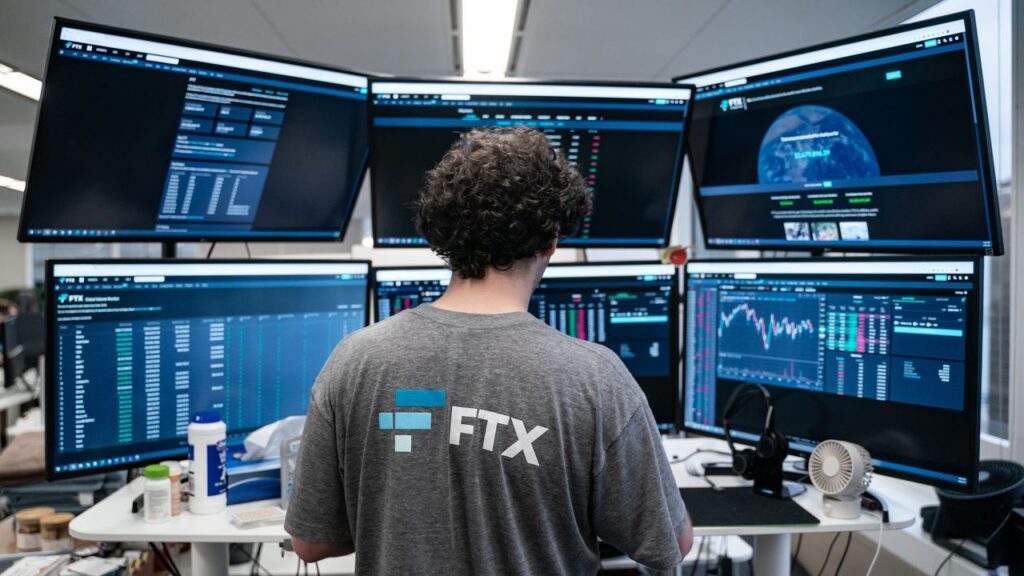
Cryptocurrency exchange FTX has taken legal action against its former regulatory and compliance executive, Daniel Friedberg, accusing him of making illicit payments to prevent employees from exposing the exchange’s problems.
FTX filed the lawsuit on June 27, highlighting Friedberg’s various roles within the organization, including chief regulatory officer, chief compliance officer of FTX US, and general counsel at Alameda Research.
According to FTX, Friedberg acted as a “fixer” for Sam Bankman-Fried, co-founder of the exchange, at the urging of Bankman-Fried’s father.
Allegedly, Friedberg made “hush money” payments to two potential whistleblowers in an attempt to silence them about regulatory issues and the alleged close relationship between FTX and Alameda.
The lawsuit claims that Friedberg even hired the attorney of one of the whistleblowers after making a payment to ensure their silence.
FTX’s 40-page complaint outlines 11 civil charges against Friedberg, including breaching his legal duties, authorizing fraudulent transfers, and approving questionable loans to former FTX executives.
During his 22-month tenure at FTX, Friedberg reportedly received a $300,000 salary, a signing bonus of $1.4 million, a separate $3 million cash bonus, an 8% equity stake in FTX US, and cryptocurrencies valued at tens of millions of dollars. FTX aims to recover these assets through the lawsuit.
Certain details, such as the specific amounts paid to the whistleblowers, are redacted in the complaint.
However, it does reveal an incident in March 2022 where Friedberg reached an “extraordinary settlement” with a female FTX US employee known as “Whistleblower-1,” who had worked at the exchange for less than two months.
The settlement reportedly included a $12 million deal to retain Whistleblower-1’s attorney.
Whistleblower-1 claimed that Alameda was merely an extension of FTX, used to boost investor confidence and manipulate project prices.
They also alleged that sensitive company information was freely shared on Slack, allowing employees to make trades based on non-public announcements.
The lawsuit further alleges that Friedberg terminated another attorney, referred to as “Whistleblower-2,” at Alameda after they raised concerns about governance and regulatory issues within the business.
Although their severance package is redacted in the filing, FTX claims they had been with Alameda for less than three months.
Previous reports by FTX’s restructuring chief implicated an unnamed senior attorney in facilitating and concealing the mingling of customer funds.
The Wall Street Journal later identified Daniel Friedberg as the anonymous attorney, citing insider sources.
Friedberg was also mentioned as someone who provided information to investigators from the U.S. Attorney’s office.
In addition to the lawsuit against Friedberg, FTX is facing a class action lawsuit involving celebrities accused of promoting the exchange.
Interestingly, Friedberg allegedly provided evidence that challenges certain defenses put forth by the defendants in that case.
Friedberg could not be reached for immediate comment regarding these allegations.
Other Stories:
HSBC Launches Cryptocurrency Services, Offering Bitcoin ETFs to Customers
Federal Judge Denies Binance’s Motion in SEC Lawsuit
Bspin Review – Here’s Why You Shouldn’t Gamble With This Bitcoin Casino

The United States House of Representatives has implemented a set of rules that prohibit the use of artificial intelligence (AI) large language models by its members, with the exception of OpenAI’s ChatGPT Plus service.
The decision was made to enhance security within the House offices, as stated in a notice issued by Catherine Szpindor, the chief administrative officer of the House.
The notice specifically authorized the use of the ChatGPT Plus version, highlighting its incorporation of crucial privacy features necessary for safeguarding House data.
No other versions of ChatGPT or similar large language models are currently permitted for use in the House. Furthermore, the usage of ChatGPT by House members is limited solely to research and evaluation purposes, and it is not to be integrated into their regular workflow.
The provisions outlined in the document also impose restrictions on sharing sensitive data as prompts, and require the utilization of ChatGPT Plus with all privacy settings enabled.
Although the memo refers to privacy features, the exact nature of these features is not explicitly mentioned by OpenAI, the developer of ChatGPT.
OpenAI has not specified any privacy-related advantages exclusive to the Plus service.
According to OpenAI, the ChatGPT Plus service grants users general access to the model during peak times, quicker query responses, and priority access to new features.
However, there is no mention of additional privacy features provided by ChatGPT Plus.
In April, OpenAI introduced the option for users of both ChatGPT and ChatGPT Plus to delete their chat history and accounts.
It should be noted, though, that information removed through this process remains on the ChatGPT servers for an additional 30 days.
OpenAI has announced plans to launch a business subscription service for ChatGPT, aiming to include additional data control features.
However, specific details regarding how this service will differ from ChatGPT Plus have not been disclosed.
The newly adopted House rules are applicable solely to House members. However, Representatives Ted Lieu, Ken Buck, and Anna Eshoo have jointly introduced a bipartisan bill that proposes the establishment of a federal artificial intelligence commission.
This commission would be responsible for regulating the AI industry as a whole within the United States, indicating a growing focus on oversight and governance in the field of AI.
Other Stories:
Bitcoin ETF Fever Returns: ProShares’ BITO Sees Largest Inflow in a Year
FATF Urges Global Adoption of Crypto ‘Travel Rule’ Amid Rising Financial Crime Risks

The Swiss National Bank (SNB) has revealed its plans to launch a pilot project for a wholesale central bank digital currency (wCBDC), as reported recently.
According to the SNB’s chair, Thomas Jordan, the project will commence in the near future. The wCBDC will be issued on the Swiss SIX digital exchange and will run for a limited duration.
Notably, the SIX Group operates Switzerland’s largest stock exchange.
Jordan emphasized during the Point Zero Forum in Zurich on June 26 that this initiative is not merely an experiment but an opportunity to test real transactions with market participants, as the wCBDC will hold the same value as bank reserves.
Last year, SNB governing board member Thomas Moser stated that CBDCs could integrate well with decentralized finance.
As part of Project Helvetia, the SNB previously incorporated a wCBDC into the back-office systems of five banks after successfully completing a proof of concept.
This current stance differs from the opinion expressed by SNB chief economist Carlos Lenz a year earlier, who had deemed blockchain unsuitable for CBDC and stated that Switzerland had no intention of issuing one.
Regarding retail CBDC, Thomas mentioned that caution is exercised at present, but he did not rule out the possibility of its introduction in the future.
Another SNB governing board member, Andréa Maechler, spoke at a separate event during this year’s Point Zero Forum and mentioned that the central bank does not anticipate the replacement of cash within the country.
Maechler had stated last year that SNB officials believed the risks associated with a retail CBDC outweighed the potential benefits.
In summary, the SNB’s announcement of the wCBDC pilot project on the Swiss SIX digital exchange marks a significant step towards exploring the potential of central bank digital currencies.
While the SNB remains cautious about retail CBDCs, this move showcases their commitment to innovation and testing real-world transactions with market participants.
Other Stories:
FATF Urges Global Adoption of Crypto ‘Travel Rule’ Amid Rising Financial Crime Risks
Bitcoin ETF Fever Returns: ProShares’ BITO Sees Largest Inflow in a Year

Artificial intelligence (AI) has been widely discussed in relation to its potential integration with the cryptocurrency industry, particularly regarding how it can help combat scams.
However, experts are overlooking the fact that AI itself could have the opposite effect. Meta, for instance, recently warned that hackers were exploiting OpenAI’s ChatGPT to gain unauthorized access to users’ Facebook accounts.
In just March and April alone, Meta reported blocking over 1,000 malicious links disguised as ChatGPT extensions.
The platform even labeled ChatGPT as “the new crypto” in the eyes of scammers. Furthermore, a search for keywords like “ChatGPT” or “OpenAI” on DEXTools, an interactive crypto trading platform, reveals more than 700 token trading pairs mentioning these terms.
This indicates that scammers are leveraging the hype around AI tools to create tokens, despite OpenAI not officially entering the blockchain world.
Social media platforms have become popular avenues for promoting fraudulent cryptocurrencies online. Scammers exploit the extensive reach and influence of these platforms to quickly amass a significant following.
By utilizing AI-powered tools, they can further amplify their reach and create an apparently loyal fanbase consisting of thousands of people.
These fake accounts and interactions create an illusion of credibility and popularity for their scam projects.
Much of the cryptocurrency industry relies on social proof-of-work, assuming that popular projects with large followings are legitimate and trustworthy.
Investors and newcomers tend to trust projects with substantial and loyal online followings, assuming that others have done thorough research before investing.
However, AI poses a challenge to this assumption and undermines social proof-of-work.
Merely having thousands of likes and genuine-looking comments does not guarantee the legitimacy of a project. AI opens up various attack vectors, including “pig butchering” scams where AI instances spend days befriending vulnerable individuals, only to scam them later.
The advancement of AI technology has empowered scammers to automate and scale fraudulent activities, potentially targeting vulnerable individuals in the crypto space.
Scammers may deploy AI-driven chatbots or virtual assistants to engage with individuals, offer investment advice, promote fake tokens and initial coin offerings, or present high-yield investment opportunities.
These AI scams are particularly dangerous because they can flawlessly mimic human-like conversations. Furthermore, by leveraging social media platforms and AI-generated content, scammers orchestrate elaborate pump-and-dump schemes, artificially inflating token values before selling off their holdings for significant profits, leaving many investors at a loss.
Investors have long been cautioned about deepfake crypto scams, which utilize AI to create realistic online content by swapping faces in videos and photos or altering audio to make it seem as if influencers or well-known personalities are endorsing scam projects.
One notable deepfake that impacted the crypto industry was a video of former FTX CEO Sam Bankman-Fried directing users to a malicious website promising to double their crypto.
Earlier this year, in March 2023, an AI project called Harvest Keeper scammed users out of approximately $1 million. Around the same time, projects emerged on Twitter claiming to be “CryptoGPT.”
However, on a positive note, AI also has the potential to automate mundane aspects of crypto development, serving as a valuable tool for blockchain experts.
AI technology simplifies essential project requirements such as setting up Solidity environments or generating base code.
This will significantly lower the entry barrier, shifting the focus of the crypto industry from development skills to the genuine utility of ideas.
In some cases, AI can democratize processes traditionally accessible only to a select group, such as well-trained senior developers.
With advanced development tools and launchpads available to everyone in the crypto space, possibilities become limitless.
However, as AI makes it easier for scammers to operate, users must exercise caution and due diligence before investing in a project. It is essential to watch out.
Other Stories:
Bitcoin ETF Fever Returns: ProShares’ BITO Sees Largest Inflow in a Year

Flasko (FLSK) is a relatively new player in the cryptocurrency market, making its debut with a fresh perspective and innovative approach that is set to reshape the current landscape. With its unique design and strategy, Flasko aims to leverage blockchain technology to address the persistent challenges in the digital world while providing a secure, decentralized platform for transactions.
A critical element of Flasko’s appeal is its underpinning technology: blockchain. As a cryptocurrency, Flasko relies on a decentralized system that ensures the transparency, immutability, and security of every transaction. This decentralized design eliminates the need for intermediaries, reducing costs, and making transactions faster and more efficient.
Flasko’s Native Token
FLSK, Flasko’s native token, is the lifeblood of the ecosystem. It is used for various purposes within the Flasko network such as transaction fees, staking, and participating in governance votes. FLSK tokens are designed to incentivize user participation, and also reward network validators for securing the system and adding new blocks to the Flasko blockchain.
Flasko’s team has adopted a Proof-of-Stake (PoS) consensus algorithm, which distinguishes it from many other cryptocurrencies that still use the more resource-intensive Proof-of-Work (PoW) model. In PoS, validators are chosen to create a new block based on their stake or the number of tokens they hold and are willing to ‘bet’ on creating a valid block. This approach encourages more people to participate in the network, making it more decentralized, secure, and sustainable in the long run.
Flasko also features smart contract capabilities, enabling developers to build decentralized applications (dApps) on its platform. The potential applications of Flasko’s blockchain are broad-ranging, from DeFi (decentralized finance) applications to supply chain management systems, all powered by Flasko’s secure and scalable technology.
Roadmap
One significant aspect of Flasko’s roadmap is its focus on cross-chain interoperability. Flasko aims to bridge different blockchains, allowing them to communicate with each other and transfer value seamlessly. This feature will break down the silos in the current blockchain ecosystem, creating a more interconnected and efficient network.
Flasko’s community governance model is another unique aspect that sets it apart. Flasko token holders can propose and vote on various changes to the network, such as system upgrades or policy changes. This democratic governance model ensures that the community actively shapes Flasko’s future direction.
Flasko’s utility extends beyond just being a cryptocurrency; it is an entire ecosystem built with a vision of providing a robust, user-friendly, and democratic platform for digital transactions. By leveraging blockchain technology and incorporating unique features such as PoS consensus, smart contract capability, and cross-chain interoperability, Flasko is poised to be a significant player in the crypto market.
However, like any cryptocurrency, investing in Flasko comes with its set of risks. The volatility of the crypto market, regulatory uncertainties, and technological risks are factors that potential investors need to consider. Therefore, thorough research and due diligence are essential before diving into any investment.
Overall, Flasko is a promising addition to the ever-growing world of cryptocurrencies. Its unique features and innovative approach position it as a potential game-changer in the blockchain space. While it’s still early in its journey, Flasko presents a compelling vision of a more inclusive, efficient, and democratic digital transaction landscape.
Other Stories:
Bspin Review – Here’s Why You Shouldn’t Gamble With This Bitcoin Casino
Bitcoin Holds Steady Around $30,500, Fueling Hopes for Institutional Demand
Hong Kong, China, June 28th, 2023, Chainwire
DWF Labs, the global digital asset market maker, and multi-stage Web3 investment firm, has further strengthened its commitment to support the growth of Conflux, the tree-graph consensus algorithm Layer-1 blockchain. Conflux has been gaining significant traction since February 2023 on the back of some key partnerships, including the signature collaboration with China Telecom announced on February 15th, with the goal of developing a blockchain SIM (BSIM) card that was first unveiled in May.
DWF Labs recently purchased $18M in CFX token, cementing the long-term relationship between the investment firm and Conflux. This follows DFW Labs buying $10M worth of CFX tokens in March 2023.
More recently, Conflux joined Hong Kong’s Web3 Institute, participated in the Singapore Digital Economy Roundtable organized by the Singaporean Government, and led the drafting of IEEE P3217, an international blockchain standard by the Institute of Electrical and Electronics Engineers. In addition, Conflux announced key partnerships including:
- Supremacy – Web3 security platform
- dappOS – an operating protocol that manages crypto infrastructures for users
- NuLink – a privacy-preserving technology that provides APIs for decentralized applications
- Smooth Labs – developing the Layer 2 solution that supports parallel execution
- Opside – a decentralized ZK-RaaS network featuring PoW of ZKP mining
DWF Labs has made significant contributions to placing Conflux on the global stage. Since then, Conflux has established ecosystem partnerships with Floki, Worldcoin, Blockbank, Luganodes, AirDAO, Mask, and OpenEden, with a growing list of ongoing partnerships being discussed. Conflux and DWF Labs have also co-hosted multiple events, including those organized in Hong Kong, Tokyo, and Paris.
Fan Long, Conflux Network’s Co-Founder, stated: “Conflux Network has experienced exponential growth since the start of 2023, pioneering advances in the Chinese NFT market and establishing fresh Web3 access through the BSIM card project with China Telecom. DWF Lab is one of the key supporters of Conflux. This infusion of capital not only strengthens our bond, but also acts as a catalyst for our shared ambition to expand the Conflux ecosystem. Conflux plans to leverage the raised funds to further fuel its ecosystem growth in Asia and Hong Kong, empower burgeoning developer communities, and bring an increasing number of real-world assets onto the Conflux chain.”
The Managing Partner of DWF Labs, Andrei Grachev stated: “We take great pride in our role as supporters of Conflux throughout its remarkable growth trajectory. It exemplifies our commitment to backing projects with immense potential and providing the necessary support to fill in the missing pieces of the Web3 puzzle. Our deep understanding of the crypto market has served as a compass for Conflux, allowing it to fully express its potential on the global stage. We are delighted to have played a part in Conflux’s journey towards success.”
About Conflux
Conflux is a permissionless Layer 1 blockchain connecting decentralized economies across borders and protocols.
Recently migrated to hybrid PoW/PoS consensus, Conflux provides a fast, secure, and scalable blockchain environment with zero congestion, low fees, and improved network security.
As the only regulatory-compliant public blockchain in China, Conflux provides a unique advantage for projects building and expanding into Asia. Conflux has collaborated with global brands and government entities in the region on blockchain and metaverse initiatives, including the city of Shanghai, McDonald’s China, and Oreo.
About DWF Labs
DWF Labs is the global digital asset market maker and multi-stage Web3 investment firm, supporting portfolio companies from token listing to market making to OTC trading solutions.
With offices in Singapore, Switzerland, the UAE, Hong Kong, South Korea and BVI, the investment company DWF Labs is an affiliate of Digital Wave Finance (DWF), which consistently ranks among the top 5 trading entities by volume in the cryptocurrency world through its proprietary technology for high-frequency trading.
Contact
Melissa Tirey
[email protected]

Dubai, UAE, June 27th, 2023, Chainwire
OKX, the second-largest crypto exchange by trading volume and a leading Web3 technology company, today launched its new ‘Nitro Spreads’ feature on its institutional Liquid Marketplace, an OTC, futures spreads and options liquidity network, allowing traders to make complex basis trades with simple one-click execution.
Basis trading is a strategy built around trading the difference between an asset’s price on two separate markets, such as spot vs. futures, and can generate returns when executed properly. It typically requires both legs of the trade to be managed simultaneously, which can be cumbersome. OKX’s Nitro Spreads automates this complex trade into one click, leveraging the platform’s superior liquidity and low latency for maximum user benefit.
Nitro Spreads is also one of the only basis trading tools in the crypto market in which the two legs of the trade are executed via a central orderbook, eliminating leg risk between markets. Before execution, traders can also select a guaranteed spread for a trade, mitigating unexpected price slippage. Trades are then matched and settled immediately.
OKX Global Chief Commercial Officer Lennix Lai said: “In the current complex market environment, institutions demand reliability, predictable returns and genuine innovation when choosing a trading venue. This is especially true in basis trading, where precision is paramount. Nitro Spreads raises the bar for the industry for efficient basis trading, and we invite institutional traders everywhere to see how it can enhance their strategies and contribute to their success.”
A variety of basis trading strategies can be executed by institutional traders through Nitro Spreads’ easy-to-use interface. Institutional traders can employ popular delta one spread strategies like calendar spreads, future rolls and funding rate farming – all in an orderbook format.
The on-demand OKX Liquid Marketplace provides access to deep institutional liquidity and a number of crypto trading strategies, including futures spreads, large options block trades or spot OTC, to run at scale. In April, OKX announced that the Liquid Marketplace exceeded USD1 billion in trading volume during the first three months of 2023.
About OKX
OKX is the second-largest global crypto exchange by trading volume and a leading Web3 ecosystem. Trusted by more than 50 million global users, OKX is known for being the fastest and most reliable crypto trading app for traders everywhere.
As a top partner of English Premier League champions Manchester City FC, McLaren Formula 1, Olympian Scotty James and F1 driver Daniel Ricciardo, OKX aims to supercharge the fan experience with new engagement opportunities. OKX is also the top partner of the Tribeca Festival as part of an initiative to bring more creators into web3.
Beyond OKX’s exchange, the OKX Wallet is the platform’s latest offering for people looking to explore the world of NFTs and the metaverse while trading GameFi and DeFi tokens.
OKX is committed to transparency and security and publishes its Proof of Reserves on a monthly basis.
To learn more about OKX, download our app or visit: okx.com
Contact
Press
[email protected]
Bspin Casino is an online gaming platform that caters to users worldwide. Known for its expansive games roster and security features, it is emerging as one of the premier destinations for online gambling enthusiasts.
Bspin Casino boasts an impressive range of gaming options that include table games, slots, and live casino games, delivered by some of the industry’s best software developers.
Bitcoin-Only Casino
One unique aspect that separates Bspin from its competitors is its commitment to Bitcoin. The casino operates on a Bitcoin-only basis, which not only makes it distinct but also makes it an appealing option for players who prioritize privacy and security. The blockchain-based transactions facilitated by Bitcoin ensure that player activities remain anonymous, thus providing a high level of confidentiality. Additionally, Bitcoin transactions are instant, eliminating the waiting times typically associated with conventional casino payment methods.
Bspin Casino takes pride in its extensive game library that offers a variety of games to cater to the tastes of all players. The games are provided by renowned developers in the industry, including Pragmatic Play, GameArt, Habanero, and Evolution Gaming. Slots are by far the most populated category, featuring a diversity of themes, graphics, and gameplay mechanics.
You’ll find classic 3-reel slots for those who like simplicity and nostalgia, and the latest 5-reel video slots for those who prefer cutting-edge graphics and immersive gameplay. Progressive jackpot slots are also available for players chasing life-changing prizes.
Table game enthusiasts are also well catered for, with a wide array of classics such as Blackjack, Baccarat, Roulette, and Poker available in multiple variants. These games are powered by sophisticated RNG software, ensuring fair and unpredictable outcomes. The live dealer section adds an extra layer of immersion, allowing players to engage with professional croupiers and experience the thrill of a land-based casino from the comfort of their home.
Mobile App
Perhaps one of the most commendable aspects of Bspin Casino is its mobile-friendly design. In this day and age, the convenience of being able to play on the go is a significant factor for many online gamblers.
Bspin Casino provides a seamless mobile experience, making all games accessible via mobile devices without compromising on functionality or graphics quality. The site is intuitively designed, ensuring that players can navigate easily and find their favorite games within seconds.
Security is a top priority at Bspin Casino. The platform uses advanced SSL encryption to protect player data, ensuring that personal and financial information remains secure. The casino also adheres to strict privacy policies, reinforcing its commitment to player confidentiality. The use of Bitcoin further enhances security, as it ensures that transactions are both encrypted and untraceable.
Bspin Casino also excels in customer service, with a dedicated support team available 24/7 to assist players with any queries or issues. The support team can be contacted through various channels, including live chat and email, ensuring that players are never left in the dark. The casino also has a comprehensive FAQ section where players can find answers to common questions.
When it comes to bonuses and promotions, Bspin doesn’t disappoint. New players are welcomed with a generous bonus package, while regular players are rewarded with various ongoing promotions. The casino also features a loyalty program, where players can earn points for every bet they place and redeem these points for bonuses or cash rewards.
Bspin Casino is an impressive online gambling platform that delivers on multiple fronts. Its Bitcoin-only operation might be a sticking point for some, but for those who value privacy and security, it’s a distinct advantage. With an expansive game library, user-friendly design, robust security measures, and excellent customer service, Bspin Casino is a top choice for both new and experienced players. Whether you’re a fan of slots, table games, or live dealer games, Bspin Casino has something to offer for everyone.
Should You Gamble With Bspin Casino?
Several users have reported issues withdrawing their winnings or part of their initial deposits with Bspin Casino, indicating that this crypto casino is a scam. Furthermore, Bspin has been accused of running rigged games, with exceptionally low win rates and payouts.
Therefore, it is not advisable to gamble with Bspin Casino.
Other Stories:
Federal Judge Denies Binance’s Motion in SEC Lawsuit
Bitcoin Holds Steady Around $30,500, Fueling Hopes for Institutional Demand
HSBC Launches Cryptocurrency Services, Offering Bitcoin ETFs to Customers