
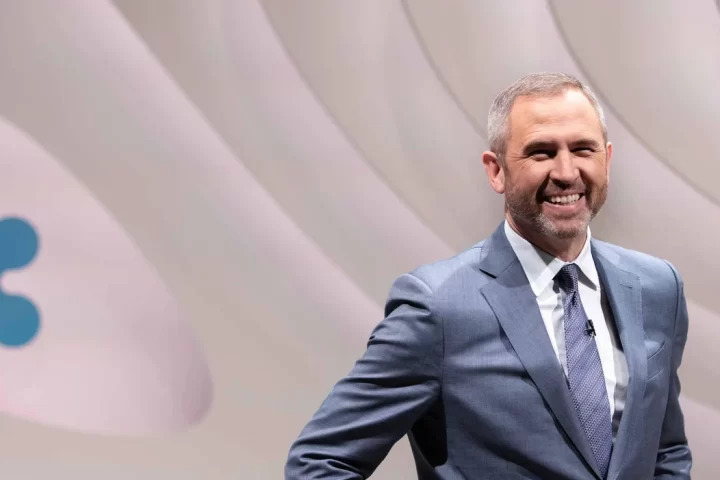


$PEPE, the meme-inspired cryptocurrency, has witnessed a remarkable surge of nearly 70% in the past week, fueled by the active participation of cryptocurrency whales.
This surge in price has positioned $PEPE ahead of rival meme tokens like Dogecoin ($DOGE) and Shiba Inu ($SHIB) amidst a broader recovery in the cryptocurrency market.
On-chain analytics firm Santiment reported a 61% surge in $PEPE within 48 hours, coinciding with a significant increase in whale transactions of $100,000 or more.
This surge in volume marked the highest observed on the $PEPE network in the last six weeks, indicating strong engagement from influential investors.
While the overall cryptocurrency market was experiencing a rally, thanks to major financial institutions submitting spot Bitcoin exchange-traded fund (ETF) applications, $PEPE’s growth surpassed that of other meme tokens.
Prominent players like BlackRock, Invesco, WisdomTree, and Germany’s Deutsche Bank have also contributed to renewed investor optimism by applying for digital asset custody licenses.
The surge in price has propelled $PEPE’s market capitalization to over $500 million, making it the 64th largest cryptocurrency by market capitalization.
It now sits ahead of Bitcoin SV ($BSV) and trails behind Neo ($NEO), further solidifying its position within the crypto space.
Despite concerns surrounding the contract owner’s ability to modify transaction taxes and blacklist functions, $PEPE has experienced a phenomenal boom since its entry into the market on April 17, 2023.
Being listed on multiple centralized exchanges has provided $PEPE with substantial traction among investors, propelling it to top 100 digital asset status.
One fortunate cryptocurrency investor managed to turn a modest investment of 0.125 ETH in $PEPE into an astonishing $1.14 million in just a few days, showcasing the immense potential for gains in well-timed cryptocurrency investments.
The surge of $PEPE highlights the influence of meme-inspired tokens in the cryptocurrency market. With significant involvement from cryptocurrency whales and its outperformance of rival meme tokens, $PEPE has emerged as a formidable player.
As institutional interest in cryptocurrencies continues to grow, supported by major financial institutions’ pursuit of digital asset-related licenses, the future of $PEPE and other meme tokens appears promising. Investors remain captivated by the potential for substantial gains in this dynamic and rapidly evolving market.
Other Stories:
ECB Executive Slams Cryptocurrencies as Platforms for Gambling, Calls for Regulatory Safeguards
Sequoia Capital Defends FTX Investment Despite Bankruptcy
Etherscan Launches AI-Powered Code Reader, Polygon Proposes zkEVM Upgrade
The blame game continues between Digital Asset and the Australian Securities Exchange (ASX) over the failed blockchain upgrade of ASX’s CHESS system.
Digital Asset, the New York-based firm responsible for the abandoned blockchain clearing system, has pointed fingers at ASX for dropping the plans. ASX representatives, however, have dismissed these claims as misleading.
ASX had been poised to become the world’s first securities exchange to adopt blockchain technology in partnership with Digital Asset over the past seven years.
However, in a surprising turn of events, ASX announced on May 17 its decision to abandon the upgrade and explore more conventional technology options.
Digital Asset’s co-founder, Eric Saraniecki, addressed the issue during a parliamentary joint committee meeting on June 8. He stated two main reasons for the failure of the blockchain upgrade.
First, he alleged that ASX was reluctant to provide crucial test data that would have allowed Digital Asset to better test the functionality of the new system.
This lack of information forced Digital Asset to make assumptions in the absence of necessary data.
Second, Saraniecki claimed that ASX had publicly discussed replacing its old CHESS platform with a “big bang” approach while simultaneously asking Digital Asset to preserve outdated elements of the system.
This conflicting approach reportedly created further discord between the two companies, ultimately leading to the failure of the upgrade.
On the other side, ASX non-executive director David Curran responded to these allegations by stating that the issue arose from a lack of communication from Digital Asset.
Curran emphasized that if Digital Asset had concerns about the project, they should have been raised and resolved through appropriate channels.
ASX managing director and CEO Helen Lofthouse explained that the challenges did not stem from the “flexible requirements” but rather from the preexisting requirements of the system itself and how they related to settlements in Australia.
She revealed that the decision to pause the upgrade in November 2022 was based on the realization that the original solution design could not meet the current market requirements and provide the necessary flexibility.
Contrary to reports stating that ASX has completely abandoned blockchain technology, ASX’s chief information officer, Tim Whiteley, clarified that no firm decision had been made.
He mentioned that ASX is on track to announce a solution design later in the year and is exploring all options for the upgrade.
The ongoing blame game and differing accounts reflect the complex nature of the failed blockchain upgrade between Digital Asset and ASX.
The exact details and outcome of the situation remain uncertain as an ongoing review prevents the release of further information.
Other Stories:
Sequoia Capital Defends FTX Investment Despite Bankruptcy
Etherscan Launches AI-Powered Code Reader, Polygon Proposes zkEVM Upgrade
ECB Executive Slams Cryptocurrencies as Platforms for Gambling, Calls for Regulatory Safeguards

A creditor of the recently bankrupted cryptocurrency exchange FTX has utilized a decentralized finance (DeFi) protocol called Arcade to pledge a claim as collateral for a loan.
This groundbreaking transaction marks the first on-chain loan backed by an FTX claim, as reported by the bankruptcy claims platform Found.
The creditor tokenized their claim, representing its ownership through a nonfungible token (NFT). On June 23, this NFT was utilized as collateral to secure a loan of $7,500, which is expected to be repaid within a five-day period.
In the event of a payment default, the lender retains the right to claim the collateralized amount, which stands at $31,307.
This transaction exemplifies the concept of real-world asset (RWA) tokenization, wherein blockchain technology is employed to represent ownership rights of tangible assets.
DeFi has emerged as a prominent sector for asset tokenization, enabling a wide range of real-world assets such as stocks, government bonds, real estate, and commodities to be tokenized.
Found took to Twitter to disclose that the original creditor and lender underwent biometric Know Your Customer (KYC) and Anti-Money Laundering (AML) screenings.
The company’s website reveals that users can access loans using bankruptcy claims as collateral, subject to a 10% transaction fee upon successful trades.
FTX, the cryptocurrency exchange that filed for bankruptcy in November 2022, has locked billions of dollars in user accounts pending court proceedings.
Industry estimates suggest that FTX claim holders may recover between 35% and 66% of the face value of their claims.
The rise in crypto-related bankruptcy cases, particularly associated with the collapse of FTX, has inundated the courts over the past year.
Genesis Global Trading and BlockFi are among the crypto firms involved in these cases. As a result, there is a growing demand for on-chain claims solutions.
Found, which launched earlier this year, and Open Exchange, a claims trading platform established in April by the co-founders of the collapsed hedge fund Three Arrows Capital, are notable players in this space.
Other Stories:
Bitcoin (BTC) Predicted To Reach New All-Time High In This Month of 2023
ECB Executive Slams Cryptocurrencies as Platforms for Gambling, Calls for Regulatory Safeguards
Etherscan Launches AI-Powered Code Reader, Polygon Proposes zkEVM Upgrade
Coinbase Takes Unconventional Legal Approach Ahead of SEC’s Crypto Crackdown

Credible Crypto, a prominent voice in the cryptocurrency community, predicts Bitcoin’s price may soon surpass its previous high of $69,000, citing patterns in past impulse movements.
The prediction, shared via Twitter, suggests Bitcoin (BTC) could reach this peak within the next four months, potentially by October.
This optimism is based on Bitcoin’s strong performance in recent times, and its successful retest of support on monthly timeframes, implying a potential upcoming “parabolic advance.”
According to Credible Crypto, the trend of parabolic advances is characterized by exponentially increasing momentum that peaks at the top, as previously seen in Bitcoin’s movement from $3,000 to $14,000 and $10,000 to $60,000.
The largest monthly candle seen recently was a $10,000 move that took Bitcoin above the $25,000 level.
Following this trend, the analyst expects a similar magnitude in future monthly moves. The gap between the current price and the prior all-time high, which stands at $40,000, could, therefore, be covered within a few monthly candles.
However, this forecast remains speculative, and the actual timing remains uncertain, even though October has been suggested as a likely timeline.
The analyst clarified that while a new all-time high by the year-end is expected, October was merely a guess.
While many are optimistic about Bitcoin’s potential rise, some remain skeptical about the recent price surge attributed to Bitcoin spot price exchange-traded funds (ETFs) applications by firms like BlackRock.
Regulatory hurdles in the US may impede near-term approvals, a concern voiced by trading firm QCP Capital. Meanwhile, BTC trades around $30,000 as of the latest reports, following a brief period of high volatility.
Other Stories:
ECB Executive Slams Cryptocurrencies as Platforms for Gambling, Calls for Regulatory Safeguards
Sequoia Capital Defends FTX Investment Despite Bankruptcy
Etherscan Launches AI-Powered Code Reader, Polygon Proposes zkEVM Upgrade

In a recent update on June 22, Binance.US, which operates as an independent subsidiary of the larger Binance exchange, assured its customers that its system is fully operational again.
However, the exchange has cautioned its customers that this relief may only be temporary.
It stated that U.S. dollar withdrawal requests are expected to return to their normal processing time of five business days.
Earlier on June 9, the exchange had temporarily suspended dollar deposits and notified its customers about an impending pause on fiat withdrawal channels due to an ongoing battle with the Securities and Exchange Commission (SEC).
The exchange had warned that its banking partners might halt fiat withdrawal channels as early as June 13, but that did not happen at that time.
Binance.US has urged customers who faced failed withdrawal attempts to resubmit their requests, emphasizing that their systems are currently functioning properly.
However, the exchange has cautioned that their banking partners are likely to discontinue the USD withdrawal service in the near future.
As a result, Binance.US is advising its users to consider utilizing stablecoins or converting their USD holdings into stablecoins to continue engaging in crypto-to-crypto trading.
The exchange is gradually transitioning to becoming a crypto-only platform. Any remaining USD balances held by customers may be converted into Tether at a later date, according to the announcement.
Furthermore, Binance.US revealed plans to introduce additional trading pairs involving Tether (USDT) and cryptocurrencies such as ANKR, DAI, DASH, HBAR, ICX, IOTA, RVN, WAVES, XNO, XTZ, and ZIL on June 26.
However, the exchange will remove most of the “USD Advanced Trading pairs” from its platform on the same date.
Among the 150 supported crypto assets on Binance.US, only BTC, ETH, ADA, BNB, LTC, MATIC, SOL, VET, USDC, and USDT will be tradable against the dollar.
It’s worth noting that Binance.US has also experienced banking partner issues in Australia.
In May, the Australian branch of Binance witnessed a 20% drop in Bitcoin prices when local banking and payment partners suspended their services, leading to a rush of users selling and cashing out.
Other Stories:
Etherscan Launches AI-Powered Code Reader, Polygon Proposes zkEVM Upgrade
ECB Executive Slams Cryptocurrencies as Platforms for Gambling, Calls for Regulatory Safeguards

Circle and Sequoia Capital were among the top depositors at Silicon Valley Bank (SVB) before its collapse, according to a recent report by Bloomberg.
Other significant depositors included SVB itself, SVB Financial Group, Altos Labs, a biotechnology research company, and Kanzhun, a China-based firm.
Documents provided by the Federal Deposit Insurance Corporation (FDIC) indicated that Circle, Sequoia, and other depositors had billions of dollars covered.
This was an exception to the usual FDIC insurance limit of $250,000 per depositor. In response to the collapse of SVB, the Federal Reserve announced its collaboration with the FDIC to compensate insured and uninsured depositors.
Circle, a stablecoin issuer, held approximately $3.3 billion in deposits, while Sequoia Capital had around $1 billion.
The failure of SVB and subsequent collapses of Signature Bank and First Republic Bank have drawn attention to how deposit insurance is handled by regulators in the United States.
The Fed, FDIC, and Treasury Department deemed the coverage of SVB and Signature deposits over $250,000 as a “systemic risk exception” but are said to be considering an increase in the insurance limit.
Following SVB’s collapse in March and Circle’s confirmation of approximately $3.3 billion exposure to the bank, the value of its stablecoin, USD Coin, briefly deviated from the U.S. dollar.
However, Circle has since announced its plans to launch a native version of USDC on the Arbitrum network in June. This move aims to strengthen the stability and accessibility of its stablecoin.
The events surrounding SVB’s collapse have highlighted the importance of regulatory oversight and insurance in the cryptocurrency and banking sectors.
As the industry continues to evolve, discussions about risk management and investor protection are likely to shape future regulatory frameworks.
Other Stories:
Melanion Capital Launches Bitcoin Equities ETF on Euronext Amsterdam Stock Exchange
SHIB Coin Prediction: Will Shiba Inu Coin Reach $1?
Accenture Announces $3 Billion AI Investment After Wave of Layoffs

Bitcoin mining continues to generate controversy due to its environmental impact, and a recent revelation by a Brooklyn bathhouse has sparked mixed reactions among users on social media.
The bathhouse, located in Brooklyn, New York, announced on Instagram and Twitter that it utilizes Bitcoin mining rigs to heat its spa facilities.
In a post made on June 21, the bathhouse explained its process in three steps: the Bitcoin mining rigs generate heat as a byproduct, the heat is then captured by heat exchangers, and finally, it is circulated to heat the venue’s pools.
Bitcoin mining involves the creation of valid blocks that record transactions on the blockchain, but it consumes a significant amount of energy, often derived from fossil fuels.
This high energy consumption contributes to carbon emissions, raising concerns about the environmental impact of Bitcoin mining.
A report from January 2022 estimated that the Bitcoin mining network emits 42 megatons of carbon dioxide annually, accounting for 0.08% of the world’s total production. Instagram users who follow the Bathhouse account expressed mixed opinions.
Some users, like Annalarranaga, voiced their concerns about who benefits from cryptocurrency mining and called for transparency.
Another user claimed that bathhouse customers preferred “pure, unadulterated heat” for their salt baths, rather than heat generated as a byproduct of mining.
However, some individuals reveled in the negative responses, while others welcomed the idea of using mining-generated heat to warm the pools.
The latter group saw it as an innovative way to reduce energy consumption. Despite the specific example of carbon-neutral Bitcoin mining provided by the bathhouse, concerns about the environmental impact of Bitcoin mining persist among certain individuals, leading to unfavorable reactions.
Interestingly, repurposing the heat generated by Bitcoin mining to save energy is not a new concept. In Europe, miners have found creative ways to recycle the heat produced during the mining process.
For instance, in Norway, a Bitcoin miner and data center named Kryptovault uses the hot air generated by mining rigs to dry chopped logs.
As the debate surrounding Bitcoin mining’s environmental impact rages on, the use of excess heat for other purposes serves as a potential solution to mitigate energy consumption and reduce carbon emissions.
However, addressing the concerns of those worried about the ecological consequences of Bitcoin mining remains crucial for the wider acceptance and sustainability of cryptocurrency.
Other Stories:
Accenture Announces $3 Billion AI Investment After Wave of Layoffs
Melanion Capital Launches Bitcoin Equities ETF on Euronext Amsterdam Stock Exchange
In a scathing speech, Fabio Panetta, an executive board member of the European Central Bank (ECB), expressed his belief that cryptocurrencies offer little more than a platform for gambling among investors. Panetta delivered his remarks during a panel at the Bank for International Settlements Annual Conference on June 23.
Panetta highlighted the decline of cryptocurrencies’ perception as a “robust store of value” since late 2021, when the total market capitalization plummeted by over $1 trillion. He attributed this loss of confidence to the highly volatile nature of crypto assets, suggesting that they are more suited for gambling activities than as a stable investment. He emphasized the need for global lawmakers to recognize this reality and treat cryptocurrencies accordingly.
The ECB official criticized the crypto ecosystem, describing it as “deleterious” and plagued by market failures and negative externalities. Panetta warned that without adequate regulatory measures in place, the industry is likely to face further market disruptions. He cautioned policymakers against supporting an industry that, in his view, has yet to deliver any societal benefits and is primarily seeking integration into the traditional financial system for legitimacy and advantage.
Panetta specifically criticized the security, scalability, and decentralization of crypto transactions, arguing that these characteristics are unattainable. He pointed to the immutability of blockchains as a negative aspect, citing instances where transactions cannot be reversed, such as the collapse of FTX and a recent lawsuit by the United States Securities and Exchange Commission against Binance. According to Panetta, these incidents represent fundamental shortcomings within the crypto ecosystem.
The ECB official reminded crypto enthusiasts that new technology does not eliminate financial risks. He used the analogy of pressing a balloon, suggesting that when pressure is applied on one side, it will eventually burst on the other side. Panetta warned that if a balloon is filled with hot air, it may rise temporarily but will ultimately burst.
It is worth noting that Panetta has previously supported aspects of the ECB’s exploration of a potential digital euro. He has also proposed the banning of crypto assets with excessive environmental impact as part of the ECB’s efforts to address environmental risks.
In conclusion, Fabio Panetta’s speech painted a bleak picture of the future of cryptocurrencies, portraying them as platforms for gambling with limited societal benefits.
He called for regulatory safeguards and criticized the perceived limitations and failures of the crypto ecosystem.
Other Stories:
SHIB Coin Prediction: Will Shiba Inu Coin Reach $1?
Accenture Announces $3 Billion AI Investment After Wave of Layoffs
FTX Files Lawsuit Seeking $700 Million from Former Associates and Affiliated Funds

Sequoia Capital’s partner, Alfred Lin, has defended the firm’s investment of $213.5 million in the now-bankrupt cryptocurrency exchange FTX. Speaking at Bloomberg’s Tech Summit, Lin stated that if given the opportunity to evaluate FTX again, Sequoia would likely make the same investment decision.
Despite the loss incurred, he emphasized that the venture capital firm remains enthusiastic about the potential of cryptocurrency.
Sequoia Capital manages approximately $85 billion in assets and has investments in prominent technology companies as well as several crypto ventures.
In the case of FTX, the firm invested $150 million through its Global Growth Fund III, accounting for 3% of the fund’s capital.
Additionally, the Capital Global Equities Fund invested $63.5 million in both FTX and FTX US, representing less than 1% of its entire portfolio.
Last November, Sequoia informed its partners that both of its investments in FTX had been categorized as complete losses following the exchange’s closure.
However, the firm’s investment strategy revolves around trusting founders and taking calculated risks, understanding that not all investments will yield positive results.
Despite the negative outcome with FTX, Sequoia Capital maintains its enthusiasm for the crypto industry.
Lin reiterated the firm’s investment thesis, emphasizing the importance of founder trust and acknowledging that unsuccessful investments are part of the risk-taking nature of the business.
Nevertheless, the FTX investment has brought additional challenges for Sequoia Capital. Some users of the bankrupt exchange have filed lawsuits against the financiers who supported the platform, including Sequoia, Thoma Bravo, and Paradigm.
The lawsuit alleges that these firms participated in a promotional marketing campaign in 2021, contributing to FTX’s perceived legitimacy. Sequoia, along with Thoma Bravo and Paradigm, were investors in FTX’s record-breaking $900 million Series B funding round in July 2021.
Despite the setbacks, Sequoia Capital remains a significant player in the venture capital landscape, with substantial investments in various industries.
The firm’s experience with FTX serves as a reminder of the inherent risks involved in investing, particularly in the volatile and evolving world of cryptocurrency.
Other Stories:
Accenture Announces $3 Billion AI Investment After Wave of Layoffs
SHIB Coin Prediction: Will Shiba Inu Coin Reach $1?
Melanion Capital Launches Bitcoin Equities ETF on Euronext Amsterdam Stock Exchange

Etherscan, a prominent Ethereum block explorer and analytics platform, made significant strides in the realm of artificial intelligence (AI) during the past week.
Among the notable developments were the launch of their AI-powered code reader and Polygon’s proposal for a zero-knowledge Ethereum Virtual Machine (zkEVM) upgrade to enhance protocol security.
Etherscan’s Code Reader is a groundbreaking tool introduced on June 19. Utilizing AI technology, it allows users to retrieve and interpret the source code of specific contract addresses.
By inputting a prompt, the Code Reader generates responses using OpenAI’s large language model, providing valuable insights into the contract’s source code files.
The tool’s functionalities encompass gaining a deeper understanding of contract code through AI-generated explanations, obtaining comprehensive lists of smart contract functions related to Ethereum data, and comprehending the contract’s interaction with decentralized applications.
Furthermore, users have the option to modify the source code directly within the user interface before sharing it with the AI.
In parallel, Polygon’s co-founder put forward a proposal for a zkEVM upgrade aimed at bolstering the security of the protocol.
The zkEVM upgrade leverages zero-knowledge proofs to enhance privacy and confidentiality, while simultaneously reducing transaction costs.
This development showcases the continuous efforts of blockchain platforms to improve their underlying technology and provide a more robust and secure environment for users.
Meanwhile, ZachXBT, a blockchain investigator, received substantial support from the crypto community in his ongoing legal battle. Binance CEO Changpeng Zhao joined the cause by donating to ZachXBT’s lawsuit fund, which has now surpassed $1 million.
The community-driven initiative aims to assist ZachXBT in defending himself against a defamation case filed by Jeffrey Huang, also known as MachiBigBrother on Twitter.
This display of solidarity among crypto personalities underscores the interconnectedness and collaborative nature of the industry.
These developments coincide with a bullish momentum across the decentralized finance (DeFi) market, led by Bitcoin’s resurgence.
The top 100 DeFi tokens broke free from a three-week-long bearish phase, experiencing substantial price surges throughout the week.
Most DeFi tokens traded in the green, signaling renewed optimism and investor confidence in the market.
In summary, Etherscan’s introduction of the AI-powered Code Reader, Polygon’s proposal for a zkEVM upgrade, and the support rallied behind ZachXBT’s legal battle have been the highlights of the past week in the DeFi ecosystem.
These advancements contribute to the growth, security, and innovation within the blockchain industry, setting the stage for further breakthroughs in the future.
Other Stories:
FTX Files Lawsuit Seeking $700 Million from Former Associates and Affiliated Funds
SHIB Coin Prediction: Will Shiba Inu Coin Reach $1?
Melanion Capital Launches Bitcoin Equities ETF on Euronext Amsterdam Stock Exchange