


Vienna, Austria, May 17th, 2023, Chainwire
Pantos, a Multichain Token System conceived by the team behind Bitpanda, today announced the public release of the Multichain Token Creator. It is an easy-to-use web app that allows users to configure and deploy their own multichain tokens built on top of the Pantos Digital Asset Standard (PANDAS). Moreover, developers can configure their base token and download the contract code to extend it with their custom functionality.
The Multichain Token Creator makes it easy for projects to launch on multiple blockchain networks, increasing their reach without much effort and creating more opportunities for the community and the projects themselves. Developers, users, and their assets no longer have to be locked to a single chain.
“Our Multichain Token Creator is a defining innovation in the blockchain space, offering developers and projects an effortless way to adopt a revolutionary multichain token standard that drives unparalleled cross-chain collaboration and opens up endless possibilities for the future of decentralized technology,” said Marius Ciortan, the Director of Product Engineering at Pantos.
For developers, the Token Creator dramatically reduces the time and complexity of developing multichain assets, enabling them to launch their tokens within minutes. Users, on the other hand, will have a smoother multichain experience thanks to the increased availability of native multichain assets through the easy token creation process.
Pantos will showcase the Token Creator to the public for the first time during Super Demo at the upcoming EDCON conference, to be held between May 19-23 in Montenegro. It will also introduce the Pantos Digital Asset Standard (PANDAS) at the event. The EDCON Super Demo provides a platform for the startups or projects promoting the development of Ethereum technology and its ecosystem. The Super Demo starts on the first day of the conference, May 19th, and concludes on May 22nd.
Pantos began in 2018 as an in-house research project by Bitpanda in collaboration with TU Wien (Austria) and later also TU Hamburg (Germany) to establish an open standard for truly decentralized multichain token transfers and blockchain interoperability. It allows developers and users to send tokens, wrap native coins of supported chains, and create and deploy native multichain tokens easily with a few clicks.
Pantos currently supports seven chains on testnet: Ethereum, Polygon, Avalanche, BNB, Cronos, Celo and Fantom; and plans to integrate more EVM and non-EVM chains continuously. Earlier this month, Pantos won the ‘Best Business Model’ award at the Austrian Blockchain Award Gala.
About Pantos
Started as a research project by the team behind Bitpanda in 2018, Pantos is an open-source protocol on a mission to make Web3 truly interoperable. It aims to become an enabler for sophisticated Web3 applications. Pantos’ cutting-edge technology allows existing and upcoming tokens to be deployed on multiple blockchain networks, giving users the freedom to choose the most suitable network for their digital assets. It had secured $12.1 million in funding through an Initial Coin Offering (ICO) on Bitpanda in 2018.
For more information, visit: Website | Twitter
Contact
Marsel Nenaj
[email protected]
Miami, USA, May 17th, 2023, Chainwire
IOVLabs, one of the global blockchain technology leaders, announced the launch of a $2.5 million strategic grants program to further enhance the development and adoption of Rootstock, the world’s first Bitcoin sidechain which has become a growing hub of DeFi activity on the Bitcoin network.
The program was revealed today at the inaugural Bitcoin Builders Conference in Miami, a pioneering event focused on Bitcoin Layer 1 and Layer 2 developers.
To discover eligible candidates for the grant program, IOVLabs also announced the launch of a Hackathon in partnership with HackerEarth, a global community of over 4 million developers.
The Hackathon will run from May to July, featuring an ideation stage, a development stage, and a final pitch to an esteemed panel of judges from the Bitcoin and Rootstock ecosystems. Blockchain developers from all over the world are invited to apply.
Given Rootstock’s compatibility with Ethereum Virtual Machine (EVM), no prior knowledge is required to build decentralized applications (dApps) and integrations on the network. Developers can use the same solidity tools and libraries they are accustomed to, including Hardhat, Truffle, web3.js, and ethers.js.
In addition to the possibility of qualifying for the $2.5 million grant program, all Hackathon participants stand a chance to win over $25,000 in prizes.
Hackathon Judges include Rootstock Co-founder Sergio Lerner and mentors include Rootstock Co-founder Diego Gutiérrez Zaldívar. Rootstock ecosystem leaders including representatives from Sovryn and Tropykus will also be judging the hackathon.
Developers can leverage Rootstock’s extensive resources on the DevPortal and gain the ability to incorporate the RIF’s pre-built open-source protocols into their current and future projects.
This is part of a broader effort by IOVLabs to extend the possibilities of Bitcoin beyond being a store of value and help the ecosystem become a full-fledged financial system. The dual-pronged approach of supporting established financial institutions building and launching Web3 products and aiding entrepreneurs and builders with funding and support through hackathons and grants all speaks to IOVLabs’ desire to empower the community. Co-creation and the continual growth of Rootstock’s ecosystem partner list further attribute to that mission.
IOVLabs VP of Growth Pei Chen comments:
“IOVLabs’ support of the strategic grants program demonstrates our strong commitment to provide the tools needed to build a truly decentralized financial system on Bitcoin. This is an opportunity for the next generation of developers to harness the Rootstock sidechain to extend the capabilities of Bitcoin and help create a freer and fairer financial system for all.”
“Rootstock is rapidly becoming known as the home of DeFi on Bitcoin. But we believe now is the time to make it available to everyone, regardless of their technical ability. That’s why the overarching theme of this year’s grant programme is Everyday DeFi. This is how the first billion users will be onboarded to Web3 and together we can make it happen.”
The Hackathon and grants program will encourage developers to explore a range of concepts and projects aligning with the “Everyday DeFi” theme, including:
- Greater interoperability for different blockchains built on or with Bitcoin (dApps, bridges, technical implementations)
- User-centric utility to achieve effective user engagement (real-world use cases, compelling DAO governance modules, data dashboards)
- Unlocking new functionality and liquidity for DeFi (strategic integrations of marketplaces, dApps, DEXes, aggregators, wallets, on/off ramps, oracles)
- Developer Hackathon Bounties for Rootstock infrastructure & tooling (enhancing the foundational tools and resources for sustainable ecosystems, e.g. compiler support, SDKs, libraries, node-as-a-service, merge mining, rollups, etc.)
The Bitcoin Builders Conference, set for May 17th in Miami, will provide an opportunity for hands-on workshops, panel discussions with engineering leaders, and insightful industry keynotes for developers and innovators. The conference will also showcase the latest development tools for Bitcoin.
IOVLabs President Daniel Fogg adds:
“With the Bitcoin Builders Conference underway, I’m excited to see how developers are harnessing Bitcoin’s potential to solve everyday challenges for people around the world. IOV Labs strongly believes Bitcoin sidechains like Rootstock will play a major role in bringing the first billion users to crypto. This conference is an opportunity to celebrate and share our progress so far while acknowledging there’s still work to do. Every network has its sweet spot, and for Rootstock, it’s all about using Bitcoin to create a more accessible and fairer financial system for all. By bringing together EVM compatibility with the unmatched security of Bitcoin, Rootstock offers developers a network that can be trusted to support the financial futures of people worldwide, no matter their economic status.”
Both the grants scheme and the Hackathon aim to encourage developers to build on Bitcoin by leveraging the smart contract capabilities of its Rootstock sidechain.
This initiative helps to futureproof Bitcoin by enhancing its long-term value proposition and promoting sidechains for complex transactions, thereby addressing the ongoing congestion issue on the leading network.
The $2.5 million grants program is fully funded by IOV Labs, which contributes to the development of Rootstock, a decentralized blockchain protocol.
Rootstock use continues to grow, with close to $400m in Total Value Locked (TVL) and over 60 protocols in its ecosystem.
About IOVlabs
IOVlabs develops the blockchain technologies needed for a new global financial ecosystem that fosters opportunity, transparency, and trust.
The organization currently contributes to the development of the Rootstock blockchain and Rootstock Infrastructure Framework (RIF).
The Rootstock network is one of the more secure smart contract platforms in the world, designed to leverage Bitcoin’s unparalleled hash power while extending its capabilities.
Rootstock Infrastructure Framework (RIF) is a suite of open and decentralized infrastructure protocols that enable faster, easier and scalable development of distributed applications (dApps) within a unified environment.
For more information, visit the IOVLabs website.
About Rootstock
Rootstock is the world’s most secure, permissionless and censorship-resistant Bitcoin sidechain. It provides EVM-compatible smart contract functionality using Bitcoin as the native asset. Rootstock takes Bitcoin from a simple store of value and turns it into the foundations of a fully-fledged decentralised financial system.
Rootstock’s native token RBTC is known as “Smart Bitcoin” and lets users use their BTC to interact with a range of services on the Rootstock Bitcoin layer 2. RBTC is an exact 1:1 peg with BTC. (1 RBTC = 1 BTC) When you transfer bitcoin into Rootstock, your bitcoin is locked and the equivalent amount is released as RBTC.
Rootstock is a Bitcoin sidechain that provides EVM-compatible smart contract functionality using Bitcoin as the native asset. Rootstock is the most permissionless and censorship-resistant Bitcoin sidechain. People around the world use Rootstock every day to interact with a range of DeFi protocols such as Sovryn, Tropykus and stablecoin Money on Chain.
Rootstock is permissionless, and its consensus mechanism is merge-mined proof of work (PoW) with over 50% of Bitcoin’s hash power currently mining Rootstock. This means that Rootstock is mined with more hash power than any other chain, except Bitcoin itself.
RBTC is used as gas to pay for smart contract execution on the network, such as the transaction fee for trading Rootstock ecosystem tokens, the same way as ETH is used as gas for Ethereum. Unlike other blockchain native tokens, Rootstock is non-custodial and maintains the censorship resistance of Bitcoin.
Contact
Director of Brand & Communications
Sam Golden
IOV Labs
[email protected]

Bitcoin enthusiasts are presented with a potentially more streamlined approach to create new assets on the blockchain. This comes as Lightning Labs unveils an updated version of the recently renamed Taproot Assets Protocol.
In a blog post dated May 16, Lightning Labs, a Lightning Network infrastructure company, disparaged current procedures for creating assets on the Bitcoin blockchain. They described them as “exceptionally inefficient,” citing unwieldy protocols that inscribe asset metadata “directly into block space.”
The Taproot Assets Protocol is engineered to function “predominantly off-chain” in an effort to sidestep the network congestion that has unfortunately become a hallmark of the Bitcoin network since the BRC-20 token standard was introduced by anonymous developer “Domo” on March 8.
Lightning Labs suggested that Protocol users could soon incorporate BRC-20 assets into the Lightning Network, with wallets, exchanges, and merchants being adapted rather than having to construct a whole new ecosystem from the ground up.
Domo previously asserted that the Taproot Assets Protocol provides a superior option for creating new assets on Bitcoin compared to pre-existing methods like JavaScript Object Notation (JSON). This is because it allows users to transition to the Lightning network for transactions that are both swift and inexpensive.
The vast majority of BRC-20 tokens created to date employ Ordinal inscriptions of JSON data to launch token contracts, mint tokens, and transfer them. This method has received broad criticism from developers, who argue that the process incurs four times the transaction fees compared to using binary.
The Taproot Assets Protocol is a newly rebranded iteration of the original “Taro” protocol. Lightning Labs had to alter the software’s name due to what they described as an “unwarranted” trademark infringement lawsuit lodged against them by blockchain development firm Tari Labs on Dec. 8 the previous year.
The total value of BRC-20 tokens briefly exceeded $1 billion on May 9, but has since declined to $500 million, a decrease of nearly 50%.

Dubai, UAE, May 16th, 2023, Chainwire
Influential figures such as heads of global funds, government officials, investors, business owners and promising startups come together in Dubai to shape the future of cryptocurrencies at the 11th International Blockchain Life Forum on October 24-25 in Dubai, Festival Arena.
Buy your ticket now at the presale price here.
The event stays as a meeting point for Crypto Whales, attracting over 7,000 visitors from 120 countries.
Attendees can look forward to informative sessions led by leaders in the crypto industry, revealing insider information on upcoming bullrun trends and other topics. Over 80 speakers are going to share their analytics and world-changing ideas.
What else to expect:
- Over 100 leading companies at the expo
- Startup Pitch with Tier-1 funds as jury and attendees in conference hall
- One of the largest independent awards – Blockchain Life Awards 2023
- Unique online app for finding contacts and vacancies in the crypto industry – Networking 2.0.
- Quick acquaintances in the Speed Networking area and many other formats for new connections
- Legendary AfterParty in one of the World’s most famous clubs, Sky 2.0.
Hurry up and buy your ticket now
Contact
Senior media manager.
Victoria
Blockchain Life
infopartners@blockchain-life

Toronto, Canada, May 16th, 2023, Chainwire
Conflux Network, the first regulatory compliant public blockchain in China and global communications network, China Telecom, today unveiled its jointly developed Blockchain SIM (BSIM) card at the Xuhui District West Bank Artificial Intelligence Center in Shanghai.
In a world first, the BSIM card is a mobile user identification card based on blockchain technology. With an appearance nearly identical to traditional SIM cards, the BSIM card is fully compatible with mainstream mobile terminal systems such as Android and iOS. It also boasts storage space 10-20 times larger than traditional SIM cards and computing power several dozen times greater.
Alongside traditional communications functions, the BSIM card also can generate and store users’ public and private keys within the card. By performing digital signatures in a “private key never leaves the card” manner, the card reduces the risk of users’ mobile terminals being targeted by malware and virus software attacks. Furthermore, the BSIM card can implement encrypted storage, key recovery functions and even integrate traditional U-shield functions. Leveraging the hardware security advantages of the BSIM card to protect users’ private keys. It is currently the safest and most convenient Web3 user terminal entry solution available.
During the launch event, Dr. Wu Ming, CTO and Co-Founder of the Conflux Network, successfully transferred a Commemorative NFT of the China Telecom and Conflux Partnership by pressing the send button within the app. This marked the first on-chain, public use of the BSIM card, as the NFT was transferred from the BSIM card account of Shanghai Conflux Research Institute to the BSIM card account of China Telecom.
Dr. Wu Ming from Conflux stated: “From now on, all mobile communication users can obtain a more secure digital identity through mobile terminals and access Web3 and the metaverse with minimal technical barriers. Blockchain technology has evolved beyond its reputation as a complex and inaccessible concept, transforming into a truly practical infrastructure for applications in the global economy and people’s daily lives.”
Li Anmin, Deputy Dean of the Research Institute at China Telecom Group added: “We are committed to working alongside Conflux Network in developing and promoting practical communication solutions tailored to meet genuine user needs. The BSIM card is just a first step as we collaborate in exploring a diverse range of application scenarios and supplementary products, made possible through the innovative integration of blockchain technology with modern communication advancements.”
The BSIM card will be piloted in Hong Kong before being gradually introduced to mainland and overseas markets.
About Conflux Network
Conflux is a permissionless Layer 1 blockchain connecting decentralized economies across borders and protocols. Recently migrated to hybrid PoW/PoS consensus, Conflux provides a fast, secure, and scalable blockchain environment with zero congestion, low fees, and improved network security.
As the only regulatory-compliant public blockchain in China, Conflux provides a unique advantage for projects building and expanding into Asia. In the region, Conflux has collaborated with global brands and government entities on blockchain and metaverse initiatives, including the city of Shanghai, McDonald’s China, and Oreo.
Contact
Melissa Tirey
[email protected]

Creditors of the insolvent cryptocurrency lending business BlockFi have lodged a fresh court document, challenging the company’s most recent restructuring proposal.
On May 12, BlockFi detailed its Chapter 11 restructuring strategy in a document submitted to the United States Bankruptcy Court in Trenton, New Jersey. The firm suggested that a sale of BlockFi might not yield sufficient value for its creditors given its outstanding debt of nearly $1.3 billion to its top 50 creditors.
Countering this, BlockFi creditors filed an additional court document on May 15, accusing BlockFi of intentionally delaying the court proceedings.
Represented by the Brown Rudnick law firm, the creditors of BlockFi highlighted that the firm liquidated approximately $240 million in cryptocurrency prior to declaring bankruptcy in late November 2022. They underlined that the crypto assets were sold “at the nadir,” referring to a substantial market decline following the FTX collapse.
The creditors criticized BlockFi’s decision to liquidate almost all domestic cryptocurrency in November 2022 as ill-judged, costing them over $100 million in subsequent months. They also pointed out “unnecessary and undesired tax consequences,” asserting that the sale was not relevant to its bankruptcy proceedings. The filing stated:
“Selling $240 million in cryptocurrency was never rationally related to bankruptcy funding needs, given that no reasonable estimate would peg the costs of this bankruptcy at $240 million.”
According to the creditors, BlockFi expended $22.5 million of client funds to purchase a $30 million insurance policy, following the disposal of digital assets before filing for bankruptcy.
The creditors argued in their document, “By selling everything pre-petition, BlockFi provided itself with an almost unlimited budget, essentially shielded from the bankruptcy’s adversarial process, to conduct its case for as long and as contentious as it deems appropriate without the ‘typical milestones’ in a DIP or cash collateral order.”
The plaintiffs urged the court to expedite the case’s conclusion by transferring the estate assets “into the hands of new management.” They reiterated that such a situation appears incongruous with the debtors’ case objectives.
BlockFi did not immediately respond to Cointelegraph’s request for comment.

The total count of Bitcoin wallet addresses possessing at least one BTC has crossed the milestone of one million.
Data from Glassnode confirms that this benchmark was achieved on May 13.
A significant rise in wallet addresses owning a minimum of one Bitcoin was observed last year as the cryptocurrency’s price plummeted by over 65%. The most prominent increases happened during a severe market downturn in June and from November 11, following the bankruptcy declaration by FTX.
As Bitcoin’s price declined from its peak in November 2021, approximately 190,000 “wholecoiners” joined the ranks from early February 2022.
Glassnode co-founder Negentropic advised his 54,000 Twitter followers that the optimal time to invest in Bitcoin is during market distress.
This advice comes amidst several major bank failures in the U.S. and potential halting of interest rate hikes by the Federal Reserve. These factors contribute to Glassnode’s continued belief in Bitcoin’s potential to reach $35,000 in the mid-term.
While the milestone of “one million” is notable, it’s essential to remember that a single Bitcoin wallet address doesn’t necessarily equate to one individual.
Many Bitcoin investors manage multiple addresses, and others belong to major entities like cryptocurrency exchanges and investment firms that often hold substantial Bitcoin quantities.
CoinGlass, a crypto analytics provider, estimates that out of the roughly 19 million Bitcoin in circulation, 1.89 million BTC — valued at $50.7 billion — are held by large centralized exchanges such as Binance and Coinbase.
Moreover, Glassnode’s estimates suggest that an astonishing 3 million BTC — equivalent to $80.4 billion and 17% of the total circulating supply — are irretrievably lost. These estimations are based on various data sources, including BTC sent to “burn addresses,” wallets with lost keys, and substantial accounts that have been inactive for over a decade.

Salem, Oregon, May 15th, 2023, Chainwire
Merov is proud to announce the launch of its comprehensive suite of services designed for the Bitcoin mining industry. The suite of services includes Merov Hosting, Rejuvit Systems by Merov, and Merov Marketplace, each providing solutions to the needs of the Bitcoin mining industry.
“As a pioneer in the industry, we are excited about the opportunities these services present, and we look forward to continuing to innovate and provide exceptional services to the Bitcoin mining community,” said Montana L. Dukes, Founder and Chief Executive Officer of Merov.
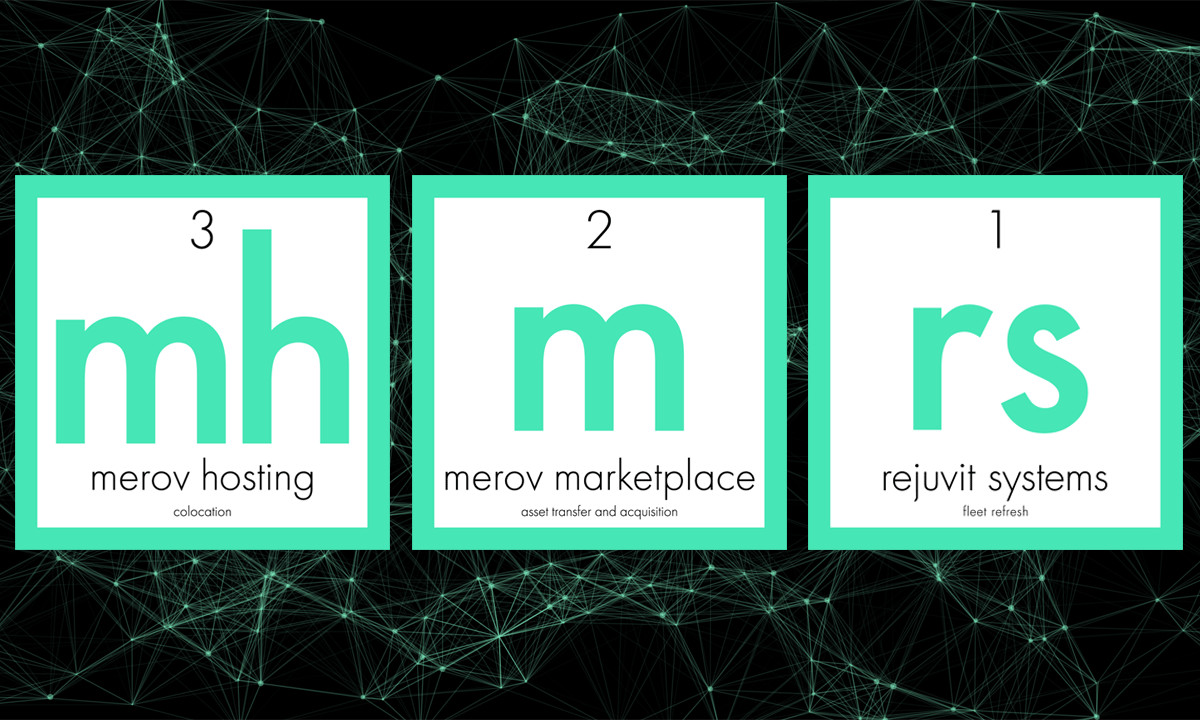
Merov Hosting offers state-of-the-art colocation facilities designed to provide the highest levels of performance, reliability, and security for Bitcoin miners.
Rejuvit Systems by Merov is a US-based parts distributor and ASIC repair company with high-quality repair, training, and tools at competitive prices.
Merov Marketplace is an innovative platform that provides due diligence, asset sale, distribution, and procurement services to the Bitcoin mining industry. It is currently in beta testing and will launch in Q3 ‘23.
Milestones Achieved
- $771.96mm in ASIC mining infrastructure deals closed or currently engaged in.
- 105,455 ASICs processed through Merov’s acquisition, verification, repair, or fulfillment services.
- 400+ megawatts of colocation capacity becoming available ’23-’24.
About Merov:
Merov is a team of passionate and experienced professionals committed to enhancing the Bitcoin industry. With a deep understanding of the industry and a range of expertise in related fields, we strive to deliver innovative, reliable, and comprehensive solutions tailored to our clients’ needs.
Our mission is to bridge gaps and streamline operations, enabling businesses and individuals to thrive in the rapidly evolving world of Bitcoin. By pushing the boundaries of technology and staying at the forefront of industry developments, we are dedicated to driving growth, fostering innovation, and empowering our clients to reach their full potential.
Follow Merov on Telegram and Twitter.
Merov is a proud sponsor of the Bitcoin Conference, May 18-20, 2023. Come meet the Merov team at booth 1206.
Contact
Chief Creative Officer
Rachel Schimelman
Merov
[email protected]

Despite a cautionary note from the International Monetary Fund (IMF), the Reserve Bank of Zimbabwe has successfully sold 14 billion Zimbabwean dollars (approximately $39 million) in gold-backed digital tokens.
The Zimbabwean central bank announced on May 12 that it had received 135 applications totaling 14.07 billion Zimbabwean dollars for the purchase of the gold-backed cryptocurrency. At the official exchange rate of 362 Zimbabwean dollars to one US dollar, this amount is worth approximately $38.9 million. However, the exchange rate is considerably higher on the street.
Launched in April, the cryptocurrency tokens are backed by 139.57 kilograms of gold. The sale period ran from May 8 to May 12. The tokens were available for a minimum of $10 for individuals and $5,000 for corporations and other entities, with a minimum holding period of 180 days. The tokens can be stored in e-gold wallets or on e-gold cards.
The sale is part of an initiative to stabilize the national economy and counteract the persistent devaluation of the Zimbabwean dollar against the US dollar. A second sale of digital tokens is planned, with the bank inviting applications to be submitted this week for settlement by May 18.
RBZ Governor Dr. John Mangudya stated that the issuance of the gold-backed digital tokens is intended to “expand the value-preserving instruments available in the economy and enhance the divisibility of the investment instruments and widen their access and usage by the public.”
This move comes in the wake of a warning from the IMF against Zimbabwe’s strategy for a gold-backed currency. The IMF suggested the country should liberalize its foreign-exchange market instead, according to a Bloomberg report from May 9.
Zimbabwe has been grappling with currency instability and inflation for over a decade. In 2009, the country adopted the US dollar as its currency after hyperinflation made the local currency practically worthless. The Zimbabwean dollar was reintroduced in 2019 in an attempt to revitalize the local economy, but it again faced significant instability.

The US Department of Justice (DOJ) is intensifying its efforts against hackers and exploiters in the Decentralized Finance (DeFi) sector, following a significant increase in illicit cryptocurrency activities over the past four years.
Eun Young Choi, the head of the DOJ’s National Cryptocurrency Enforcement Team (NCET), shared in a Financial Times report on May 15 that the DOJ is zeroing in on thefts and cyber-attacks related to DeFi, with a special focus on “chain bridges.”
Choi highlighted that this is a considerable concern for the DOJ, especially since North Korean state-sponsored hackers have been identified as major players in this area.
Cointelegraph reported in February that North Korean hackers had pilfered an estimated $630 million to $1 billion in cryptocurrency assets in 2022 alone.
Choi, who has nearly ten years of prosecutorial experience with the DOJ, was named the inaugural director of the NCET in February 2022. The DOJ stated at that time that the NCET would act as the primary hub for the department in dealing with matters related to cryptocurrency, cybercrime, money laundering, and asset forfeiture.
The DOJ underscored that they would specifically target “mixing and tumbling services,” but there was no mention of DeFi platforms in their initial announcement.
Speaking at the recent Financial Times Crypto and Digital Assets Summit, Choi reaffirmed that the DOJ is targeting cryptocurrency companies that either commit crimes or knowingly permit such activities to occur, thereby facilitating money laundering.
Choi underlined that focusing on the platforms where these activities originate could have a multiplying effect by making it harder for criminals to reap the benefits of their illicit activities.
She also noted that the extent and variety of illicit uses of digital assets have significantly increased in the past four years.