
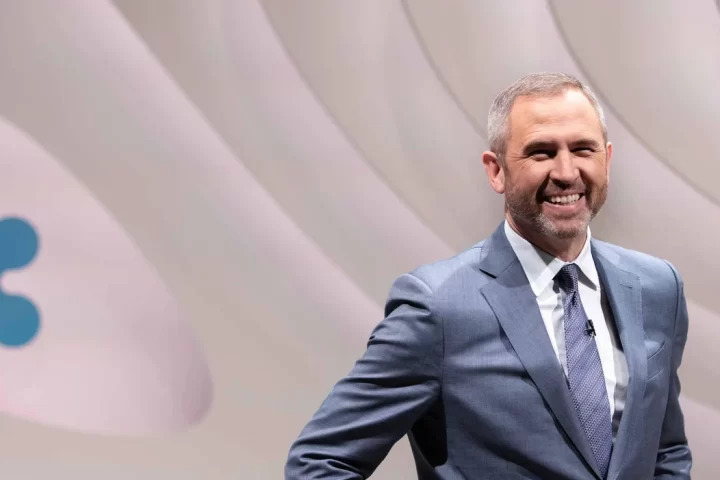


Former British Chancellor Philip Hammond has cautioned investors that European Union competitors were outpacing the United Kingdom in digital financial assets.
Hammond commented as he stepped into his role as chairman of cryptocurrency enterprise Copper.
The news comes as the fintech company aims to close a fresh round of funding, raising the company’s total value to roughly $2 billion USD.
Hammond continued: “The UK needs to be leading in this area post-Brexit. It’s allowed itself to slip behind. Switzerland is further ahead. The EU is also moving faster. There has to be appetite to take some measured risk.”
He also urged Westminster to expedite regulatory frameworks for cryptocurrencies and digital assets as other nations had already kicked off such processes.
The Copper Key to Britain’s Fintech Bid
Copper, a digital asset firm for institutional crypto acquisition, trading, and storage. It registered in Switzerland after being forced to withdraw its application from the UK.
Hammond blamed the Financial Conduct Authority (FCA) for its slow response, which may have triggered a loss of customers after its temporary registration expired in March last year.
Hammond said he hoped that “UK authorisation will be forthcoming in the future”.
“We are very much hoping to migrate back to London. Post-Brexit, the UK needs a strong financial services sector. We need to work out how to become the location of choice for trading in new asset classes.”
Adding, Copper chief executive Dmitry Tokarev said that Hammond’s public advocacy for “connecting traditional finance with distributed ledger technology comes at a time when it is needed more than ever.
The news comes as the UK aims to reposition itself as a major crypto and fintech hub for global markets. Currently, HM Treasury has posted job applications for a central bank digital currency (CBDC) team to build a sovereign digital currency.
The LinkedIn advert called for a head of digital currency to lead a team of roughly 20 people, leading to the creation of a digital pound. The initiative aims to create the CBDC as an alternative to paper and banking payment systems.
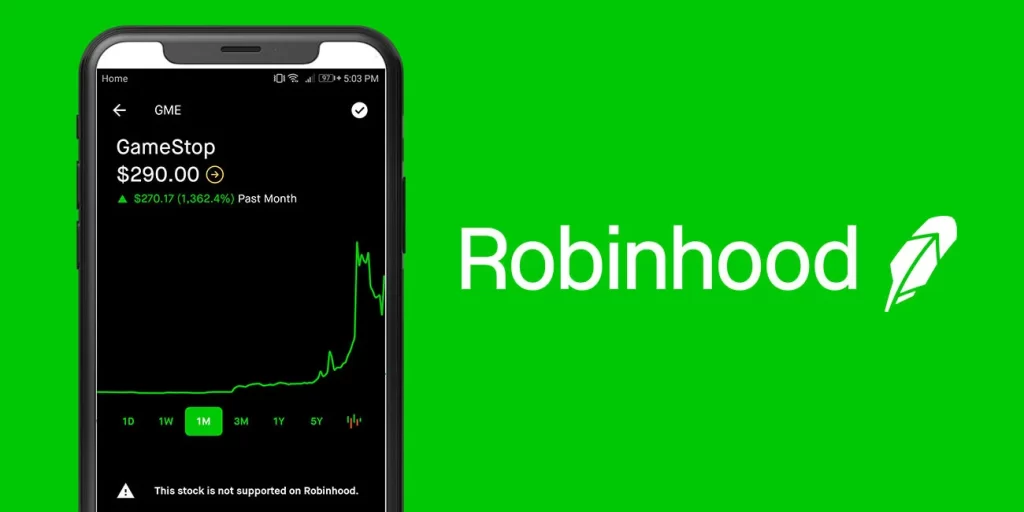
Unknown suspects have hacked Robinhood’s Twitter account to promote a scam crypto token. The 25 January tweet urged over a million Robinhood followers to buy the RBH token.
The anonymous poster urged people to pay for RBH at $0.0005 each token, which uses the Binance Smart Chain. According to Conor Grogan, Coinbase’s head of product business operations, roughly 10 people had purchased around $1,000 USD of the fake crypto tokens.
Grogan said at the time: “Looks like Robinhood’s social media was hacked. They only got ~10 people to bite on the scam token before the link was taken down. So far the token has only seen <$1000 in purchases. I imagine people crowding in now saw the volume spike and ar looking for a thrill.”
Binance chief executive Changpeng Zhao added his company’s security teams had locked the account of the tweet and it had launched pending investigations.
He said in a tweet at the time: “Looks like Robinhood account got hacked and was promoting a coin on BNB Chain. Always have critical thinking even [if] the account looks or is real.”
Currently, Robinhood does not facilitate RBH purchases, but investors can purchase exposure by buying HOOD shares on the Nasdaq stock exchange.
The news comes after a major CertiK report in early January, which stated 2023 would continue ongoing trends in hacking, fraud, and other cybercrime.
The report found malicious attacks, hacking, scams, and phishing incidents were set to increase over this year, with last year totalling $3.7 billion in losses. November cost markets roughly $595 million USD in token scams, becoming the worst month of the year.

Genesis, the bankrupt cryptocurrency lending firm linked to the ongoing FTX crisis, has sued Roger Ver, a key Bitcoin Cash (BCH) backer, due to claims of unsettled cryptocurrency options.
GGC International filed the lawsuit against Ver in the New York State Supreme Court revealed. GCC is a subsidy of the now-defunct crypto firm. It alleges that Ver failed to settle transactions for the crypto assets which expired in late December.
Named “Bitcoin Jesus,” Ver took to Reddit to explain his reason for the incident.
He said in his post: “I have sufficient funds on hand to pay Genesis the sums allegedly owed, and I’m happy to pay what I actually owe. However, Genesis was required by our agreement to remain solvent — as Genesis can’t ask its clients to play a ‘heads clients lose, tails Genesis wins’ game.”
Explaining further, Ver said that Genesis “dipped under the solvency line” and that he asked the firm for solvency assurances. Genesis provided financial information that “had been called into question by recent events,” he added, referencing the recent bankruptcy.
He added: “When I asked Genesis to clarify the financial information they had provided me, they refused, and instead chose to file suit.”
Lawsuit Details
According to the lawsuit, Ver must answer the summons after the required 20-day period. He has not responded to the matters and will be forced to pay the entire sum for failing to do so.
The news comes after CoinFLEX chief executive Mark Lamb alleged Ver had defaulted on $47 million in USD Coin (USDC). Ver indirectly denied the accusations in late June.
The news comes after Genesis’ parent company, the Digital Currency Group (DCG), declared Chapter 11 bankruptcy earlier this week.
It also launched restructuring efforts for its crypto operations amid a massive row with Gemin’s Tyler and Cameron Winklevoss, who slammed Genesis over the collapse of its Earn programme.
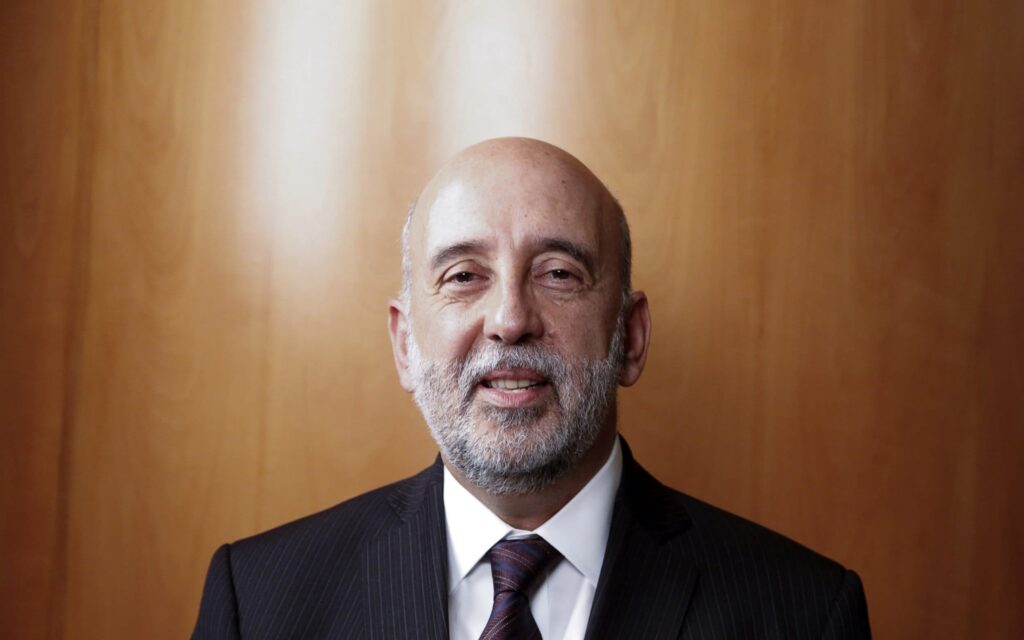
Irish central bank governor Gabriel Makhlouf called on legislators to ban cryptocurrency firms from advertising digital assets to young adults, reports revealed.
The longstanding crypto critic slammed digital coins not backed by underlying assets as Ponzi schemes. Despite this, he claimed they posed a small risk to financial stability but could negatively impact retail customers.
Speaking further, Makhlouf explained to an Irish parliamentary committee that there was a number of young adults that had invested in crypto. There was also an “uncomfortable level of advertising” targeting the group.
“I would recommend that adverts to that cohort are banned,” he said.
He added: “Unbacked crypto is essentially a Ponzi scheme… People who put their money into unbacked crypto, and most of the significant stock of crypto out there is unbacked, they are essentially gambling. When you gamble you can win, but most of the time when you gamble, you’re actually losing.”
MiCA and EU Crypto Markets
The European Central Bank governing councillor urged EU regulators to impose “guardrails” for emerging stablecoins. These types of coins include central bank digital currencies (CBDCs) and provide stable trading values.
In July, European lawmakers passed rules requiring cryptocurrency firms to obtain licences and customer safeguards to buy and sell digital currencies across the bloc.
Regulators in Brussels called the cryptocurrency market the “Wild West.” To date, the EU aims to pass regulations to fight fraud and money laundering, among others. Parliament passed the deal at the time as its Markets in Crypto-Assets (MiCA) law.

Uniswap’s version 3 (v3) protocol is set to shift from the Ethereum network to BNB Chain following a majority vote from governor forums.
The “temperature check” proposal passed after 80 percent of voters approved the measure to deploy v3 on the BNB Chain.
Ilia Maksimenka, chief executive of decentralised finance protocol Plasma Finance, explained his reasoning for the network swap in a 17 January post.
He said: “We believe this is the right moment for Uniswap to deploy on BNB [proof of stake] Chain, for many reasons (one of them is License expiration).”
Adding, he said the BNB chain had “a large and growing user base, providing a potential new market” and offered “high transaction speeds and low fees.”
BSC to Provide ‘Secure’ DeFi Exchange
Cameron O’Donnell, a decentralised autonomous organisation (DAO) governance strategist at ConsenSys, explained why his firm backed the measures.
He said in a statement: “Regardless of personal views, Uniswap entering the BSC market will provide current and future users with a secure and established medium for decentralized exchange.”
The company also supported a “chain agnostic” platform to help people in the Web3 space. The process may require five to seven weeks to deploy smart contracts.

The Digital Currency Group (DCG) is set to face fresh legal woes after Genesis Capital received a securities class action lawsuit. The case will take place in the United States District Court for the District of Connecticut.
Silver Golub & Teitell (SGT) hit DCG founder and chief executive Barry Silbert with the lawsuit, citing federal securities laws violations.
Individuals involved in digital asset lending agreements with Genesis filed the litigation. SGT famously handled a Coinbase class action lawsuit in March last year.
According to the complaint, Genesis offered unregistered securities. Lending agreements also involved securities not exempt from registration under federal securities laws.
It added that Genesis defrauded investors with a scheme involving existing and potential digital asset lenders with misleading statements.
Plaintiffs accused Genesis of misrepresenting its financial standing, which breached section 10(b) of the US Securities Exchange Act. Concluding, the complaint said that the scheme aimed to “induce prospective digital asset lenders to loan digital assets to Genesis Global Capital,”
This prevented current lenders from “redeeming their digital assets,” the lawyers alleged.
FTX – DCG Links
The news comes after Genesis filed for bankruptcy, sending ripples across the crypto industry. This comes just months after the shock collapse of crypto exchange platform FTX. Several executives face massive fraud charges in New York courts, including disgraced ex-CEO and founder Sam Bankman-Fried.
Genesis declared bankruptcy after halting withdrawals in mid-November, shortly after FTX. The former halted withdrawals and could not honour redemption requests for its Earn rewards programme.
Gemini co-founder Cameron Winklevoss slammed the firm on Twitter and threatened further litigation against DCG and others involved in the scandal.

Dubai, UAE, 26th January, 2023, Chainwire
Flare is pleased to announce an official partnership with blockchain security specialist, FYEO. The firm will perform ongoing security audits of Flare’s codebases, providing actionable feedback to support safer smart contract development and help to minimize risk for all users of the network.
Rigorous professional auditing and testing are an important part of Flare’s blockchain security strategy. Alongside stringent internal testing measures, ongoing code audits help to establish a level of security assurance to application developers and users on the network.
Flare Co-Founder & CEO Hugo Philion said, “We are building our protocols with auditor reviews initiated from close to day one. We believe this guarantees a safer outcome than an auditor reviewing an entire code base at the end of development.”
In addition to continuous auditing from partners including FYEO, Flare also employs rigorous testing with testnets and a Canary network called Songbird. The Canary network is a live but more experimental version of Flare (similar to Kusama’s relationship to Polkadot) where Flare can test their protocols. The network advises application developers and builders to do the same.
Flare recognizes that risk minimization from both an auditing and testnet perspective is crucial to building reputational trust amongst users.
In the words of Flare Co-Founder, Hugo Philion, “Our game as an organization within the industry is to mitigate the risk in blockchain such that people feel comfortable to use it. As a result of that, the usage can increase substantially”.
Tammy Kahn, Co-CEO of FYEO, said, “FYEO could not be more aligned with this vision for supporting adoption through user risk minimization, and look forward to our continuous work with Flare as it expands its presence as a leader of decentralized innovation.”
About Flare
Flare is an EVM-based Layer 1 blockchain designed to allow developers to build applications that can use data from other chains and the internet. By providing decentralized access to high-integrity data, Flare enables new use cases and monetisation models.
Flare’s State Connector protocols enable information, both from other blockchains and the internet to be used securely, scalably and trustlessly with smart contracts on Flare.
The Flare Time Series Oracle delivers highly-decentralized price and data feeds to dapps on Flare, without relying on centralized providers.
Build on Flare with more data than ever before or build with Flare to serve multiple ecosystems.
About FYEO
FYEO is focused on solving the growing problem of cyber crime in Web3. FYEO’s code audit team is composed of some of the best DeFi logic experts in the world having worked on 100s of projects and protocols such as Solana, Ethereum, Cardano, ICON, Hyperlane, Sommelier Finance, and more. Its flagship product, FYEO Domain Intelligence, which provides real-time threat monitoring and intelligence for organizations, was developed to provide unparalleled security and address present-day security issues impacting both organizations and individuals. Today, the FYEO team continues its work to identify and evolve its products to solve the biggest security problems facing Web3 ecosystems.
Contact
Dan Horowitz
[email protected]
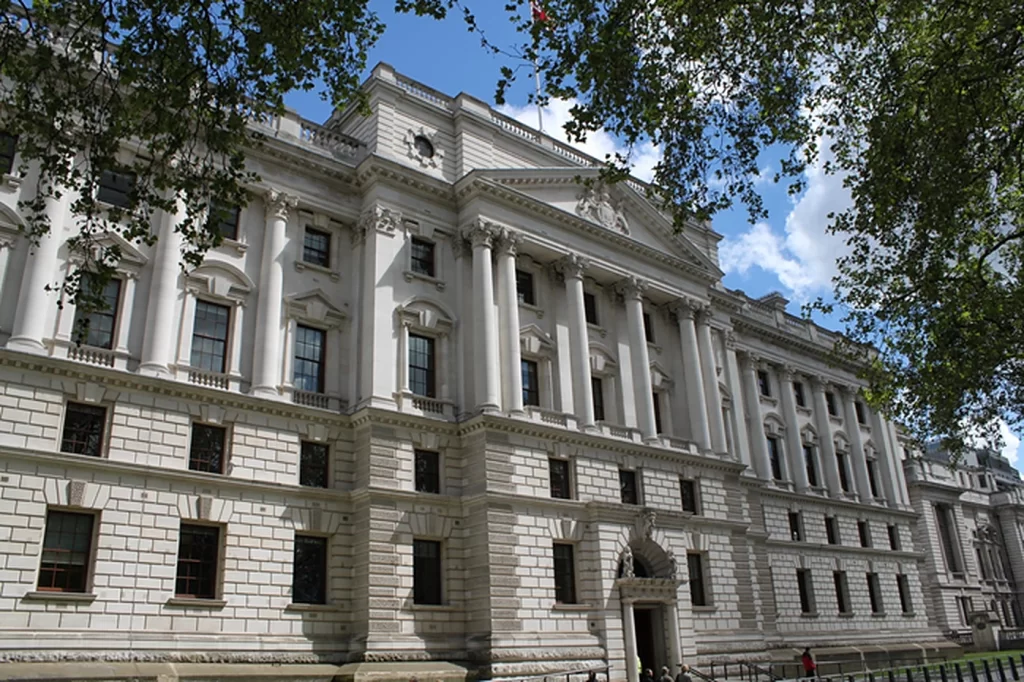
Britain’s HM Treasury has called for applicants to join an initiative involving a central bank digital currency (CBDC) to launch a national cryptocurrency.
The Treasury posted a job on Linkedin for a team of candidates to operate its Payments and Fintech Team. The position would lead a team of 20 people to explore a “potential digital pound,” the advert said.
The job posting added the head of the team would guide the strategic direction of the Government’s plans for a digital pound. This comes as Whitehall aims to position the UK as a major global fintech hub.
HM Treasury explained further,
“Digital innovation is changing the landscape for payments and money. The use of physical money is declining while new forms of private sector digital money are emerging. These changes offer exciting opportunities for UK businesses and consumers, but also present new challenges and risks. This has motivated countries around the world to explore digital versions of central bank money.”
It added that the Bank of England, the UK’s central banking institution, “issues only physical bank notes.” Both business and individual households could use the BoE cryptocurrency.
Both the Treasury and the BoE were working jointly via a CBDC Taskforce to “explore the case for a digital pound.” Successful candidates for the position would work directly with the BoE for consultations.
National Crypto Adoptions Increase
According to the BoE, it is considering a national CBDC to allow entities to expand their payment method choices. The organisation needed to “keep up with the changing times” by assessing the benefits of such a monetary system.
It noted: “More and more, people are choosing to pay electronically rather than use notes and coins.”
The news comes as multiple countries adopt or mull using national cryptocurrencies, including China, El Salvador, Venezuela, the European Union, Fiji, Tonga, and many others.
Prime Minister Rishi Sunak launched the campaign for a CBDC last year while serving as the former Chancellor of the Exchequers.
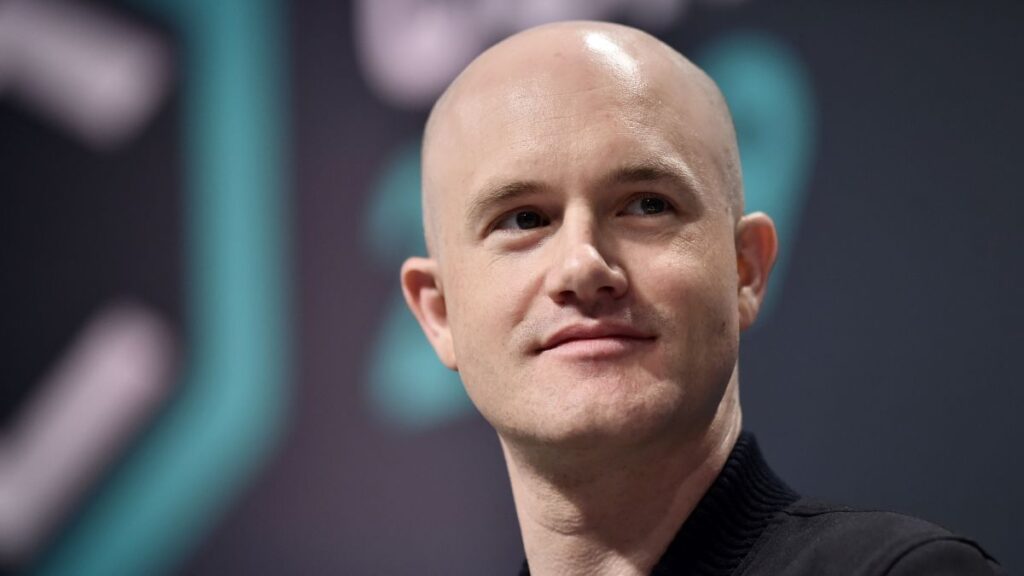
Coinbase chief executive Brian Armstrong has hinted Brazil and Argentina should adopt Bitcoin (BTC) as a sovereign currency, according to a recent report.
The two South American nations announced on Saturday they had launched plans to use the digital coins along with their respective national currencies.
The report noted that both nations would soon invite other Latin American nations to join the world’s second-largest currency bloc. It added that it planned to outline its efforts at a summit in Buenos Aires and later, invite additional nations on the continent to join.
Brazil aims to create potentially the “Sur,” or South, to reduce dependence on the US dollar. Countries such as Venezuela have created similar currencies such as the Petro in recent years for similar reasons.
Speaking to the Financial Times (FT), Argentinian economy minister Sergio Massa said,
“There will be . . . a decision to start studying the parameters needed for a common currency, which includes everything from fiscal issues to the size of the economy and the role of central banks.”
Replying to the news, Armstrong tweeted the following day that it could be a “right long-term bet” and hoped both countries would consider the option.
Crypto as Legal Tender
His comments come after numerous countries have begun adopting BTC as sovereign currencies. El Salvador has long remained a supporter of Bitcoin as its national currency after it adopted it in 2021.
In late November last year, the Brazilian Chamber of Deputies approved measures to legalise cryptocurrencies for payments across the nation. Former president Jair Bolsonaro signed off on the bill last month, which will enter force in June this year.
The Argentinian province of San Luis also passed a bill for a future US dollar-linked stablecoin for adults 18 and over and backed by government assets.
Nations such as Fiji and Tonga have also pushed for similar legislation. In late December, the former nation’s new prime minister, Lord Fusitu’a, announced support for Bitcoin adoption in Fiji.
He stated at the time that Fiji could “do bitcoin legal tender like Tonga,” allowing two Pacific islander nations to have two legal tenders for 2023.
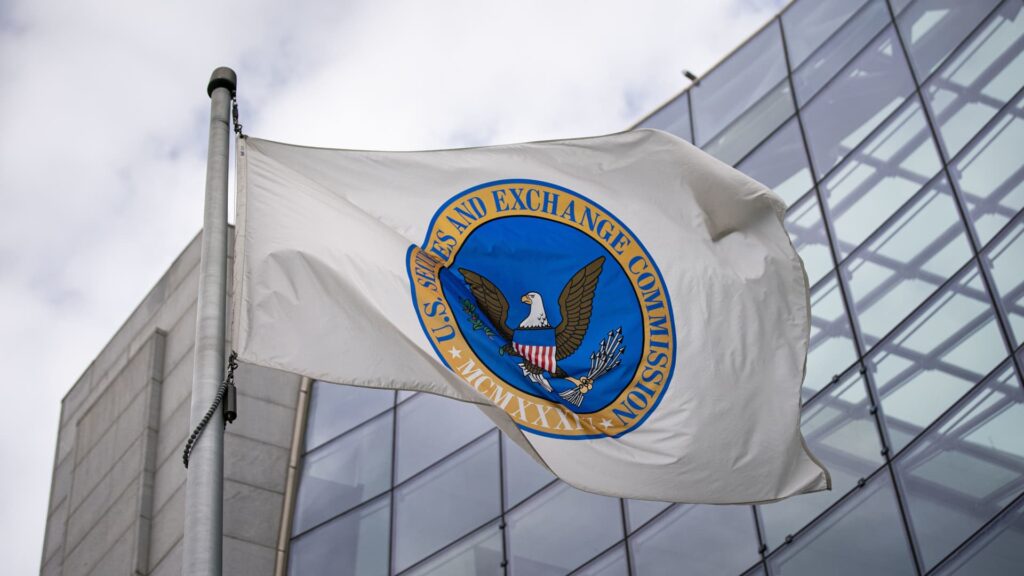
Mango Markets scammer Avraham Eisenberg faces a court ruling from the US Securities and Exchange Commission (SEC), the regulatory body reported on Friday last week.
The SEC charged him with market manipulation after he manipulated pricing for Mango Market’s native token MNGO using bots. Investors lost roughly $116 million from the platform following the incident.
According to the SEC, the token was “a security,” adding that the suspect sold a massive number of perpetual futures for the tokens.
He later repurchased them under another account and inflated their price, offering him $116 million in cryptocurrency tokens. The move purged the entire Mango Market platform of its tokens, the SEC filing said.
David Hirsch, Crypto Assets and Cyber Unit chief, said in a statement,
“Eisenberg engaged in a manipulative and deceptive scheme to artificially inflate the price of the MNGO token, which was purchased and sold as a crypto asset security, in order to borrow and then withdraw nearly all available assets from Mango Markets, which left the platform at a deficit when the security price returned to its pre-manipulation level.”
Rug Pull, Pull Over
The news comes after Eisenberg launched the massive rug pull to defraud investors, triggering a major backlash on social media.
He later boasted to people on Twitter about his tactic, stating it was a “highly profitable trading strategy.” Many people responded to his comments by demanding authorities arrest him, despite his replies that his actions were “legal”.
The SEC concluded that Eisenberg faces charges in Manhattan district courts for “violating anti-fraud and market manipulation provisions of the securities laws and seeks permanent injunctive relief, a conduct-based injunction, disgorgement with prejudgment interest, and civil penalties.”
Cybersecurity firm CertiK reported in January on the rise in cryptocurrency fraud, manipulation, and cybercrime last year, with similar numbers expected for 2023.
One of the largest financial scandals to date, the ongoing FTX crisis has prompted governments and organisations to crack down on crypto regulations following the collapse.