

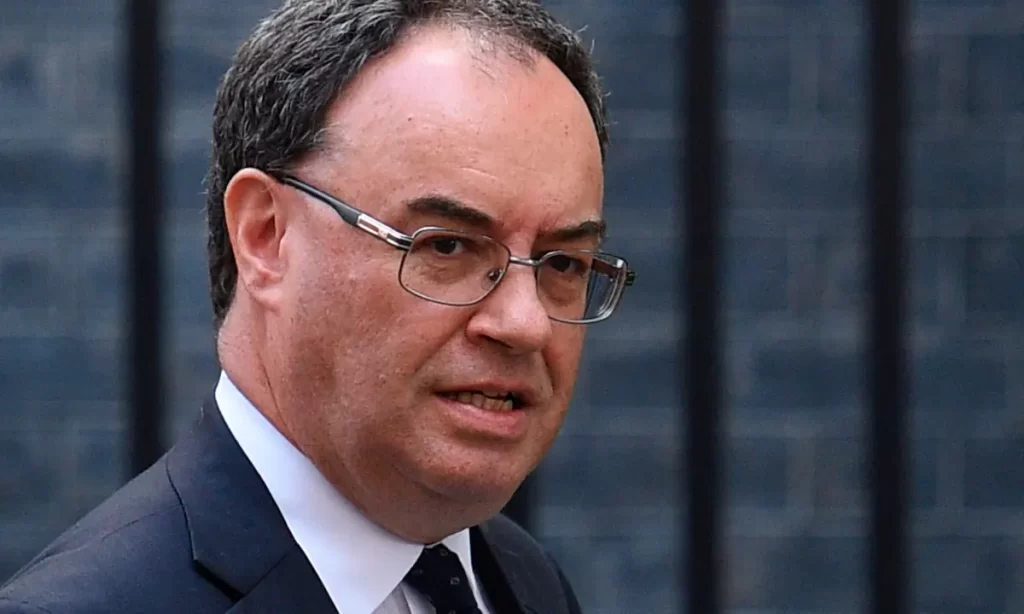
Bank of England (BoE) governor Andrew Bailey has cautioned people on adopting a digital pound for the United Kingdom, reports revealed.
In a Parliament Treasury Select Committee meeting, he stated he was not sure if the country currently needed a British digital pound.
He said that the Bank of England currently had a “wholesale central bank money settlement system” with further upgrades.
Bailey added the Bank of England did not plan to replace physical money with digital currencies, adding retail payment changes were not needed.
Speaking further, he said: “We have to be very clear what problem we are trying to solve here before we get carried away by the technology and the idea.”
Eurozone Crypto Euphoria
The news comes just after finance ministers in the European Union voiced support for a digital euro on Monday. Finance ministers issued a document outlining plans to back a future CBDC.
Such efforts would need further talks at the political level, it said, adding it would first need to assess environmental, privacy, cybersecurity, and other factors.
Despite the forward movement, Tony Yates, a former advisor to Britain’s central bank, said in a Financial Times article that costs and risks linked to creating CBDCs were “suspect.”
He said in his article,
“CBDC accounts may drain money from the banks, particularly during a period of heightened financial risk. This would force banks either to find new sources of funds, or shrink their loans. That could amplify tightening in financial conditions when the central bank is trying to loosen them. The central bank could respond by simply reinvesting CBDC deposits back in the banks. But would this leave us in a better place?”
Crypto Coins and CBDBs for the People
The news comes as several countries, including China, El Salvador, Venezuela, Russia, the Bahamas, Sweden, and many others have begun piloting national cryptocurrencies.
El Salvador approved legislation in 2021 to determine how it plans to use bitcoin at the national level. Shortly after, President Nayib Bukele tweeted that he backed the cryptocurrency after his country purchased several waves of Bitcoin.
Conversely, China has rolled out several test pilots of its national digital yuan, which people can use at physical and online retail stores. Locations such as Beijing, Guangzhou, and others have begun using the cryptocurrency feature. Alipay and WeChat Pay have also accommodated the CBDC with app features.

Three Arrows Capital (3AC) founders Kyle Davies and Su Zhu have reportedly launched plans to raise $25 million USD in capital for a new cryptocurrency exchange.
The group revealed the new platform, GTX, in a presentation. The 3AC founders will partner with Coinflex’s Mark Lamb and Sudhu Arumugam. The initiative aims to protect bankrupt firms from claims.
The presentation added:
“FTX users are selling claims at ~10% face value for immediate liquidity or waiting 10+ years for the bankruptcy to process disbursements […] Our legal team will streamline and automate claims onboarding to GTX and make it the dominant marketplace for FTX and other bankrupt companies’ claims.”
In a tweet, Colin Wu stated that Su Zhu replied, “Yes, no comment, just busy building it.”
GTX will provide a platform for trading collateralised claims to allegedly “fill the power vacuum left by FTX.” It also plans to enter stock exchanges and other regulated markets.
The news comes after Coinflex blocked withdrawals due to a massive $84 million USD loss of revenues. The company has begun restructuring to tackle the revenue crisis.
Additionally, 3AC liquidated in late June and its founders disappeared, with reports stating they had fled to Indonesia and the United Arab Emirates (UAE). Su slammed FTX and the Digital Currency Group for its collapse.
Despite this, courts slapped the 3AC founders with subpoenas on 5 January. Singapore’s Monetary Authority (MAS) vowed in recent months to tighten regulations on cryptocurrency markets following the collapse.

Shibu Inu (SHIB) developers have announced plans to roll out a beta version of Shibarium, a new layer-2 network overlayed on its Ethereum mainnet.
According to the blog post, Shibarium will provide tools to grow its community in line with its founder’s plans. Developers stated that Shibarium aimed to release the project “soon.”
They said, “Patience is key, and some see Shibarium as a price pumping tool, but that is not the project’s focus and never has been. Shibarium is being built to fulfill Ryoshi’s vision and provide the community with a tool to build and grow the project on their own terms. With the imminent Network launch, we invite everyone to read this article and familiarize themselves with the concepts before testing.”
Shibarium Doggo-Themed Plans
Developers added the project’s goal was to “revolutionize the Shiba ecosystem.” It aims to minimise obstacles to conducting small transactions and provide cheaper, faster decentralised transactions.
Efforts would also help people develop new solutions such as decentralised applications (dApps) and integrate non-fungible tokens (NFTs).
One of the key components of the project is a new burning mechanism, which will take place when users make transactions on the network. The announcement continued: “[All] transactions on the network will have an implicit burn amount for SHIB token.“
The news comes after Shibu Inu developer Shytoshi Kusama tweeted on 22 November last year that the World Economic Forum (WEF) invited the cryptocurrency project to work jointly to develop a global metaverse policy. Other major tech firms such as Meta Platforms, Decentraland, and others would contribute to outlining the policy.
Shibu Inu and crypto rival Dogecoin spiked in value. Dogecoin and Shibu Inu jumped 14 percent and 40 percent, respectively, after Ethereum completed its merge upgrade.
Cryptocurrency lending firm Nexo Capital agreed on Thursday to pay $45 million in fines after the United States Securities and Exchange Commission (SEC) slapped them with charges.
The penalty consists of $22.5 million to the SEC and an additional $22.5 million to state regulators, the SEC said in a statement.
The charges are linked to the platform’s Earn Interest Product, which began in June 2020. Crypto investors could offer their assets for alleged earned interest but ceased the product in February last year.
At the time, the SEC slapped a company for similar offences, triggering the firm to cease offerings for the Earn programme.
Nexo stated it was “content” with its settlement, adding: “We are confident that a clearer regulatory landscape will emerge soon, and companies like Nexo will be able to offer value-creating products in the United States in a compliant manner.”
Speaking further, Andrew Harnett, North American Securities Administrators Association (NASAA) president, said that US securities laws were “designed to protect investors through full and fair disclosure.”
He continued: “State securities regulators continue to lead the effort to ensure companies involved in offering digital asset investments comply with our laws and that investors are treated fairly.”
Complying with the ruling, Nexo said it would stop selling its US products over the next few months due to US regulations. The SEC has also hit companies such as Genesis and Gemini lawsuits over allegations of its interest-earning programme.
Washington-based rural state bank Moonstone Bank announced on Wednesday it would leave the cryptocurrency market and return to its status as a community bank.
The comment comes after Alameda Research, FTX’s hedge fund division, invested $11.5 million USD in the bank. According to the latter’s statement, the shift in focus comes after “recent events in the crypto assets industry and the changing regulatory environment surrounding crypto asset businesses.”
The bank will no longer brand itself as Moonstone Bank and rebrand as Farmington State Bank to “return to its roots.”
It continued: “The return to its role as [a] community bank will be seamless for the bank’s local customers in the Farmington community with no change or disruption of services. The bank has consistently remained committed to safe and sound practices, has kept its balance sheet liquid and customer deposits have remained secure and fully accessible.”
The announcement comes after Deltec chairman Jean Chalopin bought out Moonstone Bank in 2020. According to reports, his firm is an FTX banking partner and received $11.5 million in investments.
Investments from the now-bankrupt hedge fund firm allowed his banking business to transform as a cryptocurrency financial services firm.
The news comes after numerous companies, including BlockFi, Genesis, Gemini, and many others have faced the fallout from the ongoing FTX collapse. Due to ongoing capital crises, Genesis could reportedly file for bankruptcy as early as this week due to a liquidity crunch.

US authorities have coordinated with French counterparts to arrest Bitzlato founder Anatoly Legkodymov in a “major international cryptocurrency enforcement action.”
The United States Department of Justice (US DoJ) announced the news in an 18 January statement. US Deputy Attorney General Lisa Monaco revealed US and French police had seized Bitzlato’s website.
The statement continued that the cryptocurrency platform was a “primary money laundering concern” allegedly linked to illegal Russian financing.
Monaco claimed the US DoJ, US Treasury Department, and French authorities launched the crackdown, accusing Bitzlato of “conducting a money transmitting business that transported and transmitted illicit funds and that failed to meet U.S. regulatory safeguards.”
Police arrested Legkodymov, who currently lives in China, in Miami on 17 January. He will face charges at the US District Court for the Southern District of Florida.
Monaco added in her statement,
“Today the Department of Justice dealt a significant blow to the cryptocrime ecosystem. Overnight, the Department worked with key partners here and abroad to disrupt Bitzlato, the China-based money laundering engine that fueled a high-tech axis of cryptocrime, and to arrest its founder, Russian national Anatoly Legkodymov. Today’s actions send the clear message: whether you break our laws from China or Europe—or abuse our financial system from a tropical island—you can expect to answer for your crimes inside a United States courtroom.”
Ransomware and Darkwebs
The US DoJ press release continued, explaining Bitzlato allegedly provided funding for the Hydra darknet marketplace, where people could send money from sources such as ransomware attacks.
“[Bitzlato] allegedly became a haven for criminal proceeds and funds intended for use in criminal activity. Bitzlato’s largest counterparty in cryptocurrency transactions was Hydra Market, an anonymous, illicit online marketplace for narcotics, stolen financial information, fraudulent identification documents, and money laundering services that was the largest and longest running darknet market in the world.
The statement added that Bitzlato and Hydra Market also traded over $700 million USD “either directly or through intermediaries.” US and German law enforcement later “shuttered” the latter in April last year.
The statement also claims Bitzlato also received over $15 million USD in ransomware funds.
The news comes after the Singaporean Monetary Authority (MAS) cracked down on Russian cryptocurrency exchanges in early November.
Reports found the central bank aimed to comply with US and European Union-led Russian sanctions allegedly linked to money laundering for pro-Russian groups in the ongoing war in Ukraine.
Crypto Crisis Continues
The story is the latest significant blow to the cryptocurrency industry, namely amid the ongoing FTX collapse and arrest of disgraced chief executive Sam Bankman-Fried. Released on $250 million USD bail, he faces eight counts totalling 115 year in court for fraud, misappropriation of funds, and other offences.
New York authorities also detained Aurelien Michel at John F Kennedy Airport for creating a fake Mutant Ape Yacht Club non-fungible token (NFT) and later launching a rug pull. Investors in the decentralised autonomous organisation (DAO) lost up to $2.9 million USD.

Genesis Global Capital is set to proceed with bankruptcy filings as early as this week, Bloomberg News reported on Wednesday.
Citing people with knowledge of the matter, the report stated that the cryptocurrency trading platform’s collapse came after it froze customer redemptions on 16 November.
The news comes just after FTX’s collapse and subsequent bankruptcy proceedings on 11 November. Numerous crypto firms have followed, including crypto lending company BlockFi and the largest publicly traded cryptocurrency mining firm in the United States, Core Scientific Inc.
Bloomberg added Genesis and parent firm Digital Currency Group have failed to agree on a proposal. Creditors involved in the case include Kirkland & Ellis and Proskauer Rose have joined advising groups.
Gemini-Genesis Partnership
The cryptocurrency enterprise is also deadlocked with Gemini founders Cameron and Tyler Winklevoss. The latter accused Genesis of owing over $900 million USD.
The partnership led to the launch of crypt lending product Earn, which faced US Securities and Exchange Commission (SEC) charges of selling illegal securities to customers.
Recently, fintech firm Curve proposed to buy BlockFi following FTX’s collapse in mid-November. Curve aims to buy out BlockFi’s massive 87,000 customer base after the latter suspended access to credit cards.
San Francisco, California, 18th January, 2023, Chainwire
Today, Coinbase has listed Kava and will launch a massive Learning Rewards Campaign to educate its user base about how Kava is leading the world to Web3.
Kava is a decentralized layer-1 blockchain that combines the speed and interoperability of Cosmos with the developer power of Ethereum. Kava has spent the last year building a deep integration with Coinbase that optimizes the process for Cosmos SDK chains to integrate with Coinbase helping to drive new liquidity to the Cosmos ecosystem.
Unlocking Cosmos Liquidity
Coinbase’s native integration with Kava allows for easy listing of Kava ecosystem projects, KAVA staking on Coinbase, and unlocks DeFi usage for Coinbase users on Kava. Additionally, Kava worked with the Coinbase team to make it significantly easier for Cosmos chains to list on the exchange, unlocking access to liquidity for Cosmos projects and further driving the adoption and growth of the entire Cosmos ecosystem. The entire process whittles the timeline for integrating Cosmos SDK chains to Coinbase from 12-18 months to a single month. Cosmos chains can now be integrated as easily as ERC-20 tokens. A major step forward to increasing liquidity within the Cosmos Ecosystem
“It’s exciting to see Kava listed on the largest US-regulated exchange. Coinbase sets the standard as the most important on-ramp for new users and capital into the blockchain ecosystem. I look forward to growing Kava’s exposure to new users, which will have downstream effects for all protocols in the Kava Rise program and the Cosmos ecosystem.” — Scott Stuart, CEO of Kava Labs
Fueling Protocol Growth with Kava Rise
Kava was built from the ground up to optimize its resources for protocol growth, strengthened by its Cosmos-EVM technology that enables maximum scalability, speed, security, and developer support. In 2022, Kava combined on-chain and off-chain growth mechanisms into a single developer incentive program called Kava Rise.
Kava Rise aims to set a new standard for enabling growth and demand for thousands of Web3 protocols. Builders earn a share of Kava Rise’s $750M developer incentive fund via the program’s blockchain-based distribution method, designed to reward the top protocols every month based on usage. More than 50 protocols like Curve Finance, Sushi, and Beefy Finance have collectively brought more than $15M TVL into the ecosystem, showcasing the program’s ability to enable protocols to grow and thrive regardless of market conditions.
About Kava
Kava charges Web3 growth with the best on-chain incentives and Cosmos-EVM sidechain tech. Join the network bringing millions into Web3 at kava.io
Contact
Media Manager
Guillermo Carandini
Kava Labs
[email protected]

Texas A&M, a major university for technological and medical innovation, has launched a cryptocurrency course set to start in January, tweets revealed on Friday.
Associate Professor Korok Ray of the university’s Mays Business School announced that over 74,000 students could access the Bitcoin Protocol course offered at the university.
According to his tweets, the Bitcoin Protocol will segue into a Programming Bitcoin course, allowing students to “build a Bitcoin library from scratch.”
He said in a statement: “It took months to get this class approved, but we made it! Getting Bitcoin into the curriculum is important for the long game.”
Crypto Class is in Session
The news comes amid a growing number of cryptocurrency courses at universities. This aims to develop a stronger educational system for fostering emerging technologies.
The Canes Connection facilitates name, image, and likeness (NIL) opportunities for students at the University of Miami. Spokespeople revealed in September the programme would integrate the Reserve Block Foundation’s blockchain protocol for non-fungible tokens (NFTs).
The Foundation will offer RBX masternodes to the Canes Connection organisation, allowing students at the university to join the RBX Network, earn blockchain rewards, and verify transactions.
Tuition Coin is a project aimed at boosting the Cardano blockchain via a Teach to Earn platform. This will create fresh partnerships with education technologies to increase awareness of cryptocurrencies.
Instructors can join the Tuition Coin initiative to earn cryptocurrency rewards and learn about cryptocurrency and blockchain technologies. Teachers can register on the platform to and use a Know-Your-Customer (KYC) procedure to validate their identities.
Alameda Research liquidators have faced numerous setbacks in their attempts to recover lost funds for creditors, crypto analytics company Arkham tweeted on Wednesday.
According to its analysis, liquidation staff failed to conduct procedures properly. Liquidators improperly withdrew funds from vesting recipient wallets after failing to extract $1.75 million USD in Lido DAO Coin (LDO).
Explaining, it said: “The LDO tokens were still vesting, and as such the liquidators had to resort to taking out 10K LDO at a time to the central wallet. This was, however, not before sending 9 different failed transactions”
Additional cryptocurrencies affected include Aave, where liquidators misplaced $72,000 in assets on Aave, a decentralised finance (DeFi) lending platform.
Staffers liquidated a loan twice, totalling 4.05 Wrapped Bitcoin (WBTC). The funds cannot be recouped for creditors. The incident happened as liquidators attempted to pool funds in a single wallet, it added.
It explained further: “The existence of other DeFi positions still held in Alameda wallets suggests that this may be the case. Often, these positions are on alternative L1 chains. The screenshots below show spot assets on Ethereum, but all of these wallets hold positions on other protocols or chains.”
The developments come after Alameda liquidators lost $1.7 million to cyberattacks, forcing staff to move funds to a safe multi-signature wallet.
The news comes just a day after FTX attorney Andy Dietderich revealed FTX had “recovered $5 billion in cash and liquid cryptocurrencies.” He told courts in a statement on 11 January the bankrupt firm had been working to rebuild transaction history from the collapsed exchange.