


Investors of the Hector decentralised autonomous organisation, HectorDAO, on the Fantom network are demanding control of the protocol’s remaining funds after the team allegedly halted all communications following a Jan. 16 hack that led to $2.7 million in losses.
In a conversation with Cointelegraph, a HectorDAO investor who wishes to remain anonymous stated that the HectorDAO team stopped communicating with its community on Jan. 19.
According to the source, all project social channels were muted in September 2023.
At that time, the HectorDAO team still allowed contact through a Google Group email address. However, the DAO allegedly deleted this group sometime before Jan. 19.
To make matters worse, the hack occurred just as the protocol planned to dissolve itself and return assets to investors. Prior security warnings were allegedly ignored.
According to blockchain security firm CertiK, its researchers informed the HectorDAO team of the “centralisation” risk posed by the “addEligibleWallet” function, the root cause of the exploit, and recommended steps to mitigate this risk.
The HectorDAO team allegedly chose not to implement the recommended changes for unknown reasons CertiK referred Cointelegraph to its official audit report, which stated that the function could be called by any account with moderator privileges.
HectorDAO tells a different version of the story, claiming that the protocol engaged with CertiK to conduct a thorough smart contract security analysis and that, contrary to CertiK’s statement, “all assets were secured in a Redemption Vault prior to the launch of the production claim process.”
Blockchain analysis has since shown that the attacker allegedly had access to the team’s deployer account, implying that the exploit was either an inside job or the result of a private key compromise.
The development team’s last known communication to investors was on Jan. 18, before going quiet.
The story of HectorDAO begins in 2021, when its early investors were allowed to buy the DAO’s token, HEC, at a discount through DAO bonds.
The funds raised through this process went into the DAO’s treasury, where, theoretically, each HEC token represented ownership of a portion of the treasury, which could be reinvested to produce yield for tokenholders.
At its height, the HectorDAO treasury held over $100 million in digital assets.
But troubles began with the onset of the crypto winter.
By 1st May 2023, HEC’s price had collapsed by nearly 99%, according to data from CoinMarketCap. At the same time, the HectorDAO treasury also declined in value.
These difficulties accelerated when the $1.5 billion Multichain bridge hack on 6th July 2023 caused contagion in the Fantom ecosystem.
This led to another $8 million in losses for HectorDAO, as some of its treasury assets depegged from their Ethereum collateral.
After this incident, HectorDAO investors decided to call it quits, voting in July 2023 to liquidate the DAO and return its funds to users.
Despite the vote, however, most of the $16 million held by the treasury at the time of the vote had yet to be distributed to investors by 15th Jan 2024, on the eve of the HectorDAO hack.
On 15th Jan, the HectorDAO team attempted to finally distribute treasury funds by moving them into a new contract from which they could be redeemed.
However, a malicious account immediately transferred $2.7 million worth of assets to itself after depositing only 0.0001 HEC.
READ MORE: Crypto.com Defends Major Sponsorship Deals with F1 and UFC
Shortly afterward, the team shut down the redemption platform, and all remaining assets were moved back to the treasury contract. The redemptions have not been reopened since.
On 18th Jan, the HectorDAO team announced that the redemption platform had been hacked.
“Hector Network regrets to inform you that there has been a security breach when the protocol was redeeming token holders as part of liquidation, and approximately USDC 2.7 million have been stolen on 15 January 2024,” it stated.
The team claimed it was “actively investigating” the breach and would provide updates in the future. In the meantime, it stated, “the redemption process is postponed for now.”
In the wake of the hack announcement, some tokenholders squarely blamed the development team, claiming that the hack was either the work of a rogue developer or a compromised private key.
They argued that the team could no longer be trusted to secure the DAO’s funds.
On 19th Jan, blockchain analyst Lilbagscientist released a detailed post-mortem report on the attack, citing data from Etherscan.
According to them, preparations for the attack began on 16th Dec 2023, when the HectorDAO deployer account sent 0.0001 HEC to the attacker. This 0.0001 HEC sat in the account until 15th Jan.
From 12:32 am UTC through 12:43 am on 15th Jan, a series of 14 transactions were submitted to Ethereum by the HectorDAO team’s Treasury Multisig Wallet.
When confirmed, these transactions resulted in some of the treasury funds being moved to the HectorDAO Temporary Treasury Multisig, while others were sent to the Hector Liquidation Manager.
The Hector Liquidation Manager then swapped some of the tokens for others on a decentralised exchange before sending them to the Temporary Treasury Multisig.
At the end of this process, the entirety of the HectorDAO treasury had been sent to the Temporary Treasury Multisig.
Between 3:14 am and 4:19 am on 15th Jan, an additional 16 transactions were performed by the Temporary Treasury Multisig, moving the funds to the Hector Redemption Treasury contract.
At 5:12 am, the attacker made a token approval, allowing up to 1 HEC to be spent by the Hector Redemption Contract. Immediately afterward, they deposited 0.0001 HEC into the contract.
One minute later, the team’s deployer account whitelisted the attacker’s wallet by calling the addEligibleWallet function on the platform’s Token Vault contract.
This transaction also set the rate of redemption at $2.7 million worth of USD Coin.
At 5:59 am, the attacker called mintWithdraw on the Token Vault contract.
This caused the Hector Redemption Contract to send $2.7 million in USDC to the attacker and burn the 0.0001 HEC that had been deposited. This transaction completed the attack.
The HectorDAO website’s most recent update was posted on 18th Jan. The last paragraph states that the redemption process is “postponed for now.”
“Hector Network is working tirelessly to address this, is committed to maintaining transparency throughout this process and will keep you updated on any developments,” the team wrote.
Meanwhile, HectorDAO investors say that they are considering legal action amid repeated failed efforts to contact the protocol’s developers.
Originally, payments were scheduled for March to compensate investors as the DAO liquidates. An investigation into the hack continues.
Cointelegraph attempted to contact the HectorDAO team for comment but did not receive a response by the time of publication.

Bitcoin (BTC) suffered sudden losses ahead of the Feb. 13 opening on Wall Street, as United States inflation data delivered a blow to risky assets.
Data from Cointelegraph Markets Pro and TradingView tracked a 3.8% decline in BTC price for the day, reaching a low of $48,435 on Bitstamp.
Bitcoin reacted negatively to the January Consumer Price Index (CPI) data, which surpassed expectations.
The month-on-month CPI stood at 0.3%, with the year-on-year figure at 3.1% — exceeding predictions by 0.1% and 0.3%, respectively.
“The index for shelter continued to rise in January, increasing 0.6 percent and contributing over two-thirds of the monthly all items increase.
The food index increased 0.4 percent in January, as the food at home index increased 0.4 percent and the food away from home index rose 0.5 percent over the month,” read an official press release from the U.S. Bureau of Labor Statistics.
“In contrast, the energy index fell 0.9 percent over the month due in large part to the decline in the gasoline index.”
Markets promptly began reevaluating the probability of the Federal Reserve reducing interest rates, postponing expectations from March to later in the year.
The latest figures from CME Group’s FedWatch Tool indicated only an 8.5% likelihood of a rate cut in March, compared to 17.5% on Feb. 12.
READ MORE: Crypto.com Defends Major Sponsorship Deals with F1 and UFC
“This inflation reading was much hotter than expected all around the board,” commented trading resource The Kobeissi Letter on X (formerly Twitter).
“Core CPI was expected to fall and it didn’t while CPI inflation came in 20 bps above expectations. A March rate cut is likely gone.”
Kobeissi noted that avoiding a premature rate cut, which would bolster risky assets including crypto, was the Fed’s “top priority.”
The resurgence of inflows into spot Bitcoin exchange-traded funds (ETFs) did little to stabilize Bitcoin’s situation.
$49,000 remained elusive, while outflows from the Grayscale Bitcoin Trust (GBTC) amounted to around 2,400 BTC ($117 million), according to data from crypto intelligence firm Arkham.
Despite this, popular trader Daan Crypto Trades noted positive trends in ETF flows, which were absorbing BTC supply around twelve times faster than new coins entered the market.
GBTC’s net asset value (NAV) flipped positive relative to Bitcoin for the first time in almost three years last week.
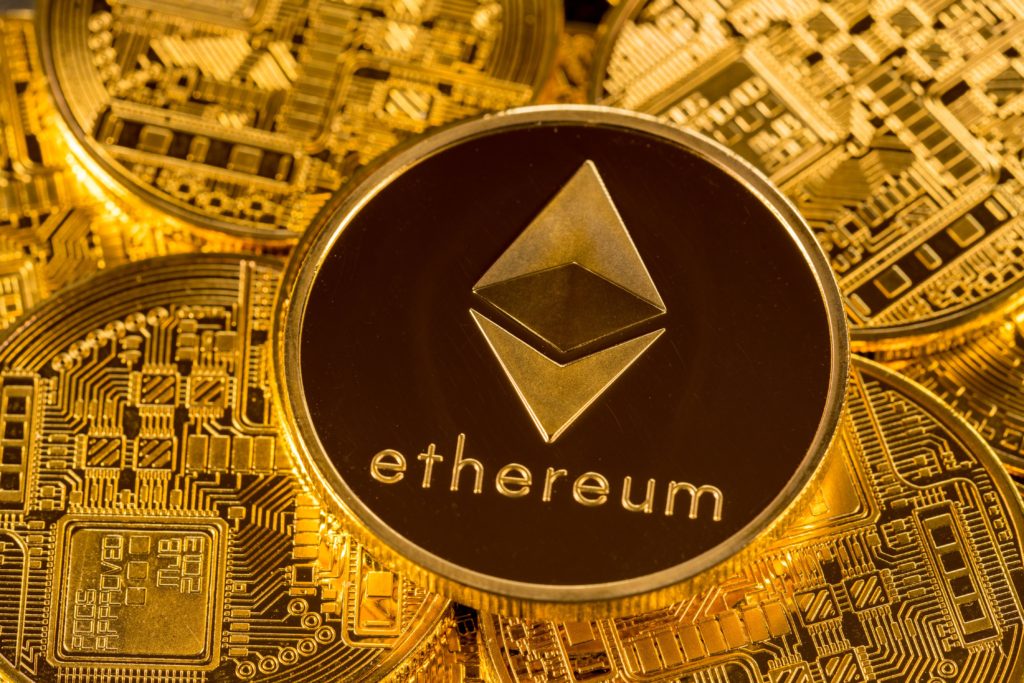
A novel Ethereum token standard, ERC-404, has swiftly garnered attention within the blockchain community, eliciting both admiration and critique from seasoned industry figures.
Termed ERC-404, this standard amalgamates the functionalities of ERC-20 tokens with those of ERC-721, commonly utilised in crafting non-fungible tokens (NFTs).
Notably, ERC-404 facilitates the fractional ownership of NFTs, exemplified by the subdivision of assets like the Bored Ape Yacht Club among numerous wallet holders.
Introduced earlier this year by anonymous developers under the alias “ctrl” and “Acme” within the Pandora project, ERC-404 has already seen notable success, with the inaugural ERC-404 token witnessing a remarkable surge, returning 530% since its issuance on Feb. 6.
Presently, Pandora ERC-404 tokens command a trading price of $23,484 and boast a market cap of $235 million.
Plans for the protocol’s future entail a reduction in protocol gas fees by 28% to 50%.
Nonetheless, not all share an optimistic outlook on ERC-404’s potential.
READ MORE: Institutional Investors Increasingly Embrace AI in Trading, JPMorgan Survey Finds
“The negative feedback centres on [ERC-404] deviating from standard ERC procedures, technically rendering it a non-ERC token,” remarked Miguel Prada, co-founder and tech lead at Diva Staking.
He further cautioned, “The absence of standardisation poses a significant constraint, potentially limiting independent integration and adoption by DeFi projects or exchanges.”
Echoing similar sentiments, Ryan Lee, chief analyst of Bitget Research, emphasised the experimental nature of ERC-404, cautioning against premature optimism.
“While ERC-404 presents an innovative prospect, its longevity and widespread acceptance remain uncertain,” Lee remarked.
Conversely, Akash Mahendra, head of developer relations at layer-1 blockchain Haven1, hailed ERC-404 as a “game changer.”
Mahendra lauded its capacity to transform Ethereum into a frontrunner in real-world asset tokenisation, opening avenues for novel utility.
However, despite growing momentum, ERC-404 awaits official endorsement from the Ethereum Foundation, with its status pending review as an Ethereum Improvement Protocol.
Mahendra, acknowledging the associated risks, urged cautious consideration from investors, citing potential vulnerabilities in unaudited projects.
As the blockchain community awaits the verdict on ERC-404’s fate, Mahendra advises vigilance amidst the excitement surrounding this pioneering innovation.
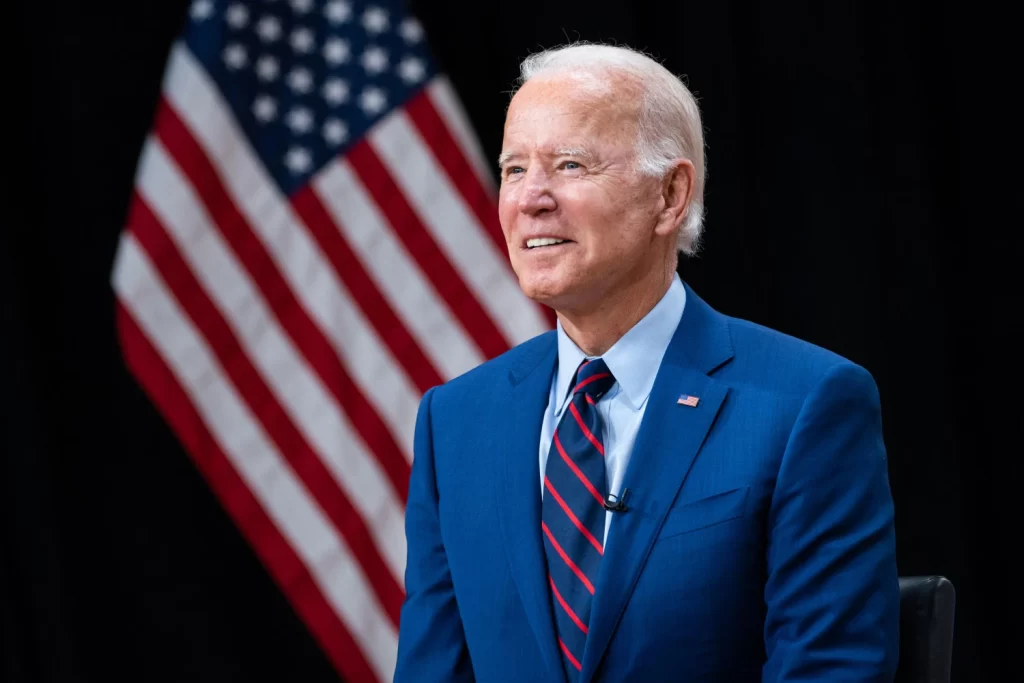
United States President Joe Biden has inadvertently assumed the role of a Bitcoin ambassador following the posting of a picture adorned with laser eyes on his Twitter and Instagram profiles.
Accompanied by the caption “just like we drew it up,” the post was in reference to the Kansas City Chiefs’ victory over the San Francisco 49ers in the 2024 Super Bowl.
Initially interpreted by many crypto enthusiasts as a direct nod to or endorsement of Bitcoin, Biden’s new profile picture with laser eyes utilises the “Dark Brandon” meme.
This meme alludes to the conspiracy theory suggesting that the Super Bowl was manipulated to ensure the victory of Taylor Swift’s partner, Travis Kelce’s team, thus enabling the pop sensation to subsequently endorse Biden for president.
The president’s social media team has previously embraced the Dark Brandon meme to cultivate a perception of Biden as trendy and daring.
The post from Biden’s account playfully suggests his involvement in plotting the team’s victory.
READ MORE: UN Probes North Korea-linked Cyberattacks on Crypto Firms, Profits Totaling $3 Billion
The crypto community swiftly reacted to the meme. Bankless speculated on the implications for the ETH/BTC chart, while the pseudonymous user WhalePanda indirectly accused Biden of “cultural appropriation.”
However, it is important to note that the president has not endorsed any policies favouring Bitcoin or cryptocurrencies in general, making it highly improbable for Biden to explicitly endorse a specific crypto asset.
According to Coinbase’s non-profit advocacy group Stand with Crypto, Biden is categorised as “anti-crypto,” based on five public statements displaying a negative stance towards digital assets.
The phenomenon of laser eyes, often employed as a symbol of optimism regarding Bitcoin’s prospects, originated as part of a social media movement aiming to drive Bitcoin’s price to $100,000 by the end of 2021, a goal that remained unfulfilled.
Prominent figures adopting the laser-eyed profile picture included NFL star Tom Brady, Paris Hilton, and Elon Musk.
While Biden unintentionally acknowledged Bitcoin, Jack Dorsey, CEO of Block (formerly Square), made a more overt reference to the digital asset during the Super Bowl.
Dorsey was spotted in the stands sporting a Satoshi T-shirt, modelled after the design of popular Nirvana tees, featuring a smiley face reminiscent of the band’s 1991 album Nevermind.
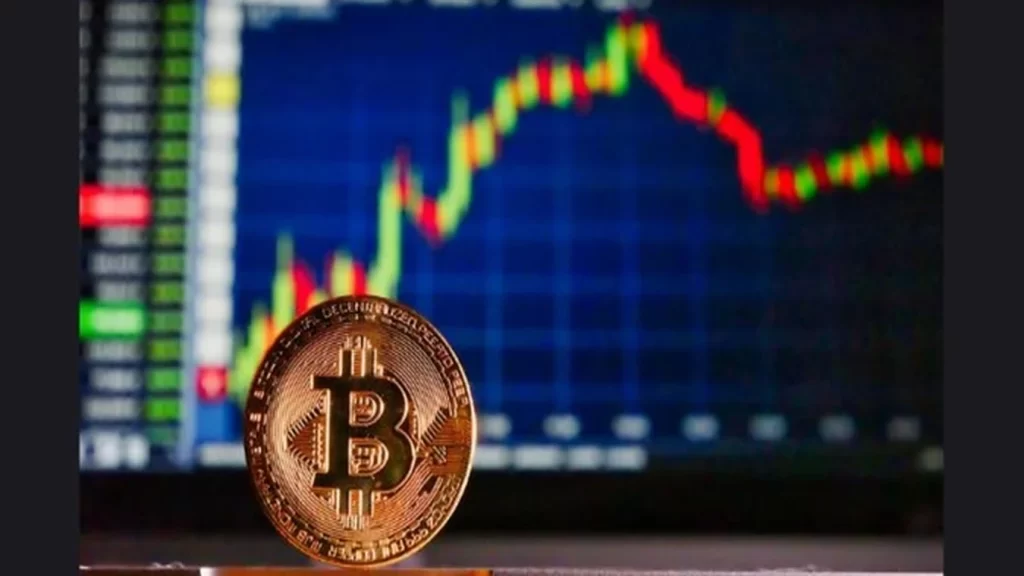
Bitcoin is anticipated to surge to a minimum of £200,000 in the forthcoming years and could even surpass half a million pounds, according to a prominent analyst.
In his most recent update on the long-term BTC price trajectory, advisor and early Bitcoin advocate Tuur Demeester projected BTC/USD to reach up to £600,000 by 2026.
Demeester attributed Bitcoin’s ascent to “trillions” of pounds in bailouts, suggesting that the cryptocurrency’s rally to £50,000 this week is indicative of a growing confidence in its future appreciation.
The bullish arguments for BTC’s price surge revolve around the significant events of April’s block subsidy halving and the recent launch of spot Bitcoin exchange-traded funds (ETFs).
These developments reduce the emission of new Bitcoin and exert additional pressure on its available supply.
However, Demeester highlights macroeconomic factors as crucial drivers behind Bitcoin’s trajectory. He stated, “In ’21 bitcoin topped at £69k. I’m targeting £200-£600k by 2026. Fueled by £ trillions in global bailouts/stimulus.”
Discussion on social media platform X echoed concerns about systemic issues in the U.S. banking system and the government’s potential need to provide liquidity to prevent their decline.
READ MORE: Crypto.com Defends Major Sponsorship Deals with F1 and UFC
Cointelegraph reported on the possibility of risk-asset price volatility in March due to these ongoing challenges.
Demeester suggested that Bitcoin’s next multiyear peak could occur anywhere from 2025 onwards, and he anticipates a surge in mainstream interest, particularly after Bitcoin’s recent milestone of £50,000.
He stated, “I expect for retail to start waking up soon. Remember, there is no fever like bitcoin fever.”
Demeester’s track record in the Bitcoin sphere spans over a decade, with accurate predictions of Bitcoin’s recent all-time high between £50,000 and £100,000 in 2019 and 2020.
However, not all analysts share Demeester’s optimism. Some foresee a less rosy future for Bitcoin and altcoins, with predictions of a market reversal, including a potential drop to £30,000.
One such voice is popular trader Il Capo of Crypto, who warned of a potential rejection of BTC from the £50,000 level while altcoins continue to surge, indicating a market divergence.
Despite the recent bullish sentiment, Il Capo of Crypto has maintained a BTC price target of just £12,000 for most of the past year.

As blockchain technology gains greater traction, students and the forthcoming cohort of young entrepreneurs demonstrate a burgeoning familiarity with the technology.
In an interview with Cointelegraph, Greg Siourounis, managing director of the Sui Foundation, discussed the foundation’s endeavour to establish a blockchain academy in partnership with the American University of Sharjah, based in the United Arab Emirates.
Siourounis articulated the initiative’s objective as heightening awareness among students regarding blockchain and its potential for crafting applications and platforms to tackle various issues.
He conveyed plans to conduct seminars and workshops aimed at educating youths about the capabilities and limitations of blockchain.
Upon initial interaction with university students, Siourounis was taken aback to discover a considerable degree of awareness concerning blockchain technology. Reflecting on this encounter, he disclosed to Cointelegraph:
“We walked into the amphitheatre where students from high schools and also from universities were presenting ideas, and surprisingly enough, seven out of 10 ideas had blockchain as one part of their solution.”
Siourounis elucidated that this indicates a growing understanding among students and young entrepreneurs of the utility of blockchain technology.
Consequently, he stressed the necessity of furnishing young individuals with the requisite tools to enhance their comprehension of blockchain’s potential and limitations.
Moreover, Siourounis underscored the importance of shielding students from misinformation, stating:
READ MORE: UN Probes North Korea-linked Cyberattacks on Crypto Firms, Profits Totaling $3 Billion
“So, it’s twofold. One is to educate them on the usability, but at the same time give them the right tools and filters to filter the information that is coming from outside about this technology.”
The establishment of the blockchain academy aligns with Sharjah’s aspiration to emerge as a hub for blockchain research and education.
Tod Laursen, chancellor of the American University of Sharjah, asserted that the academy seeks to provide students with insights into “future-oriented topics,” enabling them to engage with trending subjects and acquire skills essential for “thriving in the evolving landscape of tomorrow.”
Meanwhile, the Governor of Bangko Sentral ng Pilipinas (BSP), Eli Remolona, disclosed the central bank’s intention to introduce a wholesale central bank digital currency (CBDC) in the forthcoming years.
Speaking to Inquirer.net, Remolona elaborated on the BSP’s plan to develop a CBDC, affirming the central bank’s decision not to employ blockchain technology due to previous unsuccessful attempts by other central banks.
Crypto.com has positioned itself at the forefront of major fan bases in the Formula 1 (F1) and Ultimate Fighting Championship (UFC) worlds through lucrative sponsorship deals, driving the cryptocurrency exchange’s expansion.
In a comprehensive interview with Cointelegraph on February 9, Eric Anziani, president and chief operating officer of Crypto.com, discussed the company’s high-profile advertising ventures with F1 and the UFC, along with its naming rights agreement for the Crypto.com Arena in downtown Los Angeles:
“We’ve been fortunate to find these amazing partners. F1, the UFC, working in LA with the Crypto.com Arena and AEG.”
Anziani highlighted that market surveys conducted by the exchange demonstrate its global awareness ranking highly in brand recognition among retail cryptocurrency users.
“For a brand to be established in just a couple of years is very challenging to sustain.
Maintaining top-of-mind awareness for users is very challenging, and I think those investments have clearly paid off,” Anziani said.
ESPN estimates that the 2023 Formula 1 season attracted an average of 1.11 million viewers per race in the United States alone.
Meanwhile, F1’s 2022 viewership figures reveal an audience of over one billion people across the race calendar.
The UFC also boasts a global audience, with fight nights over the past two years drawing similar numbers to a single F1 race.
Major fights, such as Khabib Nurmagomedov vs. Conor McGregor, sold 2.4 million pay-per-view tickets.
Crypto.com’s logo prominently features on UFC octagons, securing prime advertising space in what is recognised as one of the world’s fastest-growing sports.
“We have also witnessed numerous activations with those brands being integrated, relevant to the fans and participants.
It has been tremendous in terms of bringing people into the space through these partnerships,” Anziani said.
READ MORE: Super Bowl LVIII: Crypto Ads Absent Amid Global Expansion Plans
These partnerships have contributed to Crypto.com’s expanding user base, with previous estimates indicating 80 million users in 2023.
Anziani informed Cointelegraph that the exchange is nearing 100 million users in 2024.
As its influence expands, Anziani noted that the exchange is also targeting specialist services for high-volume, high-net-worth traders.
In February 2024, the company launched Crypto.com Prime, an exclusive programme requiring a $1 million deposit for membership activation.
“When I want to execute a large trade, I need minimal fees and deep liquidity. So we aggregated all the books and provided them with two basis points,” Anziani explained.
The programme offers institutional-grade custody, $1 million account protection, uncapped fiat transfers, and individual account managers for high-net-worth traders focusing on wealth accumulation and inheritance and tax planning.
Regarding what sets exchanges apart in terms of business models and offerings as more of the global population engages with cryptocurrencies, Anziani offered three key considerations driving user preferences:
“It’s a great question but a complex one. First of all, regardless of your profile as a user, you want a platform where your funds are secure, and you can trust the platform.”
Anziani noted that some users prioritise convenient cryptocurrency access, while others, particularly high-value traders, value API connectivity, exchange liquidity, and fee structures.
“I believe compliance and security form the foundation that everyone looks for as a starting point,” Anziani added, emphasising its significance following ecosystem failures like FTX.
Crypto.com is one of several cryptocurrency exchanges and businesses tapping into the global audiences reached by major sports.
OKX sponsors English Premier League team Manchester City and F1 team McLaren.
Cryptocurrency betting platform Stake joined the F1 scene in 2024, securing a two-year naming rights deal with the Sauber F1 team.

Institutional investors are increasingly placing their bets on the role of artificial intelligence (AI) in the future of trading, as indicated by a recent survey conducted by the multinational investment bank JPMorgan.
In the latest edition of JPMorgan’s “e-Trading Edit: Insights from the Inside” survey, 61% of the 4,010 institutional traders surveyed across 65 countries foresaw AI and machine learning (ML) emerging as the most impactful technologies for trading within the next three years.
According to the survey’s findings, AI and ML were closely followed by application programming interface (API) integration, with 13% of respondents selecting it as one of the most important technologies shaping the future of trading.
Blockchain or distributed ledger technology and quantum computing both garnered 7% based on the preferences of the respondents, while mobile trading applications and natural language processing secured 6% of respondents.
AI and machine learning have been steadily gaining ground in JPMorgan’s reports in recent years, with the technology accounting for just 25% in ranked importance two years ago.
Conversely, institutions have grown increasingly sceptical about the role of other technologies in trading, including mobile trading applications and blockchain, according to JPMorgan’s survey.
Since 2022, blockchain and mobile trading applications have seen a decline in investor interest, with a reduction of 18% and 23% respectively as promising technologies for trading.
AI has been reshaping the future of finance by offering various features, including trade predictions or identifying real-time threats to market sentiment.
READ MORE: NY Attorney General Expands Complaint Against Genesis Holdco Amid Settlement Talks
According to a 2022 report by Nvidia, investors have been integrating AI and ML, with 30% of respondents reportedly managing to reduce their annual revenue by more than 10%.
While reaffirming the importance of AI in trading, institutions surveyed by JPMorgan have become less inclined to venture into cryptocurrency trading.
According to the survey results, 78% of institutional traders have no intentions to trade cryptocurrencies like Bitcoin or digital coins within the next five years.
This percentage has increased since last year, as 72% of respondents indicated a lack of willingness to trade such assets in 2023.
Simultaneously, the percentage of respondents who have initiated cryptocurrency trading or already engage in it has slightly risen from 8% in 2023 to 9% in 2024.
JPMorgan has been contentious regarding its stance on crypto over recent years.
CEO Jamie Dimon has persistently criticised cryptocurrencies like Bitcoin, even after the company was named an authorised participant in one of the fastest-growing spot Bitcoin exchange-traded funds by BlackRock.

Google has unveiled plans to initiate a support fund worth 25 million euros (£21.4 million) to aid in skill training for Europeans in the realm of artificial intelligence (AI).
The AI Opportunity Initiative for Europe intends to facilitate training so individuals can “seize the opportunity of AI” at a time when the continent is positioned to “lead the way” in utilising AI for economic purposes.
“We want to play our part in empowering Europe’s workforce, supporting people through change so that everyone can benefit.”
The tech giant stated that this initiative is collaborating with European Union governments, civil society, academics, and businesses to offer advanced AI training to local startups, with a specific emphasis on vulnerable communities.
Approximately 10 million euros will be allocated to equip workers with the necessary skills to avoid “being left behind.”
A similar initiative was initiated by the Italian government in mid-2023, allocating millions of euros towards developing digital skills for workers at risk of displacement due to automation and AI.
Google mentioned that the AI programme follows a successful initiative launched in 2015 called “Grow with Google,” which provided free training to tackle the digital skills gap in the EU.
It claimed that the programme trained more than 12 million people.
READ MORE: UN Probes North Korea-linked Cyberattacks on Crypto Firms, Profits Totaling $3 Billion
This recent initiative also entails a collaboration with the Centre for Public Impact (CPI), inviting applications from EU-based social enterprises and nonprofits to extend AI training to the widest audience.
Adrian Brown, the CPI’s executive director, stated that AI has the potential to “transform the world” but could also exacerbate inequality gaps.
“This new programme will help people across Europe develop their knowledge, skills, and confidence around AI, ensuring that no one is left behind.”
Google has also broadened the languages available for its AI foundational course to 18 and stated it is incorporating additional resources into its Google Career Certificates programme to enable professionals to gain practical experience applying AI in workplace scenarios.
This announcement coincides with local regulators preparing to finalise the EU AI Act, which oversees the utilisation and advancement of AI technologies within EU legal jurisdictions.

Blowfish, a Web3 security firm, has uncovered two fresh Solana drainers capable of executing bit-flip attacks, as disclosed in an analysis shared on the social media platform X on February 9.
The drainers, Aqua and Vanish, were identified altering a condition within on-chain data even after a user’s private key had authenticated a transaction.
Blowfish revealed that these drainers’ scripts are purchasable for a fee within marketplaces that peddle scam-as-a-service tools.
The Blowfish team elucidated the modus operandi employed by the drainers to manipulate data and pilfer funds:
“On Solana, a dApp can be granted authority to submit a transaction.
If the dApp’s on-chain program incorporates a condition permitting it to transfer the user SOL or drain their account, a drainer could manipulate that condition at any given moment,” the analysis expounded.
Initially, users remain oblivious to the presence of these drainers. The victim signs what seems to be a legitimate transaction.
However, subsequent to obtaining the signature, the drainer temporarily retains the transaction.
“Subsequently, via a separate transaction, they alter the dApp’s condition; it transitions from ostensibly sending SOL to seizing it instead.”
READ MORE: European Commission Proposes Mandate for Tech Platforms to Detect AI-Generated Content
A bit-flip attack represents a form of exploitation where the perpetrator alters the value of certain bits within encrypted data to manipulate a system.
This tactic enables the attacker to modify the encrypted message sans knowledge of the encryption key.
By flipping specific bits, an attacker can sometimes alter a message in a foreseeable manner post decryption.
The Solana ecosystem has witnessed an escalating onslaught from crypto drainers.
According to Chainalysis, a leading online community centred around a single Solana wallet drainer kit boasted over 6,000 members as of January.
Brian Carter, senior intelligence analyst at Chainalysis, previously conveyed to Cointelegraph that the most effective draining kits possess the ability to target numerous assets through diverse means.
Allegedly, the Blowfish team has implemented defensive measures to automatically thwart the newly identified drainers and is actively monitoring on-chain activities.