

Ethereum network gas fees soared to an eight-month peak amidst a surge of interest in a novel, unofficial experimental token standard known as ERC-404.
On February 9, Ethereum network gas prices reached an average zenith of 70 gwei (£47 for a standard transaction), with peak gas expenses skyrocketing to as high as 377 gwei — a level not seen since May 12, 2023.
The surge in gas prices can be attributed to various factors, but it coincided with the escalating buzz surrounding the ERC-404 token standard across the cryptocurrency sphere.
The ERC-404 phenomenon commenced on February 5 when a venture named Pandora introduced the experimental standard.
Subsequently, it has witnessed an increase of over 6,100% and amassed a trading volume exceeding £347 million.
ERC-404 seeks to tether ERC-721 nonfungible tokens (NFTs) to ERC-20 tokens, facilitating what some have termed as fractionalised NFTs.
This permits multiple wallets to possess a portion of a single NFT and utilise that portion for trading or staking for loans.
Despite affixing the prefix “ERC” to this novel token breed, the nomenclature remains decidedly unofficial.
READ MORE: Institutional Inflows Drive Bitcoin Price Target to Six Figures for 2024
Speaking to Cointelegraph on February 9, one of the developers behind the Pandora project, known under the pseudonym “ctrl,” conveyed that the team was endeavouring to “significantly reduce” gas costs.
“We’re striving to optimise for gas because that’s a significant aspect of adoption and protocols’ desire to integrate… So, in certain instances, we might potentially reduce gas fees by around 300% to 400%.”
As per the pseudonymous user PopPunk, the co-founder of gas-auditing company Gaslite, an ERC-404 token utilises approximately three times the gas needed for an average NFT transaction.
The heightened network activity on February 9 predominantly stemmed from a surge in transactions on the decentralised exchange protocol Uniswap.
This surge can largely be attributed to the substantial trading volumes generated by Pandora, DeFrogs, and a plethora of other ERC-404 projects, boasting a combined trading volume exceeding £434 million in the past week, according to data from crypto aggregator Birdeye.

Cryptocurrency exchange OKX has declared its expansion into Argentina as part of its ongoing strategy to target the Latin American market, following its debut in Brazil in late 2023.
In a recent statement, OKX announced that Argentine users would have access to OKX’s crypto exchange platform, a self-custody wallet, and the ability to trade nonfungible tokens (NFTs).
Argentina occupies the 15th position on the Chainalysis 2023 Global Crypto Adoption Index, which evaluates on-chain and real-world data to gauge nations leading in crypto adoption. Meanwhile, Brazil holds the ninth rank.
“We’re thrilled to announce the official launch of our exchange and Web3 Wallet in Argentina! This global expansion is a vital step in unlocking the potential of crypto across Latin America,” OKX tweeted.
The announcement follows about nine months after competitor crypto exchange Binance introduced exchange services in Argentina.
Maximiliano Hinz, director of Binance for the Latam southern cone, explained to Reuters in April 2023 that the expansion decision stemmed from the growing demand for crypto services in Argentina.
“This launch has to do with the public demand that exists here,” Hinz stated.
OKX president Hong Fang highlighted Argentina’s significant growth in crypto adoption:
“We are delighted to officially launch the latest expansion of our world-class exchange and Web3 wallet in one of the most vibrant cryptocurrency markets in Latin America.”
Fang added that Argentina is a priority as part of its expansion plans across Latin America.
“The promise of crypto and blockchain is expanding across Latin America, and Argentina represents a crucial launchpad for our regional growth strategy,” Fang stated.
This follows the recent announcement of the “Bases for the Reconstruction of the Argentine Economy” decree passed in December 2023, permitting Argentine citizens to use Bitcoin and other cryptocurrencies to settle contracts within the country.
READ MORE: Bitcoin’s L2 Ecosystem is Booming as Halving Approaches
Diana Mondino, the Argentine minister of foreign affairs, international trade and worship, confirmed the news that “Argentina contracts can be settled in Bitcoin, and also any other crypto.”
However, in October 2023, Cointelegraph reported that Latin America prefers centralized exchanges over decentralized exchanges compared with the rest of the world.
“Latin America shows the highest preference for centralized exchanges of any region we study, and tilts slightly away from institutional activity compared to other regions.“
Nonetheless, in May 2023, Argentina’s central bank banned payment providers from offering crypto transactions to reduce the country’s payment-system exposure to digital assets, subjecting fintech companies to the same regulations as conventional financial institutions in Argentina.

The freshly introduced spot Bitcoin exchange-traded funds (ETFs) have wrapped up their inaugural 20 trading sessions, attaining the £10 billion milestone in assets under management (AUM).
As per figures from BitMEX Research, net flows for the nine ETFs hit £2.7 billion on Jan. 9, led by BlackRock’s iShares Bitcoin Trust, presently holding Bitcoin (BTC) valued at £4 billion.
The runner-up is Fidelity’s Wise Origin Bitcoin Fund, managing over £3.4 billion in BTC.
The ARK 21Shares Bitcoin ETF has also crossed the billion-pound milestone, housing approximately £1 billion worth in its portfolio.
In contrast, Grayscale Bitcoin Trust (GBTC) has seen outflows of £6.3 billion over the past 30 days, with £51.8 million in outflows recorded on Feb. 9, marking its lowest daily volume of capital withdrawals since conversion.
“I thought the Nine would get a bit weaker as GBTC outflows subsided but they’re getting stronger,” remarked Bloomberg analyst Eric Balchunas on X.
Invesco experienced an outflow, becoming the first non-GBTC product to do so.
READ MORE: Bitcoin’s L2 Ecosystem is Booming as Halving Approaches
Over the forthcoming months, Bitcoin ETF flows are anticipated to surge as trading firms conclude their due diligence on the investment vehicles.
Bitcoin’s price stabilised above technical support in January, “including its 200-day moving average (£29,902) and on-chain mean (£33,487),” according to a recent analysis from ARK Invest.
Throughout the month, the cryptocurrency price increased by 0.6% to £42,585.
ARK Invest’s bullish perspective suggests that Bitcoin is supplanting gold as a risk-off asset. “Bitcoin’s price relative to that of gold has increased twenty-fold in the last 7 years.
In January 2024, Bitcoin could buy ~20 troy oz of gold, compared to 1 troy oz in April 2017,” notes the analysis. “We believe this trend should continue as Bitcoin increases its role in financial markets.”
Given the macroeconomic context, the asset manager foresees that “as inflation cools and real rates rise, Bitcoin should remain antifragile as banks continue to lose deposits.”
The United States Securities and Exchange Commission (SEC) authorised Bitcoin ETF applications from ARK 21Shares, Invesco Galaxy, VanEck, WisdomTree, Fidelity, Valkyrie, BlackRock and Grayscale on Jan. 10, over a decade after Cameron and Tyler Winklevoss applied to launch the Winklevoss Bitcoin Trust in 2013.
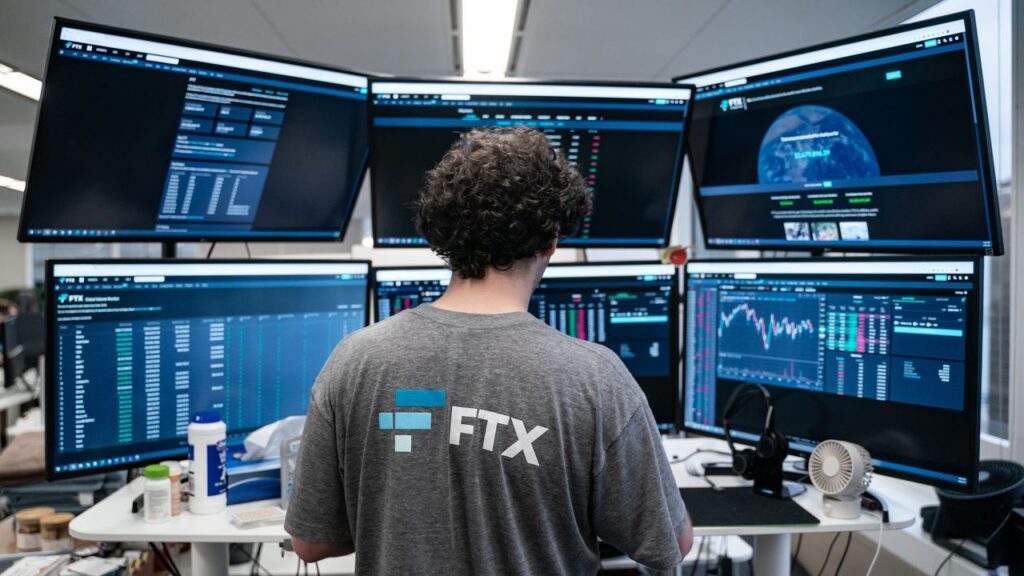
The FTX debtors’ estate, under the leadership of CEO John Ray III, has submitted an application to sell Digital Custody to CoinList at a substantial reduction of $500,000, with funding provided by Digital Custody’s original CEO and seller, Terence Culver. FTX had originally acquired Digital Custody for $10 million.
As per FTX’s legal submission, the acquisition of Digital Custody was intended to provide custodial services for FTX US and LedgerX.
However, the integration of Digital Custody into the FTX ecosystem was incomplete when former CEO Sam Bankman-Fried filed for bankruptcy in November 2022, just three months after acquiring Digital Custody.
FTX had procured the company through two transactions of $5 million each in December 2021 and August 2022.
FTX has filed a motion to sell Digital Custody for $500,000, a significant markdown from the $10 million it was purchased for, to Terrence Culver, the individual who sold Digital Custody to FTX for $10 million.
A&M (UCC/Ad hoc agrees) says this reflects a fair price for the valuable license from South Dakota that allows it to provide custody.
FTX’s legal team also clarified that since FTX US hasn’t been restarted, Digital Custody holds little value for the estate.
It states, “DCI is no longer useful to the Debtors’ business, given the Debtors’ sale of LedgerX and that it is unlikely for the Debtors to sell or restart FTX U.S..”
Nonetheless, Digital Custody retains a custodial license from the South Dakota Division of Banking.
After assessing three offers, including one from Culver, the debtors opted for the superior offer, considering its ability to swiftly complete the sale and the favourable relationship with Culver, which is anticipated to expedite regulatory approval.
FTX’s legal team indicated that both the committee and the ad hoc committee of non-U.S. customers of FTX.com endorsed the transaction.
READ MORE: European Commission Proposes Mandate for Tech Platforms to Detect AI-Generated Content
However, as part of the agreement, FTX reserves the right to seek a better offer for Digital Custody until three days before the closure.
Failure by the buyer to finalise the deal will incur a reverse termination fee of $50,000.
The now-defunct cryptocurrency exchange FTX has clarified that its restructuring plans do not involve a relaunch of the company but are focused on fully reimbursing customers.
During a court hearing on January 31, FTX lawyer Andy Dietderich stressed that despite exhaustive efforts, there are no plans to revive FTX.
Prior to this, numerous FTX users petitioned a U.S. bankruptcy judge to prevent the collapsed crypto exchange from valuing their cryptocurrency deposits using 2022 prices, claiming that this approach deprived them of the recent surge in crypto prices.

Bitcoin is now eyeing a lofty six-figure price target for 2024 amidst a surge in institutional investment pouring into the market.
In a recent analysis posted on X (formerly Twitter) on February 11, Ki Young Ju, CEO of analytics platform CryptoQuant, forecasted a staggering $112,000 per bitcoin for this year.
The introduction of the United States’ inaugural spot Bitcoin exchange-traded funds (ETFs) last month has paved the way for institutional funds to flow in.
Ki Young Ju concurs, with his latest market projection taking into account the impact of these investments on Bitcoin’s realized cap.
Realized cap indicates the collective price at which the BTC supply last changed hands.
As per CryptoQuant data, the combined inflows from ETFs could potentially inject an additional $114 billion into the existing $451 billion tally for this year alone.
“The Bitcoin market has witnessed $9.5 billion in spot ETF inflows per month, potentially elevating the realized cap by $114 billion annually.
Even with outflows from $GBTC, a $76 billion increase could push the realized cap from $451 billion to $527-565 billion,” remarked Ki.
The analysis also referred to the ongoing outflows from the Grayscale Bitcoin Trust (GBTC), which have notably decreased in the first month since its transition to a spot ETF.
Summing up the anticipated price movements, Ki provided a “worst-case” scenario range of $55,000 to $59,000.
READ MORE: Boosting Your Cryptocurrency’s Brand Before the 2024 Halving
BTC price projections for the upcoming year vary considerably, with bullish outlooks dominating the discourse for 2024.
Market observers are particularly intrigued by the block subsidy halving scheduled for April.
In recent discussions, more voices have lent credence to the possibility of a new all-time high occurring even before the halving event, now just over two months away.
Adam Back, CEO of Bitcoin technology firm Blockstream and a prominent cryptocurrency developer, expressed his views on X, hinting that BTC/USD could potentially surpass the six-figure milestone sooner than the consensus anticipates.
“On October 1st, 2021, Bitcoin surged past $47k as if it were yesterday, then proceeded to reach the $69k all-time high,” he wrote, alluding to Bitcoin’s recent surge to record highs.
“That upward trajectory took 41 days. With 70 days left until the halving, it’s just another indicator of what’s possible, and how we might see a new all-time high or even $100k before the halving.”
Sunday, February 11th, marks the annual Super Bowl LVIII in the United States, and there’s intrigue within the crypto community regarding rumours of no crypto ads appearing this year, akin to 2023.
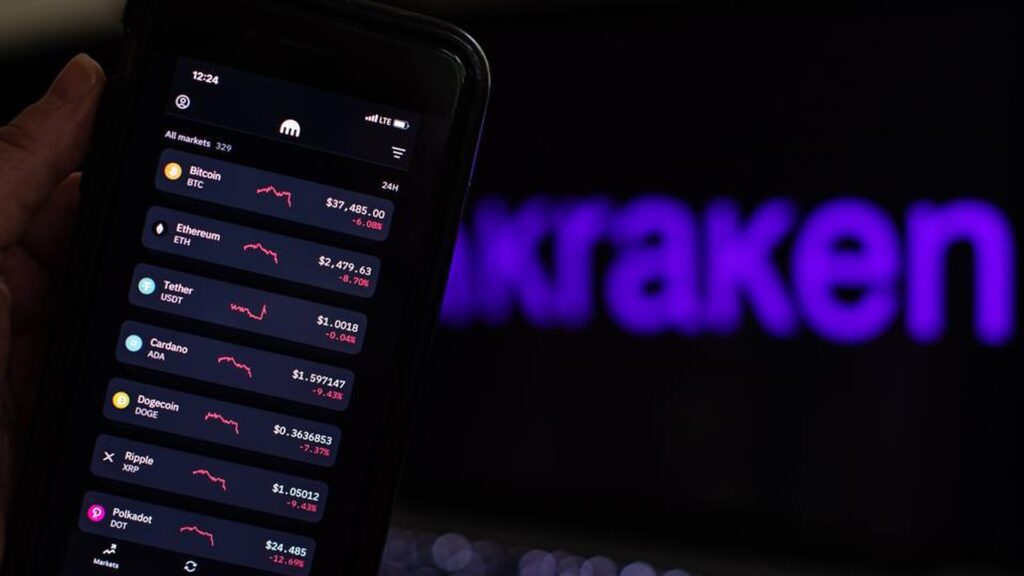
However, an executive of crypto exchange Kraken suggests that the event’s American-centric focus clashes with its global plans.
The now-defunct crypto exchange FTX stood out as a major advertiser during the 2022 Super Bowl, featuring comedian Larry David, just nine months before its collapse.
On February 1st, Cointelegraph reported that David regretted taking part in the FTX promotion, in which he encouraged viewers “not to miss out on the next big thing.”
“So, like an idiot, I did it,” David declared.
In a recent Fox Business report, Kraken’s chief marketing officer, Mayur Gupta, emphasised a transition in crypto advertising, moving away from generating hype toward educating the public about the potential of crypto for the future.
“If the last wave of crypto marketing was all about hype and FOMO [fear of missing out], this current wave has to be rooted in education and awareness for the substance and true value proposition of crypto as a movement that will bring financial freedom and inclusion.”
Furthermore, Gupta pointed out that the Super Bowl mainly caters to an American audience.
He anticipates that the next major wave of crypto users will come from locations worldwide, suggesting the exchange’s preference for events with a more global appeal.
“The Super Bowl is a very US-centric event, and the next wave of crypto users will come from all around the world, not just the United States,” he stated.
Meanwhile, Reuters recently reported that the US federal government is working to increase the global viewership of the Super Bowl this year.
READ MORE: Boosting Your Cryptocurrency’s Brand Before the 2024 Halving
The game will reportedly be broadcast in 190 countries, and the US State Department will help organise watch parties in 30 locations abroad.
According to data from Nielsen, the Super Bowl has reached over 100 million viewers every year since 2010.
There was speculation that with the United States Securities and Exchange Commission (SEC) approving 11 spot Bitcoin exchange-traded funds (ETFs) on January 10th, some asset management firms would consider advertising to the Super Bowl audience.
However, the world’s largest asset manager, BlackRock, reportedly has not secured any advertisement slots for its spot Bitcoin ETF product.
Another recently approved applicant, asset management firm VanEck, recently shared on X that seeing no crypto ads in this year’s Super Bowl will be a positive.
Cointelegraph recently reported that during Super Bowl LVII in 2023, the first game following bankruptcy filings from several crypto firms and a market downturn, crypto advertisements were absent.
According to Paul Hardart, a clinical professor of marketing for New York University’s Stern School of Business, “fun, humour and entertainment” will likely be the theme of ads for Super Bowl LVIII, in a “notable shift away” from artificial intelligence and crypto firms.
On 8th February, the New York State Office of the Attorney General (NYAG) resolved its case involving the Gemini Earn programme by reaching an agreement with Genesis Global Holdco.
Yet, the following day, the NYAG submitted an expanded complaint in the same case, identifying Genesis Global Holdco and all its codefendants.
The Genesis holding company petitioned the New York Southern District Bankruptcy Court on 8th February to ratify a settlement pact between itself and the NYAG. According to the filing, the settlement was the result of extensive negotiations.
Under the Genesis settlement, the NYAG would be reimbursed for its claims on equal terms with the United States Securities and Exchange Commission (SEC), but only after creditors were paid.
Genesis previously reached a $21 million settlement with the SEC on 31st January. Both settlements will be deliberated on 14th February.
In October, New York Attorney General Letitia James initiated a lawsuit against Genesis Holdco, Genesis Global Capital, Genesis Asia Pacific, their parent company Digital Currency Group (DCG), cryptocurrency exchange Gemini, former Genesis CEO Michael (Soichiro) Moro, and DCG CEO Barry Silbert for fraud linked to the Gemini Earn programme.
The NYAG alleged that the parties had defrauded over 230,000 investors, including 29,000 New Yorkers, of more than $1 billion.
On 9th February, James revealed that the NYAG was broadening its allegations against DCG, Silbert, and Moro, having identified additional investors who suffered losses:
“In total, OAG [Office of the Attorney General] found that these companies defrauded more than 230,000 investors out of more than $3 billion.”
Despite the settlement reached the previous day, Genesis Holdco (as one of the “Genesis/DCG Defendants”) was implicated in five of the ten causes of action in the new complaint. According to the revised complaint:
“Gemini solicited money from the public with false assurances that Earn was a highly liquid investment and that Genesis Capital was creditworthy based on Gemini’s ongoing risk monitoring. In reality, however, Gemini’s confidential risk reports found that Genesis Capital posed a high risk of default.”
Allegations that the Genesis loan book was overcollateralised were unfounded, and a significant portion of Gemini customers’ funds were invested in FTX-affiliated Alameda Research, according to the complaint. Genesis also incurred losses due to the collapse of Three Arrows Capital, the complaint continued.
It seeks a permanent injunction against the defendants from conducting related businesses in New York state and the disgorgement of illegally obtained funds along with the reimbursement of investors.
Gemini and Genesis collaborated on the Gemini Earn programme, introduced in 2021. Genesis halted withdrawals in November 2022 and declared bankruptcy in January 2023, triggering a series of legal actions.
The SEC filed a complaint against Gemini and Genesis in January 2023. Gemini sued Genesis in July and again in October.
In January, Genesis settled with the New York Department of Financial Services over Anti-Money Laundering shortcomings and inadequate cybersecurity. As part of the agreement, it forfeited its New York BitLicense.
READ MORE: Dencun Upgrade Clears Final Testing Hurdle, Sets Stage for Ethereum Mainnet Deployment
Cryptocurrency exchange Coinbase, based in the United States, anticipated that crypto-oriented voters in California would have a significant impact on the 2024 elections based on their ownership and views on digital asset-related policies.
In a blog post on 9th February, Coinbase referenced data from business intelligence firm Morning Consult, indicating that 27% of Californians — approximately 8.2 million individuals — owned cryptocurrency.
The majority of crypto owners in the state — 78% — believed that policymakers should favour “new, innovative, and disruptive technologies,” and many indicated they would vote accordingly.
“California crypto owners overwhelmingly report that they would be much more likely to support candidates that hold pro-crypto and blockchain positions,” said Coinbase.
“Almost 4 in 5 CA crypto owners say they would be more likely to support a candidate who supports the U.S. crypto industry as a job creator and source of U.S. geopolitical strength.”
According to Coinbase, a slightly larger majority — 51% — of U.S. voters nationally among Generation Z and millennials expressed willingness to support candidates favourable to crypto in the 2024 elections.
U.S. President Joe Biden and former President Donald Trump, the likely candidates for both major political parties for president, have already appeared on primary ballots in South Carolina and New Hampshire.
Coinbase’s findings mirrored a survey released in January by the Crypto Council for Innovation, which suggested that most U.S. voters prefer lawmakers who seek “to write clear rules for cryptocurrency,” indicating that crypto users could be a “key swing voting bloc” in 2024.
“Congress and other policymakers should take note that crypto voters are engaged in their states and they want rules, not an unpredictable regulation-by-enforcement approach.”
Digital assets have become a campaign issue for Republican Party presidential candidates in the United States.
Before withdrawing from the race, Florida Governor Ron DeSantis opposed central bank digital currencies in the country. Trump has since adopted the issue, pledging to never allow a digital dollar if re-elected.

The United Nations (UN) is reportedly probing hacking groups linked to the Democratic People’s Republic of Korea (DPRK) for orchestrating cyberattacks on cryptocurrency firms over six years, amassing profits of approximately $3 billion.
As per a recent Reuters report citing unpublished UN documents, an independent sanction committee is overseeing the investigation into the DPRK-linked hacking groups.
The groups purportedly targeted 58 crypto-related firms to aid their weapon of mass destruction (WMD) development work between 2017 and 2023.
“The panel is investigating 58 suspected DPRK cyberattacks on cryptocurrency-related companies between 2017 and 2023, valued at approximately $3 billion, which reportedly help fund DPRK’s WMD development.”
The UN is reportedly expected to release a published report of its findings within the next two months.
In 2023, Chainalysis estimated that the hacking groups pilfered approximately £1 billion worth of crypto from 20 hacks.
READ MORE: FCC Outlaws AI-Generated Robocalls in US Following Surge of Fraudulent Voice Messages
However, there was a notable decrease compared with 2022, when crypto losses from North Korea-linked exploits totalled £1.7 billion across 15 hacking incidents.
Blockchain intelligence firm TRM Labs foresees that this year will witness even more significant damage from hacking groups, as their attack methods are anticipated to advance beyond those of previous years.
“Despite notable advancements in cybersecurity among exchanges and increased international collaboration in tracking and recovering stolen funds, 2024 is likely to see further disruption from the world’s most prolific cyber-thief.”
Meanwhile, Cointelegraph recently reported that the United Nations Office on Drugs and Crime has cautioned that crypto is being misused in illicit economies developing in East and Southeast Asia.
It highlighted poorly regulated or illicit casinos and “pig-butchering” romance scams that have witnessed major growth in the Mekong region.

Authors such as Michael Chabon, Ta-Nehisi Coates, and Sarah Silverman, who are taking legal action against artificial intelligence (AI) firm OpenAI for copyright infringement, have urged a California court to dismiss similar lawsuits filed by The New York Times (NYT), John Grisham, and others in New York.
In a court filing on Thursday, 8th February, the authors contended that allowing these duplicate lawsuits—such as the NYT’s case and a prior one initiated by the Authors Guild on behalf of Grisham and others—in different jurisdictions would result in “inconsistent rulings in overlapping class actions” and constitute a misapplication of court resources.
Comedian and author Sarah Silverman, alongside two other writers, Richard Kadrey and Christopher Golden, lodged a lawsuit against OpenAI’s ChatGPT for copyright infringement in July 2023.
They claimed that when ChatGPT produces summaries of their work, it reveals training conducted with copyrighted content.
The Californian plaintiffs also alleged that the New York lawsuits facilitated OpenAI’s engagement in “forum shopping” and “procedural gamesmanship.”
The authors in California informed the court that the New York cases closely mirror their own, indicating that OpenAI seeks more favourable conditions in New York following the rejection of its proposed litigation schedule by the Californian court.
READ MORE: UK Police Unit Thwarts 43 Fraudulent Web Domains Amid Rising Cybercrime Concerns
Various groups of copyright holders, including writers, visual artists, and music publishers, have taken legal action against tech firms like Microsoft-backed OpenAI over purported misuse of their work in training generative AI systems.
OpenAI, Meta, and others argue that their AI training constitutes transformational use and falls within the fair use copyright doctrine.
Meta highlighted parallels to legal precedents, such as Google’s book copying for search, which was deemed fair use in Authors Guild vs. Google in 2015.
In September 2023, a New York-based professional organisation for published writers, spearheaded by the Authors Guild and featuring George R.R. Martin, John Grisham, Jodi Picoult, George Saunders, and Jonathan Franzen, joined a proposed class-action lawsuit against OpenAI, citing alleged misuse of copyrighted material in its AI model training.
Subsequent complaints by the NYT drew upon both the U.S. Constitution and the Copyright Act to defend the original journalism of the newspaper.

The European Commission is set to mandate tech platforms such as TikTok, X, and Facebook to detect artificial intelligence (AI)-generated content, aiming to safeguard the upcoming European elections from misinformation.
In a move towards enhancing election security, the commission has launched a public consultation on proposed guidelines for very large online platforms (VLOPs) and very large online search engines (VLOSEs).
The recommendations seek to mitigate the democratic threats posed by generative AI and deepfakes.
Outlined in the draft guidelines are various measures to counter election-related risks, including specific strategies pertaining to generative AI content, pre- and post-election risk mitigation planning, and providing clear directives for European Parliament elections.
Generative AI has the potential to mislead voters and manipulate electoral processes by fabricating and circulating synthetic content that is inauthentic and misleading, including depictions of political figures, events, polls, and narratives.
The draft election security guidelines are presently open for public consultation in the European Union until March 7.
They advocate for alerting users on relevant platforms about potential inaccuracies in content generated by generative AI.
READ MORE: Dencun Upgrade Clears Final Testing Hurdle, Sets Stage for Ethereum Mainnet Deployment
According to the draft, the guidelines also propose directing users to authoritative information sources and advocate for tech giants to implement safeguards against the creation of misleading content that could significantly influence user behaviour.
Regarding AI-generated text, the current recommendation for VLOPs/VLOSEs is to “indicate, where possible, in the outputs generated the concrete sources of the information used as input data to enable users to verify the reliability and further contextualize the information.”
The proposed “best practices” for risk mitigation outlined in the draft guidance draw inspiration from the EU’s recently approved legislative proposal, the AI Act, and its non-binding counterpart, the AI Pact.
Concerns surrounding advanced AI systems, such as large language models, have escalated since the widespread adoption of generative AI in 2023, bringing tools like OpenAI’s ChatGPT into the spotlight.
While the commission has not specified the timeline for companies to label manipulated content under the EU’s content moderation law, the Digital Services Act, Meta announced plans in a company blog post to introduce fresh guidelines concerning AI-generated content on Facebook, Instagram, and Threads in the coming months.
Any content identified as AI-generated, whether through metadata or intentional watermarking, will be visibly labelled.