

The originator of the robocall that circulated in New Hampshire, bearing what appeared to be the voice of United States President Joe Biden urging citizens not to vote in the Jan. 23 primary, has been identified as Life Corporation and an individual named Walter Monk, as revealed by the New Hampshire Department of Justice.
Attorney General John Formella disclosed that the source of the calls was traced to a Texas-based firm, Life Corporation, and Walter Monk.
Utilizing an artificial intelligence (AI) deepfake tool, these automated messages aimed to interfere with the 2024 presidential election.
The state attorney general’s office swiftly labeled these robocalls as misinformation and advised voters in New Hampshire to disregard the message.
AI deepfake tools utilize advanced algorithms to fabricate convincing digital content, such as videos, audio recordings, or images, with the intention to deceive.
The Election Law Unit, in collaboration with state and federal partners like the Anti-Robocall Multistate Litigation Task Force and the Federal Communications Commission Enforcement Bureau, launched an investigation upon identifying voter suppression calls in mid-January.
READ MORE: South Korean Financial Regulator FSS Seeks Insights on Spot Bitcoin ETFs from US SEC
Following the investigation, the Election Law Unit issued a cease-and-desist order to Life Corporation for violating New Hampshire’s statutes on bribery, intimidation, and suppression.
Immediate compliance was demanded, with the unit reserving the option for further enforcement actions based on prior conduct.
Investigators from the Election Law Unit traced the calls to a Texas-based telecoms provider, Lingo Telecom.
Simultaneously, the Federal Communications Commission issued a cease-and-desist letter to Lingo Telecom for its alleged involvement in supporting illegal robocall traffic.
In response to these events, FCC Chairwoman Jessica Rosenworcel proposed considering calls featuring AI-generated voices as illegal, subject to regulations and penalties outlined in the Telephone Consumer Protection Act.
The proliferation of deepfakes has heightened concerns regarding AI-generated content, with institutions like the World Economic Forum and Canada’s primary national intelligence agency, the Canadian Security Intelligence Service, highlighting the risks associated with such technology and its potential for disinformation campaigns across the internet.
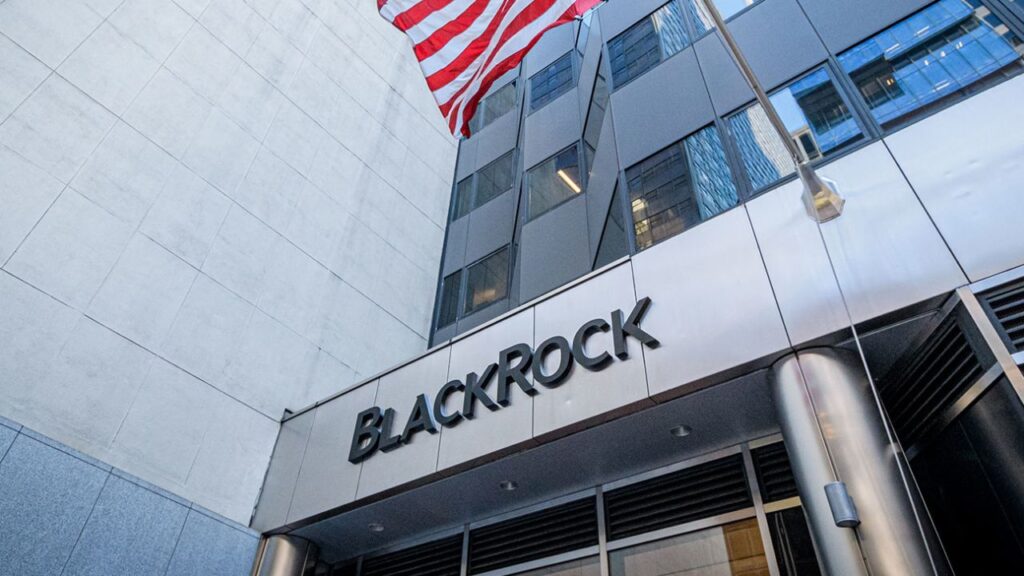
BlackRock’s iShares Bitcoin Trust exchange-traded fund (ETF) has swiftly ascended into the upper echelon of U.S.-issued ETF products, ranking in the top 0.16%.
As of February 5th, the ETF has attracted over $3.19 billion in inflows, trailing only behind broad index funds tracking the S&P 500 and Vanguard’s Total Stock Market ETF, as reported by Eric Balchunas, a senior ETF analyst at Bloomberg.
Remarkably, within just 17 days since its inception, $IBIT has surged into the Top 5 in year-to-date flows, surpassing 99.98% of other ETFs.
Comparing against the 3,109 ETFs presently trading in the United States, BlackRock’s ETF stands out, placing in the top 0.16% in terms of flows.
Balchunas offers a slightly different assessment, suggesting a 0.02% position when measured against an estimated 10,000 ETFs globally.
Fidelity’s Bitcoin Fund follows closely behind, securing the eighth spot among U.S.-based ETF products with $2.51 billion in inflows.
Both BlackRock and Fidelity’s Bitcoin ETFs have steadily climbed the ranks, advancing from eighth and tenth positions at the end of January.
READ MORE: ‘Very Few Speak of the Crypto Winter, Bitcoin is Rising in 2024’ – Serhii Tron on Crypto Investments
Notably, the approval of spot Bitcoin ETF products for trading on January 11th puts them at a seven-day trading disadvantage compared to other products whose flows are tallied from January 1st.
BitMEX Research data highlights the widening gap between BlackRock and Fidelity’s spot Bitcoin ETFs against seven other spot Bitcoin ETFs (excluding Grayscale) in terms of inflows.
ARK 21Shares and Bitwise secure third and fourth positions respectively, with over $100 million in accumulated flows each.
Meanwhile, Grayscale’s converted spot Bitcoin ETF, the Grayscale Bitcoin Trust (GBTC), saw a decline in outflows for the sixth consecutive day, recording $73 million on February 6th.
Notably, inflows from other Bitcoin ETF issuers have consistently outpaced outflows from Grayscale’s GBTC for at least seven consecutive days, marking a significant shift in investor sentiment.
The latest outflow figure represents an 88% decrease from GBTC’s peak outflow day on January 22nd, signaling a changing landscape in the Bitcoin ETF market.

A novel online service named OnlyFake, boasting the use of artificial intelligence (AI) “neural networks” and “generators,” has reportedly managed to successfully pass Know Your Customer (KYC) checks on multiple cryptocurrency exchanges.
The astonishing part? It costs a mere $15 per document.
Operating under the alias “John Wick,” the owner of OnlyFake claims that the service can help users bypass KYC checks on major exchanges like Binance, Kraken, Bybit, Huobi, Coinbase, and OKX, along with the crypto-friendly neobank Revolut.
This revelation has raised significant concerns about potential exploitation by crypto scammers and hackers, who could utilize these counterfeit documents to open exchange accounts and bank accounts while concealing their true identities, thereby making them harder to trace.
OnlyFake offers fake driver’s licenses and passports from 26 countries, including the United States, Canada, Britain, Australia, and several European Union nations.
Payments are accepted in various cryptocurrencies through Coinbase’s commercial payments service.
Recent reports indicate that OnlyFake’s users have successfully used these counterfeit IDs to evade verification at crypto exchanges like Kraken, Bybit, Bitget, Huobi, and even financial service providers such as PayPal.
READ MORE: Artists Ryder Ripps and Jeremy Cahen Ordered to Pay $9 Million in BAYC NFT Lawsuit
An alarming Telegram channel also showcases individuals sharing their apparent success stories with these IDs.
The OnlyFake website, however, asserts that it does not “manufacture forged documents as it is illegal.” Instead, it claims that its “templates are only for use in movies, TV shows, and web illustrations.” Nevertheless, generating a fake document on the platform reportedly takes less than a minute.
Users can upload their own photos or select one randomly from a “personal library of drops,” which are not generated using a neural network.
Furthermore, OnlyFake provides an image metadata spoofing feature, allowing users to manipulate GPS location, date, time, and device information, which some identity verification services rely on to authenticate documents.
This raises additional concerns about the potential for widespread abuse of this service.
Crypto industry executives have been voicing concerns about the growing sophistication of deep fake technology and its implications for identity verification.
In 2023, Binance’s Chief Security Officer, Jimmy Su, warned of an increasing number of scammers attempting to deceive exchange KYC checks using deep fakes, predicting that these videos would soon be convincing enough to fool human operators.
While some exchanges like OKX have responded promptly to these allegations by denying any condoning of fraudulent conduct and initiating investigations, the emergence of services like OnlyFake underscores the ongoing challenges faced by the cryptocurrency industry in combating fraud and ensuring robust security measures.
Coinbase, Binance, Kraken, Bybit, Bitget, Revolut, Huobi, and PayPal have yet to provide official comments regarding these developments.

Bitsonic, a prominent cryptocurrency exchange, has been embroiled in a scandal resulting in severe legal consequences for its CEO and technology chief.
According to reports from South Korean media outlet Yonhap News Agency on Feb. 6, Jinwook Shin, the CEO, has been sentenced to seven years in prison, while the firm’s technology chief, identified only as Mr. A, received a one-year jail term.
Their charges stem from the misappropriation of 10 billion South Korean won ($7.5 million) worth of customer deposits.
The Seoul District Court found Shin guilty of various offenses including fraud, forging records, falsifying records, and obstructing business through computer-related means.
Similarly, Mr. A was convicted of obstructing business through computer activities.
The court emphasized the significant damage inflicted upon trust in crypto exchanges by their actions, noting their evasion of responsibility and lack of remorse.
Moreover, it highlighted the failure to recover a substantial portion of customer funds.
The court revealed that Shin had manipulated transaction volumes on Bitsonic between January 2019 and May 2021.
He utilized company funds to purchase Bitsonic’s token, artificially inflating its value.
READ MORE: Binance Launches $5 Million Bounty to Root Out Corrupt Staff Amidst Token Listing Controversy
Additionally, he falsified deposits by injecting counterfeit currency into the exchange’s system, creating a facade of legitimate transactions.
Mr. A further exacerbated the situation by developing a program that artificially inflated cryptocurrency prices on the exchange.
Furthermore, Shin disseminated false information by announcing a partnership with an international exchange, which contributed to the scheme’s unraveling.
As a result, investors were unable to withdraw their funds, leading to losses totaling $7.5 million.
Bitsonic ceased operations in August 2021, citing internal and external issues. However, this is not an isolated incident in the cryptocurrency realm.
On the same day, the Seoul Prosecutors Office arrested the CEO and two executives of Haru Invest, a crypto yield platform.
Allegations suggest they misappropriated 1.1 trillion won ($830 million) from 16,000 users, primarily through reinvestments between March 2020 and June 2023, resulting in suspended withdrawals for users.
Grayscale CEO Michael Sonnenshein has urged regulators to approve exchange-listed options for spot Bitcoin exchange-traded funds (ETFs) in a recent post on February 5.
Sonnenshein highlighted the importance of options in supporting price discovery and assisting investors in navigating market conditions and achieving desired outcomes, such as income generation.
Exchange-traded options represent standardized contracts allowing investors to buy (via call options) or sell (via put options) a specific quantity of a financial asset at a predetermined price (strike price) on or before a specified date.
This enables investors to make predictions about the future movements of stocks, bonds, and the overall stock market.
These options are traded on exchanges like the Chicago Board Options Exchange (Cboe) and are subject to regulation by the United States Commodity Futures Trading Commission (CFTC) and the Securities and Exchange Commission (SEC). Clearinghouses like the Options Clearing Corporation (OCC) provide guarantees for these exchanges.
Sonnenshein pointed out that when the SEC approved the first Bitcoin futures ETF in October 2021, options for the ETF were available for trading the very next day due to automatic effectiveness, leveraging existing rules.
READ MORE: FTX Bankruptcy Raises Questions Over Legal Team’s Lucrative Fees
However, this rule does not apply to commodity-based ETFs, including recently approved spot Bitcoin ETFs, which undergo a potentially lengthy review process akin to the 19b-4 process for spot Bitcoin ETFs themselves.
The Grayscale CEO advocated for equal treatment of similar financial products, drawing parallels between spot and futures BTC-based ETFs.
He highlighted that national exchanges, such as the New York Stock Exchange, have filed Forms 19b-4 to amend listing standards, allowing listed options on commodity-based ETFs, including spot Bitcoin ETFs.
Currently, the SEC is reviewing applications for listed options on spot BTC ETFs and has opened comments on BlackRock’s proposed options with Cboe.
Bloomberg ETF analyst Eric Balchunas suggested that the SEC could make a decision as early as February 15 or no later than September 2024.
Sonnenshein concluded his post by emphasizing the need for fair treatment of spot Bitcoin ETFs and the entire crypto asset class.
His advocacy aims to ensure that investors have access to a broader range of financial products and options, promoting transparency and market efficiency.
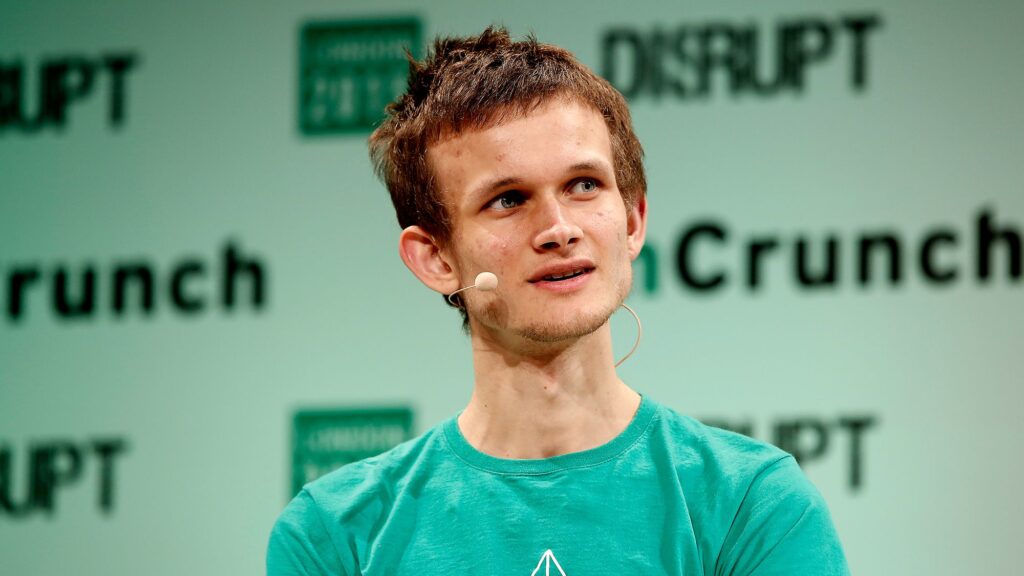
Ethereum co-founder Vitalik Buterin and the Ethereum Foundation are exploring multiple strategies to reduce Ethereum’s maximum block size, aiming to optimize the blockchain for a “rollup-centric roadmap.”
On February 5th, Buterin and Ethereum Foundation researcher Toni Wahrstätter highlighted the need to enhance block space utilization, noting that the effective block size has nearly doubled in the past year due to the increasing use of rollups for data availability and trends like Inscriptions.
The blog post outlines five solutions of varying complexity to raise block gas limits and discourage calldata usage, ultimately reducing the maximum block size and variance to accommodate more data in the future.
One of the simpler solutions proposed involves increasing the calldata cost from 16 to 42 gas, effectively reducing the maximum block size from 1.78 megabytes to 0.68 megabytes.
However, this approach could discourage apps like StarkNet, which rely on large calldata for on-chain proofs.
An alternative solution could entail increasing calldata costs while decreasing other opcode costs in the Ethereum Virtual Machine (EVM).
Another option is to cap calldata per block, as suggested in Ethereum Improvement Proposal (EIP)-4488, although this might also deter apps heavily reliant on calldata.
A separate calldata fee market, similar to data blob handling, is another potential solution, with pricing adjusting based on demand.
READ MORE: Best Crypto Projects Ranking
However, this approach adds complexity to analysis and implementation.
The final concept involves offering an “EVM loyalty bonus” to compensate calldata-heavy applications.
Data blobs, which are substantial data packets integrated into Ethereum’s blockchain to optimize data management and storage, are set to be introduced with the EIP-4844 Dencun upgrade.
Buterin and Wahrstätter acknowledged that a straightforward increase in calldata costs to 42 gas might be too blunt, while separate fee markets could introduce excessive complexity.
They suggested a balanced approach of increasing calldata costs while reducing the costs of certain operations or incentivizing calldata use within the EVM.
Notably, Buterin had previously proposed calldata limits per block in 2021 to lower gas costs.
In January, Vitalik Buterin had also recommended raising the Ethereum gas limit by 33% to 40 million to enhance network throughput.
This adjustment would allow more transactions per block, boosting overall network capacity but potentially increasing hardware demands and the risk of spam and attacks.
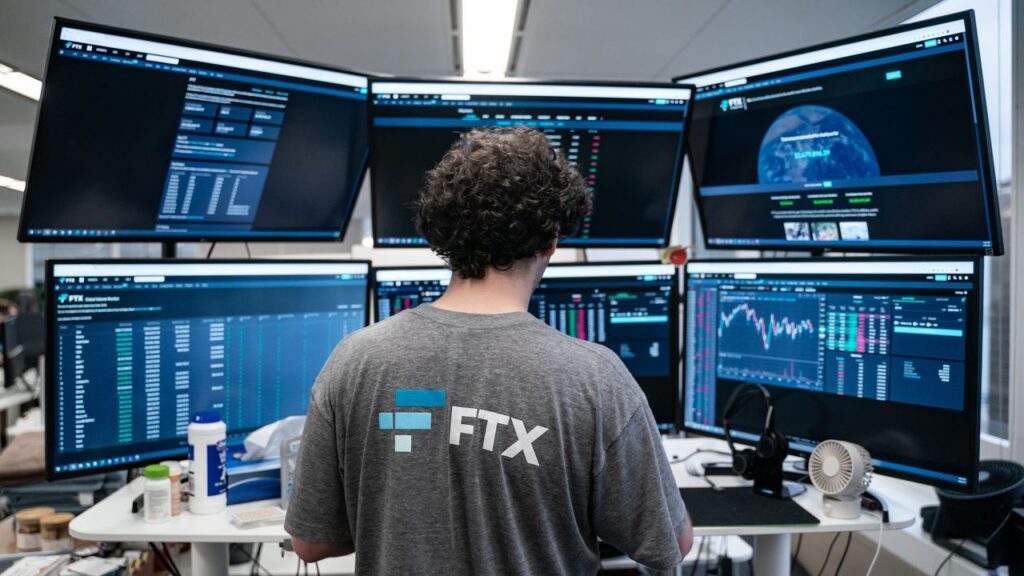
Crypto wallets associated with the now-defunct FTX exchange and its sister company, Alameda Research, have been active in transferring substantial digital assets totaling over $38.8 million to various cryptocurrency exchanges since January 2024, according to data from blockchain analytics firm PeckShield.
In February, these wallets were particularly active, with transfers totaling at least $7 million.
On February 4th, approximately $2.6 million in Ether was sent to Coinbase, and around $1.1 million in Ton (TON) and Fantom was transferred to FalconX and Wintermute.
On February 6th, the wallet addresses moved a minimum of $3.3 million in various assets to Coinbase, Coinbase Prime, FalconX, and Binance.
In January, these same crypto wallets linked to FTX and Alameda initiated transfers of at least $35 million to exchanges. On January 4th, they transferred $4.1 million in Cronos to Coinbase.
Shortly after, another $2.4 million in ETH was sent to Coinbase, followed by a transfer of 200 Wrapped BTC (WBTC) valued at $9 million to Binance on January 9th.
READ MORE; Genesis Global Capital Seeks Court Approval to Liquidate $1.6 Billion in Crypto Trust Shares
Later in January, FTX and Alameda continued their transfers, moving an additional $16.3 million to various exchanges.
On January 17th, addresses connected to these organizations sent $8.9 million in Tether Gold (XAUT) to Coinbase and $2.6 million in ETH to Wintermute.
Towards the end of the month, on January 30th, they transferred $2.3 million in ETH to Coinbase, $1.3 million in various altcoins to Binance, and a $1.28 million sum to GSR Markets.
These transactions unfolded against the backdrop of FTX exchange’s ongoing restructuring efforts and its commitment to fully reimburse its customers.
In a U.S. court hearing on January 31st, the exchange announced its intention to focus on repaying customers but emphasized that this objective was not guaranteed, raising concerns and skepticism among critics.
Following the hearing, criticism escalated, with former United States Securities and Exchange Commission official John Reed Stark describing the restructuring plan as a “highway robbery of highway robbers” on February 4th.
The plan’s perceived prioritization of legal team profits sparked further controversy within the cryptocurrency community.
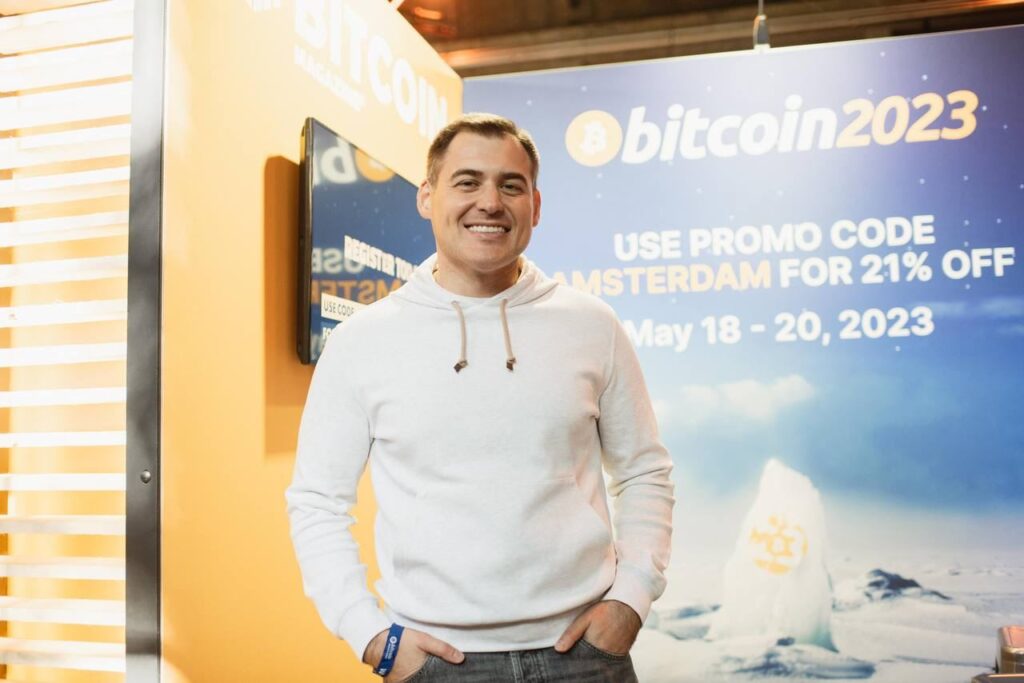
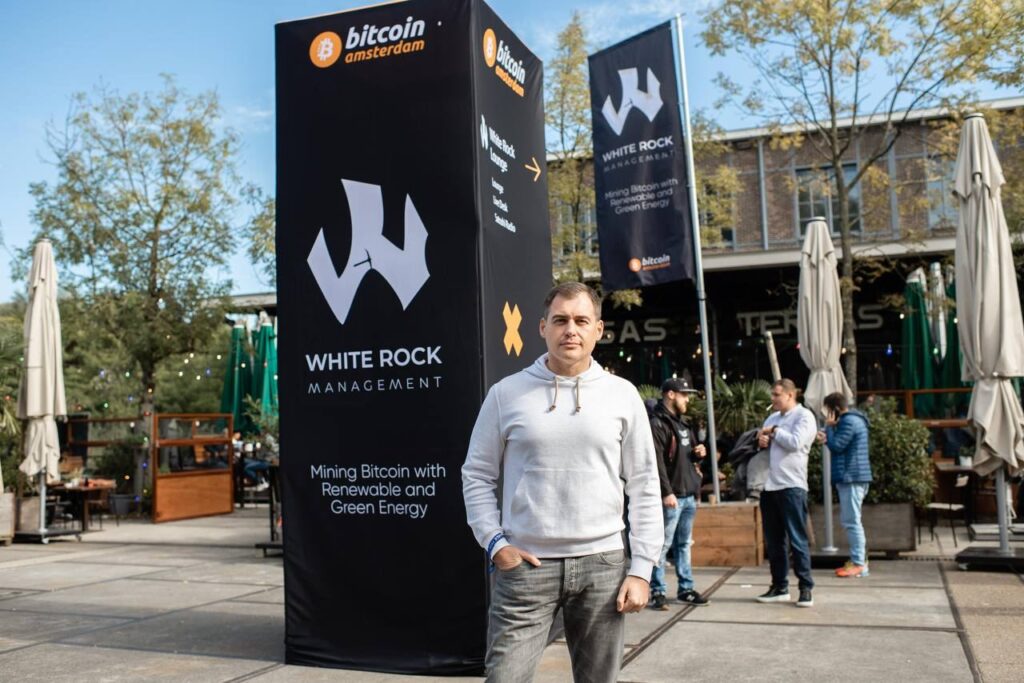
Serhii Tron, founder of White Rock Management, one of the largest mining companies in the world, spoke on the current state of the crypto market, and shared his vision of what comes next this year
What are the most valuable lessons we can learn from 2023?
What’s most important – and quite obvious for everybody – is that the crypto winter, the topic that so many people fueled their devastating forecasts with in 2022, is over and done with. A stone-cold fact, which I am not sure why anybody has any reason to question. The market did have to plough through a lot, but last year, the price of bitcoin leapt by 150%, and hit a $44 thousand mark. There were, of course, some corrections and fallbacks, however, the outcome is still very much on the bright side, so there are few people bringing up the $17 thousand indicator from November 2022.
BTC capitalization once again exceeded $816 billion. If you look at the entire market, you can see the capitalization growth of 2023 was a solid 108.1% – from $829 billion to $1.72 trillion, with the annual trade volumes reaching $36 trillion. Doesn’t feel like winter to me.
Were the external factors involved?
Naturally, there were many things at play, for the crypto market does not exist by itself. Back in 2022, world regulators had to handle the aftermath of the COVID-19 pandemic and forced monetary emission (to help businesses stay afloat and keep the wolf of the global crisis at the door) – monetary policies had to tighten in order to keep the global inflation at bay. Very active in this endeavor was the U.S. Federal Reserve, which raised their basic rates. But, by the end of 2023, the Feds softened a bit, with the consumer prices gradually going down.
Two major events took place in the United States: at the year’s start, the state regulator had to interfere and save the banks in distress (Silicon Valley Bank, Signature Bank) by means of its own Bank Term Funding Program (BTFP), which basically means a lot of money (around $400 billion) had to be pumped into the failing institutions; as the monetary policies eased up a little, the said money incrementally spread across the markets. For the loan and stock markets, and crypto market to boot, the money influx worked like a charm. Dollar instruments’ profitability decreased, but it went up in our segment, hence it feels like a natural order of things, all things considered.
Declining unemployment rates across the world and GDP growth were some other positive factors. Geopolitical tensions are still on the rise, though. I’m speaking about not only military actions in Ukraine and Israel, but the attacks on ships in the Red Sea, and bad blood between North/South Korea, and China/Taiwan.
On the bright side, people happened to notice the financial regulators are pretty interested in crypto. I am, of course, talking about the scandals and law suits against several crypto-dealing enterprises after FTX closure, which made a lot of market players really worried. Some even said it was about to bring the eternal winter upon our market. Which did not happen, by the way, as we soldiered on. I believe that, at least in part, it was possible thanks to the settlement that one of the world’s largest platforms Binance agreed to. Even though the company was fined, this solution is widely considered the optimal choice under the very tricky circumstances. The court hearings on another stock market (Coinbase) are still afoot, but we stay hopeful that both sides can also come to an agreement.
Do you think the state authorities will keep on pushing?
Most certainly, yes. Not in a bad way only, though, by imposing even more pressure and limitations. We can see that many regulators remain unmoved, and are dead-set to not accept crypto for what it is. However, it is pretty much common understanding that digital assets are the future. It doesn’t need to be fought; it needs to be reasonably regulated instead.

Yes, the regulations must be reasonable: measures of control need to be in place so that bitcoin and other coins are not used in arms deals and drug trade; the investors need to be protected from scoundrels and thieves. That being said, excessive regulations need to perish, for they only hold back development of the market and some necessary instruments.
Are you now speaking of the 10-year war with the U.S. regulator for BTC ETFs?
I’m now speaking in general. Surely, BTC ETFs implementation in the United States took way longer than it should have, and it definitely should have happened much sooner. However, hats off to the U.S. Securities and Exchange Commission (SEC) for what they did in January 2024. The entire market has been anticipating this move since the summer of 2023, when BlackRock applied for this instrument after the watershed court ruling in the Grayscale Investments case: this one company was the sole most persistent proponent of this instrument, and basically served as a trailblazer for the market as a whole.
I would like to point out, though, that many political figures warmed up to the crypto market last year. Robert Francis Kennedy Jr. (nephew of the legendary 35th U.S. President JFK), Democratic Party member and U.S. presidential candidate, openly supported crypto, and was the one to admit that bitcoin can back up the dollar exchange rate; he also compared BTC to gold. A lot was done in terms of lobbying and legislation by the U.S. Senator (Rep) Cynthia Lummis. Another vocal supporter of crypto is Javier Milei, the new President of Argentina, who’s put his team on a mission of crypto popularization in his home country. There are more politicians in favor of cryptocurrency: Lichtenstein’s Prime Minister, Minister of Finance Daniel Risch, leader of the Polish party “Porozumienie” (previously “Polska Razem”) Jarosław Govin, and many more political figures, who from their high chairs and offices substantiate the importance of digital assets. More importantly, they take real measures for coins integration.
In my home country of Ukraine, the work on legislative regulations has intensified. Before the full-scale invasion, one specialized law was adopted and signed (“The Law on Virtual Assets”), with one more piece of legislation in the works, which touches upon taxation, regulations, and other minor details. Several drafts have been introduced so far, with ongoing debates in full swing – which is always helpful; I expect the authorities to pay attention to the field experts and find common ground. Despite the sad reality of a fully-fledged atrocious war, popularity of BTC and other coins is only rising: Ukraine is No. 5 (preceded by the United States) on the Chainanalysis list of countries embracing crypto assets. According to this list, we beat Brazil, China, and Turkiye. Once we win this war, and once the legislation is sorted out, BTC in Ukraine will skyrocket.
Even under such conditions, Ukrainian crypto business keeps moving forward, including foreign countries. What are the objectives of your company?
My personal goals at the moment are to make White Rock Management one of the world’s top-3 miners, and make our company public. We are prepared to enter new markets and attract capitals. From day one, we designed our business in a way to be very clear and understandable to our investors. We imposed our principle from the very start (Environmental, Social, and Corporate), and we never messed with loans, which many of our colleagues do; thus, they’re up to the neck in debts.
We might fall short in terms of mining volumes, however, we’re not reliant on massive loans. We have zero debts and optimal EBITDA, which can be proven by three consecutive years of successful audits by international experts. I am certain that we’ll attract a lot of interest.
We are actively developing several projects in Canada and South America. Investment-wise, we’re talking about $100+ million. Also, alternative energy sources, green energy in particular, are one of our top priorities, and we have no intention of pulling back on this path.
This is, by the way, one of the reasons why miners face heavy criticism – excessive energy consumption (competing for it with other industries), especially in the middle of winter in regions burdened with all sorts of troubles…
State authorities of many countries have previously attacked the mining community as our industry was maturing, with some even launching full-scale propaganda campaigns against crypto: they claimed we’re parasites that stand in the way of developing economies. However, it was the miners who turned out to be the most prolific investors in alternative energy sources. Therefore, this angle of critique is no longer valid. There still might be some local complaints in specific regions, yet they are few and far in between.
No other field but crypto does as much to keep the green energy sector in motion. When I meet my colleagues, I find out about new projects on alternative energy sources that are being developed non-stop: for example, Bitfarms representatives spoke very engagingly on the use of hydro power in Norway, Finland, and Sweden, while Bit Digital is powered by the Niagara River in the USA (electric power generated by the currents of the Niagara River); some of our colleagues put to use geothermal power in Iceland. Our own White Rock Management is an avid proponent of hydro energy, but we are also very interested in American projects (Texas) in gas flaring, which help reduce CO2 emissions at the same time. We joined another 250 companies in signing the Crypto Climate Accord agreement that stipulates environmentally friendly and safe mining of crypto.
Do you think this subject will remain in demand in 2024? What is your general forecast for this year?
Yes, I am confident that environmentally friendly projects will remain popular among the miners – I know we’ll keep working on them for sure. This is right, and this is profitable, too, if you make your business work correctly.
Speaking of the crypto market as a whole, a lot will revolve around those new instruments and opportunities for the investors. I am, of course, talking about BTC ETFs that had a pretty solid start in the United States despite the Grayscale sale-off (Grayscale Bitcoin Trust), which people saw coming to begin with. The major share of stock exchange spots ended up in the liquidator’s pocket, FTX, which never denied it was after maximizing profits to pay off the creditors. Sooner or later, these sale-offs will come to an end, with more money gradually flowing into other funds.
I am sure the investments will grow, including the numbers from the retail market. Back in late-January, Google posted first ads of BTC ETFs, a move that will most certainly attract attention of general public across the board. New funds will emerge, not in the U.S. alone: not so long ago, a spot application was filed in Hong Kong, and I’ve faith it will come through. Let’s wait and see when Europe kicks this door flying open, for the big party is yet to start around here. Capitalization and trading volumes will grow, make no mistake about that.
Surely, other products will pass various stages of development too. 2023 saw significant interest in AI-generated tokens (AI segment of the crypto market exceeded 11%), GameFi and even meme-coins – something a lot of us managed to forget about entirely. But, speaking of the mass market, I am sure the lion share of attention will be dedicated to BTC ETFs.
Readers are always curious about expected rates of the main cryptocurrency of all…
I’m not keen on putting exact numbers on things, however, I am confident the price of bitcoin will keep on rising. With some fallbacks and profit locking, perhaps, but still on the rise overall. There are objective reasons for the upward dynamics.
I have mentioned the further expansion of BTC ETFs, which will perpetuate the increasing value of the coin. Let us not forget about another major event, the halving, which will most definitely affect the exchange rate fluctuations. Also, willingly or otherwise, the stimulation of the interest in BTC will depend on the world’s financial regulators that are on the path of easing their monetary policies. U.S. Federal Reserve in particular: American regulator kept the basic rates as they were (5.25-5.5% per annum), but might lower them in this coming March, as inflation retreats and employment rates improve. The next thing to happen will be a natural reaction: a decrease in the profitability of dollar instruments, and an easy flow of capital from the credit and stock markets to the cryptocurrency market, which promises more interesting earnings. This wheel will spin itself, and we will see the price of crypto rise.
Many analysts insist that by the end of the year’s first quarter or beginning of the second, bitcoin will comfortably sit around $50-60 thousand apiece. Who knows, though: should the stars align perfectly, this price tag might be even better.
Several top executives of the embattled cryptocurrency yield platform, Haru Invest, have been apprehended by South Korean prosecutors, marking a significant development in the ongoing investigation into the platform’s troubles.
The arrests were made by the virtual asset crime investigation unit of the Seoul Southern District Prosecutors Office, as reported by local news agency Yonhap on February 6th.
The key figures taken into custody include Haru Invest’s CEO and two other high-ranking executives.
They face serious charges of embezzling a staggering 1.1 trillion won (approximately $830 million) in cryptocurrency from around 16,000 Haru Invest customers.
Prosecutors assert that the executives systematically misappropriated the majority of funds deposited by customers over a span of three years, from March 2020 to June 2023.
During this period, they allegedly promoted Haru Invest as a stable and secure platform employing “risk-free diversified investment techniques.”
This development comes on the heels of Haru Invest’s latest cryptic announcement, dated February 4th, which reiterated the lack of concrete information regarding ongoing investigations and the overall situation following the detention of Bang Jun-ho, the major shareholder of B&S Holdings.
The company’s statement, signed by CEO Hugo Lee, reflects their continued efforts towards asset recovery.
READ MORE: Bitcoin Predicted to Reach New All-Time Highs in 2024 Despite Halving Challenges
Haru Invest initially sent shockwaves through the cryptocurrency community when it abruptly halted all withdrawal requests on June 13, 2023.
This sudden move prompted Delio, a depository and management firm that had entrusted some of its funds to Haru Invest, to follow suit and suspend withdrawals the following day.
The cryptocurrency platform claimed that these disruptions were the result of alleged fraudulent activities conducted by their consignment operator, B&S Holdings, formerly known as Aventus.
Haru Invest, established in 2019, had marketed itself as a cryptocurrency yield platform offering investors the potential to earn annual interest rates of up to 12% on their digital asset deposits.
In response to the suspension of withdrawals, Delio and other impacted investors launched a class-action lawsuit against Haru Invest in June 2023.
This legal action is part of broader efforts to seek accountability and restitution for the losses incurred by thousands of customers affected by the platform’s sudden suspension of services.
The arrests of the top Haru Invest executives mark a significant step towards achieving justice and resolving this high-profile cryptocurrency scandal in South Korea.
South Korea’s Financial Supervisory Service (FSS), the primary financial regulatory authority in the country, has unveiled its plan to seek insights from the United States Securities and Exchange Commission (SEC) regarding spot Bitcoin exchange-traded funds (ETFs).
The FSS is responsible for overseeing and regulating financial institutions under the broader jurisdiction of the Financial Services Commission.
On February 5, FSS Chief Lee Bok-Hyun presented the organization’s business plan for 2024 in Seoul.
As part of this plan, the FSS intends to visit major advanced financial markets, including New York, during the second quarter of the year.
The primary focus of these visits is to engage in discussions concerning various aspects of South Korean financial markets, with a specific emphasis on spot Bitcoin ETFs, according to reports.
Chief Lee also disclosed his intentions to meet with SEC Chair Gary Gensler later in 2024 to discuss digital assets and, notably, spot Bitcoin ETFs, among other financial matters.
He underscored the significant influence of the SEC’s recent approval of spot Bitcoin ETFs on global financial policies.
This announcement comes shortly after the SEC’s groundbreaking decision to greenlight 11 spot Bitcoin ETFs on January 10, marking the first-ever approval of such ETFs in the United States.
Previously, the SEC had rejected spot Bitcoin ETF applications, citing concerns about the crypto market’s relatively small size and susceptibility to market manipulation.
READ MORE; FTX Seeks Court Approval to Sell Anthropic Stake Amidst Bankruptcy
Following the SEC’s approval of spot BTC ETFs, the Korean securities regulator cautioned local firms against facilitating spot Bitcoin ETF transactions from the United States.
However, they also signaled their intention to review and update their regulatory framework pertaining to spot Bitcoin ETFs traded in the United States.
South Korea has established itself as a prominent regulator in the Asia-Pacific region when it comes to cryptocurrency markets.
The country often takes cues from the United States with regard to crypto regulations, including measures like prohibiting the use of credit cards for crypto purchases and banning crypto mixing services.
This ongoing collaboration with the SEC underscores South Korea’s commitment to staying current with evolving global crypto trends and regulations.