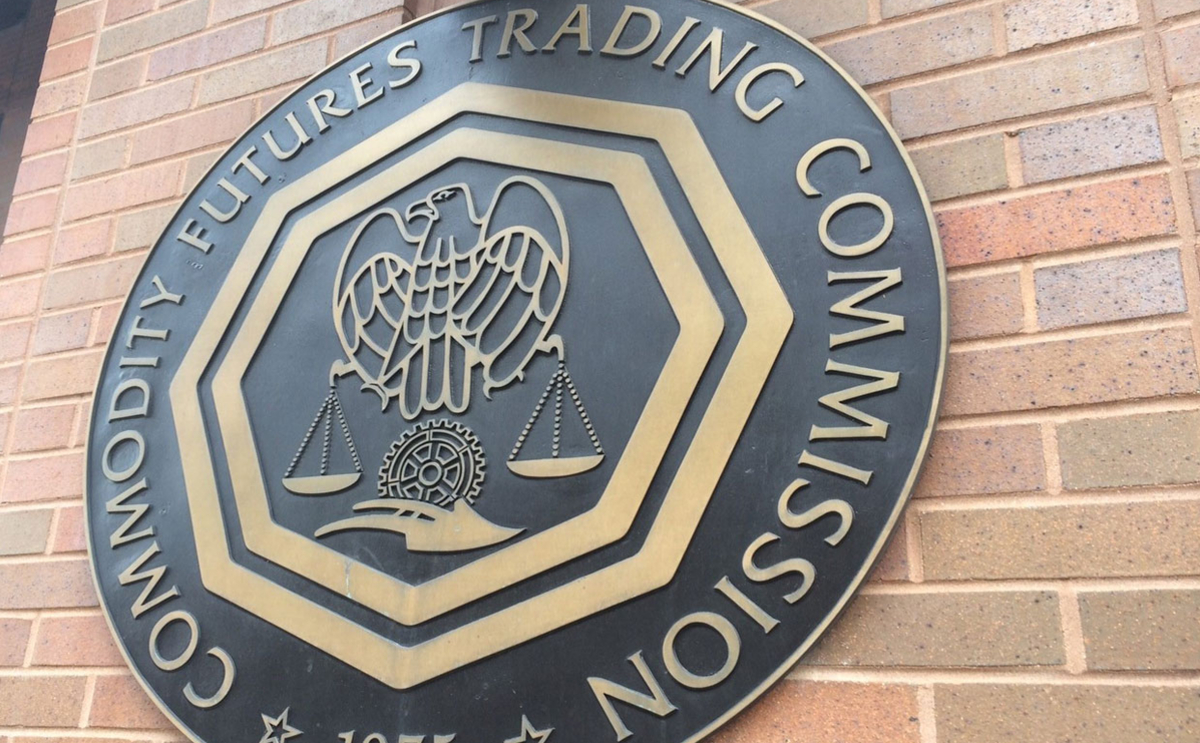
A new legal fight over perpetual futures tied to individual US stocks has pulled some of crypto’s biggest names into an unusual position: standing alongside their regulator against parts of traditional finance.
Coinbase, Kalshi and Kraken’s parent company, Payward, have asked a federal court in New York for permission to file a supporting brief. Trading firms DRW Holdings and Jump Trading and the venture investor Paradigm joined the request, filed on Monday. The brief defends the Commodity Futures Trading Commission’s authority to approve single-stock perpetuals, the products at the centre of a lawsuit brought by the Capital Markets Alliance. That group’s members reportedly include Cboe and Citadel Securities.
Perpetuals, or “perps,” let traders speculate on a price without owning the underlying asset, and unlike ordinary futures they have no expiry date. They are long established on offshore crypto venues. The CFTC has been working to bring them onshore. The Capital Markets Alliance sued on November 2, and the CFTC cleared the first equity perpetuals for eligible domestic venues the next day. Coinbase, Kalshi and Payward have each applied to list stock perps themselves.
The Alliance’s argument turns on definitions. Because a perpetual never expires, it says, the product is not a true future but a security-based swap, a category that cannot be listed on exchanges regulated by the CFTC. It also claims the CFTC overstepped by wandering into territory belonging to the Securities and Exchange Commission. One report says a federal judge has already raised questions about the regulator’s authority, though the case is at an early stage.
The crypto coalition rejects that reading. Its brief says perpetuals tied to single stocks can fit within the existing rules for security futures, which are overseen jointly by the SEC and CFTC. It adds that the SEC was involved from the outset, pointing out that both agencies had jointly invited public comment on whether perpetual contracts should be treated as security futures. In the group’s view, the claim that the CFTC went around the SEC does not hold up.
This is the second front on which the industry has lined up behind the regulator. A separate suit from CME Group challenges the CFTC’s treatment of crypto perpetuals, arguing those too are swaps. The CFTC has asked the court to dismiss it. In that case the industry has so far left the agency to argue for itself, but the stock-perps filing is the first time the coalition has made its own explicit legal argument.
The classification matters more than the label suggests. If perps are swaps, the CFTC would still have jurisdiction, but the products would have to be run under very different, and likely heavier, rules than futures. That could change who is able to offer them, to whom, and at what cost.
There is also a commercial angle. Perpetuals are a core product on crypto exchanges, and bringing stock-linked versions to US venues would give platforms like Coinbase and Kalshi a way to compete with established derivatives exchanges for the same trading flow. That is why the incumbents have moved so quickly to stop them.
For now, the court has not yet decided whether to accept the crypto firms’ brief. A ruling on the Alliance’s challenge will set the boundaries for how perps can be offered to American traders.