



LOS ANGELES, United States, August 8th, 2023, Chainwire
Xsolla, a global video game commerce company, and global cryptocurrency platform Crypto.com have announced a partnership for the integration of Crypto.com’s checkout solution into Xsolla’s Pay Station platform.
This transformative integration of Crypto.com Pay represents a significant advancement in the gaming industry and creates new possibilities for game developers and players, enabling them to accept cryptocurrency payments and streamline transactions in a user-friendly and secure manner for a universally enhanced experience. This pivotal update broadens the horizon for digital payment methods, offering players more diverse and preferred transaction options in digital and metaverse environments. This collaboration also marks a significant step for Crypto.com in building its presence and network across the gaming industry.
“There is significant potential in the convergence of gaming and Web3,” said Eric Anziani, President and Chief Operating Officer of Crypto.com. “By partnering with a global gaming leader like Xsolla and leveraging our respective assets and expertise, we are helping make that potential a reality – giving developers, publishers, and players a seamless way to engage and create value in the crypto economy.”
Xsolla’s Pay Station, which facilitates in-game purchases across 200+ regions and countries using a variety of compliant payment providers, is enhancing its service with the integration of Crypto.com Pay. This forthcoming development promises to expand the reach of developers and publishers, enabling them to engage a more diverse player base and tap into new, dynamic markets and revenue streams.
“We are thrilled about this partnership with Crypto.com and the significant integration of Crypto.com Pay into our Pay Station platform. The gaming industry is rapidly evolving, and we must adapt to meet those changes. The integration of cryptocurrencies as a form of payment offers game developers and players an innovative payment solution that aligns with the global shift towards digital currencies,” said Chris Hewish, CEO of Xsolla. “Our collaboration with Crypto.com marks a pivotal moment for the gaming industry, paving the way for a more inclusive and secure gaming ecosystem.”
“We are tremendously excited to take this first step with Xsolla as part of a broader collaboration initiative in Korea and on a global level,” said Patrick Yoon, General Manager of Crypto.com Korea. “We look forward to continuing to work with Xsolla in developing and advancing payment ecosystems and digital asset adoption.”
For more information about Crypto.com Pay and Pay Station, please visit: xsolla.pro/cryptocom
About Xsolla
Xsolla is a global video game commerce company with a robust and powerful set of tools and services designed specifically for the industry. Since its founding in 2005, Xsolla has helped thousands of game developers and publishers of all sizes fund, market, launch, and monetize their games globally and across multiple platforms. As an innovative leader in game commerce, Xsolla’s mission is to solve the inherent complexities of global distribution, marketing, and monetization to help our partners reach more geographies, generate more revenue and create relationships with gamers worldwide. Headquartered and incorporated in Los Angeles, California, with offices in Berlin, Seoul, Beijing, Kuala Lumpur, Tokyo, and cities around the world, Xsolla supports major gaming titles like Valve, Twitch, Roblox, Ubisoft, Epic Games, Take-Two, KRAFTON, Nexters, NetEase, Playstudios, Playrix, miHoYo, and more.
For additional information and to learn more, please visit: xsolla.com
About Crypto.com
Founded in 2016, Crypto.com is trusted by more than 80 million customers worldwide and is the industry leader in regulatory compliance, security, and privacy. Our vision is simple: Cryptocurrency in Every Wallet™. Crypto.com is committed to accelerating the adoption of cryptocurrency through innovation and empowering the next generation of builders, creators, and entrepreneurs to develop a fairer and more equitable digital ecosystem.
Learn more at crypto.com
Contact
Global Director of Public Relations
Derrick Stembridge
Xsolla
[email protected]
919-971-7855
Vienna, Austria, August 8th, 2023, Chainwire
TaskChain, a groundbreaking Web3 project, has just announced the launch of its presale today. This new development comes prior to the introduction of TaskChain’s innovative platform which is set to transform the way users earn income online.
For early investors, the news about TaskChain’s presale launch is another exciting opportunity to be part of a new Web3 platform’s journey.
With a vision to empower individuals worldwide, TaskChain combines Web3 technology with GameFi features with the ultimate goal of creating a virtual space where everyone can easily find diverse opportunities for extra income as they collaborate with others.
What is TaskChain’s Mission
At its core, TaskChain champions the financial inclusion of the masses through fun and user-friendly Web3 features. The platform has the potential to level the playing field, especially for low-income regions, thanks to the Quests, digital jobs, or one-time gigs that users can take on to earn cryptocurrency rewards on the platform.
Each “Quest” fulfillment is supported by video game mechanics with plans to introduce VR/AR features into the platform for a more immersive experience for users in the future.
Simply put, each “Quest” on TaskChain’s “Quest2Earn” feature breaks down everyday tasks into a game-like experience where users who fulfill these tasks get to earn XP points as they level up and collect rewards.
The rewards are paid in TaskChain’s native token called $TASKC.
In contrast to other similar platforms, TaskChain stands out as a true pioneer in the Web3 space.
Unlike traditional microtask platforms, TaskChain’s Quest2Earn feature brings the thrill of gaming to real-life tasks, making the earning process enjoyable. By providing a wide range of Quests and Quest2Earn functions tailored to individual preferences, TaskChain ensures that everyone, regardless of their background or location, can participate and earn rewards.
This inclusive approach empowers users from all walks of life to access valuable income opportunities and take charge of their financial futures.
How TaskChain works
As mentioned earlier, Quest2Earn is at the heart of TaskChain’s platform. Inspired by popular video game quests, Quest2Earn offers a dynamic and engaging earning experience, allowing users to boost their income, regardless of their location or skills.
Quest2Earn presents a wide array of exciting quests, each tailored to individual interests and categorized into various themes such as shopping, traveling, learning, trading, events, etc. By completing these and many other tasks within these quests, users not only earn cryptocurrency rewards but also gain experience (XP) points to level up and unlock milestone rewards, making the earning process enjoyable and rewarding.
Tom Klein, CEO of TaskChain, said;
“TaskChain’s Quest2Earn is a game-changer, transforming mundane tasks into exciting opportunities to earn income while having fun. We believe in providing diverse earning opportunities for our users and creating a vibrant community where collaboration and support thrive.”
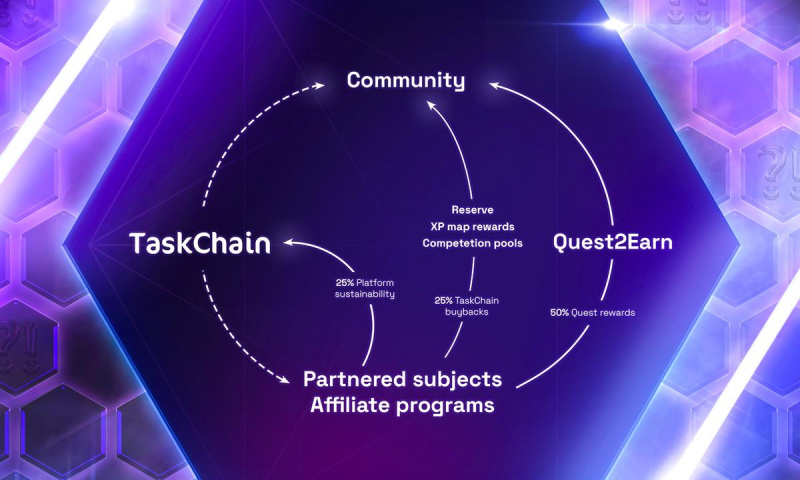
TaskChain Presale
TaskChain is set for kick-off with a listing price of $0.011 per TASKC token. With a current beta-stage price set at $0.004 per token, the 175% price difference marks the first phase of the presale. Early investors can participate in funding the project in an earlier price tranche.
TaskChain has confirmed it has successfully passed a full security audit and KYC, providing extra security for investors.
There is also a massive giveaway of $120,000 in rewards for presale participants to spice up involvement in the presale.
$TASKC Token
$TASKC ERC20 token, the lifeblood of TaskChain, is built on the most popular Ethereum Blockchain, which will provide transparency, security, and fast payouts with valuable rewards.
With a total supply of 4 billion $TASKC tokens, scarcity, and value are baked into $TASKC’s design, the presale will give investors a chance to grab a share of 2.8 billion tokens spread across all the 11 exclusive stages.
About TaskChain:
TaskChain is set to build the world’s first unique Web3 earning platform. By combining a fun experience with crypto earnings and financial inclusion, TaskChain’s Quest2Earn feature will revolutionize the way individuals earn income and interact with blockchain technology. To get involved with TaskChain, visit the official website at taskchain.co and join the growing community.
Website | Whitepaper | Socials
Contact
Tom Klein
TaskChain
[email protected]
Crypto asset manager Grayscale has expressed the belief that the next U.S. President will be supportive of central bank digital currencies (CBDCs), as stated in a recent blog post.
Grayscale highlights that the current frontrunners of both major political parties, Joe Biden and Donald Trump, have shown a willingness to explore CBDCs, though they are less enthusiastic about Bitcoin.
Trump has publicly called Bitcoin a “scam,” once tweeting his discontent with the cryptocurrency, criticizing its volatile value.
Similarly, Biden’s stance towards Bitcoin can be deduced from his support for a 30% tax on Bitcoin mining, a move that could negatively impact the U.S. mining industry.
Grayscale also pointed out Trump’s favorability towards non-fungible tokens (NFTs), with Trump having launched and sold two NFT collections.
Biden’s support for digital assets can be inferred from his “Executive Order on Ensuring Responsible Development of Digital Assets,” although the 2023 Economic Report of the President did not share the same enthusiasm for cryptocurrencies.
Other crypto-friendly candidates include Robert Kennedy Jr. and Ron DeSantis, both of whom rank second in their respective party’s polls.
READ MORE: JPEG’d DeFi Protocol Recovers $10 Million in Stolen Crypto After Hacker Returns Funds
Kennedy recently bought two Bitcoins for each of his seven children and endorsed Bitcoin as a “bulwark” against government intrusion at the Miami Bitcoin Conference.
He promised, if elected, to preserve the right to hold and use Bitcoin.
In contrast, both Kennedy and DeSantis have expressed opposition to CBDCs. DeSantis even signed a bill prohibiting the use of CBDCs in his state and encouraged other states to follow suit.
Among the Republican contenders, more pro-crypto candidates are emerging. Vivek Ramaswamy, with a 7% support level compared to Trump’s 63%, is viewed as pro-Bitcoin and anti-CBDC.
Republican Miami Mayor Francis Suarez, a vocal supporter of crypto technology, has been labeled the most ardent crypto advocate among all candidates.
In summary, Grayscale’s analysis indicates a complex and varied landscape in the 2024 presidential race regarding digital currencies.
While there is a consensus among leading candidates on the exploration of CBDCs, their stance on cryptocurrencies like Bitcoin varies widely.
The emergence of more crypto-friendly candidates further adds to this multifaceted picture.
Other Stories:
Chamber of Digital Commerce Publishes Impactful Analysis on SEC’s Ripple Lawsuit
Elon Musk Puts Rumors to Rest: X Has No Plans to Launch Crypto Tokens
Bitcoin’s Hodl Strategy Outperforms Crypto Funds by 68.8% in H1 2023
Digital Currency Group (DCG) is facing scrutiny over financial transactions involving its subsidiary, Genesis Global Capital.
According to Bloomberg, New York Attorney General Letitia James is conducting an investigation into the matter, with federal prosecutors and the U.S. Securities and Exchange Commission also seeking interviews with potential witnesses related to Genesis and DCG.
The investigation centers on loans and other transactions carried out between the two companies. DCG disclosed that it received approximately $575 million in loans from Genesis last year.
Authorities are also examining a letter from DCG’s founder and CEO, Barry Silbert, in which he mentioned a $1.1 billion promissory note resulting from DCG assuming liabilities connected to the collapse of the hedge fund Three Arrows Capital (3AC).
The disclosure of the promissory note to investors has become a significant point of interest for investigators. DCG is being represented in the case by former acting U.S. Attorney Seth DuCharme.
READ MORE: JPEG’d DeFi Protocol Recovers $10 Million in Stolen Crypto After Hacker Returns Funds
It is uncertain whether the investigations will lead to formal complaints. DCG stated that it is cooperating with regulatory bodies and investigative agencies as required.
The company emphasized that transactions between Genesis and DCG were conducted on an arm’s length basis and priced at prevailing market interest rates.
In January, Genesis filed for Chapter 11 bankruptcy due to liquidity issues amid the bear market and the collapse of other prominent crypto firms, including 3AC and FTX, a crypto exchange.
The filing estimated liabilities ranging from $1 billion to $10 billion, with corresponding assets.
Genesis is the largest unsecured creditor of FTX and its affiliates, with $226 million owed. However, the companies recently reached an agreement to settle the dispute.
DCG’s venture capital portfolio encompasses Grayscale, Genesis, CoinDesk, and around 200 other crypto-related companies.
Additionally, the company holds equity in other firms such as the crypto exchange Luno and advisory firm Foundry.
Other Stories:
Bitcoin’s Hodl Strategy Outperforms Crypto Funds by 68.8% in H1 2023
Elon Musk Puts Rumors to Rest: X Has No Plans to Launch Crypto Tokens
Chamber of Digital Commerce Publishes Impactful Analysis on SEC’s Ripple Lawsuit

Bitcoin (BTC) appears to be gearing up for a powerful bull phase, according to market analyst Cole Garner. Despite the current stagnant BTC price action, Garner believes that the cryptocurrency market is on the verge of a significant upward trend reminiscent of past cycles.
Garner draws his optimism from the behavior of major Bitcoin investors, often referred to as “whales.” He emphasizes that whale accumulation trends are a crucial indicator of a bull market.
Jarvis Labs, an analytics team, corroborates this sentiment, reporting an ongoing “multi-month buying frenzy” among whales.
Notably, smaller investors, referred to as “fish,” have also been increasing their exposure to Bitcoin. This trend, coupled with whales’ unwavering positions, leads popular technical analyst CryptoCon to label the whales as “diamond hands” during the current cycle.
In contrast to the relentless selling by whales in Bitcoin’s last cycle, the current situation portrays a stark difference.
Retail investors were the ones selling during the bear market, while whales stood their ground.
This phenomenon contributes to the conviction that the current cycle is different and that the market is poised for substantial growth.
One critical factor on which the entire bullish scenario hinges is the Bitcoin-to-stablecoin ratio on Bitfinex, known as the Bitfinex Whale.
This ratio has historically preceded major Bitcoin bull runs. Garner emphasizes the significance of this metric, considering Bitfinex the “smart money exchange” and a key driver of short-to-medium-term price movements in the crypto market.
READ MORE: JPEG’d DeFi Protocol Recovers $10 Million in Stolen Crypto After Hacker Returns Funds
While Garner favors a potential bullish breakout in the third quarter, he acknowledges the potential counter-argument of summer seasonality.
Nevertheless, he believes that any shakeout is likely to occur in September, giving the markets more time to rally.
To invalidate the bullish outlook, Garner highlights the importance of the 200-week simple moving average (SMA) for Bitcoin’s price.
A weekly close below this level, currently at $27,235, would be a critical sign that the bullish phase might not materialize.
In conclusion, Garner’s analysis indicates a strong belief in a forthcoming bull market for Bitcoin and the broader crypto market.
The increasing accumulation by whales and smaller investors, coupled with the historical significance of certain metrics like the Bitfinex Whale, provides an optimistic outlook for BTC’s future price trajectory.
Nonetheless, the 200-week SMA remains a crucial level to watch for potential bearish developments.
Other Stories:
Chamber of Digital Commerce Publishes Impactful Analysis on SEC’s Ripple Lawsuit
Elon Musk Puts Rumors to Rest: X Has No Plans to Launch Crypto Tokens
Bitcoin’s Hodl Strategy Outperforms Crypto Funds by 68.8% in H1 2023
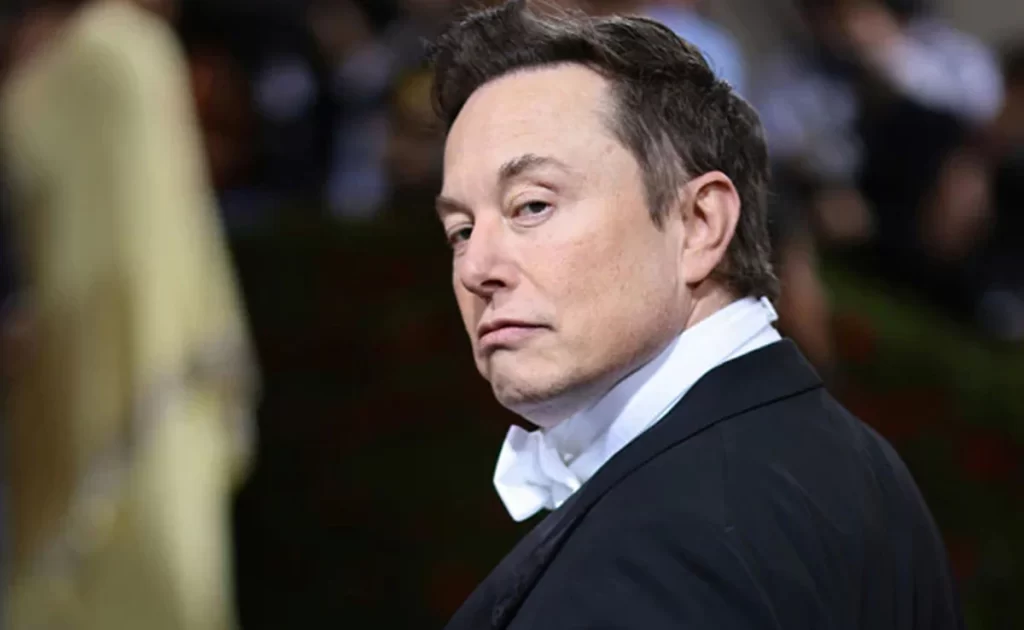
Elon Musk, the CEO of the social media company X (formerly known as Twitter), has declared that the company will financially support users who face mistreatment from their employers due to their engagement with or content posted on the platform.
In a recent thread on X, Musk announced this initiative on August 5, promising to fund legal bills regardless of the scale of the lawsuits.
The announcement garnered significant support, amassing over 200,000 likes and prompting numerous users to express their interest in receiving funding for potential legal actions against their employers.
One such case was brought to the spotlight by The Libs of TikTok, which highlighted the situation of Kara Lynne, an employee of Limited Run Games, allegedly fired for following an account on X.
Musk personally responded to the post and inquired about the accuracy of the situation, to which Lynne confirmed that the headline was slightly oversimplified but essentially accurate.
This move by Musk reflects his self-proclaimed stance as a “free speech absolutist” and his disdain for cancel culture.
He has consistently advocated for reducing content censorship, especially concerning political and ideological views, on the X platform.
READ MORE: JPEG’d DeFi Protocol Recovers $10 Million in Stolen Crypto After Hacker Returns Funds
In December 2022, he tweeted that “cancel culture needs to be canceled,” and since taking ownership, X has reinstated several accounts that were previously banned for policy violations.
The recent announcement is part of ongoing changes at X, which underwent a complete rebranding from Twitter to X in July as part of its transformation into an “everything app.”
The platform has also introduced a revenue-sharing model for its users and, on August 2, rolled out an option for premium Blue service subscribers to hide their verified checkmarks.
Elon Musk’s commitment to supporting users facing employer mistreatment due to their activity on X showcases his dedication to promoting free expression and countering cancel culture.
As the company continues to evolve and expand its services, users are eagerly embracing the changes and participating in the ongoing transformation of the platform.
Other Stories:
Bitcoin’s Hodl Strategy Outperforms Crypto Funds by 68.8% in H1 2023
Elon Musk Puts Rumors to Rest: X Has No Plans to Launch Crypto Tokens
Chamber of Digital Commerce Publishes Impactful Analysis on SEC’s Ripple Lawsuit
According to the 2023 “Financial Stability Report” by Latvijas Banka, the number of individuals purchasing crypto assets in Latvia has witnessed a decline.
The central bank attributes this drop in interest to various factors, including negative sentiment stemming from fraud and insolvency issues among major players in the market, unwise investment decisions that have been made previously, and the association of cryptocurrencies with money laundering.
Furthermore, the report points out the increasing involvement of crypto-asset companies with supervised financial sector participants, which has added to the waning interest in cryptocurrencies.
Based on data from payment card usage, the report reveals that in February 2023, only 4% of the population had bought crypto assets, compared to 8% in the previous year.
It is important to note that Latvia has a total population of 1.84 million people.
The report also sheds light on the declining transfer of funds to crypto wallets from Latvia. In 2022, Latvians transferred 51.8 million euros ($57 million) to crypto wallets, but this figure dwindled to 10.7 million euros ($11.8 million) in the first quarter of 2023.
Most of these transactions were directed towards companies based in other European countries, particularly in those countries where the fintech ecosystem, including crypto technologies, is flourishing. Notable examples include Lithuania, Estonia, Malta, and Ireland.
READ MORE: Binance-Backed Solv Protocol Raises $6M in New Funding
The report contrasts Latvia’s crypto adoption ranking with that of its neighboring country, Lithuania. According to the “2022 Geography of Cryptocurrency Report” by Chainalysis, Latvia was ranked 92nd out of 148 countries in terms of crypto adoption, while Lithuania secured the 102nd spot.
The Latvian central bank acknowledges that its nonbank financial sector is relatively less significant compared to other European countries.
This is mainly attributed to the population’s lower level of long-term savings, which have accumulated over a shorter period compared to many other euro area nations.
Despite the declining interest in crypto assets for investment purposes, the report highlights that retail crypto payments continue to dominate in Latvia.
However, these payments are typically small in size, with 44% of retail payments worth 60 euros ($66) or less, and 97.5% valued at under 1,000 euros ($1,100).
However, the specific monetary value of these transactions was not provided in the report.
Other Stories:
Bitcoin to Breach $100,000 by 2024 Amidst Mining Industry Challenges
Adam DeVine Joins Forces with Bitget in Year-Long Crypto Ad Partnership
Gulf Nation Nears Implementation of Virtual Asset Regulations
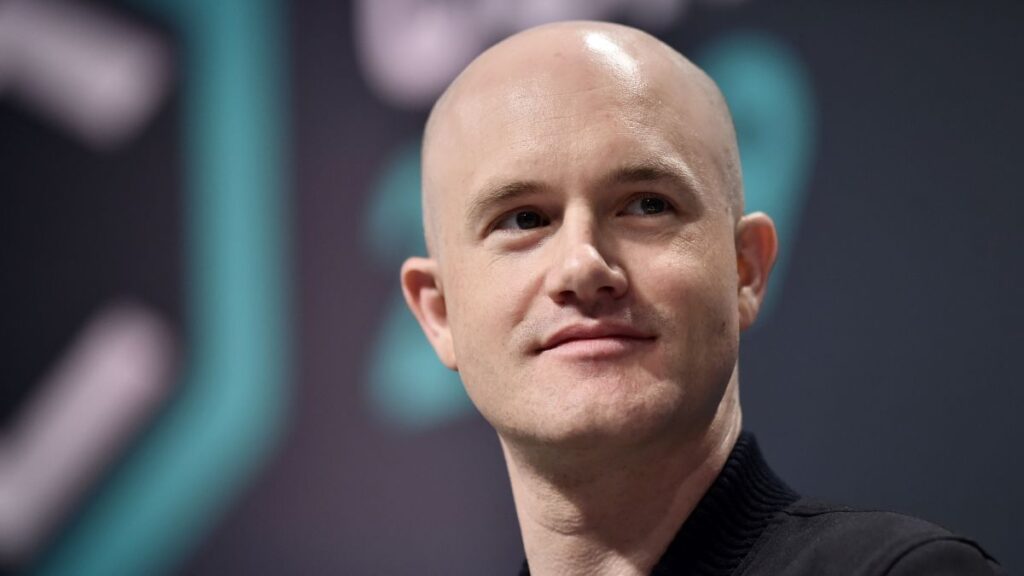
Coinbase CEO Brian Armstrong has expressed a mixed response regarding the company’s plans amid regulatory uncertainty in the United States.
Despite facing a lawsuit from the U.S. Securities and Exchange Commission (SEC) and scrutiny from state regulators over its staking services, Armstrong stated on August 4 that Coinbase is “staying in the United States.”
He emphasized that leaving the country is currently “not even in the realm of possibility” and that there is no emergency plan in place for such a move.
However, this stance contrasts with Armstrong’s comments at a fintech event in London in April, where he mentioned the possibility of relocating Coinbase’s headquarters to a more crypto-friendly country due to the lack of regulatory clarity in the U.S. market.
Nonetheless, he later assured shareholders that Coinbase remains “100% committed” to the U.S. market in the long term.
The SEC filed a lawsuit against Coinbase on June 6, accusing the exchange of offering unregistered securities, following a Wells notice issued by the regulator approximately three months prior.
READ MORE: Bitcoin to Breach $100,000 by 2024 Amidst Mining Industry Challenges
On August 4, Coinbase’s legal team filed a motion to dismiss the lawsuit, alleging that the commission had violated due process, abused its discretion, and deviated from its own previous interpretations of securities laws.
The outcome of the SEC’s case against Coinbase could have significant implications for other cryptocurrency firms operating in the United States.
Notably, in a separate lawsuit against Ripple, a federal judge ruled in July that XRP was largely not considered a security by SEC standards.
This ruling has already been cited by lawmakers and lawyers, including Coinbase’s chief legal officer Paul Grewal, in defense of crypto companies.
As the regulatory landscape continues to evolve, Coinbase remains firm in its commitment to the U.S. market, but the ongoing legal battle and uncertainty may influence its long-term decisions regarding its presence in the country.
The cryptocurrency industry is closely watching this case, as it could set important precedents for future regulatory actions in the rapidly expanding digital asset space.
Other Stories:
Adam DeVine Joins Forces with Bitget in Year-Long Crypto Ad Partnership
Binance-Backed Solv Protocol Raises $6M in New Funding
Gulf Nation Nears Implementation of Virtual Asset Regulations
Cryptocurrency exchange Coinbase, headquartered in the U.S., has submitted a motion to dismiss a lawsuit initiated by the Securities and Exchange Commission (SEC).
The SEC brought the lawsuit against Coinbase in June, approximately three months after the company received a Wells notice from the regulatory body.
In a legal document filed on August 4 with the U.S. District Court for the Southern District of New York, Coinbase’s attorneys argue that the SEC has overstepped its authority, abused its discretion, and misinterpreted securities laws in exercising certain regulatory oversight over the exchange.
They referenced the SEC v. Ripple case, pointing out that a judge had determined that XRP did not predominantly meet the definition of a security as per the commission’s existing standards.
In the lawsuit, the SEC has alleged that 12 tokens in question meet the criteria of “investment contracts” under the Howey test and therefore Coinbase has been operating as an unregistered broker.
Coinbase disputes this assertion, maintaining that the SEC’s challenges regarding its staking program lack legal standing.
READ MORE: Binance-Backed Solv Protocol Raises $6M in New Funding
The firm requested the court to dismiss the case, alleging that the SEC’s action was “punitive” and overstepped the regulatory powers given to it by Congress.
Coinbase announced its decision to file the motion to dismiss during an earnings call on August 3. The company continues to refute the SEC’s accusations that it could have violated securities laws through its activities.
Coinbase is not alone in facing SEC scrutiny. The regulator is also pursuing enforcement actions against Binance and Hex founder Richard Heart.
Recently, U.S. legislators have pushed legislation through committees that might reform the SEC’s authority over digital assets, should it become law.
Other Stories:
Gulf Nation Nears Implementation of Virtual Asset Regulations
Adam DeVine Joins Forces with Bitget in Year-Long Crypto Ad Partnership
Bitcoin to Breach $100,000 by 2024 Amidst Mining Industry Challenges

American actor and comedian, Adam DeVine, has joined forces with crypto exchange Bitget in a year-long advertisement partnership.
The new campaign, titled “Crypto & Beach Houses,” features DeVine holding a smartphone while discussing internet phenomena, with prominent Bitget branding in the background.
In the video, DeVine humorously encourages viewers to trade crypto at any time and from anywhere, even from the comfort of their race car beds at 2:00 am, declaring that traditional business hours are a thing of the past.
Known for his roles in the comedy TV series Workaholics and the Pitch Perfect film franchise, DeVine’s presence aims to attract more attention to the cryptocurrency platform.
However, it’s important to note that DeVine’s appearance in the ad comes with a disclaimer stating that he is a paid actor and his views should not be considered as specific recommendations or financial advice.
Furthermore, he is not licensed as an investment advisor or broker-dealer in any jurisdiction.
Additionally, the ad is not intended for distribution in the United States or to any U.S. person, which suggests that the campaign is targeted toward international audiences.
This partnership between celebrities and crypto companies has been a trend in the industry, with varying degrees of success.
READ MORE: Goldman Sachs Economists Predict AI to Surpass Electricity and PCs in Financial Impact on US Economy
Some prominent figures, like Lindsay Lohan, YouTuber Jake Paul, and singer Akon, have faced legal action from the U.S. Securities and Exchange Commission for allegedly promoting crypto tokens without proper disclosures.
In the past, Hollywood icon Matt Damon was mocked for his appearance in Crypto.com’s advertisement that coincided with the start of the cryptocurrency bear market.
Meanwhile, football stars Cristiano Ronaldo and Lionel Messi have also ventured into the crypto space.
Ronaldo signed a multi-year non-fungible token partnership with Binance, while Messi currently serves as the brand ambassador for Bitget, the same company with which DeVine is now partnering.
As the crypto market continues to evolve, partnerships with celebrities can help raise awareness and interest in digital assets.
However, it’s crucial for both companies and celebrities to be transparent about their relationships and avoid making misleading claims.
Investors should always conduct thorough research and seek advice from licensed professionals before making financial decisions in the crypto space.
Other Stories:
ASIC Sues eToro Over Alleged Insufficient Screening Tests