



Tel Aviv, Israel, August 17th, 2023, Chainwire
Open Campus, a community-led protocol for educators, content creators, parents, and students, and TinyTap, a subsidiary of Animoca Brands and the leading edtech platform for user-generated educational games, today announced a strategic partnership with Code Green, the trailblazing Web3 organization driven by a commitment to the planet’s health. The collaboration aims to help more children learn about climate change by leveraging the power of tokenized educational content, interactive gaming, and blockchain technology.
Open Campus, TinyTap, and Code Green are all dedicated to supporting the efforts of the United Nations Convention to Combat Desertification (UNCCD). This new collaboration exemplifies their commitment to fighting climate change and their belief in the power of education to shape a more sustainable future.
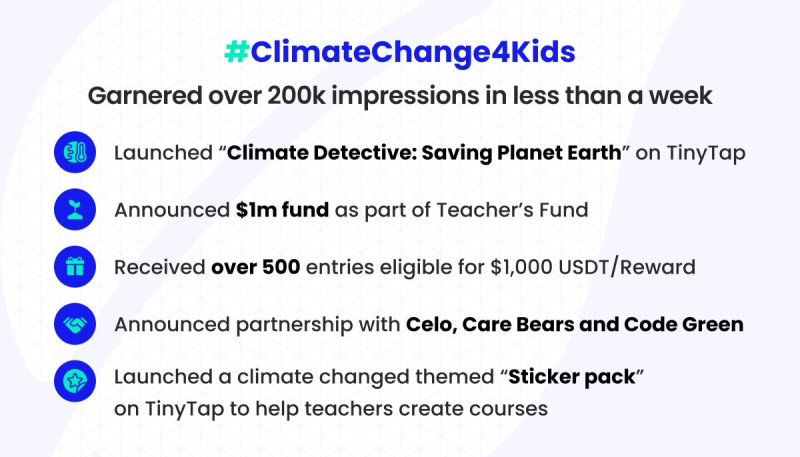
The partnership follows the successful launch of the Open Campus “Climate Change for Kids” initiative, which aims to foster knowledge and awareness of climate change among the younger generation. The #ClimateChange4Kids campaign, first launched on X (formerly Twitter), has received over a combined 200,000 impressions. The initiative includes a proposal for a US$1,000,000 fund incentivizing teachers to create climate change courses; the “Living Stories” project that encourages communities to share their experiences and climate-conscious practices; a climate-themed sticker pack developed by TinyTap to aid educators in course creation; and a new game called “Climate Detectives: Saving Planet Earth” available for free on TinyTap.
As part of the new alliance announced today, TinyTap will create a new climate change course utilizing the rich lore and avatars from Code Green’s HEALV3RSE game designed by MCSK. HEALV3RSE is a ‘play-to-heal’ game available on The Sandbox platform that allows players to explore and learn about eco-friendly activities such as planting trees, cleaning oceans, and installing solar panels, thereby promoting a deep understanding of climate change and its solutions.
“We are excited to work with Code Green, which is a partner to the United Nations’ efforts to combat climate change and desertification, by educating our kids about what is going on in our planet,” said Yogev Shelly, CEO of TinyTap. “By taking HEALV3RSE avatars to TinyTap, we develop a perfect companion to its metaverse game on The Sandbox, and offer parents and kids multiple ways to learn about our changing world in a fun and engaging way.”
Open Campus and Code Green also announced that they will be giving away 100 HEALV3RSE avatar and equipment NFTs to users who engage in an upcoming joint giveaway campaign, and help spread the message to friends and families. Campaign details will be announced on Open Campus’ Twitter.
Inna Modja, CEO of Code Green, Malian actress, singer, environmental activist, and Goodwill Ambassador for the UNCCD, expressed her excitement about this partnership: “By combining education, technology, and gaming, we’re creating a unique platform to engage children and empower them with the knowledge and awareness to tackle this urgent crisis for our planet.”
About Open Campus
Open Campus is a community-led protocol for educators, content creators, parents, and students. It puts decisions about learning back into the hands of educators and their students by fostering a collaborative environment, enabling teachers to create materials that appeal to the exact needs of students. Additionally, Open Campus recognizes the achievements of teachers and content creators who help students seek new knowledge, opening new revenue streams for effective educators around the world.
About TinyTap
TinyTap, a subsidiary of Animoca Brands, was founded in 2012 and is the world’s largest educational games library with more than 250,000 activities made by educators and publishers including Sesame Street and Oxford University Press. Games are created using TinyTap’s code-free authoring platform and can be accessed by parents as part of TinyTap’s subscription or sold directly to families as bundles. A portion of subscription revenue is shared with content creators based on the user engagement generated by their content. TinyTap is among the top 10 grossing kids apps worldwide, delivering educational content to families all over the world with a focus on young learners (Pre-K to Grade 6), serving 10 million registered family members with content created by over 100,000 creators. Learn more at https://www.tinytap.com.
About Animoca Brands
Animoca Brands, a Deloitte Tech Fast winner, a Fortune Crypto 40 company, and one of the Financial Times’ High Growth Companies Asia-Pacific 2023, is a leader in digital entertainment, blockchain, and gamification that is working to advance digital property rights and contribute to the establishment of the open metaverse. The company develops and publishes a broad portfolio of products including original games such as The Sandbox, Phantom Galaxies, Life Beyond, Crazy Kings, and Crazy Defense Heroes, and products utilizing popular intellectual properties including Disney, WWE, Snoop Dogg, The Walking Dead, Power Rangers, MotoGP™, and Formula E. It has multiple subsidiaries, including The Sandbox, Blowfish Studios, Quidd, GAMEE, nWay, Pixowl, Forj, Lympo, Animoca Brands Japan, Grease Monkey Games, Eden Games, Life Beyond Studios, Notre Game, TinyTap, Be Media, PIXELYNX, and WePlay Media. Animoca Brands has a growing portfolio of more than 380 Web3 investments, including Colossal, Axie Infinity, OpenSea, Dapper Labs (NBA Top Shot), Yield Guild Games, Harmony, Alien Worlds, Star Atlas, and others. For more information visit www.animocabrands.com or follow on Twitter or Facebook.
About Code Green
Code Green is a mission-driven web3 organization that utilizes the power of art and blockchain technology to ignite a healing revolution for the planet. Their work supports the United Nations Convention to Combat Desertification (UNCCD).
Contact
Elie Wiesel
[email protected]

Decentralized finance platform Zunami Protocol has issued a cautionary advisory against the purchase of its Zunami Ether (zETH) and Zunami USD (UZD) stablecoins.
This move comes in the wake of a security breach that targeted the protocol’s “zStables” pools on Curve Finance.
On August 13th, Zunami Protocol officially acknowledged the attack on its stablecoin pools via a post on its Twitter account.
While ensuring the safety of collateral, the protocol has initiated a thorough investigation to assess the scope and impact of the potential exploit.
Blockchain security firm PeckShield has approximated the stolen amount to be more than $2.1 million from Zunami’s Curve Pool.
The breach is attributed to a price manipulation vulnerability, a sentiment shared by the security experts at Ironblocks, who arrived at a similar conclusion.
The initial detection of the exploit was made by PeckShield on August 13th at 10:47 UTC, with Zunami Protocol confirming the incident about 20 minutes later, underscoring the urgency and swiftness with which the situation unfolded.
READ MORE: Hacker’s Tether Address Blacklisted with Police and Cyber Support, Stolen Crypto Recovery Progresses
Zunami Protocol operates as a decentralized revenue aggregator, offering users the opportunity to yield stake stablecoins. The protocol’s major stablecoin pools are housed within the Curve platform.
The impact of the breach is notably seen on the Zunami USD stablecoin as well as Zunami Ether.
In response to the attack, the zETH and UZD Curve pools operated by Zunami have been prominently marked with red exclamation symbols on the Curve platform, serving as a visual indication of the compromised status.
Cointelegraph, seeking further insights, reached out to Zunami Protocol for commentary on the incident.
However, as of the time of reporting, a response from the protocol has not been received.
As Zunami Protocol grapples with the aftermath of this attack, the broader community is reminded of the ongoing security challenges facing decentralized finance platforms.
This event underscores the significance of robust security measures in the DeFi space to safeguard users’ funds and maintain the trust necessary for the ecosystem’s growth.
Other Stories:
Curve Finance Vows Reimbursement After $62 Million Hack
Former FTX CEO Sam Bankman-Fried’s Bail Revoked Over Witness Intimidation Allegations

A motion to hold co-founder Kyle Davies of the defunct crypto hedge fund Three Arrows Capital (3AC) in contempt of court and impose sanctions has been denied by a judge overseeing the bankruptcy case.
The ruling came from Judge Martin Glenn of the United States Bankruptcy Court for the Southern District of New York in an August 11 filing.
The judge explained that previous rulings on motions related to a subpoena issued to Davies through X, formerly known as Twitter, were made under the assumption that Davies was a U.S. citizen.
However, it was later revealed that Davies is a non-U.S. citizen residing outside the country.
Judge Glenn cited federal laws that govern compelling compliance outside the United States.
He emphasized that his earlier approvals of motions were based on the assumption that Davies held U.S. citizenship.
This assumption was crucial for proper service of the subpoena, which was invalidated due to Davies’ non-U.S. citizenship status.
Davies’ lawyers submitted evidence on August 1 indicating that he had applied to renounce his U.S. citizenship in December 2020 and had become a citizen of Singapore after marrying a Singaporean national.
As Singapore does not permit dual nationality, Davies’ change in citizenship status had significant legal implications.
The judge suggested that foreign representatives could explore the possibility of compelling Davies’ compliance through the Singaporean legal system.
READ MORE: FTX Debtors Clash with Creditors Over Asset Control Amidst Restructuring Plan
Consequently, he dismissed the contempt motion, clarifying that the U.S. court lacked jurisdiction over Davies.
Co-founder Su Zhu of 3AC, who is a Singaporean national and resides outside the United States, was also issued a summons via X.
However, he is not subject to the subpoena due to his non-U.S. residency.
The whereabouts of both Zhu and Davies have largely remained unknown since 3AC’s collapse in July 2022.
Nonetheless, Davies’ lawyers confirmed his residence in Singapore in the August 1 filings.
The liquidators overseeing 3AC’s case are endeavoring to recover approximately $1.3 billion in funds from the two co-founders.
The firm is reported to owe creditors a total of $3.5 billion.
In April, Zhu and Davies played a role in launching Open Exchange, a platform designed to facilitate the trading of claims against insolvent cryptocurrency companies.
Other Stories:
US Bank’s Crypto Holdings Surge to Nearly $170 Million Amid Regulatory Scrutiny
California Updates Campaign Manuals with Detailed Rules for Cryptocurrency Contributions
Hong Kong’s HKVAX Granted Preliminary Approval for Virtual Asset Trading Platform by SFC

The DeFi landscape is grappling with a series of challenges, as it strives to recover from the aftermath of the Curve Finance hack.
While containment efforts are underway, a fresh wave of vulnerabilities emerged within the past week.
Steadefi, a prominent DeFi protocol, finds itself ensnared in an ongoing exploit, compounding the industry’s woes amid the ongoing recovery from the Curve crisis.
In a bid to mitigate risks associated with the Curve token price, Binance stepped in by injecting $5 million into the Curve token, subsequent to the hacker’s partial fund return.
This move aims to stabilize the ecosystem and shore up confidence.
Meanwhile, Aptos, the driving force behind the layer-1 Aptos Network, has solidified a partnership with tech giant Microsoft.
This collaboration is set to catalyze the adoption of Web3 solutions across financial institutions. The Aptos token witnessed an impressive surge, soaring by double digits on the back of this association.
Breaking new ground, Coinbase has accomplished a significant milestone. It has introduced Base, a decentralized layer-2 platform, marking a historic move as the first publicly listed company to venture into this domain.
This development has piqued substantial interest from the DeFi community.
Binance Labs, the investment arm of Binance exchange, made waves by investing $5 million into Curve Finance (CRV), the token underpinning the decentralized stablecoin trading platform.
The platform boasts the distinction of being the largest stableswap and second-largest DEX, currently holding about $2.4 billion in total locked value.
Aptos Network, empowered by the synergy with Microsoft, is on a growth trajectory, recording an impressive 11.6% surge.
READ MORE: Hong Kong’s HKVAX Granted Preliminary Approval for Virtual Asset Trading Platform by SFC
This collaboration harnesses Microsoft’s AI tools to expedite the adoption of Web3 in the realm of banking and finance.
The integration with Microsoft’s Azure OpenAI service will drive innovation in asset tokenization, on-chain payments, and central bank digital currencies.
Coinbase’s Base network has transitioned from an exclusive builder phase to a user onboarding phase, signaling a major milestone.
Several Web3 development teams have capitalized on this opportunity, unveiling apps for the Base network.
The launch has been accompanied by a calendar of celebratory events to commemorate this achievement.
The DeFi ecosystem experienced a setback with the exploitation of Steadefi, resulting in a loss of approximately $334,000.
The development team conveyed the gravity of the situation, stating that all funds are presently at risk. The incident has caused a decline in the app’s total locked value, as confirmed by DefiLlama data.
As the DeFi market faced bearish headwinds over the past week, the top 100 DeFi tokens by market capitalization exhibited a mixed performance, with most tokens experiencing losses.
Despite the challenges, the total value locked in DeFi protocols remained below the $50 billion mark, reflecting the sector’s resilience amid adversity.
Other Stories:
California Updates Campaign Manuals with Detailed Rules for Cryptocurrency Contributions
US Bank’s Crypto Holdings Surge to Nearly $170 Million Amid Regulatory Scrutiny
FTX Debtors Clash with Creditors Over Asset Control Amidst Restructuring Plan

Utrecht, Netherlands, August 15th, 2023, Chainwire
AllianceBlock today unveiled Nexera Exchange, an innovative new decentralized exchange platform incorporating an advanced on-chain order book protocol to provide deeper and more accessible liquidity across a diverse range of cryptocurrencies and tokenized assets.
Nexera Exchange builds on last year’s launch of AllianceBlock DEX, which harnesses the power of a cutting-edge Automated Market Maker to minimize the risk of impermanent loss for liquidity providers. Designed to meet the demand for a more streamlined user interface and optimized liquidity mechanisms, Nexera Exchange acts as an intermediary layer, making AllianceBlock DEX more efficient and user-friendly.
DEX platforms have vast potential but struggle with challenges around the user experience and operational fluidity, in contrast to the highly efficient experience of centralized exchanges. By leveraging an innovative on-chain order book protocol, Nexera Exchange bridges this gap, providing a decentralized trading experience that rivals the very best CEX platforms while amplifying the core strengths of AllianceBlock DEX.
Enhanced DEX Liquidity With Uniswap
Nexera Exchange’s integration with the Uniswap protocol allows it to leverage the rich liquidity of Uniswap V3 and execute limit orders seamlessly while ensuring the best possible price. Ultimately, Nexera Exchange intends to become an on-chain limit order book aggregator that facilitates efficient liquidity access from across multiple DEXs to deliver the most optimal decentralized trading experience. The integration with Uniswap allows users to place market orders and gain deeper insight into available liquidity at various price points for trading pairs.
In its next phase, Nexera Exchange will add the ability to execute limit orders. By leveraging its limit,on-chain order book, limit orders will be securely stored on chain, with the protocol determining the optimal match from either the order book itself or Uniswap V3’s liquidity pool. By transitioning from market orders to limit orders, users gain heightened control and deeper price insights, creating a more efficient trading environment.
A key element of this transformation will be the addition of a stability staking pool to incentivize traders to actively participate in the platform. Users will be able to stake their NXRA tokens and earn a portion of the trading fees from Nexera Exchange on a continuous basis, creating a mutually beneficial environment for all participants. The integration of NXRA as an incentivization tool will improve the overall experience for Nexera Exchange users while augmenting the platform’s growth and liquidity, and providing additional utility for the token itself.
Advanced DeFi Primitives
Traders will also gain access to an array of new DeFi primitives in a forthcoming release that combine to deliver an enriched toolkit for advanced DeFi trading strategies.
The new primitives include Staking-Enabled On-Chain Order books, a novel approach wherein users can stake their orders on the blockchain to provide liquidity to the protocol, distinct from the standard liquidity provision model. Other innovations include Order-Triggering Matching to eliminate the continuous hustle of order matching; Yield-Optimized Staked Orders to generate passive yield; and Dynamic Range Order Book Provision to ensure optimal order execution and capital utilization.
Building A Secure & Compliant DEX Experience
Nexera Exchange’s transformation will gradually redefine the DEX trading experience to support the concept of tokenized asset trading, enabling real-world assets (RWAs) to be traded with the same ease as digital tokens. The evolution of Nexera Exchange is designed to establish a fully transparent and compliant platform that’s trusted by traders and investors alike while aligning with regulatory standards.
In the coming months, Nexera Exchange will introduce critical functionality including decentralized KYC/AML procedures and gated liquidity pools to verify users and enhance security, together with zero-knowledge proofs for users to comply with KYC without revealing their personal information. The platform will also introduce Fractionalized NFT Representation technology to support the tokenization of RWAs, followed by unique yield-generating DeFi strategies for users to provide liquidity for RWA fractions. Finally, Nexera Exchange will implement high-level security mechanisms such as multi-factor authentication, advanced cold storage and consistent security audits.
With Nexera Exchange, AllianceBlock’s goal is to entice financial institutions and institutional traders to enter the DeFi industry with measures that minimize risk and achieve the highest standards of compliance for the safe and secure trading of tokenized assets.
About AllianceBlock
AllianceBlock is an infrastructure provider for decentralized tokenized markets. It empowers businesses with liquidity provisioning, and allows them to compliantly issue, manage, and trade tokenized, digital assets including real world assets (RWAs).
The AllianceBlock ecosystem of partners, clients, and ventures consists of top stakeholders from the financial industry, as well as the decentralized finance (DeFi) sector. Their unique product suite complies with global regulations and seamlessly integrates with legacy systems.
Contact
Avishay Litani
[email protected]
In a collaborative effort involving law enforcement and cyber authorities, a victim who goes by the pseudonym L3yum on X (formerly known as Twitter) has achieved a significant breakthrough following a hack that resulted in the loss of 90 Ether.
The victim has managed to have the perpetrator’s Tether address placed on a blacklist, potentially enabling the recovery of a substantial portion of the stolen funds.
The breach occurred on March 16, when the hacker successfully acquired access to L3yum’s hot wallet seed phrase.
Subsequently, a collection of nonfungible tokens (NFTs) associated with Yuga Labs, as well as cryptocurrencies and NFTs from smaller projects, were pilfered.
These ill-gotten assets were swiftly liquidated or traded by the attacker.
In a recent post on Aug. 11 on X, L3yum conveyed the successful outcome: “Today after working with the police and cyber team in my country, I was able to get the stolen funds sitting in USDT frozen and black listed.”
The involved Ethereum-based USDT address, linked to the hacker, has now been rendered inactive, marking a significant step towards recovering the stolen assets.
At present, the 90 ETH translates to roughly $166,000, while the blacklisted wallet contains $107,306 worth of USDT, implying that the victim might not fully recoup their losses.
The question of whether the victim will receive restitution remains unanswered.
READ MORE: California Updates Campaign Manuals with Detailed Rules for Cryptocurrency Contributions
However, history suggests that when a USDT address faces blacklisting under similar circumstances, Tether has previously destroyed the blacklisted USDT and reissued an equivalent amount of the asset to the original owner.
It’s important to note that the process of blacklisting a USDT address by Tether typically follows a court order, as has been observed in previous cases.
L3yum indicated that while this seemed to be the likely course of action, confirmation is still pending.
Responding to comments, L3yum clarified, “This is the part I’m unsure about but yeah from my understanding this is how it works and the funds that are blacklisted are essentially burnt.
Don’t quote me on that though, but that is my understanding!”
The circumstances that enabled the hacker to obtain the seed phrase back in March are yet to be fully determined.
However, initial speculation pointed towards possibilities such as SIM swapping, inadvertent seed phrase storage on iCloud, or the use of the wallet across multiple devices.
While details remain unclear, L3yum’s proactive efforts, coupled with the cooperation of law enforcement and cyber experts, have paved the way for potential recovery in this intricate crypto hack saga.
Other Stories:
Hong Kong’s HKVAX Granted Preliminary Approval for Virtual Asset Trading Platform by SFC
FTX Debtors Clash with Creditors Over Asset Control Amidst Restructuring Plan
US Bank’s Crypto Holdings Surge to Nearly $170 Million Amid Regulatory Scrutiny
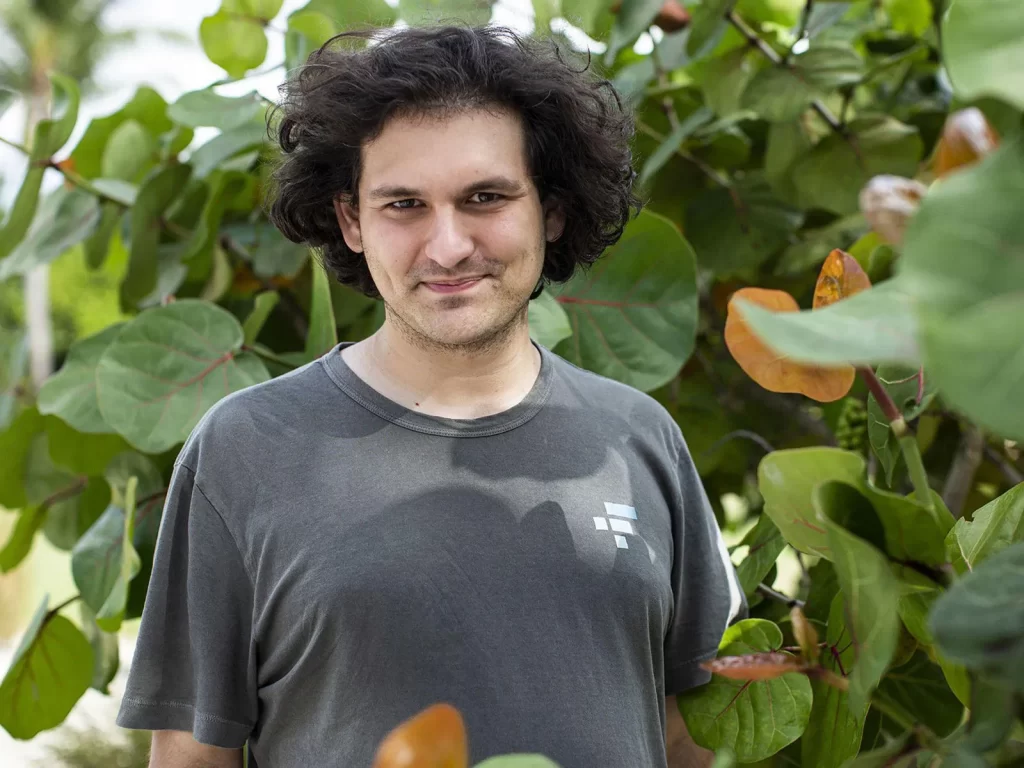
Former FTX CEO Sam Bankman-Fried’s bail has been revoked by a federal judge in response to allegations that he attempted to intimidate witnesses by sharing information with New York Times reporters.
The decision was made during an August 11 hearing at the United States District Court for the Southern District of New York. Judge Lewis Kaplan ordered the revocation of Bankman-Fried’s $250 million bail, which had initially kept him out of custody since his arraignment in December 2022.
Bankman-Fried had given interviews to New York Times reporters, with the intention, as suggested by Judge Kaplan, of “hurting and frightening” his former colleague and girlfriend, former Alameda Research CEO Caroline Ellison.
His legal team confirmed his collaboration with the reporters, leading to the imposition of a gag order to prevent any further extrajudicial statements related to the ongoing criminal case.
Assistant U.S. Attorney Danielle Sassoon cited Bankman-Fried’s breach of previous bail conditions, which included sending a message via the Signal app to FTX US general counsel Ryne Miller, using a virtual private network for internet activities, and releasing information to reporters aimed at intimidating Ellison.
The prosecutor also mentioned that the Putnam County Correctional Facility could provide Bankman-Fried with a laptop if he were to be remanded into custody, though home detention with restrictions on Google Drive was also considered.
Judge Kaplan stated that there was probable cause to believe that Bankman-Fried had attempted to tamper with witnesses on at least two occasions, and he listed additional violations as well.
Consequently, he decided to revoke the bail. Sassoon argued that Bankman-Fried had allegedly asked witnesses to delete specific messages and documents.
Bankman-Fried’s attorney, Mark Cohen, pleaded with the judge to maintain his bail conditions, asserting that coordination with the legal team was necessary.
Cohen also contended that allegations of witness intimidation should be addressed during the October trial.
READ MORE: Hong Kong’s HKVAX Granted Preliminary Approval for Virtual Asset Trading Platform by SFC
Despite Bankman-Fried’s legal team’s intention to appeal the decision, Judge Kaplan denied the motion and ordered Bankman-Fried to be remanded into custody, likely at the Putnam County Correctional Facility.
He may be transferred to the Metropolitan Detention Center in Brooklyn once the trial begins in October.
It’s worth noting that Bankman-Fried’s parents may have been present at the hearing.
Bankman-Fried, who has primarily been staying at his California home except for court appearances in New York, is facing 12 criminal charges spanning two trials scheduled for October 2023 and March 2024.
While a campaign finance law violation charge is set to be dropped due to an extradition agreement with the Bahamas, prosecutors intend to include the alleged scheme in a wire fraud charge.
Other Stories:
FTX Debtors Clash with Creditors Over Asset Control Amidst Restructuring Plan
US Bank’s Crypto Holdings Surge to Nearly $170 Million Amid Regulatory Scrutiny
California Updates Campaign Manuals with Detailed Rules for Cryptocurrency Contributions

The Hong Kong Securities and Futures Commission (SFC) has granted preliminary approval to the Hong Kong Virtual Asset Exchange (HKVAX) to operate a virtual asset trading platform within the framework of the region’s securities regulations.
HKVAX recently disclosed that it has secured an “approval-in-principle” from the SFC, authorizing the execution of Type 1 and Type 7 regulated activities.
The Type 1 license empowers the platform to administer a digital asset trading system dealing with securities, while the Type 7 classification formally permits the company to furnish automated trading services to both retail customers and institutional investors.
In pursuit of capitalizing on the investment prospects presented by Web3, HKVAX is striving to introduce a new category of offerings known as security token offerings.
Once the final endorsement is obtained, the platform intends to provide a range of services, including over-the-counter (OTC) brokerage facilities facilitating transactions between fiat and digital assets.
READ MORE: Top VC Firms Face Class-Action Lawsuit for Alleged Role in FTX Crypto Exchange Fraud
Moreover, the platform plans to establish an institutional-grade exchange platform and a secure custody solution, backed by insurance provisions.
Anthony Ng, who serves as the co-founder and CEO of HKVAX, articulated that as the platform’s operations expand, the entity remains committed to broadening its array of products available in the Hong Kong market.
Simultaneously, HKVAX intends to collaborate with strategic investors during its forthcoming funding rounds.
The announcement from HKVAX emerges in the wake of HashKey and OSL, two exchanges, debuting retail cryptocurrency trading activities in Hong Kong.
These exchanges made history on August 3 as the first entities to be granted licenses to facilitate crypto trading services in the jurisdiction.
Hong Kong’s regulatory authorities have intensified their scrutiny of the cryptocurrency sector following the FTX collapse.
The CEO of the SFC, Julia Leung Fung-yee, stressed the importance of crypto trading within the virtual asset ecosystem in light of the FTX exchange’s downfall in 2022.
In a public address, Leung emphasized that the newly implemented licensing structure for virtual asset service providers aims to safeguard investors as they engage in trading activities.
Other Stories:
Futurama’s Hilarious Take on Crypto Mining: A Wild West Adventure in ‘Crypto Country’
PayPal’s PYUSD Stablecoin Launch Triggers Flood of Imposter Tokens and Honeypot Scams
Cryptocurrency Asset Flows Continue Negative Trend with $107 Million Outflows
FTX’s CEO and chief restructuring officer, John J. Ray III, along with other debtors, are expressing dissatisfaction with certain members of the Official Committee of Unsecured Creditors (UCC), who are attempting to gain control over assets.
These debtors are raising concerns about the UCC’s proposal to invest around $2.6 billion from cash reserves into short-term Treasuries.
They believe this move contradicts the FTX 2.0 draft restructuring plan.
In an official response filed on August 9, FTX addressed the UCC’s opinions regarding the reorganization and term sheet proposal. FTX criticized the UCC’s pursuit of asset control, especially their recommendation to allocate the cash reserves to cover professional fees, which could total up to $330 million.
Tensions have arisen between the UCC and debtors due to allegations that creditors were not adequately consulted and that FTX substantially depleted funds during the bankruptcy filing process.
Furthermore, the United States Securities Exchange Commission (SEC) expressed dissatisfaction with what it perceived as limited engagement and unprofessional conduct among several UCC members.
FTX’s restructuring unit has managed to recover around $7 billion in liquid assets from the original $8.7 billion owed to customers at the onset of the exchange’s bankruptcy proceedings.
READ MORE: PayPal’s Ethereum-Based Stablecoin PYUSD Divides Crypto Community
However, some creditors and experts believe that the debtors’ actions are hindering the reorganization process and have contested claims made by the UCC.
The debtors have unveiled a strategy for the relaunch of FTX 2.0, with CEO John J. Ray III striving to finalize agreements and outstanding payments to facilitate the launch.
Yet, Jesse Powell, the CEO of Kraken, has expressed doubt about FTX 2.0, stating that the endeavor is more challenging than starting anew.
Powell pointed to factors like the absence of a complete team, technology, necessary licenses, and damage to the brand’s reputation.
In a separate development, FTX has submitted a request for the dismissal of Chapter 11 bankruptcy proceedings involving FTX Exchange FZE (FTX Dubai).
The exchange argues that it never actually provided cryptocurrency-related services to investors, and therefore, the bankruptcy proceedings are not warranted.
Other Stories:
Governments Remain Wary About Worldcoin Amid Privacy Concerns
Binance’s Proof-of-Reserves Discloses Strong Financial Position
XRP Price Fails to Reach Anticipated Levels Despite Favorable Court Ruling
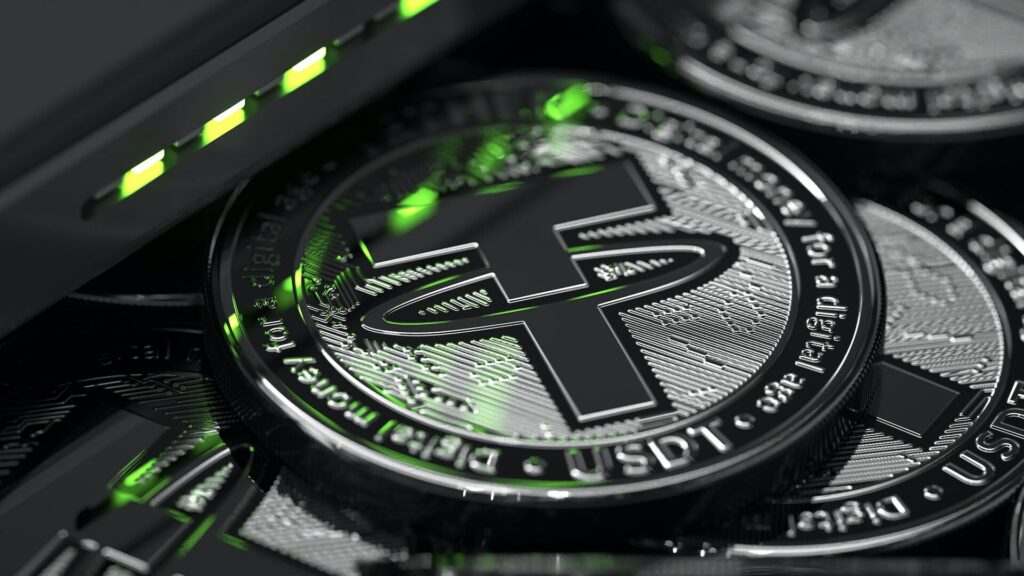
Stablecoins are positioned as the driving force behind a transformative shift tied to the U.S. dollar, potentially safeguarding its supremacy on the global stage, asserts an opinion piece dated August 9 in The Wall Street Journal.
Penned by Brian Brooks and Charles Calomiris, the article advocates for the establishment of a robust regulatory framework for stablecoins within the United States.
Brooks, previously at the helm of Binance.US and a former legal executive at Coinbase, brings substantial fintech expertise, while Calomiris, the dean of economics, politics, and history at the University of Austin, offers his background as a former chief economist at the Office of the Comptroller of the Currency.
The Clarity for Payment Stablecoins Act, championed by Patrick McHenry, Chair of the House Financial Services Committee, was tabled in July.
Unfortunately, the legislation has encountered resistance due to a lack of bipartisan consensus.
The Clarity for Payment Stablecoins Act, which has bipartisan support, seeks to implement necessary safeguards to enable this technology to realize its full potential.
In the face of mounting concerns regarding the erosion of the dollar’s status as a global reserve currency, Brooks and Calomiris suggest that stablecoins possess the capability to emulate the post-World War II paradigm in which the U.S. dollar emerged as the world’s primary trade currency.
Citing International Monetary Fund data, which reveals a decline in foreign central banks’ holdings of U.S. dollar reserves from nearly 73% in 2000 to 59% presently, the authors emphasize the importance of exploring tools that could fortify the dollar’s standing.
Brooks and Calomiris sound an alarm regarding the ongoing shift away from the dollar by major commodity trading nations like Brazil and Argentina.
READ MORE: Governments Remain Wary About Worldcoin Amid Privacy Concerns
These nations have entered into bilateral agreements with China to facilitate trade settlements using the yuan and their respective local currencies.
The authors argue that stablecoins offer individuals trapped in hyperinflationary environments a more accessible pathway to the U.S. dollar.
In advocating for stablecoin oversight, the authors underscore the potential harm dedollarization could inflict on the U.S. economy.
The loss of reserve currency status could escalate the country’s borrowing costs, a pivotal concern during periods marked by extensive government borrowing and spending.
Furthermore, the authors contend that dedollarization could erode the purchasing power of American consumers, leading to an increase in the cost of imported goods.
The authors predict that, if stablecoins proliferate, global citizens might independently and even contrarily drive demand for the dollar, irrespective of their governments’ political stances.
The authors conclude by urging U.S. policymakers to acknowledge the significance of reaffirming the dollar’s role in the global economy.
Other Stories:
PayPal’s Ethereum-Based Stablecoin PYUSD Divides Crypto Community
XRP Price Fails to Reach Anticipated Levels Despite Favorable Court Ruling
Binance’s Proof-of-Reserves Discloses Strong Financial Position